Feeds:
Posts
Comments

Archive for the ‘Essays’ Category

Gore Vidal [1925-2012]

Gore Vidal died last night at age 86 because of complications from pneumonia.

When I was younger, back in college, I loved Gore Vidal.  I read almost all of his essays and I tried to read most of his novels (I didn’t succeed–he has published some 50 books).  His book United States: Essays 1952–1992 is one of the best collection of political essays I have read.

People who know Vidal at all know him for different reasons.  Some know him as a writer of historical novels known as the Narratives of Empire: Burr (covering 1775-1805 and 1833-1836), Lincoln (1861-1865) 1876 (1875-1877), Empire (1898-1907), Hollywood (1917-1923), Washington D.C. (1937-1952) and The Golden Age (1939-1954).

Others know him for his outspoken pro-homosexuality stance.  His third novel 1948’s The City and the Pillar caused quite the controversy for presenting sympathetic gay characters.  He also wrote Myra Breckenridge about a transsexual character.  His published quote from about sexuality (from 1969) is:

We are all bisexual to begin with. That is a fact of our condition. And we are all responsive to sexual stimuli from our own as well as from the opposite sex. Certain societies at certain times, usually in the interest of maintaining the baby supply, have discouraged homosexuality. Other societies, particularly militaristic ones, have exalted it. But regardless of tribal taboos, homosexuality is a constant fact of the human condition and it is not a sickness, not a sin, not a crime … despite the best efforts of our puritan tribe to make it all three. Homosexuality is as natural as heterosexuality. Notice I use the word ‘natural,’ not normal.” (more…)

Read Full Post »

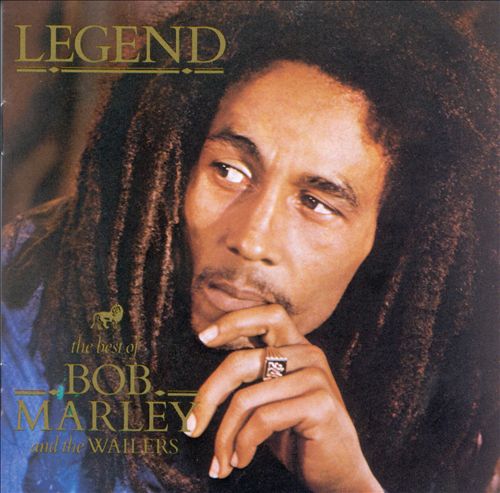
SOUNDTRACK: BOB MARLEY AND THE WAILERS-Legend (1984).

I’m white, so that means I own a copy of this CD (according to the book below).  And I do, because it’s mandatory in college that you play “Jammin'” at every party.

Now, I like ska (yup, still).  I know that ska came from reggae, but to me reggae is just boring ska.  I couldn’t agree more with Barney on How I Met Your Mother:

Ted: Oh, get this, she plays bass in a reggae band. They’re having a show this Friday. How cool is that?

Barney: Oh, does she know that one song? Mm-hm chaka, mm-hm chaka. What’s that song called? Oh, right, it’s called every reggae song.

Although in fairness, listening to this again, it is a rather nice album (I guess I know every song).  I have a personal aversion to some of the really overplayed songs, like “One Love” (because if you go to any Caribbean location they all act like it’s the official slogan of hot weather.  We even have a Christmas ornament from St. John that says “One Love”  WTF?  And I don’t think anyone needs a 7 minute version of “No Woman No Cry.”

But some of the lesser played its (“Could You Be Loved” and just about anything with The Wailers backing him are pretty great).  Although I’ve got to admit I can’t take more than a few songs.  I had to skip through some of the last songs (thank goodness I don’t have the 2 disc version).

[READ: July 26, 2012] Whiter Shades of Pale

Christian Lander created the blog Stuff White People Like.  It was very funny (it hasn’t been updated since Feb 2011, so let’s assume it has run its course).

Lander had released a first book of SWPL back in 2008.  I didn’t read it (blog to book deals were overwhelming in 2008), but I had seen enough of the site to assume it was funny.  One of the funnier jokes when the blog first came out was wondering if the creator was white or not.  (Well, the author photo gives that away, but I won’t).

We grabbed this book at a Borders going out of business sale (sorry Borders, you are missed).  This book continues where the first book left off (I gather).  I don’t know if every entry from the blog made it into the book (the thanks at the end of the book lead me to think not), but I have to assume most of them made it (and maybe there is new stuff in the book too?) (more…)

Read Full Post »

SOUNDTRACK: ST. VINCENT-Actor (2009).

I had seen St Vincent on Austin City Limits, and her juxtaposition of waif-singer with noise mongering guitar player blew me away.  So I was a little disappointed when this album opened up with this gentle, practically 1950s sounding vocal and string line in “The Strangers.”  It takes two and a half minutes, but the noise eventually comes and it totally changes the texture of the song.  Of course now, “make the black hole blacker” is a fun thing to sing along with (and the lyrics in general are pretty great).  “Save Me from What I Want” is another quiet song with a catchy chorus.  “The Neighbors” has a great melody with interesting strings over the top of it.  “Actor Out of Work” brings in some stranger sounds to the album.

There’s something interesting about the songs on this album, like the way “Black Rainbow” has these sweet string sections but for the end half builds a crescendo of tension. I also love that a seemingly delicate song can be called “Laughing with a Mouth of Blood.”  Perhaps the strangest song on the disc is “Marrow” which has a strange horn section and the chorus: “H.  E.  L.  P.  Help Me Help Me.”  “The Bed,” “The Party” and “Just the Same But Brand New” continue in this vein–like a Disney princess song with a horrible threat underneath: “Don’t Mooooove, Don’t Screeeam.”  But that sense of princess who are slightly askew really resonates on this record.  It’s not as willfully dissonant as her first record, but lyrically it’s a knife covered in cotton candy, it’s still a gem.

[READ: March 20, 2012] McSweeney’s #39

One of the bad things about having a job with actual work is not being able to write complex posts about compilation books.  It’s hard to have your book open while bosses walk by.  So, its been a while since I read this and I’ll do my best to remember it all.  Incidentally, if you’re keeping track I skipped 38, but I’ll get to it.

Issue #39 is a hardcover and a pretty one at that. It has a front cover photo (as well as many interior photos) taken by Tabitha Soren.  Yes, forty-somethings, THAT Tabitha Soren, from MTV who has a new career as a photographer.

This issue continues with the recent return of the Letters column (as the magazine and front matter become more serious the return of the Letters adds an air of silliness). (more…)

Read Full Post »

SOUNDTRACK: RICHARD THOMPSON-Grizzly Man Soundtrack (2005).

This is a largely instrumental soundtrack by Richard Thompson.  It features some wonderful guitar work (no surprise there).  There are several slow acoustic numbers (“Tim & the Bears,” “Foxes”–which is in the style of his old traditional folk ballads) there’s also the slow impassioned electric guitar solo (set over a simple beat) of “Main Title.”  “Ghosts in the Maze ” is a dark piece, the exact opposite of “Glencoe” a traditional-sounding song, both of these are under two minutes long.  “Parents” adds a cello, which means a sombre song.  “Twilight Cowboy” is one of the longer pieces, and it really conveys an openness of nature.

“Treadwell No More” is a slow six-minute dirge type song.  “That’s My Story” has spoken dialogue by Treadwell, over a simple unobtrusive guitar.  But as the title of the record says, Music composed and performed by Richard Thompson.  Which means there are other musicians on the soundtrack too.  “Small Racket” is where things start to get noisy and a little uncomfortable.  There’s some squeaks and slashes of sound, but it’s mostly a tense guitar feel.  Then comes the darker, scarier stuff.  “Bear Fight,” is a series of cello noises and swipes.  “Big Racket” is indeed that, with guitar from Henry Kaiser and noises from Jim O’Rourke.  “Corona for Mr Chocolate” is all Jim O’Rourke, it’s also odd noises and moods.  None of these three songs are terribly off-putting but they reflect a very different tone.

The album ends with “Main Title Revisited,” which is what it says and “Coyotes” by Don Edwards which has some coyote yodels.

It’s a good soundtrack, really conveying what the movie is about, and while not essential Richard Thompson, it is still some great guitar work

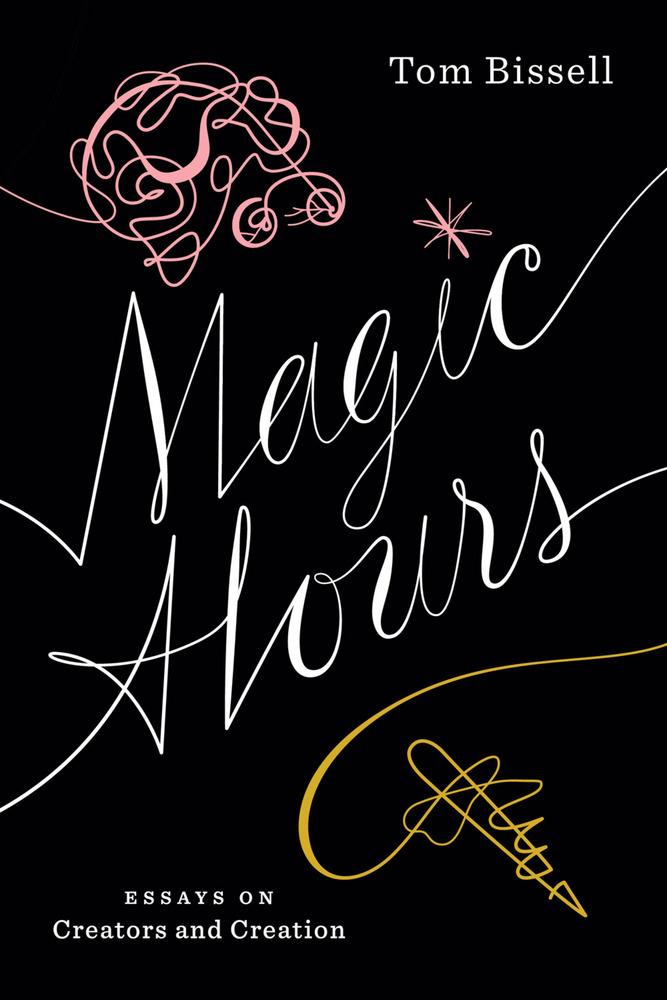
[READ: July 23, 2012] Magic Hours

I thought that I had never heard of Tom Bissell, but I see that I have read three of these articles already (I guess I don’t always pay attention to the author’s name).

This collection of essays comes from the last eleven years (2000-2011).  The articles have appeared in The Believer & The New Yorker (these are the ones I have read) and Boston Review, Harper’s, New York Times Magazine, Virginia Quarterly Review, New York Times Book Review and Outside (which I am starting to think I should really check out more).

Primarily they are articles about writing–he looks at fiction, non-fiction, film or a combination of them.  Bissell is a strong writer and he does not hold back when he sees something he likes or dislikes.  I found his articles (all of which are quite long–about 30 pages each) to be engaging, funny and very persuasive.  I’m really glad I read the book (and was even glad to re-read the articles that I had read before). (more…)

Read Full Post »

SOUNDTRACK: R.E.M. “Superman” (1986).

Even though R.E.M. is all about Michael Stipe, “Superman” is one of my favorite R.E.M. songs.  I know it’s a cover, and I know the lyrics are kind of dumb, but there’s something about Mills’ singing voice that I love (I often think his backing vocals are the strongest parts of R.E.M. songs).

Stipe didn’t like the song and refused to sing lead.  This gave Mills his debut lead vocal appearance.  You can hear Stipe in the background–he sounds great, too.  A total throwaway song that is awesome.

By the way, the original by The Clique, which I never listened to before, is very strangely clipped in the vocals.  I was sure that the band was not American by the vocal delivery, but apparently they’re from Austin.  Huh.

I know I should have picked Voivod’s cover of “Batman” for this post, but how creepy is that R.E.M. cover?

[READ: July 21, 2012] “The Only Human Superhero”

I have it in my head that I might one day read all of Jonathan Lethem’s works.  Although I’m not all that sure I like him that much. (There’s so many Jonathan’s writing, I can’t keep track of who I like).  He has 18 entries on this blog (although I see that none are for his novels).  Nevertheless, I  must like him pretty well.

Anyhow, this article is a one page thing about Batman The Dark Knight.  This was written before the terrible, horrible, unimaginable tragedy in Colorado, so there is no insensitivity about it. (more…)

Read Full Post »

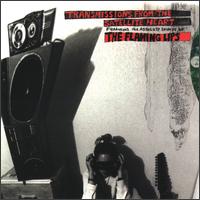
SOUNDTRACK: THE FLAMING LIPS-Due to High Expectations…The Flaming Lips are Providing Needles for Your Balloons EP (1994).

This EP came after the success of Transmissions from the Satellite Heart and the single “She Don’t Use Jelly.”  Naturally that is not the single here, rather it is “Bad Days,” a new song tha sounds of the period.  As does “Jets Part 2 (My Two Days As An Ambulance Driver)” a fuzzed out trip.

“Ice Drummer” is a primarily acoustic but still distorted song.  It’s kind of boppy and light which is odd since it is a cover of a Suicide song.   “Put the Waterbug in the Policeman’s Ear’ is a demo with strings and piano.  It also has a very lengthy introduction in which Wayne explains his brother’s proclivity for drugs and his belief that he can control bugs (and have them attack the policeman who is trying to arrest him).  It was recorded on a boombox.

“Chewin’ the Apple of Yer Eye” is a live version recorded at a record studio.  It has nice guitars with scritchy violins.  “Chosen One” is a cover of a Bill Callahan song at the same venue.  There’s a lengthy introduction explaining that it’s a cover and why he likes it so much.  It’s a nice version, very stripped down.  “Little Drummer Boy” is a travesty, but a good one (and is 1,000 times better than their version of “White Christmas.)”

“Slow-Nerve-Action” is a live version apparently broadcast on a Top 40 radio station.  The squall of noise as the song opens would frighten off anyone listening to Top 40, but the middle of the song’s acoustic section is rather pleasant (if not a little scratchy and staticky).  Although this EP racks in at 44 minutes long, it’s really not that essential (although the live versions are nice).

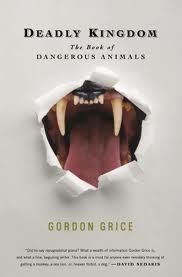
[READ: May-July 2012] Deadly Kingdom

If you have any kind of animal phobias–literally any kind: snakes, sharks, spider, rodents, bugs, stay away from this book.  Indeed, even if you don’t have this kind of phobia, you may after reading this book.  As the title says, this book tells you every single conceivable way that an animal can kill you–from biting to clawing to stomping to crushing to infections to diseases to parasites to long lingering diseases to numbness to elephantiasis (and that’s just chapter 1).  Somehow the author is not afraid of everything that moves, and is even a collector (with his wee son) of all manner of unusual creepy crawlies–tarantulas, hissing cockroaches and the like.

Sarah bought me this book for my birthday because David Sedaris recommended it when we saw him speak.  When Sedaris read from it, it was funny but dark.  Sedaris’ comment that “Monkeys are such assholes “was certainly borne out by the book.  Sedaris’ other comment–if you ever feel bad about eating meat, just read this book–is also completely accurate.  Even cows can be assholes.  This book is hard to digest in large doses.  I found that I had to put the book down after a section or two because there’s only so much you-will-die-if-you-do-this reading that I could take.

Grice has done a ton of research–he has looked into all manner of medical and death records and talked to lots of scientists around the world.  And he breaks the book into five major categories: The Carnivorids, Aquatic Dangers, The Reptiles and Birds, The Arthropods and Worms and Other Mammals.  The introduction more or less explains his origin story for being interested in deadly animals–a cougar was on his Oklahoma panhandle property when he was six years old.  His grandfather dispatched it, but he had to stay safely in the car during the ordeal.  And he has been curious ever since.

The introduction also contextualizes the violence that animals do to humans.  Is it all defensive (as we take over more and more land, it’s hard to know exactly what is defensive) or is it straight out aggressive. But he says the hardest part about this kind of descriptor is that “besides our usual biased views of all the parties involved, is that violence rouses strong emotions.  We are almost forced to take sides with the injured humans or the slandered animals….  Many writers depict virtually all animal attacks as “provoked” by the victim.  On the other side, some writers are at pains to paint dangerous animals as monsters of cruelty.  All of these views are simplistic.” (xxiii). (more…)

Read Full Post »

SOUNDTRACK: CHUMBAWAMBA-“That’s How Grateful We Are” (1990).

Chumbawamba called it quits this week after 30 years of being a band together.  Most people assume they put out one single and that’s all. And in some ways that is true.  Because most of their other music was way too radical to be played anywhere–even when it was as catchy as this.

This is a six-minute dance-funk song off of the first Chumbawamba album I ever heard (Slap!).  It opens with a little girl saying “Okay, lay some drums on me.”  After some drums and hammered percussion, she says, “gimme some bass” and a funky riff starts.  It’s followed with accordion, horns guitars and, Chumbawamba’s signature–chanting.

It’s a call and response song with a wonderfully catchy chanted chorus.

On first listen you might catch a few unexpected words (black lung, attack, attack, we took to the streets).  But then you get swept up in the chorus again (and maybe the accordion solo).  But on further inspection, the song is about the Hungarian Revolution of 1956:

Working in a forge, black lungs, burnt skin
Callouses, arched back, hammering, hammering
Stalin watching over us pigeon shit head
We’d spit on the floor at this red bastard god.

Not exactly pop music, but you can sure dance to it.  I haven’t listened to too much of their more recent music, but their early stuff is wonderful and worth looking for.  Thanks for the music lads and lassies.

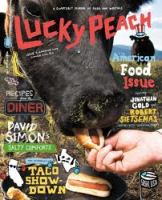
[READ: July 2012] Lucky Peach Issue 4

I can’t get over how much I enjoy Lucky Peach.  I just loaned a past issue to a friend and he loved it too.  He’s looking forward to trying some recipes and he’s been fascinated by the articles, too.  I don’t read any other cooking type magazine, and yet I can’t get enough of this one!

DAVID CHANG & CHRIS YING are still on board with their note “From the Editors” and PETER MEEHAN, JONATHAN GOLD & ROBERT SIETSEMA talk about “American Cuisine, Whatever That Is”

This issue features a choose your own adventure from COURTNEY McBROOM AND ALISON ROMAN–“Voyage of the Taco Belles” in which they travel to Texas and California to compare “Mexican” food.  It’s a fun adventure with many pitfalls and many delicious locations.  No one could conceivably eat that much.

DREW ALTIZER-“Swan Oyster Depot” photos from the independent seller.

DAVID TREUER-“No Reservations” gives a fascinating history of the Objiwe peoples.  How they don’t have a cuisine per se, but they do have specific foods they eat.  Also, that their way of life was not decimated when the white man came because they did not eat bison, they ate from the water and from smaller animals.  But when the white man gave them fatty fried foods, their diet was changed for the worst.  A fascinating look and an unexpected content from a “food” magazine.

PETER MEEHAN, BRIAN KOPPELMAN, ANTHONY BOURDAIN and ELVIS MITCHELL all talk about the movie Diner.  I have never seen it, but it sounds pretty important in a certain range of cinema.  I liked hearing their various opinions of the movie.  Elvis Mitchell (from NPR’s The Treatment) is particularly funny.
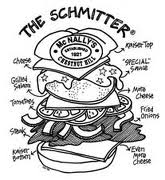
TOM LAX-“The Schmitter” talks about The Schmitter a crazy sounding sandwich from Philadelphia that should give the cheese steak a run for its money.  (Cheese, Steak, Grilled Salami, “Special” sauce, Tomatoes, More Cheese and Friend Onions).  Yum!

HAROLD McGEE-“Harold McGee in Outré Space”–He’s back with a lengthy article on eggs and his attempts at peeling hard-boiled eggs without ripping the egg inside–his experiments are pretty out there!

BEN WOLFE–“American Microbial Terroir” How microbes and bacterium form on salami in different regions and how those bacteria inform the flavor of the meat.  Gross but very interesting.

STEVE KEENE-“Portfolio”  He did the cover for Pavement’s Wowee Zowee album and here has a new portfolio of his new style of painting–on plywood.

DANIEL PATTERSON-“We Waited as Long as We Could” He talks about the Rascal House, a restaurant that he went to as young kid with his grandfather.  It’s about the demise of this kind of establishment in general too.
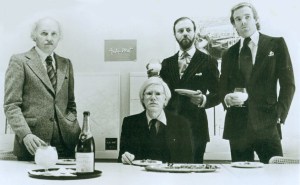
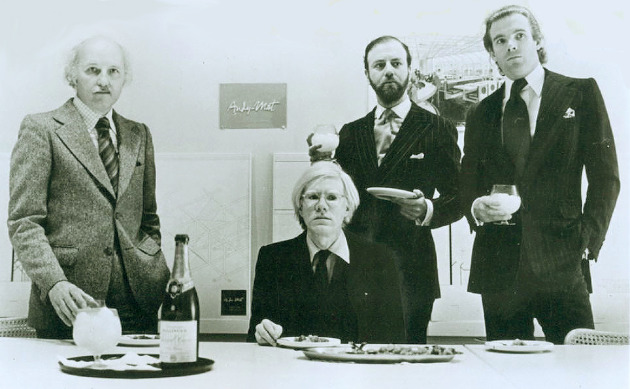
BOB NICKAS-“Someone Has to Bring Home the Bacon” Nickas looks at Andy Warhol and his various accomplishments regarding foot (including the aborted Andymat)

JOHN GALL-“Defrosted Foods” a photo of defrosted foods

NOZLEE SAMASZADEH-“A Modest Proposal”  This clever article talks about eating foods and plants that we consider invasive.  The best idea is to sell back the Asian carp to the Chinese–they love it and we don’t eat it, meanwhile it is invading our waterways.  Seems we could get back all the money they owe us!  Plus, why not eat Nutria?

MATTHEW RUDOFKER-“Knives Out” Look at these amazing knives (that I will never buy).

JONATHAN PRINCE-“Photo-Op Food” A very funny article about politicians trying (and often failing) to blend into regions by eating “local” food.  And the funny photo-ops they often provide.

MARC MARON-“Pan-American” The tale of a used cast iron frying pan and the story behind it.

DOUGLAS WOLK-“Love, Love, and ALE-8 One” This is the story of an independent locally created soda.  It’s based in Winchester, KY and serves more or less the Winchester area.  The soda is in huge demand there.  It’s the story of a brief but failed expansion and a determined independent spirit.  Check out their site and stuff.

DAVID SIMON-“Pickles and Cream” appreciating the only contribution Simon’s grandfather ever made to the culinary arts.

LAUREN WEINSTEIN-“Sushi, USA” a comic about sushi.

MARK IBOLD is still on board (hurray!) bringing culinary fun from Southeastern PA.  This time: John Cope’s Fancy Golden Sweet Corn.

There’s of course lots of delicious (and sometime crazy) recipes written in their own wonderful somewhat disrespectful style.

Oh, and just to put your mind at ease, the picture on the cover is of a cow eating a veggie dog.  Even knowing that it’s still disturbing.

Read Full Post »

I couldn’t find the right cover–this is the right year, wrong issue.

SOUNDTRACK: FOSTER THE PEOPLE-“Houdini” (2011).

My friend Anna was way ahead of the curve on these guys.  She liked them before “Pimped Up Kicks” went huge.  So I listened to the album and liked it but never would have guessed it would have been such a hit!

This song reminds me of a bunch of other bands, and I actually have no idea what the song is about (his vocals are really hard to understand).  But it’s catchy and has a great melody.

And it has a great video.   Whereas I used to look for cool new videos, I really don’t watch videos anymore, unless someone tells me about one.  I felt like bands didn’t make great concept videos anymore.  Well, this one is very cool, indeed.  I just can’t decide if the hidden people are actually how they did it or if it was a lot more high-tech than that.

[READ: July 5, 2012] “The Bonds He Did Not Break”

Everyone knows Houdini, but I didn’t know much about him.  This JSTOR article gives a really good profile of the man.

Harry Houdini was born Erik Weisz in Budapest, Hungary.  After immigrating to the U.S. with his family, his name was changed to Erich Weiss (and for some reason, his birthday was changed from March 24 to April 6) and they settled in Wisconsin.  Wisconsin seems to have been home to many circuses, or at least the circuses always made a point of stopping there, so young Erich was always around fantastic people.  He even joined a circus as a contortionists (and called himself The Prince of the Air) when he was young.

At the age of 12 he left home look for work in the circus.  After a few months, when he heard that his family had moved to New York, he rejoined them there.  He started doing magic as “Eric the Great” and then, with Jacob Hyman, began performing as the Brothers Houdini–named after French magician Jean Eugene Robert-Houdini.  By 1891 the Brothers Houdini were a success.  They even performed the 1893 Worlds’ Fair.  The Brothers parted ways when Erich met Bess, his soon-to-be wife (he was 20 she was 18).  Erich was now calling himself Harry. (more…)

Read Full Post »

SOUNDTRACK: INVISIBLE GUY BLOG (2012).

Jonas from Invisible Guy contacted me about a project he’s working on.  I’m not quite the right fit for it, but I had to check out his site to see what he was all about.  As his About page explains; “This blog is generally a platform for unknown bands to get promoted and interviewed.”  That’s pretty awesome in itself.  But as I browsed the site, I saw that in his post Invisible Guy recommends: 80s Post-Punk – 1982 (Part II) he includes not only The Birthday Party but also The Virgin Prunes.  Much respect there (especially for someone who wasn’t alive when those records came out!).

But the bulk of his site is full of really obscure bands (lots of bands that I’ve never heard of).  He interviews band members (sometimes in Swedish!) and has quite an impressive list of publications that he’s worked for.

So head on over to Invsible Guy for a wonderful collection of punk and hardcore music as well as some iconic (and really obscure) new wave and post-punk tunes.  He’s also got some great stuff on death metal too.  Not bad for a site that’s only a few months old.  Invisible Guy has a lot of samples and videos as well as a bunch of streaming music from unreleased or just-released albums (like this demo from the Swedish band Regimen called Välkommen hem).

And here’s a video for the Swedish stoner metal band Skraeckoedlan.  The song is “Apple Trees” and no you can’t understsnad the words because they are in Swedish.  I love that.

It’s a great site.

[READ: June 15, 2012] “A Psychotronic Childhood”

The more I read Colson Whitehead, the more I like him, not just as a writer, but as a “person” (the person he presents to us anyhow.  Although I met him briefly at a convention and he was super friendly and very nice).  This essay shows that he and I occupied some of the same headspace when we were kids (we were born in the same year)—watching sci-fi and horror movies on Channel 7 & 11 after school and on the weekends.  Of course, I didn’t really get into horror movies until much later them him (his first time was when his parents took him to  a horror film in the theater at the age of 5).  FIVE!

These early horror movies really shaped his outlook.  He lists about 70 movies in this article, of which I have seen at least half (although more from MST3K than actually sitting through them unaccompanied) and his summaries about them (four or five parenthetical words) are apt and often hilarious:

  • Food of the Gods (giant chickens rain pecking doom on a small island)
  • Alien (an outbreak of tummy trouble among space miners)
  • Demon Seed (rom-com about a horny computer that wants to impregnate Julie Christie)
  • The Devil’s Run (A negligible and mind-numbing film, notable only for the utter ineptitude of its attempt to cash in on the brief occult-movie fad that followed Rosemary’s Baby and The Exorcist.

The Devil’s Run is the first movie he saw, back in 1975, in the theater.  He says that there was something good in it, that it really captured the element of terror when your loved one turns on you.  And he tapped into this for his novel Zone One.

Then he reflects back on 1981, when his family bought a VCR and he and his brother would head to Crazy Eddie (remember Crazy Eddie?) to rent 5 movies for the weekend (I didn’t even know they rented movies!).  The movies were inevitably 4 horror movies and one mainstream film.  And the family would gather by the TV and watch together.  How wholesome!  Except when you read what they were watching (I can’t IMAGINE my family watching these together when I was a kid–even now, Sarah hates horror films).   This is getting into the era of Friday the 13ths and Halloweens as well as classics like Terror Train, Prom Night, Slumber Party Massacre, Silent Night, Evil Night, Mother’s Day and My Bloody Valentine (“not even the holidays, hallmark or otherwise were safe”). (more…)

Read Full Post »

SOUNDTRACK: SURFER BLOOD-Tarot Classics (2012).

I really enjoyed Surfer Blood’s debut album.  This EP is a little stopgap until the next one. Although the sound is unmistakably Surfer Blood–poppy hooks and a very recognizable singing voice, the band sounds a little bit different here.  They haven’t lost any of their catchiness–there may be even more on the opener, “I’m Not Ready” (who doesn’t love when the guitar and vocals match each other?)  “Miranda” has that fun thumping chorus that is always fun to sing along to.

“Voyager Reprise” moves away from the surf-styled songs of their debut into an alt-rock of the 90s sound–when guitars were noisy (until they were quiet for a bit) and guitar solos happened between verses instead of as the third verse.  And “Drinking Problem” has a kind of early Depeche Mode (in vocals, not synths) feel–quite a departure from their debut.

In the way of EPs, the final two songs are remixes.  I’ve never been a fan or remixes and these don’t do much for me, but i do wonder if they will have any impact on their future sound.

[READ: June 14, 2012] “Olds Rocket 88, 1950”

All this time I thought there were only five of these short essays in this sci-fi issue of the New Yorker.  And yet tucked away near the back was the sixth one by William Gibson, a pioneer in science fiction.

Gibson’s recollection is of being a child and having everything seem like science fiction–something that is notably absent these days.  Like the chrome trim on his father’s Oldsmobile Rocket 88, the prevalence of spacemen and space-themed ideas everywhere.  Even the word Tomorrow was capitalized.

Then he recounts a personal incident.  He got in trouble with his parents for arguing with an Air Force man.  The man said space travel would never happen. But Gibson knew it would.  How could it not?  And science fiction shaped this worldview.  Not that he believed the stories would come true, but that his entire mindset was that in the future “things might be different…and different in literally any way you could imagine, however radical.”

What a wonderfully freeing notion.  To me, this sort of future-looking lifestyle accounted for the unprecedented achievements of post 1950 America.  Now that we no longer think of tomorrow with a capital T, we don’t seem as enchanted by the future.  Perhaps it was a naive outlook, but you need a certain degree of naiveté if you hope to do anything radically new.

Gibson ties in the sci-fi books he bought for a dollar to other fantasists: J.G. Ballard, Ursula K. Le Guin, Michael Moorcock, and how these thinkers weren’t all that far off from the likes of Kerouac and William S. Burroughs.  And he believes that without science fiction, he might not have been interested in what these other radical writers had to say.

It’s a short piece, but it really made me wish for more chrome and space-age technology in our lives–when people weren’t afraid to dram big.

Read Full Post »

« Newer Posts - Older Posts »