Feeds:
Posts
Comments

Archive for the ‘Essays’ Category

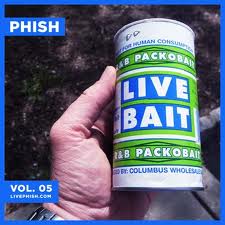
SOUNDTRACK: PHISH-Live Bait 5 (2011).

When this was released it was an astonishing free giveaway.  A mix of previously released and brand new recordings that spanned from 1987 to 2009!  Over 6 hours of music!  For free.

It’s fun to hear the really early stuff–like the songs that are from “Ian McLean’s Party at Connie Condon’s Farm” where the band is laughing with the audience (which seems like it’s about 100 people).  And when they invite everyone to another free part coming up.   This was back in 1987 before they had released their official debut Junta (who was taping all this stuff for them back then?  And with such good quality?).  But this one is especially fun because you can hear dogs barking during the quieter parts.

There’s also a big chunk of live Gamehendge material from Townshend Family Park in Vermont (circa 1989).  The middle block features the addition of The Giant Country Horns who play on “Flat Fee” and great versions of “David Bowie” and “Gumbo.”  I wouldn’t want the horns all the time, but they do add something to these shows.

Then there’s a jump to 1996 and a whole series of songs from shows at Loring Air Force base (through 1998).  There’s a 27 minute “Down with Disease” and a fun “Bathtub Gin.”  There’s then a bunch of songs from one show at the Big Cypress Seminole Reservation.

After a few year’s hiatus, they resume in 2003 back at Loring.  There’s a great version of “Waves,” although I found the “Mike’s Song” from this era kind of anemic.  And then, interestingly, there’s a “Split Open and Melt Jam” which is indeed, just the jam from the song and not the song itself.  “Suzy Greenberg” features Sharon Jones–it’s funny to me to hear r&b singers singing about a Jewish woman going to a neurologist. Fish, by the way has some of the funniest lines during the “forgotten my name bit.”  I’m also intrigued by the 2009 version of “McGrupp and the Watchful Hosemasters,” a pretty but kind of goofy song that dates back to 1985!

All in all, this was a very cool freebie to give to fans.

[READ: July 5, 2011] Five Dials 24

The newest Five Dials came as something of a surprise since Number 23 came out not too long ago and there was talk of the next issue being quite large.  But I like the small editions of Five Dials.  And this one is a cool, bite-sized nugget–a little fiction, an interview and an essay.  I have to assume this one was released when it was because it has a remembrance of David Rakoff, making this release rather timely.

…plus bear illustrations like you won’t believe by BECKY BARNICOAT (funny and dark drawings), LIZZY STEWART (beautiful pencil drawings) and NEAL JONES (blue bears). (more…)

Read Full Post »

SOUNDTRACK: THE FLAMING LIPS-“Smoke on the Water” (2012).

There’s a new Deep Purple tribute album coming out shortly (is this the year of tributes?  what’s going on?).  Anyway, the lineup isn’t all that inspired, but I was curious to see what the Flaming Lips would do with that song

As with their recent reinterpretation of Dark Side of the Moon, this cover is respectful and utterly disrespectful.  Musically the song is pretty accurate. Well, the notes are the same.  But the style is very different, kind of wahwahed delicate chords–no heavy bass or anything.  But it’s the vocals that are the contentious point–he recites the entire song (which kind of works because it is a story) in a stilted, faux British accent.

The second verse has a very computerized voice singing an autotuned melody along with the recitation–sort of a harmony but not.  This voice continues through to the chorus (which the main vocals also simply recite).

I appreciate the Flaming Lips’ approaches to popular songs, but this version renders a big loud song kind of anemic.  Which is so weird because the last few Lips albums were so loud and bass-heavy.  I listened twice, I probably don’t need to listen again.

So, this is yet another tribute I won’t be buying.

[READ: August 22, 2012] Don’t Get Too Comfortable

I’m already making good on my promise to read more David Rakoff.  Indeed, as soon as I heard that he died, I put this book on hold at the library.  The strange thing about this book is that I feel like I read parts of it already.  I don’t feel like I read the whole book because some things were unfamiliar to me, and yet there was a strange feeling of déjà vu throughout the book.  But I looked in the front of the book to see where these essays had appeared and I don’t read any of the magazines where they initially showed up.  And while I like This American Life, I don’t really listen to it very often.  So either I read this book seven years ago or these pieces are inspirations for other pieces I have read (which is possible–two or three articles in here reminded me of things that A.J .Jacobs has since done).

So this collection of essays takes place during the early 2000s, George W. Bush’s first term (not the happiest time to be a gay Canadian living in New York).  But in addition to the first essay which is all about his quest for citizenship, it seems that Rakoff was now gainfully employed as a freelance writer.  Most of these essays seem to have been requested for magazines–like they sought him out to write them.  So his fame was clearly growing.  And, again, like A.J. Jacobs, he seems to have been picked as a guinea pig for certain pieces.   I don’t really know if this is a “genre” per se, I mean lots of un-knowledgeable people have gone into new experiences to write about them (insert inevitable David Foster Wallace reference here–but of course he wasn’t the first either).  But Rakoff’s subjects in the last couple essays seem to be closer to what Wikipedia calls Jacob’s “stunt” journalism. (more…)

Read Full Post »

SOUNDTRACK: RED HOT CHILI PEPPERS-“Magic Johnson” (1989).

Just before the Red Hot Chili Peppers totally took off and became stadium stars, they released Mother’s Milk.  It was a commercialized realization of their three earlier more raw sounding funk rock records.  It was one of my favorite records of the late 80s.

Since Flea is interviewed in this issue of Grantland, and since he’s still a fan of the Lakers, it seemed like a good time to mention this song.

It opens with some martial drums (from then new drummer Chad Smith) and band chanting about M A G I C.  The lyrics are sung very quickly (I’m not even sure what they say half the time).  About 80 seconds in some wild guitar work burst forth, but it’s largely a chanted song of bass and drums.  There’ s a brief jam at the end where Flea shows off some great basswork and John Frusciante gets to do his thing again.

I don’t think I’ve ever heard it played anywhere (maybe at Lakers games?), so here’s a chance to hear it:

[READ: May 8, 2012] Grantland 3

One thing is for sure, Grantland loves it some basketball.  Basketball is the most widely covered sport in the published Grantlands so far. (The first issue even looked like one).  Since basketball is such a pop culture-referencing sport it actually works pretty well as a subject–with lots of different angles–especially given the state of the NBA lately.  Some other things on the Grantland staff’s minds include–the dangers of football and inadequacy of helmets to protect kids and Tim frickin Tebow (still!).  I don’t think an issue has past without talking about him yet.  I realize that’s a function of the time of these publications but… ew!

Nevertheless, the writing remains exciting and interesting, even for a non-sports guy like me.

(more…)

Read Full Post »

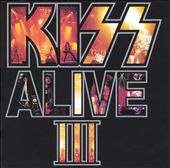
SOUNDTRACK: KISS-Alive III (1993).

Kiss put out Alive! after just three albums.  Alive II also came out after three albums.  Alive III has 14 albums between it and Alive II (if you count the solo albums as 4).  I guess poor sales and poorly attended concerts don’t really suggest live albums.  But Revenge revitalized them somewhat so it was time for a new one–their first with no makeup!  And it’s a pretty good one.

But it’s also like Kiss has forgotten all about being Kiss.  There’s no “You wanted the best, you got the best, the hottest band in the world…Kiss” (which would have been untrue at the time anyhow, but since when has that stopped Kiss?)  The tracklisting is pretty darn good though.  For Alive II, the band didn’t want to repeat any tracks from Alive! (that’s such an endearing thing to say about the band with 400 repackaged hits records).  Since there are tons of records since Alive II, you’d assume Alive III was all 80s songs.  But that’s not the case.  There are a few inevitable duplicates (how could there not be–all their biggest hits were from the 70s), but I’m surprised they didn’t throw more current stuff on the disc.

It opens with “Creatures of the Night” a great heavy version.  Then they go way back to “Deuce” which is a cool surprise.  Since this was the tour for Revenge, you’d think there might be more songs from it, but there’s only three: “I Just Wanna” “Unholy” and “Domino.”  “I Just Wanna” was perfectly crafted for Paul to banter with the audience and get them to sing “I just wanna fuck” (which was edited from the album I understand).  And in this live setting “Unholy” sounds great.

“Heaven’s on Fire” works well live, even if I don’t really like the song–but the band can really ham it up here.  The big surprise has got to be “Watching You,” a totally unexpected song form the past.  And even if it was on Alive!, this version is quite different (no Peter Criss cowbell).  I don’t think much of “Domino” anyhow (well, the music is great but the lyrics, ick), but in this version Gene just seems kind of bored.

Another surprise comes in “I Was Made for Lovin’ You”  true it’s one of Kiss; biggest hits but they often try to distance themselves from the “disco” era.  Nevertheless this version sounds revitalized.  And since there were no live albums in the 80s, there’s no official live recordings of it.  “I Still Love You” is another great chance for Paul to shine.  “I Love It Loud” sounds great (although the harmonies get a little sketchy at times.  But it’s weird to hear “Rock N Roll All Nite” in the middle of the set instead of at the end.  It’s also odd to start off this song with “It ain’t bullshit when you say rock and roll all nite and party every day.”   The intro to “Detroit Rock City” is also very strange “It doesn’t matter where you’re born ,it doesn’t matter where you come from, it matters where your head is at. This one;s called Detroit Rock City.”  Huh.

There’s not much you can do with a dreadful song like “Lick It Up,” and ad-libbing “I wanna lick you” doesn’t make it any better.  The disc ends with “God Gave Rock n Roll to You II,” which I don’t like, but which sounds good live, a lot of energy.  And it wraps up with a very odd thing–a guitar solo version of the Star Spangled Banner.  It doesn’t compare to Alive! or Alive II, but Alive III is a good live album from a good live band.

[READ: August 15, 2012] “From the Pencil Zone”

This is a review of the microscripts of Robert Walser, an author whom I have never heard of.  Walser was born in Switzerland in 1878 and he published several shorts and several novels (which were admired by Kafka!).

As the market for shorts dried up, so did his career, and he moved into smaller and smaller places.  Accordingly, his handwriting grew smaller and smaller, too.  Eventually he cheeked himself into a series of mental institutions.

Walser’s early novels dealt with everyday life, like the “young boyish man” who wants to become a bookshop proprietor in The Tanners.  The character (whose name we don’t learn for a long time) is effusive, praising the job to the heavens as a divine calling!  And lo he is given the job.  A week later he declares, “the entire book trade is nothing less than ghastly.”  Wasler himself had a multifaceted career: butler, inventor’s assistant, clerk, journalist.  But he was eventually diagnosed with schizophrenia and is responsible for this quotable quote: “I’m not here to write.  I’m here to be mad.”

After Walser died, people discovered a treasure trove of 526 pages of “microscripts.”  The writing was so small that these 526 pages, when written in book form came to six VOLUMES of books.  They were released as Aus dem Bleistifsebiet (From the Pencil Zone).  Galchen’s review here is for the short one volume New Directions collection called Robert Walser: Microscripts.  Interestingly, most of the stories have no title and some seem unfinished.  New Directions (and Harper’s) include images of this man’s microscopic writings (all done in pencil of course).  He wrote in Kurrent, a widely used script at the time which was a version of medieval shorthand and which dramatically reduced the number of strokes per character.  His letters were often one or two millimeters tall.  He was able to fit six stories on a postcard received from a newspaper editor. (more…)

Read Full Post »

SOUNDTRACK: PHISH-Live Bait Vol 3 (2010).

This selection of free Phish songs is notable because of a couple of items.

  1. All of the songs were recorded at the Worcester Centrum in Worcester, MA.  Although the first three songs were recorded in 1993, the fourth song was recorded in 1997 and the final track was recorded in 1991.
  2. The first three songs were recorded on New Year’s Eve–technically on New Year’s Day.  The first track actually counts down the seconds until midnight, when the band bursts into Auld Lang Syne
  3. Probably the biggest deal of all: the band plays a version of “Runaway Jim” that lasts 58 minutes and 48 seconds.  That’s right, nearly an hour on one song.  I think if I went to see them live and they did that I’d be pissed, but it sounds great on this recording.  “Runaway Jim” is not one of my favorite songs, but this extended jam is really good–they break into several different sections and it doesn’t feel like a long version of this song so much as a bunch of different jams thrown together.  At one point it almost seems like the band thought they began with “Weekapaug Groove,” but they push back against that.  I’m very curious to know what happened after that song was over, but the end of the disc takes on an early recording of “Llama, ” a song I like quite a lot.

This is yet another great addition to the free Live Phish pantheon of music–I mean, an hour version of one song, how cool!

[READ: August 1, 2012] “Volumes of Knowledge”

Encyclopedias date back thousands of years–Pliny the elder tried to write everything he knew in Historia Naturalis and a Chinese emperor created a similar book Emperor’s Mirror in 220 A.D.  But the art and craft of creating books that contain all the world’s knowledge flourished in the 1700s.  Increased wealth and education in the French bourgeois, a flood of information and a decline of interest in religion all led to the desire to learn more.  The printing press helped to disseminate the information.

It was Denis Diderot, a French enlightenment polymath who best explained the concept of the encyclopedia:

the purpose of an encyclopedia is to collect knowledge disseminated around the globe; to set forth its general system to the men with whom we live, and transmit it to those who will come after us, so that the work of preceding centuries will not become useless to the centuries to come; and so that our offspring, becoming better instructed, will at the same time become more virtuous and happy, and that we should not die without having rendered a service to the human race in the future years to come.

But Diderot recognized the limits of a one-author encyclopedia: “I do not believe it is given to a single man to known all that can be known.”   From 1751 to 1772 he and his assistants edited more than 70,000 articles from 140 authors to create his first Encyclopedie.  Of course having many authors had drawbacks–differences in style, length and quality.  But Diderot shied away from nothing and in many locations the book was banned.  Some of the ideas in the book shook the very foundation of accepted ideas.  And many of the authors hoped to change the world.  Diderot himself even hoped to usurp religion with his knowledge: “It is not enough for us to know more than Christians, we must show them we are better.” (more…)

Read Full Post »

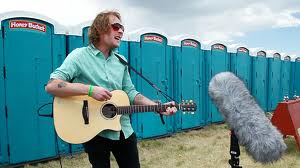
SOUNDTRACK: DEER TICK-“Main Street” (Field Recordings, July 18, 2012).

NPR created a bunch of Field Recordings at Sasquatch Music Festival.  I picked this one [Deer Tick Among the Honey Buckets]  primarily because it featured Deer Tick front man John McCauley singing front of a bunch of porta potties.

I actually don’t know much about Deer Tick, so I don’t know if they normally sound folky or what.  But this song, in its acoustic setting is very good.  John McCauley’s voice works great here.  There’s even a nice shout out to MCA.

There’s not a ton to it, and this alone won’t make me a fan, but I’ll certainly check out more by them.  It’s also a nice video to watch, especially for the amusing encore.

[READ: August 1, 2012] “The Use of Myth in History”

Most of the articles in Colonial Williamsburg have to do with, well, Colonial Williamsburg.  This one, however, talks about myths that we as Americans have created and continue to believe, from colonial times to more days.

The article opens by explaining that Patrick Henry’s famous “give me liberty or give me death” speech was written down forty-two years after the fact by William Wirt.  And he wrote it down from memory, so who knows what words Henry actually spoke.  But no doubt Wird got the gist right.  So the Henry speech is a myth–not necessarily wrong but not exactly true either.

Klein explains that some historians would like to remove the myths from history and focus only on the facts, but stories like Henry’s are so popular, so ingrained in our memories, that removing them would do more damage than the beloved myths do.  Indeed, some historians believe that myths are very important.  Micheal Gerson wrote, “We know that myths are not the same as lies” and John Thorn said “Historians have an obligation to embrace myth as the people’s history”

Klein writes that America’s mythology was largely created by writers from the early 1800s.  Pressure was building towards the War of 1812 and they needed support.  The mythology was designed to get people to forget about the ugly Revolutionary War.  And so stories were created just in time for the birth of public education in America to disseminate the stories.  And so mythological stories like George Washington and the cherry tree or the midnight ride of Paul Revere or Plymouth Rock or even Pocahontas became enshrined in textbooks.  Now, most myths are based on facts, but the truths were embellished and made more romantic and given a moral.  So, yes Patrick Henry did give a speech, the Pilgrims settled in Plymouth and Paul Revere did ride into the countryside to warn of the British invasion. but probably not exactly as we think they did.  So nineteenth century writers made George Washington the symbol of our country–a unifying power to embody a nation. (more…)

Read Full Post »

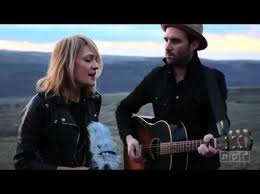
SOUNDTRACK: METRIC-“Synthetica” (Field Recordings, June 20, 2012).

After playing the Sasquatch festival, Emily Haines and James Shaw of Metric went behind the stadium and played a beautiful acoustic rendition of the title song from their latest album.  This Field Recording [Metric In A Non-Synthetic Situation] is just so wide open as to be inconceivable–especially since they’d just played a festival.

Metric make beautiful music which is rocking and usually full of all manner of electronic noises.  To hear Haines’ voice stripped from any effects shows just what a great and interesting voice she has.   It’s always nice to hear the song underneath the song.  This is a great version of the song.  Watch it here.

[READ: July 25, 2012] “Putting the Red in Redcoats”

Have you ever thought about how the redcoats’ coats became red?  No, me either.  Well, amazingly, it came from the Cochineal, the same bug that is still used today to color foods.

Cochineal bugs are pretty bizarre.  The female lives her entire life on a prickly pear cactus.  When she hatches, she clamps onto the prickly pear and starts feeding.  She grows to the size of a head of a pin. but never leaves the spot.  The male flies around, but only lives for a week.  The female lays eggs and the babies continue the process.

Although she is immobile, she is also armed with carminic acid, which predators don’t like.  Carminic acid is a vibrant red colorant.  Aztecs first mined this amazing color, which naturally impressed Spanish conquistadores who wanted to take it for themselves.  And they made a lot of money selling it to Europe.  But the Spanish never told anyone that the color came from bugs–they kept the secret for themselves.

Of course pirates and privateers would often hijack ships (one score captured 27 tons of cochineal!). (more…)

Read Full Post »

SOUNDTRACK: NOW, NOW-“But I Do” (Field Recordings, August 8, 2012).

This is an NPR Field Recording, [Now Now at Graffiti Park]which means they brought equipment to Graffiti Park in Texas and recorded Now, Now playing this song live.  You can watch the video here.

The video opens with the band lugging their gear into the weird little foundation of space.  (This explains why there are no drums, clearly).  And so the band with two guitars and a xylophone (and a shaker) play their song and sound great doing it.  This is something of a stripped down version of the bands usually more shoegazery sound, but even in this format the band sounds great–the song is catchy, the melody is pretty and their harmonies are great.

I haven’t heard the original of this, but this is now the third Now, Now song that I’ve really enjoyed.

[READ: August 1, 2012] “Mecklenburg’s Declaration of Independence”

The previous issue of Colonial Williamsburg surprised me with several articles that I found really interesting.  Although this issue was filled with a little more about current local happenings (bulldozers and updates) they still managed to pack in a number of interesting articles.

According to this article, in 1775 Captain James Jack delivered a document to the Second Continental Congress.  On May 19, 1775, select officers from North Carolina, seeing the kind of fighting that was happening against the British in Massachusetts made up several resolves.  The fist stated:

We hearby absolve ourselves from all allegiance to the British Crown, and abjure all political connection, contract, or association, with that nation, who have wantonly trampled on our rights and liberties, and inhumanely shed the blood of American patriots at Lexington.

This “declaration of independence:” preceded Thomas Jefferson’s Declaration of Independence by fourteen months.  The document never reached its destination in the intended form and it was almost forgotten.

But then in 1819, the editor of the Raleigh Register and North Carolina Gazette wrote about this “Mecklenburg Declaration.”  The news surprised John Adams who had never heard of the document.  Adams praised the document (Adams didn’t really like Jefferson).  But Jefferson called it questionable: “I believe it spurious.”  This led to an intrastate rivalry with Virginia claiming the Declaration of Independence as the true one and North Carolina claiming the Declaration of Independence a plagiarism!  Jefferson even went as far as to question the patriotism of North Carolinians.

The controversy is complicated by a document from May 31 a facsimile of which seems to show signatures cut from court records and imitations of the designer’s handwriting.

It’s all somewhat moot as the Continental Congress applauded the intention of the letter but felt that adopting the Mecklenburg resolves was premature.  And therefore it was not a usurper of the actual Declaration of Independence.  But in North Carolina, the document is held up as official.  It became a page of official North Carolina history in 1831 and in 1861, the state voted  to add the date to the state flag.

American history caught up in 1954 when President Eisenhower acknowledged the men who signed the “Mecklenburg Declaration.”  Who knew?

Read Full Post »

SOUNDTRACK: KISS-Asylum (1985).

This series of mid-80s Kiss CDs is regarded pretty poorly.  In fact, I believe that Gene and Paul have distanced themselves from Asylum.  And yet, despite its pop metal vine and really dayglo appearance, there’s some good stuff on it.  The solos are really notable on this disc.  Bruce Kulick has taken over lead guitar duties and he is wailing maniac.  He has speed and flash and he, frankly, really stand out (not always in a good way) in these songs.  His solos seem to signal a shift to a more pop heavy metal sound.

The disc opens with a pounding drum salvo and aggressive guitars!  “King of the Mountain” is a classic Kiss song—loud, with a great sing a long chorus from Paul.  “Anyway You Slice It” also rocks pretty hard, one of Gene’s fast, sex songs.  But man I hate songs that break down to just vocals and drums. “Who Wants to Be Lonely” seems like a ballad—lyrically and all—but it’s actually a pretty heavy song, again, perfectly suited for Paul’s voice.  “Trial By Fire” is the first song that really falters.  A generic anthem with the really lame chugga chugga guitars that Kiss would really push in this era.  “I’m Alive” opens with more crazy drumming and wild soloing and for all the world sounds like mid 80s Van Halen.  Until Paul belts out a fast vocal line.  This is a fast, aggressive song with a great chorus.

“Love’s a Dirty Weapon” almost turns into a great song—the chorus is just a little lacking.  And there’s that other part with just drums and a guitar solo—again, very Van Halen, which is good for Van Halen, but sounds really weird for Kiss.  I should hate “Tears Are Falling,” it’s got the chug chug chug guitars, and very little else, but I love a good Paul ballad—when he starts wailing at the end, it’s pretty great.  I am aware that the lyrics suck, yes.  But the solo is more like old school Kiss.  “Secretly Cruel” is cheesy, but delightfully so, and actually sounds like Kiss of old as well.  “Radar for Love” is an awkward song that never quite flows the way it wants.  It’s a good song that shows them branching out, though.  “UH! All Night” is a, well, look at the title.  It’s the kind of throwaway song that is so over-the-top ridiculous that it comes back around to be kind of fun.  And I imagine that some fans are still singing that chorus to themselves.  “When you work all day you gotta Uh all night.”  No one ever said Kiss was classy.  Note:  I listened to this song a week ago and that frikkin chorus is STILL in my head.

[READ: August 11, 2012] McSweeney’s #40

This issue came in a double pack–with a paperback issue of the magazine and a hardback edition of In My Home There Is No More Sorrow by Rick Bass.  I have not yet read Bass’ book [UPDATE: read it at the end of July 2013], because it sounds really depressing [UPDATE: It was].  But I do hope to get to it before the end of the year.  This issue has a few short stories and  a non-fiction at the beginning.  The entire back half of the journal is devoted to the January 25 uprising in Egypt.  It is full of testament and testimony about the event from all kinds of people–bloggers, poets, musicians.  It’s pretty profound–and almost seems like having a silly story in the journal is inappropriate.

As has been the trend lately, the journal also opens up with a series of letters. (more…)

Read Full Post »

David Rakoff (1964-2012)

David Rakoff died Thursday from a resurgence of cancer.  For those unfamiliar with his work, think of darker, more cynical David Sedaris (did you think that was possible?).  The biggest difference between Rakoff and Sedaris is that Rakoff is Canadian.  And he is more of a world traveler.  I say this not really knowing anything about how much they actually traveled.  I mean, sure, Sedaris travels the world for book tours and such, but Rakoff actually lived in foreign lands.  Wait, you say, Sedaris lives in France.  Yes, but Rakoff lived in Tokyo (which automatically makes him more exotic).  And he actually knew Japanese (kind of) whereas Sedaris seems to have not learned any French in the years he has lived there–if his essays are to be believed.

All of this is by way of introduction to using Rakoff’s description of himself as a “New York writer” who also happened to be a “Canadian writer”, a “Jewish writer”, a “gay writer'” and an “East Asian Studies major who has forgotten most of his Japanese” writer.

I’ve only read one of Rakoff’s three books, Fraud.  And about that I said: (more…)

Read Full Post »

« Newer Posts - Older Posts »