Feeds:
Posts
Comments

Archive for the ‘Essays’ Category

dec2006SOUNDTRACK: HILMAR ÖRN HILMARSSON & SIGUR RÒS-Angels in the Universe (2000).

angelsThis disc often gets placed in the Sigur Rós discography even though it really isn’t one of their records. It is a soundtrack to the film Angels in the Universe, and it is primarily music composed and conducted by Hilmarsson.  There are 17 tracks on the disc and he is responsible for 15 of them.  The remaining 2 are indeed by Sigur Rós, but if you have the “Ny batteri” single, you’ve already got the two songs.

The Hilmarsson tracks are large airy string pieces (I don’t know the film or anything about it, but it makes it seem rather sad). There are some tracks in the middle that deviate somewhat–some drums and occasional bass, but for the most part the music sounds like a string score to a film.  Pretty, but not exceptional.  At no time does Sigur Rós play with the other performers.

It’s the last two track s that are by Sigur Rós.  “Bíum bíum bambaló” is a slow piece that begins with mostly percussion.  Apparently it is an Icelandic lullaby and their version is quite different from a lullaby.  By the end of the song, when the whole band kicks in it rocks really hard and proves to be a great song.  The final track, “Dánarfregnir og jarðarfarir” was a theme used for death announcements on Icelandic radio (whatever that means).  I love the way it builds from a simple melody into a full rock band version and then back again.  It’s very dramatic.  These songs are both really enjoyable.  I like them a lot.  But I’d just stick with the single.

[READ: November 9, 2013] “The Secret Mainstream”

This article was in Bissell’s book Magic Hours, which I read a while ago.  I recognized some of the material in the article, but not all of it, which I find disconcerting that I forgot so much.

This article is (as the subtitle states) all about Werner Herzog, a filmmaker whose films I have never seen.  Herzog is notorious both for his films (he has made over 50) and for his behavior (some rumors of which are true, others are not).

Bissell wonders what historians would make of our civilization if they based their understanding on Herzog’s work.

He also goes through many of Herzog’s film, starting with Fata Morgana, Herzog’s first overt confounding of the feature film/documentary boundary.  It is neither narrative not strictly factual.  In truth, what Herzog does is make a hyperrealized truth.  For instance, in a film about a blind woman he created images and had her say they were images she remembered).  David Lynch is a fan of Herzog and you can see elements of Herzog in Lynch’s filams (so maybe the adjective Lynchian could be Herzogian.

What Bissell is saying (and Herzog confirms) is that Herzog is an artist, not a journalist.  He is also quite funny.  The story about the 32 pound rooster and the two foot horse is very very funny.

And while Herzog takes his films seriously he doesn’t really plan them.  He says he doesn’t anticipate what his next project will be and he also doesn’t spend a lot of time working on his films.  Woyzeck (1979) was shot in 18 days and edited in four.  He also took less than a month to make Grizzly Man (probably his best known recent film).

And yet for a film like Aguirre: The Wrath of God (1972), a film about Spaniards searching for El Dorado and slowly going mad, Herzog’s crew and cast nearly went mad themselves.  Klaus Kinski, the lead actor has this to say in his autobiography: “I absolutely despise this murderous Herzog… Huge red ants should piss into his lying eyes, gobble up his balls, penetrate his asshole and eat his guts.”  Herzog himself says that he helped Kinski write that and many other anti-Herzog sections of that autobiography.

Bissell cites The White Diamond (2004) as one of Herzog’s best films (it is a documentary about Dr Graham Dorrington a researcher who wants to film Guyana from an experimental blimp.  Or The Great Ecstasy of the Woodcarver Steiner (1974) which is about competitive ski jumpers and shows jump after jump after jump landing badly. Little Dieter Needs to Fly (1997) is about the escape of a pilot from a prison camp in 1966.  He has Dieter open and close his door three times before entering because “most people don’t realize how important it is to have the privilege that we have to be able to open and close the door.  That is the habit I got into and so be it.”  Which is moving and impressive and totally false.  Dieter doesn’t do that in real life.  But Dieter understood what Herzog was going for and believed in the truth of it even is it’s not strictly true.  Herzog calls it the ecstatic truth.

I don’t recall how I felt about Herzog after reading this the first time, but I am certainly thinking about watching a bunch of his films.

Some recommendations from the article:

  • Fata Morgana (1970)
  • Land of Silence and Darkness (1971)
  • Aguirre:  The Wrath of God (1972)
  • The Great Ecstasy of the Woodcarver Steiner (1974)
  • The Enigma of Kasper Hauser (1974)
  • Strozek (1976)
  • Woyzeck (1979)
  • Fitzcarraldo (1982)
  • Lessons of Darkness (1992)
  • Little Dieter Needs to Fly (1997)
  • Grizzly Man (2004)
  • The White Diamond (2004)
  • Wild Blue Yonder (2005)
  • Rescue Dawn (2006)—which Herzog was working at the time of the article and which had a fairly large budget (for Herzog) of $10 million.  He even has name stars in it (Christian Bale, for one).  Bissell makes it sound very interesting, and certainly fascinating to watch being filmed.

Read Full Post »

bothfleshSOUNDTRACK: SIGUR RÓS-Von brigði [Recycle Bin] (1998).

recycleAfter releasing their first album, Sigur Rós was approached by Icelandic musicians to remix the album. And thus came Recycle Bin.  I realized too late that I really just don’t like remix albums all that much–they’re mostly just faster drums plopped on top of existing songs.  And such is the case here.  Despite the interesting musical pedigrees of the remixers, there’s nothing anywhere near as interesting as on Von itself.  There are ten tracks, but only 5 songs.

”Syndir Guðs” gets two remixes:

Biogen keeps the bass but adds some more drumlike sounds.

Múm removes the bass, adds some wild drums and trippy textures and reduces the 7 minutes to 5.  It is quite pretty but very far from the original.

“Leit að lífi” gets three remixes

Plasmic takes a spacey 3 minute wordless noodle and turns it into a heavy fast dance song with speedy drums, big bass notes and with spacey sounds.

Thor brings in some fast skittery drums and keeps the spacey sounds (which sound sped up).  And of course bigger bass noises.

Sigur Rós recycle their own song into a dance song by adding funky bass and drums.

“Myrkur” gets two remixes.  the original is a fast-paced groovy track.

Ilo begins it as a spacey non-musical sounding piece.  After two minutes they add a beat of very mechanical-sounding drums.  It’s probably the most interesting remix here.

Dirty-Bix adds big, slow drums.  It keeps the same melody and vocals as the original but totally changes the rhythm and texture of the song, (removing the guitar completely).

The remaining three songs get one remix each.

The original “18 Sekúndur Fyrir Sólarupprás” is 18 seconds of silence.  Curver turns it into “180 Sekúndur Fyrir Sólarupprás” and makes a muffled drum beat and some other samples from the album, I think.  It constantly sounds like it is glitching apart until the end where it practically disintegrates–an interesting remix of silence.

“Hún Jörð” 7 min Hassbræður increases the drums and adds a more buzzsaw guitar sound and makes the vocals stand out a bit more.

“Von” has delicate strings and Jónsi voice.  The remix by Gusgus adds low end bass and drums making it a thumping rather than soaring track.

I prefer the original, but I much prefer their next album to the first one.

[READ: end of October to early November 2013]  original articles that comprise Both Flesh and Not

As I mentioned last week, I decided to compare the articles in Both Flesh and Not with the original publications to see what the differences were.  I had done this before with A Supposedly Fun Thing… and that was interesting and enlightening (about the editing process).

This time around the book has a lot more information than the original articles did.  Although as I come to understand it, the original DFW submitted article is likely what is being printed in the book with all of the editing done by the magazine (presumably with DFW’s approval).  So basically, if you had read the original articles and figured you didn’t need the book, this is what you’re missing.

Quite a lot of the changes are word choice changes (this seems to belie the idea that DFW approved the changes as they are often one word changes).  Most of the changes are dropped footnotes (at least in one article) or whole sections chopped out (in others).

For the most part the changes were that the book version added things that were left out or more likely removed from the article.  If the addition in the book is more than a sentence, I only include the first few words as I assume most readers have the book and can find it for themselves.  The way to read the construct below is that most of the time the first quote is from the original article.  The second quote is how it appears in Both Flesh and Not.  At the end of each bullet, I have put in parentheses the page in BFAN where you’ll find it.  I don’t include the page number of the article.  And when I specifically mention a footnote (FN 1, for example), I am referring to the book as many times the articles drop footnotes and they are not always in sync.

Note: I tried most of the time to put quotes around the text, but man is that labor intensive, so if I forgot, it’s not meant to be anything significant. (more…)

Read Full Post »

bomarsSOUNDTRACK: SIGUR RÓS-“Ný batterí” (2000).

nyThe single opens with “Rafmagnið búið” a kind of brass introductory piece.  There’s lots of horns building slowly, growing louder but not really playing a melody.  By the end of five minutes, it segues into “Ný batterí” which opens with horns as well.  Then the bass comes in, a slow, deep rumble of simple melody.  After 4 and a  half minutes, the drums are a powerful counterpoint to the sweet melody.

“Bíum bíum bambaló” is a slow piece (aren’t they all) that is mostly percussion.  Apparently it is an Icelandic lullaby.  The final track, “Dánarfregnir og jarðarfarir” was a theme used for death announcements on Icelandic radio.  I love the way it builds from a simple melody into a full rock band version and then back again.  It’s very dramatic.

Both tracks were used in the film Angels of the Universe (and appear on the soundtrack).

That certainly makes this single less interesting than the first one (although I’m not sure that the soundtrack was readily available at the time).

[READ: December 1, 2013] Breakfast on Mars

This is a collection of 38 essays (and an introduction by Margaret Cho).  It also includes an introduction geared toward teachers–an appeal that essays do not need to be dull or, worse yet, scary.  The editors encourage teachers to share these essays with students so they get a feel for what it’s like to write compelling personal nonfiction.  The introduction proper gives a brief history of the essay and then talks about the kind of fun and funny (and serious) essays that are included here.

This was a largely fun and largely interesting collection of essays.  When I grabbed it from the library I didn’t realize it was essays (I was intrigued by the title and then looked at the author list and immediately brought it home).  I know it says essays on the cover, but I chose to ignore that apparently.  When Sarah saw the authors (she knows more of them than I do) she had to read it first.  This proved to be a great counterpoint to the very large novel that I was reading at the same time.

The essays each take on different topics.  And what I liked was that before each essay, they include the question that inspired the essay.  I have included the questions here. (more…)

Read Full Post »

jan2006 SOUNDTRACK: KURT WAGNER-Tiny Desk Concert #6 (October 8, 2008).

kurtI have never been a big fan of Lambchop.  It’s just not my kind of music—a little too slow for me.  But I really enjoyed Kurt Wagner in this Tiny Desk performance.  His guitar playing I really beautiful (I loved how he hit the high note on Bob Dylan’s  “You’re a Big Girl Now.”  He plays three Lambchop songs and two covers.

Wagner is from Nashville, and he has an air of Southern propriety about him–apologizing for taking up everyone’s time at work.  He sounds great doing the Dylan song, which I suppose is no real surprise.  The first Lambchop song is a pretty ballad called “Slipped Dissolved and Loosed.”

He is a charming and funny guy, joking about a few things (like working in an office) and then discussing about one of his songs, “National Talk Like a Pirate Day” (which is not as funny as the title might suggest).  Another song is titled “Sharing a Gibson with Martin Luther King Jr.” (and Wagner waves a fan of MLK Jr. (from a funeral home-(?)) to start the song.

The final song is a Don Williams song called “I Believe in You.”  I’ve never heard of him (and neither had anyone else in the studio).  It’s a really enjoyable, sweet song, and there’s a funny moment when sirens go past and he comments that at least they are in tune.  I still don’t think I’ll be listening to a lot of Lambchop, but I really liked this Tiny Desk show.

[READ: October 8, 2013] “Improvised, Explosive, & Divisive”

Two years after writing about his trip to Vietnam, Bissell returned to another war zone.  This time going to Iraq to get embedded (I suppose that’s the technical term for what he did) with some Marines at Camp Taqaddum in Iraq (17 miles from Baghdad).  This was during the Iraq war (and the Bush presidency), after Mission Accomplished, when the military was searching for a strategy for what to do in the situation.

This article shows interviews with Marines and makes assessments about our then current plans (such as they were) for how to extricate ourselves from a seemingly hopeless situation.  After Mission Accomplished the war went from a “war” to “stability and support operations against an insurgent element” or what is called MOOTW (military operations other than war).  And Bissell acknowledges that it barely seems like any resembling war in Iraq where the soldiers are headquartered.  They cannot drink alcohol, have sex or view pornography (they are trying to remain respectful of their host country), but at the same time they play softball and go to the gym, wear Co-Ed Naked Camel Watching T-shirts and have a Baskin-Robbins ice cream stand.  Not to mention DVD, video game consoles and Coke for sale in the PX.

Some of the article is technical—a side of the fighting that most readers probably don’t know. Like that the troops must be fully protected (and the vehicles as well) just to travel the relatively short distance between camps. (more…)

Read Full Post »

contficSOUNDTRACKTHAO NGUYEN-Tiny Desk Concert #5 (September 4, 2008).

thaoI had never heard of Thao Ngyuen (who admits that her last name is a phonetic disaster–it’s pronounced When) before this concert and man is she a lot of fun.

  She plays a great acoustic guitar—very percussive on the strings (and even some percussive noises from her mouth before the first song starts).  Her voice is a strange mix of a few singers, reminding me a bit of Björk (but with a kind of Southern sounding accent) and maybe Beth Orton, if Beth was a bit more excited.   Thao plays her guitar very loosely—a kind of sloppiness that is really fun—but not in a “she can’t really play” way.  It’s an I’m having a lot of fun style.

NPR dude Mike Katzif heard her band Get Down Stay Down opening for another band.  And he loved her off-kilter melodies (which are ample).  “Bag of Hammers” is played on the high strings and it has an almost Caribbean feel—boppy and fun and totally made for dancing. Her guitar playing is very fast strumming, especially on “Beat (Health, Life and Fire),” I love watching the chords she is playing up and down the neck of the guitar.

I really enjoyed the conceit of “Big Kid Table” and the Hawaiian vibe she gets from her guitar.  “Feet Asleep” brings out a bit more of a country vibe from her singing (she is from Virginia).  I love the diversity of her music and I’m looking forward to checking out both her band and her solo work. In addition to being a great singer and songwriter, she is also quite funny—the story about her grandma and her calves is very funny indeed.

This continues the greatness of the Tiny Desk concerts.

[READ: November 14, 2013]  “The Empty Plenum”

The reason I got involved with Wittgenstein’s Halloween was because David Foster Wallace had said Wittgenstein’s Mistress was one of the best books of the 1990s.

The whole list is on Salon, but here’s the quote about WM:

“Wittgenstein’s Mistress” by David Markson (1988)
“W’s M” is a dramatic rendering of what it would be like to live in the sort of universe described by logical atomism. A monologue, formally very odd, mostly one-sentence ¶s. Tied with “Omensetter’s Luck” for the all-time best U.S. book about human loneliness. These wouldnt constitute ringing endorsements if they didnt happen all to be simultaneously true — i.e., that a novel this abstract and erudite and avant-garde that could also be so moving makes “Wittgenstein’s Mistress” pretty much the high point of experimental fiction in this country.

I had also read his review of the book before [I copy everything I said then below].  I admit I didn’t get that much out of it before because it was mostly about Wittgenstein and a book I hadn’t read.  Well, now that I’ve read the Markson book, it seemed like a good time to revisit the review.

Two things strike me immediately–this was written after Wallace had written Broom of the System and some other fiction and yet he speaks of himself as a “would-be writer,” not a writer.  And two, this review really belongs in a philosophy journal rather than a literary journal–DFW was making the jump from philosophy to literature, but his knowledge of philosophy is very strong, so he is focusing on that aspect of the story. (more…)

Read Full Post »

feb2003SOUNDTRACK: LAURA GIBSON-Tiny Desk Concert #1 (April 22, 2008).

gibsonI have enjoyed many of NPR’s Tiny Desk Concerts over the years.  And while I was listening to an All Songs Considered show, it was mentioned that there have been over 200 shows (I believe it is now over 300).  And I realized that I had missed dozens of good ones.  So, being the kind of person I am, I decided to start watching/listening to them all.  I don’t typically watch most of them as they’re usually not very visually interesting–they’re fun to watch for a minute or so, but most of the artists are there to sing, not to do visual entertainment.  So usually I just listen while doing something else.

I toyed with the idea of writing about one a day until I was done.  But the logistics of that made my head hurt.  So instead, I will write about them all over the course of however long it takes.  (And since they don’t post one every day, I will catch up eventually).

Laura Gibson had the first ever Tiny Desk show, and there’s some notable things about the show itself.  First, look how empty Bob’s shelves are!   And the camera work is a little wonky, I think.  I also enjoy how they introduce this performance without a clue as to whether there would be more of them!

I had never heard of Laura Gibson before listening to this.  She plays simple but beautiful guitar (I enjoyed watching how confidently she played the chords and individual strings).  But the big selling point is her voice.  Her voice is very quiet (this was the impetus for the Tiny Desk concept–they saw her in a club and the crowd was too loud for them to enjoy her so they invited her up to their office).  But her voice is also slightly peculiar (in a very engaging way), which you can especially hear on “A Good Word, An Honest Man,” where she is practically a capella.

She sings four songs: “Hands in Pockets,” “A Good Word, An Honest Man,” “Come by Storm,” “Night Watch.”  The sing-along at the end of the last song is really pretty–shame the audience wasn’t mic’d.  All four songs are beautiful and slightly haunting–her delivery is so spare you kind of lean in to hear more.  She currently has three albums out, and I’d like to investigate her music further.

[READ: October 31, 2013] “A Comet’s Tale”

Despite the fact that this article talks about and more or less guarantees the end of the world by asteroid or comet it was incredibly enjoyable and staggeringly informative.

Bissell begins by talking about the Biblical Apocalypse and how in 1862 Premillennial Dispensationalism (premillennialism is the belief that Christ will return before setting up his millennial kingdom and dispensationalism divides up the Bible and human history into various eras or dispensations, based on how God deals with humanity) was smuggled into the Americas and it has never left.  Fully 59% of Americans now believe that Revelations will come to pass (although what that could possibly literally mean is another question).  [Incidentally the book is not called Revelations, it is Revelation or more specifically Revelation to John.  And all of that numerology (666) must mean something right?  Well, yes, it means that the Ancient world was obsessed with numerology. The bible makes great use of the trick of predicting the future by describing the past.

Bissell pulls back from the bible to look at planet Earth “the most ambitious mass murderer in the galaxy.”  He then lists all the atrocities that have happened from natural causes to all species in the history of the planet.  But even recent tragedies (which seem to only happen to people in far off countries says the westerner) are only by happenstance happening there.  Between overpopulation and global warming we are preparing for our own apocalypse.  Although we also mustn’t look too crazy like in The Late Great Planet Earth (which still sells around 10,00 copies a year).  In that book Hal Lindsey predicted the end of the world but also the rise of a single world religion, a Soviet Ethiopian invasion of Israel and the obliteration of Tokyo, London and New York.  But astonishingly, Lindsey also worked for the Reagan administration, much like Tim LeHaye (famed “author” of the Left Behind series) was co-chairman of Jack Kemp’s 1988 presidential campaign.  Apocalyptos have way too much power in this country.

But even if we weren’t preparing for our own doom, there would still be space items to do it for us. Like 1950DA an asteroid that has near-missed the earth fifteen times and may just not miss us in the future. (more…)

Read Full Post »

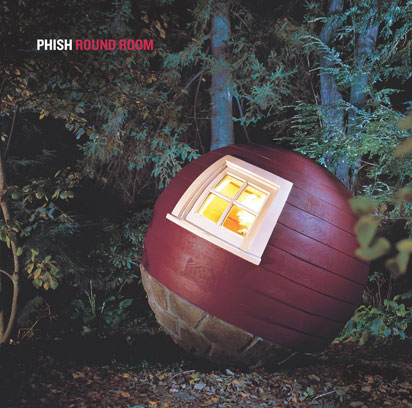
wallsSOUNDTRACK: PHISH-Round Room (2002).

round After Farmhouse, Phish went on a hiatus.  No one knew it would be quite so brief, but there was really a feeling that they were done.

And then they quietly released Round Room in 2002.  And it bursts forth with an 11 minute song.

“Pebbles and Marbles” has an interesting riff—complex and pretty.  And when I listened to it again recently I didn’t really quite recognize it.  But that’s because it’s nearly 12 minutes long and the really catchy part comes later in the song.  At around 5 minutes, the catchy chorus of “pebbles and marbles and things on my mind” announces itself.  And it is a good one.

“Anything but Me” is a pretty, mature song that is slow and piano heavy.  “Round Room” is a boppy little ditty (clearly a song written by Mike).  It is sweet and a little weird.  “Mexican Cousin” sounds a lot like a cover (maybe an old song by The Band) except for the solo which is very Trey.  It’s a funny, silly ode to Tequila.  “Friday” is a slow six minute song with two sections.  The verses are spaced out a bit, delicate riffs that are mostly piano once again.  The middle section is sung by Mike (which makes it more mellow somehow).

“Seven Below” is an 8 minute song.  It has another great riff (and the intro music is cool and bouncey).  When the vocals come in, it’s got gentle harmonies as they croon the sweet song).  Most of the 8 minutes are taking up with a guitar solo.  “Mock Song” is another of Mike’s songs.  This one seems to be a random selection of items sung to a nice melody.  Then when the chorus comes it’s quite nice, how this is a “just a mock song.”  The first verse is sung by Mike, then Trey does a kind of fugue vocal with different words in verse two.

“46 Days” opens with funky cowbells and turns into what seems like a classic rocking folk song—few words but a great classic rock melody (complete with 70s era keyboards).  “All of These Dreams” is a mellow piano piece, another mature song.  “Walls of the Cave” has an interesting piano melody that opens the song. The song is nearly ten minutes long and the middle part has a nice flowing feel to it.  There’s also a few sections that are separated be drum breaks—something that doesn’t often happen in Phish songs.  When the third part opens (to almost exclusively percussion, their vocals all work in a very nice harmony.  It’s a long song but with so many parts it always stays interesting.  “Thunderhead” is another piano-based song with some guitar riffs thrown on top. But it is largely a slow, mellow piece.

“Waves” is an 11 minute song with long instrumental passages.  It also begins with a kind of Santana feel to it, but it is a largely meandering song, with a simple melody that they stretch out for much of the song.  So this album proves to be an interesting mix of long jams and mellow ballady type songs.  It seems like Phish had a big mix of things to let loose.

[READ: November 1, 2013] If Walls Could Talk

This book reminds me of the work of Mary Roach—exploring a topic in great detail and including lots of amusing insights.  The two big differences here are that Worsley is British and that she goes back very far in British history to give us this fascinating information about the development of certain rooms of the house.

Worsley begins with the bedroom.  She looks at the furniture—the history of the bed from lumps with straw to fantastically ornate full poster beds that were made for kings who might never actually use them.

Then she moves on to more personal matters—sex (including deviant sex and venereal disease); breast feeding (for centuries mothers felt they were not equipped to take care of and nurse their own children, hence wet-nurses) and knickers (royalty had an entourage designed specifically to assist with underthings).  Indeed, privacy was an unknown thing in olden times.  Even royalty was expected to receive people in all of the rooms in the house.  Initially the bed chamber was for their most intimate friends, not just for sleeping.

The section on old medicine was also fascinating, they believed that it was vaporous miasma that did you more harm than say, excrement-filled water.

The section on Sleep discusses what was also in a recent article by Gideon Lewis-Kraus—that there were two sleep times at night.  With no electricity there was no artificial light to keep people up late so they would go to sleep early, wake up in the middle of the night (the best time for conception of children) and then sleep again. (more…)

Read Full Post »

sep2000SOUNDTRACK: PHISH-Rift (1993).

riftRift has a kind of story to it (albeit it’s not a real concept album) and you can tell by the full cover (see the bottom) that the story is complex–thank you gatefold sleeves).  The album starts with “Rift” a fast guitar spiral that opens with a harmony vocals on the opening lyric and then a call and response between I believe, Page and Trey as they each take a line of the verse—it’s a cool and surprising opening.

“Fast Enough for You” is a slow country-tinged song (with slide guitar).  This is the first song of their early records that I really don’t know that well.  So it must not get played very much.  It’s a pretty song.  “Lengthwise” is a cute little a capella song (with snoring and clock ticking) which I think about whenever I am alone in a bed: “When you’re there I sleep lengthwise and when you’re gone I sleep diagonal in my bed.”

“Maze” is one of my favorite Phish songs and it sounds great here.  I love the bomp bomp at the end of the verses and the fugue vocals at the end of the song.  This version is fantastic.  “Sparkle” also features fugue and barbershop type vocals (with Mike’s deep voice added in) in a funny silly roping song.  It’s another highlight.  “Horn” has a great opening guitar line (that reminds me of Pearl Jam for some reason).  I’ve always enjoyed this one.  It sounds great here (because you can actually hear what the harmony voices are saying (something you usually can’t in the live setting).  “The Wedge” is a mid tempo song that sounds different from their live versions.

“My Friend My Friend” is a pretty dark song (“My friend, my friend he;s got a knife”) but the opening is a beautiful instrumental with lovely guitar sequences until at 2:30 when the piano takes over and the song becomes slightly menacing.  “Weigh” is a weird song that I rather like.  It’s very piano heavy and very boppy despite the crazy lyrics:  “I’d like to cut your head off to weight it, whaddya say?  5 pounds, 6 pounds, 7 pounds.”  “All Things Reconsidered” a nice NPR joke.  This is a 2 and a half minute instrumental of guitar and keyboards that sort of plays with the NPR “All Things Considered” music.

“Mound” starts with some wonderful out of time signature riffing—4/4 drums and bass and then super fast guitars that don’t quite match until the drums and bass then catch up.  It’s hard to believe that that unusual opening leads to the big catchy bouncy chorus: “And it’s time, time, time for the last rewind.”  “It’s Ice” is a little slower here than live but I kind of like it in this slightly slower version (you can really hear the riffs).  This is another song with fugue-like vocals (they do all of their vocal tricks very well).  “The Horse’ begins as a beautiful Spanish style guitar piece and morphs into a simple acoustic song (it’s al of 90 seconds) which bleeds into “Silent in the Morning,” another highlight from their live shows and a standout here.

Rift might just be my favorite Phish album.

[READ: October 23, 2013] “Escanaba’s Magic Hour”

Once I found out that Tom Bissell had written a number of articles in Harper’s I decided to read them all, especially since some of them already appeared in his book Magic Hours.  This was his first piece for Harper’s and it is the one I remembered most from the book.  So I enjoyed reading it again.

I’m also glad I read the Harper’s version because although I don’t think it varies from the book version at all (and I’m not willing to check), it had pictures from the movie and from Escanaba, which brought a bit more reality to the article.

So, what’s this about a movie?

Well, this article is about Jeff Daniels making a movie in Escanaba, Michigan called Escanaba in da Moonlight (which I haven’t seen, but as I said after reading this the first time, I now feel invested enough in it to want to watch it–reviews are mixed).  And it sounds kind of interesting.  I also really enjoyed the comment that Daniels’ appeal “has something to do with the fact that many men, if asked to cast their lives without undue conceit, might settle on Jeff Daniels to play themselves.” (more…)

Read Full Post »

harper septSOUNDTRACK: PHISH-Lawn Boy (1990).

220px-Lawn_Boy_coverFor what I consider a guitar dominated band (Trey Anastasio is certainly the frontman), the early Phish albums have a lot of piano dominated tracks.  It’s not the guitar is absent but the piano is mixed quite loudly which gives these songs a slightly different emphasis than when they are played live.

Also was with many songs on Junta, “Reba” feels slower than the live versions.  It also has some funny backing vocals (a common occurrence with these early songs).  “My Sweet One” is a lot more honky tonk than the live versions, which often feel almost barbershoppy.  In “Split Open and Melt,” the vocals are done in a very funny mumbly way (with weird background vocals).  There’s also horns (crazy horns) and female vocals –giving it  vaguely R&B feel.

“The Oh Kee Pa Ceremony” (for origins of the phrase, check out this) is a live favorite that’s a fun and funky guitar solo (with a retro feel) and in this version there is much laughing and carrying on in the background).  “Bathtub Gin” opens with the crazy seemingly out of tune piano that they do live (although not as much).  There’s more funny voices on the chorus and crazy sound effects throughout.  Earlier Phish were a lot sillier than later Phish.

“Run Like an Antelope” also has crazy sound effects and it’s funny how I forget that the song is almost entirely introductory guitar solo wailing.  It’s not until 8 minutes that we get to the “rye rye rocco” section and the actual “run run run” part.   In this studio version, the “set your gear ship for the heart of your soul” section is spoken so quietly.  And the song is not quite ten minutes long.  “Lawn Boy” sounds clean and jazzy in ways that it doesn’t live.  And “Bouncing Round the Room” sounds a lot like the live version.  It’s a little slower, with a few more details thrown in.

Overall, Lawn Boy is a great early Phish album, with every song being a success.

[READ: October 3, 2013] “Life as a Terrorist”

William Vollmann was a suspect in the Unabomber case.  All because a “concerned citizen” alerted the FBI about his fiction.

This sounds utterly crazy, but it is true.

Vollmann has written about all kinds of things, both fiction and non-fiction.  For his non-fiction, he has traveled extensively, to Afghanistan and other places where terrorists reside.  So when he was detained upon reentering the United States from Yemen, he didn’t think too much of it.  But when he was detained a second time, years later–for seven hours and treated like a criminal–well, that got him mad.  And he used the Freedom of Information Act to see what the FBI had on him.

This is a sobering look at how the justice system in its zealotry to protect us can actually do far more harm than good, at least to innocent individuals. Vollmann uses this as the basis of his essay which looks at the omnipresent Unamericans: those who would attack without provocation and intimidate the weak. (more…)

Read Full Post »

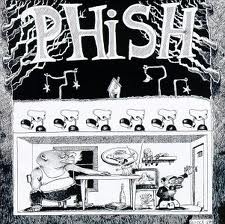
harper septSOUNDTRACK: PHISH-Junta (1989).

juntaI’ve been listening to a lot of live Phish as of late and thought it would be interesting to see if there was truth to the adage that Phish is great live but not so great in the studio.  So here is their first official album.  It was released as a double album, and when it was reissued on CD some bonus material was added.  Incidentally, I just found out that the album if pronounced “juhnta” and not “hoonta” because of the engineer they worked with.

The album starts with “Fee” which is a fun song (the lyrics are wonderfully weird) and they don’t play it all that much so it’s a treat to listen to.  I enjoy the way the verses sound compressed and distant but the choruses are nice and full.  There’s also some funny and interesting sound effects (some of which accentuate the action) throughout the song. This sound effects and noises processing has been with Phish from the beginning and they kept it up through many of their earlier, less mature albums. “You Enjoy Myself” is a live favorite so it’s fun to hear it in this version.  As with a lot of their earlier records, this song sounds a little stiff, especially if you’ve heard the wild live versions. It’s not bad at all, indeed, it has a perfectionist quality to it—the time changes are perfect, the solos are flawless.  Indeed, it’s quite an achievement (and in this more polished version it sounds more like Yes than their live versions ever did).  Interestingly when we finally get to the lyrical section (about 5 minutes in) it’s quite a bit slower than they play live.

“Esther” sounds much more theatrical here.  The music is gorgeous and there are lots of effects and backing vocals which bring a bit more menace to the song than the live version possesses. This also had a very prog rock sensibility to it.  “Golgi Apparatus” has a lot more in the way of backing vocals than the live version.  And “Foam” has some changes: the bass is especially loud and funky and yet the pace is so much slower than I’m used to.  The odd thing is the kind of stiff way that the lead vocals enunciate everything.  And the deep voice (Mike?) is quite amusing at the end of the song.  “Dinner and a Movie” is a fun and silly song and this version is especially enjoyable because of the backing voices and chatter and laughter which illustrate the dinner (and presumably the movie).

“Divided Sky” has a beautiful melody and it’s nice to hear it played so pretty and simply here.  But again the remarkable thing is how much slower the song is here.  “David Bowie” also sounds great (there’s all kinds of weird sounds effects in the background of the (very long) soloing section—I have no idea why or what they might be).  The solo sounds like it was maybe done in one take as there’s a couple spots where it’s not “right,” (whether flubs or intentional is hard to say) but it still sounds terrific.  In fact a number of tracks have some little flubs which makes it seem like they either didn’t mind or tried for a more live feel.

“Fluffhead” sounds solid and like the live versions.  What I never realized until I actually paid attention is that the bulk of the music (the extended jam session) is called “Fluff’s Travels.”  “Flulfhead is only 3 and a half minutes, while “Fluff’s Travels” is over 11 minutes (it opens with the beginning of the guitar solo–the catchy riff that starts the lengthy jam).  “Contact” is a delightfully silly song about tires and cars that I’ve always enjoyed and find myself singing often because the melody is so simple.

What’s funny is that the end of “Contact” kind of bleeds into “Union Federal” which is listed as a live song (and clocks in at over 25 minutes long).  This “Union Federal” is an improvisational jam (or an Oh Kee Pah Ceremony—where the guys would get together with instruments (and other things) and jam for a time.  This song is weird with many layers—and is rather typical of one of Phish’s weirder jazz –flavored improv sections (meaning that there is a lot of dissonance and noise).  It’s quite jarring especially after all of the melodies and prettiness of the album proper.  And I can see a lot of people not being happy about its inclusion.  “Sanity” on the other hand is a fun song.  In the intro, they keep claiming the song is by Jimmy Buffett. They are clearly very silly in this setting, especially at the end of the song.  The final track is a live version of “Icculus” the song which is pretty much all buildup.  In the intro they quote U2 “This is red rocks, this is the edge.”  But the “joke” of this version is that Trey keeps postponing the name of the person who wrote the name of the Helping Friendly Book–stalling in any way he can.  As the song gets louder and louder and more absurd, the guys are even more frenetic.  It takes over 3 and a half minutes to get to the proper lyrics of the song.   And then the song itself is about 15 seconds.  Absurd nonsense.  But very amusing.

So this is quite a solid debut album, and the amount of songs that they still play live shows how fond everyone is of it.

[READ: October 2, 2013]  “Wrong Answer”

I didn’t hate Algebra.  I rather like solving puzzles so I enjoyed solving for x.  Algebra II I recall being more daunting and less fun with lots of formulae to memorize.  And, unlike everything promised, I have never used any of it in my adult life (geometry and angles, sure, but not logarithms).  According to this article the new United States CORE curriculum (which I know my son is dealing with already in 3rd grade) says that high school graduates must have Algebra II.

The reasons for this intensification in the studying of math are many (starting around the time of Ronald Reagan) but the current push comes from Arne Duncane, the U.S. secretary of education.  He believes that “algebra is a key, maybe the key to success in college.  Students who have completed Algebra II in high school are twice as likely to earn degree as those who didn’t.”  Whether or not that is true, those of us who earned a degree in nonmathematical  subjects certainly were not aided by this class.  But Nicholson Baker explains that the reason this might be true is that for most colleges, Algebra II is a prerequisite.  Ergo: if you don’t take Algebra II you can’t get into college because colleges require Algebra II.  That, for those who may not have taken logic–a far more useful course than Algebra II in daily life–is called a tautological fallacy.  [Indeed, I maintain that all high school students should have to take a course in logic because they would then be able to see through all of the builshit that politicians spill and claim to be logic.  Like the current (as I type this) government shutdown in which Republicans are claiming they didn’t want to shut down the government when they in fact signed papers saying they were going to shut down the government).]

The real problem with Duncan’s postulate that everyone should take Algebra II (“airplane mechanics do complex measurements and work with proportions and ratios…X-ray technicians calculate time exposures to capture the cleanest possible image.  Most factory workers need to understand Algebra II or even some trigonometry to operate complex manufacturing electronic equipment”) is that even if that were true (I don’t have any idea of it is or not), most people do not do those kinds of jobs.  And even if they did know higher math, they would still be salesmen, graphic artists, librarians, preschool teachers, custodians and many many other jobs that in no way require math. (more…)

Read Full Post »

« Newer Posts - Older Posts »