SOUNDTRACK: GREAT LAKE SWIMMERS-Tiny Desk Concert #16 (June 8, 2009).
I knew of the Great Lake Swimmers from NPR, but only a song or two. I found them to be pretty but a little too mellow for my liking. In this Tiny Desk Concert, Great Lake Swimmer’s vocalist Tony Dekker stops by for a solo acoustic set. His voice is delicate sounding and yet is powerful in its own way.
He plays three songs, the first two “Everything Is Moving So Fast” and “Pulling on a Line” both come from Great Lake Swimmers’ then recent album, Lost Channels. Both Bob and Robin compliment his voice, which is really something (he says he grew comfortable with it about a year ago). And there’s something about the way he sings that really draws you in here.
He is one of the first performers who talks about working in an office in Toronto. (He liked it and says people brought in guitars from time to time).
Then Bob mentions the “yelp machine”–the harmonica stand that Tony pulls out. Bob says when a guitarist takes it out it makes fans go crazy, but Tony says that he finds it the banjo that makes people go nuts. The final song, “Various Stages” features the harmonica, which although he says is easy for anyone to play, sure sounds good here.
[READ: January 7, 2014] “Labors”
This New Yorker has several small essays about work. They are primarily from people who I wasn’t familiar with–only Amy Poehler saved the five from being unread. When after reading all of them I enjoyed them enough to include them all here.
The pieces are labelled under “Work for Hire” and each talks about a humiliating job.
Rush is an author. He has the longest article in this series (four whole columns!) Rush talks about a number of jobs that he had over the years. But mostly he says he chose jobs that would offer him free time enough to write. Like picking cherries (?). (more…)
I had never heard of Benjy Feree before this Tiny Desk Concert, and I have still never heard of him. I don’t know a thing about him, and I kind of like that. Where did they find him? They seem to know him very well. (He grew up locally to D.C., so I guess that’s it).
He plays four songs and he is very funny.
“I Get No Love” opens with Benjy whistling and playing a guitar in a Spanish style (not fingerpicking but that fast strumming style). But when the song proper begins, it’s a bouncy acoustic song. Benjy has a nice voice. He also encourages everyone to get out their pens a make a beat. The whistling is truly amazing. It’s strong and powerful and very catchy.
In the second song, “Fear,” Benjy pulls out a great falsetto—it’s a wonderful combination of his regular powerful voice and some cool high notes too. Then he tells the story of working in an office. He says his boss looked like Clarence Clemmons. It’s a very funny story.
Then he starts talking to the “chat room.” He messes up the tuning of his third song, “When You’re 16.” But he pulls through with a very solid acoustic song with more good whistling. After the song he says he’d like to take lessons from Andrew Bird in whistling. And then he curses which leads to a lengthy and funny story about going to school at a Baptist Church.
“The Grips” is the final song, it’s a slower, very nice song, which really shows his range.
He is a charming and very funny and the end (the David Letterman joke) is especially amusing. And I have to say that I thought his hair looked totally fake and then I read that it was a wig. Ha.
[READ: January 7, 2014] “Take Your Licks”
This New Yorker has several small essays about work. They are primarily from people who I wasn’t familiar with–only Amy Poehler saved the five from being unread. When after reading all of them I enjoyed them enough to include them all here.
The pieces are labelled under “Work for Hire” and each talks about a humiliating job.
So Poehler’s essay is all about working at an ice cream shoppe as a young girl–a typical summer job. I’ve often seen young girls working in ice cream shoppes for summer jobs and I always imagined that they would get the hugest arm muscles from scooping out in those awkwardly deep freezers. But Poehler focuses more on the cleaning–every night anything that wasn’t nailed down got cleaned. Ugh. (more…)
I’d never heard of Horse Feathers before this Tiny Desk Concert. Justin Ringle is the lead singer and guitarist of the band (which in this incarnation includes a violin and cello). Ringle’s voice is soft and kind of high-pitched. They seem very well suited to the Tiny Desk, (and are in stark contrast to Tom Jones!).
They play three songs, “Working Poor,” and “Curs in the Weeds” are beautiful with the wonderful strings accenting his voice and guitar.
In their interview they talk a little about their instruments (all of which are very old!). Indeed the guitar is old, but the violin (one of only 4 made) is even older and the cello is nearly 100 years old. Very impressive.
For the final song, “Heathen’s Kiss, ” the violinist busts out singing saw. It’s awesome.
I really enjoyed this simple and beautiful set.
[READ: January 7, 2014] “Caught Napping”
This New Yorker has several small essays about work. They are primarily from people who I wasn’t familiar with–only Amy Poehler saved the five from being unread. When after reading all of them I enjoyed them enough to include them all here.
The pieces are labelled under “Work for Hire” and each talks about a humiliating job.
Nicole Holofcenter is a filmmaker. She has directed a number of films that I have liked (including Walking and Talking) and most recently James Gandolfini’s last movie (which I haven’t seen), Enough Said.
In this essay she talks about a job working for “Mr. Stone” (which I’m not sure if we’re supposed to assume is Oliver Stone or not). At any rate the job paid a fortune at the time ($500/wk) and all she had to do was answer the phone. (more…)
SOUNDTRACK: TOM JONES-Tiny Desk Concert #13 (March 2, 2009).
I never gave a thought about Tom Jones until I worked a warehouse job in Cambridge, MA. My boss used to play Tom Jones all the time and all of us young’uns (I was 22) would get into it. And soon I was singing Tom Jones songs to myself. I have his Greatest Hits and it certainly scratches an unexpected itch.
It’s also funny to think of Tom Jones at at Tiny Desk Concert since his voice is so big. And also because I think of shows as being spectacles. But here he is, with just a guy on guitar and no microphone to hold on to or anything else. He stands there sweating and just belting out these songs.
His voice sounds incredible—he can hold those notes like nobody else I know. Although I have to wonder if he has a bit of a cold (he still sounds amazing, but he’s coughing a bit). The first and third songs, “If He Should Ever Leave You,” and “We Got Love” are from his then new album 24 Hours, so I didn’t know them. But with the simple electric guitar accompaniment the songs sound clean and energetic (I imagine that with a full band they’re much bigger, and there must be a horn section, right?).
“Green Green Grass of Home” is wonderful older song that I know from his Greatest Hits. It sounds wonderful here–it’s all about his voice. And the final song is a Jerry Lee Lewis song called “The End of the Road.” I didn’t imagine him fitting this style but he jumps in perfectly and totally manhandles the song. It’s great.
It never occurred to me to want to see him live (women throwing their underpants and all) but I’ll bet he puts on a great show. It’s also amazing to see how crowded the offices are for him (they even turned down the lights for extra ambiance).
[READ: January 7, 2014] “Piano Man”
This New Yorker has several small essays about work. They are primarily from people who I wasn’t familiar with–only Amy Poehler saved the five from being unread. When after reading all of them I enjoyed them enough to include them all here.
The pieces are labelled under “Work for Hire” and each talks about a humiliating job.
Jeremy Denk is a well-regarded pianist (he won a McArthur Genius Grant). He talks about his initial success very casually. He says he had about $4,500 of debt when he won a piano contest in London. I admit I didn’t know who he was when I read this and I wondered how it was that some guy randomly won a piano contest–are there many piano contests in London? That cleared away his debt (and apparently must have covered the cost to fly to London, since he is from the Midwest). (more…)
SOUNDTRACK: JIM WHITE-Tiny Desk Concert #8 (November 7, 2008).
I didn’t know who Jim White was before this Tiny Desk Concert. And I’m still not entirely sure who is he. But he’s a gifted songwriter and storyteller.
Bob explains how he and Jim tried to work together for All Songs Considered, but that every time Bob asked Jim to do a 3 minute piece, he’d hand in a 15 minute piece. And then somehow Jim would edit it into a 17 minute piece. Jim admits that anything can set him off on a tangent (most of which are thoroughly engaging). He also says that he writes songs not a bout “you” but about “me.”
So with him and a drum machine, he sings some really pretty songs. “Jailbird” is a slow ballad that is quite beautiful. I enjoyed that he played his harmonica solo without playing the guitar at the same time (I don’t know if the guitar was prerecorded or looped, I think prerecorded).
Then he gives a funny story about working with the guitarist for P.M. Dawn. “Turquoise House” is a boppy little number about not fitting in. It’s a wonderful song. “Stranger Candy” is a darker song (full of lessons). He says that it took him several tries to get the music right for this one.
There’s a fascinating story about a gift that Jim sent to Bob. The story goes on about a racist incident in which his daughter rises above racism.
“Somewhere in the World” is a gentle ballad about finding the person you are waiting for. I like it (except for that falsetto note at the end). Then he talks about how for his old songs (like the previous one) he was kind of bummed. But he has grown up and is happier. And that has made his songwriting much more difficult.
The final song is called “A Town Called Amen.” It’s another boppy little song, charming and sweet. And Jim White seems about the sweetest, nicest musician in the world.
I came away from this Tiny Desk Concert really enjoying Jim White and wanting to hear more from him.
[READ: December 15, 2013] The Braindead Megaphone
This is Saunders’ first collection of essays and non-fiction. At some point, I stated that I thought I would enjoy his non-fiction more than his fiction. That is both true and not. I enjoyed his “reporting” essays (from GQ) quite a lot. But I found his shorter, sillier pieces to be a but too much. Nevertheless, he is an inquisitive reporter, looking for truth and traveling far and wide to find it (even braving the depths of FOX news). It’s a good collection and only slightly dated.
The Braindead Megaphone
This essay seemed a bit like a blunt instrument hitting a soft object. Although 2007 is seven years ago, I feel like the subjects (dumb newscasters) were pretty soft even then. However, it’s entirely possible that people who were apolitical or just simply not that interested in what obnoxious outlets like FOX were doing may not have been entirely aware that the Braindead Megaphone (ie. all news outlets) were not doing us any favors with their spouting of nonsense and being incurious about where stories are really news worthy or even accurate. I imagine this is mostly just preaching to the converted. I was a little worried that the whole book would be just as unsubtle, but that proved to be a foundless worry. This is not to say that I didn’t agree with everything he said in this essay. He was spot on. And often he was pretty funny too. (more…)
SOUNDTRACK: Random songs at the roller rink (December 29, 2013)
We went rollerskating on Sunday and they played all kinds of pop hits. They played “Dancing Queen” and “YMCA,” sure, but they also played a lot of recent big hits. And I said to myself either I have grown more tolerant of pop songs or pop songs are simply better than they were in the 80s and 90s.
Because I thoroughly enjoyed hearing “Gangnam Style” (perhaps a pop song where you don’t know the words is really the way to go) and “What Does the Fox Say?” (or perhaps when the words are so preposterous). “Blurred Lines” is incredibly catchy (although it would be better without the offensive lyrics). I also enjoyed “Call Me Maybe” which is treacly sure, but the melody is super catchy and “Rolling in the Deep” because Adele kicks ass.
Of course when I looked at the list of #1 hits for 2013, I literally didn’t know any of them (except “Blurred Lines” and “Royals,”) so maybe pop is not what I think it is. Maybe I just like YouTube sensations.
Ring-ding-ding-ding-dingeringeding! Happy New Year.
[READ: December 27, 2013] Five Dials #30
I was surprised to get this issue of Five Dials just as I was reading the other recent ones. It allowed me to finish up Five Dials and the year at around the same time. This issue introduces a new graphics editor: Antonio de Luca and he really changes the look of the magazine. (He also used to work for The Walrus). Rather than pictures being centered in the page, they spread from one page to another (which works well online but less so if you print it out). The illustrations are also much bolder.
This is a short issue (which I appreciated). And it does what I especially like about Five Dials–focusing tightly on one thing, in this case Albert Camus, who I like but who I have not read much. It’s his centenary and many things have been said about him, so what else is there to say? They find two things worth saying.
CRAIG TAYLOR-A Letter from the Editor: On Tony, On Dean, On Camus, On Algiers
Taylor talks about the illustrations of the issue–they were spray painted on walls by an Algerian-French collective known as the Zoo Project. The new editor took photos and then Photoshopped away the extraneous stuff to leave us with just the graphics–giving them a permanence that they would normally not have. Taylor also says goodbye to Dean Allen, the outgoing art director. Then he gets to the heart of this issue: Albert Camus and Algiers (where Camus is from). Curtis Gillespie decided to go to Algiers to find out how much the people there know and love Camus (and he found it to be a much more difficult trip than he imagined). (more…)
SOUNDTRACK: BOB & DOUG McKENZIE-“The 12 Days of Christmas” (1981).
This is my preferred old school version of “The 12 Days of Christmas.” It was one of the first parodies of the song that I had heard (and I was big in parodies back in 1981).
I loved how stupid they were (on the first day of Christmas, my true love gave to me…a beer). I loved trying to figure out what a two-four was, and it cracked me up that they skipped a whole bunch of days.
I also enjoyed how they continued to snipe at each other throughout the song. Not comedy gold perhaps (that would be “Take Off” recorded with Geddy Lee, but a nice way to start, or end, the season on these “mystery days.”
Evidently, decades after SCTV went off the air, Bob & Doug got an animated TV show (without Rick Moranis). And they made a video of the song. Hosers.
Five Dials Number 29 was the first issue I had read in a while. (I read this before going back to 26-28). And it really reminded me of how great Five Dials is. I don’t know why this isn’t Part 2 after Number 28’s Part 1 (there was no 28b either), but that’s irrelevant. This is an independent collection of great writing. I was instantly surprised and delighted to see that César Aria was included in this issue (I didn’t even know he had made inroads in England).
CRAIG TAYLOR-Letter from the Editor: In Swedes and Open Letters
Taylor’s usually chipper introduction is saddened by the contents of this one. The discussion centers on Sweden and the city of Malmo, where integration is proving to be tougher than they’d hoped. Black skinned people are profiled pretty explicitly. Taylor talks about meeting the writer Jonas Hassen Khemiri (who they subsequently published in issue 21) who deals with issues of race. In March of 2013, Khemiri wrote an open letter to Swedish Minister for Justice Beatrice Ask after she brushed off concerns about racial profiling. The letter went viral including getting translated into 15 languages. So I guess there is some positivity after all. (more…)
SOUNDTRACK: PHINEAS AND FERB-The Twelve Days of Christmas (2010).
While The Bird and the Bee has become my new favorite serious version of The Twelve Days of Christmas, this Phineas and Ferb version is my new favorite silly version of the song. Sure it’s especially funny for fans of the show but, as anyone who has seen the show knows, Dr. Doofenshmirtz is comedy gold and so his wishes for Christmas and his updates and concessions (and the fact that he is a traditionalist) absolutely make this worthy of repeat listens.
[READ: December 19, 2013] Five Dials Number 28
Five Dials #28 is vaguely thematic–about heroes. Some items are literal (the writers-as-heroines drawing), some are speculative (my favorite conceit–the stories of quickly killed side characters in movies), and some are unrelated at all–the guy who helped out Will Self. This issue was launched from Sydney, Australia.
CRAIG TAYLOR-A Letter from the Editor: On Heroes and Convicts
Taylor talks about everything mentioned above and then talks about Robert Hughes’ The Fatal Shore and his primer on modern art: The Shock of the New (which has an accompanying documentary series). (more…)
SOUNDTRACK: THE BIRD AND THE BEE-12 Days of Christmas (2008).
I first heard a bit of this song in a Sephora a few years ago. Then they played it on New Girl (in two separate Christmas episodes). But I never knew who the artist was. Then some kind soul pointed me to the band and lo, I found the track.
I don’t know much else about the Bird and the Bee, but this is hands down my favorite rendition of the 12 Days of Christmas. In addition to the great, groovy sound (which reminds me of the Cocteau Twins), I just loved how…different the song sounded. Turns out, according to their soundcloud page, “we changed the song so that every repeat is a completely different progression.” I love it.
The song never gets boring and her voice is simply gorgeous. I only wish it was available for sale or download or something.
[READ: December 16, 2013] Five Dials #27
I was a little harsh on Five Dials Number 26, but overall, it still kept up the greatness that has been Five Dials. And #27 keeps up the excellence. Since Five Dials likes globetrotting, this issue is based in and around Greece, the county that is in tumult.
This one also has letters from Our Glorious Readers. One of the readers sensibly comments that the Berlin issue would keep her busy throughout the winter. Wish I had doled mine out better. I feel that Toronto gets a little knock from the editors who seem to think it is not as cool as Berlin. I also enjoyed the reader’s description of Peter Stamm’s writing as being like skiing.
CRAIG TAYLOR-A Letter from the Editor: On Timelines and Greek Photographs
Taylor talks about the timelines that tend to appear in newspapers, most of which seem to talk about the collapse of something or other (like the Greek economy). After visiting Athens, Five Dials felt it was time to bring some Greek writing to English readers. The letter talks about the contents within and gives good context to Dimitris Tsoumblekas’ photos which are quite good but are even better when you know what they are doing–especially the one about his father. (more…)
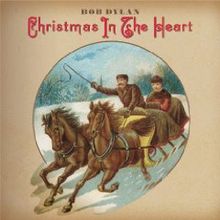
SOUNDTRACK: BOB DYLAN-Christmas in the Heart (2009).
I have been a dabbler in Dylan over the years. I like his hits, I like some of his albums, but I’ve never been a huge huge fan. So the biggest surprise to me was that Bob Dylan now sounds like Tom Waits. His voice is so crazily gravelly, it’s almost (almost) unrecognizable as Dylan.
That said, on some of the tracks it works very well–like he’s had too much to drink and is enjoying the revelry of these traditional songs. I imagine him as a benevolent uncle trying to get the family to sing along. And sing along they do. He has a group of backing singers who sound like they are straight out of the forties and fifties (on some songs the women sing incredibly high especially compared to Dylan’s growl). I’m not always sure it works, but when it does it’s quite something.
The first three songs are a lot of fun. However, when he gets to “Hark, the Herald Angels Sing,” it really sounds like he has hurt himself. He seems to really strain on some of those notes–note the way he pronounces “herald” (heeerald).
The more secular songs fare better with “I’ll Be Home for Christmas” sounding especially Waitsian and being all the better for it. Although I feel that perhaps he made up some lyrics–“presents on the tree?” It’s interesting that in “O Come, All Ye Faithful” he sings the first verse in Latin (I don’t know that I’ve heard any other pop singers do that) and it works quite well.
A less successful song is “Have Yourself a Merry Little Christmas” in which the music just seems to be too slow for him. His verses end early and it seems like the backing singers are just out in the middle of nowhere. Perhaps the best song is “Must Be Santa.” I love this arrangement (by Brave Combo) and Dylan has a ton of fun with it (and the video is weirdly wonderful too).
“Christmas Blues” is a bit of a downer (as the title might suggest). I’d never heard this song before and Dylan is well suited to it. Dylan’s version of “The Little Drummer Boy” is also very good–he croons gently and his voice sounds really good. I was surprised to hear him do “Christmas Island,” a song I have come to love this year–his version is quite fun as well, with the backing singer doing Aloha-ays.
Finally, “O Little Town of Bethlehem” is pitched a wee bit high for him (and the Waits voice is more scary than avuncular here).
So overall it’s a weird collection (to say nothing of the artwork–both the cover and the inside cover), but I think it’s well suited to the day after the festivities.
[READ: December 15, 2013] Five Dials #26
I was shocked to realize who many Five Dials issued I had put off reading (and that this one came out over a year ago!). I knew 26 was a large issue, so I put it off. And then put it off. And then put it off, until Issue 29 came out. (I read 29 before this one, which got me to jump back and tackle this large one).
I have to admit I did not enjoy this one as much as previous Five Dials. The bulk of the issue was taken up with German short stories, and I don’t know if it was the choices of the editors, but (a few) of the stories just didn’t grab me at all. Having said that, there were one or two that I thought were very good. But with this being such a large issue, perhaps it deserved to be spaced out a little better–Weltanschauung fatigue, no doubt.
This issue starts with Letters from Our Glorious readers and other sources.
I feel like this is a new feature for Five Dials (although again, it has been a while). There is applause for the Bears (From Issue #24) and the acknowledgement of Zsuzsi Gartner’s first adoptees of her story ideas (Issue #25 Pt 1). There’s also the amusing story of a guy who got nailed at work for printing the color issue (something I used to do at my old job as well) and a refraining of answering spam.
CRAIG TAYLOR-On Ewen and German
Taylor doesn’t say much in this intro, since the “heavy lifting” is done by Anna Kelly. He does mention Paul Ewen (and his food writing) and the first Five Dials questionnaire (which I assume it is too late (and too far away) for me to submit for that free HH book).
ANNA KELLY
She explains about wanting to know secrets, and how when she was little, learning Pig Latin was a such a huge boon to her secretive life. Then her sister started studying German, and Anna herself was hooked. She says that reading German works in German is like flying. And she wants to share German language writers with us. Of course, we won’t be reading them in German, so there will be no flying. (more…)
 SOUNDTRACK: GREAT LAKE SWIMMERS-Tiny Desk Concert #16 (June 8, 2009).
 I knew of the Great Lake Swimmers from NPR, but only a song or two. I found them to be pretty but a little too mellow for my liking. In this Tiny Desk Concert, Great Lake Swimmer’s vocalist Tony Dekker stops by for a solo acoustic set. His voice is delicate sounding and yet is powerful in its own way.