Feeds:
Posts
Comments

Archive for the ‘War’ Category

SOUNDTRACK: DO MAKE SAY THINK-Other Truths [CST062] (2009).

I’ve always enjoyed Do Make Say Think’s CDs.  They play instrumentals that are always intriguing and which never get dull.

But this CD far exceeds anything they have done so far (and  they’ve done some great work).   There are only four tracks, and they range from 8 to 12 minutes long.  Each track is named for a word in the band’s name: Do, Make, Say, Think.  And each one is a fully realized mini epic.

“Do” sounds like a gorgeous Mogwai track.  While “Make” has wonderfully diverse elements: a cool percussion midsection and a horn-fueled end section that works perfectly with the maniacal drumming.  “Say” is another Mogwai-like exploration, although it is nicely complemented by horns.  It also ends with a slow jazzy section that works in context but is somewhat unexpected. Finally, “Think” closes the disc with a delightful denouement.  It’s the slowest (and shortest) track, and it shows that even slowing down their instrumentals doesn’t make them dull.

It’s a fantastic record from start to finish.  This is hands down my favorite Constellation release in quite some time.

[READ: December 2009 – January 13, 2010] McSweeney’s #33.

The ever-evolving McSweeney’s has set out to do the unlikely: they printed Issue #33 as a Sunday Newspaper.  It is called The San Francisco Panorama and, indeed, it is just like a huge Sunday newspaper. It has real news in (it is meant to be current as of December 7, 2009).  As well as a Sports section, a magazine section and even comics!

[DIGRESSION] I stopped reading newspapers quite some time ago.  I worked for one in college and have long been aware that the news is just something to fill the space between ads.  I do like newspapers in theory, and certainly hope they don’t all go away but print issues are a dying breed.  When I think about the waste that accompanies a newspaper, I’m horrified.  Sarah and I even did a Sunday New York Times subscription for a while, but there were half a dozen sections that we would simply discard unopened.  And, realistically that’s understandable.  Given how long it took me  to read all of the Panorama, if you actually tried to read the whole Sunday paper, you’d be finished the following Sunday (or even two Sundays later).

Their lofty goal here was to show what print journalism can still do. And with that I concur heartily.  Even if I don’t read the newspaper, the newspapers as entities are worth saving.  Because it is pretty much only print journalism that finds real, honest to God, worthy news stories.  TV news is a joke.  There is virtually nothing of value on network TV.  Fox News is beyond a joke.  CNBC is sad (although Rachel Maddow is awesome!) and even CNN, the originator of all of this 24 hour news nonsense still can’t fill their airtime with non-sensationalized news.

Obviously, there are some decent internet sites, but for the most part they don’t have the budget to support real news investigation.  You either get sensationalized crap like Drudge or rebroadcasts of real news.

So, print is the last bastion of news.  And you can see that in journalistic pieces in The New Yorker, Harper’s, The Walrus, Prospect and, yes, in newspapers.

But enough.  What about THIS newspaper?  Oh and unlike other McSweeney’s reviews I’ve done, there is NO WAY that I am writing a thorough comment on everything in here.  There’s just way too much.  Plus, there are many sections that are just news blurbs.  Larger articles and familiar authors will be addressed, however.  [UPDATE: January 18]: If, however, like Alia Malek below, you bring it to my attention that I’ve left you out (or gotten something wrong!) drop me a line, and I’ll correct things.

There is in fact a Panorama Information Pamphlet which answers a lot of basic questions, like why, how and how often (just this once, they promise!). There’s also a Numbers section which details the size, scope and cost of making this (it shows that with an initial start up, anyone could make a newspaper if they talked enough about what the readers were interested in). (more…)

Read Full Post »

SOUNDTRACK: KISS-Kiss (1974).

I’ve always loved the first Kiss record.  Everything about it is over the top, and I can’t imagine what people thought of it when it hit shelves back in 1974.

And yet, for such a preposterous looking record, the tracks are really great.  The music is a mixture of pop, Rolling Stones rock swagger, Beatles harmonies, and a sort of proto-heavy metal.

“Strutter” proves to be a great opening track with a great riff and fun vocals.  And it’s just one of thousands of Kiss songs about hot chicks that, because of its metaphorical/obscure lyrics is less offensive than it might have been.  “Nothin’ to Lose” is another lyrically inscrutable song that I’ve always assumed was very dirty: “Before I had a baby, I tried every way.  I thought about the back door.  Didn’t know what to say.”  And yet it is so outrageously poppy that no one minds singing along.  “Firehouse” is a wonderfully over the top song with great falsetto vocals and an awesome solo from Ace. “Cold Gin”  is another rocking classic with cool basswork and guitar solo notes over a standard rocking verse.  Side one ends with”Let Me Know” a pop song hiding under the guise of a heavy rock song.  The song is such a poppy bit of fluff (check out the soulful harmonies before the ending guitar solo kicks in), but it works wonders.

Side Two starts with a silly cover of “Kissin’ Time” that of course is appropriate for this band (and if they went for a more poppy sound overall, this would have been their anthem, no doubt).  “Deuce” follows, and it blasts forth with some heavy stuttering and slighty off-sounding guitars.  It also has the best opening lyric ever: “Get up and get your grandma out of here.” Which is later followed by one of the top ten Huh? choruses off all time, “You know your man is working hard, he’s worth a deuce.”  (Rampant speculation as to what a “deuce” was in 1974 can be found online).  I’ve always loved the “Love Theme from Kiss” which is possibly the most hated pre-disco Kiss song that I can think of.  It’s a weird pseudo-middle-eastern instrumental that I’ve always thought was trippy and funny.  And then comes “100,000 Years,” another one of my favorite songs.  Again, the lyrics are just bizarre (and I’ve always mis-heard them until I looked them up just now: “How could you have waited so long, it must have been a bitch while I was gone” (I’d always thought the “it” was actually “you” which means the song isn’t as nasty as I ‘d always thought).  So, it’s sort of like The Odyssey, then.  But musically the song is just phenomenal: a great guitar riff over simple bass notes and a staggering guitar solo.

The disc ends with the outstanding “Black Diamond.”  There’s so much to love about this song.  It’s a gritty tale about life on the streets.  It opens with a pretty acoustic guitar ballad sung by Paul.  Then, after the awesome “Hit it!” the song kicks in powerfully.  Peter takes over vocals, and his rough voice works perfectly.  It’s only five minutes long, but it feels like a great epic track.  No the least of which is because the song ends with a cool concept: a single note, punctuated with drums, that is slowed down (from the original taped master), getting slower and slower making the notes sound heavier and heavier, slower and slower.  You can even hear the drum riff played at a by-now snail pace.  It’s very cool.

This is really a great album, and it’s somewhat overshadowed by their mid 70’s more famous music.  And if you like 70s rock but don’t think you like Kiss, this is one disc you can sneak into your collection.

[READ: December 20, 2009] The New Sins

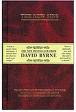
I’m not entirely sure what to make of this.  I bought it from McSweeney’s in their attic sale for a couple of bucks.  David Byrne is Talking Heads David Byrne, so everything he makes is arty, avant garde and hard to fathom on a first listen/view.  But I’m unlikely to read this again, so he gets a cursory attempt here.

The New Sins purports to be a collection of what the “new” sins are.  It’s also written as if it were an ancient text that was recently uncovered and translated into English (although obviously, the word choices are laughably not ancient (web design, for instance).  Basically, what you get is a list of behaviors that until recently were not sins but which are now.  The odd thing about the book is that the sins are not an obvious parody of virtues or anything like that.  He doesn’t just say that kindness is a sin, he adds that ambition is a sin as well.  So it’s not even simple inversion. (more…)

Read Full Post »

SOUNDTRACK: BLACK SABBATH-Sabotage (1975).

Sabotage seems to be somewhat forgotten (maybe because of the creepy cover art 0f Ozzy in a kimono and fascinating platform shoes, Bill Ward in red tights with a codpiece (and visible underwear on the back cover), and Geezer and Tony’s mustaches).
But this album rocks pretty hard and heavy.
“Hole in the Sky” is a sort of spastic rocker with Ozzy screaming vocals over the top of the rocking track.
“Don’t Start (Too Late)” is the by now obligatory acoustic guitar piece.  But this one is different, for it has some really wild and unpredictable aspects to it.

“Symptom of the Universe” is another classic Sabbath track, a blistering heavy fast riff with the wonderful Ozzy-screamed: “Yeaaaaaahs!”  It then surprises you by going into an extended acoustic guitar workout for a minute and a half at the end.

“Megalomania” is a slow ponderous piece. Unlike the psychedelic tracks from the previous records, this one moves along with a solid back beat. It also has a great bridge (“Why doesn’t everybody leave me alone?”). They definitely had fun with the effects (echoing vocals, etc.) on this one.  And, like their prog rock forebears, this song segues into another rhythm altogether when we get the wonderfully fast rock segment.  And the humorous point where the music pauses and Ozzy shouts “Suck me!”

“Thrill of it All” is a pretty good rocker, which after a  pretty simple opening morphs into a slow, surprisingly keyboard-fueled insanely catchy coda.  “Supertzar” is a wonderfully creepy instrumental.  It runs 3 minutes and is all minor-keys and creepy Exorcist-like choirs.  When the song breaks and the bizzaro Iommi riff is joined by the choir, you can’t help but wonder why no horror film has used this as its intro music.

“Am I Going Insane (Radio)” is a very catchy keyboardy track.  It clearly has crossover potential (although the lyrics are wonderfully bizarre).  But it ends with totally creepy laughing and then wailing.    “The Writ” ends the album. It’s another solid rocker and it ends with an acoustic coda with Ozzy’s plaintive vocals riding over the top.

Sabotage has some truly excellent moments.  It’s just hard to fathom the amount of prog-rock tendencies they’ve been throwing onto their last few discs (we’ll say Rick Wakeman had something to do with it).

Black Sabbath made two more albums before Ozzy left.  I haven’t listened to either one of them in probably fifteen years.  And my recollection of them is that they’re both pretty lousy.  Maybe one of these days I’ll see if they prove me wrong.

[READ: December 16, 2009] McSweeney’s #7

This was the first McSweeney’s edition that I didn’t buy new.  My subscription ran out after Issue #6 and I never saw #7  in the stores.  So, I recently had to resort to a used copy.

This issue came packaged with a cardboard cover, wrapped with a large elastic band.

Inside you get several small volumes each with its own story (this style hearkens back to McSweeney’s #4, but the presentation is quite different).  7 of the 9 booklets feature an artistic cover that relates to the story but is done by another artist (not sure if they were done FOR the story or not).  I have scanned all of the covers.  You can click on each one to see a larger picture.

The booklets range from 16 to 100 pages, but most are around 30 pages.  They are almost all fiction, except for the excerpt from William T. Vollman’s 3,500 page Rising Up and Rising Down and the essays that accompany the Allan Seager short story. (more…)

Read Full Post »

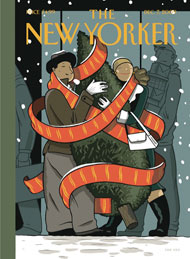
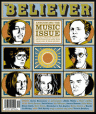
SOUNDTRACK: The Believer June/July 2007 Music Issue Compilation CD: Cue the Bugle Turbulent (2007).

The 2007 Believer disc smashes the mold of folkie songs that they have established with the previous discs in the series.  The theme for this disc is that there’s no theme, although the liner notes give this amusing story:
one decaffeinated copy editor (“the new guy”) made a suggestion: “The Believer CD should be composed of eight a.m. music/breakfast-substitute jams, like that commercial from a while back with the guy who gets out of bed over and over again while ELO plays over his morning routine. You should tell all of the bands to write/contribute songs worth listening to within three minutes of waking up.”

So, without a theme, they just asked artists for some great songs.  There’s one or two tracks written especially for the disc (Sufjan Stevens, Lightning Bolt).  There’s a couple B-sides.  There are some wildly noisy raucous songs: and three of them come from duos!  No Age offers a very noisy blast of feedback.  Magik Markers play a super-fast distortion-fueled rocker, and Lightning Bolt play 5 minutes of noise noise noise.  Oh, and there’s even a rap (Aesop Rock)!

Tracks 3-7 are just about the 5 best songs in a row on any compilation.  Oxford Collapse plays a catchy and wonderfully angular song with “Please Visit Your National Parks.”  It’s followed by a song from Sufjan Stevens that sounds NOTHING like Sufjan Stevens, it’s a noisy distorted guitar blast of indie punk.  I’m from Barcelona follows with a supremely catchy horn driven song that would be huge on any college campus.  Aesop Rock comes next with a fantastic song.  I’d heard a lot about Aesop Rock but had never heard him before, and he raps the kind of rap that I like: cerebral and bouncy.  This is followed by Reykjavik! with a crazy, noisy surf-guitar type of song.  It reminds me of some great college rock from the early 90s.

Of Montreal, a band I’ve been hearing about a lot but who I’ve never heard (and didn’t think sounded like this) plays a wonderfully catchy two minute love song that sounds ironic, but which likely isn’t.  The melody is straight out of the Moody Blues’ “Wildest Dreams,” and yet it is still fun and quirky.

There’s a couple instrumentals as well: The Clogs do a cool, mellow instrumental and Explosions in the Sky do one of their typically fantastic emotional tracks.  Also on the disc, The Blow contribute a delightfully witty song and Bill Fox, a singer I’d never heard of (but who has a great article about him in the magazine), really impressed me with his Bob Dylan meets Nico delivery.  The disc ends with an alternate version of a song by Grizzly Bear.

This is definitely my favorite Believer disc thus far.  See the full track listing here.

[READ: Throughout 2009] Schott’s Miscellany 2008

This year’s edition of Schott’s Miscellany is very much like last year’s edition (see that review here).  I mean, it is an almanac after all.  However, it is a wondrous testament to Schott that even though I read every word of the 2008 edition, I was able to read every word of the 2009 edition and not feel like I was duplicating myself very much.

Obviously the news, facts and events of 2008-09 are different from last year.  And since Schott’s writing style is breezy and fun with a hint of sarcasm and amusement thrown in, you don’t get just a list of facts, you get sentences with subtle commentary on the facts.  And it’s a fun way to re-live the past year.  Plus, the Sci, Tech, Net section discusses science stories that sounded really impressive and important which I can’t believe I didn’t hear about at the time. (more…)

Read Full Post »

SOUNDTRACK: The Believer June 2004 Music Issue CD (2004).

Every year since 2004, The Believer magazine has published a Music Issue which comes with a CD.

I recently received the 2009 CD, but I thought it might be fun to go back through the previous ones and see what kind of music they put on them since the beginning.  I was delighted to see how many bands I like now that I was either introduced to or SHOULD have been introduced to by these discs.

The inaugural issue was a fantastic collection of then-underground alt-rock (the issue also featured interviews with a few of the artists–you can see the Colin Meloy interview here).

The collection contains all previously released songs (I think).  But for me it was a great introduction to a number of bands that I didn’t know: The Walkmen, The Mountain Goats, Ted Leo + Pharmacists.  It also contained a new release by a band I did know, The Constantines.   And, this was my introduction to a band that turned out to be one of my new favorites: Death Cab for Cutie.

There’s a lot of great songs on here, and it would make a great hanging-out-at-a-party-with-friends soundtrack.  There’s not a lot of diversity on the disc which is a bit of  a bummer (although it’s good for a mellow party).  However, the 19 second blast of “You Got the Right” by the Tiny Hawks does break things up a bit.

But with a great collection of songs it would be wrong to complain.  For a complete listing (and another review) check out this page.

[READ: December 9, 2009] “The Use of Poetry”

Ian McEwan writes fantastically engaging stories about relatively simple things, oftentimes relationships.  And he has these relationships so well sussed out that a simple six-page story like this can pack in a ton of humanity.

In a post some time ago I wrote about how World War II affected Britain much more than it affected the U.S.  And, how artists of a certain age have found great drama from the war.  This story is no exception.  Except that the war veteran is not the main character.  But I loved this summary of the main character’s dad, the typical “stoic British man.”

Like many men of his generation, he did not speak of his experiences and he relished the ordinariness of postwar life, its tranquil routines, its tidiness and rising material well-being, and above all, its lack of danger–everything that would later appear stifling to those born in the first years of the peace.

That’s an amazing encapsulation of a generation of men.  And it rings very true to me.  But what’s more amazing is that that description is not even about the main character Michael, it’s about his dad, Henry. (more…)

Read Full Post »

SOUNDTRACK: KATE BUSH-Aerial (2005).

This was Kate’s first release in 12 years!  There’s a part of me that would expect unparalleled genius to emerge from a 12 year hiatus, but realistically, what we get is a more mature and confident singer, and songs that sound very much like Kate Bush songs. There’s not a lot of experimentation, although there is a song cycle (two in fact) to hold the disc together.

The first disc (for there are two, totaling about 80 minutes) is listed as “A Sea of Honey”

It opens with “King of the Mountain” a great upbeat single.  Next is “Pi” a fascinating song in which Kate sings out the decimal places of Pi (3.14…).  It’s airy and ethereal, and pretty neat.  “Bertie” is an adorable ode to what I assume is her son. It’s a very sweet love song to a child.

“Mrs Bartolozzi” opens with a piano sequence that sounds very uncomfortably close to a Phil Collins.  And, later in the sings she sings a “sloshy sloshy” part which is pretty odd.  But despite all of this, the song is closest to the Kate of old.

“How to be Invisible” has some really cool choral effects (and is a very neat concept lyrically).  It also features a very nice guitar line that sneaks out of the musical tapestry from time to time.  “Joanni” rocks in Kate’s inimitable way (and it’s about Joan of Arc).  It has also got some fun and funny parts the reflect the Kate of old (screaming vocals way down in the mix and “Mmm Hmms” that are kind of silly).  The disc ends with the gorgeous ballad “A Coral Room.”

The second disc “A Sky of Honey” is more of a complete song cycle (It starts with a Prelude AND a Prologue).  There’s a couple of short songs (90 seconds each) thrown in the middle.  My favorite is the final track, “Aerial” which has a cool dance rhythm (that seems so unlike Kate) which propels the song almost magically.

Overall, this disc doesn’t overwhelm me as much as say Hounds of Love, but it’s a really solid disc and I’ve found myself listening to and enjoying it a lot over the last few weeks.  It’s nice to have Kate back.  I wonder how long it will be for her next disc.

[READ: November 27, 2009] Unspeakable Practices Unnatural Acts

After reading (the incomplete) “The Balloon” (see the post), I decided to give the entire collection a spin.  I didn’t really enjoy the short stories I had read in Harper’s, but I did enjoy “The Balloon,” so I thought it would be worth investigating Barthleme (a little) further.

This collection is a mix of utterly absurdist stories (many of which seem to have multiple vantage points that I found rather difficult to keep track of ).  One of the most noteworthy things about the collection is that it seems to me to be very topical circa 1968.  And I think I’m missing a lot of what is happening in the stories.   I’ll cite examples below, but oftentimes I assume that I’m just not getting something that I should be getting (more…)

Read Full Post »

I received my second issue of Prospect magazine just in time for the Thanksgiving holiday.  I’m pleased to say that this issue not only confirmed my suspicions of the magazine, it actually impressed me a little bit more.  And it sort of made me wish I had done something similar with all the magazines:  do a write up and then see how the latest issue compares (but I won’t).

I’m not going to go into extravagant detail with this issue, since I just wrote about the previous issue, but I wanted to mention the article that I was not only fascinated by, but that made me wonder why I had to cross the Atlantic to read about them. (more…)

Read Full Post »

socSOUNDTRACK: TINDERSTICKS-The Hungry Saw [CST055] (2008).

hungryIt was the releases of this Tindersticks disc (their first in 5 years) on the venerable Constellation Records (in North America) that inspired my trip through their back catalog. I was completely surprised to see them released on Constellation, as the band doesn’t exactly fit with the label’s stereotypical style (although, realistically with the last dozen or so releases, Constellation has really expanded the kind of music they release).

And this is a fantastic Tindersticks release!  There’s not a bad song on the disc. And, even though nothing is as immediately gripping as say “Can We Start Again,” the disc contains some of the band’s strongest songs.  “The Hungry Saw” is simply amazing, both lyrically and in its catchy (yet creepy) chorus.  But the highlight is probably “Boobar, Come Back to Me,” a song that begins slowly and builds gloriously, including a call and response segment that makes this song really swagger.

“Mother Dear” features a strangely comical musical episode.  In an otherwise very mellow piano based track, right in the middle of the song, come slashing, somewhat atonal guitar chords.  It’s as if a more rocking song is trying to overtake the mellow track.  (The coup is rebuffed, though).

The biggest thing to note about the disc is that longtime co-songwriter Dickon has left the band.  And so, some of the co-writing duties have been taken up by David Boulter.  While it is obviously sad that Dickon has left, Staples seems revitalized on this disc, and Boulter’s additions (especially his quirky instrumentals) bring a new point of view to the proceedings.  Also of note is something of a return to the orchestral style (albeit a much more understated version).  However, different songs emphasize different aspects: horns on one, strings on another, but always underscored by the ubiquitous Hammond organ.

It’s not a radical departure or anything like that.  It’s more of a continuation after a well earned vacation.  And it’s certainly their strongest release since their first four.

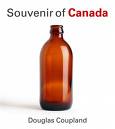
[READ & WATCHED: October 2009] Souvenir of Canada, Souvenir of Canada 2 & Souvenir of Canada (the movie)

I got the first Souvenir of Canada when it came out.  (I was on a big Coupland kick and may have even bought it in Montreal).  I didn’t get #2 when it came out, probably because I didn’t really invest a lot of effort into the first one.  But after recently reading City of Glass, I wanted to get a little more involved in Coupland’s visual art.  So, I picked up #2 and, while investigating this second book, I discovered that he had made a film of the books, too.

Coupland explains in the introduction that this book is his personal vision of what Canada is like. It is designed for Canadians as something of a nostalgia trip, but it is also something of an introduction to unseen Canada for non-Canadians.  And so, what you don’t get is pictures of mounties and Tim Hortons and other things that fit the stereotypical Canadian bill. Rather, you get things that are significant to Coupland (and maybe the average Canadian born on the West Coast in the 60s). (more…)

Read Full Post »

tr3A patron asked for Technology Review to be added to our collection.  When he said it was a technology magazine published by M.I.T. I thought it was going to be way too academic for our patrons.  But when I read the sample issue, I was really delighted with it.  So much so that I ordered a subscription for myself (the library has yet to decide).

The technology that the magazine covers is actually tech that is accessible to everyone: alternative fuels, cheap laptops, even technology in medicine (and how it will impact us as patients).  But there’s also some super high tech stuff: robotic arms, nuclear power, genetic engineering.

It opens with an Editor’s Letter followed by Reader’s Letters.  Next comes the Notebooks section.  This features several very short pieces about different ideas: green energy, memory boosting drugs. (It also has oddly computer generated drawings of the writers). (more…)

Read Full Post »

propsectI recently received an e-mail from a nice person at Prospect (a British magazine).  The email asked if I’d like to review their magazine.  After being completely flattered, I said, “Of course!”  And then I waited nervously hoping that the magazine was good and that I wouldn’t have to say anything mean about it, because I would.  Oh yes, I would.

ctBut I don’t have to. They grabbed me right off the bat because the c & the t in the title are connected by a little filigree doodad.   I love typography, so that little flourish was a selling point (okay a superficial one, but I liked it immediately).

The “subtitle” of the magazine is “Good Writing About Things That Matter” and it is a totally apt description.  Prospect is a monthly magazine that covers all aspects of society: British, European, American and the world.  And, indeed, the writing is quite good.

In many ways it reminded me of The Walrus, a favorite magazine of mine.  (It’s a weird comparison since The Walrus has only been around for a few years, while Prospect has been around for about 13 (the November issue is number 164, so I’m guessing here), but it’s an apt comparison for its coverage: politics, culture, arts and more.

Because this was a new (to me)  magazine (and because I knew I’d be reviewing it), I decided to read every article.  There were a few that I thought I wouldn’t care much about.  But the writing totally grabbed me.  For instance, the article about Princess Diana (about whom I am indifferent) was fantastic.  It was cynical and funny and totally engaging.  And the same was true for just about every article in the magazine.

Normally I like to have at least two issues to refer to when reviewing.  So there may very well be things about this issue that are different from the others.  So, forgive, please, if I generalize incorrectly. (more…)

Read Full Post »

« Newer Posts - Older Posts »