Feeds:
Posts
Comments

Archive for the ‘Nazis’ Category

SOUNDTRACK: THE KLEZMER CONSERVATORY BAND-Oy Chanukah! (1987).

For the first day of Hanukkah, it’s time for a Chanukah album.

This is a collection of traditional Chanukah songs interspersed with brief stories and a history of the holiday.

It works as a musical collection, although the dialogue does obviously stop the flow every couple of minutes.

Klezmer music is fun (provided you like the clarinet), but it really can’t be dissociated from the stories behind it.

The first narrator talks about the Maccabees and the Festival of Lights.  There’s the tales of Judith and Hannah and memories of klezmorim coming to the shtetl.  There’s even a recipe for latkes and the story of the dreydl.

Some of the songs have words (sung in Yiddish) but just as many are instrumentalist.  The majority of the songs are traditional, of course, but my favorite is “Klezzified,” which is written by one of the band.

This disc is a good introduction to Chanukah music.

[READ: December 12, 2017] “Souterrain”

Once again, I have ordered The Short Story Advent Calendar.  This year, there are brief interviews with each author posted on the date of their story.

Hello. Welcome. It’s finally here: Short Story Advent Calendar time.

If you’re reading along at home, now’s the time to start cracking those seals, one by one, and discover some truly brilliant writing inside. Then check back here each morning for an exclusive interview with the author of that day’s story.

(Want to join in? It’s not too late. Order your copy here.)

This year I’m pairing each story with a holiday disc from our personal collection

This story was really powerful and it revealed all of the details and connections in a slow and excruciating way–once you realized what was happening.

There are several characters in the story which takes place primarily in France.   (more…)

Read Full Post »

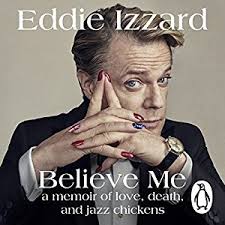
[LISTENED TO: September 13, 2017] Believe Me

When I saw that Eddie Izzard had a book out I was pretty interested to read it.  I have loved his stand-up since 1997 or 1998 and I was lucky enough to see him on his Circle Tour (on the date they recorded it!).  I have been keeping up with his career and trying to see him in whatever he does (although I like my comedy more than drama and he has certainly made the shift towards drama in recent years).

I thought an autobiography or memoir by him would be pretty interesting (even if he claims to be boring).  But when I saw that he read the audiobook, I knew I had to give it a listen (even if it was 12 discs)!

Amusingly, there was a long delay at the library.  The lady at the counter (who is not the librarian–we librarians know the difference) said if I knew his voice, I could just read the book to myself in his voice.  It was an amusing thought, and I possibly could do that, ….yes, but Eddie’s voice is just so fantastic that it never would have worked properly.  Plus, he throws in easily an extra hours worth of footnotes and rambles that aren’t in the print book!  That’s right, an extra hour’s worth of nonsense if you do the audio.   True you don;t get to see the pictures, but it’s a fair trade-off.

Well the book finally came in and I had plenty of driving time to make short work of this 12 hours behemoth.  And I laughed and laughed.  And cried and cried.

Because while Eddie Izzard is an action transvestite (transgender, now) and one of the best stand-ups around, he is also an extremely warm and thoughtful person. He worked very hard to become the success he is.  And he has used his fame to do some absolutely wonderful things for humanity–including raising millions of dollars.  Not bad for an atheist who is sometimes in girl mode and sometimes in boy mode. (more…)

Read Full Post »

SOUNDTRACK: ALDOUS HARDING-Tiny Desk Concert #640 (July 28, 2017).

Aldous Harding is a singer from New Zealand.  Her second album, Party, is full of deeply personal songs with memorable melodies and spare instrumentation.  Aldous Harding’s musical partner for the Tiny Desk is Jared Samuel Elioseff .

I was mesmerized by her performance right from the start.  Her voice is deep and sultry like Nico’s, and I imagined that she was French the way she enunciated.  There’s something about her face–she seems to be filled with what…? disdain? emotion?  as she sings these song.  She grits her teeth, protrudes her lower jaw, makes fascinating expressions all to convey her meanings.

The first song she performs,”Imagining My Man,” is about what she calls the “tender and frightening thoughts that come with being in love,” and what you witness while watching her are often painful, pensive expressions that are as important to the song as the notes being played.

I really like this song a lot–the simple melody, the fascinating delivery and the wonderful touch of a strange little zip sound after each singing of “all my life….”  The way she sings “if you get down” introduces yet another strange expression and an even stranger vocal delivery.  It all borders on comical, but she is not funny she is baring emotion.

In introducing “Blend” she gives Jared the guitar and says “I’m really sorry for what you’re about to see me do, but it’s all for the good of the song.”  And I genuinely can’t tell what she’s talking about.  She doesn’t do anything expect change the drum sound on the keyboard.  This song is whispered and the guitar plays gentle picked notes.

For the final song, “Horizon,” she takes away the guitar, stands up and says “thanks for watching” with a smile.  She stands singing the final song which I think is my favorite.  The expressions she uses as she delivers the first few lines is really intense–almost like a verbal threat:

I broke my neck dancing to the edge of the world, babe
my mouth is wet, don’t you forget it, don’t you lose me

The fact that she stands straight, dressed all in white–unmoving except for some hand gestures–just adds to the subtle intensity of her performance.

[READ: August 1, 2017] “Eric Duncan”

Philip Roth retired from writing in 2012, but that doesn’t mean that we can’t get more new material from him (although this isn’t exactly new, since it is from 2008).  This excerpt comes from remarks he gave at his 75th birthday celebration and will be collected in a forthcoming volume.

This is his recollection of the first things he ever wrote on his mothers Underwood typewriter.  In 1943, Philip’s mother was teaching him to type–white keys with black letters and number which “constituted all the apparatus necessary to write in English.”

He says that as soon as he mastered touch typing, he wrote his first title: “Storm Off Hatteras.”  But he says that instead of writing his own name, he wrote by Eric Duncan: “There’s little that can bestow more confidence and lend more authority than a name with two hard c’s in it.” (more…)

Read Full Post »

thrilignSOUNDTRACK: ADIA VICTORIA-Tiny Desk Concert #545 (June 30, 2016).

adiaAdia Victoria has a rough, raw voice that goes well with her simple, exposed guitar sound.  The blurb says her music “carries the singular perspective of a Southern black woman with a Seventh Day Adventist upbringing, who never felt like she’d fit in.”

She sings three song, mostly in a great, raspy voice.  For “Stuck in the South” she actually seems to be gritting her teeth as she sings: “I don’t know nothing ’bout Southern belles / but I can tell you something ’bout Southern hell.”  When the first verse ends, and her band kicks in, it adds such interesting textures.  A distorted bass and a lead guitar playing quietly distorted sounds.  This song is really captivating.

“And Then You Die” with its swirling sounds and keyboards has a very distinctly Nick Cave feel–gothic in the Southern sense of the word.  Indeed, the first verse is spoken in a delivery that would make Nick proud. This is no to say she cribbed from Cave but it would work very well as a companion song  I really like the way it builds, but the ending is so abrupt–I could have used some more verses.

After the second song the band heads away and Bob says “They’re all leaving you.”  She looks at them and growls, “Get off the stage!” to much laughter.

She sings the final song “Heathen” with just her on acoustic guitar.  It is a simple two chord song.  It’s less interesting than the others, but again, it’s the lyrics that stand out: “I guess that makes me a heathen, something lower than dirt / I hear them calling me heathen, ooh like they think it hurts.”

I’m curious to hear just what Adia would do with these songs when she’s not in this Tiny format.  I imagine she can be really powerful.

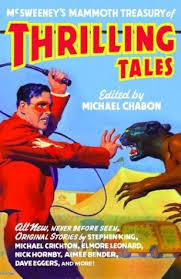
[READ: November 23, 2016] McSweeney’s Mammoth Treasury of Thrilling Tales

For some reason or another I have put off reading this McSweeney’s volume for many years.  This is technically McSweeney’s #10, although it was also released in this printing from a  major publisher. Sadly for me, my McSweeney’s subscription had expired sometime around here so I’ve never actually seen the “official” Volume 10 which I understand has the exact same content but a slightly different cover.

One of the reasons I’ve put off reading this was the small print and pulpy paper–I don’t like pulpy paper.  And it was pretty long, too.

But I think the big reason is that I don’t really like genre fiction.  But I think that’s the point of this issue.  To give people who read non-genre fiction some exposure to genre stuff.

Interestingly I think I’ve learned that I do enjoy some genre fiction after all.  And yet, a lot of the stories here really weren’t very genre-y.  Or very thrilling.  They seemed to have trappings of genre ideas–mystery, horror–but all the while remaining internal stories rather than action-packed.

Which is not to say I didn’t enjoy anything here. I enjoyed a bunch of the stories quite a bit, especially if I didn’t think of them as genre stories.  Although there were a couple of less than exiting stories here, too. (more…)

Read Full Post »

resist3SOUNDTRACK: CHARLIE SIEM-Tiny Desk Concert #134 (June 15, 2011).

siemWhen he was 3 years old, Charlie Siem heard violinist Yehudi Menuhin play Beethoven’s Violin Concerto. That was all it took to inspire him to pursue the violin. Siem studied at Eton and the Royal College of Music, and now he plays one of Menuhin’s old violins—a stunning 1735 Guarneri del Gesu.  Upon describing this centuries old instrument he says “it helps me a lot when I’m doing my… little thing.”  He is also greatly amused when NPR’s Stephen Thompson asks if he can borrow it.

Siem recently discovered that he’s related to the 19th-century Norwegian violin virtuoso and composer Ole Bull. So he started off his Tiny Desk show with Bull’s bucolic Cantabile.  His introduction is great.  He says that Bull was a precursor to Paganini, who emigrated to the States and set up a colony on Pennsylvania.  He calls him a “really crazy guy.”  It’s a beautiful piece with occasional really high notes.  This violin seems to have an unreal sound to it, bringing it what sounds like harmonic notes or something.

Paganini’s Introduction and Variations on Paisiello’s “Nel Cor Piu”  (an aria from a now-forgotten Paisiello opera), contains a grab bag full of violin special effects.  This is just incredible.  His fingers move faster than can be believed.  There are trills all up and down the neck, there’s pizzicato plucking with his left hand (how?).  In a section of “harmonics” he even whistles the final note.  It’s amazing to watch.

Leopold Godowsky: Alt Wien (“Old Vienna”) (arr. Heifetz)  This is a lovely piece with lots of high keening notes in an arrangement by the incomparable Jascha Heifetz.

It’s amazing that Siem can be so good and yet somehow I’d never heard of him.  His kind of virtuosity is amazing.  And, as it turns out he’s a total hunk with a deep resonating actor’s voice as the pages of Italian Men’s Vogue magazine.  He’s also the 2011 spokesman for Dunhill, the men’s fashion house.  The write up says that for his Tiny Desk Concert appearance, you could say Siem dressed “casual, but with an understated elegance,” right down to his left-hand pinky, with its pink-painted fingernail.

I definitely need to hear more from him.

[READ: December 8, 2015] Victory

This final book in the trilogy sees the culmination of French Resistance against the Nazis.

We learn in the introduction that it has been four years since the occupation began and although victory seems within sight, things have been getting worse.  There’s hardly any food or resources and the Nazis are growing even more angry and vicious.  On June 6, 1944 the Allies landed in Normandy.  But they had a lot of fighting to do before they could liberate Vichy.

As this book opens we see Paul called into the prison because of his drawings.  He looks older now (a great detail on the drawing) and he finds it much easier to lie to the guards.  After an interrogation, Lucie’s father–the policeman we saw in the previous book who seemed to turn a blind eye to Paul’s activity–accuses him of sneaking around to see Lucie.  Paul catches on quickly that the man is helping him and when they are free together, Paul learns that there are people on his side who he never suspected. (more…)

Read Full Post »

resist2SOUNDTRACK: SIERRA LEONE’S REFUGEE ALL STARS-Tiny Desk Concert #118 (April 6, 2011).

sierraSierra Leone’s Refugee All Stars are famous for their story.  Its members met in refugee camps during Sierra Leone’s civil war and formed a band to spread joy during an otherwise difficult time.  But the band’s music is what has stood the test of time.  Ten years, two albums and an award-winning documentary later, these eight men are still riding that upbeat reggae groove.

The band consists of three drummers (all with hand-held drums) and one percussionist.  There’s 2 guitars (one electric and one acoustic) a bass and everybody sings.  Their music has a reggae feel, although it’s not exactly reggae, I don’t think.

“Jah Come Down” opens the show. The acoustic guitar keeps the melody while the electric guitar plays a riff throughout.  Occasionally the bass comes in with a cool line or two adding a nice low end.

“Living Stone” has a different singer (the percussionist).  His vocals are a bit more mellow, as this song is.  It’s amazing to see the age range of the players.

“Tamagbondorsu (The Rich Mock The Poor)” is the final song.  It opens with a guitar lick that reminded me of Paul Simon’s Graceland until i re-thought and realized that Graceland sounded like this.

The songs are fun and lively, perfect for dancing (as the singer does during the long instrumental outro).  Most reggae sounds the same to me, and these three songs do tend to blend together quite a lot.  But the music is fun and the players’ skill is undeniable.

Here;s to ten more years.

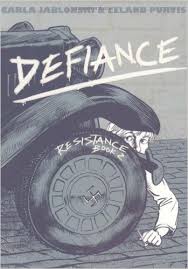
[READ: December 4, 2015] Defiance

This book is set three years into the Nazi occupation of France.  Things are sort of the same but worse for the residents of Vichy.  Neighbors inform on neighbors, and some residents collaborate with the Germans (and are more successful because of it).  And then in 1943, a new French-based Nazi police force called the Milice begin keeping watch over their own people

This aggressiveness causes more resistance, of course. And Paul has been drawing detailed and insulting pictures and posting them all over town (which is making the Milice quite upset).

Of course the kids are taking more aggressive stances now, too.  Some say that the posters are causing more harm because it makes the police mad.  But other kids’ parents have joined the police–some of whom are nice to the kids.  Even Paul’s sister, Marie, believes what her teachers say about Marshall Philippe Pétain (there’s a lesson about Pétain at the end of the book) and his governance.  And no one is going to say anything about the Resistance.   (more…)

Read Full Post »

resistSOUNDTRACK: LUISA MAITA-Tiny Desk Concert #100 (December 26, 2010).

maitaI’ve not heard of Maita.  The NPR write up speaks about the electronic flourishes and deep grooves of her songs.  Felix Contreras worried that their stripped down ensemble (only guitar, bass and fascinating bongos) would have a hard time creating that sound.

And in one way they do.  Except that it’s clear they didn’t even try.  Rather, they play a simple, but engaging kind of mellow Brazilian dance music.  In the first song, “Ai Vem Ele,” the guitar and bass play the same grooves except when they each take some meandering moments.  The percussion keeps a quiet but steady rhythm and Maita sings vocals and accent notes all over the place to keep the song interesting.  I really enjoyed at the end of the song when the bassist played exactly the vamping solo that she was singing.

“Alento” is a much faster song, with quickly sung lyrics.  It allows for rapid guitar playing and more uptempo feel.

They only play two songs (about 8 minutes long), but it really shows the kind of range she is capable of.

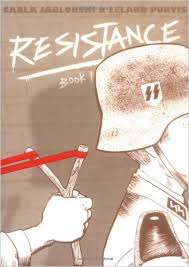
[READ: December 1, 2015] Resistance

This First Second graphic novel is about the Nazi occupation of France.  It’s not exactly light reading and yet Jablonski has taken this incredibly dark story and found an excellent and compelling narrative about one family who works as part of the resistance to fight back against their oppressors.

This is the first book in a trilogy and I am curious to see what the next two books bring as this story was nicely wrapped up but there are so many more stories which could be told.

Jablonski also helpfully sets up the situation in the introduction.  She explains how France was split in two as a result of the armistice agreement.  She gives a very brief but powerful explanation for why they would agree to splitting their country in half.  Paris and the upper portion of France became Occupied while Vichy and the southern part of France were “Free” (but still with a large Nazi presence).

This story is about an average family.  Paul Tessier and his parents and little sister live in the free part of France. Paul is an artist, and I love the way Purvis juxtaposes Paul’s art with what is actually happening (placing Paul’s “drawing” in the middle of the action so we know he is observing everything. (more…)

Read Full Post »

elephantSOUNDTRACK: DAN DEACON-Tiny Desk Concert #422 (February 25, 2015).

dandeacDan Deacon is a trip and a half.  I only know him from NPR (and they love him).  He is a weird dude, that’s for sure.  He plays some super weird electronic music.  But more importantly, he really really gets the crowd into his show.  Indeed, this is one of the few Tiny Desk Concerts where the audience features more than the performer.

His opening mantra is that you will close your eyes and enter the consciousness of Martin Lawrence’s character in Bad Boys II.  This is apropos of nothing of course.

“Feel the Lightning” is amazing.  He has his synth set up to control an acoustic piano (you can see the keys playing).  Deacon plays some really catchy music (an amazing amount of noise and layers) but with a beautiful piano melody over the top.  And he sings.  But his voice is utterly and utterly processed.  There are high harmonies added to it and frankly I have no idea what he’s singing most of the time.  It’s catchy and alienating at the same time.  It’s amazing to watch the piano playing by itself–wailing–at the end.

Deacon himself is a pretty weird dude as well, as I said. He starts talking about filing down solenoids and other technical details about what he did and then he shifts gears and tells them to form a circle for a dance contest.  He prattles on and on (and is quite funny).  The contest rules: be sassy, after 5 seconds, pick the next person to go in, imagine you’re a T-Rex in Jurassic Park.

“Sheathed Wings” opens with the wrong song and then when the song proper starts the dance contest begins.  And how fun to watch the NPR staff dancing along (and to see how big their office is).

The final song “Learning to Relax” is nearly 7 minutes and it also features a group interpretive dance (with captains).  As with the previous dance off, everyone is brought out one at a time (including Bob and Robin!) for a dance off.  Always maintain eye contact with your team otherwise you won’t know if your dance moves sucks.

And while all this is going on, he’s singing along, pressing all kinds of weird (homemade) gadgets.  I love watching him “conduct” the piano during the slow part.

As the show ends, you hear Bob say it’s heart-healthy NPR (and Dan asks if there’s a shower in the building).

I don’t even have all that much to say about the music–which is hyper and dancey, but man, I’d like to see him live sometime.  It’s a show one won’t soon forget.

This is a must see.

[READ: January 6, 2015] An Elephant in the Garden

I didn’t realize until after I read this that this play was an adaptation from a novel (I’m curious to read the novel now).  Or that the novel was actually a children’s novel ( I just saw on amazon).

This is a simple story of a girl, her mother and an elephant.

As the play opens, it is 1989 and Lizzie is visiting the recently torn down Berlin Wall.  Then it flashes back to her life in Dresden.  She as born in 1929.

Set in 1945 in Dresden, Germany (yes, you know what is going to happen), Lizzie and her family are a Christian family who do not approve of Hitler or his plans.  They have relatives who support Hitler (and who blame the Jews for their losing World War I) and who call Lizzie’s father a Jew-loving pacifist (!). (more…)

Read Full Post »

cityspiesSOUNDTRACK: PHOX-Tiny Desk Concert #423 (March 2, 2015).

phoxtinyPhox play pretty, quiet music (quiet for a six piece anyhow). There’s a 12 string guitar, banjo, bass drums and piano al held together by the lead vocals of Monica Martin.  Her dusky voice is quite lovely (as are the high backing vocals of the piano player).

“Kingfisher” is bright and chipper and that little trill at the end of the verses (and the song) is really catchy.

It’s always fun when artists are nervous about being in a small room–closely scrutinized.  Monica notes, “It’s so bright in here.”

“1936” is chock full of great harmonies (both backing vocals and when the whole group sings together).  It has an olde quality, especially when they start doing the “bum bum bum” in lovely harmony.

The final song is also lovely—the harmonies again, and the delightful times when the music drops out and its’ just piano or glockenspiel are really dynamic.  There’s even whistling!  I wonder if this is what the band sounds like live or if they are usually more rollicking.

This was a very (to quote Monica) “dreamy” show.  Watch it here.

[READ: December 24, 2014] City of Spies

I have dozens of posts about books I’ve read over the last few months that have been pushed back because of other things that I wanted to write.  So I’m going to start publishing these older posts–most of which are about comic books!

I had also decided to read all of the First Second Graphic Novels. There are a lot, and I got a whole bunch from the library all at one time.  I kind of burnt out on them so I haven’t read too many lately.  But now its time to see what I’ve been reading.

I had literally no idea what it would be about (spies, obviously).  So imagine my surprise to find out that it was also about the Nazis infiltrating America in the 1940s.  C. had read it a few days before me, and he said he liked it but after reading it myself, I have to find out just how much he understood.

It’s a clever book in which two kids (who are drawn rather simply–like Sunday funnies kids, which I liked)  try to bring down a secret Nazi spy ring in Manhattan in 1942. (more…)

Read Full Post »

krausSOUNDTRACK: THE FLAMING LIPS-The Terror (2013).
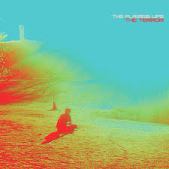
terror After the distortion heavy and heaviness of At War with the Mystics and Embryonic (to say nothing of their other experimental releases), I wasn’t sure what to expect from an album called The Terror.  Yet with a title like that the album is far more invested in psychological terror than in pummeling you with scary noises and music.  The album is more unsettling and spooky with existential dread.

Wayne Coyne has always been a pretty optimistic guy–weird, sure, dealing with feelings of dread, sure, but never so dark and insular.  But I learned that before recording this album and most likely as an impetus to record it,  Coyne separated from his partner of 25 years, Michelle, and Lips multi-instrumentalist Steven Drozd temporarily relapsed into addiction.

In an interview, Drozd says the album is like a crisis of life confidence.  He also says that the uniformity in sonic style was intentional: “Instead of writing songs and then figuring out sounds, we’d write the other way around: create sounds then make songs out of those sounds.”

So the vocals are quite low in the mix, and there is not a lot of “music” in the album.  Rather there are layers of sounds–swishing synths, spiraling noises, percussion effects that seems to almost cover up the vocals, giving it a very claustrophobic effect.  “Look… The Sun Rising” opens the disc.  It is primarily percussion with some noisy sounds and really sharp piercing guitars (that play noisy counterpoint to the soothing chorus of Oh Oh Ohs).  And yet after all of that noise and chaos, the very lovely “Be Free, A Way” surfaces as a quiet introspective song.  There are gentle keyboard notes (not unlike on Yoshimi) that propel this song along.  “Try to Explain” is a pretty song with some unusual sound effects swirling around it (The Lips can’t so straight up pretty, right?).  And yet lyrically, this song, along with the rest, is very dark indeed.

“You Lust” is a 13 minute (!) invocation about various forms of lust.  It opens with the couplet: “You’ve got a lot of nerve/A lot of nerve to fuck with me.”  The middle of the song is a kind of Pink Floydian keyboard workout.  It’s a  lengthy jam that’s kind of samey, but I’ll bet if you can really sit (with headphones) and close your eyes and focus it’s pretty intense.  After about ten minutes of that repetitive claustrophobia, some lightening occurs with sprinkled keyboard notes.

“The Terror” is primarily in Coyne’s falsetto, and it seems gentle until the mechanized noises come bursting forth.  “You Are Alone” is the shortest thing here, under 4 minutes of squeaking noises.  And again, a lovely melody despite the title.  I feel like this song summarizes the album pretty well.  In it, Coyne sings “I’m not alone” while a deeper voice replies, “you are alone.”  Whose voice will ultimately win?

  “Butterfly, How Long It Takes to Die” returns to that abrasive guitar of the earlier tracks, but the main body of this 7 minute song is just bass, keening keyboards and Coyne’s whispered voice.  There’s a recurring synth line that is magical and/or creepy depending on your frame of mind.  It, along with many of the other songs, have a kind of coda that links the songs.  This one is mostly just choral voices, but it twists the ends of the songs in a different direction. “Turning Violent” is a quiet track, in which Coyne sounds nearly defeated until the second half of the song grows louder and more animated with layers of vocals.  The disc ends with “Always There…In Our Hearts” which seems to offer some hope…maybe.  There’s signs of uplift in the melody, and when the drums kick in at the end, it seems to propel the song into a more intense frame of mind.

And lyrically, despite all of the darkness that is always there in our hearts, there is a light peeking out: “always therein our hearts a joy of life that overwhelms.”

Although most reviewers find this album unremittingly bleak, I find the music to be beautiful in an aching sort of way–a beautiful way to deal with pain (better than getting the same tattoo as Miley Cyrus, anyway).

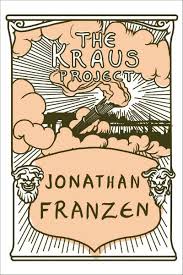
[READ: October 31, 2014] The Kraus Project

The title page of this book read: The Kraus Project: Essays by Karl Kraus translated and annotated by Jonathan Franzen with assistance and additional notes from Paul Reitter and Daniel Kehlmann.

So just what is this thing anyhow?  Well Karl Kraus was a German writer (1874-1936) whose main contributions to letters were some essays and a newsletter Die Fackel (The Torch).  The authors compare the newspaper (favorably) to a blog (while also complaining about what blogs have done to letters).  He started Die Fackel in 1899 and he continued to direct, publish, and write it until his death.  He used the paper to launch attacks on hypocrisy, psychoanalysis, corruption of the Habsburg empire, nationalism of the pan-German movement, laissez-faire economic policies, and numerous other subjects.  For the first ten or so years, Kraus was the editor, accepting contributions from around the German speaking word.  But in 1911, he became the sole contributor to the newsletter.

He also wrote many essays (he did not care much for fiction), including the two main ones that compression this book: “Heine and the Consequences” (1910) and “Nestroy and Posterity” (1912).  The book also includes two follow up essays: “Afterword to Heine and the Consequences” and “Between Two Strains of Life: Final Word to Heine and the Consequences” (1917) and a poem: “Let No One Ask…” (1934).

The essays themselves are quite brief.  Despite the first coming in at 135 pages, note that the left pages are all in German (so reduce 135 by half), nearly all of the English pages are filled with footnotes (reduce by half again) and some of the footnotes run for several pages.  So the essay could be said to be about 25-30 pages.

The same is true for all of the pages in the book.  The left sides are in German (except the footnotes) and most pages are split in half because of the footnotes.  Which means that Franzen and friends write far more than Kraus did.  Ultimately, this book is actually three things: It is a collection of Kraus’ essays with Franzen’s fine translation; it is an explication of Kraus’ attitude and about life in Germany during Kraus’ life and finally it is an insight into Franzen as a young man living in Germany and why Kraus was so appealing to him.

The first part: Kraus’ essays. (more…)

Read Full Post »

« Newer Posts - Older Posts »