Feeds:
Posts
Comments

Archive for the ‘Law’ Category

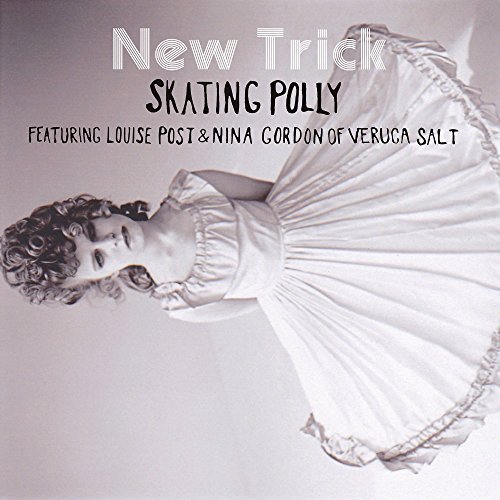
SOUNDTRACK: SKATING POLLY featuring LOUISE POST & NINA GORDON OF VERUCA SALT-New Trick EP (2017).

So Kelli (17) and Peyton (21) have added their brother Kurtis (20) on drums which allows the grrrls to focus on guitars and bass.  This EP, as the name states, was co-written with Louise and Nina of Veruca Salt

“Louder in Outer Space” is the catchiest thing they’ve done by far.  The harmonies are great and the chorus (and even the verse) has the clear impact of Veruca Salt.  The co-songwriting has upped their game in a number of ways too with interesting vocal harmonies.

“Hail Mary” has a real Nirvana feel in the chord choices and in Kelli’s vocal delivery.  The addition of Peyton’s backing vocals in the chorus are a wonderful detail.

There’s a simple bass and drum set up on “Black Sky.”  But when it gets going, it’s the most Veruca Salt of the three songs. It’s even more so when the song pauses and someone (even their voices intertwine) sings “the monster of a sky.”  Then end the song with the following section, the way the vocals (all four of them, I assume) swirl around is really great.  It’s such a terrifically catchy song.  And a dynamite EP.

[READ: December 17, 2017] “Lynch Law”

This story was constructed around what I assumed was a fabricated title but which is very much real: Mounted Police Life in Canada, A Record of Thirty-One Years’ Service by Superintendent Richard Burton Deane (you can see the whole book here).  I was willing to accept the “truth” of the book even if it was made up, but knowing that it was real makes this a more interesting (but not more enjoyable) story.

Basically what we have is Deane’s official transcript of events and then a woman’s explanation of the story from her point of view.

The story begins with quotes from the manuscript: (more…)

Read Full Post »

SOUNDTRACK: CIGARETTES AFTER SEX-Tiny Desk Concert #684 (December 13, 2017).

I only know of Cigarettes After Sex from when NPR played a song of theirs and Bob asked us to guess whether the singer was a man or a woman.

Greg Gonzalez has one of those wonderful voices that is deep and husky and sounds feminine (although his speaking voice is very deep).

This Tiny Desk Concert is very quiet (like The XX).  It is just Gonzalez on heavily echoed guitar and vocals and his unmoving, emotion-free longtime bandmate Phillip Tubbs on spare keyboards.

Although there’s not a lot to these songs, the melodies are truly terrific.

The three songs sound very similar–unmistakably them.

“K.,” the opening track to this Tiny Desk Concert – and the opening cut to the band’s eight year-long awaited debut album – is especially memorable. The lyrics are simple and easy to remember: “Kristen, come right back/I’ve been waiting for you to slip back in bed/When you light the candle.”

Amazingly, for almost half of each song, there are no keyboards, just the guitar.  So that extra, gentle wash of music sounds huge.  “Apocalypse” has the lovely swooning chorus of “you’ve been locked in here forever and you just can’t say goodbye” and “Nothing’s Gonna Hurt You Baby” follows that same pretty structure (although it’s my least favorite of the three).  With the minimalism:

each note and each word seems to count for more  …  and the office environment of the Tiny Desk Concert [may work better] than in a club, where just the chatter of a crowd can drown out this gentle music.

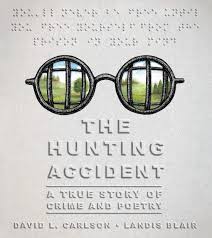
[READ: November 1, 2017] The Hunting Accident

I loved this book. Everything about it was utterly fantastic.  The story, the way it was told, and the amazing drawings of Landis Blair

The book opens on a snowy day in Chicago in 1959.  A boy whose mother has just died has moved from sunny California to miserable Chicago to live with his blind father, Matt.   The boy had lived with his mother since he was four (his mother’s mother thought that his father was a trouble and that they needed to get away from him).  So he barely knew his father.  And now it was time to find out everything about the man.  Like, first off, how he became blind.

The father told the boy all about the hunting accident.  He and his friends were screwing around, playing by the train tracks.  They were having fun scaring each other.  All the kids were afraid of real life bogeymen Leopold & Loeb local murderers.  The boys even believed they found the pipe in which Leopold & Loeb stuffed their victim.

There’s even little reminder of the crime:

In 1924, two wealthy educated men kidnapped and brutally murdered Bobby Franks, a 14-year-old neighbor…just for the thrill of it… to see if they could commit “the perfect crime.”

Anyhow, the boys had a shotgun and heard a deer.  When one of those boys shot at the deer he missed and his Charlie’s father right in the face.

Soon Charlie must learn what it is like to live with a blind man–how everything must be in the exact same place.

Charlie’s father writes all the time (on a braille machine).  He writes about morality and poetry.  He quotes Dante.  And soon, Charlie’s dad was having Charlie help with the writing–by proofing and checking things (Charlie learned a lot at the same time).

Charlie’s grandmother also said that Chicago was dangerous, but not for Charlie.  He got along fine. He even made friends with Steve Garza–the coolest kid in the neighborhood.    Garza was so cool he bummed cigarettes off of Charlie (from his dad–even though Matt, counted them and got mad about it).

Charlie also began getting involved in extracurricular activities–he loved tap dancing and tried the cello–two things his father appreciated. But soon Steve and his buddy started pressuring Charlie.  He “left” his tap shoes at the park, he stopped playing cello and he got involved in some ugly things.

Garza wanted to join the JPs–a local mob related gang.  But he was too young so he started the Junior JPs and soon enough that involved theft.  And since they were dumb, they were easily caught.

And that’s when the truth comes out.

I was already hooked into the story and then I was blown away.  Charlie’s dad did not lose his sight in a hunting accident.  Charlie is furious that his dad lied to him.

Garza convinces Charlie to head for Canada to avoid the cops.  (The third guy has already gotten there and is at a free-love commune or something).  Charlie is prepared to drive them both (he’s the one with the car after all).  And then his dad tells him the whole truth, which gets Charlie to pause.

The rest of the book cover’s Matt’s story.

He was poor in 193os Chicago and got mixed up with the wrong crowd.  His did go blind from a gun shot, but it was a very different setting–and it led to prison.

On the day he got to prison, the same prison that Leopold and Loeb were in, Richard Loeb was killed in the shower.  This left Leopold alone.

Charlie asks if he met Leopold.   And Charlie’s dad says that Nathan Leopold is the reason for his divorce.  What?

Turns out hat not only did Charlie’s dad know Nathan Leopold. He was Leopold’s cell mate.  Since Loeb was killed there was concern that Leopold might be next.  And since Matt was blind, they were put together under watch.

After Matt was out of prison, Leopold sent him a letter (in braille) which the grandmother intercepted.  Matt had never told anyone he was in jail, and that made Matt a Liar.

Matt was miserable in jail.  He couldn’t see, his father was disappointed in him and he had nothing to live for.  He just wanted to die, but that was pretty hard to do under constant supervision. We see daily life for a blind man in jail–food stolen all the time and knocking his cellmate’s things over.

Leopold was angry and bitter and wanted nothing to do with a blind man.  But soon, Leopold began talking to Matt about the life of the mind–something he realized that Matt lived all the time.  Because he couldn’t see everything was in his mind. Leopold used to hold educational lessons in the library at the jail.  He also showed Matt how to make a Glim Box (a way to use a spinning coin to light a fire to light cigarettes).

Matt tells Leopold that he has no family.  Meanwhile, Leopold’s dad visits every two weeks (the visits are awkward and uncomfortable but are a way for Leopold to get things from the outside).

Soon, Leopold is trying to convince Matt to learn Braille.  Why?  well, this gave opportunity for Leopold to learn it to and thereafter he could read after lights out.  (Leopold was a master of many languages and picked up braille easily).

And that’s when Leopold persuaded Matt to read Dante’s Inferno.

The story of Matt’s imprisonment jumps back to the present where Charlie is still annoyed with his father, but is really interested in the story. Especially when he leans that his father almost committed suicide there.

I loved the philosophical ideas in the story–they way the book interprets both Plato and Dante for the everyman .  I loved that Matt’s story runs throughout the book and I loved the whole idea of a blind man helping one of the most notorious criminals of he 20th century.

This story is thought-provoking and exciting at the same time.

The only thing that I feel was left out–did Charlie wind up going to jail or not?  It’s never addressed.

The end of the story and that final two-page spread are just breathtaking.

I also love that David L. Carlson more or less found out about this amazing true story by accident.

Read Full Post »

SOUNDTRACK: RHEOSTATICSFall Nationals The Horseshoe Tavern Toronto, ON. Night 3 of 13 (November 12, 2003).

This was the 3rd night of the Rheostatics 13 night Fall Nationals run at the Horseshoe.  Rheostatics Live has recordings of nights 1, 3, 4, 5 and 7.

As the show starts, Tim says, “Thanks for coming out.”

So Dave replies, “Why, you’re welcome, Tim.  I was doing nothing else so I figured why not play a little drums, a little bass, a little guitar.”

“Here Comes The Image” opens the show (Dave is on drums for this).  It’s slow with lots of cool keys from M.P.W.  The sound quality fades dramatically about 3 minutes in.

Dave explains, “That was an epic song by Tim Vesely.  We’re gonna do another epic song now.  Epic means just long basically, and grand.”  It’s “Oneilly’s Strange Dream.”  Which Dave describes as a song that “was supposed to the be the equivalent of an Edgar Rice Burroughs book.  He’s the guy who wrote Tarzan.  Not to be confused with William S. Burroughs–an urban jungle thing still a lot of guys with no shirts on.”  Martin: “I hate those guys.”

Martin repeats the first verse.   There’s some great powerful drumming in the middle of the song.  The sound levels go back up during this song.

The final notes are a little cockeyed and you hear someone re-sing “pile of bones laying at my side” with that bad chord.

They play Woodstuck “with a drum fill.”  Dave says it’s an old song and someone asks him what it’s about.  Dave tells a story about touring in 1987 and he tells a strange story about a merch guy.  It’s pretty strange and ends with: that’s a song about Brett.  We left him in Calgary naked, quivering under the bed.  Tim says “we didn’t leave him, we gave him to another band: Pigfarm.

Mike notes that “that story was on the set list.  That was a tune.”

Next they play a new song (from 2067), “The Latest Attempt On Your Life.”  It seems they haven’t quite figured out the backing vocals live yet.  “CCYPA” rocks and then they settle things down with “Introducing Happiness” and “Power Ballad for Ozzy Osbourne” (with no ending howl from Martin).

Dave says this is our 3rd annual Fall Nationals.  Mike asks if there is a theme for this night.  No, but one might emerge.

Mike says, “A bolt of lightning struck exactly one block from my house this evening.”  (Dave makes an allusion to Frank Marino of Mahogany Rush (who “inherited the soul of Jimi Hendrix”).

They play a sweet version of “It’s Easy To Be With You,” about which Dave says, “Boy is this song ever about cocaine.”

Next Thursday is an all covers night, so they’re going to do some tonight to make sure they know what they’re doing.

They play Simon & Garfunkel’s “The Only Living Boy in New York,” which I don’t know at all. Martin sings and plays gentle guitar.

Then they start joking about “Old Garfunkel, eh?”

He walked across America with just a credit card…it’s true.  Talk about time on your hands.  I thought it was a knife and a rope.   I heard it was credit card shoes.  Shoes made out of old credit cards.  That was his last album Credit Card Shoes.

In Edinburgh we listened to Scissors Cut about 20 times.  Weirdest album ever made.  Scissors cut and yet the hair remains.

They finally get to a quiet “Palomar” with limited backing vocals.

Somebody in the audience says “I heard you guys have a synchronized soft shoe routine.”  Tim says,”we’re waiting for that to become an Olympic event before we unveil it.”  Dave says, “I couldn’t remember if it was black square white square or white square black square.”

Martin introduces “Self Serve Gas Station”: Take it away Dave.”  But Dave plays “Roll Another Number” bu Neil Young which segues in to “Self Serve.”  The quiet guitar section at the end segues beautifully into “California Dreamline.”

They play a cover of The Clash’s “London Calling,” which sounds great although Dave is a little not angry enough.

People shout out “Michael Jackson”  Martin: “pleased to announce that Michael Jackson is in the audience tonight.”

Then after lots of ums there’s discussion of what to play. Martin in HAL’s calm voice “Why not both, David.  Let’s do both.”  They play “One More Colour,” but then go to an encore break.

Thanks all.  “Frozen rock pose.”  Dave: “We are Frozen Rock Pose.”

We have a few more for you—Dave sings “My First Rock Show” and gets the wrong verse!  He also sings “I ‘sore’ [sic] everything.”  Tim calls him on that.  At “swan dived,” Mike plays a thunderous drum and Dave recites a spiel:

The drums of war were in the air yet they were peaceable times.
And you saw a band like Yello and found out that they sucked and it didn’t cost you $85 to find out.  No $21.50.  Trixter, Heart, The J Geils Band.    Meat Loaf, Blue Peter, The Spoons.  A Flock of Seagulls.  No A-ha did not play.  OMD  OMD, baby.  Oingo Boingo at the first Police picnic.  To Martin: Are those guitar sounds a flock of seagulls?  Dave: they were the best, not the best but they were good.

Where to?  A Flock of Seagulls.  No Tim will do a Warren Zevon song.  called “Reconsider Me.”  I don’t know it.  He sings very high and off a bit.  He groans but then by the middle he says its coming to me and he finished okay with a “Sorry, Warren, I tried.”

We’re here til next Saturday and tomorrow night is guest vocals night.  We have 26 guest vocalists.  We better get in the habit of thanking our guests.

Andrew Houghton played tonight.  And Serena Ryder the next two nights held over by popular acclaim.  They end the with a poppy “In This Town.”

[READ: January 25, 2017] The Ugly

I read a review of this book that made it sound really compelling and strange.  And the back of the book has some of that compelling strangeness in the blurb:

Muzhduk the Ugli the Fourth is a 300-pound boulder-throwing mountain man from Siberia whose tribal homeland is stolen by an American lawyer out to build a butterfly conservatory for wealthy tourists.  In order to restore his people’s land and honor, Muzhduk must travel to Harvard Law School to learn how to throw words instead of boulders.

And that is exactly what happens.  Along with a bunch of other strange things.

I enjoyed the way the story was told.  There are basically parallel narratives.  One is told in first person and is Muzhduk’s life after Harvard (perhaps the present), the other is told in third person and is all about his life at Harvard law school.

But the story begins with the Dull-Boulder Throw.  In his village a chief is determined by who can catch (and throw) a boulder hurled at your chest.  Muzhduk the Ugli the Fourth is the next in line for the throne–his ancestors have all been leaders–but he is the smallest of his lineage being only 300 pounds.

Nevertheless, he knows he must defeat Hulagu who was inbred huge and dumb.  If Hulagu won, the tribe would suffer.  And so for the good of the tribe, he win the Throw. But the second part of becoming chief was climbing the tallest mountain.  Each of his ancestors had climbed a taller mountain, and now his task was trying to find one taller than the tallest one around here. (more…)

Read Full Post »

[LISTENED TO: April 2016] The Scarecrow and His Servant 

I was looking for a story that C. and I could listen to in the mornings when I drove him to school.  I didn’t want it to be too long (our commute was only 15 minutes), but I wanted it to be really enjoyable.

I know Pullman from the His Dark Materials series which I loved.  But I didn’t know much else by him.  This story seemed unusual, to say the least, but it was a perfect length–about 3 hours–for morning drives.

The audio book was read by Graeme Malcolm, and he did an amazing job–he had a great variety of voices at his disposal and he really made the story come to life.

The story is really quite unusual.  It begins with the history of the titular scarecrow.  How a man made him–and gave him a lovely turnip for a head–dressed him smartly and tucked a piece of paper, to show ownership, into his jacket pocket.  Pretty much straightaway, he is stolen, and then stolen again and then one more time until he is very far from home standing in a field.

And then he is struck by lightning and comes to life! (more…)

Read Full Post »

SOUNDTRACK: ANTONIO LIZANA-Tiny Desk Concert #615 (April 28, 2017).

I am fascinated by Lizana, but more for his voice than anything else.  Lizana’s singing voice/style sounds a lot like the lead singer of Gipsy Kings (musicians from Arles and Montpellier in the south of France, who perform in the Spanish language with an Andalusian accent).  Lizana is from Spain, but he has that same strained and fascinating delivery.  The blurb here hints that maybe that is just the style of flamenco:

In many ways, the traditions of flamenco and jazz could not be further apart, but in the hands of a few Spanish jazz musicians, these two worlds commingle and find common ground. Antonio Lizana is one such musician, both a saxophonist and vocalist with one foot firmly planted in each tradition. As a vocalist he has mastered the Moorish, note-bending improvisations that make flamenco singing so beguiling, while the fluidity of ideas he expresses as a saxophonist place him in the time-honored tradition of composing while playing.

Indeed, between jazz-like saxophone, Lizana sings flamenco vocals.  For these three songs, Lizana and Jonatan Pacheco (percussion) and Andreas Arnold (guitar) play quite a mix and it works very well.  The band is also quite multicultural as well as Andreas is from Germany and Jonatan is from Spain (and he plays a mean box drum).

“Airegría” is about 6 minutes long.  It begins with hims singing over the percussion.  It after a minute and a half that the guitar comes in and not until almost 2 and a half minutes before the sax comes in.  The guitar is kind of staccato while the sax is pretty fluid.

Introducing the band he says, “We’re very happy to be here playing.  We have today on the stage or on the desk…”

“Déjate Sentir” more conventionally jazzy sax but the main melody comes from his kind of scat singing.  Ad I find tat when the guitar kicks in I prefer him singing to guitar rather than playing the sax–I suppose traditional flamenco over jazz. But I can appreciate the sax too–especially when it seems to push aside the flamenco style for a bit.

“Viento De La Mar” is a smoother song with some pretty guitar and light jazzy sax.  My favorite moments comes in the middle with the chiming percussion and the big ending.

[READ: June 24, 2016] Big Bad Ironclad

How cool is this series?  It is so cool that this is the official author bio:

The spy Nathan Hale was executed in 1776.  The author Nathan Hale was born in 1976.

Nathan Hale is the author/illustrator’s real name and he uses the spy Nathan Hale as the narrator of his stories about history (or in this case the future–for the spy, that is).

The book begins on September 22, 1776 as Nathan Hale is about to be hung for treason.  The British soldier in charge of the execution is cross, but the executioner himself is kind of giddy because Hale is going to tell another tale.

After some amusing introductions, designed to antagonize the solider, Hale settles in to tell the story of the iron ships (iron doesn’t float!).

And thus he begins the story of the Merrimack and the Monitor.  The year is 1861 and Abraham Lincoln has just been elected.

Hale uses some very funny narrative devices to get some of the salient battle points across, like General Scott’s anaconda plan–surround the enemy and squeeze.  But how can they do that with only four, yes four, ships?

The North’s man in charge was Gideon Welles, nicknamed Father Neptune.  Stephen Mallory is in charge of the confederate navy–the executioner dubs him “sharkface.”  And in the most amusing nod to comics, Gustavus Fox (Foxy) is rendered as a fox (he’s a cute li’l fox). (more…)

Read Full Post »

SOUNDTRACK: DANILO BRITO-Tiny Desk Concert #619 (May 12, 2017).

This is a pretty great  introduction to the music of Danilo Brito:

After four chords, the notes start to fly — Danilo Brito and his four collaborators, three Brazilians and one American, are off like jackrabbits in front of a hound, having hustled their instruments to the Tiny Desk at the end of a North American tour.

Brito plays the mandolin, and boy how his finger fly.

Brito a 32-year-old mandolin player, made his first record when he was a teenager, plays a type of music called choro (pronounced “shore-oo”).  It’s said that choro started in the streets and back yards and made its way to the concert hall. Brazilian musicians of all genres have drawn on choro, from popular composer Antonio Carlos Jobim to Heitor Villa Lobos, one of the giants of Latin American classical music. Its literal translation from the Portuguese is “to cry,” but in Brito’s dextrous hands a better translation may be “crying out to be heard.”

They play five songs.  “Sussuarana” is just full of amazing finger work.  The pace is breakneck and exhausting.  How does he do it?.  There are two guitars (Carlos Moura (7-string guitar) and Guilherme Girardi (guitar)) playing chords and the mandolin zipping all over the place.  In the background, Lucas Arantes plays a small guitar called the cavaquinho and Brian Rice (the American) keeps the beat on the pandeiro.

Between songs he has a translator explain that they are playing “a little bit of Brazilian instrumental music.”  He says this style of music started around 1860, mixing jazz and classical and African music.”

“Lamentos” is a much sadder song (as you might imagine), but it is gorgeous.  For “Tica” Arantes and Rice step aside.  “Tica” is his own composition.  It is a waltz in two tempos.  There’s some wonderful lead lines that run up and down the instrument.  It’s fascinating that while his lines are still fast the rest of the musicians are at a slower pace.  There’s a lovely middle section of delicate guitar, but once it ends they take off again.

The next song is “Melodia Sentimental” it sounds like the soundtrack of a weepy romance film–heart string tugging.

Brito and his colleagues play their arrangement of Villa Lobos’ “Melodia Sentimental,” originally written for voice and orchestra.  What you’re actually hearing is a kind of formal Rodas de Choro, the circles of players who developed this music more than a century ago and have carried it on to the present.

Only — in the backyards, they don’t wear suits and ties.

The final song “Pega Ratão” is also an original piece.  It is short and never stops.  It is great watching his fingers fly.

[READ: June 12, 2016] One Dead Spy

How cool is this series?  It is so cool that this is the official author bio:

The spy Nathan Hale was executed in 1776.  The author Nathan Hale was born in 1976.

Nathan Hale is the author/illustrator’s real name and he uses the spy Nathan Hale as the narrator of his stories about history (or in this case the future–for the spy, that is).

This is the first book in the series so it begins with the historical Nathan being brought up to the gallows.  The people are all there to watch a hanging, but they are disappointed that the guy to be hung is a spy, not the arsonist.  And then Hale is brought up to the British soldier and the executioner (who looks at Hale and say “This is awkward”).

Hale mutters his famous last words: I regret that I have but one life to give for my country.  And as that happens a The Big Huge Book of American History comes down and swallows Hale and then lets him back out because he just “made history.” (more…)

Read Full Post »

SOUNDTRACK: MATT ULERY’S LOOM-Tiny Desk Concert #312 (October 19, 2013).

When a jazz band (or really any band) is named after a person, it’s always fun to try to guess who that person is in the band.  The first song “Coriander”  starts out with some trumpet notes and a kind of intro melody that’s played by both the sax and the trumpet.  And then about a minute and a half in, the keyboards take over, with a great cool 70s jazz/funk sound (the keys sound is my favorite part of this band).  And then of course behind all of this is the constancy of the drummer and the upright bass.  So, which one is Ulery?

I never would have guessed that he’s he bassist.  For his job in this band is basically to hold everything together.  The horns are doing their own thing, the drummer is doing all kinds of cool syncopated jazz beats. And the keys are just soloing like mad.  I don’t know if it’s because the bass isn’t very loud in the mix (it’s really isn’t), but his presence is almost not really there.  At the 4 minute mark of “Coriander,” the whole band drops away and the keys pick up a cool riff and then the horns chime in and eventually the bass comes back in.  I think he’s just not loud enough because watching him, it sure looks like he’s doing a lot more than what I hear.  And yet he’s never flashy.  As I say, he’s the ground, not the star.

When he speaks he’s rather quiet as well.  He says he loves NPR and gives a shout-out to his local Chicago station WBEZ.

Then they launch into the second song “My Favorite Stranger”  in which the keyboardist has now switched to accordion (a pretty pearly white and red affair).  I really like when the bass clarinet takes over the melody for a bit.  The accordion acts like drone with the trumpet taking most of the leads (although I love when the bass clarinet gets to run those same leads as well).

And for some background on Ulery:

The Chicago bassist Matt Ulery writes beautiful music in an unpretentious way. It’s intricate stuff, with interlocking parts and segmented structures. It often borrows from Eastern European scales, orchestral tone colors, folky textures. (On his backpack, he sports a SXSW patch from when he toured with a rock band called In Tall Buildings.) But it doesn’t sound like calculus class, as in some other ambitious works of modern jazz. It never seems to stray too far away from pretty melody over undulating rhythms, and that deceptive simplicity sets it apart.

Last year Ulery put out a grand two-disc set of music you might call “chamber jazz.” By A Little Light had strings, orchestral horns and singers — the whole nine yards. But he has also long done lavish on a smaller scale with a band called Loom. A rejiggered quintet lineup (note: Matt Ulery, bass; Marquis Hill, trumpet; Geof Bradfield, bass clarinet; Rob Clearfield, keyboards/accordion; Jon Dietemyer, drums) produced this year’s Wake An Echo, which the band brought to our office during a brief summer tour.

[READ: December 14, 2014] Tetris

I really enjoyed Box Brown’s take on Andre the Giant.  I really wasn’t sure what a book about Tetris could contain.  I mean, I love the game, but what’s there to say about it?  Well, it turns out, quite a lot–250 pages worth, in fact.

Beyond the game itself, Brown talks a bit about the history of video game development, including a bit of the history of Nintendo. But then he gets into what happened when people started to get addicted to those little falling blocks.  Who knew that Tetris had such a convoluted history?

The book starts off (in Brown’s wonderfully simple drawing style) with a picture of Alexey Pajitnov, the creator of Tetris and his friend Vladimir Pokhilo.  Alexey says he has been thinking about the pentomino puzzle. (more…)

Read Full Post »

thrilignSOUNDTRACK: ADIA VICTORIA-Tiny Desk Concert #545 (June 30, 2016).

adiaAdia Victoria has a rough, raw voice that goes well with her simple, exposed guitar sound.  The blurb says her music “carries the singular perspective of a Southern black woman with a Seventh Day Adventist upbringing, who never felt like she’d fit in.”

She sings three song, mostly in a great, raspy voice.  For “Stuck in the South” she actually seems to be gritting her teeth as she sings: “I don’t know nothing ’bout Southern belles / but I can tell you something ’bout Southern hell.”  When the first verse ends, and her band kicks in, it adds such interesting textures.  A distorted bass and a lead guitar playing quietly distorted sounds.  This song is really captivating.

“And Then You Die” with its swirling sounds and keyboards has a very distinctly Nick Cave feel–gothic in the Southern sense of the word.  Indeed, the first verse is spoken in a delivery that would make Nick proud. This is no to say she cribbed from Cave but it would work very well as a companion song  I really like the way it builds, but the ending is so abrupt–I could have used some more verses.

After the second song the band heads away and Bob says “They’re all leaving you.”  She looks at them and growls, “Get off the stage!” to much laughter.

She sings the final song “Heathen” with just her on acoustic guitar.  It is a simple two chord song.  It’s less interesting than the others, but again, it’s the lyrics that stand out: “I guess that makes me a heathen, something lower than dirt / I hear them calling me heathen, ooh like they think it hurts.”

I’m curious to hear just what Adia would do with these songs when she’s not in this Tiny format.  I imagine she can be really powerful.

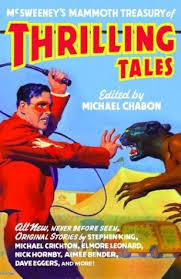
[READ: November 23, 2016] McSweeney’s Mammoth Treasury of Thrilling Tales

For some reason or another I have put off reading this McSweeney’s volume for many years.  This is technically McSweeney’s #10, although it was also released in this printing from a  major publisher. Sadly for me, my McSweeney’s subscription had expired sometime around here so I’ve never actually seen the “official” Volume 10 which I understand has the exact same content but a slightly different cover.

One of the reasons I’ve put off reading this was the small print and pulpy paper–I don’t like pulpy paper.  And it was pretty long, too.

But I think the big reason is that I don’t really like genre fiction.  But I think that’s the point of this issue.  To give people who read non-genre fiction some exposure to genre stuff.

Interestingly I think I’ve learned that I do enjoy some genre fiction after all.  And yet, a lot of the stories here really weren’t very genre-y.  Or very thrilling.  They seemed to have trappings of genre ideas–mystery, horror–but all the while remaining internal stories rather than action-packed.

Which is not to say I didn’t enjoy anything here. I enjoyed a bunch of the stories quite a bit, especially if I didn’t think of them as genre stories.  Although there were a couple of less than exiting stories here, too. (more…)

Read Full Post »

dfwreadSOUNDTRACK: CHRISTIAN SCOTT aTUNDE ADJUAH-Tiny Desk Concert #477 (October 9, 2015).

aacsChristian Scott aTunde Adjuah and his septet play what he calls stretch music: “the particular type of jazz fusion he’s up to: something more seamless than a simple collision of genre signifiers.”

They note that even his appearance stretches traditional jazz: “You may note that he showed up in a Joy Division sleeveless T-shirt and gold chain.” It’s sleek and clearly modern, awash in guitar riffs, but also bold and emotionally naked.

Christian Scott aTunde Adjuah (not sure how to abbreviate that) is a trumpeter and he can hit some loud powerful and long –held notes.   It’s funny that when he bends over the trumpet grows quieter—those ic really are direction-based.

For the first song “TWIN” he does some impressive soloing over a simple and cool beat—piano and delicate guitar riffs (there’s also an upright bass and drummer).   After his lengthy solo there’s a flute solo that also works perfectly (if less dramatically) with the background music.  (Christian plays tambourine during her solo).  He says that this song is about being a twin.  His brother, Kyle Scott is a film director and for whom Christians scores the music.  Christian also explains that he comes from an African-American and Native-American background and that this song has rhythms as a sort of history of his family that touches on Mali, Senegal Gambia and The Ivory Coast and makes its way to the Caribbean, Cuba and into New Orleans.

He’s pleased to play the Tiny Desk Concert for an audience that appreciates “Music that has nutritional value.”

For the second song, “West of the West” he brings on a young alto-saxophonist who plays with his drummer in a different band. The song opens with a rocking electric guitar solo and then the jazzy band kicks in behind it.  The instrumental features a couple of solos by the saxophonist, the pianist and the bassist.

“K.K.P.D.” is a dramatic song for which he gives a lengthy back story.  Many years ago in his home of New Orleans, he was stopped by New Orleans police late at night for no reason other than to harass and intimidate him.  he was coming back from a gig.  He resisted and was in a serious situation and was seriously threatened—the story is long and very affecting, especially given how articulate (I know, terrible word, but true) and calm he is about retelling this horrifying story.  His pride almost made him do something ill-advised, but instead he channeled that pent-up frustration into a piece of music whose long-form title is “Ku Klux Police Department.”

He adds that we see things on TV about inner cities or the ninth ward and we believe them to be true.  Like that the neighborhood is happy that the police are clearing out the youth there.  We begin to think that the narrative is true, although the people who live there can tell you otherwise.  Despite the title and the origin, the is song is designed to reach a consensus to move forward –not to build derision or hate.  He says that we have to start working on that now, because if it doesn’t start now then our children will continue to inherit this situation.

It opens with a noisy guitar wash and fast drums.  It’s quite noisy and chaotic although it resolves very nicely into an almost sweet piano-based song with slow horns.  The middle of the song ramps up with some intense soloing from Christian.  I love how that segues into a very different section with an electronic drum and delicate piano.  Chritsian’s next solo is much more optimistic.  The final section is just wonderfully catchy.

When he introduces the band, he points out just how young some of his newest members are: Drummer Corey Fonville (another new member) used a djembe as a bass drum, and also brought a MIDI pad so he could emulate the sound of a drum machine; Lawrence Fields, piano; Kris Funn, bass; Dominic Minix , guitar (21 years old); Braxton Cook, saxophone (24 years-old) and Elena Pinderhughes, flute: 20 years old!

I don’t listen to a ton of jazz, but I really liked this Tiny Desk Concert a lot.

[READ: July-October 2016] The David Foster Wallace Reader

I’ve had this book since Sarah bought it for me for Christmas in 2014.  I haven’t been in a huge hurry to read it because I have read almost everything in it already.  And some of that I have even read recently.  But this summer I decided to read some of my bigger books, so this was a good time as any.

One of the fascinating things about reading this book is the excerpting in the fiction section.  I have never really read excerpts from DFWs longer books before.  And once you decontextualize the parts, you can really appreciate them for themselves rather than as a means to the end of the story.  This is especially true of the excerpts from Broom of the System and Infinite Jest.  But also just reading some of these sections as a short story makes for an interesting experience.

It was also very interesting to read the non-fiction all together like that.  These pieces come from difference anthologies, but they have thematic similarities  So, placing them together like that allows for really comparing the stories.

And of course, the selling point for most DFW fans is the teaching materials in the center of the book–an opportunity to look into the man’s mind at work shaping younger minds.

I have written about virtually everything in this book already (title links refer back to previous posts), so mostly these are thoughts about the pieces themselves and not a part of a whole. (more…)

Read Full Post »

harp marchSOUNDTRACK: RHEOSTATICS-Vertigo, Victoria British Columbia, (January 22, 2000).

vertigoOne of the things that I like about listening to Rheostatics live shows is that when they play a couple nights in a row, they play such different sets both nights.  In the two nights at Vertigo, they played 44 songs and only 5 of them were duplicated (all from the newest album and a song that was on the live album).  That is a fan pleasing band.

It’s hard to even say which night is better.  Night 2 had more deep cuts and yet, they’re not exactly rare tracks for them to play either.

Lucky’s notes for this one say that the band were given cell phone type gadgets and that Martin played with his throughout the show.  You can hear that as the set opens and Martin is goofing off with his.

Overall for these shows I found that the band was playing a lot of songs in a bit more mellow vibe.  It’s not the way I like to hear them, but I wonder what it was like live.  However, “King of the Past” one of my favorite songs was played too slow on this night, as was “Christopher.” And “Northern Wish” sounded quite different–it had an almost meandering quality to it. Even “Stolen Car” has a slow moody quality (which Martin agrees with).

But the band is clearly having fun.  On “Four Little Songs there’s a crazy drum solo.  And as it ends and “The Royal Albert” starts, there’s some odd guitar sounds which Martin describes as change falling in an elevator.

The stage banter is certainly fun tonight, especially the talk about Sean Brodie and ordering a pizza (which was terrible).

The final song is a great version of “Aliens.”   But before that they play a cover of Reverend Ken and the Lost Followers’ “The Midnight Ride of Red Dog Ray ” which is all about a guy who drove to Quebec when there was a beer strike in Toronto.

Here’s the original

Although I love the song choices in this set, I feel like its slowness makes me prefer the previous night’s set a little more.

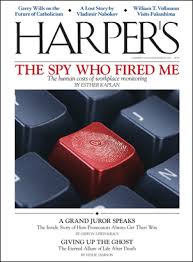
[READ: March 2, 2015] “Invisible and Insidious”

Vollmann is one of the more prolific writers I know (or at least his one collection of works is over 3,000 pages).  I sort of have designs on reading his output but there’s so many other authors I like and Vollmann has so much out there that I think my best bet is to keep up with his writing when I see it and just let it go at that.

So he occasionally writes non-fiction for Harper’s.  And they are usually pretty dark and unhappy pieces about the state of the world–Vollmann is not afraid to go to dark places.  In this article he talks about living in Japan and he reminds us that not that long ago (March 2011) there was a tsunami and a huge nuclear meltdown in that country.  And how most likely we all assume it must have been fixed, since we don’t hear about it anymore.

I don’t wish to overwhelm with details–that’s Vollmann’s job.  But he does a few interesting things in Japan.  He explores locations that are off-limits (or at least in the evacuation zone) and he talks to people who live and work in these areas.  He also (of course) has a dosimeter (which I assume must be pretty common in a radiated site).

The nuclear utility that monitors the plant, TEPCO (Tokyo Electric Power Company) has issued various information over the years, although none of it seems verifiable.  In August 2013, The Japanese Nuclear Regulation Authority said the leak was re-categorized from level 1(anomaly) to level 3 (a serious accident).  And the Japan Times says a the radioactivity was about 100 times more than what TEPCO had been allowing to enter the sea each year before the crisis. (more…)

Read Full Post »

« Newer Posts - Older Posts »