Feeds:
Posts
Comments

Archive for the ‘Film & TV’ Category

fivedials_no29SOUNDTRACK: BOB & DOUG McKENZIE-“The 12 Days of Christmas” (1981).

bob & dougThis is my preferred old school version of “The 12 Days of Christmas.”  It was one of the first parodies of the song that I had heard (and I was big in parodies back in 1981).

I loved how stupid they were (on the first day of Christmas, my true love gave to me…a beer).  I loved trying to figure out what a two-four was, and it cracked me up that they skipped a whole bunch of days.

I also enjoyed how they continued to snipe at each other throughout the song.  Not comedy gold perhaps (that would be “Take Off” recorded with Geddy Lee, but a nice way to start, or end, the season on these “mystery days.”

Evidently, decades after SCTV went off the air, Bob & Doug got an animated TV show (without Rick Moranis).  And they made a video of the song. Hosers.

[youtube-http://www.youtube.com/watch?v=l2oPio60mK4]

[READ: December 3, 2013] Five Dials #29

Five Dials Number 29 was the first issue I had read in a while.  (I read this before going back to 26-28).  And it really reminded me of how great Five Dials is.  I don’t know why this isn’t Part 2 after Number 28’s Part 1 (there was no 28b either), but that’s irrelevant.  This is an independent collection of great writing.  I was instantly surprised and delighted to see that César Aria was included in this issue (I didn’t even know he had made inroads in England).

CRAIG TAYLOR-Letter from the Editor: In Swedes and Open Letters
Taylor’s usually chipper introduction is saddened by the contents of this one.  The discussion centers on Sweden and the city of Malmo, where integration is proving to be tougher than they’d hoped.  Black skinned people are profiled pretty explicitly.  Taylor talks about meeting the writer Jonas Hassen Khemiri (who they subsequently published in issue 21) who deals with issues of race.  In March of 2013, Khemiri wrote an open letter to Swedish Minister for Justice Beatrice Ask after she brushed off concerns about racial profiling. The letter went viral including getting translated into 15 languages.  So I guess there is some positivity after all. (more…)

Read Full Post »

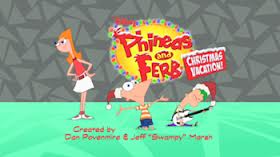
fivedials_no28SOUNDTRACK: PHINEAS AND FERB-The Twelve Days of Christmas (2010).

phineasWhile The Bird and the Bee has become my new favorite serious version of The Twelve Days of Christmas, this Phineas and Ferb version is my new favorite silly version of the song.  Sure it’s especially funny for fans of the show but, as anyone who has seen the show knows, Dr. Doofenshmirtz is comedy gold and so his wishes for Christmas and his updates and concessions (and the fact that he is a traditionalist) absolutely make this worthy of repeat listens.

[READ: December 19, 2013] Five Dials Number 28

Five Dials #28 is vaguely thematic–about heroes.  Some items are literal (the writers-as-heroines drawing), some are speculative (my favorite conceit–the stories of quickly killed side characters in movies), and some are unrelated at all–the guy who helped out Will Self.  This issue was launched from Sydney, Australia.

CRAIG TAYLOR-A Letter from the Editor: On Heroes and Convicts
Taylor talks about everything mentioned above and then talks about Robert Hughes’ The Fatal Shore and his primer on modern art: The Shock of the New (which has an accompanying documentary series). (more…)

Read Full Post »

hawk SOUNDTRACK: BAD RELIGION-Christmas Songs (2013).

brThere’s been plenty of press about this Bad Religion Christmas album.  Greg and Brett have been interviewed on NPR’s Weekend Edition.

So what is a Bad Religion fan to make of this disc?  Bad Religion has, as its name states, no tolerance for any religion, especially Christianity.  So what the hell?

Well, as anyone who has grown up in America knows, these songs are ubiquitous.  But more importantly, these songs are quite good.  So why not give a try at punking them up.  What I appreciate about his album is that the band plays these songs absolutely straight.  Whatever their beliefs, they do not mess with the songs.  (I have absolutely enjoyed mocking versions of these songs, and I have many many goofy versions of them, but Bad Religion has never been goofy, so they sound like real Bad Religions songs–lyrics aside).

And so we get fifteen minutes (seriously) of great respectful punk renditions of traditional religious and secular Christmas songs.  In true Bad Religion form, the songs barely make it over 2 minutes long, but the lyrics are completely understandable and their harmonies are outstanding.  (Bad Religion has always had great harmonies but they are used to wonderful effect here).  Their version of “Hark, The Herald Angels Sing” is amazing (even if I find it unsettling that some of his rhymes are weird (like that he pronounces it BethleHAIM to rhyme with proclaim).  The acapella opening is really impressive (Brett was in choir as a kid).  When the band hits the line where the drums play a counterpoint (for just one line), it’s really fantastic.  “O Come, All Ye Faithful” is just straight out punk.  “God Rest Ye Merry Gentlemen” features some great backing vocals.  The Ramones-feel of “White Christmas” is a weird touch, but their delivery is spot on.

“The Little Drummer Boy” (a song I’m not terribly fond of in general) is quite good in this rendition–especially after hearing Brett say how complicated the measures are in this song.  It’s hard to do a bad version of “Angels We Have Heard on High” when you can harmonize as well as this band does.  And their version is great (I love the backing vocals on this as well).  Theirs is certainly the most aggressive version of “O Come O Come Emmanuel” I’ve ever heard (and I rather like it).  And “What Child is This?” has a solid riff to start with (it’s interesting to hear it on the guitar).  And again, the chorus is stellar.

They finish off the album with a remix of “American Jesus” a very anti-religion song (and perhaps a palette cleanser).  I didn’t notice how it is a remix, but it still sounds good.

Of course if you don’t like punk, you won’t like this, but I was really impressed with the care they put into these renditions.

[READ: December 24, 2013] Bad Santas

This book looks at the history of Christmas, but specifically at the creatures who caused mayhem and violence during the long winter holidays.  Indeed, our “traditional” Christmas celebration is a relatively new construct (you will be shocked to see how new it actually is).

kallikantzaroi_free_christmas_by_gpapanto-d5or453In Greece, during the twelves days of Christmas, goblins called Kallikantzaoi would steal things, destroy property and even abduct children.  In Finland, an evil goat called Joulupukki would demand gifts and punish evil children (he has since been turned into basically Santa Claus.

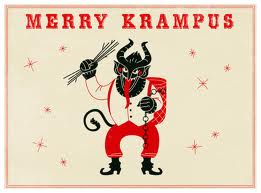
krampusAnd in parts of Italy and Germany, the witch Perchta would climb down the chimney.  But instead of giving presents to children, she would rip out their intestines and replace them with straw and stone.  (There’s a wonderful doll of Perchta here).  And anyone who has recently since the Grimm Christmas episode now knows of Krampus who is not only a real Christmas creature, (meaning Grimm didn’t make him up), he is still active and you can get Krampus cards.

(more…)

Read Full Post »

blacaxeSOUNDTRACK: HAVE YOURSELF A SULLEN LITTLE CHRISTMAS–NPR (December 19, 2013).

charliebrown_wide-ac0b12e7fc8f83eb302cc221a37ba8592ccc2e63-s40-c85NPR Music’s Stephen Thompson and Travis Larchuk hop onto Morning Edition to talk about Christmas songs that are melancholy sad and downright sullen (which is quite a lot of them, if you really listen to the words).

They talk about some new(ish) songs that are depressing  Like David Mead’s “The Smile of Rachael Ray” (which would be bad enough, but that’s just a lead in to the bummer within), Harvey Danger’s “Sometimes You Have to Work on Christmas (Sometimes),” Garfunkel & Oates’ “Year End Letter” (which is quite funny) and the song “Dead, Dead, Dead” from the South Park holiday album Mr. Hankey’s Christmas Classics.

Of course, dark Christmas songs are nothing new.  There are plenty of dour holiday standards that originate in the 1940s “I’ll Be Home for Christmas,” “Have Yourself a Merry Little Christmas,” and “Blue Christmas”  are major downers.

When I try to compile Christmas mixes I try to leave off the bummer songs, but it’s really hard.

Stephen Thompson gives an excellent summary of the season: “Christmas is the one day a year when we’re all supposed to be happy, and so you’re hyperaware when you’re not.”  I hope everyone has a Happy Christmas this year.

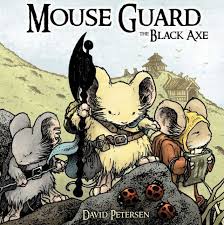
[READ: December 10, 2013] Mouse Guard The Black Axe

This book features a preface by Terry Jones.  It doesn’t say a lot, but it’s worth a mention.

The Black Axe begins after the events of Winter 1152 (it is set in Spring, 1153), but the bulk of the book is a flashback to the origin story of the Black Axe.

As the book opens we learn that Lieam, one of the Mouse Guards has been missing for the last three months.  We also learn that even though the Winter was a dangerous time for the mice, the Spring proves to be equally treacherous as all of the predators are awaking from hibernation. But despite the current crises, Gwendolyn’s thoughts turn to Spring 1115 where the story of Celanawe begins.

We see Celanawe on an island building a house.  Suddenly a crow approaches.  On the crow is Em, a mouse who can communicate with the crows and who reveals that he she has been looking for him. (more…)

Read Full Post »

dec2006SOUNDTRACK: HILMAR ÖRN HILMARSSON & SIGUR RÒS-Angels in the Universe (2000).

angelsThis disc often gets placed in the Sigur Rós discography even though it really isn’t one of their records. It is a soundtrack to the film Angels in the Universe, and it is primarily music composed and conducted by Hilmarsson.  There are 17 tracks on the disc and he is responsible for 15 of them.  The remaining 2 are indeed by Sigur Rós, but if you have the “Ny batteri” single, you’ve already got the two songs.

The Hilmarsson tracks are large airy string pieces (I don’t know the film or anything about it, but it makes it seem rather sad). There are some tracks in the middle that deviate somewhat–some drums and occasional bass, but for the most part the music sounds like a string score to a film.  Pretty, but not exceptional.  At no time does Sigur Rós play with the other performers.

It’s the last two track s that are by Sigur Rós.  “Bíum bíum bambaló” is a slow piece that begins with mostly percussion.  Apparently it is an Icelandic lullaby and their version is quite different from a lullaby.  By the end of the song, when the whole band kicks in it rocks really hard and proves to be a great song.  The final track, “Dánarfregnir og jarðarfarir” was a theme used for death announcements on Icelandic radio (whatever that means).  I love the way it builds from a simple melody into a full rock band version and then back again.  It’s very dramatic.  These songs are both really enjoyable.  I like them a lot.  But I’d just stick with the single.

[READ: November 9, 2013] “The Secret Mainstream”

This article was in Bissell’s book Magic Hours, which I read a while ago.  I recognized some of the material in the article, but not all of it, which I find disconcerting that I forgot so much.

This article is (as the subtitle states) all about Werner Herzog, a filmmaker whose films I have never seen.  Herzog is notorious both for his films (he has made over 50) and for his behavior (some rumors of which are true, others are not).

Bissell wonders what historians would make of our civilization if they based their understanding on Herzog’s work.

He also goes through many of Herzog’s film, starting with Fata Morgana, Herzog’s first overt confounding of the feature film/documentary boundary.  It is neither narrative not strictly factual.  In truth, what Herzog does is make a hyperrealized truth.  For instance, in a film about a blind woman he created images and had her say they were images she remembered).  David Lynch is a fan of Herzog and you can see elements of Herzog in Lynch’s filams (so maybe the adjective Lynchian could be Herzogian.

What Bissell is saying (and Herzog confirms) is that Herzog is an artist, not a journalist.  He is also quite funny.  The story about the 32 pound rooster and the two foot horse is very very funny.

And while Herzog takes his films seriously he doesn’t really plan them.  He says he doesn’t anticipate what his next project will be and he also doesn’t spend a lot of time working on his films.  Woyzeck (1979) was shot in 18 days and edited in four.  He also took less than a month to make Grizzly Man (probably his best known recent film).

And yet for a film like Aguirre: The Wrath of God (1972), a film about Spaniards searching for El Dorado and slowly going mad, Herzog’s crew and cast nearly went mad themselves.  Klaus Kinski, the lead actor has this to say in his autobiography: “I absolutely despise this murderous Herzog… Huge red ants should piss into his lying eyes, gobble up his balls, penetrate his asshole and eat his guts.”  Herzog himself says that he helped Kinski write that and many other anti-Herzog sections of that autobiography.

Bissell cites The White Diamond (2004) as one of Herzog’s best films (it is a documentary about Dr Graham Dorrington a researcher who wants to film Guyana from an experimental blimp.  Or The Great Ecstasy of the Woodcarver Steiner (1974) which is about competitive ski jumpers and shows jump after jump after jump landing badly. Little Dieter Needs to Fly (1997) is about the escape of a pilot from a prison camp in 1966.  He has Dieter open and close his door three times before entering because “most people don’t realize how important it is to have the privilege that we have to be able to open and close the door.  That is the habit I got into and so be it.”  Which is moving and impressive and totally false.  Dieter doesn’t do that in real life.  But Dieter understood what Herzog was going for and believed in the truth of it even is it’s not strictly true.  Herzog calls it the ecstatic truth.

I don’t recall how I felt about Herzog after reading this the first time, but I am certainly thinking about watching a bunch of his films.

Some recommendations from the article:

  • Fata Morgana (1970)
  • Land of Silence and Darkness (1971)
  • Aguirre:  The Wrath of God (1972)
  • The Great Ecstasy of the Woodcarver Steiner (1974)
  • The Enigma of Kasper Hauser (1974)
  • Strozek (1976)
  • Woyzeck (1979)
  • Fitzcarraldo (1982)
  • Lessons of Darkness (1992)
  • Little Dieter Needs to Fly (1997)
  • Grizzly Man (2004)
  • The White Diamond (2004)
  • Wild Blue Yonder (2005)
  • Rescue Dawn (2006)—which Herzog was working at the time of the article and which had a fairly large budget (for Herzog) of $10 million.  He even has name stars in it (Christian Bale, for one).  Bissell makes it sound very interesting, and certainly fascinating to watch being filmed.

Read Full Post »

bothfleshSOUNDTRACK: SIGUR RÓS-Von brigði [Recycle Bin] (1998).

recycleAfter releasing their first album, Sigur Rós was approached by Icelandic musicians to remix the album. And thus came Recycle Bin.  I realized too late that I really just don’t like remix albums all that much–they’re mostly just faster drums plopped on top of existing songs.  And such is the case here.  Despite the interesting musical pedigrees of the remixers, there’s nothing anywhere near as interesting as on Von itself.  There are ten tracks, but only 5 songs.

”Syndir Guðs” gets two remixes:

Biogen keeps the bass but adds some more drumlike sounds.

Múm removes the bass, adds some wild drums and trippy textures and reduces the 7 minutes to 5.  It is quite pretty but very far from the original.

“Leit að lífi” gets three remixes

Plasmic takes a spacey 3 minute wordless noodle and turns it into a heavy fast dance song with speedy drums, big bass notes and with spacey sounds.

Thor brings in some fast skittery drums and keeps the spacey sounds (which sound sped up).  And of course bigger bass noises.

Sigur Rós recycle their own song into a dance song by adding funky bass and drums.

“Myrkur” gets two remixes.  the original is a fast-paced groovy track.

Ilo begins it as a spacey non-musical sounding piece.  After two minutes they add a beat of very mechanical-sounding drums.  It’s probably the most interesting remix here.

Dirty-Bix adds big, slow drums.  It keeps the same melody and vocals as the original but totally changes the rhythm and texture of the song, (removing the guitar completely).

The remaining three songs get one remix each.

The original “18 Sekúndur Fyrir Sólarupprás” is 18 seconds of silence.  Curver turns it into “180 Sekúndur Fyrir Sólarupprás” and makes a muffled drum beat and some other samples from the album, I think.  It constantly sounds like it is glitching apart until the end where it practically disintegrates–an interesting remix of silence.

“Hún Jörð” 7 min Hassbræður increases the drums and adds a more buzzsaw guitar sound and makes the vocals stand out a bit more.

“Von” has delicate strings and Jónsi voice.  The remix by Gusgus adds low end bass and drums making it a thumping rather than soaring track.

I prefer the original, but I much prefer their next album to the first one.

[READ: end of October to early November 2013]  original articles that comprise Both Flesh and Not

As I mentioned last week, I decided to compare the articles in Both Flesh and Not with the original publications to see what the differences were.  I had done this before with A Supposedly Fun Thing… and that was interesting and enlightening (about the editing process).

This time around the book has a lot more information than the original articles did.  Although as I come to understand it, the original DFW submitted article is likely what is being printed in the book with all of the editing done by the magazine (presumably with DFW’s approval).  So basically, if you had read the original articles and figured you didn’t need the book, this is what you’re missing.

Quite a lot of the changes are word choice changes (this seems to belie the idea that DFW approved the changes as they are often one word changes).  Most of the changes are dropped footnotes (at least in one article) or whole sections chopped out (in others).

For the most part the changes were that the book version added things that were left out or more likely removed from the article.  If the addition in the book is more than a sentence, I only include the first few words as I assume most readers have the book and can find it for themselves.  The way to read the construct below is that most of the time the first quote is from the original article.  The second quote is how it appears in Both Flesh and Not.  At the end of each bullet, I have put in parentheses the page in BFAN where you’ll find it.  I don’t include the page number of the article.  And when I specifically mention a footnote (FN 1, for example), I am referring to the book as many times the articles drop footnotes and they are not always in sync.

Note: I tried most of the time to put quotes around the text, but man is that labor intensive, so if I forgot, it’s not meant to be anything significant. (more…)

Read Full Post »

bomarsSOUNDTRACK: SIGUR RÓS-“Ný batterí” (2000).

nyThe single opens with “Rafmagnið búið” a kind of brass introductory piece.  There’s lots of horns building slowly, growing louder but not really playing a melody.  By the end of five minutes, it segues into “Ný batterí” which opens with horns as well.  Then the bass comes in, a slow, deep rumble of simple melody.  After 4 and a  half minutes, the drums are a powerful counterpoint to the sweet melody.

“Bíum bíum bambaló” is a slow piece (aren’t they all) that is mostly percussion.  Apparently it is an Icelandic lullaby.  The final track, “Dánarfregnir og jarðarfarir” was a theme used for death announcements on Icelandic radio.  I love the way it builds from a simple melody into a full rock band version and then back again.  It’s very dramatic.

Both tracks were used in the film Angels of the Universe (and appear on the soundtrack).

That certainly makes this single less interesting than the first one (although I’m not sure that the soundtrack was readily available at the time).

[READ: December 1, 2013] Breakfast on Mars

This is a collection of 38 essays (and an introduction by Margaret Cho).  It also includes an introduction geared toward teachers–an appeal that essays do not need to be dull or, worse yet, scary.  The editors encourage teachers to share these essays with students so they get a feel for what it’s like to write compelling personal nonfiction.  The introduction proper gives a brief history of the essay and then talks about the kind of fun and funny (and serious) essays that are included here.

This was a largely fun and largely interesting collection of essays.  When I grabbed it from the library I didn’t realize it was essays (I was intrigued by the title and then looked at the author list and immediately brought it home).  I know it says essays on the cover, but I chose to ignore that apparently.  When Sarah saw the authors (she knows more of them than I do) she had to read it first.  This proved to be a great counterpoint to the very large novel that I was reading at the same time.

The essays each take on different topics.  And what I liked was that before each essay, they include the question that inspired the essay.  I have included the questions here. (more…)

Read Full Post »

Fall 2013 brought in a whole slew of new shows that we wanted to check out.  And while we dropped some after an episode, we still have a few that are lingering on the DVR which we are never really all that excited to watch them.

Perhaps the biggest surprise is that a couple of shows that we thought were sure goners are still around.  And of course, there’s always those shows that we never watched and when we see an ad for it we say, “that’s still on?”

So last time, I did a tally of networks.  Let’s see who wins this time:
NBC: 4  FOX: 6   CBS: 3  Comedy Central: 1  FX: 1  ABC: 3  Lifetime: 1 SyFy: 1   (more…)

Read Full Post »

CV1_TNY_09_16_13Tomine.inddSOUNDTRACK: SAM PHILLIPS-Tiny Desk Concert #3 (June 25, 2008). 

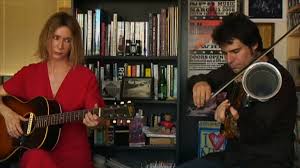
Isamt took a month and a half to get the second Tiny Desk player in, but it took only 20 days to get Sam Phillips to come in after Vic Chesnutt.  Sam Phillips plays four songs (in what is sauna-like conditions apparently) all from her then new album Don’t Do Anything.

Phillips has had a couple of incarnations as a performer (first as “Leslie Phillips” Christian singer).  This incarnation sees her as a kind of folky troubadour with dramatic flair.  She played a lot of the music on the Gilmore Girls (she does the la las), so of course I’m a fan.

Sam is a funny performer, introducing herself (and then asking is she is allowed to talk) and later playing Bob Boilen’s cow in the can (and even questioning the way to say This is NPR).  She is accompanied by Erik Gorfain, who plays a Stroh violin which you can sort of see in this picture (there’s a better one below) and which Phillips suggests is plenty loud enough thank you.

Her first song, “Sister Rosetta Goes Before Us” opens with big strumming guitars and a bouncy melody.  It’s a great song that is a lot of fun–that violin brings great counterpoint.  “No Explanations” is a bit more rocking (with Gorfain on electric guitar).  It has a catchy chorus.  “Signal” returns to that kind of bouncy tin pan alley style which she does very well.  “Little Plastic Life” ends the set with… a screw up, which she handles wonderfully, and which makes the song seem all the better when she plays it again.

I really enjoyed this Tiny Desk and am going to have to listen to more of her work.

Check out what a Stroh violin looks like:

stroh

[READ: September 25, 2013] “By Fire”

Here’s another story about unemployment.  I had intended to post this back in September, so when I originally typed that this story is more dramatic than “yesterday’s,” I meant Lisa Moore’s story from September which was also about unemployment.

I wasn’t sure where this story took place (it was originally written in French).  The story is about Mohammed.  He graduated from University a few years ago with a degree in history.  It has been useless thus far.  When his father dies, and he is once again incapable of getting a teaching job, he gives up and burns all of his paperwork.

Then he sets out with his father’s fruit cart, determined to make some money selling fruit so he can move out of his house and in with his girlfriend.

There is ample back story in this piece.  We learn about Mohammed’s family—his mother has crippling diabetes, his brothers work but not very hard (one is downright lazy).  And we learn that the person who Mohammed’s father bought his fruit from was a crook who demands more and more money from Mohammed.

But the bulk of the story shows the daily life of Mohammed.  He is routinely harassed by the police for not having the proper paperwork or for being in the wrong place or just for being.  They start with simple harassment, but soon they turn to beatings.  Mohammed refuses to bribe anyone, even when the police give him the opportunity to turn in his former students. (more…)

Read Full Post »

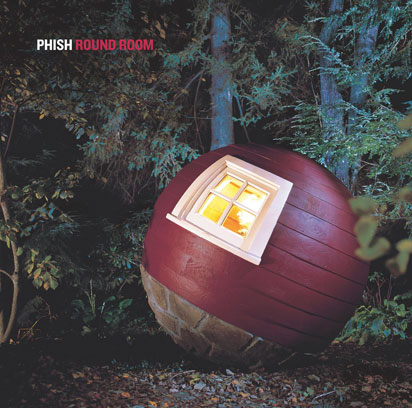
wallsSOUNDTRACK: PHISH-Round Room (2002).

round After Farmhouse, Phish went on a hiatus.  No one knew it would be quite so brief, but there was really a feeling that they were done.

And then they quietly released Round Room in 2002.  And it bursts forth with an 11 minute song.

“Pebbles and Marbles” has an interesting riff—complex and pretty.  And when I listened to it again recently I didn’t really quite recognize it.  But that’s because it’s nearly 12 minutes long and the really catchy part comes later in the song.  At around 5 minutes, the catchy chorus of “pebbles and marbles and things on my mind” announces itself.  And it is a good one.

“Anything but Me” is a pretty, mature song that is slow and piano heavy.  “Round Room” is a boppy little ditty (clearly a song written by Mike).  It is sweet and a little weird.  “Mexican Cousin” sounds a lot like a cover (maybe an old song by The Band) except for the solo which is very Trey.  It’s a funny, silly ode to Tequila.  “Friday” is a slow six minute song with two sections.  The verses are spaced out a bit, delicate riffs that are mostly piano once again.  The middle section is sung by Mike (which makes it more mellow somehow).

“Seven Below” is an 8 minute song.  It has another great riff (and the intro music is cool and bouncey).  When the vocals come in, it’s got gentle harmonies as they croon the sweet song).  Most of the 8 minutes are taking up with a guitar solo.  “Mock Song” is another of Mike’s songs.  This one seems to be a random selection of items sung to a nice melody.  Then when the chorus comes it’s quite nice, how this is a “just a mock song.”  The first verse is sung by Mike, then Trey does a kind of fugue vocal with different words in verse two.

“46 Days” opens with funky cowbells and turns into what seems like a classic rocking folk song—few words but a great classic rock melody (complete with 70s era keyboards).  “All of These Dreams” is a mellow piano piece, another mature song.  “Walls of the Cave” has an interesting piano melody that opens the song. The song is nearly ten minutes long and the middle part has a nice flowing feel to it.  There’s also a few sections that are separated be drum breaks—something that doesn’t often happen in Phish songs.  When the third part opens (to almost exclusively percussion, their vocals all work in a very nice harmony.  It’s a long song but with so many parts it always stays interesting.  “Thunderhead” is another piano-based song with some guitar riffs thrown on top. But it is largely a slow, mellow piece.

“Waves” is an 11 minute song with long instrumental passages.  It also begins with a kind of Santana feel to it, but it is a largely meandering song, with a simple melody that they stretch out for much of the song.  So this album proves to be an interesting mix of long jams and mellow ballady type songs.  It seems like Phish had a big mix of things to let loose.

[READ: November 1, 2013] If Walls Could Talk

This book reminds me of the work of Mary Roach—exploring a topic in great detail and including lots of amusing insights.  The two big differences here are that Worsley is British and that she goes back very far in British history to give us this fascinating information about the development of certain rooms of the house.

Worsley begins with the bedroom.  She looks at the furniture—the history of the bed from lumps with straw to fantastically ornate full poster beds that were made for kings who might never actually use them.

Then she moves on to more personal matters—sex (including deviant sex and venereal disease); breast feeding (for centuries mothers felt they were not equipped to take care of and nurse their own children, hence wet-nurses) and knickers (royalty had an entourage designed specifically to assist with underthings).  Indeed, privacy was an unknown thing in olden times.  Even royalty was expected to receive people in all of the rooms in the house.  Initially the bed chamber was for their most intimate friends, not just for sleeping.

The section on old medicine was also fascinating, they believed that it was vaporous miasma that did you more harm than say, excrement-filled water.

The section on Sleep discusses what was also in a recent article by Gideon Lewis-Kraus—that there were two sleep times at night.  With no electricity there was no artificial light to keep people up late so they would go to sleep early, wake up in the middle of the night (the best time for conception of children) and then sleep again. (more…)

Read Full Post »

« Newer Posts - Older Posts »