Feeds:
Posts
Comments

Archive for the ‘Dip-in Books’ Category

SOUNDTRACK: BLUE ÖYSTER CULT-compilations and live releases (1978-2010).

For a band that had basically two hits (“Don’t Fear the Reaper” and “Burnin’ for You”) and maybe a half a dozen other songs that people might have heard of, BOC has an astonishing number of “greatest hits” collections.

Starting in 1987 we got Career of Evil: The Metal Years (1987), Don’t Fear the Reaper (1989), On Flame with Rock n’ Roll (1990), Cult Classic (which is actually the band re-recording their old tracks (!)) (1994), and the two cd collection Workshop of the Telescopes (1995).  There’s even Singles Collection, (2005) which is a collection of their European singles & Bsides.

This doesn’t include any of the “budget price” collections: E.T.I. Revisited, Tattoo Vampire, Super Hits, Then and Now, The Essential, Are You Ready To Rock?, Shooting Shark, Best of, and the 2010 release: Playlist: The Very Best of).

The lesson is that you evidently won’t lose money making a BOC collection.

I don’t know that any of these collections are any better than the others.

The 2 CD one is for completists, but for the most part you’re going to get the same basic tracks on all of them.

And, although none of them have “Monsters” for the average person looking for some BOC, any disc is a good one.

Regardless of the number of hits they had, BOC was tremendous live.  And, as a result, there have also been a ton of live records released.  Initially the band (like Rush) released a live album after every three studio albums. On Your Feet or On Your Knees (1975) Some Enchanted Evening (1978) and Extraterrestrial Live (1982) were the “real releases.”

Then, in 1994 we got Live 1976 as both CD and DVD (which spares us nothing, including Eric Bloom’s lengthy harangue about the unfairness of…the speed limit).  It’s the most raw and unpolished on live sets.  2002 saw the release of A Long Day’s Night, a recording of a 2002 concert (also on DVD) which had Eric Bloom, Buck Dharma an Allan Lanier reunited.

They also have a number of might-be real live releases (fans debate the legitimacy of many of these).  Picking a concert disc is tough if only because it depends on the era you like.  ETLive is regarded as the best “real” live disc, although the reissued double disc set of Some Enchanted Evening is hard to pass up.  Likewise, the 2002 recording is a good overview of their career, and includes some of their more recent work.

If you consider live albums best of’s (which many people do) I think it’s far to say that BOC has more best of’s than original discs.  Fascinating.  Many BOC fans believe that if they buy all the best of discs, it will convince Columbia to finally reissue the rest of the original discs (and there are a number of worthy contenders!) in deluxe packages.  I don’t know if it will work, but I applaud the effort.

[READ: October 2009-February 2010] State By State

This is a big book. And, since it’s a collection essays, it’s not really the kind of big book that you read straight through.  It’s a perfect dip in book.  And that’s why it took me so long to get through.

I would love to spend a huge amount of time devoting a post to each essay in the book.  But, well, there’s 51 (including D.C.) and quite a few of them I read so long ago I couldn’t say anything meaningful about.  But I will summarize or at least give a sentence about each essay, because they’re all so different.

I’ll also say that I read the Introduction and Preface last (which may have been a mistake, but whatever).  The Preface reveals that what I took to be a flaw in the book was actually intentional.  But let me back up and set up the book better.

The catalyst for the book is the WPA American Guide Series and sort of Steinbeck’s Travels with Charley.  The WPA Guides were written in the 1930s as part of the Works Progress Administration.  48 guide books were written, one for each state.  Some famous writers wrote the books, but they were ultimately edited (and many say watered down) by a committee.  I haven’t read any of them, but am quite interested in them (and am looking to get the New Jersey one).  Each guide was multiple hundreds of pages (the New Jersey one is over 800).

State By State is written in the spirit of that series, except the whole book is 500 pages (which is about 10 pages per state, give or take).  And, once again, famous writers were asked to contribute (no committee edited this book, though).  I’ve included the entire list of authors at the end of the post, for quick access.

So I started the book with New Jersey, of course.  I didn’t realize who Anthony Bourdain was until I looked him up in the contributor’s list (I’m sure he is thrilled to hear that).  And his contribution was simultaneously exciting and disappointing,.  Exciting because he and I had quite similar upbringings: he grew up in North Jersey (although in the wealitheir county next to mine) and had similar (although, again, more wealthy) experiences. The disappointing thing for me was that Bourdain fled the state  for New York City (and, as I now know, untold wealth and fame (except by me))  I felt that his fleeing the state, while something many people aspire to, is not really representative of the residents of the state as a whole.

And that dissatisfaction is what I thought of as the flaw of the book (until I read the Preface).  In the Preface, Matt Weiland explains that they asked all different authors to write about states.  They asked some natives, they asked some moved-ins, they asked some temporary residents and they asked a couple of people to go to a state for the first time.  In reality, this decision makes for a very diverse and highly entertaining reading.  In my idealized world, I feel like it’s disingenuous to have people who just stop in to give their impression of an area.  But hey, that’s not the kind of book they wanted to compile, and I did enjoy what they gave us, so idealism be damned.

For most of the book, whenever I read an essay by someone who wasn’t a native or a resident of a state, I assumed that there weren’t any famous writers from that state.  I’ve no idea if that played into anything or not.  From what I gather, they had a list of authors, and a list of states (I was delighted to read that three people wanted to write about New Jersey-if the other two writers ever decided to put 1,000 words  to paper, I’d love to read them (hey editors, how about State by State Bonus Features online, including any extra essays that people may have wanted to write).

From New Jersey, I proceeded alphabetically.  And, I have to say that I’m a little glad I did.  I say this because the first few states in the book come across as rather negative and kind of unpleasant.  Alabama (written by George Packer) comes across as downtrodden, like a place you’d really have to love to live there.  Even Alaska, which ended up being a very cool story, felt like a veil of oppression resided over the state (or at  least the part of the state that Paul Greenberg wrote bout.)  But what I liked about this essay and the book in general was that the authors often focused on unexpected or little known aspects of each state.  So the Alaska essay focused on Native fisherman and the salmon industry.  Obviously it doesn’t do justice to the rest of that enormous state,  but that’s not what the book is about.

The book is meant to be a personal account of the author’s experiences in the state. (more…)

Read Full Post »

SOUNDTRACK: DROMEDARY RECORDS

My friend Al started Dromedary Records many many years ago (for the whole, in depth, history read here).  He released a number of cool indie rock CDs and then decided to put a halt to the proceedings.

Recently, he decided to resurrect the label, with mostly downloads as opposed to physical product (for the post about that, read this).  He’s currently offering a free EP download from the great Jersey band Footstone.  But more importantly, he’s gathered a number of cool indie bands who contributed a track for his new compilation called Make the Load Lighter: Indie Rock for Haiti.  Proceeds from the compilation go to Haitian relief.

Al has always loved music.  Dromedary was his way of getting great music out to people without all the bullshit that major labels were foisting on artists (this was all before internet music, of course).  And, Al has always been a really good and decent human being (even after owning a record label for a dozen years).  I’m delighted that he’s able to do a nice thing for people and still get music out to those who want it.

So, buy the download, support a good cause, and enjoy some great tunes.

[READ: February 2009] 52 Weeks Heads and Quotes

This is a day planner (sort of) and as such it doesn’t really qualify as a book I’ve read.  However, The Believer published this planner which included excerpts from the magazine, so it kind of counts.  Each week there’s a quote from an artist (usually a writer, but also actors and musicians) as well as a Charles Burns drawing of him or her (or even it in a couple of cases).

And since it is not tied to any year (you write in the month as you go) it has the delightful quote on the back: “You can start this planner anytime–it does not expire.” (more…)

Read Full Post »

SOUNDTRACK: COLIN MELOY-Sings Sam Cooke (2008).

I ordered this CD from the Decemberists website.  (Sadly Colin singing Morrissey is no longer available).   This is, as the title states, Colin Meloy singing Sam Cooke songs.

I don’t know much about Sam Cooke (although I knew a few tunes from this disc).  And, in my head, Sam Cooke doesn’t have a “catalog” of songs, like, say, Morrissey does. So, this came across as a disc of standards.  And as such it’s very good.

If you like Meloy, you’ll like this.  If you don’t, this isn’t going to covert you.  It’s basically just him and his acoustic guitar (and an occasional backing vocal) singing these songs.

I have always liked “Cupid” so it’s nice to have a rendition of it.  As for “Summertime,” I’m not sure why that’s considered a Sam Cooke song since it comes from Porgy and Bess.  I didn’t know the other three songs, but they’re all quite good, uptempo jazzy numbers.

This EP makes me want to investigate a Sam Cooke Greatest Hits, to see what I’ve been missing.  And maybe that was Meloy’s point all along.

[READ: January-February 2010] Shite’s Unoriginal Miscellany

I had ordered a couple of Schott’s Almanacs from the UK, because I thought it would be fun to see what was different about them from the U.S. versions (quite a lot actually).  And while browsing for them, I found this parody of the series.  So, for a few dollars used, I ordered it too.

Now any book that bills itself as “extensively researched, eccentrically compiled and irresponsibly written” pretty much lets you know what you’re getting.   And it does conclude its summary by saying, “more than 250 pieces of useless, misleading and possibly dangerous information.”  So, what might you expect?

This is a very strange parody of the series because it does three things at the same time:  1) It provides actual lists of actual things (which are, indeed, useless and silly).  2) It provides nonsensical/hypothetical questions (more on that shortly).  And 3) It has stuff that is clearly made up and intended to be funny (but often isn’t) (more…)

Read Full Post »

SOUNDTRACK: DO MAKE SAY THINK-Other Truths [CST062] (2009).

I’ve always enjoyed Do Make Say Think’s CDs.  They play instrumentals that are always intriguing and which never get dull.

But this CD far exceeds anything they have done so far (and  they’ve done some great work).   There are only four tracks, and they range from 8 to 12 minutes long.  Each track is named for a word in the band’s name: Do, Make, Say, Think.  And each one is a fully realized mini epic.

“Do” sounds like a gorgeous Mogwai track.  While “Make” has wonderfully diverse elements: a cool percussion midsection and a horn-fueled end section that works perfectly with the maniacal drumming.  “Say” is another Mogwai-like exploration, although it is nicely complemented by horns.  It also ends with a slow jazzy section that works in context but is somewhat unexpected. Finally, “Think” closes the disc with a delightful denouement.  It’s the slowest (and shortest) track, and it shows that even slowing down their instrumentals doesn’t make them dull.

It’s a fantastic record from start to finish.  This is hands down my favorite Constellation release in quite some time.

[READ: December 2009 – January 13, 2010] McSweeney’s #33.

The ever-evolving McSweeney’s has set out to do the unlikely: they printed Issue #33 as a Sunday Newspaper.  It is called The San Francisco Panorama and, indeed, it is just like a huge Sunday newspaper. It has real news in (it is meant to be current as of December 7, 2009).  As well as a Sports section, a magazine section and even comics!

[DIGRESSION] I stopped reading newspapers quite some time ago.  I worked for one in college and have long been aware that the news is just something to fill the space between ads.  I do like newspapers in theory, and certainly hope they don’t all go away but print issues are a dying breed.  When I think about the waste that accompanies a newspaper, I’m horrified.  Sarah and I even did a Sunday New York Times subscription for a while, but there were half a dozen sections that we would simply discard unopened.  And, realistically that’s understandable.  Given how long it took me  to read all of the Panorama, if you actually tried to read the whole Sunday paper, you’d be finished the following Sunday (or even two Sundays later).

Their lofty goal here was to show what print journalism can still do. And with that I concur heartily.  Even if I don’t read the newspaper, the newspapers as entities are worth saving.  Because it is pretty much only print journalism that finds real, honest to God, worthy news stories.  TV news is a joke.  There is virtually nothing of value on network TV.  Fox News is beyond a joke.  CNBC is sad (although Rachel Maddow is awesome!) and even CNN, the originator of all of this 24 hour news nonsense still can’t fill their airtime with non-sensationalized news.

Obviously, there are some decent internet sites, but for the most part they don’t have the budget to support real news investigation.  You either get sensationalized crap like Drudge or rebroadcasts of real news.

So, print is the last bastion of news.  And you can see that in journalistic pieces in The New Yorker, Harper’s, The Walrus, Prospect and, yes, in newspapers.

But enough.  What about THIS newspaper?  Oh and unlike other McSweeney’s reviews I’ve done, there is NO WAY that I am writing a thorough comment on everything in here.  There’s just way too much.  Plus, there are many sections that are just news blurbs.  Larger articles and familiar authors will be addressed, however.  [UPDATE: January 18]: If, however, like Alia Malek below, you bring it to my attention that I’ve left you out (or gotten something wrong!) drop me a line, and I’ll correct things.

There is in fact a Panorama Information Pamphlet which answers a lot of basic questions, like why, how and how often (just this once, they promise!). There’s also a Numbers section which details the size, scope and cost of making this (it shows that with an initial start up, anyone could make a newspaper if they talked enough about what the readers were interested in). (more…)

Read Full Post »

SOUNDTRACK: The Believer June/July 2007 Music Issue Compilation CD: Cue the Bugle Turbulent (2007).

The 2007 Believer disc smashes the mold of folkie songs that they have established with the previous discs in the series.  The theme for this disc is that there’s no theme, although the liner notes give this amusing story:
one decaffeinated copy editor (“the new guy”) made a suggestion: “The Believer CD should be composed of eight a.m. music/breakfast-substitute jams, like that commercial from a while back with the guy who gets out of bed over and over again while ELO plays over his morning routine. You should tell all of the bands to write/contribute songs worth listening to within three minutes of waking up.”

So, without a theme, they just asked artists for some great songs.  There’s one or two tracks written especially for the disc (Sufjan Stevens, Lightning Bolt).  There’s a couple B-sides.  There are some wildly noisy raucous songs: and three of them come from duos!  No Age offers a very noisy blast of feedback.  Magik Markers play a super-fast distortion-fueled rocker, and Lightning Bolt play 5 minutes of noise noise noise.  Oh, and there’s even a rap (Aesop Rock)!

Tracks 3-7 are just about the 5 best songs in a row on any compilation.  Oxford Collapse plays a catchy and wonderfully angular song with “Please Visit Your National Parks.”  It’s followed by a song from Sufjan Stevens that sounds NOTHING like Sufjan Stevens, it’s a noisy distorted guitar blast of indie punk.  I’m from Barcelona follows with a supremely catchy horn driven song that would be huge on any college campus.  Aesop Rock comes next with a fantastic song.  I’d heard a lot about Aesop Rock but had never heard him before, and he raps the kind of rap that I like: cerebral and bouncy.  This is followed by Reykjavik! with a crazy, noisy surf-guitar type of song.  It reminds me of some great college rock from the early 90s.

Of Montreal, a band I’ve been hearing about a lot but who I’ve never heard (and didn’t think sounded like this) plays a wonderfully catchy two minute love song that sounds ironic, but which likely isn’t.  The melody is straight out of the Moody Blues’ “Wildest Dreams,” and yet it is still fun and quirky.

There’s a couple instrumentals as well: The Clogs do a cool, mellow instrumental and Explosions in the Sky do one of their typically fantastic emotional tracks.  Also on the disc, The Blow contribute a delightfully witty song and Bill Fox, a singer I’d never heard of (but who has a great article about him in the magazine), really impressed me with his Bob Dylan meets Nico delivery.  The disc ends with an alternate version of a song by Grizzly Bear.

This is definitely my favorite Believer disc thus far.  See the full track listing here.

[READ: Throughout 2009] Schott’s Miscellany 2008

This year’s edition of Schott’s Miscellany is very much like last year’s edition (see that review here).  I mean, it is an almanac after all.  However, it is a wondrous testament to Schott that even though I read every word of the 2008 edition, I was able to read every word of the 2009 edition and not feel like I was duplicating myself very much.

Obviously the news, facts and events of 2008-09 are different from last year.  And since Schott’s writing style is breezy and fun with a hint of sarcasm and amusement thrown in, you don’t get just a list of facts, you get sentences with subtle commentary on the facts.  And it’s a fun way to re-live the past year.  Plus, the Sci, Tech, Net section discusses science stories that sounded really impressive and important which I can’t believe I didn’t hear about at the time. (more…)

Read Full Post »

createdSOUNDTRACK: ONE RING ZERO-As Smart as We Are (2004).

orzI had this CD sitting around my house for about 4 years.  I had received it as a promo disc from Soft Skull Press (along with several other books on CD) and I just never put it on.  Then one day I was going through all these promos to see if any were books I wanted to listen to.  It was then that I actually read the disc label and saw that it was a band with lyrics written by some of my favorite authors.

I liked the disc so much I wound up buying it because the packaging is truly cool.  It’s a little booklet and it features an interview with the band and some really cool insights into how the songs came about, how they got the writers to submit lyrics, and the cool fact that One Ring Zero became McSweeney’s house band, accompanying writers during their weekly readings.

One Ring Zero is comprised of two guys (and guests).  And for this disc they split the tracks in half and one of them wrote melodies for 8 songs and the other guy wrote melodies for the other 8.  I’m not sure that I could tell the song writers apart by their styles, though.

But sure, the lyrics are probably great, but what does the band sound like?  Well, in the introduction, they are described as specializing “in the sort of 19th century, gypsy-klezmer, circus-flea-cartoon music you mainly hear in your dreams.” And, yep, that is a good summary of things.  The band uses water pipes, claviola, slide whistle and a theremin (among other homemade instruments).

And so, as with other McSweeney’s things, I’m going to list all of the lyricists with their titles.  But lyrically it’s an interesting concoction.  The authors were asked to write lyrics, but not necessarily songs.  So some pieces don’t have choruses.  Some pieces are just silly, and some pieces work quite nicely.  But most of them are really poems (and I can’t really review poems).  They’re fun to read, and it is fun to see what these authors made of this assignment.

PAUL AUSTER-“Natty Man Blues”
A rollicking opening that lopes around with the nonsensical lyrics, “There ain’t no sin in Cincinnati.” This one feels like a twisted Western.

DANIEL HANDLER-“Radio”
A supremely catchy (and rather vulgar) song that gets stuck in my head for days.  “Fucking good, fucking good, fucking good…”

DARIN STRAUSS-“We Both Have a Feeling That You Still Want Me”
A Dark and somewhat disturbing song that is also quite fun.

RICK MOODY-“Kiss Me, You Brat”
A delicate twinkly piece sung byguest vocalist Allysa Lamb *the first female vocalist to appear) .  Once the chorus breaks in, it has an almost carnivalesque tone to it.  This is the only song whose lyrics were written after the music.

LAWRENCE KRAUSER-“Deposition Disposition”
A twisted song that works as a call and response with delightful theremin sounds.  It has a very noir feel.

CLAY McLEOD CHAPMAN-“Half and Half”
This is a sort of comic torchy ballad.  Lyrically, it’ a bout being a hermaphrodite (and it’s dirty too).  Vocals by Hanna Cheek.

DAVE EGGERS-“The Ghost of Rita Gonzalo”
This has a sort of Beach Boys-y folky sound (albeit totally underproduced).  But that theremin is certainly back.

MARGARET ATWOOD-“Frankenstein Monster Song”
This song begins simply with some keyboard notes but it breaks into a very creepy middle section.  It’s fun to think of Margaret Atwood working on this piece.

AARON NAPARSTEK-“Honku”
This song’s only about 20 seconds long.  It is one of a series of haikus about cars, hence honku.

DENIS JOHNSON-“Blessing”
The most folk-sounding of all the tracks (acoustic guitar & tambourine).  It reminds me of Negativland, somehow.  It is also either religious or blasphemous.  I can’t quite be sure which.

NEIL GAIMAN-“On the Wall”
A tender piano ballad.  The chorus gets more sinister, although it retains that simple ballad feel throughout.  It’s probably the least catchy of all the songs.  But lyrically it’s quite sharp.

AMY FUSSELMAN-“All About House Plants”
An absurdist accordion-driven march.  This is probably the most TMBG-like of the bunch (especially when the background vocals kick in).

MYLA GOLDBERG-“Golem”
This song opens (appropriately) with a very Jewish-sounding vibe (especially the clarinet).  But once that intro is over, the song turns into a sinister, spare piece.

A.M. HOMES-“Snow”
This song opens as a sort of indie guitar rock song.  It slowly builds, but just as it reached a full sound, it quickly ends.  The song’s lyrics totally about twenty words.

BEN GREENMAN-“Nothing Else is Happening”
This song has more of that sinister carnivalesque feel to it (especially when the spooky background vocals and the accordion kick in).  The epilogue of a sample from a carnival ride doesn’t hurt either.

JONATHAN AMES-“The Story of the Hairy Call”
This song has a great lo-fi guitar sound (accented with what sounds like who knows what: an electronic thumb piano?).  It rages with a crazily catchy chorus, especially given the raging absurdity of the lyrics.

JONATHAN LETHEM-“Water”
This track is especially interesting. The two writers each wrote melodies for these lyrics.  So, rather than picking one, they simply merged them. It sounds schizophrenic, but is really quite wonderful.  The two melodies sound nothing alike, yet the work together quite well.

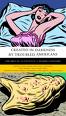
[READ: Some time in 2004 & Summer 2009] Created in Darkness by Troubled Americans

This was the first collection of McSweeney’s humorous stories/pieces/lists whatever you call them.  Some of the pieces came from McSweeney’s issues, but most of them came from McSweeney’s Internet Tendency.

The humor spans a great deal of categories, there’s some literary, some absurd, some nonsensical and, most amusingly, lists.  The back of the book has an entire selection of lists, but there are also some scattered throughout the book as well (I don’t know what criteria was used to allow some lists to be in the “main” part).

As with the other McSweeney’s collections, I’m only writing a line or two about each piece.  For the lists, I’m including a representative sample (not necessarily the best one, though!)

Overall, I enjoyed the book quite a lot (which is why I re-read it this year).  There are puns, there are twisted takes on pop culture, there are literary amusements (Ezra Pound features prominently, which seems odd).  It spans the spectrum of humor.  You may not like every piece, but there’s bound to be many things that make you laugh. (more…)

Read Full Post »

glassSOUNDTRACK: DANKO JONES-Never Too Loud (2008).
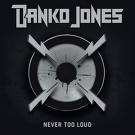
dankoDanko Jones is a hard and fast rock band, with a one track mind and a straightforward sound.  They deal in excessive cliches (album titles include: Sleep is the Enemy, We Sweat Blood, Never Too Loud, etc) and play mostly short songs.  And despite all that apparent negativity, I enjoy them beyond reason.

Their first full length was a compilation of their early EPs, and it was full of outrageously short songs about big dumb sex (a bunch of the tracks were under two minutes).  Danko’s voice sounds a but like Phil Lynott from Thin Lizzy, to give a frame of reference.

Never Too Loud, despite the name, actually changes their style a little bit.  He throws in a ballad (!), and he’s got one song “Take Me Home” which reminds me an awful lot of Kid Rock.   And songs like “King of Magazines” and “Forest for the Trees” similarly slow the pace down (Forest for the Trees is even 6 minutes long!).  But despite all that, Danko still rocks hard.

And yes, I admit that lyrically the disc isn’t ground breaking (“Still in High School” tends to sum up a lot of the themes here), but I don’t care.  Sometimes it’s fun to just rock out.  And Danko rocks with the best of them.

[READ: October 14, 2009] City of Glass

Douglas Coupland is from Vancouver.  And this book (and the revised edition) is like a love letter to the city (although he describes it as a personalized guide book).

When he first published this in 2000, Coupland had been experimenting with things other than novels, but this was the first book he released that was primarily photography (not his own, mind you).  He mixes photos of Vancouver landmarks as well as stock photos to illustrate the varied and multicultural life of Vancouver.

He also includes alphabetically titled texts in which he writes about a paragraph or two or three about the topic.  Most of these are personal insights into the city.  It’s not a work of fiction or even a collection of essays.  It’s more like love notes about this city. (more…)

Read Full Post »

adidasSOUNDTRACK: TV ON THE RADIO-Dear Science, (2008).

sciencThe problem with TV on the Radio for me is that their first EP is so damned good that anything else they do pales in comparison.  Having said that, Dear Science, comes really close to topping that EP.  I liked Cookie Mountain (their previous disc) but I felt like they put so many elements into the mix that it detracted from the best part of the band: Tunde Adepimbe & Kyp Malone’s vocals.

And so, on Dear Science, the vocals are back up front where they belong.  This disc is a lot less busy, which may seem a little like selling out, but instead, it just heightens the complexity and originality of the band’s work.  The disc rocks hard but it also heightens some really cool jazz and dance elements.    But it all comes back to the melodies and vocals for me.  And on Dear Science, they pretty much outdo themselves.

And you can dance to it!

[READ: September 30, 2009] Shiny Adidas Tracksuits and the Death of Camp and Other Essays

After reading David Foster Wallace’s essay in this book, I looked at the other articles here and decided to read the whole thing.  And I’m really glad I did.  It’s an interesting book full of, funny and often thought-provoking pop culture articles circa 1996.  As with some of the other pop culture/political books that I’ve read several years after they were relevant, it’s often weird to look back and see what things fully occupied the popular landscape at the time.  And, when a piece is completed dated, it’s pretty obvious, and sometimes unintentionally funny.  But there are many pieces here that are timeless (or at least hold up for a decade), and those are still really good reads.

This book also does a good job of summarizing the tenor of the defunct Might magazine.  A dose of irony, a splash of humor and a lot of criticism of what’s trendy.

The strange thing to me about this book, though is the targets that they chose to go after sometimes.  Rather than critiquing right-wing attitudes or corporate shenanigans (which they do touch on), they really seem to be after pop and rock celebrity.  For instance, there are two separate articles which take a potshot at Eddie Vedder (this was around the time of the Ticketmaster fiasco which didn’t put him in the best light but which could hardly be seen as only self-serving).  This seems rather unfair, unless his sincerity could really be called into question by a bunch of ironic jokesters.  Magazines like Radar and Spy used to do snarky articles like this. I’d always thought that Might was a little better than that.  But indeed, there’s one or two pieces here that have a holier- (or perhaps indier)-than-thou attitude.   Which may have been fine in the 90s but which seem petulant now.

But aside from those, the irony-free pieces are very enjoyable.  (more…)

Read Full Post »

nealSOUNDTRACK: SONIC YOUTH-Made in USA (1986 released in 1995).
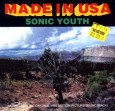
usaThe liner notes explain a lot of what was behind this disc.  The then largely unknown Sonic Youth was asked to score a cool indie film, which later became a less cool more mainstream film and ultimately went straight to video.
The CD is mostly background music, but it is notable for how mainstream it sounds (for Sonic Youth in the mid-80s) and for how bad it sounds–like it was recorded in a can.

It’s mostly completely listenable soundtrack mood music.  It’s nothing to rush out and buy, especially if you like the noisier SY stuff, but, and this is something of a shock, its sounds quite nice, almost ambient at times.

If you’re interested in this sort of thing, it’s worth noting that “Secret Girl” from EVOL appears in a slightly different form (twice actually).

[READ: July 29, 2009] The Neal Pollack Anthology of American Literature

This is the first book published by McSweeney’s Books.  And it is indeed handsome, with a nice yellow ribbon for marking your page.

And so, who is Neal Pollack?  Well, as you all know, Neal Pollack is the greatest living writer today.  He has been writing for decades and has written some of the most important books, and the most important articles that anyone has ever read. His book on life as an African America has not only impressed Oprah, but it has inspired Toni Morrison and Henry Louis Gates.

And, as you can see from the back of the book, everyone from Hunter S. Thompson to Normal Mailer sings his praises. (more…)

Read Full Post »

changeSOUNDTRACK: HÜSKER DÜ-New Day Rising (1985).
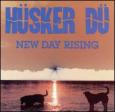
new dayAfter Zen Arcade, who would have guessed that Hüsker Dü would finally release a regular album…not live, not an EP, not a double record, just a standard platter of 40 minutes of music.

For the longest time, “New Day Rising” was one of my favorite songs.  I think its simplicity combined with its basic absurdity really struck a chord with me.  It starts with a  pummeling drum and then is all distorted guitars chugging away at a single chord while Bob Mould screams, really screams “new day RI-sing” over and over again.  The chord changes from time to time and eventually Grant Hart busts in with backing chanting and hollering while Mould gets even more berserk with his screams.  And then it ends.  Just like that.  Two and a half minutes of noisy bliss.

That fuzzy guitar is a really a trademark of Hüsker Dü, something I tend to forget when I think about the songs themselves.  I’m not sure what Mould did with his settings, but his guitar is always loud, kind of tinny and heavy on the distortion.  It’s a good way to mask some simple pop songs as raging punk.

And the songs on New Day Rising are quite poppy. Grant Hart continues his great songwriter streak with “The Girl Who Lives on Heaven Hill” and the ridiculously poppy “Books About UFOs,” while Mould’s pop side is really starting to peek through: “I Apologize” and “Celebrated Summer” hit some great poppy strides (and the distorted guitar is toned down a little bit too).

There’s also another favorite: the weird and creepy “How to Skin a Cat.”  It’s something of a nonsense/throwaway song and yet the music is so weird that they must have had a lot of fun playing it.  “Feed the cats to the rats and the rats to the cats and get the cat skins for nothing.”  The song also makes me think of SST records in general.  If you follow music labels, SST was the home to some seminal punk bands like Black Flag and Hüsker Dü, but they also had a lot of weird punky-California bands.  And all the records have a similar soud quality.  “How to Skin a Cat” to me is the encapsulation of the SST sound.

SST is also a thorn in everyone’s side because they won’t release any of the Hüsker’s disc for remastering. I wonder what a remastered Hüsker disc would sound like? Would it still be as noisy and tinny?

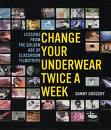
[READ: July 3, 2009] Change Your Underwear Twice a Week

When we went visiting my brother-in-law in Vermont, he took us to an awesome local bookstore called Brown Dog Books.  Sarah and I made sure to do our part for the local economy.  One of the books that I bought was this one.  Tim was also very interested in reading it, as would anybody else who grew up in the 60s and 70s.

As the subtitle suggests, this is a book that looks at a number of the filmstrips shown in grade school. (more…)

Read Full Post »

« Newer Posts - Older Posts »