SOUNDTRACK: THE FLAMING LIPS-Race for the Prize (1999) & Waiting for a Superman’ (1999) singles.
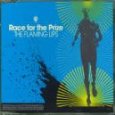
When these singles were released, Zaireeka was out of print; these discs were the only way to get any of the tracks. So, each of these singles has two track from a Zaireeka disc as a B-side: “Riding to Work in the Year 2025 (Your Invisible Now)” & “Thirty Thousand Feet of Despair.” “Race for the Prize” (1 and 2) have the tracks from Zaireeka discs 1 and 2, and “Waitin’ for a Superman” (1 and 2) have the tracks from Zaireeka discs 3 and 4. The singles aren’t really worth hunting down at this point since Zaireeka is now available, but at the time, they were worth it.
[READ: January 18-Feb 5, 2009] Schott’s Original Miscellany
This is the book that started the Schott empire!
Ben Schott wrote this book (the origin story will appear shortly) and it was so successful that he wrote 2 more volumes (all reviewed here). This led to his annual almanacs/miscellanies. There are different versions of the annual almanac for England and the U.S. (and Germany too!) and I can’t help but wonder just how different they are. So if any one has an old UK edition of a Schott’s almanac that they want to send me, let me know!
Okay, get ready. Zaireeka comes as a 4 CD set. With a twist. Each CD is meant to be played simultaneously. So, you get yourself 4 boomboxes hit play at the same time and enjoy!
Each CD has some aspects of each song. So, on one disc you may get some vocals, maybe another has some guitars and sound effects. It all varies per disc. In fact, on one disc, track 6 is given a warning, perhaps my favorite warning ever on a CD: “This recording also contains frequencies not normally heard on commercial recordings and on rare occasion has caused the listener to become disoriented.”
And if you do a search for Zaireeka you will read the gamut of opinions about the disc and its ridiculousness or its social coolness. So I won’t go into that. I will say that one fine day many years ago I tried the experiment. I got 4 radios and synched up all the songs and it worked and it was a lot of fun. I also listened to the set in many different ways: Discs 1-4 individually. Discs 1& 2, discs 1&3, discs 1& 4, discs 2& 3, discs 2&4, discs 3&4 and then discs 1,2 & 3, discs 1, 2 & 4, discs 1, 3 & 4, and discs 2, 3 & 4. Phew. (I had a lot more free time on my hands back then). And since then, I haven’t really listened to the discs at all. Because, well, how often do you get a chance to listen to 4 discs at once?
So, online I found a stereo mixdown version of the disc. I know purists argue that that is simply not the way to listen to the disc, and they have a point…. Many of the effects are certainly lost, and since part of the point of the experiment is that the tracks are going to wobble and go out of synch, the mixdown does ruin the effect. However, if you actually want to hear the songs as songs, not as experiments, the stereo mixdown mix is the way to go (at least until they release the disc in a 5.0 DVD version (which evidently they might…maybe? in 2000, or maybe 2007, or who knows.))
But what about the songs? It’s hard to say that the songs are typical Flaming Lips songs, because that’s not really very meaningful. (Lips songs being off the wall at the best of times). However, the songs are designed to allow the different discs to go out of synch somewhat, creating echoes or even stranger sounds. As such, they are rather meandering pieces, somewhat lengthy, without a lot of heavy beats (that said, there are sections with very loud chaotic drums, they just don’t have other parts to synch up to). But this experiment allows the songwriting to shine through in th emost minute details. And it pays off on their next album in big time.
A track by track rundown goes:
“Okay I’ll Admit That I Really Don’t Understand” opens with a big drum splash and a fantastic bassline. Intermittent piano chords let you know that this song isn’t going to be typical. Fun effects and a swelling chorus add to the ambience. It’s a short song, but it sets the tone for the rest of the disc.
“Riding to Work in the Year 2025 (Your Invisible Now)” starts off in a chaotic jumble, but once it settles down it has yet has another fantastic bassline to start. The middle choral part is really beautiful, although that scream section is pretty jarring/creepy.
As the title, “Thirty-Five Thousand Feet of Despair” suggests, it’s a sad song about a depressed pilot. The effects include a plane taking off. The song is propelled by a heartbeat-like drum, and the echoing voices suit the experiment very well. There’s a “sane” vocal track and an “insane” vocal track.
“A Machine in India” is 10 minutes long. It’s got a long meandering middle section, but the slow keyboard melody remains constant. It’s also the first real occurrence of Wayne’s apparent obsession with vaginas (see Christmas on Mars). It begins sweetly as a nice acoustic song but it explores many sonic areas (according to theliner notes, Wayne and his wife were discussing her menstrual cycle, and that was the jumping off point of this song).
“The Train Runs over the Camel but Is Derailed by the Gnat” begins with a fascinating cacophony of drums and ends in a very sweet “na na na” chorus. In between you get yet another splendid trippy pop song.
“How Will We Know? (Futuristic Crashendos)” contains a shockingly high pitched sound (as warned) and yet the main body of the song is another of Wayne’s folky and very catchy melodies.
“March of the Rotten Vegetables” is probably my favorite track on the disc, despite the fact that it’s an instrumental. It starts with some really interesting squeaky sounds and a cool guitar riff. It morphs into yet another bombastic drum “solo” over a nice piano melody. The liner notes indicates there are bats involved, but I’m not quite sure I hear it.
“The Big Ol’ Bug Is the New Baby Now” is a spoken word piece in which Wayne relates a story about how his dogs treat a stuffed toy like a baby, until they get a “Big Ol’ Bug” which becomes, as you may guess, the new baby. Each disc has different ambient effects. As the song ends, a swelling chorus sings the title until the loudly barking dogs bring an end to the song and the experiment as a whole.
As I mentioned, the stereo mixdown version is one way to enjoy the music. But I must say that even listening one disc at at time can be fun (although really, that comes down to much more of an experimental music experience than anything else). The social aspect of the performance certainly appeals, but I’m pretty antisocial and can’t imagine that I’d ever do it.
If you like the Lips at all but have been afraid of this CD because of how ridiculous it is, it’s probably worth the outlay of funds to buy the set or download a track or two. It’s a fun disc that rewards patience, and, really, the songs are all very good. You could also look for the stereo mixdown, but really, you’d only be getting half the story.
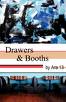
[READ: February 3, 3009] Drawers & Booths
Full disclosure: Ara 13 asked if I’d like to read his book and write about it. I looked up the book on Amazon, and it sounded cool, so I agreed.
Drawers & Booths is a work of metafiction. A simple definition of metafiction, in case you don’t know, is: “a type of fiction that self-consciously addresses the devices of fiction; metafiction does not let the reader forget that he or she is reading a fictional work” (for the full Wikipedia explanation click here.)
SPOILER ALERT: Generally I try not to give anything away when I review a book. Some things are unavoidable of course, but any major plot twists or surprises I try to leave for the reader to discover by him or herself. However, because this book is metafictional, and there are twists, surprises, and massive plot alterations throughout the book, the only way I can review it at all is to give some of these things away. I don’t think I ruin anything for anyone, but tread lightly if you want nothing revealed. (more…)
SOUNDTRACK: THE FLAMING LIPS-Oh My Gawd!!!..The Flaming Lips (1987).
The cover of this disc makes a statement. And it should tell you everything you need to know about the music inside. It’s got skulls and psychedelic colors and Oh My Gawd!!! And yet, it doesn’t, exactly. It’s not quite as out there as the cover might make you think.
Because it’s funny how much this disc’s first song sounds like the Replacements (except where he starts singing about his brains falling out and everything exploding…not quite ‘Mats material). But Wayne sounds like early, sloppy Paul Westerberg, and the riffs are not too far off from some of the early ‘Mats records.
Even the wonderfully titled 9 minute epic “One Million Billionth of a Millisecond on a Sunday Afternoon” isn’t quite as much of a freak out as you might expect. In fact, the early instrumental part is one of the prettiest melodies they’ve done. It is particularly interesting given its sparse instrumentation. The song does eventually drift back into earlier Pink Floyd territory (“Astronomy Domine” etc). But it’s “The Ceiling is Bendin'” that is the freak out you’re looking for, with a fun drum fading and the chaos. “Maximum Dream for Evil Kenevil” on the other hand is a noisy mess (a fun noisy mess, but a noisy mess nonetheless).
It’s clear that they’re doing some good experimentation with audio effects. And yet “Can’t Exist” is a delicate little song with just a light touch of feedback.
The first half of “Prescription: Love” is a rocking instrumental that would not sound out of place as a Nirvana B-side (but since it came before Nirvana, let’s say maybe on an SST Records track. The second half returns to the garage rocking sound (with some funky deep vocals dubbed on…the first of many experiments with voice on future albums).
“Ode to C.C., Pt. 2” feels like it’s going to take of in an explosion but never does. But it has the excellent line “Hell’s got all the good bands anyway.” “Can’t Stop the Spring” is another fantastic riff rocking song, and it starts and end with a classical music sample. [Which I can’t place right now, sadly].
The disc ends with “Love Your Brain,” a 7 minute piano workout –which ultimately ends in the destruction of the room. It sounds like every instrument in the place is destroyed.
So this disc expands the sonic weirdness of the Flaming Lips’ first disc, and it also showcases their growth as musicians. It’s not a brilliant album by any means although it is quite good. The most interesting thing is seeing how much they are experimenting with sounds now, and how it will pay off for them later on.
[READ: Late 2006 & December 2008] Winkie
I read this book two years ago, and my memory of it is not that great. I’m only including it because I really enjoyed it at the time, and would like to make some record of having read it.
UPDATE: I have decided to re-read this book while on P breaks at work. I am now utterly unsure whether or not I read the book fully last time. I have just finished it again, and I was totally surprised by so many things (although one or two things did trigger my memory) that I really had to wonder if I finished it.
So, the story is about a stuffed bear named Winkie. Winkie was a beloved toy of the Chase family and most recently of Clifford Chase [see author’s name now]. As the story opens, Winkie, the stuffed bear, is being tackled by the FBI as they arrest him for terrorist activities. [You can re-read that sentence to see if your brain digested it.] (more…)
I’ve claimed that I love the Lips, but then I was very harsh about their cover of “White Christmas,” and I noted that I wouldn’t listen to the soundtrack of Christmas on Mars very much. So, I felt I owed them some love. But my recollection of their early stuff was that it was pretty weird and hard to listen to.
And yet, I proved myself wrong. Hear It Is is not the Flaming lips of the early 2000’s. It’s almost like the bratty younger brother of that band. Only Wayne and Michael Ivins are present, and the band is pretty much just guitar, bass and drums. The guitar is distorted and noisy (except when it’s acousticy and mellow). The album doesn’t sound too far out of place for a college radio record in the late 80s.
Except of course that Wayne and the boys are pretty out there. The music is psychedelic, acid inspired and quite punk. So you get songs like “Jesus Shootin’ Heroin” a seven minute epic of heavy riffs and screaming, but also of background “Ahhhh’s”. You also get “With You” a song that starts out like a pretty, acoustic ballad. “Godzilla Flick” is a ballad like no other. And yet despite all of the freakouts and noise, really at this stage what you get is a Led Zeppelin inspired heavy garage band having a lot of fun. To say that this is going to blow your mind would be unfair, but to anyone who says the early stuff is unlistenable, they are totally wrong. Hear It Is is sloppy, punky and a little ridiculous, the ideal incubator for what will become the Lips of 2000.
This CD comes with a cover of “Summertime Blues.” This disc was reissued along with their initial EP and some bonus tracks on the disc Finally the Punk Rockers are Taking Acid.
[READ: 1998 and January 10, 2009] McSweeney’s #1
I have been reading McSweeney’s since its inception. (My copy of this issue even has the two page typed letter that explains the failure of Might magazine and the origins of this one. However, it’s been over ten years since I read the first issues. Given my new perspective on McSweeney’s, and how I read just about everything they release, I thought it was about time to go back to the beginning and proceed through the issues until I meet up where I first started reviewing them.
Issue #1 has many features that are absent in later issues:
First is the cover. This cover is simply filled with words; practically littered with them. There are subtitles, there are jokes, there’s all sorts of things (I mean, just look at the full title of this issue).
Second is the letters column. The difference with this letters column compared to most publications is that they are all (or mostly) nonsense. One comes from an author whose piece is accepted into the issue (Morgan Phillips). Another is a funny/silly letter from Sarah Vowell. And there’s a letter to his cousin from John Hodgman (whose comic potential may not have been tapped at this point?). (more…)
SOUNDTRACK: FISHBONE-Give a Monkey a Brain and He’ll Swear He’s the Center of the Universe (1993).
I had actually forgotten about this album, because it was so overshadowed by Truth and Soul and Reality….. When I put it on I wasn’t expecting much (Fishbone had something of a precipitous decline around this time). So, I was amazingly delighted with how much I remembered this album and how much I enjoyed it (which shows to me that I must have listened to it a lot back in college).
This album is much much heavier than anything they’ve done up to this point (I can’t speak for the releases that came after it). It does have some variety of songs, but not nearly as much as their previous releases. The other notable thing is that there’s no short songs on it. There’s none of the one minute songs that they’ve put throughout their discs.
“Swim” was the single from the album and it is heavy and moshy. The video, I seem to recall, was a lot of people crowd surfing. “Black Flowers” slows things down a bit, but unlike previous ballads, this one is still pretty loud. It’s got a great catchy melody, but it’s still quite dark. “Servitude” reminds me of some of King’s X’s s darker moments, with their riffs and dark harmonies. (This just shows how Fishbone is much more metal on this release). Their first “lighter” song is the return to ska with “Unyielding Condition.” It’s a nice let up from the heaviness, and is still catchy. “Lemon Meringue” is the other lighter moment, with a nice bass riff included.
Funk returns with “Properties of Propaganda” and the repeated chants of “Fuk This Shit on Up.” “The Warmth of Your Breath” is hardcore insanity, the type of song that would have been about 2 minutes on another disc sort of overstays its welcome, although the often repeated line “may your dog’s colon be familiar with the warmth of your breath” while barely audible can’t help but raise a smile. And even though “Drunk Skitzo” features Branford Marsalis, it’s still too long for such silliness.
So, it’s really the first half of the disc that I liked a lot…I guess some discs run too long.
I never got a Fishbone CD after this one. The reviews were pretty lousy by then. But of course, the reviews of this one were lousy too, so maybe I’m, selling their later output short.
[READ: January 3, 2009] McSweeney’s # 29
My cover for this book happens to be red. Huh.
This issue comes as a hardcover book. There are planets on the cover, including a die cut hole that shows the moon of the next page.
On the bottom of every page of the book are matchbox labels. Most of them are Eastern European in origin. They were collected by Jane McDevitt, a web designer in the UK. Some of the images are available on her Flickr site: www.flickr.com/photos/maraid. They are a pretty cool collection of images. And, they brighten up all the work . (more…)
SOUNDTRACK: FISHBONE-Set the Booty Upright Bonin’ in the Boneyard single (1990).
This is a slight remix EP of their classic “Bonin’ in the Boenyard.” The two remixes of the song (Bonin’ in the Jungle) and (New and Improved Bonin’) are okay (really nothing beats the original which is not included). But the 3 other songs are fun b-sides. “Love and Bullshit” is particularly good (even at under 2 minutes). It’s fast and furious. “In the Name of Swing” is a jazzy romp with a few different sections for fun, and it features the nonsense that the band members talk and shout to each other in the background.
This is not essential by any means.
[READ: December 26, 2008] “Feel This”
This story about a brother returning from WWII has more depth than it might at first appear. As we learn that the brother, Jack, has returned from the front under special circumstances, we see the family’s reaction to how he was discharged…honorably? …dishonorably? …or something else.
But really the story is about the family’s father, and how he handles disappointment (grief not really being an option for him). (more…)
After getting the dislikes out of my system, it’s time to bring in the positivity. Now that I have a lot of different Christmas discs to choose from, I don’t get inundated with the same songs over and over. This has really allowed me to appreciate the old songs for what they are.
So, here’s 12 things I like about the holiday tune season (in no particular order)
1. “O Holy Night” I feel like I never really knew this song until I heard Cartman getting cattle-prodded for not knowing the words. I listened to that version all the time (but I can’t tell if I like that version or the one on Mr. Hankey’s Christmas Classics better [“Fall on your knees, and hear the angels… something” “VOICES!”]), and what it did was give me a real appreciation for what a cool song this is. The chord changes are very satisfying without being really obvious. And, it’s not an easy song to sing. But I have liked every version I’ve heard: from Cartman to Avril Lavigne (whose first two verses on Maybe This Christmas, Too are the most vibrato-free singing I have ever heard. I’m quite certain she’s flat all the way through, and yet her voice is so unaffected it’s totally disconcerting. Tell me what you think…it’s available here).
Sarah: This truly is a beautiful song and I love all its versions as well, from Cartman to Tracy Chapman. I’m not a religious person but I always feel a little holy when I sing this. (more…)
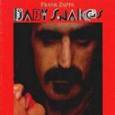
SOUNDTRACK: FRANK ZAPPA-Baby Snakes [the movie & soundtrack] (1979).
This is sort of a review of the soundtrack album to Baby Snakes, but really it’s a review of the film, which I just watched over the last 4 days. Baby Snakes (A Movie About People Who Do Stuff That is Not Normal) was not as depraved as the subtitle (and the history of Zappa) would lead you to believe. In fact, primarily it is a concert film. There are a bunch of other things in the film as well, but easily 3/4 is a live Halloween concert in New York City.
More on that in a moment.
In today’s market, the other parts of the film would simply be packaged as bonus features on a DVD. The claymation and subsequent interview with the artist Bruce Bickford would be a (somewhat) interesting short film, and a lot of the behind the scenes footage would also go well as a bonus attachment to the concert.
But I won’t get ahead of myself. The claymation sequences are, frankly, amazing to watch. There’s a clip on YouTube of Frank on the Mike Douglas Show (which is a trippy/weird thing to watch in and of itself) in which he shows an example of the claymation from the film and from elsewhere. Unlike the amazing work of Aardman on Wallace and Gromit, Bickford’s work is not polished. However, each new image slowly morphs into the next in a series of mindblowing sequences…there are scenes of sex and violence and driving and mountains and flowers, and naughty bits and vomiting and you name it. It is the most stream-of-consciousness looking visuals I may have ever seen.
During the sequences, Frank interviews Bickford. The interview is pretty long, and it sounds like Bickford may be completely stoned. I tuned out a lot of what he was saying.
The backstage footage is the kind of sillydebauchery that you imagine happens back stage: there’s a blow up sex doll, there’s most of the band members telling little stories about what’s going on and there’s Adrian Belew dressing in drag. But again, the editing is not great, and the footage is just sort of randomly inserted…the worst part is when Adrian Belew is actually talking OVER the Frank and the Devil negotiation during “Titties and Beer.” Boo!
So, both of these segments could have worked very nicely as their own short films, rather than being inserted into this longer piece. In fact, the haphazardness of the proceedings seems even worse when you realize that they are no longer inserted into the film after about the two hour mark: the last stretch of the concert is interruption free. The problem is that the whole film is nearly three hours long, and since he intersperses these interviews/animations in between live footage, watching five or ten minutes of animation feels disjointed (overall, the editing leaves something to be desired)
The live footage, however, is pretty amazing. Watching Terry Bozzio beat the crap out of the drums while singing/narrating is pretty fantastic. And Andrian Belew is amazing to watch at any time. It’s also fun to see the percussionist going nuts on what must be a hundred different instruments (including the ever-present Zappa Xylophone.)
But clearly the highlight is watching Zappa. Zappa conducts a whirlwind percussion jam, giving the musicians the key (A is a triangle of two hands, C is his hand shaped like a C) before getting them to strike their chords. It is a fun improv moment, and shows that even back in the 70s, he was interested in composing music, not just writing rock songs.
Incidentally, the soundtrack, of Baby Snakes contains many of the live songs from the film,(but not the improv) including the excellent “Punky’s Whips” and “Black Page #2.” The soundtrack is short (especially compared to the movie) but is really great.
Watching Zappa solo on the guitar is also pretty amazing. I’ve listened to all of his guitar solo releases. And he simply knows the guitar backwards and forwards. So, this concert is a good way to just sit back and watch him play. But it’s also a good way to watch him interact with the fans. Frank is right there with the fans, shaking hands, slapping high fives (and doing this while he is playing an extended solo as well). His charisma is undeniable.
And his charisma is in great evidence during the audience participation section where some of the thronging masses are invited onstage to enact a scene out of Frank’s imagination (a young volunteer is “whipped” by a young woman whose face is painted white with flowers on it, and her friend Donna U Wanna). The woman in the white makeup is all over Frank when she’s down in the crowd, too. While Frank is singing, she starts kissing him and even taking his hair out of a ponytail holder–and he never flubs a word! What a professional.
By the end of the film you kind of forget about the editing, but in the first 2/3, mostly you come away thinking that the editing is just not very good. Much of the claymation is repeated (some is repeated three times). While I understand that Frank reedited the film down to 90 minutes in a failed attempt to find a distributor, and I know everyone is happy to get this unedited version of the film, nevertheless I think the whole film should be broken up into smaller films for maximum enjoyment.
[READ: January 2008 ] Opus
I was a huge huge huge fan of Bloom County back in the day. It was one of my favorite comics, and I can recall doodling Opuses and Bill the Cats during downtime in class. I sort of liked Outland, but then, I didn’t get a paper, so I never really saw those. And, lo and behold, I didn’t even KNOW about the Opus strip. I also just read that he just finished the Opus strip in November. The final panel is supremely touching and is available here (what appeared in the Sunday paper) and then here (the link that’s in the cartoon).
I found this book remaindered, and figured I’d have to give it a try. And it filled me with nostalgia! (more…)
I heard about The Divine Comedy in the beloved British magazine Q. I used to get every issue up until about two years ago. I enjoyed their reviews, and especially enjoyed learning about bands that were under the radar here. I think the Divine Comedy album that was being talked about was Casanova, but I wound up getting Promenade first. And once I did, I was hooked.
Promenade is their second album, and it is still my favorite. It features a musical soundtrack that is similar to Michael Nyman in its electronic/repetitive structure. Nyman’s The Piano soundtrack came out in 1993, and although Nyman had been writing scores for years, The Piano seems like a pretty close reference point to Hannon’s work.
And yet, despite the “modern” sounding style of the music, the lyrics are old school Britain at its best. And, Neil Hannon’s voice is truly an old-school croon (it’s almost cheesy, but not quite). But it’s the words, oh the words, that really sell the disc.
In fact, the song that sold me from the beginning was “The Booklovers,” which is just a list of authors. Really. But the list is punctuated with smarty pants allusions to the writers’ works and it’s all wrapped up in a catchy chorus. But that’s not all, each song references literature in some way.
“Bath” opens with an orchestral flourish as a woman, well, bathes. “Going Downhill Fast” is about racing your bike downhill, with my favorite line: “Vacuous vice!/Just once or twice/Thrice/Four times in five we forget we’re alive.” A Seafood Song” and “Geronimo” lead you to the realization that this album is about two young lovers. First they are having lunch, and then they get caught in a torrential downpour. “Don’t Look Down” has one of my favorite orchestral pieces as towards the end of the song, the young man on a Ferris Wheel has a discussion with a God “who really ought not to exist” as the music grows more and more tense.
“When the Lights Go Out All Over Europe” is another stellar song that contains a wonderfully building chorus. “The Summerhouse” is a really nice ballad. “Neptune’s Daughter” has the story taking a dark turn until the ribald delights of “A Drinking Song.” This song in particular has been one of my favorites because it is raucous and silly and oh so clever. It also ends with one of the great couplets in all of drinking songdom: “From the day I was born ’till the night I will die/All my lovers will be pink and elephantine.” It is soon followed by “Tonight We Fly” a propulsive song of the two lovers “flying” over their life together and flying away from everyone.
It’s truly sublime. I can understand those who don’t like Michael Nyman’s style not really enjoying this disc. But if you like lyrical wonderment, you must check this out. Divine Comedy’s next disc “Casanova” removes the Nyman influence but retains the cleverness. By most accounts it is a better album but I still love Promenade.
[READ: January 2008] Public Enemy #2
Sarah bought this collection for me for Christmas last year. I don’t read a lot of comic strips, but occasionally one pops up on my radar. I had seen a few Boondocks comics and really liked them. This is the 2nd to last collection of the strip (I think…some are called treasuries, so I’m not sure what the distinction is). (more…)
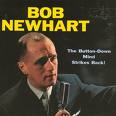
SOUNDTRACK: BOB NEWHART-The Button-Down Mind of Bob Newhart (1960), The Button-Down Mind Strikes Back (1960) & Behind the Button-Down Mind of Bob Newhart (1961).
We started watching The Bob Newhart Show on DVD (the 1970s one, not the one set in the inn). I was surprised how much I liked it and how well it stood up, for the most part. And it made me realize how much I liked Bob Newhart in general. So, I figured I’d try some of his stand up and see what it was like.
I was delighted to find out that a joke from Mystery Science Theater 3000 was finally explained to me: the “Mrs Webb” joke that is muttered whenever an old lady is driving a car comes from the “Driving Instructor” joke on the first album (hereafter known as Button-Down). It’s only taken a decade for me to get that joke!
But really, what do you get when you listen to a Newhart CD? And what would a reviewer write about in a review of these CDs? Well, I think it would go something like this:
[Reviewer]: Yea, hi, ha ha. Hi.
[ ]:
[Reviewer]: I was just listening to these Newhart CDs.
[ ]:
[Reviewer]: No. No, they’re not new, they’re almost 50 years old now.
[ ]:
[Reviewer]: Ha ha, right.
[ ]:
[Reviewer]: No, they’re basically telephone conversations. In most instances Bob plays a character listening to the person on the other end whom you never hear. So, it’s almost entirely reaction shots.
[ ]:
[Reviewer]: Yes, they’re very funny.
[ ]:
[Reviewer]: A few are dated. The one about Khrushchev, “The Khrushchev Landing Rehearsal” (Button-Down), for example is pretty funny but was probably a lot funnier in 1960. And “Driving Instructor” (Button-Down) is sexist in set-up (it’s sort of a joke about “women drivers” but once you get past that it applies to any new driver) but the joke is probably the funniest thing on any of the discs. I was also concerned about “The Africa Movie” (Behind the Button) as it seemed potentially fraught with inappropriate humor, but it turned out to be very very funny, and a wonderful twist on expectations.
[ ]:
[Reviewer]: Yes, the skits do run pretty long. Most are over 5 minutes, but he packs a lot of jokes into that time.
[ ]:
[Reviewer]: Well, sure there are a few that are only about 2 minutes long, and one that even comes close to set up/punchline: “TV Commercials” on Behind the Button (the dentist commercial in particular). But even on that disc, the one sided nature of the conversations persists.
[ ]:
[Reviewer]: There’s a Khrushchev skit on Behind the Button as well (“Tourist Meets Khrushchev”), but aside from knowing who he is, the jokes in that skit aren’t dated at all. It’s all about an annoying tourist running into him somewhere…and the resultant consequences.
[ ]:
[Reviewer]: Yeah, Yeah. Boom!
[ ]:
[Reviewer]: It’s not violent, just implied. Another potentially violent one is “Bus Drivers School” (Strikes Back) as he notes that it takes a certain type of sadist to drive a bus, if you know what I mean. But, uh, well, the only one that gets somewhat risque is “The Uncle Freddie Show” which shows Newhart’s intolerance for kid’s TV show hosts.
[ ]:
[Reviewer]: What?
[ ]:
[Reviewer]: Well, Uncle Freddie doesn’t seem to like kids.
[ ]:
[Reviewer]: Oh.
[ ]:
[Reviewer]: Well, no, some other topics are “Nobody Will Ever Play Baseball” (Button-Down) because how could you possibly market it [“Why four balls, Abner?”]?
[ ]:
[Reviewer]: Yes, a lot with marketing. Like “Abe Lincoln Vs. Madison Avenue” (Button-Down) [“Keep the beard, Abe], and “Merchandising the Wright Brothers” (Button-Down) [“Where will we put the john, Orville?”].
[ ]:
[Reviewer]: Precursor to what?
[ ]:
[Reviewer]: Well, he does predate many, many comedians by having airline jokes.
[ ]:
[Reviewer]: No, nothing about peanuts. But “The Grace L. Ferguson Airline (And Storm Door Co.)” (Strikes Back)” pretty much negates the need for any future airline humor.
[ ]:
[Reviewer]: No, I’m not saying the new comedians aren’t funny.
[ ]:
[Reviewer]: I do like Seinfeld.
[ ]:
[Reviewer]: No, Newhart’s bit is about an airline run out of someone’s house.
[ ]:
[Reviewer]: It’s totally….
[ ]:
[Reviewer]: Oh, forget it.
All three discs are very funny. I was under the impression that he only had these three discs, but I now understand he released four more discs through 1967, all of which are supposed to be funny, but which are unavailable right now.
[READ: Halloween 2008] Wacky Packages
So you don’t really READ this book. This book is a collection of images from the Wacky Packages collection of trading cards that circulated from 1973-1974. There were seven series of cards that ran during this time for a total of some 232 cards. According to the site I link to below, there were 16 series in total, which makes sense, as I was only 5 when these 7 series came out, but I distinctly recall getting the packs myself. (more…)
 SOUNDTRACK: THE FLAMING LIPS-Race for the Prize (1999) & Waiting for a Superman’ (1999) singles.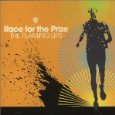
 When these singles were released, Zaireeka was out of print; these discs were the only way to get any of the tracks. So, each of these singles has two track from a Zaireeka disc as a B-side: “Riding to Work in the
 Year 2025 (Your Invisible Now)” & “Thirty Thousand Feet of Despair.” “Race for the Prize” (1 and 2) have the tracks from Zaireeka discs 1 and 2, and “Waitin’ for a Superman” (1 and 2) have the tracks from Zaireeka discs 3 and 4. The singles aren’t really worth hunting down at this point since Zaireeka is now available, but at the time, they were worth it.
 SOUNDTRACK: THE FLAMING LIPS-Zaireeka (1997).
 Okay, get ready. Zaireeka comes as a 4 CD set. With a twist. Each CD is meant to be played simultaneously. So, you get yourself 4 boomboxes hit play at the same time and enjoy!
 SOUNDTRACK: THE FLAMING LIPS-Oh My Gawd!!!..The Flaming Lips (1987).
 The cover of this disc makes a statement. And it should tell you everything you need to know about the music inside. It’s got skulls and psychedelic colors and Oh My Gawd!!! And yet, it doesn’t, exactly. It’s not quite as out there as the cover might make you think.

 I’ve claimed that I love the Lips, but then I was very harsh about their cover of “White Christmas,” and I noted that I wouldn’t listen to the soundtrack of Christmas on Mars very much. So, I felt I owed them some love. But my recollection of their early stuff was that it was pretty weird and hard to listen to.
 SOUNDTRACK: FISHBONE-Give a Monkey a Brain and He’ll Swear He’s the Center of the Universe (1993).
 I had actually forgotten about this album, because it was so overshadowed by Truth and Soul and Reality….. When I put it on I wasn’t expecting much (Fishbone had something of a precipitous decline around this time). So, I was amazingly delighted with how much I remembered this album and how much I enjoyed it (which shows to me that I must have listened to it a lot back in college).

 SOUNDTRACK: FISHBONE-Set the Booty Upright Bonin’ in the Boneyard single (1990).
 I feel like I never really knew this song until I heard Cartman getting cattle-prodded for not knowing the words. I listened to that version all the time (but I can’t tell if I like that version or the one on Mr. Hankey’s Christmas Classics better [“Fall on your knees, and hear the angels… something” “VOICES!”]), and what it did was give me a real appreciation for what a cool song this is. The chord changes are very satisfying without being really obvious. And, it’s not an easy song to sing. But I have liked every
  version I’ve heard: from Cartman to Avril Lavigne (whose first two verses on Maybe This Christmas, Too are the most vibrato-free singing I have ever heard. I’m quite certain she’s flat all the way through, and yet her voice is so unaffected it’s totally disconcerting. Tell me what you think…it’s available
 SOUNDTRACK: FRANK ZAPPA-Baby Snakes [the movie & soundtrack] (1979).
 This is sort of a review of the soundtrack album to Baby Snakes, but really it’s a review of the film, which I just watched over the last 4 days. Baby Snakes (A Movie About People Who Do Stuff That is Not Normal) was not as depraved as the subtitle (and the history of Zappa) would lead you to believe. In fact, primarily it is a concert film. There are a bunch of other things in the film as well, but easily 3/4 is a live Halloween concert in New York City.
 SOUNDTRACK: THE DIVINE COMEDY-Promenade (1994).
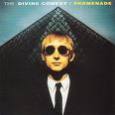 I heard about The Divine Comedy in the beloved British magazine Q. I used to get every issue up until about two years ago. I enjoyed their reviews, and especially enjoyed learning about bands that were under the radar here. I think the Divine Comedy album that was being talked about was Casanova, but I wound up getting Promenade first. And once I did, I was hooked.




 I Just Read About That...