Feeds:
Posts
Comments

Archive for the ‘Scholarship’ Category

fivedials_no26SOUNDTRACK: BOB DYLAN-Christmas in the Heart (2009).
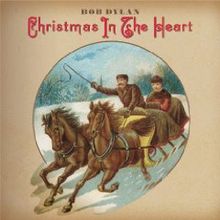
220px-Bob_Dylan_-_Christmas_in_the_HeartI have been a dabbler in Dylan over the years.  I like his hits, I like some of his albums, but I’ve never been a huge huge fan.  So the biggest surprise to me was that Bob Dylan now sounds like Tom Waits.  His voice is so crazily gravelly, it’s almost (almost) unrecognizable as Dylan.

That said, on some of the tracks it works very well–like he’s had too much to drink and is enjoying the revelry of these traditional songs.  I imagine him as a benevolent uncle trying to get the family to sing along.  And sing along they do.  He has a group of backing singers who sound like they are straight out of the forties and fifties (on some songs the women sing incredibly high especially compared to Dylan’s growl).  I’m not always sure it works, but when it does it’s quite something.

The first three songs are a lot of fun. However, when he gets to “Hark, the Herald Angels Sing,” it really sounds like he has hurt himself.  He seems to really strain on some of those notes–note the way he pronounces “herald” (heeerald).

The more secular songs fare better with “I’ll Be Home for Christmas” sounding especially Waitsian and being all the better for it.  Although I feel that perhaps he made up some lyrics–“presents on the tree?”  It’s interesting that in “O Come, All Ye Faithful” he sings the first verse in Latin (I don’t know that I’ve heard any other pop singers do that) and it works quite well.

A less successful song is “Have Yourself a Merry Little Christmas” in which the music just seems to be too slow for him.  His verses end early and it seems like the backing singers are just out in the middle of nowhere.  Perhaps the best song is “Must Be Santa.”  I love this arrangement (by Brave Combo) and Dylan has a ton of fun with it (and the video is weirdly wonderful too).

“Christmas Blues” is a bit of a downer (as the title might suggest).  I’d never heard this song before and Dylan is well suited to it.  Dylan’s version of “The Little Drummer Boy” is also very good–he croons gently and his voice sounds really good.  I was surprised to hear him do “Christmas Island,” a song I have come to love this year–his version is quite fun as well, with the backing singer doing Aloha-ays.

Finally, “O Little Town of Bethlehem” is pitched a wee bit high for him (and the Waits voice is more scary than avuncular here).

So overall it’s a weird collection (to say nothing of the artwork–both the cover and the inside cover), but I think it’s well suited to the day after the festivities.

[READ: December 15, 2013] Five Dials #26

I was shocked to realize who many Five Dials issued I had put off reading (and that this one came out over a year ago!).  I knew 26 was a large issue, so I put it off.  And then put it off.  And then put it off, until Issue 29 came out.  (I read 29 before this one, which got me to jump back and tackle this large one).

I have to admit I did not enjoy this one as much as previous Five Dials.  The bulk of the issue was taken up with German short stories, and I don’t know if it was the choices of the editors, but (a few) of the stories just didn’t grab me at all.  Having said that, there were one or two that I thought were very good.  But with this being such a large issue, perhaps it deserved to be spaced out a little better–Weltanschauung fatigue, no doubt.

This issue starts with Letters from Our Glorious readers and other sources.
I feel like this is a new feature for Five Dials (although again, it has been a while).  There is applause for the Bears (From Issue #24) and the acknowledgement of Zsuzsi Gartner’s first adoptees of her story ideas (Issue #25 Pt 1).  There’s also the amusing story of a guy who got nailed at work for printing the color issue (something I used to do at my old job as well) and a refraining of answering spam.

CRAIG TAYLOR-On Ewen and German
Taylor doesn’t say much in this intro, since the “heavy lifting” is done by Anna Kelly.  He does mention Paul Ewen (and his food writing) and the first Five Dials questionnaire (which I assume it is too late (and too far away) for me to submit for that free HH book).

ANNA KELLY
She explains about wanting to know secrets, and how when she was little, learning Pig Latin was a such a huge boon to her secretive life.  Then her sister started studying German, and Anna herself was hooked.  She says that reading German works in German is like flying.  And she wants to share German language writers with us.  Of course, we won’t be reading them in German, so there will be no flying.  (more…)

Read Full Post »

hawk SOUNDTRACK: BAD RELIGION-Christmas Songs (2013).

brThere’s been plenty of press about this Bad Religion Christmas album.  Greg and Brett have been interviewed on NPR’s Weekend Edition.

So what is a Bad Religion fan to make of this disc?  Bad Religion has, as its name states, no tolerance for any religion, especially Christianity.  So what the hell?

Well, as anyone who has grown up in America knows, these songs are ubiquitous.  But more importantly, these songs are quite good.  So why not give a try at punking them up.  What I appreciate about his album is that the band plays these songs absolutely straight.  Whatever their beliefs, they do not mess with the songs.  (I have absolutely enjoyed mocking versions of these songs, and I have many many goofy versions of them, but Bad Religion has never been goofy, so they sound like real Bad Religions songs–lyrics aside).

And so we get fifteen minutes (seriously) of great respectful punk renditions of traditional religious and secular Christmas songs.  In true Bad Religion form, the songs barely make it over 2 minutes long, but the lyrics are completely understandable and their harmonies are outstanding.  (Bad Religion has always had great harmonies but they are used to wonderful effect here).  Their version of “Hark, The Herald Angels Sing” is amazing (even if I find it unsettling that some of his rhymes are weird (like that he pronounces it BethleHAIM to rhyme with proclaim).  The acapella opening is really impressive (Brett was in choir as a kid).  When the band hits the line where the drums play a counterpoint (for just one line), it’s really fantastic.  “O Come, All Ye Faithful” is just straight out punk.  “God Rest Ye Merry Gentlemen” features some great backing vocals.  The Ramones-feel of “White Christmas” is a weird touch, but their delivery is spot on.

“The Little Drummer Boy” (a song I’m not terribly fond of in general) is quite good in this rendition–especially after hearing Brett say how complicated the measures are in this song.  It’s hard to do a bad version of “Angels We Have Heard on High” when you can harmonize as well as this band does.  And their version is great (I love the backing vocals on this as well).  Theirs is certainly the most aggressive version of “O Come O Come Emmanuel” I’ve ever heard (and I rather like it).  And “What Child is This?” has a solid riff to start with (it’s interesting to hear it on the guitar).  And again, the chorus is stellar.

They finish off the album with a remix of “American Jesus” a very anti-religion song (and perhaps a palette cleanser).  I didn’t notice how it is a remix, but it still sounds good.

Of course if you don’t like punk, you won’t like this, but I was really impressed with the care they put into these renditions.

[READ: December 24, 2013] Bad Santas

This book looks at the history of Christmas, but specifically at the creatures who caused mayhem and violence during the long winter holidays.  Indeed, our “traditional” Christmas celebration is a relatively new construct (you will be shocked to see how new it actually is).

kallikantzaroi_free_christmas_by_gpapanto-d5or453In Greece, during the twelves days of Christmas, goblins called Kallikantzaoi would steal things, destroy property and even abduct children.  In Finland, an evil goat called Joulupukki would demand gifts and punish evil children (he has since been turned into basically Santa Claus.

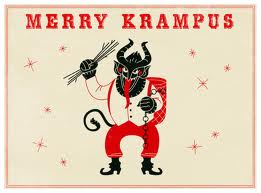
krampusAnd in parts of Italy and Germany, the witch Perchta would climb down the chimney.  But instead of giving presents to children, she would rip out their intestines and replace them with straw and stone.  (There’s a wonderful doll of Perchta here).  And anyone who has recently since the Grimm Christmas episode now knows of Krampus who is not only a real Christmas creature, (meaning Grimm didn’t make him up), he is still active and you can get Krampus cards.

(more…)

Read Full Post »

harper septSOUNDTRACK: PHISH-Junta (1989).

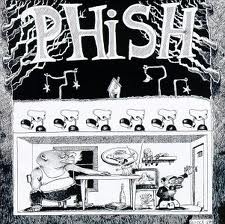
juntaI’ve been listening to a lot of live Phish as of late and thought it would be interesting to see if there was truth to the adage that Phish is great live but not so great in the studio.  So here is their first official album.  It was released as a double album, and when it was reissued on CD some bonus material was added.  Incidentally, I just found out that the album if pronounced “juhnta” and not “hoonta” because of the engineer they worked with.

The album starts with “Fee” which is a fun song (the lyrics are wonderfully weird) and they don’t play it all that much so it’s a treat to listen to.  I enjoy the way the verses sound compressed and distant but the choruses are nice and full.  There’s also some funny and interesting sound effects (some of which accentuate the action) throughout the song. This sound effects and noises processing has been with Phish from the beginning and they kept it up through many of their earlier, less mature albums. “You Enjoy Myself” is a live favorite so it’s fun to hear it in this version.  As with a lot of their earlier records, this song sounds a little stiff, especially if you’ve heard the wild live versions. It’s not bad at all, indeed, it has a perfectionist quality to it—the time changes are perfect, the solos are flawless.  Indeed, it’s quite an achievement (and in this more polished version it sounds more like Yes than their live versions ever did).  Interestingly when we finally get to the lyrical section (about 5 minutes in) it’s quite a bit slower than they play live.

“Esther” sounds much more theatrical here.  The music is gorgeous and there are lots of effects and backing vocals which bring a bit more menace to the song than the live version possesses. This also had a very prog rock sensibility to it.  “Golgi Apparatus” has a lot more in the way of backing vocals than the live version.  And “Foam” has some changes: the bass is especially loud and funky and yet the pace is so much slower than I’m used to.  The odd thing is the kind of stiff way that the lead vocals enunciate everything.  And the deep voice (Mike?) is quite amusing at the end of the song.  “Dinner and a Movie” is a fun and silly song and this version is especially enjoyable because of the backing voices and chatter and laughter which illustrate the dinner (and presumably the movie).

“Divided Sky” has a beautiful melody and it’s nice to hear it played so pretty and simply here.  But again the remarkable thing is how much slower the song is here.  “David Bowie” also sounds great (there’s all kinds of weird sounds effects in the background of the (very long) soloing section—I have no idea why or what they might be).  The solo sounds like it was maybe done in one take as there’s a couple spots where it’s not “right,” (whether flubs or intentional is hard to say) but it still sounds terrific.  In fact a number of tracks have some little flubs which makes it seem like they either didn’t mind or tried for a more live feel.

“Fluffhead” sounds solid and like the live versions.  What I never realized until I actually paid attention is that the bulk of the music (the extended jam session) is called “Fluff’s Travels.”  “Flulfhead is only 3 and a half minutes, while “Fluff’s Travels” is over 11 minutes (it opens with the beginning of the guitar solo–the catchy riff that starts the lengthy jam).  “Contact” is a delightfully silly song about tires and cars that I’ve always enjoyed and find myself singing often because the melody is so simple.

What’s funny is that the end of “Contact” kind of bleeds into “Union Federal” which is listed as a live song (and clocks in at over 25 minutes long).  This “Union Federal” is an improvisational jam (or an Oh Kee Pah Ceremony—where the guys would get together with instruments (and other things) and jam for a time.  This song is weird with many layers—and is rather typical of one of Phish’s weirder jazz –flavored improv sections (meaning that there is a lot of dissonance and noise).  It’s quite jarring especially after all of the melodies and prettiness of the album proper.  And I can see a lot of people not being happy about its inclusion.  “Sanity” on the other hand is a fun song.  In the intro, they keep claiming the song is by Jimmy Buffett. They are clearly very silly in this setting, especially at the end of the song.  The final track is a live version of “Icculus” the song which is pretty much all buildup.  In the intro they quote U2 “This is red rocks, this is the edge.”  But the “joke” of this version is that Trey keeps postponing the name of the person who wrote the name of the Helping Friendly Book–stalling in any way he can.  As the song gets louder and louder and more absurd, the guys are even more frenetic.  It takes over 3 and a half minutes to get to the proper lyrics of the song.   And then the song itself is about 15 seconds.  Absurd nonsense.  But very amusing.

So this is quite a solid debut album, and the amount of songs that they still play live shows how fond everyone is of it.

[READ: October 2, 2013]  “Wrong Answer”

I didn’t hate Algebra.  I rather like solving puzzles so I enjoyed solving for x.  Algebra II I recall being more daunting and less fun with lots of formulae to memorize.  And, unlike everything promised, I have never used any of it in my adult life (geometry and angles, sure, but not logarithms).  According to this article the new United States CORE curriculum (which I know my son is dealing with already in 3rd grade) says that high school graduates must have Algebra II.

The reasons for this intensification in the studying of math are many (starting around the time of Ronald Reagan) but the current push comes from Arne Duncane, the U.S. secretary of education.  He believes that “algebra is a key, maybe the key to success in college.  Students who have completed Algebra II in high school are twice as likely to earn degree as those who didn’t.”  Whether or not that is true, those of us who earned a degree in nonmathematical  subjects certainly were not aided by this class.  But Nicholson Baker explains that the reason this might be true is that for most colleges, Algebra II is a prerequisite.  Ergo: if you don’t take Algebra II you can’t get into college because colleges require Algebra II.  That, for those who may not have taken logic–a far more useful course than Algebra II in daily life–is called a tautological fallacy.  [Indeed, I maintain that all high school students should have to take a course in logic because they would then be able to see through all of the builshit that politicians spill and claim to be logic.  Like the current (as I type this) government shutdown in which Republicans are claiming they didn’t want to shut down the government when they in fact signed papers saying they were going to shut down the government).]

The real problem with Duncan’s postulate that everyone should take Algebra II (“airplane mechanics do complex measurements and work with proportions and ratios…X-ray technicians calculate time exposures to capture the cleanest possible image.  Most factory workers need to understand Algebra II or even some trigonometry to operate complex manufacturing electronic equipment”) is that even if that were true (I don’t have any idea of it is or not), most people do not do those kinds of jobs.  And even if they did know higher math, they would still be salesmen, graphic artists, librarians, preschool teachers, custodians and many many other jobs that in no way require math. (more…)

Read Full Post »

[LISTENED TO: May 13, 2013] Musicophilia

musico

My sister-in-law Karen got me this audio book for Christmas.  I had never read any Oliver Sacks before although I have always been amused/intrigued by his stuff (The Man Who Mistook His Wife for a Hat is such a great title).  So this book, as one might guess, is all about how music impacts our lives.  Music is more than just an enjoyable set of melodies, it is a more primordial form of communication.  The key thing for any fan of music to know about this book is that about 97% of the music he talks about is classical.  Which is fine, but you’re not going to get any kind of insight into rock.  The reason for this is twofold.  One–he likes classical (and doesn’t seem to like rock–although he did take one of his patients to a Grateful Dead show) and two–he wants to talk more about music and not so much about lyrics (although again, that’s not entirely true).

I have to admit that while I enjoyed the stories in the book and will certainly talk about it a lot, I found the book a little overwhelming–it was exhaustive and exhausting.  Sacks really tries to cover ever aspect of music (and many I never would have guessed) and so I found the nine hours of story a bit tiring by the end.

Part of that may also have been John Lee, the reader, who spoke very clearly and a little slowly and gave the book something of a lecture-feel.  Which was fine for much of the book, although again, it was a little exhausting sometimes.

The thing that is most exhausting about the book is that virtually every person he talks to or about has had some kind of trauma which makes their appreciation of music different from the norm.  If you are in any way a hypochondriac, this book will make you go insane  I’m not, but even I found myself worrying about having a stroke at any second or experiencing some kind of weird brain thing where I no longer like music or god forbid get some kind of long term amnesia.  Jesus, I was getting a little spooked by the end. (more…)

Read Full Post »

#15SOUNDTRACK: SUGAR-Copper Blue (1992).

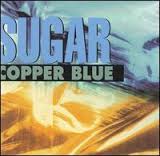
copperblueAfter Bob Mould made some solo albums, he created another band.  Another trio, this one called Sugar.  Sugar seems to take Mould’s poppiest elements and wrap them in a big 90s grunge sound–a sound that Mould pretty much invented in Hüsker Dü.  And in many ways Sugar is not all that different from Hüsker Dü–maybe a bit less experimental and a little more commercial.

One thing I noticed about this album that, once I noticed it I couldn’t avoid it, was that when the drummer plays the cymbal (it might even be a hi hat with a tambourine on it), which he plays a lot, the tinny shimmer of that sound is so pervasive, I find it rather distracting.  Or should I say it adds an almost minute level of static over the proceedings.

The disc opens with “The Act We Act,” where big grungy guitars and a simple chugga chugga riff burst out of the speakers. I love the Pixies feeling of “A Good Idea” both that up front bass and the buggy sounding guitars provide an almost false introduction to the catchy verse and chorus that’s to come.  I also enjoy the unexpected break after the chorus.

It’s followed by the ringing guitars that introduce “Changes” a classic poppy rock song that is unmistakably Mould.  The uneasy almost nauseating sounds at the end of the song are again like a feint in the wrong direction as “Helpless” easily the most pop song Mould has ever written comes out.  Of course, as with Mould, this outrageously poppy song is all about feeling helpless.

Keyboards open the next song, “Hoover Dam” (something of a surprise for this album), which proves to be yet another big Mould single.  The song is so open with multiple acoustic guitars (and that cool synth solo) and a really wild reverse guitar solo.  It’s one of my favorite Mould  songs and yet another example of why this album was such a huge hit.

“The Slim” brings back the darker songs that Mould is also known for.  And just when you think that Mould can’t pull out another huge big single, he gives us “If I Can’t Change Your Mind,” one of his great big bouncy acoustic guitar songs.  It is almost obscene how catchy this song is, right down to the simple scale solo at the end.  Mould has this little technique that I find irresistible where he plays a song normally and then plays two fast chord changes segueing into another section.  It’s so cool.

“Fortune Teller” is a fast rocker with Mould’s trebly guitar taking the lead.  “Slick” is the only song I’m not crazy about. There’s something about it that kind of slows the momentum down, which is odd for a song about a car.  It’s got a real middle-period-Who feel to it, which I do like (and I really like the bridge) it just feels odd in this place in the disc.  The end of the song has some snippets of chatter that could have been edited out but lend an amusing air to the final track, “Man on the Moon” which ends the disc with that same air that the rest of the album has—big guitars and Mould’s slightly distorted vocals.  The solo is weirdly processed and kind of fun.  The end of the track with its repeated half step has a very Beatles feel to it. And the very end of the disc has the sound of tape rewinding, an amusing nod to the digital era.

Copper Blue was Mould’s first huge success and in his book he talks about not realizing quite how huge it was until he was in the middle of it.

[READ: March 20, 2013] McSweeney’s #15

I was a little disappointed with McSweeney’s #14, but #15 was once again fantastic.  This issue is a smallish hardcover (I like when their books are this size).  The bottom half of the cover features a cool 2 color painting by Leif Parsons.  The issue is known as the Icelandic Issue because of a few things.  The first half of the book features stories by the usual suspects.  Each of these stories is accompanied by an illustration of a Scandinavian rune that dates to the Viking era.  The stories in the second half of the book have illustrations that are taken from Icelandic grimoires–magician’s handbooks.  It is these second half stories that are all from Scandinavian authors.  It’s a fascinating peek into a culture few of us probably get to read.

There’s no letters in this book, which removes some of the levity, but that’s okay.  The front page has a brief story that it was being written on November 2, 2004 in New Mexico, hoping to bring some voting power to “the good guys “in this “completely fucking terrifying election.”  (The bad guy eked out a victory 49.8 to 49.1).  They went canvassing door to door with an Iraqi veteran named Joey (who was 21).  He was very pro-Kerry and may have even convinced a young girl to vote (she thought her vote didn’t count because she was poor (!)).  It really evokes the feeling on that dark night in 2004 when the iota of hope was snuffed out. (more…)

Read Full Post »

penumbraSOUNDTRACK: FIONA APPLE-The Idler Wheel is Wiser than the Driver of the Screw and Whipping Cords will Serve You More than Ropes Will Ever Do (2012).

fionaFiona Apple released the album with the longest title a few years ago.  The title of this new album (also taken from a verse of Apple’s) doesn’t quite match in terms of length, but the music absolutely delivers in terms of quality.

When the Pawn… was full of big numbers–it was loud and brash and gorgeous.  The Idler Wheel is much more subdued and initially I didn’t think it was as exciting.  But this subdued music draws you in and gets you to really absorb everything that’s going on.  Musically, this album takes notes on the orchestration from her previous album Extraordinary Machine, but it scales  everything back  to what amounts to just Fiona’s voice (often multitracked) and minimal instrumentation.

Like “Every Single Night” which opens with beautiful bells/glockenspiel as Fiona sings.  “Daredevil” is almost all percussion and loud piano.  Indeed, the main sounds of the song is a quick shuffling followed by short piano chords.  It is so stark but her voice just sails through the open space beautifully.

The meandering piano of “Jonathan” is great–at turns minor and sad but then come chords and beauty.  More drums fill “Left Alone” as the opening twenty or so seconds are all drums followed by a menacing piano riff and the amusing lyric, “How can I ask anyone to love me when all I do is beg to be left alone” (and with each subsequent repeating of this chorus she sounds more and more exasperated).

“Periphery” is also mainly percussion.  But in this case, the percussion sounds like feet scraping on gravel–rhythmically of course.  This leads to a great vocal turn by Fiona, one that climaxes in a big roaring almost shouting section.  Speaking of roaring, just listen to the rawness that Fiona reaches on “Regret.”  It is spine tingling.

“Anything We Want” opens with more odd percussion, which I’m led to believe came from Fiona tapping on things on her desk–and it sounds like it–not instruments, but found objects.  Indeed, read the list of instruments that she and her compatriot used on the album: For “Feedy”: Artwork, Celeste, Composer, Dancer, Field Recording, Keyboard Bass, Loops, Percussion, Piano, Primary Artist, Producer, Stomping, Timpani, Vocals and for “Seedy”: Autoharp, Baritone, Bouzouki, Cora, Dancer, Drums, Field Recording, Guitar, Marimba, Percussion, Producer, Stomping.

The final song is just Fiona and tympani as she sings a line about hot knives and melting butter.  Then the piano and second voice (her sister) sings a fugue as the lines repeat over each other.  It’s a crazy, daring song to end an album with and it sounds like nothing else on the radio today.

I have never been disappointed by an album from Fiona.  Each album is different, taking new chances having wilder experimentation   And this one is up there with the best.  It’s easily one of the best records of 2012.

[READ: January 16, 2012] Mr Penumbra’s 24-Hour Bookstore

I saw an ad for this book in The Believer (I believe) and I thought it looked great.  Sarah said she had already put it on hold.  And when it came in from the library, I grabbed it first.

This book is really great.  It’s a story full of intrigue and secret societies  it embraces old books and modern technology; it’s a romance and a puzzle.  And it’s all done in a very comic style.

What is surprising is how different the book is from what I initially expected.  True, I didn’t know anything really about the book before reading it, but the book opens with an overeducated and underemployed guy, Clay, getting a job in the titular bookstore.  But it’s no normal bookstore.  First, it’s open 24 hours a day (that’s 8 hour shifts for three clerks because they really don’t have many customers).  Second, it’s very narrow and very tall–Penumbra has a massive ladder that rolls along all of the shelves and there’s a chapter dedicated to using it properly.  Third, although there are books for sale in the front (an esoteric lot based mostly on Penumbra’s whims), the back section of books (the tall shelves called the Waybacklist) are not for sale–indeed, they are not even real books per se.

There is a small group of local readers (called the Unbroken Spine) who come to the store, give Clay a code, return a book and check out a new one.  Part of Clay’s job is to write down every detail he can about them each time they come in.  But he is not supposed to open any of these wayback books.  Those are really the only rules of the store.

Clay has two roommates, one of whom is Mat, a guy who works for Industrial Light and Magic as a miniaturist (he is building a miniature city in their living room called Matropolis).  He also has an old friend, Neel, with whom he played a Dungeons and Dragons like game called Robots and Warlocks.  Neel has since become a very wealthy programmer (his job is very funny).  Clay and Neel both loved the The Dragon-Song Chronicles, a trilogy of nerdiness by the author Clark Moffat (incidentally, later in the book a character is named Tabitha–this is now the SECOND book in which both of my children’s names are included and both of them are good guys.  Hooray!  So obviously I loved this book).  I love that later in the book, Clay is making an mp3 version of the books because they were only available on cassette!  (I was equally outraged with him).

When Clay’s friends visit the store, they are enchanted by it and can’t believe that he hasn’t looked at any of the books.  So, he does.  He breaks the rule and flips through a book.  But he can’t make much out of it as it has been encoded.

Soon after, a pretty young girl named Kat Potente enters the store (because of a Google ad that he placed trying to get people into the store–she fit every quirky demographic he could dream up).  Kat works for Google, recognizes that Clay is a kindred soul and, in the whirlwind way of people who know what they want, she sets up a date with him.  They hit it off immediately, especially when she sees that he’s working on a program to graph the checkouts of the books that the Unbroken Spine take out.  (Yup, there’s programming in the book–in Ruby).  The graph suddenly starts taking shape and Clay believes that a pattern is slowly emerging.  And when it does, it is like no pattern you have ever seen! (more…)

Read Full Post »

dtmaxSOUNDTRACK: TOM WAITS & KEITH RICHARDS-“Shenandoah” (2013).

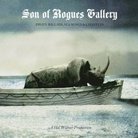
roguesgallery-f8be47f3887d51de57ea842a129f0a722e53ef74-s1This tune comes from the album Son Of Rogues Gallery.  The album is, of all things, a sequel to the album Rogues Gallery.  The full title is Son Of Rogues Gallery: Pirate Ballads, Sea Songs & Chanteys.  The first album was a kind of novelty–I can’t even say novelty hit as I don;t know if it was.  But it must have had some success because here’s a second one (and there’s no Pirates of the Caribbean movie to tie it to).

The album has 36 songs (!) by a delightful collection of artists, including: Shane MacGowan, Nick Cave, Macy Gray, Broken Social Scene, Richard Thompson, Michael Gira and Mary Margaret O’Hara (among many others).  I enjoyed the first one, but I think the line up on this one is even better.

“Shenandoah” is not a song that I particulalry like.  Because it is traditional, I have a few people doing versions of it, but I don’t gravitate twoards it–it’s a little slow and meandering (like the river I guess) for me. And this version is not much different.  What it does have going for it is Waits’ crazed warbling along with even crazier backing viclas from Keith Richards (there;s no guitar on the track).

[READ: January 7, 2012] Every Love Story is a Ghost Story

I had mixed feelings about reading this biography.  I’m a huge fan of David Foster Wallace, but I often find it simply disappointing to read about people you like.  And yet, DFW was such an interesting mind, that it seemed worthwhile to find out more about him. Plus, I’ve read everything by the guy, and a lot of things about him…realistically it’s not like I wasn’t going to read this.  I think I was afraid of being seriously bummed out.  So Sarah got me this for Christmas and I really really enjoyed reading it.

Now I didn’t know a ton about DFW going into this book–I knew basics and I had read a ton of interviews, but he never talked a lot about himself, it was predominantly about his work.  So if I say that Max is correct and did his research, I say it from the point of someone full of ignorance and because it seems comprehensive.  I’m not claiming that he was right just that he was convincing.  And Max is very convincing.  And he really did his research.

It’s also convenient that DFW wrote a lot of letters–Max has a ton of letters to quote from.  And DFW wrote to all kinds of people–friends, fellow authors  girlfriends, colleagues….  Aside from old friends, his two main correspondents were Don DeLillo, whom he thought of as a kind of mentor, and Jonathan Franzen, whom he considered one of his best friends and rivals.  I guess we can also be thankful that these recipients held on to the letters. (more…)

Read Full Post »

SOUNDTRACK: RA RA RIOT-“Is It Too Much” (2013).

raraI loved the first Ra Ra Riot album The Rhumb Line.  This song expands on some of the ideas from that album, but I fear that it goes in the one direction I would have preferred they not go.  The album had strings, nice harmonies and a great singer all melded into an interesting rock structure.

This song retains all of the elements that were interesting, but it removes it from the rock structure, making it  sound much more lightweight.  It’s pushing too far into easy-listening.  And do I hear autotune on the vocals?  The instrumental middle section is the most interesting part of the song.  But Ra Ra Riot seems to have removed the riot part of their sound.  If this is the direction of the album, I’m afraid I won’t be following.

[READ: January 8, 2013] “Consider the Writer”

I just finished the D.T. Max biography of David Foster Wallace.  I was curious what kind of reception it received.  And lo, here’s a review by Rivka Galchen (something I would have read anyhow since I enjoy her so much).

Galchen opens with two main points–the biography is gripping (and it is, I’ll be saying more about that tomorrow, too).  She writes: “In writing a chronologically narrated, thoroughly researched, objective-as-­imaginable biography, Max has created a page turner.”

The second idea is that you keep thinking “that you just don’t find Wallace all that nice”  (which I also thought).  But then she wonders if it is fair to be worried about that.  We should not judge others after all.  Especially since, as she points out, “We don’t always find ourselves asking whether a writer is nice. I’ve never heard anyone wonder this at length about, say, Haruki Murakami or Jennifer Egan.”  So why is that a concern about Wallace?  Because niceness is what Wallace wrote about, tried to encourage.  And perhaps “One understandably slips from reading something concerned with how to be a good person to expecting the writer to have been more naturally kind himself.”  But that is not necessarily the case–people strive for things that they cannot achieve.   I like her example “the co-founder of A.A., Bill W., is a guru of sobriety precisely because sobriety was so difficult for him.”   And her conclusion: “Wallace’s fiction is, in its attentiveness and labor and genuine love and play, very nice. But what is achieved on the page, if it is achieved, may not hold stable in real life.”

And Galchen talks a bit abut DFW himself (the book is a biography after all).  How he wore the bandana because he sweated so much–how self conscious he was about that and by extension nearly everything he did.  This mitigates his not-niceness somewhat.  It also ties in to his alcoholism  drug use and depression.  And his competitiveness, which is obvious in the biography.  She enjoys the pleasure of Wallace’s correspondences, “especially with his close friend and combatant Jonathan Franzen, but also with just about every white male writer he might ever have viewed as a rival or mentor. Aggressive self-abasement, grandstanding, veiled abuse, genuine thoughtfulness, thin-skinned pandering — it’s all there.”  I rather wished that the authors’ own reactions were included (of course it’s not biographies of them, and they are still alive), just to see if they sparred back with Wallace or if they were put off by yet indulgent of his needs. (more…)

Read Full Post »

SOUNDTRACK: SUNN O)))-Flight of the Behemoth (2002).

I hadn’t really heard Sunn O))) until this record (which may not be typical as they collaborated with Merzbow on this one).  I knew that Sunn O))) played loud droney “music.”  And so it is here.  On “Mocking Solemnity” (9 minutes) and “Death Becomes You” (13 minutes) (which meld into each other seamlessly), the songs are mostly slow drones on electric guitar.  The chords are heavy and heavily distorted and they ring out for a few bars–not until the chords die naturally, there is a kind of pacing involved, but for a few bars until the chords are played again (often the same chord).  This is for those who thought Metal Machine Music was too complicated.

On paper this sounds unimpressive (or downright awful, depending) but in reality it is a very physical experience (if played loud enough).

The staticy noise of “Death” melds into track 3 “O))) Bow 1” which adds what sounds like radically modified piano playing a kind of melody.  It’s about 6 minutes and it really changes the tone of the record to suddenly add an atonal racket to the almost calming drone of the bass.  But by the middle of the song, the piano becomes what sounds like a chainsaw.  Merzbow mixed that track and  “O))) Bow 2” which is 13 minutes of the same slow pulsating noise.  It’s not exactly soothing.

The final track is “F.W.T.B.T.” a “remake” of “Metallica’s “For Whom the Bell Tolls.”  I can’t hear a thing that sounds like the original, but that’s what makes a cover interesting.  Although admittedly around the four and a half minute mark there’s some faster chords (for this band anyhow) that could be Metallica-like.  There are also drums (and vocals, although I have no idea what they are saying) on this ten-minute workout.

Not for the faint of heart (or fans of melody).

[READ: November 17, 2012] How to Be Alone

I read most of the articles in this book already.  But I read them over two years ago, so I thought it would be safe to wade into the world of Franzen again.  What I find most interesting about the title of this book is just how many of these articles are about being alone, wanting to be alone or feeling like you are alone.  Obviously that is by design but it seems surprising just how apt the title proved to be, especially given the variety of subjects  his father’s brain, being a novelist, the US Postal Service, New York City.

I’m not going to go into major detail about each article this time, although I am providing a link to the earlier review–my feelings didn’t really change about the pieces (except that from time to time I got a bit exhausted at his…whininess?  No, not that exactly…maybe his persecution complex.  But I will give a line summary about each one just to keep everyone up to speed.  The four pieces that I hadn’t read before I will give a few more words about.

One overall feeling is that when Franzen isn’t writing about the state of the novel (which he is very passionate about) his articles are well researched well documented which is kind of surprising given the state of panic he seems to be in the novel articles.  It’s also kind of funny how out of touch these articles seem (some are almost 20 years old and are kind of laughably outdated), but it’s also funny to see how poorly his predictions panned out.  The death of the novel is rather overrated (just see the success of his own Freedom.

So the book contains: (more…)

Read Full Post »

SOUNDTRACK: SISKIYOU-“Bad Days” (2012).

Siskiyou has had some medical problems and have canceled their recent tour.  They are also going on a brief haitus.  This is a shame as after their second album, they really had momentum and they sounded better than ever.

As a kind of peace offering to fans who would not be able to see the band, they recorded a cover of The Flaming Lip’s “Bad Days.”  The cover souds remarkably like the original, with one big difference: rather than squalls of feedback, Siskiyou uses only piano.  And it works very well, getting down  to the basics of the song and sounding a bit like Wayne Coyne singing.

It’s a nice tribute and  a nice “until later”

[READ: August 27, 2012] Agapē Agape

I have a long history with this book.

I was working at Baker and Taylor, a book supplier, when this book was released.  Some of the higher ups were able to get free books from the publishers they dealt with.  The guy who dealt Viking was not the friendliest guy, but since B&T paid absoluet crap wages, I was going try to get any books I could for free.   So, I asked for this book.  It was embarrassing enough to walk in and say this title with confidence, since I knew how it was pronounced (yes I took Greek in college), but knew he didn’t.  After some groveling, his reaction led me to think I wouldn’t be getting it.

But lo and behold a few weeks later it was sitting on my desk.

And now, ten years later, I’ve finally read it.

In JR, Jack Gibbs is writing a book with the name Agapē Agape, it is a jumbled history of the mechanization of the arts, starting with the player piano.  JR was finished in 1975–who knows for how long he had been working on it until then.  According to the Afterword of this book by Joseph Tabbi, Gaddis was pretty all-consumed by the idea of the player piano.  (It’s really quite an obsession).

This book is the culmination of all of Gaddis’ work on the player piano and how it removed all of the artistry from music (this theme of art and mechanization is in JR as well).   But rather than write this as an essay, which he didn’t think would be very effective, Gaddis decided to make this a novel.   I admit to not really knowing if he finished it–Gaddis died in 1998.  While it doesn’t feel unfinihsed, I’m just not sure if he was “done” with it. (more…)

Read Full Post »

« Newer Posts - Older Posts »