Feeds:
Posts
Comments

Archive for the ‘NPR/PRI/PBS’ Category

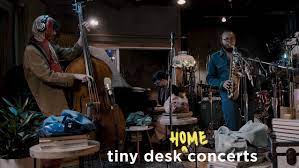
SOUNDTRACK2 CHAINZ-Tiny Desk (Home) Concert #170 (February 17, 2021).

I’ve never heard of 2 Chainz, but I love that his Tiny Desk comes from Pamper Atlanta–his nail salon!

He’s a pretty fascinating dude

Colored in royalty, neon hues of lavender, fuchsia and violet, in his high-end nail studio Pamper (yes, he owns it, and he’s not shy about letting you know), 2 Chainz is feeling himself throughout his five-song set. Getting a champagne-soaked pedicure, rolling one and periodically shouting out his sixth and latest studio album, So Help Me God!, the rapper exudes Black excellence in the way of luxurious comfortability.

“Southside HOV” is a fascinating brag track with lines like

I’m from the gutter, diamonds studded, I am too for real
Name another rapper that got a Versace shoe deal

His unbridled braggadocio so clearly comes from the freedom of security after being denied opportunities, not just individually but generationally.

He ends the song with a statement to the little ones:  “Listen carefully, this is a grown man speaking to you … pedicure in this bitch. too.”

“Vampire” is another new song that he casually raps while getting his legs massaged.

Then the set jumps to another room with 2 Chainz sitting in the spotlight as his partially obscured band plays.

He rewinds the clock and samples [his] stacked discography (“Good Drank,” “I’m Different”)

“Good Drank” has a grooving bass line from Tyler Sherard with some cool soloing from Josh Sneed.  “I’m Different” opens with a quiet piano melody from Mark Polynice–it’s almost like a horror movie.  Most of the songs have a chill rap style, but in the middle of this one he really lets it fly for a verse–rather impressive.  There’s some great drumming from Alex Turner on this track too.

The set ends with “Grey Area” and good grief with these lyrics, so much for inspirational).

All this sh- that I have done, I can not believe in karma (yeah)
Old enough to be your Daddy
Young enough to f- your Mama (boom, boom, boom!)
Young enough to f- your sister, young enough to f- your auntie
I ain’t messing with your Grannie, I just juuged her out them Xannies (true!)

It’s surprising then, that he gets all thoughtful at the end of the set.  As Polynice plays some backing chords, 2 Chainz says “Let me inspire.”

“There are a lot of people who have been moving the needle forward for Black people. And they have been for some time,” says an earnest, almost plaintive 2 Chainz. In a heart-filled sermon, he cites Martin Luther King Jr., Tyler Perry and Puffy as trailblazers, practicing gratitude for Black leaders who inspire him and the world at large. It’s a sober moment of euphoria — and a drastic shift from the first 17 minutes of the Grammy winner’s flashy Tiny Desk.

When thinking of inspirations he thinks of Martin Luther King, Jr. “I played from M.L.K.” he says (this must be metaphorical since King died almost ten years before Chainz was born).  Then when asked to name names of black people “who are currently like breathing and accessible in entertainment and tech” he says there’s so many who have inspired him he really can’t think of any names, even though there are so many black billionaires … “their names logged in my phone.”

The jump from M.L.K. to Tyler Perry may be the only time that connection was ever made.  But at the end he admits

I wasn’t specific when answering the question.  I just said what my heart told me to say.

But damn, if Pamper Atlanta doesn’t look really nice.

[READ: March 31, 2021] Klawde: Evil Alien Cat 3

While I enjoyed Book 2, I thought that Book 3 was a bit more fun.

Because it has dogs!

Raj’s parents are heading to Hawaii for a dental conference (Raj’s dad is a dentist, which you know because he is wearing a “plaque is wack” shirt.  Dad said it was work, but Raj was pretty jealous.  He wasn’t allowed to go because he was in school.  And that could mean only one thing: his ajji (grandma) was going to come stay with him.  Ajji was old-school Indian and brought three suitcases worth of cooking supplies.  And a dog.

Ajji doesn’t have a dog, but she was foster sitting this fluffy creature named Wuffles and brought it with her.  Since Wuffles needed a seat, Raj’s appi (grandfather) had to stay home!

Obviously Klawde is not happy to see that the “mortal enemy of all felines” was going to stay with them (the drawing of Wuffles on the “mortal enemies” page is hilariously adorable.  As Klawde sneaked up to get a better look, Wuffles exploded, snarling and barking right in Klawde’s face.

Klawde surveys the creature from atop the fridge:  It has the good sense to walk on four legs and has proper anatomical parts: fur, tail, whiskers and claws. But the whiskers were short (and couldn’t possibly be intergalactic sensors) and the ears were flopped over–clearly broken. (more…)

Read Full Post »

SOUNDTRACK: IMMANUEL WILKINS-Tiny Desk (Home) Concert #164 (February 3, 2021).

Immanuel Wilkins is a saxophone player who creates mellow but poignant jazz.

Candles and books rest on a trunk at the bottom right corner of the wide shot. There, too, are special photographs of alto saxophonist Immanuel Wilkins with family in his childhood home in Philadelphia.

Wilkins plays three songs from Omega in this twenty minute

Omega was released last year to high acclaim. The project is all about Blackness, Black theory, the Black experience and the struggle and triumph that go with it all.

They open with “Grace and Mercy,” which is “a lyrical story about peace, forgiveness and humility with carefully crafted form and melody.”

He met up with his long time bandmates — Micah Thomas on piano, Daryl Johns on bass, Kweku Sumbry on drums —in Manhattan’s Sear Sound studio to record this set. The quartet has been playing together for years, which is remarkable considering Wilkins is only 23 years old.

There’s a really nice piano solo in the middle of the track from Thomas

“Warriors” opens with a saxophone intro before the band joins in for this

driving, dynamic tune that conveys the shield of protection provided by our inner circles.

Wilkins gets up to some wild soloing in the middle of the song.  As the song comes to an end and Wilkin repeats the same melody, Sumbry gets to show off his chops on the drums.

“The Dreamer” is a tender piece that honors the Black writer and activist James Weldon Johnson and is based on his poem “A Midday Dreamer.” The opening lines are played effortlessly on bass by Johns and when Wilkins joins in, his melodic saxophone exudes the rhythm of the poem’s first stanza: “I love to sit alone, and dream, and dream, and dream…”

This is some wonderfully thought provoking instrumental music.

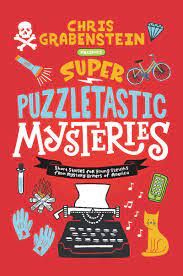
[READ: March 3, 2021] Super Puzzletastic Mysteries

I was in Barnes & Noble at the end of last year and I was feeling splurgy so I picked up this book, thinking that everyone in the family might like it.  We all love Chris Grabenstein after all.  So this is basically a series of pretty short mysteries.  The end of the story is pushed to the back of the book so you can figure out if you solved the mystery before it is revealed to you.

CHRIS GRABENSTEIN-Introduction
Grabenstein sets up what the book is about.  it was inspired by Donald Sobol (the guy who created Encyclopedia Brown) and his Two Minute Mysteries.  There would be some kind of crime, clues would be presented and the story would end without a  solution.  The end of the story (and the solution) came at the end of the book so you could try to figure it out for yourself.  Amusingly, he also tells us that his story is “based on something I actually saw out the library window when I did a school visit the day after a snow day.”

I’m giving a brief summary of each mystery and then whether my adult brain could solve it. (more…)

Read Full Post »

SOUNDTRACK: ÓLAFUR ARNALDS-Tiny Desk (Home) Concert #177 (March 4, 2021).

Ólafur Arnalds is an Icelandic composer who creates (mostly) beautiful soothing songs.

I really enjoyed his previous Tiny Desk Concert where he displayed his high tech player piano gadget (used in one of these songs although it’s hard to tell).

He and his accompanying quartet (Geirþrúður Ása Guðjónsdóttir, Sigrún Harðardóttir and Karl James Pestka on violins; Unnur Jónsdóttir on cello) play four tracks.

The pensive set opens with an older tune, “Happiness Does Not Wait,” with Ólafur Arnalds seated at a short upright piano known as a Danish ‘pianette.’

“Happiness Does Not Wait” opens the set with a beautiful looping melody on the piano and gentle strings added on top.  Then the strings take over playing the piano melody and the backing melodies as Arnalds preps his next song.

The remaining three songs are form 2020’s, some kind of peace. 

For “Woven Song” he winds up an Edison “Fireside” cylinder phonograph which plays a haunting melody–a traditional Amazonian healing song sung by the late shaman Herlinda Agustin Fernandez.  He plays a complex piano melody on top of the song.  Then strings layer on top and then once again take over the melody as he stops playing and heads to his other piano.

He explains that in the tribe where Fernandez sings, they weave their melodies into cloth to write them down.

Then moving from the wax cylinder to his high tech Stratus music software.

Look closely at the piano toward the back of the studio during the tune “Spiral,” and you’ll see a piano playing seemingly without a performer. That piano is reacting to Ólafur Arnald’s real-time performance using algorithms he and his coder friend, Halldór Eldjárn, developed.

The song opens with the violin and then the rest of the strings flesh the song out while he begins the piano.  Then the instruments fall back leaving just one violin along with the piano for the end.

For the final song, he moves back to the first pianette to play “We Contain Multitudes” which has an otherworldly echoing quality to it.

It’s a lovely calming session.

[READ: March 21, 2021] Klawde: Evil Alien Cat 2

Book 2 picks up soon after the events of Book 1.  In other words, summer is over and it’s time for Raj to go to his new school.  The good news is that the friends he made at camp–Cedar and Steve–will be there.  The bad news is so will his enemies Scorpion and Newt.

In the introduction, Klawde explains that his name is not Klawde, it is Lord High Emperor Wyss-Kuzz, the Magnificent.  He says he hated the planet Earth when he was exiled here and he hates it even more now.

Raj is freaking out about school, but Klawde is not interested in his pathetic classes. Where is Battle Tactics?  The Art of Slash-and-Claw? The Art of Ambush?  And that made Klawde think–he will start his own school–a school for warriors.

Marciano wrote this book in 2019 but how crazily prescient was this.  Raj goes into his classroom but there is no teacher.  Instead a voice came from speakers

Now, y’all may think it’s weird to have a teacher on a screen, but it’s part of a new wave in education… remote instruction! [And] no you cannot do whatever you want… I may be sitting down here in Alabama, but … I have a split screen monitor right here with every student’s face on it.

Spooky! (more…)

Read Full Post »

SOUNDTRACK: MELANIE CHARLES-Tiny Desk (Home) Concert #165 (January 4, 2021).

I had never heard of Melanie Charles and boy was I in for a treat with this being my first exposure to her.

A Brooklynite proud of her rich Haitian heritage, Charles is conscious of the giant shoulders upon which she stands and takes steps to both honor and advance this music. Behind her, smiling pictures of her guardian angels, Mary Lou Williams and Billie Holiday, encourage Charles while she and her musicians blend the mystique of Haitian folk music with the sorrowful optimism of negro spirituals and the free space for elevation that jazz improvisation allows.

The video opens on a dark screen with samples being manipulated and twisted.  It’s amazing to have the camera fade from black into this really old-fashioned looking scene–upright bass, snare drum and a nearly sepia filter on the video.  And then there’s Melanie Charlie dressed in a beautiful but old-fashioned looking ensemble manipulating all of the sounds.

She is playing from the

Williamsburg Music Center, one of Brooklyn’s last surviving black-owned jazz venues… This performance was a full circle moment for Melanie Charles. The Williamsburg Music Center is owned by Gerry Eastman, a celebrated musician and composer who taught the jazz class Charles and her brother and saxophonist, Rogerst Charles, attended when they were in high school. According to Charles, Eastman “represents a special era of Brooklyn jazz musicians” and created a space that gave these artists a place to perform when all other doors were closed to them.

Then she starts singing French while Jonathan Michel plays a bass solo /melody.  This song is

“Damballa Wedo,” [in which] Charles channels her Haitian roots and delivers a modern twist of a traditional vodou song by Toto Bissainthe. She sings that when we seek transformation, we may become someone who those around us no longer recognize, but that the change is necessary and part of the ancestors’ divine plan. “C’est bon, c’est bon,” she sings.

Up next she offers a little Sun Ra vibration.  She plays a sample and dramatically shuts it off as it loops.  The starkness of the silence is very dramatic.   Then she starts singing

Charles’ arrangement of “Deep River” is inspired by her admiration for Sun Ra. The biography of the eccentric composer, arranger, musician, and early pioneer of Afrofuturism, Space Is The Place rests on a stand behind her. By really digging into his approach and arrangements and using his “spaceship setup as a performance guide,” she breathes new life into this spiritual, injecting it with a potency that is simultaneously somber and otherworldly.

While the sample continues the band picks things up.  The bass and sax play the main melody while Melanie plays some sharp and cool flute accents.

And what a voice!

Before the final song, she introduces the band:

Jonathan Michel: who looks like an upright bassist–he’s got that Ron Johnson turtleneck.  Shout out to Ron Johnson.  On drums, Diego Ramirez: coming in at the last minute and learning the songs over night.  On saxophone, Rogerst Charles, my blood brother, my heart.

The final song is “Dilemma.”

She finishes the set with “Dilemma,” a new song written to find the balance between self-care and showing up for those you love amid the cries for justice during the first summer of the pandemic. On our phone call, Charles explained that the song is an anthem that reminds us to not to “dim your light for anybody” and “remember how vibrant we are, despite what we as black people had to deal with in 2020.”

She plays keys and sings a soft song until the whole band joins in.  After a couple of minutes she she sings a high note and the sax plays the same note a wailing harmony of greatness.

With about two minutes left she starts singing the coda “we’ve been doing alright be we still shine bright.”  The band sings along and she interjects:

We’ve been doing alright
even though we didn’t get our stimulus.
But we still shine bright.

[READ: March 31, 2021] Only Righteous Fights

On December 31 of 2020 I donated some money to Elizabeth Warren (I’m not actually sure to what end it was used–presumably her Senatorial campaign?) to pre-order this collection of speeches (and get a laminated bookmark!).

There are few things more disappointing than reading amazing, inspiring and truly moving speeches by a person who lost a candidacy.

Kamala Harris and Elizabeth Warren were my number 1 and number 2 choices for President.  I didn’t have to worry too much about which one I would ultimately choose, I was just happy they both were so successful (until they weren’t).  Having Harris as V.P. is pretty awesome, and I will acknowledge that Biden (who was my last choice) has been doing a good job thus far (apparently having taken ideas from all the other candidates…which is rather a good idea).

But reading this book and seeing how genuine Warren was (or came across) and how much she cared (or appeared to) for the people she spoke to and about, it is crushing that her campaign didn’t last.

There are five speeches in the book as well as lots of photos.  There’s a few smaller sections as well, like photos from the Selfie Line, Letters to Elizabeth and Pinky Promises.

What’s impressive is how she manages to hit all of her main bullet points and yet how each speech is quite different. (more…)

Read Full Post »

SOUNDTRACK: GIVĒON–Tiny Desk (Home) Concert #166 (January 28, 2021).

GIVĒON is a pretty classic R&B crooner.  He seems pretty grateful to have gotten where he is.

“Just bear with me while I just enjoy this and soak in it,” GIVĒON admits with a laugh.

He plays three songs.

“The Beach” opens with gentle guitar chords from James Murray and a slow bass line from Ivan Chatman.  Then GIVĒON and RaVaughn Brown sing together.

After the song, he says he’s pretty excited to play in February.

“Any moment to do this would be special,” he says between songs, “but I think Black History Month … just celebrating Black culture for this month, I’m really excited to get to do this on this platform.”

He also notes that he is a Pisces.  “Pisces are emotional, maybe that’s why I make songs like this.”  “Like I Want You” opens with a simple drum intro from Andre Montgomery and a slow bass line.  Deondre Ellis plays a keyboard melody that matches the vocal melody at the beginning each line–it’s a nice touch.  Murray plays a pretty ripping guitar solo, too.

Before the final song, “Stuck on You,” he says, “I can’t wait to watch this with my mom and see what she thinks because she likes to nitpick sometimes.”  It’s a bit of a faster song and when there’s about a minute left, GIVĒON walks off to let the band jam out the set.  The mark of an old school singer already.

[READ: February 20, 2021] Goliath

The final book of this trilogy was as exciting as the rest of the series.

Everyone is back aboard the Leviathan and they are heading toward the Arctic.  They have an exciting and dangerous mission up ahead–they are going to lower Leviathan as low as she can go so that they can retrieve some cargo from the back of a polar bear beastie.

Deryn and Newkirk are on a small platform swinging madly through the air as they try to secure this very large parcel from the back of a moving bear.  It’s something that’s been done before, but never with something this large (usually just mail bags).  This is a massive time saver, but if they miss, it means a several hours before they can turn around an try again.

The package is a huge amount of supplies both for the Leviathan and for the special guest who they are going to meet in the Wilderness. Things don’t go as smoothly as promised because the package weighs more than was promised–the danger is pretty great and the scene is very exciting.

When they open up the packages in the ships hold, they discover that in addition to the various supplies there is a massive Clanker gadget that needs assembling.  It is good that Alek and his men are on board to help assemble the Clanker contraption.  He’s also happy to have gainful employ for a time–it’s the happiest he’s been in a while.

The device proves to be a portable metal detector–a powerful one designed to be used almost like a giant magnet. But there’s no explanation for why it’s here.

The ship continues on its mission further up towards Greenland.  Then the watchman sends a message: Trees All Down Ahead.  It doesn’t make sense until they see a clearing up ahead and indeed all of the trees are destroyed–knocked over as of by the world’s largest hurricane. Worse yet, there are gigantic bones littering the place–as if a whale beastie was eaten. (more…)

Read Full Post »

SOUNDTRACK: MESHELL NDEGEOCELLO–Tiny Desk (Home) Concert #167 (February 10, 2021).

I bought Meshell Ndegeocello’s Plantation Lullabies back in 1993 on the strength of “If That’s Your Boyfriend,” a funky track that is still pretty great.  I didn’t realize she had been steadily putting out music ever since.

This Tiny Desk (home) concert … includes songs from throughout her career framed by her thoughts on the importance and influence of James Baldwin: “He deserves flowers every day. Most of all because he was willing to discuss things that were painful, hard to look at, hard to see, hard to accept.”

Ndegeocello is a bad-ass bass player with a serious funk edge.  And yet in this Tiny Desk Concert, she strips almost all of that away.

The first song comes from Lullabies, but in this version of “Step Into the Projects” she strips away all the music and turns the song into a spoken word piece (although she does keep the rhythm of the original).

For the next three songs she is accompanied by her longtime guitarist Chris Bruce.

“Price of the Ticket,” is from Ndegeocello’s recent project, Chapter & Verse: The Gospel of James Baldwin, “a 21st century ritual toolkit for justice” inspired by Baldwin’s The Fire Next Time.  In the track, it’s just Bruce’s gentle guitar and Meshell’s quiet voice.

“Forget My Name” from Comet Come To Me (2014) is stripped down from its original reggae arrangement and lays bare the haunting imagery in the lyrics.

She plays some spare bass, but musically it’s all about Bruce–the cool low riff and the pretty high melody.

“Fool of Me,” from her acclaimed album Bitter (1999), ends the set with just vocals and guitar.

Like the other songs, it is spare and beautiful, allowing you to really hear the words.  I love Meshell’s funk, but this is a beautiful set.

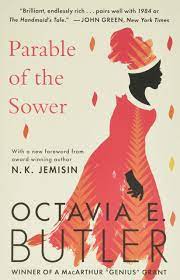
[READ: March 29, 2021] Parable of the Sower [2026-2027 (chapter 19)]

I have not read Cormac McCarthy’s The Road, and I don’t intend to.  But I feel like this book acts as a precursor to that one.  And that is something I did not in any way expect.

2026 opens in June, almost seven months after the previous entry.  I’m curious about the distance between entries.  It’s possible that Lauren has dozens and dozens of pages that just said, “today sucked” and we don’t need to see that.  But I am curious about the time jumps.

Is it a way for Butler to move us ahead quickly so that something that needed to take a few years to happen is given the time to do so?  I’m thinking about Mars a bit.  In two years a lot can happen with the space program.  Of course, the President was supposed to cancel the program.  So who knows what’s going on there.  Aside from basic passage of time, did we need to wait six months to see what came next?  I’m not sure.

In June Keith is back–bigger and more confident.  He’s not yet 14, but he’s very successful, bringing home money and gifts (but none for his father).  He has ingratiated himself into a gang by being the only literate one in the group:

They’re all older than me, but not one of them can read or write anything.  They stole all this great stuff and they couldn’t even use it.  Before I got there they even broke some of it because they couldn’t read the instructions. (105)

Lauren and Keith have a heart-to-heart–really their first ever.  He learns a bit about her and while he gains a little more respect he also tells her that she’d never survive out there–she doesn’t know enough.  He also tells her about these new crazies called Paints who paint their skin green or blue or yellow and eat fire and kill rich people.

Keith comes back on her birthday and gives her a present.  A month later he is dead–killed in a horrific and gruesome way.  He was clearly tortured and left to be found.  His death was a message for someone–a rival gang, probably.

But they don’t call the police:

cops liked to solve cases by “discovering” evidence against whomever they decided must be guilty.  Best to give them nothing.  They never helped when people called for help.  They came later and more often than not, made a bad situation worse. (114)

In October, a new component to the story crops up.

Kagimoto, Stamm, Frampton and Company (KSF) has taken over a nearby town called Olivar.  It is small and well to do.  The citizens voted to let their town be taken over–privatized.  They intend to set up energy resources in the community–solar, wind, desalinization.  They mean to own great industries in an area that people have given up on.

Kagimoto, Stamm Frampton: Japanese, German, Canadian.  When I was young, people said it would come to this. Well why shouldn’t other countries buy what’s left of us if we put it up for sale. (121)

This is another aspect of the story that confuses me.  Is it basically that Los Angeles has exploded and the rest of the country is okay?  There’s talk about work up north, but why?  What happened to the country that they/we would let L.A. collapse but nothing else.  Or maybe it’s the entire South West?  Nobody knows anything about the East Coast, apparently.   I’m hoping that they will get explained a bit later on.

Olivar was accepting applications to live there.  They were looking for educated people.  And here we learn that both of Lauren’s parents have PhDs [a commentary on the invisibility of Black scholars?].  Her stepmother thinks it’s a great idea to go to Olivar.  They would be guaranteed safety and security.  But her father is against it, calling it “half antebellum revival and half science fiction” (122).

Anyone KSF hired would have a hard time living on the salary offered. In not very much time, I think the new hires would be in debt to the company.  That’s an old company-town trick–get people into debt, hang on to them and work them harder.  Debt slavery. That might work in Christopher Bonner’s America. Labor laws, state and federal are not what they once were. (121)

Come November, the Garfields have been accepted at Olivar.  The Garfieds include Joanne, Lauren’s one time best friend (who misplaced Lauren’s trust by tattling to her father).  Joanne has been serious with Harry Balter.  But Harry is staying in Rebledo.  Lauren suggests they get married and then Harry can move in with them, but she says that Harry wants to get married and travel north.  He thinks they way Lauren’s father does about Olivar.

But the Garfields are still going: “conservative and sensible and mature and wrong” (128).

In November, Lauren’s father did not come home one night.  They spend days looking for him with no luck.  The search parties uncover all kinds of remains, some of which they think might be her father’s but which turn out not to be.

The search also reveals an aspect of Lauren’s hyperempathy that we didn’t know–sound doesn’t trigger it (she hears a man screaming), only sight does.

Five days alter they have a Sunday survive that turns more or less into a memorial.  Lauren speaks at he service and proves to be powerful preacher.  She speaks of God but presumably she means her own god–the earthseed god.  By mid-December they have a formal funeral–they accept that he would have found his way home by now.

Later, when KSF came for the Garfields, it was in an armored truck

The two movers were a black and a white, and I could see that Cory considered that hopeful.  Maybe Olivar wouldn’t be the white enclave that Dad had expected. (139)

All along Lauren has been romantically involved with Curtis.  People anticipated that she would get married an have a baby with him–something she strongly resisted.  Indeed, her plan all along was to leave Rebledo without him.  But now with Lauren’s father gone (he was the reason she hadn’t left yet–she didn’t want to hurt him), Curtis suggests that they both go.  He’s upset that she wanted to go without him, but she explains that she didn’t want to force him to make that choice.

Two days later, someone burned down the Payne/Parrish house; while that was going on. they robbed three of the other houses including Lauren’s.

I’ve been frightened at the phrases that Butler says that prove eerily prophetic to the last few years:

People are setting fires because they’re frustrated, angry, hopeless. They have no power to improve their lives, but they have the power to make others even more miserable.  And the only way to prove to yourself that you have power is to use it.  (143)

Interestingly, the drug that gave Lauren her hyperempathy–Paracetco–was initially a legitimate drug intended to help victims of Alzheimer’s disease.  Pyro was an accident–a homebrew on the East coast it made it was away across the country.

People on the fire drug get off on watching things burn.  Blaze, fuego, flash, sunfire.  The most popular name is pyro short for pyromania [I’m fascinated that she needed to spell that out as I feel that in 2021 (and much earlier) it was a common abbreviation].

As the year ends, the families try to make due with what they have left.

Then we enter 2027.  Once again it’s six months into the year.  And this is when things change dramatically.   Thieves drove a truck through their wall and set everything on fire.  Nearly everyone in the community was killed.  [I did wonder if it was worthwhile learning anyone’s names, and it was two people I didn’t think twice about who survived].  The description is a violent orgy of death, rape, fire and who knows what else.  It is brutally described.  Lauren escaped.  She had the forethought to run back in and put on clothe and shoes and grab her bug out bag.  No one else in her family had done so. She saw them n bare feet and pajamas and then she didn’t see them any more.  She managed to get outside and to hide until the next day,

She crept back into her community and went to her house which was being looted and stripped. She knew where there were some hiding places and she managed to get clothes for her family as well as money that was hidden in the ground.  She grabbed a gun and got out, looking like all the other miserable looters.

Lauren was sure she was alone.  Then out of the rubble came Harry Balter and Zahra Moss–the youngest wife of Richard Moss the polygamist.  Zahra’s baby was killed (brutally) and an attacker was about to (or had begun to) rape her when Harry saved her (and got beaten for his help).  Neither one had planned for anything like this and they are pretty hopeless.  Lauren decides that three is safer than one and invites them to go North with her.

Zahra’s backstory is interesting.  Richard bought her from her mother who was a drug addict and a prostitute.  Zahra has lived on the streets and she knows what’s what.  She takes them to Hanning Joss, the biggest secure store complex.  I’m fascinated to learn that there are are still megastores and that they have security allowing people to shop safely there–commerce always wins.

Then they do what everybody else does–they head North.  Lauren has decided to pass as a man.  She’s tall and muscular and can do so, so she cuts her hair short.  They encounter much danger and violence but manage to get relatively far north.  Harry is a trusting guy, trying to avoid violence in any way possible.  But Lauren (and Zahra) knows the reality of the situation–kill or be killed; steal or be stolen from.  And with Lauren’s hyperempathy, she can’t afford to let people around her suffer.  She winds up cutting a man’s throat to stop the hurting that he (and she) are feeling.  Harry is appalled at her.  So she finally admits to her hyperempathy assuming they’ll abandon her.  But they do not–three is better than two.

Zahra and Harry become a couple and have unprotected sex (what harm could come from that?)

Then the trio meet another family who seems to be tagging along after them.  Everyone is out for themselves, but Lauren takes pity on this mixed race couple with a baby.  She helps them out at the second Hanning Joss and a few days later, when Lauren saves their baby from a feral dog, they agree that five (or six) is better than three and two (or three).

The new people are Travis Charles Douglas, Gloria Natividad Douglas and six month old Dominic. They are going to Seattle where Travis’ aunt lives.  Travis is quite taken aback when he learns that Lauren is a woman–especially since she saved them, but he’s going to have to get over it.

All of this time, Earthseed has been running around in Lauren’s head, but it hasn’t really shown up.

Then in chapter 18, Lauren starts talking to them about Earthseed.  Travis is a (surprisingly) intelligent man–he knows about entropy.

Travis’s mother was a live in cook for a rich man.  But before that she had written for newspapers and magazines.  She taught Travis to read. The man she worked for had a library and she would sneak out one book at a  time–he didn’t want Travis touching his stuff.

Of course. Slaves did that two hundred years ago.  They sneaked around and educated themselves as best they could sometimes suffering whipping, sale or mutilation for their efforts. (218)

Natividad was a maid and the rich man let them marry:  The son of the cook marrying one of the maids. That was like something out of another era too.

They discuss her poems–Earthseed.  Travis pushes back against her ideas, although never in an aggressive way.

She argues that here is no pore pervasive power than change.  Travis says that nobody is going to worship change.  Lauren says she hopes not

This excerpt from God is Change summarizes this discussion nicely:

“I was looking for God. I didn’t know whether there was a god to find, but I wanted to know. God would have to be a power that could not be defied by anyone or anything.”
“Change.”
“Change, yes.”
“But it’s not a god. It’s not a person or an intelligence or even a thing. It’s just … I don’t know. An idea.”
“It’s a truth. Change is ongoing. Everything changes in some way— size, position, composition, frequency, velocity, thinking, whatever. Every living thing, every bit of matter, all the energy in the universe changes in some way.”
“Sort of like saying God is the second law of thermodynamics?”
“That’s an aspect of God. There are all kinds of changes in the universe.”
“But why personify change by calling it God? Since change is just an idea, why not call it that? Just say change is important.”
“Because after a while, it won’t be important. People forget ideas. They’re more likely to remember God— especially when they’re scared or desperate.”
“Your stuff isn’t very comforting.”
“It is after a while. I’m still growing into it myself. God isn’t good or evil, doesn’t favor you or hate you, and yet God is better partnered than fought.”
“Your God doesn’t care about you at all.”
“All the more reason to care about myself and others. All the more reason to create Earthseed communities and shape God together. ‘God is Trickster, Teacher, Chaos, Clay.’ We decide which aspect we embrace— and how to deal with the others.”
“But nobody’s going to worship change.”
“I hope not.  Earthseed deals with ongoing reality, not with supernatural authority figures. Worship is no good without action. With action, it’s only useful if it steadies you, focuses your efforts, eases your mind.”
“Praying makes people feel better even when there’s no action they can take. I used to think that was all God was good for.”
“That isn’t what God is for, but there are times when that’s what prayer is for. And there are times when that’s what these verses are for. God is Change, and in the end, God prevails. But there’s hope in understanding the nature of God— not punishing or jealous, but infinitely malleable. There’s comfort in realizing that everyone and everything yields to God. There’s power in knowing that God can be focused, diverted, shaped by anyone at all. But there’s no power in having strength and brains, and yet waiting for God to fix things for you. Best to understand that and return the effort: Shape God.”

Lauren thinks he might join her movement.  Zahra is already on board.

She imagines finding and isolated place on the coast and making a deal with the owners–if there were more of them and they were better armed, they could provide security as well as education.

This fantasy, this plan gives the first sign of hope in this bleak world of Lauren’s.  It seems impossible.

Read Full Post »

SOUNDTRACK: MR. BUNGLE-The Raging Wrath of the Easter Bunny Demo (2020/1986).

In 1986, Mr. Bungle released a demo tape called The Raging Wrath of the Easter Bunny.

In 2020, after a reunion tour of sorts, the band rerecorded the album, with some slight personnel changes. Original singer Mike Patton was still there as was masterful guitarist Trey Spruance and bassist Trevor Dunn.  But they had two impressive guests stars (who also performed live with them), Scott Ian (from Anthrax) on rhythm guitar and Dave Lombardo, drummer extraordinaire.

And thus they re-recorded the initial demo.  Fans of Mr. Bungle’s later genre bending work would be a little disappointed because this was pretty much a heavy heavy metal record.  But it is Mr. Bungle so you know there’s gonna be some weird stuff too.

The only song they don’t play from the original is “Evil Satan” which is more or less a goof anyway.

“Grizzly Adams” opens the album with a very pretty guitar instrumental. Spruance really shines with this moody, weird piece.  But even when the full band joins in in the last 30 seconds, it doesn’t prepare you for the heaviness to come.

“Anarchy Up Your Anus” is old school metal–heavy guitars with an Anthrax/Slayer vibe.  There’s even a lengthy scream after the opening drum fills.  This song has an opening narration by Rhea Perlman.  Yes.  Rhea Perlman.  The narration comes from the Chilling, Thrilling Sounds Of The Haunted House Disney album (on the demo they just played the audio from the record).

“Raping Your Mind” is out of sequence from the demo (it was originally song 6).  It continues with the heavy Anthrax-like riffage and some serious drumming.  There’s a cool middle moment where there’s two guitar solos and just bass and drums in the back–there’s some seriously wicked guitar soloing going on.

“Hypocrites /Habla Español o Muere” was originally a longer song, but they decided to shorten it and add this humorous cover of the Stormtroopers of Death song.  The title is mentioned in the first few seconds, then after 30 seconds, the song jumps into a bit of “la Cucaracha” and then segues into “Speak Spanish or Die.”

“Bungle Grind” is really heavy with some classic mosh sections and faster riffage.

“Methematics” is a new song.  It’s a bit more standard heavy metal and not so much early thrash until the double bass drums kick.  There’s lots of parts including a classic punk style in the middle.  This is more akin to the later, adventurous Mr. Bungle, but at 8 minutes it is a little long.

“Eracist” is another new song.  This one is great.  Really catchy with some good old fashion metal riffs and chanted chorus.  There’s a seriously heavy middle section, too.

“Spreading the Thighs of Death” was the third song on the demo.  It’s some good fast thrash with wicked chord changes and massive double bass drum.  There’s some really wild guitar soloing too.

“Loss For Words” is a Corrosion of Conformity cover.  It’s a pretty serious cover version.  Patton’s vocal delivery is even a little different.

“Glutton for Punishment” is another new song that fits into the classic riff an thump thrash.  There’s a whispered vocal part where you can actually hear the words!  And a fascinatingly fiddly guitar solo that left me wondering how he did it.

“Sudden Death” ended the demo and ends this as well.  A heavy chugging riff and super fast thrashing–it’s impressive that they can keep it up for seven plus minutes.  I rather liked the “yes/no” chanting at the end.

This album isn’t for everyone (as most Mr. Bungle albums aren’t).  But it does show off some quality old school metal and some serious skill for a band covering themselves 30 years later.

[READ: March 24, 2021] Zed

I saw this book in Barnes & Noble and fell in love with the cover.  I made sure to look for it at the library and was pretty psyched when it came in.

And I was pleased as soon as I started reading.

Set in the not too distant future, one tech company, Beetle, dominates the world.  I thought that Beetle was pretty inspired name.  It could be Apple (who have a connection to The Beatles, with Apple Records) and it looks a lot like the word Google, although I suppose it is probably closest to being about Amazon–with their online assistant Athena.

Nearly every citizen (the book takes place in London, but Beetle is global) wears a BeetleBand which monitors everything you do–like a Fitbit or Apple Watch on steroids.

It tells you when you are stressed or when you should hydrate or that you shouldn’t have that donut.  Indeed, everything is now really “smart”: fridges, doors, cars.  Everything in your house is monitoring you. And everyone has a Veep, a personal assistant who does everything for you (except for physical things, since it has no body). You pay for all the best stuff in Beetle bucks–the cryptocurrency that replaced actual  money as the dominant currency.  If you didn’t convert your pounds, euros or dollars, when the rate was good, you’re just stuck.

When the book says everyone, it’s really mostly everyone. There are some people who can’t afford such extravagance.  People who don’t work for Beetle get paid in regular money which isn’t very useful.  There are also neo-Luddites who want nothing to do with Beetle.  But they are carefully monitored by Beetle.

Most people work and communicate in a virtual world with avatars that are some version of themselves.  And most importantly, every person has a Lifechain–the algorithm that determines the longevity and happiness you should experience.  This predictions are pretty much never wrong and everyone uses them to judge people–employers, police, etc. Everything you do, every decision you make changes our Lifehchain, which changes you likelihood of doing x y or zed. (more…)

Read Full Post »

SOUNDTRACK: MILEY CYRUS–Tiny Desk (Home) Concert #161 (January 28, 2021).

I’m quite torn about Miley Cyrus.  I respect her individuality and her desire to push boundaries (and her Happy Hippie Foundation [created to rally young people to fight injustice facing homeless youth, LGBTQ youth and other vulnerable populations] is pretty great).  But sometimes I don’t always love her choices.

In all that time I’ve never given much attention to her music.  She was a pop singer (or worse, a country singer) and that was that.

Now, after getting mixed up with The Flaming Lips, who even knows what she’s up to.

For her Tiny Desk Concert (I can’t believe it’s barely over 11 minutes when so many other have done them over 20) she has built a tiny room, complete with a bed and a window and posters on the wall.  The room itself is probably three feet high and Miley, bedecked in a fascinating array (fake, one assumes) furs an leopard skin pants and a big hat and glasses.

The blurb gives rather an extensive narrative to Cyrus’ video

Here, the scene opens with Cyrus, dressed head to toe in rock-star faux fur, in what looks like a teenage girl’s bedroom. But the perspective in this pink-and-purple space feels a little … odd.  As Cyrus sings, it becomes clear that this is her Wonderland – like Alice full of magical cake, she’s grown to exceed her surroundings. By the end of this three-song set, Cyrus reveals that it’s the adolescent enclave that grew too small for her, not the other way around.

That give a lot of credit to a little video.  But whatever.  First she lounges on her bed and sings a pretty intense version of Mazzy Star’s “Fade into You.”

The original was pretty chill (and maybe a little boring) and Miley inject some powerful screams in the middle and her voice gets all raw.  It adds some drama to an otherwise chill song.  Or as the blurb says

a hazy psychedelic anthem that she infuses with just the edge of the next day’s hangover.

Up next are two songs from her latest album.

The two songs from Plastic Hearts that follow are her own bids at classic-rock timelessness.

In “Golden G-String” Cyrus assesses her own life in the spotlight with Leonard Cohen-esque charm.

She takes off her coat and hat (the video ifs filmed from different angles and there’s some overlapping edits.

This song is really quite catchy.  I think Id like to hear the album version.

And “Prisoner” is the power ballad that lets Cyrus really break out – as she leaves the tiny room — just a box, it turns out, on a soundstage – and joins her band,

Her poor band is never really on camera. It pans around a little before prisoner–you see some hands and some hair of Stacy Jones: drums; Mike Schmid: keys; Max Bernstein: guitar; Jamie Arentzen: guitar and Joe Ayoub: bass.

“Prisoner” sounds like a classic rock song-maybe from Heart or Fleetwood Mac.  This album is getting some good accolades and I might just have to check it out.

[READ: March 18, 2021] I Text Dead People

We brought this book home from the library for my daughter, but I found myself reading and (sort of) enjoying it.

Annabel Craven and her mother have just moved from Sacramento to this small town.  They moved because Annabel’s Uncle died and left his house to them.  Since they lived in a tiny apartment in Sacramento, her mom figured it was a step up.  Except that their new house is actually a creepy old “haunted” house that is adjacent to a cemetery.

On her first day of school, Annabel took a shortcut through the cemetery where she found a phone.  She had recently broken her phone and her mother was trying to teach her the value of things by making her save up for a new one.

Obviously, she will return this found phone to its owner, but until then, it might be nice to be able to communicate with people  Sadly, the phone has no power so she couldn’t locate its owner anyhow. (more…)

Read Full Post »

SOUNDTRACK: LOUS AND THE YAKUZA-Tiny Desk (Home) Concert #168 (January 27, 2021).

If I listen to a few Tiny Desk Concerts in a row, it can get pretty dull hearing the same more or less generic pop music (the bar has been lowered I’d say for Home Concerts).  So it’s really nice to hear something different.  Like vocals in French!

Lous — an anagram for “soul” — is Marie-Pierra Kakoma, a 24-year-old artist based in Belgium but born in the Democratic Republic of the Congo.  Lous and The Yakuza perform a Tiny Desk from the Book Bar in the Hôtel Grand Amour in Paris.

“Dilemme,” her 2019 single, opens the set.

The song conjures up images of growing up in the Congo and Rwanda: “Living haunts me, everything that surrounds me made me mean,” she sings in French. Her songs are often set to Congolese rumba rhythms, filled with resilience, beauty and resistance.

I just love the way the chorus ends with a choruses and echoed “na na na na” (or “non non non non”) as Ayelya Douniama and Myriam Sow sing along and harmonize.

“Bon Acteur” opens with some sharp drums from Jamiel Blakeand and then gentle keys from Joseph Nelson while Lous kind of raps–quickly–in French. It is pretty sweet.  The song has a slower soft jazz feel at the end.

Up next is her favorite song on the album “Dans La Hess” means “being broke” ’cause that’s what I used to be.  “It’s over now because we’re shining.  Some black girl magic.”  The song has a soft bounce with some slightly funky five-string bass from Swaeli Mbappe.

And while the music is smooth, upbeat and warm, what lies beneath in Lous backstory, in her French lyrics, is, at times, deep and disturbing.

She came to Belgium because her family escaped war in the Congo. They were refugees.  These songs from her 2020 album, Gore, are steeped in a life that saw her mother imprisoned in the Congo for being Rwandan, then become separated during their escape to Belgium. They were eventually reunited, but Lous was a troubled teen and spent a period of time adrift before pulling her life together in pursuit of music and art. There’s much to uncover and discover here. This Tiny Desk (home) concert is a deep journey.

“Solo” is a quieter ballad with just washes of keys and her voice for the first half of the song.  Eventually the bass and drums come in, but they stay quiet accenting her wonderful voice.

She thanks everyone and then speaks in French to introduce “Amigo.”  This song feel more tense than the others.  There’s a wicked drum beat (mostly rims) and a sliding funky bass that counterpoints the swirling keyboard chords.

It’s fascinating not knowing what she’s saying and honestly being unable to tell what the tone of the lyrics are meant to be (if she is playing music that’s contrary to the lyrics, I’m a total loss).

“Amigo” feels very dancey with nice backing vocal but the highlight is the moment in the middle where it’s just the keys and her spoken word.  Who knows what she’s saying, but it sounds great.

[READ: March 20, 2021] “Seven”

I don’t often think that short stories published in the New Yorker are actually excerpts from future novels.  I’ve got it in my head that these are all short stories.  Which is patently false.  Although it doesn’t say anywhere on the page whether it is or not, so I simply don’t know.

What has happened many times is I’ve felt that a short story had a poor ending only to find out it wasn’t an ending, just a part of a whole.

So I’m assuming that this story is part of a much greater story because otherwise the ending is a total fizzle.  And yet the story felt like it could have been a short story–the detail wasn’t extravagant (the best sign that it’s a part of a novel is if it seems like there is too much detail).

This story is fairly simple, so far.  A Haitian immigrant is living in New York.  It has been seven years since he has seen his wife.  We learn a little later that they were married for exactly one day–as a binding agreement–before he left for New York.

He had been trying to get her a visa and it took over six years (hence the title “Seven”). (more…)

Read Full Post »

SOUNDTRACK: SEVANA-Tiny Desk (Home) Concert #159 (January 26, 2021).

I had not heard of Sevana, although she is a member of Protoje’s In.Digg.Nation collective

“If You Only Knew” is a pretty pop song.  I enjoyed the way the music dropped out and there wa s quiet drum fill Mark Reid.

This concert was filmed at the Kingston Creative Hub back in September 2020 (the interludes you’ll hear about the pandemic are reflective of that time).

The second song “Blessed” opens with gently picked guitars from and Nicolas Groskoef and Almando ‘Mundo Don’ Douglas who also both play solos throughout Almando first, Nicolas later in the song.  It sounds like a Santana song and is an example of her

jumping delicately between traditional R&B, Caribbean gospel and soul, with touches of reggae interspersed.   On “Blessed,” an infectious ode about the miracle of life and faith, she welcomes us with open arms into her church and demonstrates the wide range of her multi-octave voice.

“Be Somebody” has some interesting sound effects and vocal samples from Jean-Andre Lawrence and washes of keys from Rhoan Johnson.

She closes out the four-song set with her most recognizable tune, “Mango,” a dancehall-influenced love song.

I would have thought this dancehall song would be more of a banger, but aside for some quietly pulsing bass from Kawain Williamson, the song is pretty mellow.

[READ: June 3, 2019] “A Dream of Glorious Return”

This is an excerpt from Rushdie’s novel Fury which I have not read.  The thesis sentence comes fairly early though.

Life is fury, he’d thought.  Fury–sexual, Oedipal, political, magical, brutal–drives us to out finest heights and coarsest depths

It concerns professor Malik Solanka, a fifty-five year old retired historian of ideas.  He is presently living in Manhattan, although that is a recent change in his life.

He seemed to mostly want to be a solitary man–celibate by choice–ignoring those around him.  Like his neighbor, that damn Mark Skywalker who asked if the slogan “The sun never Sets on American Express International” would seem offensive to Britons.

The novel really sets the time and place quite well–current movies, the election (“unlovable presidential candidates (Gush, Bore))” and the talk of Cuban refugee Elian Gonzales.

The phone rings and it is his wife Eleanor in England.  She complains that their son is ill and he doesn’t seem to care.   But more importantly

without a scrap of credible explanation you walked out on us, you went off across the ocean and betrayed all those who need and love you most.

He thinks back to how they met and how he had fallen in love with her voice.  Fifteen years ago when he phoned a publishing friend, Eleanor had answered and he was smitten with her voice–asking her out for dinner that evening.

So how could he leave her and his child?  One night

he sat in the kitchen, in the middle of the night, with murder on the brain: actual murder, not the metaphorical kind.  He’d even brought a carving knife upstairs and stood for a terrible, dumb minute over the body of his sleeping wife.  Then he turned away, slept in the spare bedroom, and in the morning had packed his bags and caught the first flight to New York

He had left his first wife Sara earlier in a less dramatic fashion.  They married too quickly and felt trapped almost immediately.

He reflected back to his childhood in Bombay when Mr Venkat, the big-deal banker whose son Chandra was the ten year old Malik’s best friend

became a sannyasi on his sixtieth birthday, and abandoned his family forever, wearing no more than a hand-hewn loincloth, with a long wooden staff in one hand and begging bowl in the other.

He would never return.

This story could go in many directions from here.

Read Full Post »

« Newer Posts - Older Posts »