Feeds:
Posts
Comments

Archive for the ‘Sonic Youth’ Category

[LISTENED TO: August 2015] The Organist

organistFor the second season of The Organist, they switched formats from the once a month 45-55 minute long amalgam of stories of last year to a one story an episode, once a week format.  The length hovers around 20 minutes now with some shows being much longer and others being much shorter.  It doesn’t make too much of a difference if you listen all at once as I did, but I can see that if you’re listening when they come out that a weekly podcast would be more satisfying.

However, they have also opted to have an “encore” episode every fourth episode in which they take one of the segments from an earlier episode and play it on its own.  How disappointing would it be to tune in and get a repeat?  And why on earth would they repeat things if all of the previous episodes are available online?  It’s very strange and frankly rather disappointing.  I mean, sure, it’s nice to have the new introductions, but it’s not like you’re getting some kind of special version when they repeat it.  It’s exactly the same.  And, boy, they tend to repeat some of my least favorite pieces.

Also the website now gives a pretty detailed summary of the contents of each episode, so you get a good sense of what’s going to happen. (more…)

Read Full Post »

[ATTENDED: October 8, 2014] An Evening with Neil Young

2014-10-08 22.40.54 Sarah has wanted to see Neil Young for decades.  However, we’ve had bad luck (or high prices) with tickets so we never went.  But when I saw that he was performing in Philly for not too too expensive, it was time to get Sarah to see her man.

I myself have enjoyed Neil Young for a while too, so this wasn’t like a sacrifice or anything.  I had just never gotten around to seeing him either.  Over the years he has played with some amazing other bands (not to mention Crazy Horse), like Sonic Youth and Pearl Jam–two tours that I should have gone to but didn’t.  But this night was all about Neil.  It was just him and his guitar and his guitar and his guitar and his guitar and his guitar and his guitar and his guitar and his banjo and his piano and his piano and his organ and a bunch of harmonicas.  (He had about 8 guitars on stage and he played every one of them).

I don’t usually check setlist before shows because I like to be surprised, but with Neil, ever the curmudgeon, you never really know what you’ll get–perhaps he’ll do an all Trans night.  So I scanned a set, saw a few hits and felt secure in letting him give us whatever he wanted.

2014-10-08 19.42.37-1Outside the theater–the Academy of Music, to which I had never been–there was a big silver bus (not an Econoline van) with the license plate ZUMA, and we knew we were in the right place.  Then we entered the old building and went up the less than impressive stairs (it looked like a middle school stairwell).  And we proceeded to go up and up and up and up to our seats.  We were about ten rows from the top of this building.  And the theater was breathtaking (especially since we were out of breath from climbing 8 flights of stairs).

But it 2014-10-08 19.52.35was stunning to be eye to eye with a chandelier.  However, the building is not deep, so we weren’t that far from the stage.  Of course, mostly we saw the top of Neil’s head (and the top of his piano–which was cool).

Before the lights dimmed we got the great announcement to “please refrain from shouting out song titles,” which I loved–if only the latecomers had heard that message as well.

And then, lights went out, flashlights appeared and Neil shuffled on stage–in jeans, a T-shirt, a flannel type shirt over it–and sat down in the middle of the stage.  He picked up one of the guitars (he already had his harmonica clipped on) and busted out “From Hank to Hendrix.”

Okay, so I’ve been listening to Neil for a long time–I’ve gotten nearly all of his records, I’ve heard a bunch of live things, saw him recently on Jimmy Kimmel–nevertheless I was absolutely blown away by how good his voice sounded.  It was clear and strong and nothing like the 68 year old guy shuffling around on stage should be able to possess.  And his guitar playing sounded crisp and clean, his harmonica was spot on–it was so perfect sounding.  Perhaps it was the venue, but it was the purest sounding concert I may have ever heard.

When he finished the song, Sarah, overcome said, “Okay we can go now.”  That’s how good it was.  [You can read her review here].  But of course we didn’t go.  We sat, rapt as he picked guitars to play, “This one was a gift from Stephen Stills.” [Audience guy: How is he?] “He’s good.”  And on that guitar he played a Buffalo Springfield song.  Then he played “Only Love Can Break Your Heart.”  At this point I stopped trying to keep track of the guitars he played. (more…)

Read Full Post »

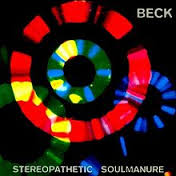
tintinSOUNDTRACK: BECK-Stereopathic Soulmanure (1994).

soulmanureDepending on who you believe, this was Beck’s first or second or even third album.  Certainly it was recorded earlier than the other records but who knows what the actual release date was, or if it even matters (it doesn’t).  This album plays like a demo tape of home recordings of a talented folksinger who doesn’t want to be labelled as a folk singer ans is experimenting with all kinds of other sounds, including tape manipulation, home recording and utter noise (there’s a Sonic Youth sound connection here, before they ever did anything together).

But anyway, that’s got nothing to do with this album.  My version has 23 listed tracks and two bonus tracks.  And since I’ve no intention of doing a track by track analysis of the album, I’m going to group some tracks together.

There are a few styles of music on the record.  There are about a half-dozen noise/nonsense tracks–distorted guitar, distorted voices, sometimes sheer noise–like the “bonus” track which is some ten minutes of just nonsense.  There are about a half a dozen tracks that are basically just talk–old home recordings from when he was a kid, and other spoken tracks.  There are even a few tracks from a guy named Ken who is apparently an older guy singing what sounds like hobo songs (which I suspect Beck does not play on at all).

There are also a number of different instruments which (I assume) Beck is playing. He plays banjo very well, there’s an accordion track, and of course guitar.

What sets this apart from being a simple nonsense album is that there are nearly a dozen “real” songs.  There are a couple of well sung country tracks, with a slide guitar. There’s also some anti-folk, rap and live numbers.  These are fleshed out, proper songs–musically complete.  It’s in the lyrics that you can hear Beck fighting the folk/country pigeonhole.  He has three songs that are more or less rapping (like “Loser”).  There’s a couple of songs that were recorded live (in a club with half a dozen people), and are mostly silly.  And then there’s a series of anti-folk songs.  These are pretty traditional sounding songs, but with layers of noise or weirdness that keeps them from being traditional folk.  Like “Satan Gave me a Taco” which is complete song but is obviously quite silly.  And yet, Johnny Cash covered the song “Rowboat” on one of his Americana albums.

None of the recordings sound more than lo-fi, but the good songs all sound good.   It honestly sounds like a guy trying desperately to show off what he can do–and hoping desperately to get accepted by just about any genre.  Except that he clearly has his own identity (as varied as it may be).  This record is certainly not for everybody (as suggested by the incredibly low sales), but if you like Beck’s early experimental stuff, there’s enough really good stuff here that’s worth checking out.

[READ: March 9, 2014] Tintin: The Art of Hergé

Sarah bought me this book for our tenth anniversary (which is “tin”, get it?).  We’ve both enjoyed Tintin over the years, more as an icon than as a collection of stories (which I believe she has not read and which I’ve read about 1/3 of).  The Spielberg film and subsequent video game are both really cool too.  This book is an amazing look at Hergé as an artist and at the Hergé museum, which looks amazing.

When Sarah and I were in Belgium, we went to an animation museum which featured Hergé heavily.  Since it was a decade ago, I actually thought that this book was about that museum, but no, the Musée Hergé opened in 2009 and was designed by French architect Christian de Portzamparc.  The first chapter of the book is dedicated to the Museum, and do de Portzamparc’s designs and execution in the spirit of Tintin.  And I have to say the building looks amazing.  The facade alone is beautiful, and his explorations light and dark and shape look really awesome. (more…)

Read Full Post »

CV1_TNY_11_04_13Brunetti.inddSOUNDTRACK: LEE RANALDO AND THE DUST-Live at KEXP (December 8, 2013).

leeThis show was recorded before the holidays in 2013.  For some reason, it wasn’t posted online until Jan 31.  But whatever the reason, I’m glad it was featured.

During the dissolution (or whatever) of Sonic Youth, much has been made of both Thurston and Kim’s new projects.  But Lee Ranaldo tends to get lost in the shuffle (which is probably how he likes it).  During the break, Lee has been plugging away on two solo albums.  His latest one, with The Dust, is more of a band effort, with contributions from everyone: Steve Shelley (talk about getting lost in the shuffle, poor Steve) on drums, Tim Lüntzel on bass and Alan Licht on guitar.  Licht plays some wonderful guitar solos and sounds (although Lee handles most of the weird sounds).  I think what’s interesting about these songs is that although they feel like Sonic Youth, they have a “pretty” guitar solo which really changes the overall feel of the song.

Ranaldo has written (and sung) some of my favorite Sonic Youth tracks.  I always assumed that his tracks sounded great when they were balanced with the rest of the album.  But these songs sounds very Ranaldo and they are all fantastic.

The first song, “Keyhole” is part beautiful melody and part beautiful noise.  Ranaldo writes chords that work perfectly together and yet which don’t sound like an obvious pairing.  And his vocal phrasing is always perfect for the music he makes–his voice is not spectacular but it is really quite perfect.  The second song, “Off the Wall” has the most commercial-sounding chorus I’ve heard from a Sonic Youth alum.  I almost don’t like it, although the rest of the song is very cool.

They play a cover of The Velvet Underground’s “Rock n Roll” which fits in perfectly with their sound (even if Lee doesn’t hit the falsetto “fine fine” notes).  The final song, “The Rising Tide” is perhaps my favorite.  Clocking in at 10 minutes, this song is expansive and full of textures and sounds.  It goes in a  bunch of different directions and is really fantastic.

There’s a very long interview in the middle of the four songs, in which we learn what Lee has been up to, about how Hurricane Sandy affected him and about The Dust’s tour in India.  Lee’s an engaging talker and the interview flies by.

I don’t have any of Lee’s solo albums, but I think this one Last Night on Earth (and it seems like perhaps the previous one, Between the Times and the Tides) are total keepers.  You can watch the whole show below.

[READ: January 5, 2014] “Take It or Leave It”

I was surprised and pleased to see a piece from Zadie Smith in here.  Her article is mostly a comparison of take out food in New York and in London (or more broadly, the U.S. and England).

She tells how the first time she ordered Chinese food in New York, she wondered why the delivery guy just stood there after getting paid.  So she closed the door on him.  Her companion was shocked.  They just don’t tip delivery people in England.  British people grumble about it when they come here and have to tip.  They say that people should be compensated fairly for their work (although Smith notes that no one actually says if delivery boys are fairly paid in England) .

She says that a guy comes to your door, gives you food, gives you change and leaves (sometimes without even taking off the motorcycle helmet).  And they never say to have a nice day.  (“Have a good one” is the best you’ll get). (more…)

Read Full Post »

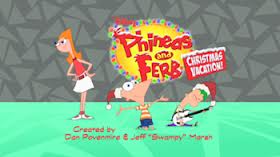
fivedials_no28SOUNDTRACK: PHINEAS AND FERB-The Twelve Days of Christmas (2010).

phineasWhile The Bird and the Bee has become my new favorite serious version of The Twelve Days of Christmas, this Phineas and Ferb version is my new favorite silly version of the song.  Sure it’s especially funny for fans of the show but, as anyone who has seen the show knows, Dr. Doofenshmirtz is comedy gold and so his wishes for Christmas and his updates and concessions (and the fact that he is a traditionalist) absolutely make this worthy of repeat listens.

[READ: December 19, 2013] Five Dials Number 28

Five Dials #28 is vaguely thematic–about heroes.  Some items are literal (the writers-as-heroines drawing), some are speculative (my favorite conceit–the stories of quickly killed side characters in movies), and some are unrelated at all–the guy who helped out Will Self.  This issue was launched from Sydney, Australia.

CRAIG TAYLOR-A Letter from the Editor: On Heroes and Convicts
Taylor talks about everything mentioned above and then talks about Robert Hughes’ The Fatal Shore and his primer on modern art: The Shock of the New (which has an accompanying documentary series). (more…)

Read Full Post »

lou_reed-620x412 SOUNDTRACK: LOU REED-Metal Machine Music (1975).

mmmfrom Wikipedia:

Metal Machine Music is generally considered to be either a joke, a grudging fulfillment of a contractual obligation, or an early example of noise music. The album features no songs or even recognizably structured compositions, eschewing melody and rhythm for an hour of over-modulated feedback and guitar effects, intricately mixed at varying speeds by Reed himself. In the album’s liner notes he claimed to have invented heavy metal and asserted that Metal Machine Music was the ultimate conclusion of that genre.

I don’t know how many people have actually listened to this album all the way through.  There are four 16-minute tracks.  Each one is, on the surface, exactly the same: feedback and more feedback.  In truth, the album is a bit more complicated than that.

There is a guitar in the left speaker and a guitar in the right speaker and each one is feedbacking in very different ways.  Indeed, if you listen to only one speaker at a time, you get a very different experience (I haven’t done that with the whole album, although that’s only because I really only found out about that recently, I did for a few minutes and it was pretty fascinating).

And fascinating is what this release is.  It was unlistenable in 1975, there is no question.  Just as something like Slayer would have been unlistenable in 1975.  But twenty years later, when Sonic Youth was riding high, Metal Machine Music seemed a lot less outrageous (indeed, their 1998 release Silver Sessions was essentially the same structure of feedback).

And now MMM seems very forward thinking.  Whether or not it was a joke or some kind of payback to the label or whatever (liner notes suggest he just really enjoyed enveloping himself in feedback), it’s a remarkable record.  If you can actually sit through it, there are some really interesting moments in it.  There are times when the squall and noise turns eerily beautiful, when the ringing notes take on chime-like status.

And unlike the aforementioned SY album in which they just turned up their amps and left, it sounds like Reed was actually hanging around and manipulating the sound.  You can hear times when new notes/strumming comes in and changes the mood.  And of course, Reed had to edit it for the album.

One of the more interesting moments comes right at the end of the disc.  On the vinyl release, he made a locked groove so the final rotation would keep repeating over and over until you had to get up and manually lift the needle (as if the album wasn’t difficult enough).  On the CD, they repeat that section for about a minute.  And that little repeated section is noteworthy for the rough distorted guitar and chiming feedback that all sounds very cool.

All of this is not to say that this album is enjoyable.  It’s really not.  It’s brutal and harsh and best handled in small doses (even Reed admits that in the notes).  But it is noteworthy and fascinating.  And it may have inspired as many feedback based bands as the Velvet Underground inspired droning bands.

[READ: November 2, 2013] “I loved Lou Reed more than you”

I was sad at the passing of Lou Reed, although I’ve never been a huge fan.  But of all of the eulogies, I knew that Neal Pollack would write the best one.

Neal Pollock is a wonderfully pompous “character” (who is the main character in most of the writing of his that I have read).  This article—while much briefer than most of Pollack’s short pieces—is an honest eulogy of Reed, but is also a hilariously over the top profession of fandom.

When Pollock heard the news of Reed’s death, he was polishing the acetate of his producer’s cut of Metal Machine Music.  He wept, mostly for himself but also “on behalf of all cultured people everywhere.” (more…)

Read Full Post »

yitaSOUNDTRACK: WXPN (88.5 Philadelphia) xpnand wxpn.org online-Prog rock Marathon (2012-??).

Every January, Dan Reed plays a prog rock marathon on WXPN.  This year I was able to enjoy portions of it.  I rather wish the playlist was still available (you can search, but only by artist), because I’d love to rave about the tracks they played (like the live “Supper’s Ready.”)

I was delighted by the great mix of songs they played and (as I learned from reading this book) I was surprised by how many prog artists I didn’t even know.

In 2014 I’ll be listening again and maybe this time I’ll copy the playlist to document what I’ve missed.

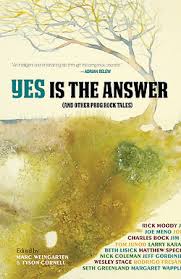
[READ: July 7, 2013] Yes is the Answer

This book was sitting on a cart outside of my cube.  I was intrigued by the title (it didn’t have that trippy cover, so I didn’t know what it was).  But “Yes is the Answer” was calling me.  Especially when I looked at the cover and saw that the cover had an excerpt from a William Vollmann story in which the protagonist plays In the Court of the Crimson King (track 5) for Reepah and watches her face as they band went Ahhhhhhhhhhhhhhhhhhhhhhhhhhhhhhhhhhhhhhhhhhhhhhhhhh!.

Quoting Vollmann (from The Rifles), playing King Crimson?  What could this book be?   Then I saw the subtitle and I knew I had to read it all.

I’m not going to review these essays because that would be like making a radio edit of a side long track, but I’ll mention the band the author focuses on and any other relevant details. (more…)

Read Full Post »

McSweeney’s #13 (2006)

13SOUNDTRACKPARTS & LABOR-Stay Afraid (2006).

partslaborParts & Labor have changed t heir style over the years going from noisemakers who have a melody to being melodious noisemakers.  This album is one of their earlier releases when noise dominated.  Right from the opening you know the album is going to be a challenge.  The first song has pounding drums (electronics that sound like bagpipes) and heavy distorted shouty vocals.  By the end of the songs there is squealing feedback, punk speed drums and screaming distorted vocals (complete with space sound effects).  It’s an aggressive opening for sure.  Song two opens with a long low rumbling and then “Drastic Measures” proves to be another fast-paced song.

“A Pleasant Stay” is 5 minutes long (most of the rest of the album’s songs are about 3 minutes).  It continues in this fast framework, although it has a bit more open moments of just drums or just vocals.  The way the band plays with feedback in the last minute or so of the song  very cool.

“New Buildings” has a hardcore beat with a guitar part that sounds sped up.  “Death” is a thumping song (the drums are very loud on this disc), while “Timeline” is two minutes of squealing guitars.  “Stay Afraid” has a false start (although who knows why–how do these guys know if the feedback sounds are what  they wanted anyhow?).  The song ends with 30 seconds of sheer noise).  The album ends with the 5 minute “Changing of the Guard” a song not unlike the rest of the album–noisy with loud drumming and more noise.

The album is certainly challenging, it’s abrasive and off putting, but there;s surprising pleasures and melodies amidst the chaos.   Indeed, after a listen or two you start to really look forward to the hooks.  If you like this sort of thing, this album s a joy.  It’s also quite brief, so it never overstays its welcome.

[READ: April 15, 2011] McSweeney’s #13

I have been looking forward to reading this issue for quite some time.  Indeed, as soon as I received it I wanted to put aside time for it.  It only took eight years.  For this is the fabled comics issue.  Or as the cover puts it: Included with this paper: a free 264 page hardcover.  Because the cover is a fold-out poster–a gorgeous broadside done by Chris Ware called “God.”  And as with all Chris Ware stories, this is about life, the universe and everything.  On the flip side of the (seriously, really beautiful with gold foil and everything) Ware comic are the contributors’ list and a large drawing that is credited to LHOOQ which is the name of Marcel Duchamp’s art piece in which he put a mustache on the Mona Lisa.  It’s a kind of composite of the history of famous faces in art all done in a series of concentric squares.  It’s quite cool.

So, yes, this issue is all about comics.  There are a couple of essays, a couple of biographical sketches by Ware of artists that I assume many people don’t know and there’s a few unpublished pieces by famous mainstream artists.  But the bulk of the book is comprised of underground (and some who are not so underground anymore) artists showing of their goods.  It’s amazing how divergent the styles are for subject matter that is (for the most part) pretty similar: woe is me!  Angst fills these pages.  Whether it is the biographical angst of famous artists by Brunetti or the angst of not getting the girl (most of the others) or the angst of life (the remaining ones), there’s not a lot of joy here. Although there is a lot of humor.  A couple of these comics made it into the Best American Comics 2006.

There’s no letters this issue, which makes sense as the whole thing is Chris Ware’s baby.  But there are two special tiny books that fit nearly into the fold that the oversized cover makes.  There’s also two introductions.  One by Ira Glass (and yes I’d rather hear him say it but what can you do).  And the other by Ware.  Ware has advocated for underground comics forever and it’s cool that he has a forum for his ideas here.  I’m not sure I’ve ever read prose from him before. (more…)

Read Full Post »

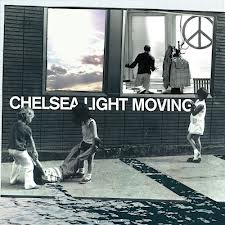
literarySOUNDTRACK: CHELSEA LIGHT MOVING-“Burroughs” (2013).

chelsea-light-moving-albumChelsea Light Moving is Thurston Moore’s new band [no comments about the state of Sonic Youth/Kim Gordon will be included in this post].  I don’t know anything about the other members of the band; I’ve not heard of any of them.  “Burroughs” is one of four new songs streaming on the Matador Records site.

The song is spot on for the noisy/sloppy style of Sonic Youth.  Fans of Sonic Youth will certainly detect some differences–the counterpoint of Lee Ranaldo is definitely absent, indeed, the entire low end sounds very different from what SY would create given this song.  But man, if you’re jonesing for some chaotic noise, this song has it in spades.

Moore is capable of creating some traditionally beautiful songs (see his Trees album), but here it’s all about discord.  The song is over six minutes long and the last 3 or so are devoted to some noisy guitars in both chords and solos.

While SY has not shied away from long songs, this song doesn’t feel like an epic–it’s not multi part or “extended” exactly.  It’s a fairly straightforward rock song with an extended solo section.  It’s really great.  I’m looking forward to the whole album (and I love the cover, too),

[READ: March 23, 2012] The Literary Conference

This has been my favorite Aira book so far.  And that’s probably because it is wonderfully over the top, mixing fantasy, sci-fi, genetics and literature.  All in 90 pages.

The story is about César Aira, translator.  He has been invited to a literary conference in Venezuela.  While there, he solves the age-old problem of The Macuto Line.  The Macuto Line is, essentially a rope which is attached to a pirate treasure.  For generations, people have tried all kinds of  things to impact this line–but it has proven to be unsolvable and indestructible.   Aira happened to be staying near the Line in a hotel.  He claims that he is no genius, but it just happens that the elements of his life have given him the exact information he needs to solve the puzzle.  And with a simple touch of the rope, the treasure is his.

But that’s just part 1 and has nothing to do with the rest of the story, really.  For despite his newfound wealth, he will still be attending the literary conference.  Primarily because he knows that Carlos Fuentes will be there (Fuentes is a real person, a Mexican author who died in 2012).  For, you see, Aira is planning to clone Fuentes in his bid to take over the world.  (In addition to being a translator, Aira is a mad scientist). (more…)

Read Full Post »

SOUNDTRACK: KISS-Lick It Up (1983).

Kiss takes off their makeup!  And they look…like normal guys with lots of hair (How has Paul’s hair stayed so spectacular for so long?).

Lick It Up was a transformative album for Kiss, in which they suddenly gained new respect and new fans.  And yet somehow, that impressive amazing tongue really looks kind of dumb without all the makeup on, sorry Gene.  They also added (officially) Vinnie Vincent to the band (see he’s right there on the cover!). I tend to hate the song “Lick It Up” with a real passion.  In part because it was overplayed and in part because it’s terrible.  Vinnie Vincent was supposed to be this amazing guitarist and that’s what he came up with?  Blah.  Maybe he felt hampered by Kiss and that’s why he made the wank-fest that was Vinnie Vincent Invasion.

As a result I tend to overlook this album, but “Exciter” is a great, rocking track.  It’s fast and heavy and is really propulsive.  “Not for the Innocent” is one Gene’s great songs—heavy and dark with a cool chorus (Much better than some of his recent affairs).  “Young and Wasted” starts out kind of tripping over itself but man the chorus is great.

“Give Me More” is a straight out fast rocker.  The song never stops and there’s a great old-school Kiss Chorus  too.  “All Hell’s Breaking Loose” also has an old school sound—a kind of “Hotter Than Hell” feel.  And of course, who doesn’t love when Paul rambles nonsensically, “Hey man, I am cool, I am the breeze.”  “A Million to One” is kind of a generic Kiss song—not bad (certainly not as bad as some of their songs) but nothing terribly exciting.

“Fits Like a Glove” is one of Gene’s dirty songs, it has a good bridge/chorus structure.  Kiss may have set a record for the most similes when it comes to sex.  “Dance All Over Your Face” is pretty silly, probably the worst song on the disc.  The lyrics are, well, Gene, and it even has a break where it’s just drums (a terrible way to force a song to be an anthem).  At least the album ends on a high note with “And on the 8th Day.”  True it’s yet another attempt for the band to have an anthem about rock, and it starts out a little anemic, but this is what they do best, and even a middling Kiss anthem is a good one.   Somehow I think about Eric Carr singing along to this and it makes the song seem better.

Whereas Creatures of the Night was overlooked by most people, Lick It Up is overlooked by me.  It needs a higher ranking in my Kiss lists.

[READ: July 30, 2012] “Permission to Enter”

I’m very happy to see a new Zadie Smith story in The New Yorker.  I know she left her gig at Harper’s to work more on writing.  And here’s some of the fruits.  It’s funny to me that this one is done in a series of numbered sections–a strange microtrend that I have been experiencing lately.  It’s strange for Zadie because I find that her transitions and narrative structure are always very strong, so to eschew that for these little chapter breaks is surprising.  Of course, if she spelled everything out it would have been much longer and–given the content, potentially less effective.

So this is the story of Keisha Blake and Leah Hanwell.  When they first met they were four years old.  They were “swimming” in a shallow trough in a park in Hampstead when (and no one saw it happen) Keisha rescued Leah from drowning.  Leah’s mother was so grateful that she invited Keisha over and Keisha and Leah became best friends (even though there are so may differences between their families and they clearly would have never been friends otherwise, really under any circumstances).

And so each titled section reveals something new about their young friendship.  For example, “6. Some Answers” gives just the answers to a series of questions which economically show the difference and similarities between these two girls).  The girls grow up together.  They grow apart a little as friends will.  While Leah and her other friends liked Sonic Youth, Keisha (and no other friends) liked Monie Love. But they stayed close friends anyhow (never really questioning why they were friends–a wonderful detail). (more…)

Read Full Post »

« Newer Posts - Older Posts »