Feeds:
Posts
Comments

Archive for the ‘Essays’ Category

SOUNDTRACK: THE COLIN McENROE SHOW-The Life & Legacy Of David Foster Wallace (December 5, 2011) (2011).

This NPR show features an interesting discussion about David Foster Wallace:  his fan base, his cronies and his archive.   The guests were Donald Brown (New Haven Review), Evan Hughes, Ryan Walsh (who created the David Foster Wallace Audio Project) and Maria Bustillos.  Evan Hughes recently wrote a piece in New York that I’ll look at tomorrow and Maria Bustillos wrote the main piece for today’s post.  The other two guys I admit I don’t know.

This show looks at some interesting aspects of DFW’s life in the wake of his suicide and the release of The Pale King.  Although really the impetus seems to be Hughes’ article (which was published in Oct).  McEnroe asks him about the state of literature today and how both Jonathan Franzen and Jeffrey Eugenides have created characters that “resemble” DFW in some way.

They talk about the cult of DFW and play some audio clips.  Brown is an older reader and so does not embrace DFW as much as others.  He is of the same age as DFW and so loves the people DFW loved more than DFW himself.  I get the feeling that he is a curmudgeon.

But they can all agree that fans of DFW feel that he was their buddy.  Super-intelligent but very human, almost speaking like they would (if they were that smart).  They conclude that the Kenyon commencement speech is something of the pinnacle of his project of earnest warmth in humanity.

At the half way point, Maria Bustillos comes in to talk about going to the archive (which you can read about below).  She explains her own interest in self-help books and how DFW was a person who needed help.

The end of the episode has them talking about DFW’s voice.  They wonder why DFW has an “audio project” but other writers do not.  They talk about DFW’s voice and his presence during interviews and how he is very warm, even when he’s being cold (it’s an odd clip they choose). I’ve mentioned the Audio Project before.  It’s wonderful.

For anyone interested in reading books that are in a similar vein to Infinite Jest, Bustillos recommends Under the Volcano (Malcolm Lowry) and wholeheartedly recommends The Last Western (Thomas Klise).

A fascinating thing about this show was finding out that McEnroe was the author of a pretty funny piece in McSweeney’s many many years ago called “I Am Michiko Kakutani.”  He offers an anecdote about originally mentioning DFW in the story but that the McSweeney’s guys asked him to change it to someone else.

But I have to say that the show seems a bit too much about Colin McEnroe (the McSweeney’s anecdote was just one of many involving McEnroe).  He talks a lot about himself and about how he’s “afraid” that the Awl will make fun of him or that Franzen (who was with McEnroe in a green room backstage at some show) will put him in his next book (because he was discussing Neti Pots).  But I’m just not sure that Colin McEnroe rates enough to warrant the concern. 

It’s an enjoyable show, although unlike other interviews by people like Charlie Rose or Michael Silverblatt, McEnroe’s questions and comments aren’t very well informed.  If you know a lot about Wallace, this show is a bit frustrating because it takes a tone that Wallace is basically a “postmodern ironist” or that he sees everything as “a big dark joke.” And even when the guests are showing that that is not the case, he seems to try to keep reverting back to this trope.

Oh well, it led to some interesting articles at least.  Like the one below.

[READ: December 7, 2011] “Inside David Foster Wallace’s Private Self-Help Library”

For no reason in particular, I’m devoting this weekend to articles that are specifically or tangentially about David Foster Wallace (it’s been awhile, and I have yet to finish my Consider the Lobster project, so, why not). 

I actually read this because of the above radio show.  I know Maria Bustillos because we’re both in a newsgroup.  “Newsgroup” is so 90s, I wonder what they’re called these days).  Anyhow, Maria has always proven to be smart, funny and very articulate.  And the only reason I didn’t read this article when it came out was because I wasn’t sure I wanted to dive into this topic. 

After listening to the above radio show, however, I felt that this would be a very interesting article. And so it was.  It’s available at The Awl.

As it opens, Bustillos lets us know that she visited the DFW Archives Ransom Center at the University of Texas at Austin and pored over all of the materials they have there (undergrad papers, drafts of fiction and non-fiction, syllabi, tests and quizzes, and juvenilia among other things). 

Wallace was a major note-taker.  And he loved to take notes in a book as he was reading.  Just look at some of these books

But what surprised Maria (and me) is that among Wallace’s collection of wonderful fiction was a collection fo self-help books which were equally annotated and marked up. 

Much of the set up of the article concerns why DFW had self-help books at all.  The answer is, of course, because he was a depressed person (obviously) and because he had been in rehab for a pretty long time.  None of this background information is new, but Maria offers insights into DFW and his life that I had never heard before (Maria and DFW had corresponded, although I don’t know if they were “friends” or not).  (more…)

Read Full Post »

SOUNDTRACK: THE FLAMING LIPS: AUSTIN CITY LIMITS FESTIVAL 2010 (on Palladia TV 2011).

It must be tough to take a festival like Austin City Limits and truncate it into 2 hours.  It must also be tough to be a pretty much headling band like The Flaming Lips and to be playing in the middle of the day when your cool stage stuff is probably less impressive (but good for them for going all out!).

Some fun things to see during their set: the camera mounted on Wayne Coyne’s microphone (huge close-ups of his face); the guns that shoot streamers, Cliph the drummer makes the sample sound effects that you need to make during the songs, tons of back up dancers (who I believe are fans that won a contest or something), the amazing multi-instrumental skills of Steven Drozd.

This broadcast only showed two Lips songs (criminally underrepresented, but I understand).  They played “I Can be a Frog” which is a wonderful audience participation song even if it’s nowhere near their best song. 

And “She Don’t Use Jelly” which I understand as it was their hit and the crowd (and even the band) always seem into it, but that song is like twenty years old and they didn’t play any other bands’ old singles.   I won’t complain to hear that song, but there are just so many good ones to choose from that it seems silly to play that one.

[READ: November 6, 2011] “The Mermaid of Legend and Art”

A while back I read a few old articles that I got from JSTOR, the online archiving resource.  This month, I received some links to three new old articles that are available on JSTOR.  So, since it’s the holiday weekend, I thought it would be fun to mention them now.

I wrote the review of this article before I realized that I had only read part 3 of 3.  There were some clues (like the start mentioning “the first few lines of my opening chapter”), but since the link I was given went here, I assumed that the other chapters were not available (until I saw the tiny footnote that said this was continued from pg 172).

So, I’m including my original post at the bottom for history’s sake, but I’m going to write the revised review here.

I don’t quite understand why this article was broken up into three sections.  This is especially egregious because of the figures included in the articles.  They do not really correspond to the sections where they are written about.  So, for instance he mentions Figure 13 on the last page of the article when we are already up to Figure 36 (and Figure 13 is fifty-some pages away).  For most of the other figures, he always seems to be a few pages behind, as if they needed to put the pictures throughout the article rather than where they are mentioned–it was bad enough having it in three sections (in my print puts) but imagine having to flip back thirty some pages to see what the hell he’s talking about!  Of course, this was 1880, they had more free time.

So, anyhow, the beginning of this article talks about the history of the mermaid in folk tales and the Bible.  Evidently Brahma visited Menu (Aka Noah) in the guise of a fish–which is how he was able to build the ark.  There is also a lengthy discussion about the importance of fish in the Old Testament.  In addition to the whole IXTHUS thing, fish were a very useful form of currency.  So it is nor surprise that they used representations of fish and sea creatures in ancient Rome and Greece. (more…)

Read Full Post »

SOUNDTRACK: AUSTIN CITY LIMITS FESTIVAL 2010 (on Palladia TV 2011).

Recently Palladia broadcast some highlights from the Austin City Limits Festival in 2010.  The bands they showed were Phish, The Flaming Lips, Vampire Weekend, Muse, LCD Soundsystem, Sonic Youth, Spoon and Slightly Stoopid.

There were so many good bands at this festival (why is Richard Thompson in such small print?) that I won’t really complain about the inclusion of Slightly Stoopid and LCD Soundsystem on this best of (but they could have included Band of Horses, Yeasayer, Broken Bells, Gogol Bordello (the list goes on!).  (I’d never heard of Slightly Stoopid and although I like LCD Soundsystem, live they were less than stellar).  Although I am glad they didn’t include the Eagles, thank you very much.

I’m trying to get actual set lists of these airings (they mentioned the song titles during the show but I didn’t write them down).

This was a 2-hour broadcast and it was really good.  If they re-air the episode, it’s worth watching.  The quality of the broadcast is excellent (even if the HD format does take up way too much space on a TiVo).

[READ: November 6, 2011] “Beer Cans: A Guide for the Archaeologist”

A while back I read a few old articles that I got from JSTOR, the online archiving resource.  This month, I received some links to three new old articles that are available on JSTOR.  So, since it’s the holiday weekend, I thought it would be fun to mention them now.

And to start of the holidays, I present you with this–a loving history of the beer can (for archaeologists).

This is a fairly fascinating look at the development of the beer can from 1935 to the present.  The selling point of the article is that archeologists could use beer cans to date the timeframe of an excavation.  I agree with this; however, since they only date back to 1935, I’m not entirely convinced of its long-term usefulness.

The problem with the article is that page two shows a chronological timeline.  This in itself is not a problem (although it is odd that it goes from present to 1935 instead of chronologically forward); the problem is that the article itself more or less sates exactly the same thing as the timeline.  For although this article is 20 pages long, there are tons of photos and very little in the way of text beyond what was in that (very thorough) time line.

Nevertheless, you can see the morphing of beer cans from ones that you had to pop open with a can opener to ones that finally had self opening cans.  See the switch from tin to aluminum, and even learn why the tops of cans are a little narrower than the sides (called a neck-in chime, it evidently saves a lot of money). (more…)

Read Full Post »

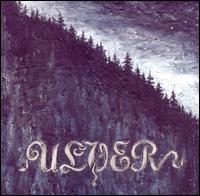
SOUNDTRACK: ULVER-Bergtatt (1994).

Ulver has some music in the soundtrack to Until the Light Takes Us and my friend Lar pointed me to a location where you could download a bunch of their music (this was before Spotify of course). 

So I grabbed a few of their albums expecting to hear some brutal death metal.  And I kind of did, but I also heard classical guitar, flute solos and chanting.   So this album’s full title is Bergtatt – Et eeventyr i 5 capitler (“Taken into the Mountain – An Adventure in 5 Chapters”) and it comes in at a whopping 35 minutes–not bad for an epic.

The opening track (“I Troldskog faren vild” (“Lost in the Forest of Trolls”)) is fascinating–a kind of chanting vocals over a quietly-mixed-in-the-background black metal.  The music is so quiet (and yet clearly black metal) that it almost comes across as ambient noise, especially over the multilayered chanting (I have no idea what language they are singing in).  It ends with a pretty acoustic guitar passage that segues into a very traditional sounding heavy metal section–with a catchy solo that takes us to the end.

“Soelen gaaer bag Aase need” (“The Sun Sets Behind Hills”) opens with, of course, a flute solo.  It’s a minute long and quite melancholy before blasting into the fastest of heavy black metal complete with growling vocals and nonstop pummeling.  But after a minute of that it’s back to the layered chanting like in the first song.  The song ends with a conflation of the two–the chanting metal with the growling black metal underneath.  It’s quite a sound.

Track three “Graablick blev hun vaer” (“Graablick Watches Her Closely”)opens with a lengthy acoustic guitar intro–not complicated, but quite pretty and unlike the poor recording quality of the metal, it seems to be recorded with high quality equipment.  After about 45 seconds that gives way to more black metal.  In a strange twist, the black metal section just fades out, replaced by more acoustic guitar and what seems like the end of the song.  But instead, there is a strange quiet section–not music, but sounds–like someone walking around in the cold forest with crunchy noises and little else.  For almost two minutes.  Until the black metal comes back with a vengeance.

Slow guitar with slow chanting opens track 4 “Een Stemme locker” (“A Voice Beckons”) (the shortest at only 4 minutes).  And the amazing thing is that it doesn’t change into something else.  It is a nice folk song.

The final song “Bergtatt – Ind i Fjeldkamrene” (“Bergtatt – Into the Mountain Chambers”) has a blistering opening followed by some of the most intricate acoustic guitars on the record.  It morphs into a very urgent-sounding black metal section which lasts about 5 minutes.   But just to keep us on our toes, the song (and the disc) end with more classic acoustic guitar.

There is a story here (allmusic says it is a Norse legend about maidens being abducted by denizens of the underworld) and that might help explain the music madness.  But as a musical composition it works quite well.  The chanting over the black metal is really effective and the acoustic instruments bring a nice sonic change from the pounding metal. 

This is not for everyone obviously, but the diversity makes this an interesting introduction into the black metal scene.  Baby steps. 

[READ: November 4, 2011] “Apocalypse”

This is the final non-fiction essay of Junot Díaz that I could find online.  The other one comes from GQ and is called “Summer Love”, but there’s no access to it online. 

In this essay, Díaz looks at the impact of the earthquake that devastated Haiti now that it has been over a year.  Díaz was born in the Dominican Republic which has a long and very brutal history with the people of Haiti–they share a land mass after all.  But rather than looking only at Haiti and how it was devastated, Díaz takes this as an opportunity to see what the earthquake reveals about our country and the state of the world.

The essay is broken down into eight parts.  The first revisits what happened.  The second discusses the meanings of apocalypse, which sets up the “theme” of this essay.  The First: the actual end of the world (which for the thousands of people who died, the earthquake was); Second: the catastrophes that resemble the end of the world (given the destruction of Haiti and the devastation that still lingers, this is certainly applicable); Third: a disruptive event that provokes revelation.

Díaz is going to explore this third option to see what this earthquake reveals. 

What Díaz uncovers is that the earthquake was not so much a natural disaster as a social disaster–a disaster of our creating.  The tsunami that hit Asia in 2004 was a social disaster because the coral reefs that might have protected the coasts were decimated to encourage shipping.  Hurricane Katrina was also a social disaster–years of neglect, the Bush administration’s selling of the wetlands to developers and the decimation of the New Orleans Corp of Engineers budget by 80 percent all contributed to a situation where Katrina could be so devastating.

Then he talks looks at the history of Haiti.  I had known some of this story, but not as much as he provides here–the constant abuse of the citizens, the constant abuse of their finances (both from simple theft and from French and American planning that changed their economy).  There’s also the story of “Papa Doc” Duvalier.  Basically Haiti was a disaster waiting to happen. 

Díaz goes into great detail about the global economy and how it impacted the poor in Haiti and he shows that it doesn’t take a lot of extrapolation to see it reflected in the rest of the world as well.  With the constant rise in standards for the wealthy and the constant abuse that the poor take, it’s not hard to see that Haiti could easily happen here.  If not in our lifetime, then certainly in our childrens’.

But Díaz has hope.  (more…)

Read Full Post »

SOUNDTRACK: DAVE BIDINI-“The List” (2007).

This song appears as a bonus track on the Bidiniband album.  But I’ve been aware of it since 2007 when he played it on his solo tours.  It is essentially a list of 4 Canadians who are “killing us, killing us now.”  The list includes Tim Horton’s (purveyor of delicious donuts), Chad Krueger (from Nickelback), Zack Werner (a judge on Canadian Idol), and Stephen Harper (I shouldn’t have to tell you).

But the key to the song is the chorus: “where are the angry young ones….”  This song should become the unofficial song from Occupy Wall Street.  It would be very easy to modify.  Hey Dave, if you’re free you should head on down and serenade these angry young ones.

Here’s a great live version done in a record store in which he is close enough to have a casual chat about the very song he is singing in the middle of the song.

He also ends it a little differently than the original.  It’s catchy and easily adaptable.  Good on ya, Dave.

[READ: November 19, 2011] “Who Wrote Shakespeare?”

No one has traded off of his Monty Python fame as much as Eric Idle.  All of the other Pythons have moved on in one direction or another, but Eric keeps the torch alive (see Eric Idle Sings Monty Python and Spamalot).  He even has a little nod to MP in this essay with the asterisk next to his name which leads to (*Most likely Michael Palin, really).  This refusal to let go of Python has at least kept his wit sharp, as we see in this Shouts & Murmurs.

My main problem (as I’ve said before) with the Shouts & Murmurs is that they are usually too long.  But, as Python knew, keep it short and funny and you’ll succeed.  So this two-column piece never really flags in its simple premise.

Which is that everyone knows that Ben Jonson really wrote all of Shakespeare.  Idle presents a list of all of the famous books that were really written by someone else.  For example, “Simone de Beauvoir wrote all of Balzac and a good deal of ‘Les Misérables,’ despite the fact that she was not born yet when she did so.”   And my favorite: “‘Moby Dick’ was written not by Herman Melville but by Hermann Melbrooks, who wrote most of it in Yiddish on the boat from Coney island.”  The joke about Henry James is very funny and too good to spoil. (more…)

Read Full Post »

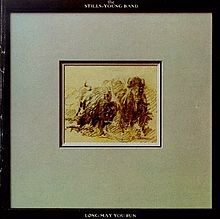
SOUNDTRACK: THE STILLS-YOUNG BAND: Long May You Run (1976).

I’ve known the song “Long May You Run” for a long time, but I never really realized it came from a non-Neil Young album.  The album is by The Stills-Young Band and the history of the album may be more interesting than the album itself (in sum: CSN&Y broke up, C&N made and album so S&Y made an album.  C&N were supposed to be on the S&Y album but they fought and S&Y removed their vocals).

So what we get is nine songs.  Five written by Neil Young and four by Stephen Stills.  The songs are played by Stills’ solo backing band and while the credits suggest that they played on each others’ songs, it doesn’t really seem like it.  It seems like you get 5 Neil Young solo songs and four Stephen Stills solo songs.

It’s also odd that the cover of the album shows buffalo running in the plains (nod to Buffalo Springfield, I’m sure) but so many of these songs are about water.  Maybe that disconnect feeds the whole thing.

By the way, “Long May You Run” is a catchy little country number that I never realized was about his car until recently.

Stephen Stills’ first song is the utterly unsubtle, possibly seductive in the 70s but hilariously outre in 2001 “Make Love to You.”  It’s full of 70s synths and has a very serious tone (despite the 70s synth).  And the lyrics, hoo boy:

Girl your body said everything and I know you knew/I wanna make love to you, make you feel all right/I wanna make love  to you, yes, it’ll take all night

Which is about as long as the shower you need to take after hearing that song.

“Midnight on the Bay” is a pleasant enough song from Neil.  It’s a bit too much into the 70’s-lite music genre for my liking, but it’s not too terrible.

The thing about Stephen Stills is I like his voice.  It’s unusual and unique and I like hearing him sing.  But man his lyrics are crazy.  I like the opening riff of “Black Coral” with its staccato piano.  Yet it seems like he’s got but one thing on his mind.  The song is ostensibly about being underwater:

Got to move slow/Take it easy down there/You’ve only so much air/When you get a little deeper/If you slow down/You might keep her/The sea, unforgiving and she’s hard/But she’ll make love to you/Show you glimpses of the stars.

But maybe that’s metaphorical.  Because when you go deeper, “I saw Jesus, and it made sense that he was there.”

“Ocean Girl” is sort of Neil’s answer to that song.  It’s got a very 70s wah wah sound and a very easy to sing chorus.  Consider it a catchy but inessential Neil song.  “Let It Shine” is also Neil’s song (and there’s more stuff about his cars here–so you know he’s really into it).  It’s a more substantial song than most of the rest although it has a very easy feel.

“12/8 Blues” (love the title) feels like an Eagles song (“Life in the Fast Lane” to be specific, although they both came out in the same year.  Hmm).  It’s fairly generic (like the title) but I like it (crazy time signatures are my thing, man).

“Fontainebleau” is an interesting angsty Neil song that I think would have done very well with CSN&Y.  I never really paid attention to the lyrics before, but it’s fairly interesting and the guitar solos are soft but cool.

The final song goes to Stills.  “Guardian Angel” feels like a combination of all of his other songs, and it’s probably his best on the disc.   It’s got the slinky 70s vibe of  the first song, the staccato piano and, interestingly a chorus that would sound great with the 4 part harmony of CSN&Y.  It also rocks harder than anything on the record (which isn’t saying all that much).  The end has a cool extended instrumental section which I rather like as well.

So this is a weird little hybrid record.  There’s some good stuff for Neil Young fans, although it’s far from essential.  I actually don’t know much about Stills’ solo work so I don’t know how this compares, but he does seem a little one-track here.

[READ: November 4, 2011] “He’ll Take El Alto”

I don’t read Gourmet magazine.  I’m not a foodie and it seems like it’s just a food magazine.  But here’s the second article in Gourmet by a writer that I really like.  The first of course would be David Foster Wallace’s “Consider the Lobster.”  Is Gourmet more than just recipes?  Does it often have contributions from respected authors?  Am I missing out?

This issue is the Latino issue, so it deals with food from Cuba, El Salvador, Puerto Rico and the Dominican Republic.  And Junot Díaz is our resident Dominican, so he’s given the task of talking up the cuisine.

Unlike Wallace’s essay, which was about a trip to the Maine Lobster Festival, Díaz’s essay is about how upper Manhattan (known as El Alto) has become a hotbed for Dominican food.

Díaz explains how when Dominicans first arrived in New York, there were no restaurants.  Dominicans had to eat Cuban food to approximate their home food.  But now that there are vast enclaves of Dominicans living in El Alto, there are excellent restaurants everywhere (the sure sign that a culture has made it is when you have people from other cultures as your waitstaff).

Díaz revel as his own and his friends’ and acquaintances’ preferences for favorite Dominican restaurants.  As this article is four years old and most of the places seem to be holes in the wall (which everyone knows serves the best food, even if they don’t last very long), I’m not going to bother saying which places they are or checking to see if they are still extant).  Okay, well, Malecon is still around, anyhow. (more…)

Read Full Post »

SOUNDTRACK: SUFJAN STEVENS-The Age of Adz (2010).

Sufjan Stevens has released a bunch of albums of beautiful orchestral rock.  It is multi-layered and complex with classical elements and all kinds of cool instruments.

And this album starts out with a beautiful acoustic guitar melody and Sufjan’s delicate vocals.  Although it is a far more stripped down song than usual, “Futile Devices” seems like it is heading in the standard direction.  But anyone who heard Sufjan’s Christmas album number VIII knows that he has been having some fun with electronics.  And they show up with a vengeance on track two, “Too Much.”

All of the multilayered noise that was once orchestral and (some might say) precious has been replaced by a cacophony of gorgeous electronic noises.  The beginning of the song reminds me of the sounds in Skinny Puppy’s “Stairs and Flowers” (how many Sufjan Stevens reviews mention Skinny Puppy?).  The song is nothing like Skinny Puppy once the vocals kick in–it’s catchy and delicate–but those electronics underpin the whole thing, bringing his pastoralia into the twenty-first century.  When I first reviewed this song I didn’t like it but once you get absorbed by Sufjan’s world, it’s an enticing place to be,

“Age of Adz” takes this electronic nonsense even further with an 8 minute brew of strange sounds and choral voices.  But he always manages to throw in some catchy parts, no matter how strange the song gets.

For me one of the highlights of the disc is “I Walked” it features one of my favorite Sufjan things–falsetto vocals in a beautiful but unexpected melody.  And this song has them in spades.  “Now That I’m Older” has a very disconcerting sound–his voice is slowly warbled and mournful.  It’s a beautiful melody that is alienating at the same time.

“Get Real Get Right” returns to his earlier style somewhat (there’s more layers of music, although the electronica is still in place).   “Vesuvius” is a beautiful song and “All for Myself” is another of those great falsetto tracks that I like so much.

“I Want to Be Well” eventually turns into a manic electronic workout in which he repeats the chorus “I’m not fucking around.”

But nothing compares  to “Impossible Soul” a twenty-five minute (!) multi-part suite of electronic chaos.  It’s a fantastic song complete with autotune (used to very cool effect), repeated swelling choruses (it’s like a Polyphonic Spree tribute), electronic freakouts, and acoustic comedowns.  All in a positive, happy message.  I can’t stop listening to it.  “It’s not so impossible!”

Sufjan continues to impress me.

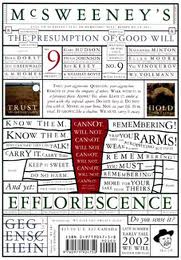
[READ: November 10, 2011] McSweeney’s #9

After the excesses of McSweeney’s #8, I was excited to get to the brevity (and urgency) of McSweeney’s #9.  This one is a paperback and looks like the first couple of issues.  The cover is mostly text with a hodgepodge of phrases and pleas.  You get things like: Thankful, Emboldened, The (Hot-Blooded/Life-Saving) Presumption of (Perpetual/Irrational (or More Likely, Irreducibly Rational) Good Will, Efflorescence, Our motto this time: We Give You Sweaty Hugs,” Alternative motto: ” We Are Out Looking,” GEGENSCHEIN (no more), and the promise: “We will Do Four This Year.”

This is the kind of issue that makes me love McSweeney’s.  There are some wonderful short stories, there are some nice essays and there are some dark moments all centered vaguely and tangentially around a theme.  There are some great authors here, too.

The back cover image is called Garden Variety by Scott Greene and it’s a fantastic painting.  You can see it here (navigate through the 2000-2004 paintings, but I have to say I really like the style of all of his work.

There are no letters and no nonsense in this issue.  So let’s get to it. (more…)

Read Full Post »

SOUNDTRACK: OKX: A Tribute to Ok Computer (2010).

OK Computer is one of the best records of the 90s.  Every time I listen to it I hear something new and interesting.  So, why on earth would anyone want to cover the whole thing?  And how could you possibly do justice to this multi-layered masterpiece?

I can’t answer the first question, but the second question is more or less answered by this tribute which was orchestrated by Stereogum.

The answer is by stripping down the music to its bare essentials.  When I first listened to the songs I was really puzzled by how you could take a such a complex album and make Doveman’s version of “Airbag,” which is sort of drums and pianos.  Or gosh, where would you even begin to tackle “Paranoid Android?”  Well Slaraffenland create a bizarre symphonic version that excises many things–in fact half of the lyrics are missing–and yet keeps elements that touch on the original.  But it’s an interesting version of the song and shows  a bizarre sense of creativity.  And that is more or less what this tribute does–it makes new versions of these songs.

Mobius Band make a kind of Police-sounding version of “Subterranean Homesick Alien.”  Again, it radically changes the song, making it a fast and driving song (although I don’t care for the repeated “Uptights” and “Outsides” during the verses).

Vampire Weekend, one of the few bands that I actually knew in this collection (and whom I really like) do a very interesting, stripped down version of “Exit Music, for a Film.  The “film” they make is a haunted one, with eerie keyboards.  Again, it is clearly that song, but it sounds very different (and quite different from what Vampire Weekend usually sound like).

“Let Down” (by David Bazan’s Black Cloud) and “Karma Police” (by John Vanderslice) work on a similar principle: more vocals and less music.  The music is very stripped down, but the vocals harmonize interestingly.  Perhaps the only track that is more interesting than the original is “Fitter Happier” by Samson Delonga.  The original is a processed computer voice, but this version is a real person, intoning the directives in a fun, impassioned way.  There’s also good sound effects.

Cold War Kids take the riotous “Electioneering” and simplify it, with drums and vocals only to start.  It’s hard to listen to this song without the utter noise of the original.  “Climbing Up the Walls” is one of the more manic songs on this collection, with some interesting vocals from The Twilight Sad.

There are two versions of “No Surprises” in this collection.  Interestingly, they are both by women-fronted bands, and both treat the song as a very delicate ballad.  Both versions are rather successful.  Marissa Nadler’s version (the one included in sequence) is a little slower and more yearning, while Northern State’s version (which is listed as a B-Side) is a little fuller and I think better for it.  My Brightest Diamond cover “Lucky.”  They do an interesting orchestral version–very spooky.

Flash Hawk Parlor Ensemble (a side project of Chris Funk from The Decemberists) do a very weird electronic version of the song (with almost no lyrics).  It’s very processed and rather creepy (and the accompanying notes make it even more intriguing when you know what’s he doing).

The final B-side is “Polyethylene (Part 1 & 2),”  It’s a track from the Airbag single and it’s done by Chris Walla.  I don’t know this song very well (since it’s not on OK Computer), but it’s a weird one, that’s for sure.  This version is probably the most traditional sounding song of this collection: full guitars, normal sounding drums and only a slightly clipped singing voice (I don’t know what Walla normally sounds like).

So, In many ways this is a successful tribute album.  Nobody tries to duplicate the original and really no one tries to out-do it either.  These are all new versions taking aspects of the songs and running with them.  Obviously, I like the original better, but these are interesting covers.

[READ: November 5, 2011]  McSweeney’s #8

I had been reading all of the McSweeney’s issue starting from the beginning, but I had to take a breather.  I just resumed (and I have about ten left to go before I’ve read all of them).  This issue feels, retroactively like the final issue before McSweeney’s changed–one is tempted to say it has something to do with September 11th, but again, this is all retroactive speculation.  Of course, the introduction states that most of the work on this Issue was done between April and June of 2001, so  even though the publication date is 2002, it does stand as a pre 9/11 document.

But this issue is a wild creation–full of hoaxes and fakery and discussions of hoaxes and fakery but also with some seriousness thrown in–which makes for a fairly confusing issue and one that is rife with a kind of insider humor.

But there’s also a lot of non-fiction and interviews.  (The Believer’s first issue came out in March 2003, so it seems like maybe this was the last time they wanted to really inundate their books with anything other than fiction (Issue #9 has some non-fiction, but it’s by fiction writers).

This issue was also guest edited by Paul Maliszewski.  He offers a brief(ish) note to open the book, talking about his editing process and selection and about his black polydactyl cat.  Then he mentions finding a coupon in the phonebook for a painting class  which advertised “Learn to Paint Like the Old Masters” and he wonders which Old Masters people ask to be able to paint like–and there’s a fun little internal monologue about that.

The introduction then goes on to list the 100 stores that are the best places to find McSweeney’s.  There are many stores that I have heard of (I wonder what percentage still exist).  Sadly none were in New Jersey.

This issue also features lots of little cartoons from Marcel Dzama, of Canada. (more…)

Read Full Post »

SOUNDTRACK: ADELE-“Someone Like You” (2011).

I’ve been hearing this song in unlikely places–like on a radio station that plays The Foo Fighters and the Butthole Surfers.  So I thought I’d actually listen to it and see what the fuss was about.  It has been selected as one of 2011’s Best Songs (So Far) on NPR  (where you can hear it in full). 

It’s a sparse piano song, a pretty, desolate melody .  But the real selling point is Adele’s voice.  I had heard her described as a kind of Amy Winehouse (who I don’t like) or a sort of R&B siren,(which I wouldn’t like).  But she has a kind of husky voice that belies its power.  In some ways she reminds me of a more mature Fiona Apple.

On this song at least, it’s just her and her piano–no pretensions to genre or style, just an honest emotionally naked song.

The melody isn’t obvious–it’s not an immediate grab you by the lapels hit.  But it is haunting and her voice supplies the bulk of the tune.  She can carry the whole thing with ease.

I’m not sure if it fits on that radio station, but it is certainly a wonderful song.  I wonder what the rest of the album sounds like.

[READ: October 31, 2011] “One Year: Storyteller-in-Chief”

I am posting this review today because it is Election Day (in New Jersey, anyhow).  One can only hope we get some of the awful incumbents out of town, but we’ll see.  I’m also posting this now because I feel the need to vent about our current Presidential Candidates.  Not the men and woman themselves (who are all barely qualified to be in charge of their own car keys, much less the country).  What I’m venting about is the fact that we know these men and women are candidates at all.  Or the fact that so many prospective candidates have already dropped out.

The election is a year away.  A YEAR.  It’s bad enough that the media talks about everything the President does in terms of how it will affect his chances for re-election (again, A YEAR away) but that we have all of these bozos running around talking about what a bad job the President is doing as well is just dreadful.  And basically, instead of actually doing something about being President, he must do triage on the damage these loose cannons are causing.  True, Obama appears to be somewhat less than concerned with what they say about him, but the fact that everything that happens in Washington is foreshadowing the next election, it sure makes it hard for anything to get done.

Anyhow, in other countries, the citizens have a few months at most to decide who their candidates will be.  And a few months in our country would translate to much less expensive candidacies, much more opportunities for fringe candidates to be heard (for better or worse) and less candidate exhaustion (both them and us).  Why in the hell does it take eighteen months to run for President?  In what way are we served by having all of these people running for office for over a year?  And things are only going to get worse now that so many states have moved their primaries up so far (January 3, Iowa?  Really?  You want to narrow down the presidential choices ten months before the election?).

I know that my opinion won’t even cast a ripple in Washington, but come on.  I propose that people aren’t even allowed to declare their candidacy until the May before the election.  That gives them six months, which should be ample time to run an election campaign.  Have the primaries in August and September and then the general election in November.  That gives two months early in the season for primary debates and it gives a month and change after the primaries for general election debates.  This way the President isn’t distracted with running a reelection campaign and the populace (and the media) isn’t distracted for 18 months with candidates running or not running.  And seriously, if you can’t be organized enough to win an election in 6 months, you don’t deserve to be President.  How can I get this policy enacted?

This article from Diaz is a very good one.  It criticizes President Obama for not being a good storyteller.  He was an excellent storyteller before he became President (both as a campaigner and an author-Diaz cites Dreams from My Father in particular).  But since he has taken office his storytelling has lapsed. (more…)

Read Full Post »

SOUNDTRACK: MOGWAI-Batcat (2008).

“Batcat” is one of my favorite Mogwai songs.  The melody is intense and the drumming is wonderful.  I picked up this single for the B sides (which will undoubtedly be collected somewhere one of these days anyhow, but that’s okay. 

It was very hard to pass up a song called “Stupid Prick Gets Chased by the Police and Loses His Slut Girlfriend”  Given that the song has “Chased” in the title, this is a surprisingly slow tune.  It builds slowly over a series of keyboard waves.  There’s also a slow guitar melody that keeps the piece grounded.  It’s one of their more subtle songs, which again, is rather surprising given the title.

“Devil Rides” is quite jarring in that it features vocals by Roky Erickson.  I don’t really know anything about Roky.  I picture him as a large, unkempt man with crazy hair and a beard.  His voice is otherworldly and seems to be maybe just a wee bit off from what the music is playing.  It’s a strange track and works very well with Mogwai’s history of slightly off-kilter vocalists. 

[READ: November 3, 2011] The Discomfort Zone

After reading The Corrections, I planned to read one of Franzen’s earlier novels.  But they were all quite long (even his debut!) and I wasn’t ready to get so immersed yet.  Then I found The Discomfort Zone in the biography section of the library.  It was less than 200 pages and seemed like just the thing.  It turns out, however, that I had read most of it already.  Three of the pieces were published in slightly different form in the New Yorker: “The Retreat,” (here as “Then Joy Breaks Through”) “The Comfort Zone,” (here as “Two Ponies”) “Caught” (Here as “Centrally Located”) and one “My Bird Problem” (here as “My Bird Problem”) which appears to be unchanged. 

That leaves two essays that were new to me: “House for Sale” and “The Foreign Language.”

The collection works as something of a biography, although really it’s not–it’s a collection of essays about his life, but I don’t think I would go so far as to say biography.   The book also doesn’t follow a chronological order. (more…)

Read Full Post »

« Newer Posts - Older Posts »