Feeds:
Posts
Comments

Archive for the ‘Essays’ Category

SOUNDTRACK: tUnE-yArDs-Tiny Desk Concert #179 (December 1, 2011).

tUnE-yArDs perform three songs in this Tiny Desk concert.  Merrill Garbus doesn’t chat a lot between songs, but she’s clearly having a good time (witness them all jumping at the end of “You, Yes You” and how much she smiles at the end of the set.  This is a wonderful opportunity to see and hear her live sampling technique in a small setting (with close up cameras!).

Her voice sounds great–she pulls off all of those voices that she conjures on the record.  And her ability to sample herself and make it work is wonderful to witness (I never imagined that some of those “sirens” and “keyboards” are actually her voice).

The live band is also really hot.  The bassist really hold everything together and the horns sound great–duplicating the sound of the record with just enough flare to keep it original.

And to think she’s making all of  that guitar noise with a ukulele!  It’s pretty groovy.

Watch it here.

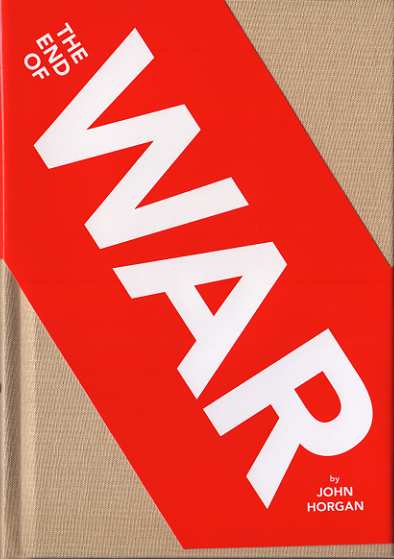
[READ: January 21, 2012] The End of War

This is a non-fiction book in which Horgan believes that in the not too distant future (his lifetime I believe), we will see the end of war.  Not the end of violence, nor anger nor aggression–he’s not crazy–but military campaigns against another country could be ended if we reversed our fatalism about war’s inevitability.

Horgan is a writer for Scientific American and in this book he uses the scientific method to show that ending war is utterly possible.  Now, although Horgan is himself kind of a pacifist (he’s not entirely one, this interview explains), his family is not–his father and grandfather are both veterans and his son is looking to enlist in the army.  Nevertheless, Horgan feels that war is not a viable way to solve problems and that the cost of human life is never worth it.

His research shows him that war should be thought of as a solvable, scientific problem—like curing cancer.  The difference is that cancer is outside of our control, while war is not.  But like cancer, war can infect any society–there is no “reason” for it, but it is like a virus–it infects all cultures, even peaceful ones.  If one culture is aggressive the peaceful neighbors need to prepare for war or move away.

Horgan anticipates skepticism, indeed, many of the sources he quotes are skeptics, and he deals with all of their arguments accordingly.  He looks at those who say that war is genetically part of humanity (as many people believe) or that the best way to prepare for peace is to prepare for war (as just about everyone seems to believe).  He looks at those who say that scarcity causes war (not necessarily true), to those who say that as long as there are guns there will be war (he disagrees).  He has a reasonable, believable argument for all of these doubts.  He even shows that the whole “alpha male, XXY chromosome” argument has been disproven and while men are more prone to violence, they are not more prone to wage war.

He also shows scientific evidence that war has not been around as long as people (or even apes) have existed.  Indeed, the first evidence for “war” (as opposed to violence) is 10,000 years ago (not much in humanity’s timeline).

He culls data from previous wars to show that the causes of wars can never be narrowed down to one thing.  And yet, rather than seeing this as a negative–that so many things cause war, he sees it as a positive–that causes of war are not monolithic and impervious to breakdown.

I was skeptical of this book when I started reading it.  I was willing to accept the various scientific answers that he showed (that war is not innate, for example) but my skepticism came because of what I guess you call the military industrial complex–that our military budget is huge and is not going to go down any time soon.  Just see how much protest is garnered by the miniscule amount that President Obama wants to reduce it.  [Everybody knows this truth but it’s worth seeing in print–our military budget is more than almost every other country combined.  China, who spends the next largest amount on their military has a budget that is 1/6 the size of ours.  That is shocking and depressing and a horrific waste of money].

But his point is that like with so many other things that we have outlawed or abolished over the years: slavery, apartheid, monarchy (as opposed to democracy), acceptance of torture; if we have enough consensus we can also abolish war.  He gives examples that it’s actually not as hard as we might think.  Germany and Japan become pacifist virtually overnight (it was forced on them, but they have taken to it with no problem) and even better, Sweden and Switzerland are pacifist voluntarily.

He also points out that war is already on the wane–although the United States was in two wars very recently, the warlike nature of the world is much less than it was even as recently as the first half of the 20th century.  The number of casualties from war has dropped dramatically compared to World War I.  We simply need to find ways to solve crises that do not involve killing people.

All of the chapters were interesting in this book (the book is more or less set up to deal with an issue per chapter).  Some of the chapters were a little long but at 186 pages (plus a bunch of citation pages) this book is short overall.  I appreciate all of his scientific rigor and his ability to show the arguments and then knock them down.

For me, the most interesting and satisfying chapter was the one that found that preparing for war, despite claims that it is necessary, actually does not keep a people safe. That the allocation of resources towards war removes resources from things that actually make people’s lives  better: art, culture, medicine, health.  Preparing for war doesn’t keep us safe, it actually harms us.

Similarly, he shows that competition for resources is not necessarily a cause for war.  To the contrary they have found that in some cultures scarcity brings out altruism.

In short, he says that the only thing that prevents us from abolishing wars is our fatalism that war is inevitable.  The more fatalistic we are about war the more we accept hawkish ideas which perpetuates more war. Once we stop believing that and we try to work towards the end, he believes that we war can end very quickly.

Horgan doesn’t really calm my fears about the military industrial complex–but who knows with enough popular opinion, maybe voters can change things.  It’s a wonderful thought.  And here’s hoping that this post can spread the good word.

And here’s an interview with Horgan that addresses a lot of these questions.

Read Full Post »

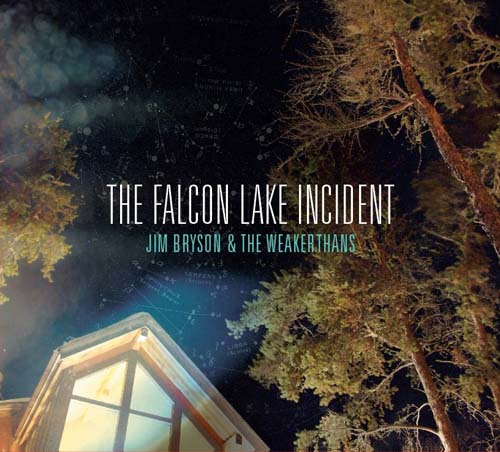
SOUNDTRACK: JIM BRYSON & THE WEAKERTHANS-The Falcon Lake Incident (2010).

I don’t know who Jim Bryson is (he’s a Canadian folk singer, duh), but I do know The Weakerthans.  And since this CD is always listed in The Weakerthans’ discography, I thought it was worth investigating.

All of the songs have a Weakerthans feel, there is no question (I mean, they play all the music).  And while I like the album quite a lot, I feel like without John K. Samson’s voice, the disc is missing something.  Nevertheless, the album is a wonderful folky album, a great mix of upbeat and slow tracks.

“Metal Girls” is a wonderful upbeat folk rocker.  It’s incredibly catchy.  “Fell Off the Dock” is a much slower, sadder song with the final repeated line, “everybody loved it here, but you.”  “Wild Folk” ups the tempo again.  “Constellation” is another slow song, this one with beautiful harmonies.

“Freeways in the Frontyard” has even better harmonies, from Jill Barber–a kind of minor key harmony that works very well.  “Up All Night” is another more uptempo track that could easily be an adult alternative hit.  “Kissing Cousins” is a slight track that seems like it should be funny but isn’t really.  “Decidedly” is one of my favorite tracks on the disc.  It’s boppy with a fun chorus: “Why would you ever grow leaves just to watch ’em fall off again.”

The first and last tracks feel more like filler or intro/outro than real songs.  But that’s okay.  It’s a tidy little album of very pretty songs.  And the tempo changes keep everything interesting for half an hour or so.  You can’t complain about that.

And in case you were wondering, the Falcon Lake Incident is a reported UFO encounter near Falcon Lake, Manitoba, Canada claimed to have occurred on May 20, 1967 (thanks Wikipedia).

[READ: January 19, 2012] “Happy New Year”

Of course, I wish I had read this article earlier in the month, but then I only found out about it a couple of days ago.

This is an article (I assume from the editor of The Lotus Magazine) which bemoans the loss of the New Year’s Day tradition of going to (pretty much) anyone’s house for meals and snacks and drinks and good times.

The article states that it may have been about 35 years ago (circa the 1880s) that the Dutch custom was abandoned.  Before then, people in New York City would throw open their doors and it was:

a breach of etiquette to omit any acquaintance in these annual calls, when old friendships were renewed and family differences amicably settled.  A hearty welcome was extended even to strangers of presentable appearance.

Indeed, it seems that certain houses were known for:

particular forms of entertainment.  At one was eggnog; at another, rum punch; at this one, pickled oysters; at that, boned turkey, or marvelous chocolate, or perfect Mocha coffee, or, for the connoisseur a drop of old madeira, as soft as rainwater and as delicate in flavor as the texture of the glass from which it was sipped. (more…)

Read Full Post »

SOUNDTRACK: WILD FLAG-Live at the Black Cat, October 20, 2011 (2011).

It’s interesting to compare this show by Wild Flag with their SXSW show.  This set is longer, but they retain the same raw energy and intensity.  It also sounds as though the tour has been rough on Carrie’s voice, which sounds a bit strained and hoarse (even when she talks!).

They play most of their debut album, but they also throw in a couple of new songs and even a few covers.  Perhaps the most fascinating part is the 15 minute (!) version of “Racehorse.”  There’s a lengthy noodling section as well as a cool part where Carrie goes a little crazy asking about money.

Janet Weiss is absolutely amazing here too.  And the keyboards, definitely complement everything well, but they are always the most notable flubs, and there’s the same one as in the SXSW show (not as bad, but noticeable).

Without a doubt the most interesting thing is the hearing that Mary Timony gives guitar lessons in Washington DC.  She lives there and evidently earns extra cash by doing guitar lessons.  Wow.  How cool would that be?

Check out the show here.

[READ: January 15, 2012] The Influencing Machine

Brooke Gladstone is one of two reporters who works on NPR’s On the MediaOn the Media is an awesome show which dissects things that happen in the world and examines the way the media portrays the events.  They work pretty hard to see who is reporting bias, who is exposing bias and how things are getting out to the average media consumer.  It’s worth anyone’s time to read (it doesn’t take very long).  And it’s also fun and enjoyable.  As anyone who has heard the ending of On the Media: “and edited [dramatic pause] by Brooke” knows, there’s always a smirking grin attached to the program.

When I heard that this book came out I was pretty excited to read it.  And then I promptly forgot all about it.  Lucky for me, my wife can take a hint, and she got it for me for Christmas.

The first surprise of the book is that it is written as a graphic novel–illustrations by Josh Neufeld (who has drawn for Harvey Pekar’s American Splendor).  The funny thing about the illustrations is that I have no idea what Brooke Gladstone looks like (which I rather prefer about my NPR announcers), but I really like the cartoony style of her avatar (which reminds me of Elaine from Seinfeld and which inspired me to draw a kind of similar version on my drawing site.

On to the book.

This book works as a primer for understanding media ownership, media consolidation and media power.  The opening few chapters are going to be nothing new for anyone who has read Chomsky or Vidal on the media.  But since most people haven’t, it’s a wonderful way into some of these thorny issues of who tells us what and why. (more…)

Read Full Post »

SOUNDTRACK: LEMONHEADS-Varshons (2009).

This is a Lemonheads covers album.  The amazing thing about this covers album is that mot of the originals are quite unknown (heck I didn’t even recognize some of the artists).  But he manages to put a good Lemonheads spin on most of them (the  later country/folk Lemonheads style) and it makes for an enjoyable listen.  ALthough truth be told, most of the songs aren’t as catchy as a good Lemonheads song.

“I Just Cant Take it Anymore” and “Fragile” are folky/country songs, not too far out of line with the Lemonheads sound.  “Living with Linda” is a strange choice on the disc.  It’s a cover of a song by G.G, Allen, a performer who I know a lot about (he’s infamous) but who I have never heard.  I assume that the original is a brutal punk song (it’s about killing an ex girlfriend, after all) but Dando turns it into something of a Johnny Cash type song (using his best deep voice).

“Waiting Around to Die” is a dark song, another good country ballad.  “Green Fuz” has a cool backwards guitar solo.  “Yesterlove” is a long, slow builder of a song that, intriguingly seems to move seamlessly from one section to another.  I really like it.  “Dandelion Seeds” is a trippy weird song  that works quite well in the Lemonheads universe.

“Dirty Robot” is the really big surprise on the disc. After all of the folky country music, this song is a totally electronic song (and a very simple one at that). In addition to the electronic surprise is the fact that the lead vocals are supplied by Kate Moss (Dando has a robot-processed spoken verse).

The only song I knew here was the cover of Leonard Cohen’s “Hey That’s No Way to Say Goodbye.”  This is a fine but very quiet version which features a duet by Liv Tyler (!?).  (It would be impossible to screw up this song).  The final song is probably my favorite.  It’s a cover of Christina Aguilara’s “Beautiful.”  I’ve always liked the song (it’s quite touching) but I must say I like Dando’s version better.  It’s very understated (and he changes the words to “I am Beautiful” instead of “You are beautiful”–interesting change or egotism?).

So this is a strange covers album, quite atypical for the world of covers.  It’s not often that a covers record introduces yo to a whole bunch of new material.

[READ: December 30, 2011] “Succeeding in Business Through Marketing Fads”

I am running dangerously close to not having anything to post about in 2012.  Not for the entire year, but on a daily basis.  I have effectively caught up to all of the posts that I had planned to write.  I have read all of the New Yorker and Harper’s stories that I had lying around and because of my new job it’s taking me considerably longer to read books.

I was seriously planning on having this post be about how I wouldn’t be able to have any more daily posts in 2012.

Enter Max Barry.

I’ve read all three of Barry’s previous books (indeed I read his first book years and years ago and didn’t even tie it into his other ones until his bio did it for me).  I’ve enjoyed them all.  He has a new book out that I am currently enjoying called Machine Man.  Anyhow, reading this book made me want to see about his short stories and the like.  Well, his website has a few short pieces on it.  Enough to get me through the next week anyhow.

For you, dear reader, that means you’ll get a whole week’s worth of Max Barry before you can get to whatever else I manage to finish next year. (more…)

Read Full Post »

SOUNDTRACK: THE DIVINE COMEDY-BANG goes the Knighthood (2010).

I’ve really enjoyed The Divine Comedy since their earliest Michael Nymanesque music.  I loved the orchestral pop that Neil Hannon seemed to effortlessly create.  His last few records have been less exciting to me.  He has toned down the orchestration and made his songs more subtle.  They’re still beautiful but they’re not always as immediately arresting.  I thought that was true of this album as well, although I found that when I sat down and really listen to the music and words together (what a novel idea) the music played so well with the lyrics that the album overall is easily one of his best.  Although I still prefer the pomp and full orchestration of the earlier music, this newer stuff is very interesting. An artist has got to grow, right?

The new sound is more Tin Pan Alley.  It’s piano with guitars and occasional horns–very limited strings are present at all.  And, as any fan knows, Neil writes wonderful songs about love, and the songs on here are some more great love songs.  The non-love songs span the gamut of ideas–from emotionally wrenching to downright silly.  Neil is definitely a “get to know him” kind of songwriter.  And it’s rewarding when you do.

“Down in the Street Below” is a piano based song that morphs into a jaunty little number after some quiet verses.  It features yet another of his great melodies.  “The Complete Banker” is a jaunty piano song that mercilessly mocks the banking industry.  Not terribly original but certainly fun and lyrically it’s quite clever.  “Neapolitan Girl” is a faster song (reminds me of a Broadway musical or movie instrumental) which is (as they all are) very fun to sing along to).  “Bang Goes the Knighthood” is a musical hall song that is really quite funny despite the somber sound of the music (it’s about a knighted man who indulges in certain proclivities that might cost him what he has).

“The Indie Disco” is the exact opposite, it’s bouncy and shuffly and yet understated as only an indie disco can be (this may be the softest, least excited “yea!” in any song ever.  Name checking Morrissey may not be original but it would be a less real picture without him.  The songs he mentions are kind of dated, but are probably pretty accurate to what gets played in an indie disco these days.  “Have You Ever Been in Love” could be used in any rom-com film montage.  Although maybe it’s too obvious?  Sweetly filled with strings (yes strings).

“Assume the Perpendicular” is a slightly faster song, as befits lyrics, “I can’t abide a horizontal life while “The Lost Art of Conversation” is another bouncy tune with a whistle for an ending!

“Island Life” is one of the first duets I can think of from the Divine Comedy–it sounds like something out of the movie Brazil.  “When a Man Cries” is an emotionally wrenching song.  It seems somewhat out of place for Hannon’s usual topic, but it’s quite beautiful.  The silly fun of “Can You Stand Up on One Leg” is the perfect antidote.  Each verse provides something that’s harder to do than you think.  The final verse offers, “can you hold a singing note for a stupidly long time…. Let’s see how long you can hoooooooooo….oooold on to a note.” For the record, Neil’s note is 29 seconds long….stupidly long!  Is that really him holding that high note for 29 seconds?

The final song “I Like” is a wonderful poppy ditty, in which the full band rocks out (more or less) to another great melody.  It’s a perfect love song (even modernized to include a kind of rhyme with sexy and texting).

Initially I was a little disappointed by this disc, but it really proved to be fantastic.  More, Neil, more!

[READ: December 28, 2011] Is Everyone Hanging Out Without Me?

Is Mindy Kaling a big enough celebrity to write a book (memoir or otherwise?).  To use her own in-book comparison, she’s nowhere near Tina Fey’s level of fame, right? (although I actually think she is funnier).  I mean, she’s a minor character on a popular show.  True, she’s also a writer and producer, but that’s not going to lead you to fame or anything.  The more I read about her in the book, the more I wondered exactly who would know her aside from fans of The Office.

None of that is to say that Kaling isn’t awesome.  She is.  She’s funny and talented and I am thrilled she wrote a book–sometimes within an ensemble your individual voice will get lost.  But I have to wonder how much name recognition she has.  And the book doesn’t do a lot to dispel this sense for me.  I mean, she tells about everything she’s done, and really all she had done was write Matt & Ben (which sounds awesome and which I remember hearing about back in the day) and work (a lot) for The Office.  Not minor accomplishments by any stretch, but not a fame-inducing resume.  Nevertheless, good for her that someone was interested in letting her write a book.  And good for us who read it.  If you are amused by the use of the subtitle of the book (which I am) you will like enjoy the humor here.

I had read some excerpts from the book so I assumed it was all funny essays and whatnot, but it’s not.  It’s actually a memoir with funny essays mixed in.   Of course, Mindy’s life before Matt & Ben isn’t really very “interesting” (the book is very funny during this time of her life, even if she really didn’t do much more than babysit for rich folks and watch Comedy Central).

In the Introduction, Mindy provides a FAQ about the book.  One of the questions is if she is going to offer advice and she says yes.  And here’s the thing, Mindy’s advice is outstanding.  She offers advice about many topics and I don’t think I disagreed with her about anything (except maybe pea coats).  She’s like the voice of reason in a world gone mad and an excellent role model for anyone. (more…)

Read Full Post »

SOUNDTRACKBABE THE BLUE OX-“Basketball” (1998).

This was the first song I’d ever heard from Babe the Blue Ox, and I was hooked (sadly, The Way We Were, where this song is from was their last album).  This is also my favorite songs about sports (and it will never be played in an arena).

It opens with this great funky keyboard over a cool walking bass line.  And after a verse about playing basketball, we get the gorgeous bridge: “pass it to me, I am free, look there’s no one guarding me) sung by one of the women in the band (who sounds vaguely like Edie Brickell).  When the chorus kicks in “And when she gives it to me, I am as high as can be” both singers harmonize wonderfully.

There’s even a cool instrumental break.

Everything about this song is catchy and wonderful.  And it should have been huge.

[READ: December 21, 2011] Grantland

McSweeney’s seems to keep trying to push me away.  Or maybe they are just trying to push me out of my comfort zone.  First they publish Lucky Peach, a magazine about cooking (with recipes that contain ingredients that I couldn’t find anywhere).  I don’t read cooking magazines, but I loved this one.  Now they publish Grantland, a book about sports.  I don’t follow sports.  At all.  I used to play sports and I used to watch sports, and then when I got out of college, I did neither.  I have a very good knowledge of most sports (so I can still follow any game that’s on), but as for actual people playing the games right now–I’m ignorant.  So, why on earth would I want to read this book about sports?

I was pretty sure I would finally not be getting this book until I read the author list: Chuck Klosterman, Colson Whitehead (!), Malcolm Gladwell (?)  I knew this was going to be no ordinary sports book.

So it turns out (and I didn’t know this until just now) that the book is a collection of works from the website Grantland, which is created and run by Bill Simmons.  I haven’t explored the site but it sure looks interesting enough–longish articles about sports and culture and all kinds of interesting things.  And evidently this issue is a sort of best of the website.  The whole Grantland experience, including this book, are connected to ESPN, indeed, ESPN gets a copyright for the book, McSweeney’s is just the publisher.

And this volume was wonderful.  I couldn’t put it down.  I even wound up putting aside a book I was in the middle of to read it.  None of the articles are terribly long and, despite the basketball textured cover (which is very cool–no one can walk by and not touch it) the variety of sports covered is wonderful: from boxing to cricket!  And there are short stories and essays about the entertainment industry as well (articles on Shia LeBeouf and Amy Winehouse (!)).

If I had one complaint about the book it’s that many of the articles don’t give a time from when they were written.  I assume they are all fairly recent but since I don’t follow sports I can’t say for sure.  The other problem is that several of the stories end with a game/match unresolved.  Clearly they have been resolved since then, but even one line saying what happened would be comforting for those of us not glued to ESPN. (more…)

Read Full Post »

SOUNDTRACK: JOHN ZORN-“Have Yourself a Merry Little Christmas” (2011).

Wild skronking horns, screamed vocals, chaos chaos cha–.  No.

Piano and vibraphones with some gentle guitars thrown on top.  This is a beautiful, gentle jazz rendition of this song.  What makes this so strange is well, frist, because John Zorn loves death metal and all things noise.  But also because John Zorn revels in Jewish culture.  So what’s up with this holiday album?

Evidently he always wanted to make a holiday album.  And he’s using most of the same guys who have played with him for years. 

That’s a real Christmas miracle! Read more about it here.

[READ: December 16, 2011] Children, Gender, and Social Structure

Our director sent us a link to this article to get us in the holiday spirit (you have to subscribe to JSTOR to read it).  Although he spoiled it in his email (boys and girls are different), I still enjoyed reading the contents here.  At least somewhat.  The article was really quite dry and relied on some scientific terminology which I found confounding.  Nevertheless, the results were easy enough to follow, and that’s what really matters.

The most interesting thing was the setup.  They read all of the letters mailed to Santa that were received in the Seattle post office in 1978.  (I wondered why it was so long ago before I confirmed that this was written in 1982, so that makes sense).  They received 855 letters that year.  And I found this breakdown as interesting (if not moreso) than the rest of the article: 63% were from within the state; 29% were from out of state (how did they get there??); and 8% were from out of the country (what?? how, why?–no answer is given, sadly).  31 letters were illegible, so they were out.  The rest were assessed by gender of the names based on a baby naming book (from 1966!).  This yielded 359 from boys, 391 from girls, 46 gender ambiguous (what percentage would there be today??) and 28 with no name. 

I was also fascinated by  the age breakdown: 24%: 5 or under; 41% 6 or 7; 29% 8 or 9 and 7% were ten or older! (more…)

Read Full Post »

SOUNDTRACK: COCTEAU TWINS-“Frosty the Snowman” (1993).

Cocteau Twins released Snow, a “holiday” EP in 1993.  Their version of “Winter Wonderland” is quite sublime.  This version of “Frosty the Snowman” on the other hand is a bit…off.

I don’t know if the tempo is too fast (I think that may be it), or if the lyrics are too silly (even if the Twins weren’t filled with gravitas, most of the time you couldn’t hear what they were saying anyhow) or if they just can’t get their brand of lush to envelope the song, but it just doesn’t quite work for me.

[READ: December 13, 2011] “The Tragedie of Frosty the Snowman”

My work director sent this article around as an amusing academic piece for the holidays.  It’s a short article (one and a half pages) but it does a good job of analysing the real tragedy that is Frosty the Snowman: “Frosty’s tragedy is not simply that he must melt, thaw, resolve into etc.–this is merely the common fate of all men, persons, who are made out of snow.”

The tragedy of Frosty is personal, for he has an inner greatness.  When he encounters the magic hat he claims to be coming “back again someday.”   But can he every really understand that?  [We watched this special just the other day, and it must be said that Frosty, who seems to be quite naive and unaware (what’s a traffic light?) is also quite savvy about a lot of things that he should not know–winter flowers, frozen boxcars]. (more…)

Read Full Post »

SOUNDTRACKPEARL JAM-Austin City Limits (2009).

Pearl Jam records (and sells) most of their shows and they occasionally videotape them as well.  But they don’t do TV all that much (excepting the recent Late Late Show episodes).  There seemed to be something special, or at least different, about Pearl Jam on Austin City Limits.  Think of it almost like Unplugged Updated.

It opens slow with Eddie on an acoustic guitar and strings behind him.  In fact, the whole set seems less heavy than many of their sets.  But that’s not to say that the band doesn’t rock out, because they do.

The first six songs of the set come from Backspacer.   And then they bust out “Army Reserve” (which makes sense given who is in the audience, see below).  Then there’s a wonderfully raucous version of “Do the Evolution” (one of my favorite PJ songs).

After that riotous track, they bring the strings out for one more song.  It’s a rather funny little joke because it’s just the strings and Eddie on acoustic guitar playing “Lukin,” the 80-second song that is so fast you can barely hear the words.

For an extra treat, touring mate Ben Harper comes out to play slide guitar on “Red Mosquito” (which is always a treat).  And the set ends with an amazing version of “Porch” with a super long guitar solo in which Mike McCready really shows off his chops.  There’s even a moment where Mike and Stone are riffing off each other, classic rock style.
The set ends the Eddie talking about playing for the wounded veterans in the audience and how it was quite moving for him given all they have done for us.  Over the closing credits you see the band mingling with the veterans (including a guy who has lost a leg).  It’s all surprisingly touching for a rock show.

[READ: November 20, 2011] “Perchance to Dream”

A while back I read all of the Jonathan Franzen articles that were published in The New Yorker.  I thought I had read everything he’d published until I realized I had forgotten to read this piece (possibly his most famous) that was published in Harper’s.  It fits in well with this weekend’s theme because it was mentioned in Evan Hughes’ article that I talked about yesterday and because David Foster Wallace is mentioned in it.

As with most of Franzen’s non-fiction, it’s not easy to write about critically unless I want to argue with him, which I don’t necessarily want to do.  So instead, I’ll try to summarize.  Of course, this is a long and somewhat difficult article, so let’s see what we can do with it.

The first surreal thing is when you see the byline: “Jonathan Franzen is the author of two novels, The Twenty-Seventh City and Strong Motion, and is writing a third.”  It’s hard to imagine he got a huge article in Harper’s before he wrote The Corrections.

The second surreal thing comes in the text: It opens with “The country was preparing for war ecstatically, whipped on by William Safire (for whom Saddam Hussein was ‘this generation’s Hitler’) and George Bush, whose approval stood at 89 percent.”  And it is only a few paragraphs later when he mentions Patriot missiles that it clicked that this was written in 1996 and not 2001 and that he was talking about the 1991 Iraq invasion.  He mentions this as a prelude, saying that he was trying to sequester himself in order to start writing again.

Then he talks about Paula Fox’s novel Desperate Characters as a benchmark in terms of insight and personal conflict, even if it is so crazily outdated (that someone would throw an inkwell!).   He talks about this book quite a bit. I’m, not sure I found it compelling enough to want to read, but it’s always interesting to hear a fan write about a book I’ve never heard of.  He will return to this book throughout the essay. (more…)

Read Full Post »

SOUNDTRACK: BOOKWORM-Jeffrey Eugenidies: The Marriage Plot (December 1, 2011) (2011).

Since “Just Kids” mentions  Eugenides’ book, and since Eugenides happened to appear on Bookworm at around the same time as I read this article, it seemed like a good pairing.

Obviously, from the title of the episode you can tell that this is all about Eugenides’ new book, The Marriage Plot.  Michael Silverblatt raves about this book like no other book I have heard (granted I haven’t listened to all that many episodes of Bookworm, but still).  In fact while listening to this episode, I put The Marriage Plot on hold at the library.  I always planned to read it but figured I’d just get around to it some day.  Now I feel more of a sense of urgency.

They talk at length about the state of marriage in the 21st century.  Not as in its decline but in how it differs so much from classic literature in which women had to get married by 21 or risk spinsterhood.  Eugenides set out to write a book about people getting married without having the trappings of classical literature.

It sounds wonderful.

The reason I mention this interview at all is because in the article below, Hughes talks about contemporaries of DFW using DFW as the basis for a character in their books.  So, in Franzen’s Freedom, there is character who is very much like DFW (I haven’t read Freedom yet so I can’t say). 

And in The Marriage Plot, there is a character who resembles DFW.  When I read the excerpt of this story in The New Yorker, I had to admit he did seem an awful lot like DFW–a tobacco chewing, bandanna wearing philosopher.  Eugenides had been mum about it for a while, but now, under the gentle nudging of Michael Silverblatt, he comes clean. 

He admits that there are some characteristics of DFW in the character.  However, he says that he didn’t know DFW all that well and the character has been kicking around since he went to college (long before he knew DFW).  Tobacco chewing was rampant at Brown in the 80s apparently.  But it’s a nice revelation and it ties in very well with the article.

You can listen to the show at KCRW.

[READ: December 7, 2011] “Just Kids

I have always grouped together certain authors in my head.  When there were a bunch of Jonathans publishing, I kind of lumped them together.  I think of Mark Leyner and Bret Easton Ellis in the same breath.  It’s fairly common, I suppose.  But I never really thought of David Foster Wallace in terms of a group of authors.  He seems so solitary that it’s funny to even think of him as having friends.   But according to Hughes, many of today’s established authors prove to have been a part of a kind of nebulous writer’s circle.  A kind of 1990’s update of Dorothy Parker’s vicious circle.  But more insecure.

The article bookends with Jeffrey Eugenides.  In 1983 he and Rick Moody drove to San Francisco with the intent of being writers.  Five years later with no written works, Eugenides moved to Brooklyn, alone.  In that same summer, Jonathan Franzen was in Queens, also feeling alone (even though he was married–unhappily) and desperate for friends and peers.  And then Franzen got a fan letter from David Foster Wallace (that’s after he had written Broom of the System, but before Girl with Curious Hair) praising The Twenty-Seventh City

Franzen and DFW became friends.  To this friendship was added William T. Vollman, and David Means, also Mary Karr (whom DFW dated) and Mark Costello (who co-wrote Signifying Rappers with DFW).  Later they would connect with Eugenides, Rick Moody and Donald Antrim.  (more…)

Read Full Post »

« Newer Posts - Older Posts »