Feeds:
Posts
Comments

Archive for the ‘Death’ Category

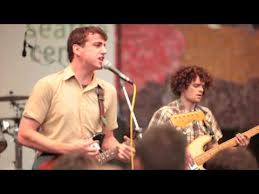
SOUNDTRACK: CYMBALS EAT GUITARS-Live on KEXP June 18, 2009 (2009).

Cymbals Eat Guitars are from Staten Island (with members from New Jersey).  They have released two albums, although this recording is from after the release of their first album.    They play four songs:  “And the Hazy Sea,” “Cold Spring,” “Tunguska,” and “Wind Phoenix.”   They are noisy songs (mostly) with squalls of guitars (squalls is a good word since two of the guys are from Manahawkin, New Jersey.

The band has true progenitors in the indie rock scene–there’s sounds of Pavement, The Replacements,  even more melodic Sonic Youth .  They play noisy guitars and the vocals veer from softly sung to loudly screamed (often within the same line).    “Cold Spring” starts like a kind of shoegazery song and then after almost three minutes it turns into a  blast of pummeling rock with a noisy guitar section, before moving into a third more melodic section.

There’s   a lengthy interview with the band, where they give a shout out to New Jersey and seem genuinely surprised by the success they’ve had.  It’s a good show, and you can hear it here

[READ: September 25, 2012] God Bless You, Dr. Kevorkian

Again, against my better judgment I brought this Vonnegut book home too because it was on the shelf (and it was very short).  I still haven’t finished Bluebeard yet, but I have been curious about this book for some time.  It references Vonnegut’s early novel God Bless You, Mr Rosewater, but it also name checks Dr Jack Kevorkian.  So just what is it?

Well, it is collection of radio spots that Vonnegut did for WNYC radio in New York back in 1998.  Vonnegut claimed that he went to Kevorkian’s facility, was strapped in and almost killed multiple times, but Kevorkian brought him back each time creating a near-death experience. And each time Vonnegut travelled through that “blue tunnel,” he would interview a dead person.

The people he interviews vary quite a lot in fame and stature: (more…)

Read Full Post »

SOUNDTRACK: THE FLAMING LIPS-Dark Side of the Moon live at Hangout Music Festival, May 2012 (2012).

Recently, the Flaming Lips and friends released a version of Dark Side of the Moon that was noisy and chaotic and resembled the original in some  ways but departed from it radically in others.  When Palladia aired this concert of the band performing the album in its entirety I wasn’t sure what to expect.

I was pleasantly surprised that their rendition of the album is quite faithful to the original.  There’s plenty of Flaming Lips-isms in it, but it sounds a lot closer to the Pink Floyd version than The Flaming Lips and Stardeath and White Dwarfs with Henry Rollins and Peaches version.  And that’s a good thing.

I have to admit the audio wasn’t as clear as I would have expected (which is surprising for the Lips)–it was very hard to hear Wayne when he was talking.  That may have worked well for the singing though as he sounded almost exactly like David Gilmour on most of the songs.  The stage was also filled with people.  In addition to the four band members, there was a cast of dancers dressed like Swiss maids, there were some extra musicians  and two women.  One, dressed in a gold lame body suit (with wings) sang all of the wailing vocals on the album (and did a very good job) and the other I’m not sure what she did–neither woman was introduced during the aired set so I don’t know who they were.

Many bands throw things out into the crowd during a set, well, during “Money,” Wayne Coyne tossed out giant confetti balloons that were filled with actual money, allegedly $10,000 donated by none other than Dave Matthews.  That’s pretty intense and hopefully didn’t cause any damage.

Check Palladia for when they’re going to air it again.  I just learned that there is a You Tube video of the whole concert (more than just Dark Side of the Moon) and you can watch it here:

It’s a good fun set and shows just how much Stephen Drodz does on stage (I mean, seriously, check out the guitar he plays in “The Yeah Yeah Yeah Song”) and that Wayne’s hands must be either very cold or have no sensation.

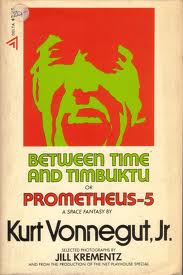
[READ: September 24, 2012] Between Time and Timbuktu

I have been reading a lot of Vonnegut lately. I had it in my head that I would just blow through all of his books.  But I admit I’m getting a little burnt out.  Deadeye Dick and Galàpagos were kind of numbing and Bluebeard which I’m working through now is fun, but a little exhausting.  There’s no reason I should be ordering new Vonnegut books to read now, but I saw that the library had a copy of Between Time and Timbuktu (which is hard to find) and since I won’t be using that library for much longer, I decided to order it.

And I’m glad I did.  Between Time and Timbuktu was a TV movie made by compiling a bunch of scenes from Vonnegut’s first few books.  The basic script was by David O’Dell and Vonnegut himself had a hand in working on it (like “grafting the head of a box turtle onto the neck of a giraffe”).  And as the story progresses you can see some of the best set pieces from his novels.

But the framing device is new.  A man, Stony Stephenson has won a jingle contest for Blast-Off Space Food.  The TV crew appear at his house (and meet his mother in a dressing gown (she’s a funny character)) to break the news.  He gets dragged away and a few months later we see the blast off of the rocket.  When he gets into space, Stony will launch into the Chrono-Synclastic Infundibulum (the Infundibulum comes from Sirens of Titan). (more…)

Read Full Post »

SOUNDTRACK: …AND YOU WILL KNOW US BY THE TRAIL OF DEAD-Live on KEXP, March 12, 2009 (2009).

Back in 2009, …And You Will Know Us by the Trail of Dead had been hit by a truck.  Really.  Evidently no one was hurt too bad, but they did have to cancel a show in Salt Lake City. 

Nevertheless, they managed to get to KEXP to play a four song set from their latest album The Century of Self.  The opener “The Giant’s Causeway” is full of bombast and noise  and has a surprisingly catchy melody in the middle.  It merges into “The Far Pavillion” (just like on the album) which sounds like pretty typical Trail of Dead–rocking and yet melodic, with some good screaming parts.

“Luna Park” is something of a surprise to me as it’s a piano-based ballad (which I suppose Trail of Dead plays, but which I don’t associate with them).   “Bells of Creation” also opens with a piano, but it quickly grows very loud.  It’s a cool song with lots of depth.

I had actually stopped listening to Trail of Dead after Worlds Apart (and album I liked, but I guess the band fell off my radar) so it’s nice to hear they’ve still got it.  At least as of three years ago.

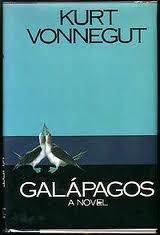
[READ: September 17, 2012] Galápagos

Each of these 1980’s era Vonnegut books gets darker than the last.  In this one the entire human race is wiped out (except for a few people who spawn what eventually becomes of the human race in a million years).  For indeed, this book is set one million years in the future and it is written by a person who was there, one million years in the past when the human race destroyed itself.  It’s not till very late in the book that we learn who the narrator is and, hilariously, what his relationship is to the Vonnegut canon.

In typically Vonnegut fashion, the story is told in that spiral style in which he tells you a bit of something and then circles back to it again later and comes back again later until finally 200 or so pages into the book you get all the details of what is happening.  Interspersed with the respawning f the human race (and flippers) is the story of the Adam and Eve and Eve and Eve and Eve and Eve who created the human race–how they got to be together, what their lives were like before and what contribution they made to humanity, such as it is now.

In another bizarre and fascinating twist, every character who is going to die in the near future gets a star next to his name so that the reader knows that that person is going to die.  We get a lot of things like ★Andrew MacIntosh for many pages until the character finally dies.  And pretty much everybody does die.  Well, obviously if it is set a million years in the future, but aside from that part, only a few of the characters survive.

So here’s how these few people managed to create a new human race in the Galápagos Islands.   (more…)

Read Full Post »

SOUNDTRACK: CIRCLE TAKES THE SQUARE Live at Black Cat Washington DC, August 31, 2011 (2011).

I had never heard of Circle Takes the Square before seeing the link to this show on NPR (Thank you, Viking!).  I like the band name (Hollywood Squares reference), and couldn’t imagine what they sounded like.

Song titles like “In the Nervous Light of Sunday” and “We’re Sustained by the Corpse of a Fallen Constellation” and even “Non-Objective Portrait of Karma” lead one in many possible directions.  But it turns out that the band is sort of pigeonholed as screamo, a post-hardcore style that allows mostly for screamed vocals.  And yet these guys also incorporate intricate playing, odd time signatures and some beautiful instrumental passages.

Even though the band plays fast, they don’t play only short songs.  The shortest songs run about three minutes but they have two songs that are over 6 minutes, with several different sections.

I listened to this show a few times and I confess I never really got into it.  I liked some of it but I was never fully able to grasp what was going on.  It could have been the recording quality.  Usually NPR shows are crystal clear, but this one was a bit muddy–which may have been intentional from the band as they are pretty raw sounding.  I did like  the split male/female vocals which added a cool depth to the songs.  But mostly I was impressed by the kind and almost sweet attitude of the lead singer.  He was polite and thankful to the audience (thanking them for braving the weather–the show was during Hurricane Irene–thanking them for coming from both far and near and talking about how excited he was about Pg. 99, the headliners.  It’s funny to hear polite thankfulness and then screaming lyrics like: “Embrace the sweet sound of self-destruction.”

I’d like to hear a studio release before passing final judgment, because there was a lot to like here.

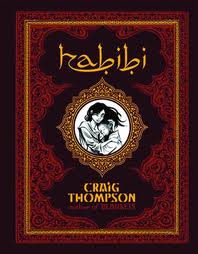
[READ: August 29, 2012] Habibi

I saw this book in a review by Zadie Smith in Harper’s a while back.  I didn’t realize at the time that the author was the same person who did the wonderful Blankets.

This book is an amazing piece of art.  And the story is very good too.

So this massive book (almost 700 pages) is the story of  a woman born into a fictional Middle Eastern country called where the Qur’an is studied and women are more or less chattel.  As the story opens Dodola is sold by her father to a wealthy man who becomes her husband.  The scene of her deflowering, while not graphic at all, is very disturbing nonetheless.  She is afraid of this man and cowers in the fear until they gradually start to see each other as human beings.  And although their age difference is substantial (and yes, gross), she learns to appreciate him.

Until he his killed by the king’s men and Dodola is taken away to the king’s palace to be sold as a slave–her hair is tied to another girl’s hair so they cannot escape.

Through a series of events, she does escape, and when she is hiding out she manages to save the life of a black baby named Cham.  She calls him Zam after the Well of Zamzam (Arabic: زمزم‎) in Mecca, the holiest place in Islam.  And while she is only 12, she takes care of this 3-year-old boy and raises him as her own child. (more…)

Read Full Post »

SOUNDTRACK: OF MONSTERS AND MEN-Live from Iceland Airwaves (2011).

This brief set was recorded at KEX hostel in Reykjavik, Iceland (how on earth KEXP in Seattle was there I don’t know).  This set was performed before the release of their debut EP, although “Dirty Paws” which they play was not on that EP.  “Little Talks” their (reasonably) huge hit them was on the EP and is on their full length album–it’s a great duet (and reminds me a bit of Stars).

There’s an amusing fail in the horn solo on “Lake House,” which is kind of surprising, but not terribly tragic or anything.  The band sounds great, especially in front of a home country crowd (I love hearing them say “Takk” at the end of the songs).  There’s five songs in all, and by  the final one, they feel  sound like they’re really enjoying themselves.

[READ: September 1, 2012] Wampeters, Foma & Granfaloons

This collection contains essays reviews and speeches.  So it’s non-fiction.  Except that, ever the contrarian, Vonnegut includes one fiction piece–a short play.  The title of this book comes from three words from his novel Cat’s Cradle: “a wampeter is an object around which the lives of many otherwise unrelated people may revolve.  The Holy Grail would be a case in point.  Foma are harmless untruths, intended to comfort simple souls.  An example: ‘Prosperity is just around the corner.’ A granfallooon is a proud and meaningless association of human beings.”

That all comes from the preface.  The preface also says that there are people who have collected everything he has ever written (even stuff he has forgotten about) but he will not let most of that see the light of day.  Here he has whittled down the least embarrassing stuff for publication.  He also explains that at some point (supported by reading this) he decided to stop giving speeches; to stop “talking” and to concentrate on writing.  So he did.

The final straw for this was a comment from the President of the American Academy of Arts and Letters.  Vonnegut had prepared a speech.  The president reread it and hated it, but the president told Vonnegut that nobody would actually listen to the words: “People are seldom interested in the actual content of a speech.  They simply want to learn from your tone and gestures and expressions whether or not you are an honest man.”

While Vonnegut’s essays are powerful and effective, it’s the Preface that really tells it straightg.”Not nearly as many Biafrans were butchered by the Nigerians at the end of the war as I had thought would be.  At a minimum those damaged children at the exact middle of the universe will be more honorable than Richard M Nixon.  [Nixon] is the first president to hate the American people and all they stand for.”

Get ready for a happy collection. (more…)

Read Full Post »

SOUNDTRACK: MOGWAI-Music for a Forgotten Future (The Singing Mountain) (2011).

This track is a 23 minute instrumental that was used for an art installation by Douglas Gordon (who made the film Zidane, for which Mogwai provided the score) and Olaf Nicolai called “Monument for a Forgotten Future”.  The more I learn about  his installation, the more intrigued I am by it.  According to wikimedia, “Monument for a Forgotten Future” is a sculpture by Olaf Nicolai and Douglas Gordon on the so called “Wilde Insel” (wild island) in Gelsenkirchen-Horst, Germany. It is 1:1 replica of a rock formation in Joshua Tree National Park with a sound installation by Mogwai that can be heard from within the “rock.”  Someone has even posted a video of their trip to it.  In the video (which is literally of a rock), as the filmer approached you can hear the music only when he or she gets pretty close to the installation. It’s just barely audible.  Cool.

As for the music itself, it is very mellow an atmospheric, quite perfect for being on a Wild Island and sitting by/staring at a rock.  There are definitely hints of Mogwai’s sound in the music, although there are a lot more keyboards than guitars (which befits their more recent albums).  It’s very peaceful and quite beautiful.  At about 19 minutes it fades out and seems to being another string laden piece into the mix as well, but it more or less fades into static (which would be a lousy time to get to the installation!).

The music comes free with most editions of Hardcore Will Never Die But You Will.

[READ: August 2, 2012] “Without Blood”

After reading Baricco’s Emmaus, I wanted to see what else he had written.  I found this short story (which is also the name of one of his novels, although I’m not sure if this is an excerpt or the inspiration for the novel–Wikipedia says it is a “revised form” of the novel, whatever that means).

I was a little disconcerted by this story when it opened because it has a very violent introduction.  The farmhouse of Manuel Roca is the site of bloodshed.  Three men, Salinas, El Guerra, and Tito pull up in a Mercedes.  Manuel Roca is the man they are looking for.  He has two children a boy and a girl, Nina.  He tells Nina that she must hide when the men come.  Hide in the cellar and be absolutely still, no matter what happens.  And to not be afraid.  The son, slightly older, wants to help, he even has a gun, but Manuel tells him to hide in the woodshed.  And then the house was riddled with bullets.

Manuel survived that first round but when he looked up, Tito (who was described as a boy but was in fact 20) was standing there with a gun pointed at Manuel.  And he shouted to  Salinas “IT’S TITO.  I’VE GOT HIM.”  When the threesome get inside, they see that Tito has shot Roca in the arm because he had a gun.

When the two men come face to face we learn that this fight has to do with the war.  Roca says the war is over, although Salinas, says “Not yours, Not mine, Doctor.”  Salinas was known as the rat because he deciphered Roca’s men’s coded messages.   But despite the war, Salinas has only shot a gun twice.  The first one was at no one, the second was at his brother who was in the hospital when the war ended.  Salinas went to the hospital with the intent of killing Doctor Roca and his men, but they had fled, leaving all of the sick and dying unattended.  When Salinas’ brother asked him to kill him…please, he could only comply.

After this flashback, Roca’s son came into the room with a shotgun.  From here the scene gets really violent with both Roca and his son killed.  The men realize that Nina must be there as well, so they look all over for her.  It is the boy Tito who finds her in the cellar.  They stared at each other, but Tito let her live.  And the men left.  After they set the house on fire.

Three days later a man on horseback found Nina and took her away.

Wow. (more…)

Read Full Post »

SOUNDTRACK: THE FLAMING LIPS-“Smoke on the Water” (2012).

There’s a new Deep Purple tribute album coming out shortly (is this the year of tributes?  what’s going on?).  Anyway, the lineup isn’t all that inspired, but I was curious to see what the Flaming Lips would do with that song

As with their recent reinterpretation of Dark Side of the Moon, this cover is respectful and utterly disrespectful.  Musically the song is pretty accurate. Well, the notes are the same.  But the style is very different, kind of wahwahed delicate chords–no heavy bass or anything.  But it’s the vocals that are the contentious point–he recites the entire song (which kind of works because it is a story) in a stilted, faux British accent.

The second verse has a very computerized voice singing an autotuned melody along with the recitation–sort of a harmony but not.  This voice continues through to the chorus (which the main vocals also simply recite).

I appreciate the Flaming Lips’ approaches to popular songs, but this version renders a big loud song kind of anemic.  Which is so weird because the last few Lips albums were so loud and bass-heavy.  I listened twice, I probably don’t need to listen again.

So, this is yet another tribute I won’t be buying.

[READ: August 22, 2012] Don’t Get Too Comfortable

I’m already making good on my promise to read more David Rakoff.  Indeed, as soon as I heard that he died, I put this book on hold at the library.  The strange thing about this book is that I feel like I read parts of it already.  I don’t feel like I read the whole book because some things were unfamiliar to me, and yet there was a strange feeling of déjà vu throughout the book.  But I looked in the front of the book to see where these essays had appeared and I don’t read any of the magazines where they initially showed up.  And while I like This American Life, I don’t really listen to it very often.  So either I read this book seven years ago or these pieces are inspirations for other pieces I have read (which is possible–two or three articles in here reminded me of things that A.J .Jacobs has since done).

So this collection of essays takes place during the early 2000s, George W. Bush’s first term (not the happiest time to be a gay Canadian living in New York).  But in addition to the first essay which is all about his quest for citizenship, it seems that Rakoff was now gainfully employed as a freelance writer.  Most of these essays seem to have been requested for magazines–like they sought him out to write them.  So his fame was clearly growing.  And, again, like A.J. Jacobs, he seems to have been picked as a guinea pig for certain pieces.   I don’t really know if this is a “genre” per se, I mean lots of un-knowledgeable people have gone into new experiences to write about them (insert inevitable David Foster Wallace reference here–but of course he wasn’t the first either).  But Rakoff’s subjects in the last couple essays seem to be closer to what Wikipedia calls Jacob’s “stunt” journalism. (more…)

Read Full Post »

SOUNDTRACK: PINK FLOYD-Alan’s Psychedelic Christmas (1970).

I’ve always loved Pink Floyd’s Atom Heart Mother.  I have no recollection of how I stumbled upon this live bootleg, but when I saw that it contained one of the few live recordings of “Alan’s Psychedelic Breakfast” I had to give it a listen.

So this show is from 1970 and was recorded in Sheffield just before Christmas (Nick Mason evidently introduced the show while wearing a Santa Claus suit).  The sound quality is pretty good given that it is 40 some years old.  There’s a bunch of hiss, and the quieter talking bits are hard to understand, but the music sounds fine.

So the show opens with “Alan’s Psychedelic Breakfast” and what is so silly (and I assume funny to watch (a little less funny on bootleg) is that the band made and ate breakfast on stage.  As Collectors Music reviews writes: “This is the only known live recording of ‘Alan’s Psychedelic Breakfast’ but also hosts an amazing performance by the band which included them making morning tea on stage which is audible. Just like most of their earlier performances, the performance of “Alan’s Psychedelic Breakfast” slightly differs from the album version due to some nice jamming done by the band, especially Gilmour with his delay pedal.” As I said, some of the audio is static and hard to make out in this song–the band is conversing during their tea, but who knows what they are saying.  And who know what is o the radio.

Then the band gets down to business.  One of things I love about this period Floyd which is so different from their later work is that the played really long spacey jams often with very few lyrics.  So we get a 12-minute version of “The Embryo” (the only available studio version is a very short one on Works which is quite a shame as the song is really good).  A 14-minute workout of “Fat Old Sun” which is usually only about 5 minutes.

There’s a great version of “Careful with that Axe Eugene” and “Set the Controls for the Heart of the Sun” (15 and 12 minutes respectively).

Then in a killer version of “Saucerful of Secrets,” just as they get to the end, there’s a power failure (at least according to the song title).  The band is rocking out just hitting the climax when suddenly all you can hear are un-miked drums.  Ha. After a couple of minutes, power comes back and they pick up from just before where they left off.

Then the band launches into a full 31-minute version of “Atom Heart Mother” complete with horns and choir  of voices.  It sounds quite good (the horns seem a little sketchy but that might be expected with such staccato music).

The set ends and the band needs an encore.  Apparently they couldn’t remember anything else because they just re-do the last few minutes of “Atom Heart Mother” again.

One of the things that cracks me up about these shows in the 70s in England, is that the audience is so polite. Their applause sounds like a classical theater rather than a rock show.  And with a bootleg you know they didn’t try to make the audience sound bigger than they are.

The whole package is a fun trip.

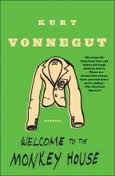
[READ: August 17, 2012] Welcome to the Monkey House

So this book is Vonnegut’s second collection of short stories.  But there’s a twist.  This collection contains all of the short stories from Canary in a Cat House except one. It also contains many of the stories he had written since then as well as stories not collected in Canary.  So you get basically 18 years worth of stories here.  And it’s interesting to see how much he has changed over those years (during which he wrote 5 novels, but not yet Slaughterhouse Five).

Since I read Canary a little while ago (see comments about the stories here), I knew that his 50’s era stories were influenced by WWII.  So it’s interesting to see how his stories from the 690s are not.  They deal more with day to day things and, of course, abstract concepts about humanity, although politics do enter the picture again once Kennedy is elected .

  • Where I Live (1964)

This was a good story to open with because it shows the then-later-period Vonnegut’s mindset and location.  This story is about Barnstable Village on Cape Cod (where I assume Vonnegut lived since there are a number of stories set on the Cape).  This is a very casually written story about an encyclopedia salesman who goes to the local library and sees that their two encyclopedias are from 1910 and 1938.  I enjoyed this line: “He said that many important things had happened since 1938, naming among others, penicillin and Hitler’s invasion of Poland.”  He is told to talk to the library directors who are at the yacht club.  I love the attitude that Vonnegut creates around the village which “has a policy of never accepting anything.  As a happy consequence, it changes about as fast as the rules of chess.” For really, this story is about the Village more than the encyclopedia salesman, and it’s an interesting look at people who move into a new place and want it to never change. (more…)

Read Full Post »

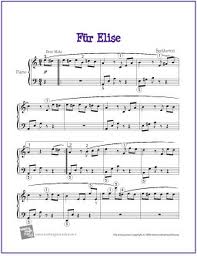
SOUNDTRACK: LUDWIG VAN BEETHOVEN-“Für Elise”

I didn’t know a lot of the music mentioned in this book, but like most people, I know and enjoy “Für Elise.”  It’s an interesting choice of music to end such a crazy chaotic story, although I suppose there are some less than peaceful moments ion the song too.  It’s a shame Bast never gets to play it.

I find the most engaging moments to be when the lone high note comes before the reintroduction of the initial melody.  The middle, minor key section that sounds kind of menacing is also neat–a big switch from the delicate opening.

Why not take 3 minutes and enjoy it now:

[READ: Week of August 20, 2012] JR Week 10

The end is here.  After endlessly interrupted conversations, the book has actually hit a period.

As the last week ended, Bast was being dropped off at the hospital by Coen.  And the bulk of the end of the book takes place in the hospital.  There are many similarities between this book and a big 60s/70s comedy romp, and here is another one–all the characters seems to pile into one location for a big finale.  (Technically the finale happens at Bast’s house, but you get the idea). (more…)

Read Full Post »

SOUNDTRACK: KISS-Hot in the Shade (1989).

Before this album came out, Paul Stanley did a little club tour.  My friends Matt and Nick and I got to see him in Wilkes Barre, PA. It was a pretty great show, and intimate in a way that Kiss shows can never be.  So we were pretty psyched for this new album.  And yes, this album holds special memories or me because we used to listen to it a lot after the show.

The biggest problem with this album is bloat.  I don’t have any kind of evidence to back this up, but this was the first Kiss album that took advantage of the compact disc’s length.  And so it’s easily twenty minutes longer than most Kiss albums (and the later albums had some filler on the already).  Plus it’s  almost longer than Kiss’ first two albums combined.     That’s just too much.

Even Kiss’ weaker albums usually start with a good song.  Not so much Hot in the Shade.  “Rise to It” is pretty generic even by mid 80s Kiss standards.  They try to make it fun with the Ri–e i-e-i part, but it doesn’t quite make it.  “Betrayed” is a bit more of a rocker and is quite a good song.  Lyrically it’s not so great (it’s funny to think of Gene Simmons trying o be down with the common man), but it rocks pretty hard.  My friend Matt and I liked “Hide Your Heart” quite a bit when it came out.  The chorus: Ah ah ah ah, hey hey hey do do do do do do do do do” is pretty bad though.  “Prisoner of Love” musically sounds like Kiss of old, until the verses come in.  “Read My Body” is really catchy until you realize it sounds just like “Pour Some Sugar on Me.”  That’s embarrassing.  Although the metaphor is well done, at least.  “Slap in the Face” might as well be “Let’s Put the X in Sex” from Thrashes Smashes and Hits.

Then comes the cheesiest ballad in Kiss’ history—actually written by Michael Bolton, yes Michael Bolton.  And man do I love it.  Paul is in full voice, he sounds great, the harmonies are spot on.  It is the cheesiest metal ballad ever, but I never get tired of it.  It even has an acoustic guitar solo—pre-made for Unplugged!  “Silver Spoon” is a good rocker, with a fun chorus.  Although the gospel singers at the end are a bit overkill—it seems silly to have invited them in for 90 seconds of singing.  “Cadillac Dreams” is just a bit too close to a Beatles song for my liking.  “King of Hearts” is a decent song, and “The Street Giveth and the Street Taketh Away” (were Kiss really hard up for money?  what’s up with these lyrics?).  We had an in-joke on my dorm floor, so I can never take this song seriously (that may also be because they steal the “Hey man” right out of David Bowie’s mouth).  Love Me to Hate You” is pretty generic although catchy.  “Somewhere Between Heaven and Hell” is also a decent song.

“Little Caesar” is the first (and only, really) song that Eric Carr sang lead vocals on.  As a singer he’s a really good drummer.  The song is pretty generic too and is unfortunately given the same name as a bad pizza company.  “Boomerang” has a good fast pace (once again, not unlike a Van Halen song).

[READ: August 11, 2012] “The Cryptozoologist”

This is yet another short story broken down into lots of little sections.  What’s neat about the way that this one is done is that because the narrator is a cryptozoologist, each section is headed by a cryptid (animals whose existence has not been proven).  But in addition to discussing these animals, the sections also describe a history of the narrator’s life.  His life in this field started when his grandfather told him about a snake which latched onto the end of its own tail and rolled away from its pursuers (section title: Hoop Snakes).  His grandfather never lied, so it had to be true.

It proceeds through The Mušhuššu (a serpent dragon spoken of in ancient Babylon), through the Jenny Hanivers (jeunes d’Anvers), into The Wolf of Ansbach (believed to be an old Bürgermeister who was transformed into a werewolf), and on to The Batutut, a monkey man in Laos.  Most of these sections describe the origins of the cryptids (and his lack of success at spotting them), but The Batutut section is also about himself and how he was in the war when this particular cryptid entered his life.

Then we move on to The Altamaha-Ha in Southeastern Georgia, while Giglioli’s Whale, which had two dorsal fins dates to 1867.  The Mongolian Death Worm, said to live in the sands of the Gobi desert is a cryptid that he actually experienced in the American desert.  he didn’t see it, but he could feel its presence.  The Madagascar Tree is a killing tree–it looks like a pineapple and eats sacrifices.  This story was told by two adventurers who saw the tree eat a woman.  The best part of is that there is no proof that the two men who are credited with telling the story actually existed themselves. (more…)

Read Full Post »

« Newer Posts - Older Posts »