Feeds:
Posts
Comments

Archive for the ‘William T. Vollmann’ Category

SOUNDTRACK: PJ HARVEY-Rid of Me (1993).

For Rid of Me, PJ Harvey jumped to the big leagues (relatively) by enlisting maniac Steve Albini as a producer.  And he takes the rawness of Dry one step further into a sound that is both raw and sharp.  He really highlights the differences between the highs and lows, the louds and quiets.  And man, when this came out I loved it.

Like NIN’s “March of the Pigs,” the opening of “Rid Of Me” is so quiet that you have to crank up the song really loud.  And then it simply blasts out of the speakers after two quiet verses.

“Legs” turns Harvey’s moan into a voice of distress, really accentuating the hurt in her voice.  And Harvey hasn’t lightened up her attitudes since Dry, especially in the song “Dry” which has the wonderfully disparaging chorus: “You leave me dry.”

“Rub Til It Bleeds” is a simple song that opens with a few guitars and drums but in true Albini fashion it turns into a noisy rocker.  “Man Size Quartet” is a creepy string version of the later song “Man Size” (I’ll bet the two together would sound great).  And the wonderful “Me Jane” is a great mix of rocking guitars and crazy guitar skronk.   Albini really highlights the high-pitched (male) backing vocals, which add an element of creepiness that is very cool.

For me the highlight is “50 Foot Queenie”.  It just absolutely rocks the house from start to finish.  The song is amazing, from the powerful…well…everything including the amazing guitar solo.  “Snake” is a fast rocker (all of 90 seconds long) and “Ecstasy” is a song that feels wrung out, stretched to capacity, like they’ve got nothing left.

It’s not an easy record by any means, but it is very rewarding.  This is a CD that really calls for reamastering.  Because it is too quiet by half, and could really use–not a change in production–just an aural boost.

[READ: end of February and beginning of March] A Supposedly Fun Thing I’ll Never Do Again

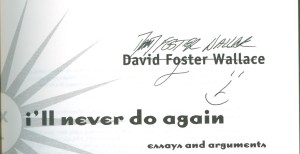
This is a collection of 7 essays that DFW wrote from 1990-1996.  Three were published in Harper’s, two in academic journals, one in Esquire and the last in Premiere.  I devoured this book when it came out (I had adored “Shipping Out” when it was published in Harper’s) and even saw DFW read in Boston (where he signed my copy!).

click to see larger

[Does anyone who was at the reading in Harvard Square…in the Brattle Theater I THINK…remember what excerpts he read?]

The epigram about these articles states: “The following essays have appeared previously (in somewhat different [and sometimes way shorter] forms:)”  It was the “way shorter” that intrigued me enough to check out the originals and compare them to the book versions.  Next week, I’ll be writing a post that compares the two versions, especially focusing on things that are in the articles but NOT in the book (WHA??).

But today I’m just taking about the book itself. (more…)

Read Full Post »

SOUNDTRACK: SHARON VAN ETTEN-Epic (2010).

Sharon Van Etten caught my attention with the song “Don’t Do It,” which I love.  The rest of this album doesn’t have the intensity of that song, but rather, it gets under your skin with some great songs and interesting and subtle textures.

There’s only seven songs (running time just over 30 minutes), so “epic” is kind of a joke.  But she packs a lot into these songs.  The opening two songs are about 3 minutes each, and they are great alt-folk songs, especially “Peace Signs.”  They are sparse but effective.

“Save Yourself” adds more instrumentation, including a slide guitar.  But it’s the harmonies that really make the song great.  “DsharpG” is a cooly brooding song that never wears out its 6 minute length.   And “One Day” also has major potential to be a hit.

Of course for me the highlight is still “Don’t Do It” which gives me goosebumps with each listen.

What’s really impressive about the disc is how on the surface it seems like a simple folk album and yet every song has subtly different sounds and textures to makes this a really complex recording.

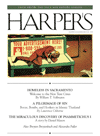
[READ: February 16, 2011] “Homeless in Sacramento”

Vollmann wrote a lengthy piece about death in the November issue of Harper’s.  Now, four months later, he’s back with an 18 page (!) article about homelessness. Now, normally I wouldn’t read an article about homelessness, because, well, because its a major bummer, but also because there isn’t anything that I can do about it and it doesn’t seem like there’s much new to say about it.

But I decided recently that I was going to try to read Vollmann whenever I encountered him, since it was unlikely that I’d ever go back and read his vast output.  So, here I am.

Vollmann does, in fact, manage to say something new about the homeless.  He begins by explaining that the house he bought had a vacant lot next to it.  And he has been tacitly encouraging homeless people to sleep there when they need to.  He has learned to like many of them and he finds that the frequent users have become “friends”–as much as you can in that situation. (more…)

Read Full Post »

SOUNDTRACK: STEREOLAB-“Everybody’s Weird Except Me” (2010).

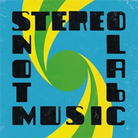
I was able to listen to another track from the upcoming Stereolab album Not Music.  This song is just fantastic.  It’s a faster, uptempo track.   Laetitia’s voice is backed by some other female singers (I wonder who they are, is it just Laetitia multitracked?).  And the propulsive beat is infectious.  The backing track of the music sounds like their earlier experiments with “space age” sounds.  Yet the guitar over the top is warm and inviting.

The song drops out at about the 90 second mark and offers a very cool respite from the bopping around that the song is doing.  After the break, the song seems to jump back and forth between this new mellow bit and the bouncy earlier part.  It’s a great track and a welcome opening to their last CD before going on hiatus.  Because, yes, according to the information on the NPR page, Stereolab is going on hiatus.

This CD is full of songs that were created around the time of their previous disc Chemical Chords, and it’s also packed with mixes, remixes and seemingly alternate version of some of those songs.  I haven’t heard the whole disc but it sounds like they’re going out with a winner.

[READ: November 15, 2010] “A Good Death: Exit Strategies”

I’ve mentioned before about my reader-relationship with Vollmann–I feel that I ought to read a lot more of him, yet I haven’t brought myself to do it (those books are huge!).  Nevertheless, I’ll keep reading the new pieces that I stumble upon.

So this piece is a nonfiction essay.  I’m tempted to say it’s more personal than the other pieces that I’ve read because it concerns the death of his father.  Yet from the little Vollmann I have read, it feels like he takes all of his writings very personally and invests himself pretty much bodily into them.

So, this piece, as I said, is sort of about the death of his father.  He died just a few months ago and Vollmann wants to find out a number of answers about death: should he be afraid of it, will he suffer, what should he expect?  So he interviews several “experts” in different fields:  coroners, funeral directors and many religious people of different faiths (Vollmann and his companion/translator are agnostic).  He’s given a vast array of answers, some of which are comforting to him and others just kind of piss him off. (more…)

Read Full Post »

SOUNDTRACK: BUILT TO SPILL-There is No Ememy (2009).

I’ve liked Built to Spill for quite a few years (I first encountered them on Perfect from Now On), but they always hang just below my radar when I think about great albums.  Nevertheless, many of their songs have landed on compilations I’ve made.

I listened to this disc a few times when it came out and when I popped it in again today I couldn’t believe how well I knew the whole album and how much I really, really liked everything on it.

This may in fact turn out to be my favorite BtS disc.  It isn’t radically different from other releases of theirs, but there’s some ineffable quality that seems to raise the whole disc above the fray.  The total package is fantastic.  The first few songs are quite short, just over three minutes each (which is surprising after the release of the live album which had so many extended songs and solos (a 20 minute cover of Neil Young’s “Cortez the Killer”).

Of course there are a few extended jams as well.  Four songs are over six minutes long (and three of them make up the last four tracks, so the disc does to tend feel a little heavy at the end–although “Things Fall Apart” has a horn solo (!) and “Tomorrow” has some unexpected time changes).  But the first long song, “Good Ol’ Boredom” has a great chugging riff that hold ups to the six minutes very well.  The nearly seven minute “Done” has a wonderfully effects-laden end section. The solo is pretty lengthy, but the backing music/sounds keep the whole thing interesting.  Of course, there’s also “Pat” a two and a half-minute blast of punk abandon.

Doug Marsch has a pretty high voice, but it never grows whiny or annoying, and in fact, it has a kind of gravitas to it.  And it is more than matched by the full band sound on the disc.  Martsch’s lyrics are also wonderfully unexpected [“Is the grass just greener because it’s fake?”].

BTS has made a great album and I’m going to have to revisit their back catalog too.

[READ: November 14, 2010] “Twilight of the Vampires”

This was a banner issue of Harper’s (I’ve felt kind of down on the magazine lately, but it made up for itself this month).  We have the Lydia Davis/Flaubert stories, a lengthy piece by William T. Vollmann and the cover story about Rupert Murdoch (which I won’t be posting about).  In fact, normally I don’t post too much about non-fiction (recent obsessions notwithstanding), but this particular piece was by Téa Obreht, one of this year’s New Yorker 20 Under 40.  Obreht had barely had anything published when they selected her, and so I figured it would be easy to keep tabs on her.  So here’s a nonfiction to add to her two stories.  (And it’s about vampires!)

Obreht is originally from Russia (her family is apparently still there).  As the essay opens, she is going to meet her mother in Belgrade for their trip to Serbia.  Their ostensible reason to travel to the Balkans is to find out about vampires.   (But when her mother injuries herself before the trip is about to commence, it convinces her mother that the whole trip is possessed by devils).

But why travel to the Balkans in search of vampires when her adopted homeland of America is overrun by vampires right now?  Because as she relates, our vampires are rather different from theirs. (more…)

Read Full Post »

While I was looking around for Jonathan Franzen pieces in the New Yorker, I stumbled upon the first 20 Under 40 collection from 1999.  Since I had received so much enjoyment from the 2010 version, I decided to read all of the 1999 stories as well.  It was interesting to see how many of the authors I knew (and knew well), how many I had heard of but hadn’t read, and how many were completely off my radar.

I initially thought that they had published all 20 authors in this one issue, but there are five stories (including Franzen’s) that were just excerpted rather than published in full.  And I will track down and read those five in their entirety.  But otherwise, that’s a lot of fiction in one magazine (a few of the stories were quite short).  And it features a cover by Chris Ware!

So here’s the list from 1999.

**George Saunders-“I Can Speak™”
**David Foster Wallace-“Asset”
*Sherman Alexie-“The Toughest Indian in the World”
*Rick Moody-
“Hawaiian Night”
*A.M. Homes-
“Raft in Water, Floating”
Allegra Goodman-
“The Local Production of Cinderella”
*William T. Vollmann-
“The Saviors”
Antonya Nelson
-“Party of One”
Chang-rae Lee-
“The Volunteers”
*Michael Chabon-
“The Hofzinser Club” [excerpt]
Ethan Canin-
“Vins Fins” [excerpt]
*Donald Antrim-
“An Actor Prepares”
Tony Earley-
“The Wide Sea”
*Jeffrey Eugenides-
“The Oracular Vulva”
*Junot Diaz-
“Otra Vida, Otra Vez”
*Jonathan Franzen-
“The Failure” [excerpt]
***Edwidge Danticat-
“The Book of the Dead”
*Jhumpa Lahiri-
“The Third and Final Continent”
*Nathan Englander-
“Peep Show” [excerpt]
Matthew Klam-
“Issues I Dealt with in Therapy” [excerpt] (more…)

Read Full Post »

SOUNDTRACK: ALANIS MORISETTE-Jagged Little Pill (1995).

In this book, DFW considers himself to be absolutely useless when it comes to music.  He doesn’t know anything at all.  He says he listens to Bloomington country radio stations until he can’t take it anymore and then he switches over to the alt rock station.  He’d never even heard of Nirvana until after Cobain’s suicide.

And so, the soundtrack for the book is R.E.M., Bush (two songs) and Alanis.  In fact, there’s a surprisingly long section devoted to Alanis in the book, including DFW’s admittance that he would love to have a date with her for tea.  He admits that she is pretty much manufactured angst and yet there’s something about her that he finds irresistible.

At this stage (2010), the whole Alanis thing seems almost adorable in it’s “controversy” or “hype” or whatever.  It’s still hard for me to be objective about the quality of Jagged Little Pill (I mean, Flea plays bass on it so it must be good, right?).  I really enjoyed it at the time, perhaps because of its rawness or its honesty (which was pretty novel at the time, especially from a woman), all packed in a clean production of course.  There’s also something weirdly appealing to me about her (really not very good) voice.  She seems just off enough for all of this to be really sincere.

And of course, the nastiness of “You Oughta Know” was pretty astonishing for pop radio at the time.  True, there’s songs on here that make me cringe now (there’s a lot about her that makes me cringe) and yet there’s still some really enjoyable stuff here.  Even the perennially mocked “Ironic” for all of its flaws has a stellar chorus.

Now that the “women in rock” phase of alternative music has passed, there’s very little music like this being made anymore.  So it’s kind of fun to reminisce about this stage of my musical life, warts and all.

Oh, and by the way, I also grew up watching Alanis on “You Can’t Do That on Television,” so it was pretty exciting to see a child star that I knew make it big.

I never liked Bush though.

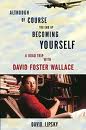
[READ:April 21, 2010] Although of Course You End Up Becoming Yourself

As I mentioned, I was super excited to get this book and I treated it like the artifact it is: trying to read it in one sitting (impossible) or at least in as compressed a time as possible to preserve the stream of consciousness attitude of the book.

For, as the subtitle doesn’t quite state, this is five-day conversation between David Lipsky and David Foster Wallace.  The tape recorder was running for most of these five days and what we get is a literal transcript of the conversation (with much of Lipsky’s parts excised).  It is an all-access pass to the mind of the man who wrote Infinite Jest as the hype of the book was really taking off and as his brief promotional tour for the book was winding down.

Lipsky was (is) a reporter for Rolling Stone. DFW’s Infinite Jest was the huge media hit (#15 on the bestseller list) and the hype was outrageous.  DFW had begun a (sold out) reading tour which actually began the day before the book came out, so he rightfully notes that no one could have actually read the book by then, they were just there because of the hype.  And Lipsky himself is part of this hype.

Lipsky was sent to do a profile of the wunderkind, literature’s next great hope (RS hadn’t (hasn’t?) covered a young author like this in a decade at least).  The idea was that Lipsky would tag along with DFW, go to the last readings on the tour, an NPR interview, and spend most of their time together: planes, rental cars, hotel rooms, etc generally just hanging out with tape recorder running. (more…)

Read Full Post »

SOUNDTRACK: BLUE ÖYSTER CULT-compilations and live releases (1978-2010).

For a band that had basically two hits (“Don’t Fear the Reaper” and “Burnin’ for You”) and maybe a half a dozen other songs that people might have heard of, BOC has an astonishing number of “greatest hits” collections.

Starting in 1987 we got Career of Evil: The Metal Years (1987), Don’t Fear the Reaper (1989), On Flame with Rock n’ Roll (1990), Cult Classic (which is actually the band re-recording their old tracks (!)) (1994), and the two cd collection Workshop of the Telescopes (1995).  There’s even Singles Collection, (2005) which is a collection of their European singles & Bsides.

This doesn’t include any of the “budget price” collections: E.T.I. Revisited, Tattoo Vampire, Super Hits, Then and Now, The Essential, Are You Ready To Rock?, Shooting Shark, Best of, and the 2010 release: Playlist: The Very Best of).

The lesson is that you evidently won’t lose money making a BOC collection.

I don’t know that any of these collections are any better than the others.

The 2 CD one is for completists, but for the most part you’re going to get the same basic tracks on all of them.

And, although none of them have “Monsters” for the average person looking for some BOC, any disc is a good one.

Regardless of the number of hits they had, BOC was tremendous live.  And, as a result, there have also been a ton of live records released.  Initially the band (like Rush) released a live album after every three studio albums. On Your Feet or On Your Knees (1975) Some Enchanted Evening (1978) and Extraterrestrial Live (1982) were the “real releases.”

Then, in 1994 we got Live 1976 as both CD and DVD (which spares us nothing, including Eric Bloom’s lengthy harangue about the unfairness of…the speed limit).  It’s the most raw and unpolished on live sets.  2002 saw the release of A Long Day’s Night, a recording of a 2002 concert (also on DVD) which had Eric Bloom, Buck Dharma an Allan Lanier reunited.

They also have a number of might-be real live releases (fans debate the legitimacy of many of these).  Picking a concert disc is tough if only because it depends on the era you like.  ETLive is regarded as the best “real” live disc, although the reissued double disc set of Some Enchanted Evening is hard to pass up.  Likewise, the 2002 recording is a good overview of their career, and includes some of their more recent work.

If you consider live albums best of’s (which many people do) I think it’s far to say that BOC has more best of’s than original discs.  Fascinating.  Many BOC fans believe that if they buy all the best of discs, it will convince Columbia to finally reissue the rest of the original discs (and there are a number of worthy contenders!) in deluxe packages.  I don’t know if it will work, but I applaud the effort.

[READ: October 2009-February 2010] State By State

This is a big book. And, since it’s a collection essays, it’s not really the kind of big book that you read straight through.  It’s a perfect dip in book.  And that’s why it took me so long to get through.

I would love to spend a huge amount of time devoting a post to each essay in the book.  But, well, there’s 51 (including D.C.) and quite a few of them I read so long ago I couldn’t say anything meaningful about.  But I will summarize or at least give a sentence about each essay, because they’re all so different.

I’ll also say that I read the Introduction and Preface last (which may have been a mistake, but whatever).  The Preface reveals that what I took to be a flaw in the book was actually intentional.  But let me back up and set up the book better.

The catalyst for the book is the WPA American Guide Series and sort of Steinbeck’s Travels with Charley.  The WPA Guides were written in the 1930s as part of the Works Progress Administration.  48 guide books were written, one for each state.  Some famous writers wrote the books, but they were ultimately edited (and many say watered down) by a committee.  I haven’t read any of them, but am quite interested in them (and am looking to get the New Jersey one).  Each guide was multiple hundreds of pages (the New Jersey one is over 800).

State By State is written in the spirit of that series, except the whole book is 500 pages (which is about 10 pages per state, give or take).  And, once again, famous writers were asked to contribute (no committee edited this book, though).  I’ve included the entire list of authors at the end of the post, for quick access.

So I started the book with New Jersey, of course.  I didn’t realize who Anthony Bourdain was until I looked him up in the contributor’s list (I’m sure he is thrilled to hear that).  And his contribution was simultaneously exciting and disappointing,.  Exciting because he and I had quite similar upbringings: he grew up in North Jersey (although in the wealitheir county next to mine) and had similar (although, again, more wealthy) experiences. The disappointing thing for me was that Bourdain fled the state  for New York City (and, as I now know, untold wealth and fame (except by me))  I felt that his fleeing the state, while something many people aspire to, is not really representative of the residents of the state as a whole.

And that dissatisfaction is what I thought of as the flaw of the book (until I read the Preface).  In the Preface, Matt Weiland explains that they asked all different authors to write about states.  They asked some natives, they asked some moved-ins, they asked some temporary residents and they asked a couple of people to go to a state for the first time.  In reality, this decision makes for a very diverse and highly entertaining reading.  In my idealized world, I feel like it’s disingenuous to have people who just stop in to give their impression of an area.  But hey, that’s not the kind of book they wanted to compile, and I did enjoy what they gave us, so idealism be damned.

For most of the book, whenever I read an essay by someone who wasn’t a native or a resident of a state, I assumed that there weren’t any famous writers from that state.  I’ve no idea if that played into anything or not.  From what I gather, they had a list of authors, and a list of states (I was delighted to read that three people wanted to write about New Jersey-if the other two writers ever decided to put 1,000 words  to paper, I’d love to read them (hey editors, how about State by State Bonus Features online, including any extra essays that people may have wanted to write).

From New Jersey, I proceeded alphabetically.  And, I have to say that I’m a little glad I did.  I say this because the first few states in the book come across as rather negative and kind of unpleasant.  Alabama (written by George Packer) comes across as downtrodden, like a place you’d really have to love to live there.  Even Alaska, which ended up being a very cool story, felt like a veil of oppression resided over the state (or at  least the part of the state that Paul Greenberg wrote bout.)  But what I liked about this essay and the book in general was that the authors often focused on unexpected or little known aspects of each state.  So the Alaska essay focused on Native fisherman and the salmon industry.  Obviously it doesn’t do justice to the rest of that enormous state,  but that’s not what the book is about.

The book is meant to be a personal account of the author’s experiences in the state. (more…)

Read Full Post »

SOUNDTRACK: DO MAKE SAY THINK-Other Truths [CST062] (2009).

I’ve always enjoyed Do Make Say Think’s CDs.  They play instrumentals that are always intriguing and which never get dull.

But this CD far exceeds anything they have done so far (and  they’ve done some great work).   There are only four tracks, and they range from 8 to 12 minutes long.  Each track is named for a word in the band’s name: Do, Make, Say, Think.  And each one is a fully realized mini epic.

“Do” sounds like a gorgeous Mogwai track.  While “Make” has wonderfully diverse elements: a cool percussion midsection and a horn-fueled end section that works perfectly with the maniacal drumming.  “Say” is another Mogwai-like exploration, although it is nicely complemented by horns.  It also ends with a slow jazzy section that works in context but is somewhat unexpected. Finally, “Think” closes the disc with a delightful denouement.  It’s the slowest (and shortest) track, and it shows that even slowing down their instrumentals doesn’t make them dull.

It’s a fantastic record from start to finish.  This is hands down my favorite Constellation release in quite some time.

[READ: December 2009 – January 13, 2010] McSweeney’s #33.

The ever-evolving McSweeney’s has set out to do the unlikely: they printed Issue #33 as a Sunday Newspaper.  It is called The San Francisco Panorama and, indeed, it is just like a huge Sunday newspaper. It has real news in (it is meant to be current as of December 7, 2009).  As well as a Sports section, a magazine section and even comics!

[DIGRESSION] I stopped reading newspapers quite some time ago.  I worked for one in college and have long been aware that the news is just something to fill the space between ads.  I do like newspapers in theory, and certainly hope they don’t all go away but print issues are a dying breed.  When I think about the waste that accompanies a newspaper, I’m horrified.  Sarah and I even did a Sunday New York Times subscription for a while, but there were half a dozen sections that we would simply discard unopened.  And, realistically that’s understandable.  Given how long it took me  to read all of the Panorama, if you actually tried to read the whole Sunday paper, you’d be finished the following Sunday (or even two Sundays later).

Their lofty goal here was to show what print journalism can still do. And with that I concur heartily.  Even if I don’t read the newspaper, the newspapers as entities are worth saving.  Because it is pretty much only print journalism that finds real, honest to God, worthy news stories.  TV news is a joke.  There is virtually nothing of value on network TV.  Fox News is beyond a joke.  CNBC is sad (although Rachel Maddow is awesome!) and even CNN, the originator of all of this 24 hour news nonsense still can’t fill their airtime with non-sensationalized news.

Obviously, there are some decent internet sites, but for the most part they don’t have the budget to support real news investigation.  You either get sensationalized crap like Drudge or rebroadcasts of real news.

So, print is the last bastion of news.  And you can see that in journalistic pieces in The New Yorker, Harper’s, The Walrus, Prospect and, yes, in newspapers.

But enough.  What about THIS newspaper?  Oh and unlike other McSweeney’s reviews I’ve done, there is NO WAY that I am writing a thorough comment on everything in here.  There’s just way too much.  Plus, there are many sections that are just news blurbs.  Larger articles and familiar authors will be addressed, however.  [UPDATE: January 18]: If, however, like Alia Malek below, you bring it to my attention that I’ve left you out (or gotten something wrong!) drop me a line, and I’ll correct things.

There is in fact a Panorama Information Pamphlet which answers a lot of basic questions, like why, how and how often (just this once, they promise!). There’s also a Numbers section which details the size, scope and cost of making this (it shows that with an initial start up, anyone could make a newspaper if they talked enough about what the readers were interested in). (more…)

Read Full Post »

SOUNDTRACK: BLACK SABBATH-Sabotage (1975).

Sabotage seems to be somewhat forgotten (maybe because of the creepy cover art 0f Ozzy in a kimono and fascinating platform shoes, Bill Ward in red tights with a codpiece (and visible underwear on the back cover), and Geezer and Tony’s mustaches).
But this album rocks pretty hard and heavy.
“Hole in the Sky” is a sort of spastic rocker with Ozzy screaming vocals over the top of the rocking track.
“Don’t Start (Too Late)” is the by now obligatory acoustic guitar piece.  But this one is different, for it has some really wild and unpredictable aspects to it.

“Symptom of the Universe” is another classic Sabbath track, a blistering heavy fast riff with the wonderful Ozzy-screamed: “Yeaaaaaahs!”  It then surprises you by going into an extended acoustic guitar workout for a minute and a half at the end.

“Megalomania” is a slow ponderous piece. Unlike the psychedelic tracks from the previous records, this one moves along with a solid back beat. It also has a great bridge (“Why doesn’t everybody leave me alone?”). They definitely had fun with the effects (echoing vocals, etc.) on this one.  And, like their prog rock forebears, this song segues into another rhythm altogether when we get the wonderfully fast rock segment.  And the humorous point where the music pauses and Ozzy shouts “Suck me!”

“Thrill of it All” is a pretty good rocker, which after a  pretty simple opening morphs into a slow, surprisingly keyboard-fueled insanely catchy coda.  “Supertzar” is a wonderfully creepy instrumental.  It runs 3 minutes and is all minor-keys and creepy Exorcist-like choirs.  When the song breaks and the bizzaro Iommi riff is joined by the choir, you can’t help but wonder why no horror film has used this as its intro music.

“Am I Going Insane (Radio)” is a very catchy keyboardy track.  It clearly has crossover potential (although the lyrics are wonderfully bizarre).  But it ends with totally creepy laughing and then wailing.    “The Writ” ends the album. It’s another solid rocker and it ends with an acoustic coda with Ozzy’s plaintive vocals riding over the top.

Sabotage has some truly excellent moments.  It’s just hard to fathom the amount of prog-rock tendencies they’ve been throwing onto their last few discs (we’ll say Rick Wakeman had something to do with it).

Black Sabbath made two more albums before Ozzy left.  I haven’t listened to either one of them in probably fifteen years.  And my recollection of them is that they’re both pretty lousy.  Maybe one of these days I’ll see if they prove me wrong.

[READ: December 16, 2009] McSweeney’s #7

This was the first McSweeney’s edition that I didn’t buy new.  My subscription ran out after Issue #6 and I never saw #7  in the stores.  So, I recently had to resort to a used copy.

This issue came packaged with a cardboard cover, wrapped with a large elastic band.

Inside you get several small volumes each with its own story (this style hearkens back to McSweeney’s #4, but the presentation is quite different).  7 of the 9 booklets feature an artistic cover that relates to the story but is done by another artist (not sure if they were done FOR the story or not).  I have scanned all of the covers.  You can click on each one to see a larger picture.

The booklets range from 16 to 100 pages, but most are around 30 pages.  They are almost all fiction, except for the excerpt from William T. Vollman’s 3,500 page Rising Up and Rising Down and the essays that accompany the Allan Seager short story. (more…)

Read Full Post »

mojoBack oh, fifteen years ago, I subscribed to Mother Jones.  I also subscribed to an unvaried assortment of political mags: The Nation, The Progressive, and In These Times.  But as I grew less politically motivated, I slacked off on the subscriptions.  I just didn’t have time to read all of that.

Recently, I added Mother Jones to my Google Home page.  I started seeing some good headlines, so I thought I’d look into resubscribing.  And for $10, I got a year.

At first I was a bit disappointed in it.  The first issue I received had the cover story: Who Ran Away With Your 401K?  And frankly, it’s gone, I don’t really need to see the trail of footprints leading to a culprit that will never be punished.  And that is the general focus of MoJo: Follow stories that no one is covering; muckrake, if you will.  And they’re very good at it.  And yet, most of the time I feel like nothing really comes of it.  Knowing that someone is at fault doesn’t make them pay for it (most of the time).

The other problem I had was with what we can call liberal guilt.  I’ve got better things to worry about, frankly.  So, when I get an article like this in the current issue: What’s Your Water Footprint? And the subtitle is If you thought calculating your carbon impact made you feel guilty, just wait….  Well, I’m not going to read that.

So the magazine starts like most magazines: the Out Front section is full of short articles that are usually depressing.

I do enjoy Conspiracy Watch, a small box that delves into a current conspiracy (by any side of the political spectrum) and sees if there’s any merit to it (with a rating in tinfoil hats).

There’s usually a look at someone in the administration and then some heavy-hitting articles.  This particular issue is all about the Drug War.  So there’s an article about drug violence in Mexico.  But then a more light-hearted, I suppose, article about drugs in the U.S., including a timeline for drug issues, was more interesting.  This particular one was a first-person account of the war on drugs.

The muckraking article was about the car dealers who steal from military families. (more…)

Read Full Post »

« Newer Posts