Feeds:
Posts
Comments

Archive for the ‘Authors’ Category

SOUNDTRACK: KNEECAP-“C.E.A.R.T.A.” (2018).

Kneecap are the Northern Irish trio of Mo Chara, Móglaí Bap and DJ Provaí.

They rap.

In Irish.

This in itself opens up all kinds of interesting rhyme opportunities.

Because I have no idea what they are saying, when the song opens with what sounds like “Fuck me,” I don’t know if that’s what he’s saying or if he’s saying something in Irish.  It sounds like they say fuck a lot, so I’m assuming that’s what they are saying (especially since the video has them flipping the bird a lot).  But who knows.

The song is anti police (garda) I’m assuming, although I don’t know what the initials stand for.  It also seems to be pro drug (or at least pro party).  There is one line that I picked out (there are occasional English words)  So a line ends with “balaclava” and then goes on

coke, speed, E, agus [and] marijuana
[irish irish irish irish irish] Connamara.

The video is an interesting insight into, I assume, Belfast, with graffiti-strewn tunnels and a very very very depressing looking “party” at the end.

The music is not terribly interesting.  It’s a very simple bass line that runs through the whole song, with the only change in the chorus being the addition of a high synth line.  But their flow is really good (to someone who can’t tell what they are saying).  The rhymes work and it is good craic not knowing what they are talking about but hearing an occasional familiar word.

If they can get their musical part more interesting, they’d be on to something.

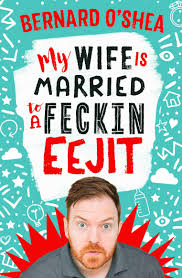
[READ: September 21, 2020] My Wife is Married to a Feckin’ Eejit

I have no idea who Bernard O’Shea is.  Well, he’s an Irish comedian, but I don’t know what kind.  He could be Ireland’s Jeff Foxworthy for all I know.  I doubt that he’s Ireland’s Dave Chapelle, anyway.

This book came across my desk at work and I liked the title so I thought I’d give it a read.

The premise of this book is that O’Shea found a list in his wife’s diary of all of the reasons why he is an eejit.  So he enumerates this list and then gives details about each incident.

Most of the things O’Shea he talks about are daily frustrations (often gone to crazy conclusions).  I probably wouldn’t have enjoyed this book if it were set in the States, but having it set in Ireland–where everyday things are a little different, (what in the heck is a crèche?) brought enough unfamiliarity to make these familiar stores seem more amusing. (more…)

Read Full Post »

SOUNDTRACK: PUP-“Rot” (2020).

Pup has a new EP coming out in October.  It’s called This Place Sucks Ass. Ha.  This is the first single.

It’s three minutes of angry catchy punk (so a PUP song).  The verses are sung by the lead singer while the chorus is sung by the whole band–chanted and rocking.

The bridge changes things a little bit and adds some tension to this otherwise catchy but dark song.  It celebrates the paradoxes of life

The more I’m reckless The less I break
The more I care about money The less I make
The less I care about everything The better it goes
And the better it gets The more I lose control
And when I’ve lost it all I self-sabotage

Looks like PUP has been busy over the quarantine.

[READ: September 18, 2020] “Along the Frontage Road”

In this story, the narrator remembers going to pumpkin patches as kid around Halloween.  I love that his father is fastidious and hates to get his hands dirty–especially with food–but is also a surgeon and has expert precision as he operates on the pumpkin.

But he now lives in the city and instead of farm pumpkin patch, they go to an abandoned lot on the frontage road where every year people set up a booth with pumpkins and Halloween items. It slowly morphs into a Christmas store and then disappears again until next all.

The narrator is sad that his son, Nicky, seems to love this otherwise gloomy stretch of land.  His son was intrigued by the decorations–a rubber snake crawling through a skull’s eye socket.  The scarecrow at the entrance had a pumpkin for a head and wore a Friday the Thirteenth goalie mask

I forbid myself absolutely to consider the proposition that in the orchards of my youth it would neve have occurred to anyone to employ a serial killer motif as a means of selling Halloween pumpkins to children.

(more…)

Read Full Post »

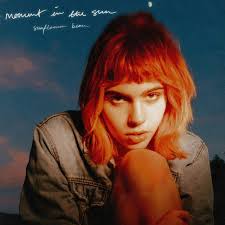
SOUNDTRACK: SUNFLOWER BEAN-“Moment in the Sun” (2020).

When Sunflower Bean first came out they were a wonderful poppy guitar band.  They sounded like a classic indie pop band from the 90s with Julia Cummings great vocals and Nick Kivlen’s delicate guitar sound that also worked in some roaring solos.

Their last EP was a lot more synth and even more poppy.  This new track, “Moments in the Sun” continues in that poppy synthy style.

The song opens with a slinky disco bass line and guitar chords.  Cumming’s voice sounds husky until the end of the each verse which has a catchy echoing falsetto vocal.  Bouncy synths accompany the vocals.

The propulsive chorus strips out the synth for a really catchy vocal harmony between Cummings and Kivlen.

The song sounds vaguely familiar–very catchy and simple

This aggressively poppy direction is a bit surprising given their earlier sound.  It’s not all that far afield from their initial sound, but I do miss Kivlen’s excellent guitar work.

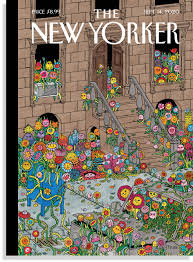
[READ: September 14, 2020] “The Englishman”

This is the second story of Stuart’s to appear in the New Yorker this year.

In this story, a college-aged Scottish man has answered a want ad to help an older Englishman named William.  The young man (who is nicknamed Caspar by William) was expected home from college for the summer.  His family farmed on a Scottish isle and were often buffeted by the harsh Atlantic winds.  His older brothers had been saving up the worst chores for his return.  So when he said he wouldn’t be coming home, they were furious at him.  His father was also disappointing–he said nothing when Caspar told him he was spending the summer in London.

The position paid four hundred quid a week.  William was a wealth man, with much cash at his disposal–he offered to fly William in from Scotland.  William was fastidious in his dress but his house was a shambles.  (The narrators mother would have died to have her house look like this). (more…)

Read Full Post »

SOUNDTRACK: BURT BACHARACH & DANIEL TASHIAN-Tiny Desk (Home) Concert #75 (September 3, 2020).

Obviously, Burt Bacharach needs no introduction.  He has written hundreds of songs that everyone knows. It’s rankly amazing that he is still living given his long and storied history.  Well, it turns out he is 92 (!).  And he can still play and compose.

I don’t know who Daniel Tashian is, but I see that he is a songwriter who seems to have written for a lot of country singers.

For this Tiny Desk Home Concert, the two have written music together for an EP called Blue Umbrella and they perform three songs while far apart: “Bells of St. Augustine,” “Blue Umbrella,” and “We Go Way Back.”

The melodies are lovely, as you’d expect.  Tashian is a lyricist, so the lyrics are very good as well.  I guess the one unknown turns out to be Tashian’s voice.  I found that I liked it quite a lot.  He reminded me a lot of Jim James in his delivery.  It’s also fascinating to watch his beard grow over the three songs.

In between songs, first Daniel addresses us.  he says that music is an oasis of calm and peace.  He says, seriously that he hopes this time next year we’re looking at a different picture of where this country is headed.

A love of songcraft brought these tremendous talents together, writing songs of friendship, songs that have been a comfort for both of them in these challenging days.

Bacharach talks about what it’s like being 92 and being sequestered like this.  He’s been out of his house once–to a small party at a friend’s house.  But he is happy to be at home with his wife.

And he has a direct message to the anti-maskers out there.

It’s okay to wear a mask.  You’re not proving anything walking around without a mask like some kind of hero.  You’re not.  You know who the heroes are.  They’re all walking masks and working in hospitals.

[READ: September 11, 2020] “End of the Line”

This is an excerpt from Franzen’s The Corrections.  

The Corrections is a large book that covers, in depth, a large family.   I enjoyed the novel very much and this refresher (I read the novel nine years ago), was a nice reminder of the novel.

The family has three adult children: Gary, a banker in Philadelphia who is (more or less unhappily) married with three children; Chip, a former school teacher and current playwright who sponges off of his younger sister while he tries to live the high life in New York City; and Denise, a very successful chef who also lives in Philadelphia.

This excerpt is about Denise.

It is a story about her as a youngish woman working in her father’s railroad office.  She is a strong, hard-working young girl in an office full of men.  And they don’t know what to do about her. (more…)

Read Full Post »

SOUNDTRACK: NUBYA GARCIA-Tiny Desk (Home) Concert #81 (September 16, 2020).

Nubya Garcis is a jazz saxophonist and this Tiny Desk (Home) Concert is unlike any other thus far.

Look to the left of Nubya Garcia’s Tiny Desk (home) concert and you’ll see a hanging plant swaying right above the keys. It never stops moving during the next 23 minutes, and it’s for a bizarre reason. Garcia’s (home) concert took place on a boat — a first in Tiny Desk history.

Garcia and her band are at Soup Studio, a recording facility built on a decommissioned floating lighthouse moored on the River Thames. It’s also where Garcia recorded her excellent new album, SOURCE. This set features three songs from the record; the title track starts it off with a reggae, dub vibe.

“Source” opens with some great low end from Daniel Casmir’s double bass.  The main melody comes from Joe Armon-Jones’s simple keyboard hits.  Sam Jones makes the drums almost a lead instrument as well, as he plays a lot of cymbals and interesting fills.

There are two backing singers for these songs.  Richie Seivwright and Cassie Kinoshi add some ahhs and oohs as needed.  They’re not intrusive and add a human element to Garcia’s otehriwse otherworldly saxophone soloing.

At around eight minutes, the singers do a lot of woohing and scatting which I find less interesting than the rest of the band does.

After nearly 12 minutes, everything slows down and Casmir does a bass solo as the introduction to “Pace.”  Armon-Jones plays piano with his right hand keyboards with his left to lay down a complex musical tapestry which Garcia weaves her saxophone all over.  Armon-Jones also gets a quiet piano solo, then the song takes off again, crashing to a wild conclusion with frenetic drumming and piano.

“Boundless Beings” opens with a slow saxophone introduction and the bass matching the notes. This song is only two minutes, and I assume that’s because time runs out on her video or her session.

[READ: September 15, 2020] “Whose Little Girl Are You?”

I had read Fox’s Desperate Characters after three authors that I like all championed it.  S. knows of Paula Fox as a children’s author.  I had no idea she had the kind of crazy childhood that this memoir lets on.  Indeed, this is an excerpt from her memoir Borrowed Finery.  And, while I’ve no doubt this is all true.  It is as exciting (and horrifying) as fiction.

When Paula was born her parents deposited her at an orphanage.  Paula’s mother Elise was a panicked nineteen-year-old and wanted to get rid of her as quickly as possible.  Her father Paul brought her to a Manhattan foundling house.  She was taken in by the Reverend Elwood Corning who raised her and whom she called Uncle Elwood.

Her maternal grandmother came to New York from Cuba and learned of her whereabouts.  She intended to take her back home to Cuba with her, but her grandmother worked as a companion to a rich old cousin and could not possibly look after a baby, so Paula stayed with Uncle Elwood.

When she was about five, her father came to see her. He had a large box which he dropped with a thud.  He looked at her and said “‘There you are,'”\ as if I’d been missing for such along time that he’d almost given up searching for me.”   The box contained a whole host of books. The next morning when Paula woke up he was not there anymore.

Later that year Uncle Elwood drove her to Provincetown where her parents were living.  The main memory she took from that visit (because all she ever did was visit her parents) was that she had found a large steamer trunk and was exploring it when her mother walked in and yelled, “What are you doing?”  And then, “Don’t cry!  Don’t you dare cry!”

A year later they were living in New York City and Paula visited them for a few hours.  When her mother came into the room she stared at Paula, her eyes like embers. Then she flung her glass and its contents at the girl.  Water and ice fell all lover her.

The next time, she went to see them they were staying in a hotel in New York.  They had room service for dinner and Paula ordered lamb chops.  It felt special.  When the meal came Paula said “There’s no milk.” Her father stood, grabbed the tray of food and dropped it down the airshaft saying “Okay, Pal, since it wasn’t to your pleasure.”  She had no dinner that night.

Her parents were often leaving Paula with strangers. One time she went to Grand Central Station on a train by herself and was met not by her father but by a couple–actors who knew her father–with Great Danes.  They expected her father to turn up any moment.  Two days later he showed up.

Another time she visited them in Los Angeles.  Her father’s sister Aunt Jessie took her.  Jessie stayed for a few days and on the day that she left, Paula’s parents went out for the evening leaving Paula by herself.  She wandered around and eventually wandered out the front door which locked behind her.

A neighbor found her and brought her to his house where his wife made dinner for her.  The next day she walked home and opened the door shouting “Daddy!”  Her father jumped out of bed–the woman next to him was not her mother–and whisked her out of the bedroom quickly.  He sat on a chair and began to spank her. The maid stopped him–Paula years later realized how brave it was for her to speak out.  A Few days later he dropped her off in the care of an older woman.  Years later he told her it was his motehr’s reaction to Paula that made him send her away–either she goes or I go.

A few years later in Malibu, she visited on weekends. The house had a deck that jutted into the ocean.  One day, her father gabbed her hands and dropped her into the Pacific . She freaked out fearing that she was drowning, but her father laughed because it was so shallow.

One night she told her father that she had a toothache.  He mother had entered the room and said I’ll fix it for you.  She put Paula in the rumble seat of the car and drove madly through the winding roads.  Paula was shaken like a rattle. They drove for twenty minutes (it felt like forever).  Finally they returned home and her mother looked at her and said “Do you still have a toothache?”

When Paula was eight (all of that happened before she was eight!), her Spanish grandmother came for her.  She had lighter duties in Cuba and brought Paula home with her.  Paula lived there, in Hormiguero for many years, going to school there–having a crash introduction to Spanish. She had nothing but freedom there but soon grew very bored and lonely.

When she was ten in 1933, her family fled to he country for New York because the President of Cuba, Gerargo Machado, had been overthrown.

Good lord, how did she ever get through it without going crazy.  And what on earth are her children’s stories like?


Read Full Post »

SOUNDTRACK: ARLO PARKS-Tiny Desk Concert #80 (September 15, 2020).

I had never heard of Arlo Parks before this set and then today Spotify recommended her album to me.  How about that.

Arlo Parks was born Anaïs Oluwatoyin Estelle Marinho in London.

She began writing poetry and songs because (according to her short bio) she spent her high school days “feeling like that Black kid in school who couldn’t dance for s***, listening to too much emo music and crushing on the girl in Spanish class.”

Accompanied by a guitar from her home in London, Parks opens with her latest single, “Hurt”, followed by the three songs that introduced her to the world and remind us that we really aren’t alone.

All of her songs sound similar in style–very gentle guitar and her soft, eloquent vocals.

“Hurt” is filled with nice details like

Charlie melts into his mattress
Watching Twin Peaks on his ones
Then his fingers find a bottle
When he starts to miss his mum

There’s a nice spoken word part–she has a lovely singing voice, but I enjoyed hearing her speaking voice as well.

It’s funny to hear a 19 year-old talk about introspection and reading through her “old journals.”  Especially since the next song, “Cola” is the first song she ever put out–way back in November 2018.

Playing “Cola” makes her reflect on the journey she;s had and what’s next to come.  It’s another pretty, gentle song with lots of specific details.

“Eugene” explores blurring the lines between romance and friendship.  It’s one of her favorite songs that she’s written.  It’s got a simple but really engaging guitar melody.

I had a dream we kissed
And it was all amethyst
The underpart of your eyes was violet
You hung a cigarette between your purple lips
We’ve been best buds since thirteen
I hold head back when you’re too lean
I hold the Taco Bell and you cried over Eugene

“Black Dog” is one of the most emotional songs she’s written.  It’s about mental health and has gotten a very string response from people.  Her voice is so tender, so delicate.  It’s quite lovely.

[READ: September 30, 2019] Personae

I really enjoyed De La Pava’s first and third books but somehow I missed this one, which is quite unlike the other two.  It is several hundred pages shorter and has far less of a narrative.  While the other books are chock full of details, this one feels like he was deliberately leaving things out.

Part 1 is called Our Heroine and begins with Detective Helen Tame.  She is the author of this report: “this Department is obsessed with reports and I am not; if I had to cop to any obsession it would be with the Truth.”

She is amusingly no nonsense.  When addressing a police officer on the case she says:

“You can go now,” I add, but he hesitates.  “That means leave in Etiquette.”

She is writing this report because she has found a dead body–a bloody dead body.  “He is more than century old; was.”  The victim an 111-year-old Colombian writer named Antonio Arce. (more…)

Read Full Post »

SOUNDTRACK: DECLAN McCKENNA-Tiny Desk (Home) Concert #79 (September 14, 2020).

I really only know Declan McKenna from his Tiny Desk Concert.  (His song “Brazil” was a hit, although I’d never heard it anywhere else).

At that Tiny Desk he was solo, but here he’s got a band, and they sound great.

Declan McKenna and his band rock their Tiny Desk (home) concert. Their “home,” in this case, is The Foundry, a neighboring studio in North London. Declan is decked out with glitter, channeling a more flamboyant side of rock than I’ve seen from him before. He’s still immersed in complex storytelling with characters on the fringes, alienated for reasons of class and politics.

It’s hard to believe he was a teenager when he released his first album–although he does sound older now for sure.  He’s got a new album out.

Three of the songs are from Zeros, his brand new album recorded in Nashville with producer Jay Joyce. It’s been a wild three-year ride since the release of his teenage smash debut What Do You Think About the Car? He’s now 21.

Opening the set with “Daniel, You’re Still a Child” McKenna sits at the keybaord playing the piano-sounding chords.  There’s a deep bass sound from William Bishop anchoring the song which has a surprisingly 70s sounding synth riff from Nathan Cox.  There’s some excellent guitar riffing and soloing from Isabel Torres (including a scratching wah wah section).  I enjoyed that there’s a pause after the line “outside the shop that sells your favorite drink” and drummer Gabrielle Marie King hits a drum pad that sounds like a beer can opening.  King also plays some really great fills all the way throughout.

A nifty bass line (including an unexpected harmonic note) opens “The Key to Life on Earth.”  Declan plays guitar on this one including a suitably fuzzed out guitar solo.  Although I think Torres is a better guitar player, he does get a cool sound from his instrument.  The song is catchy but especially so as it ends.

For “Beautiful Faces” Torres plays a raw a slide guitar riff that follows the vocal line. Once again, he uses some falsetto in the synthy chorus to throw in a little hook.  Declan plays a ripping fuzzy guitar solo.

For the end, Declan performs his best-known song, “Brazil,” a tune steeped in politics and sports, and the enthusiasm has him atop a tiny desk in the end.

“Brazil” has a catchy guitar riff followed but a catch bass riff. And even though I’ve only heard the song here, I still can’t get it out of my head.  (Even if I can’t exactly figure out what it’s about–grizzly bears, football, Brazil).  McKenna gets another ripping solo–but I’d like to have heard more from Torres.

McKenna is an interesting character and I like his song more each time I hear them.

[READ: September 14, 2020] Our Times in Rhymes

This is a short book in which Sam Leith (who I don’t know anything about) summarizes 2019 in verse.

Leith summarizes the major news each month.  Leith is British so most of the news he talks about is British (especially Brexit), but he does have plenty of stanzas devoted to the person occupying the White House.

It’s interesting reading this near the end of 2020, which has been such an incredible shitshow.  It’s hard to believe we cared about dumb things that happened then.  But it’s also hard to believe that tRUMP is still an asshole, that Boris Johnson is even more of a liar than it seemed, that Brexit hasn’t been finalized yet, and that anybody in either country actually supports either of these bozos.  What the hell is wrong with people? (more…)

Read Full Post »

SOUNDTRACK: D12-“Bizarre” (2001).

Hornby said that this track, a skit on the D12 album, was “I think the single most dispiriting moment of my professional life so far this millennium.”  Which meant I had to see what was so horrible.

I didn’t want to listen to the whole D12 album because I basically agree with his sentiments, I just think he;s way over the top into curmudgeonland.

So this skit starts with guys talking about hos and general sex ideas.  Then a guy introduces Bizarre (one of the D12) to Cindy.  She asks about Eminem (which is pretty funny) and he says he doesn’t know who that is.  He starts hitting on her and then farts very loudly.  When she protests, “the fuck you didn’t” he says, “Girl chill out, that shit came from my soul.” Which also made me chuckle.

Then he farts loudly again and asks for a kiss.  And that’s pretty much it.

It’s juvenile and light-hearted (which is probably necessary given how dark and misogynistic the rest of the album seems).  But I can’t imagine anyone wanting to hear it more than once if you were actually listening to the album.

Nevertheless, you have to be a real curmudgeon to not enjoy humor in music.  And, given his reaction to Blink 182, I’m guessing Hornby likes his bands to be Sophisticated, only.

[READ: September 10, 2020] “Pop Quiz”

I have enjoyed recent essays by Hornby in which he jokes about being a curmudgeon.  But boy was he ever a real musical curmudgeon in 2001.

He says that back in July 1971, the top ten list included Sticky Fingers by The Rolling Stones, Whats Going On by Marvin Gaye, a live album by CSN&Y and Aretha Franklin Live at the Fillmore East.  He says even the most curmudgeonly critics probably gushed over this list.  [Let’s gloss over the fact that there were a lot fewer albums released back in 1971 and that record sales were pretty well determined by radio airplay etc–so you had a pretty set idea of what would be popular].

But now there are many different top ten lists, probably because most critics don’t like what’s on the actual top ten list.  Many of those critics from 1971 are still critics today.

He says there is literary, critically approved pop–Wilco, Lucinda Williams, Nick Cave–none of whom trouble the Billboard statisticians much.

But he was unfamiliar with most of the people on the top ten on July 28, 2001.  So he decided to listen to them all (more…)

Read Full Post »

SOUNDTRACK: VOIVOD-The End of Domancy EP (2020).

Voivod has released a new EP for 2020.  The metal band were invited to play the 2019 Montreal Jazz Fest.

To do something special, guitarist Chewy created some orchestration for a song hey had not played live before.  This EP has the live version of the song as well as a newly recorded studio version.  There’s an extra live song from the Festival as well.

The newly recorded studio version of the song is now called The End Of Dormancy (Metal Section). It has  brass quintet comprising saxophone, trombone and trumpet.  It works quite well because of how cinematic their music (and especially their newest album The Wake) is.  I mean the military drum march in the middle of the song could come from any terrific sci-fi movie. The horns add a very interesting cinematic quality and do not detract from the heaviness of the original.  Even though the horns do a lot of the dramatic rising and falling parts there is still plenty of room for Chewy’s guitar soloing.  But that high note trumpet at the end is pretty spectacular.

The live version runs about a minute longer because even though Voivod is tight AF and very meticulous, they allow for an improvised saxophone solo.  The audience is pretty thrilled by it.  I love the way the band is quiet at the beginning of the solo and then builds in intensity to the end of the solo.  And that ending trumpet high note is even more impressive live.

The third song is a live version of The Unknown Knows, a fantastic song from Nothingface.  Voivod plays incredibly complicated an intricate music and the fact that they can pull it off live–and have it sound even better–is a testament to how great they are.  And also how great Chewy is as a replacement for Piggy.

[READ: September 10, 2020] Do You Mind If I Cancel?

I had no idea who Gary Janetti was before reading this book.  S. brought it home and thought I’d enjoy reading it.  With a title like that I thought it would be kind of funny.

Turns out that Gary Janetti is a TV writer for a few different comedies (although none that I watch).  And his writing is a lot like that of David Sedaris.  By that I mean he is lauded as being a hilarious writer.  But in fact, while some of his piece are funny, there is a lot of sadness and despair in some of these essays.  I mean, the last essay is about the many men who died of AIDS in the 80s.  To call this book “laugh-out-loud funny” is slightly off base.

I hate to lump Janetti in with Sedaris, because it’s not really fair.  They are both gay men, no longer young, with a great eye for details and a snarky attitude.  But the difference is in perspective.  Janetti is ten years younger (which isn’t that big of a deal, but given the time frame they are talking about, it was quite a change in gay culture).  More importantly, whereas Sedaris is from North Carolina, Janetti is from Long Island. So he has has much greater proximity to a big (gay) city.  His family also seems to be much less antagonistic with each other–so Janetti’s comedy doesn’t stem from familial wars.

Janetti lived much of his twenties in New York City as a single guy working in a fancy hotel where rich, fabulous people showed up regularly. He has many stories of Broadway, and disappointing encounters famous people and the like.   Amusingly he also has a lot of stories about how he watched a lot of TV–typically not the most exciting thing to write about–but his essays about this are quite funny.

There are eighteen essays in total. (more…)

Read Full Post »

SOUNDTRACK: PHOEBE BRIDGERS-Tiny Desk (Home) Concert #78 (September 10, 2020).

Phoebe Bridgers is in the White House!

Obviously anybody would be better in the White House than the current squatter, but Phoebe Bridgers would certainly be more fun than any other choices at the moment.

I love that Phoebe fully commits to being in the White House by having her band wear Secret Service-looking suits while she is wearing a very Presidential pantsuit (instead of that skeleton onesie she’s been in since the quarantine began).

For the first two songs she stands behind the oval office desk while Marshall Vore on drums and Harrison Whitford on guitar accompany her.

She opens with “Kyoto” one of my favorite songs of the year.  This more acoustic version loses a little bit of the magic from the recorded version, but that chorus is just so tasty and Phoebe’s voice (and the backing vocals) sound fantastic.

They open with “Kyoto,” a story song based on her first trip to Japan, followed with a sweet version of “Moon Song” and the sad details of loving someone who doesn’t love themself.

“Moon Song” is one of those beautiful songs that is lyrically very powerful but is just a hair too slow for me.  Of course after a few more listens (especially to the lyrics) it will sound perfect, I’m sure.  I had read an article recently about a line in this song

We hate Tears in Heaven
But it’s sad that his baby died

The article said that she originally wanted to say “We hate Eric Clapton,” but decided against it.  But that she really does hate Clapton:

I have such an Eric Clapton rant, because I think it’s just extremely mediocre music, but also he’s a famous racist.

I didn’t know this but apparently during an August 1976 gig in Birmingham, Eric Clapton made racist comments and praised Enoch Powell, inadvertently inspiring the Rock Against Racism campaign.

Wow.  Has he ever made amends?

The song picks up some power by the end, as Phoebe’s song tend to do.

And then comes the kicker, as Phoebe introduces herself with the words “I hope everybody’s enjoying their apocalypse,” the band kicks into her surreal doomsday tune “I Know the End.”

It starts like many other Phoebe songs–slow and thoughtful.  But this one builds and builds.  Midway through the song, they turn off the green screen projector and everyone walks (while the song is still playing) to another part of the room for the end.

And what an end it is: The trio expands to an ensemble

Whitford and Bridgers switch to electric guitar, Vore moves to a full drum kit, Emily Retsas joins on bass (looking bad ass in her blonde hair, dark suit and sunglasses), Nick White adds keyboards and Odessa Jorgensen plays violin.  The song feel so much louder (there’s been no bass so far).  You can feel the tension mounting

And then scattered throughout the screen are videos of Phoebe fans–recording from bedrooms, cars, backyards and trampolines–singing the chorus, air drumming and smiling big smiles.

And at the end everybody

lets out the kind of cathartic scream that has come to define 2020 for so many of us.

Followed by Phoebe’s winning smile.

[READ: September 10, 2020] “Dear Mr. President”

This story is written as a letter to The Honorable George Bush, President of the United States.

It is written by a Marine, Lance Corporal James Laverne.  [He is clearly a loser or a sucker, according to our current president].

He starts the letter with greetings and salutations and a fine memory of when Bush landed his helicopter at Laverne’s station in Iraq.  The men stood at attention for two hours while Bush was in a tent talking with someone.  Then when he came out he spoke to Laverne.  When Laverne said he was from Wisconsin, Bush said “Is cheddar better?” to which Laverne gave a hearty “yes sir!”

Then he tells a story of the time he was attacked.  He and Brecks went into a burned-out building where they’d heard there was sniper.  But when they got there it wasn’t a sniper, it was a dog.  Brecks went to rescue the dog, but when he bent over, someone on the ground threw a grenade onto the roof which blew Brecks to pieces. (more…)

Read Full Post »

« Newer Posts - Older Posts »