Feeds:
Posts
Comments

Archive for November, 2020

SOUNDTRACK: BORIS-Vein (2006/2013).

Boris continues to reissue their back catalog in streaming format.  Which is pretty amazing since so much of their work is so hard to find.  Possibly not great for collectors, but great for those of us who actually want to hear the music.

Vein is Boris’ thirteenth album.  Because they are Boris, the released two different albums under the same title in 2006.  The packaging was identical on both records and the only way to tell them apart was to check out the surface of the vinyl itself.

The “Hardcore version” had punk, hardcore, and drone.with vocals that are screamed rather than sung.  The  “Noise version” had drone and noise music as well as punk. This version of the album does not include any vocals.

In 2013, the band announced that the album would be released as a 2-CD set not as a reissue, but rather a re-arrangement of both albums combined.

Given all of this, it’s not even entirely clear to me what has been released her on bandcamp.  But it seems like the first two tracks (here labeled “v” and “e” are the hardcore version.  The third and fourth tracks “i” and “n” are a little harder to place.

“v” is 14 minutes long, broken up into several small pieces:

It starts with a wall of noise–static and low feedback swirling and manipulated until 4.01 when it segues into segues into ringing bells and effects that sound like a jet taking off and broken glass swirling and zipping around.   Then some drums and chords are introduced.   At 6:15, there’s a samples from the 1979 film Stalker, by Russian director Andrei Tarkovsky. A man says “И пусть посмеются над своими страстями” (Russian for “Let them laugh at their own passions”) followed by a blistering hardcore song  until 7:52.  After an abrupt halt comes the next screaming hardcore song which is more fuzz than chords with screams and feedback which at 9:06 segues into another super fast song which is distinguished from the others because of a riff where the chords go up and up higher and higher and faster as if they are going to explode, although it rumbles unto feedback at around 10:24 when a new tone of fuzzy nose feedback and a much slower introductory opens before before the pummeling hardcore resumes until 12:03.  This first song ends with a moment of silence and then a woman saying “unpleasant dreams” before a Wata fast high note solo is balanced by slow pummeling chords and drums and cymbals. After a minute or so, the hardcore returns this time with a solo all over the top of the song.  The song ends with a humming and what sounds like car keys jingling

“e” is over 15 minutes long and is one third hardcore punk and two thirds slow lengthy drone.  It starts with an Atsuo scream and hardcore drums. There’s a blistering hardcore song–fast riffage and screamed lyrics (which I assume are in Japanese).  Although the hardcore songs sound similar (and are unnamed) the riffs are distinctive enough to tell them apart.  Some backwards masked sounds come in at 1:05 and a similar riff at 1:15.  I have never seen them play this kind of set–it must be exhausting.  At 2.01 a loud bass comes in with a lot of cymbals and the song is buried under a blanket of distortion.  two minute song starts with.  At 3:04 a buzzsaw sound and a cool riff is coupled with some intense screaming.  At 4:45 it morphs into feedback that contains another sample from an Andrei Tarkovsky film, this time the 1986 film, The Sacrifice.  A man say “I hela mitt liv har jag väntat på det här. Hela mitt liv har varit en enda väntan på det här.” (Swedish for “All my life I’ve been waiting for this. My whole life has been a long wait for this.”)  The rest of the song feels like it might stay a lengthy drone, but at 5:46 after some cracks of the snare, a slow powerful Boris riff emerges.  But the riff dies away for some slow Wata soloing over droning chords.

Track 3 is probably the “noise version” (which is 17 minutes long) or the 2013 re-release (which is 17:25) but this track is 18:04.  Of course, if the “noise” version has no vocals, it can’t be this because it does have vocals.

It opens with a similar kind of noise that opens “v” but more staticky and with distant riffing going on.  At 1:58 a riff comes in.  The songs are like “v.”  A shorter version of the jet sounds are followed by some slow heavy chords.   At 3.22 there’s some chirping feedback that introduces the first hardcore song in “v.”  At 5.22 [#4 above] segues into a scream-filled hardcore song followed at 6:14 by the riff that goes higher and higher.  At 7:36, there’s slow thumping with noise and feedback (this might be new and not on “v”) then a sudden drop off of sound and near silence before the screeching feedback that starts at 8:39 with a blistering hardcore song that sounds unlike anything before. There’s heavy fast riffing with a pause and a big scream before resuming.  At 11:50, warping sounds and a thundering drum compete with a really fast riff which sounds like the first part of “e.”  At 13:05 song 2 from “e” begins–short, fast and loud.  Then at 13:51 comes track 4 from “e” (there’s no track 3) with the buzzsaw opening. At 15.21 there’s some backwards recording which eventually becomes the guitar solo that ended “v,” although this time it’s just under 3 minutes long.

Track 4 is “n.”  Perhaps it’s the “noise version” as there are no words.    It’s 17:59 and is a noisy composition of drone and feedback.  There’s some heavy chords and some quieter moments.  The high soaring notes seem to fit in very nicely with the sludgy bottom parts.  About half way through it turns into a fast, heavy hardcoreish track with a lot of drums, but buried under a wall of feedback and distortion.

[READ: November 12, 2020] The Little Buddhist Monk

The Little Buddhist Monk (written 2005) has been bundled with The Proof (written 1989) into one book.  Both stories were translated by Nick Caistor.

The Little Buddhist Monk is an absolutely bizarre, borderline stream of consciousness story.  It jumps from topic to topic like a fever dream and resolves itself in an even more unexpected way.

The story opens with us meeting the little monk who would very much like to leave Korea (where he was born and where he studied). But he has no money and no reasonable expectation for ever emigrating.  

Then one day a French photographer, Napoleon Chirac, and his wife Jacqueline Bloodymary (!) happened in his path.  They were on vacation and spoke French to each other.  The monk knew French and joined in the conversation.  They were delighted to meet a fellow French speaker in such a foreign land.  He imagined that they could be his ticket out of Korea.  So he decided to help them throughout the day.

They talk a lot about art.  Napoleon photographs empty rooms with a 360 degree camera and then splices it together as one image.  He has traveled the world filming places and he is looking to do a Korean monastery.  What luck, the monk can take them to a good one. (more…)

Read Full Post »

SOUNDTRACK: BORIS-tears e.p. (2019).

Boris tends toward being a very heavy band.  Their two recently albums D.E.A.R. and NO are some intense heavy metal.  They also do a lot of noise and heavy drone.  But they are not afraid of melody.  And they are not at all afraid to make pretty, dancey music.

There are five songs.  The first song “どうしてもあなたをゆるせない (doushitemoanataoyurusenai)” is on the disc twice.  The first version of this song is a remix by Narasaki under his name “Sadesper.”  It opens with a grooving bass line and some pretty guitars.  The drums are metronomic and there’s a sprinkling of keys.  I’m not sure who sings, but there’s a lot of falsetto. I love how just before the chorus there’s some orchestra hits.  It’s pretty much a full on dance song and it suits them perfectly.  You’d never guess it was Boris, but it makes sense once you realize it.  It even ends with a nifty guitar solo that sadly fades out.

“u fu fu” opens with a fast simple guitar chugging riff.  After a good ol’ “Whoo!” from Atsuo, the song pulses forward on the insistent grunted  “ooh ah” that works as a foundation to the song.  There’s a lots of great backing vocals in each ear. With about a minute to go, the bass takes over with a fast, heavy rumble before the harmonizing vocals kick in.

Up next is a fantastic cover of a Coaltar of the Deepers song “To the Beach.”  I didn’t know Coaltar of the Deepers before this release, but I have listened to them a bunch since and they are a terrific Japanese band unknown in the States.  I’m not sure how much this differs from the original , but this version is fantastic–slow and moody with lots of build and release.  The song starts with a pretty guitar melody and then a series of crashing chords and cymbals while Wata’s guitar soars.  The verses are slow with a whispered vocal.  But the choruses resume the crashing chords to punctuate things perfectly.  In the middle of the song as the vocals overlap and blend, it sounds magnificent.

“Peaches” comes next, it’s a 2 minute song sung by Wata.  A pulsing bass line propels the song forward as Wata chants the the word “peaches” over and over with an occasional “la la la” fleshes things out.  A repeating piano is added for a bit and then a shift to a kind o funky bass line that leads to the end of the songs.  It’s only two minutes long and kind of goofy but I wish it was longer.

The disc ends with an instrumental version of “どうしてもあなたをゆるせない.”  The song is so catchy and wonderful that hearing it a second time in the EP is a great thing.  It’s one of the few instrumentals that I think might sound better than the original because you can really hear what the musicians are doing–and its some great stuff.

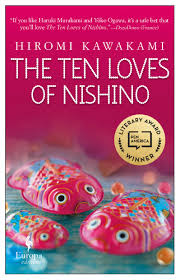
[READ: October 29, 2020] The Ten Loves of Nishino

I have a stack of books waist high next to my desk which I intend to read.  And yet, I continue to find new (to me) books that I jump in and read first.  This book was recommended by the most recent Tiny Desk Contest winner Linda Diaz.  Why on earth would I read a book recommended by a person I’d never heard of before?  She said it was her favorite book ever (which seems weird since it only came out in English last year, but whatever).  It was also pretty short.  So I decided to check it out.

I have enjoyed many of the Japanese writers that I’ve read, so I was intrigued to read a contemporary female author (this book was translated by Allison Markin Powell).

So this book is written in ten chapters–each one written by a lover of Nishino, an enigmatic figure whom we only learn about from the women writing about him.

There is something strangely seductive about Nishino that these women find hard to resist.  He is aloof and puzzling, but that seems to make women want him even more.  But he is perpetually with women (more than these ten, it would appear). (more…)

Read Full Post »

SOUNDTRACK: THE ROOTS feat. JILL SCOTT-“You Got Me” (1999).

I’ve wanted to listen to more from The Roots ever since I was exposed to them on Late Night with Jimmy Fallon.  But as typically happens, I’m listening to other things instead.  So this seemed like a good opportunity to check them out (based on Samantha Irby’s rave below).

One of the best things about this recording (and The Roots in general) is Questlove’s drumming.  In addition to his being a terrific drummer, his drums sound amazing in this live setting.

Erykah Badu sings on the album but Jill Scott (Jilly from Philly) who wrote the part, sings here.

It starts out quietly with just a twinkling keyboard and Scott’s rough but pretty voice.  Then comes the main rapping verses from Black Thought.  I love the way Scott sings backing vocals on the verses and Black Thought adds backing vocals to the chorus.

Midway through the song, it shifts gears and gets a little more funky.  Around five minutes, the band does some serious jamming.  Jill Scott does some vocal bits, the turntablist goes a little wild with the scratching and Questlove is on fire.

Then things slow down for Scott to show off her amazing voice in a quiet solo-ish section.  This song shows off how great both The Roots and Jill Scott are.  Time to dig deeper.

[READ: November 1, 2020] Wow, no thank you.

This book kept popping up on various recommended lists.  The bunny on the cover was pretty adorable, so I thought I’d check it out. I’d never heard of Samantha Irby before this, but the title and the blurbs made this sound really funny.

And some of it is really funny. Irby is self-deprecating and seems to be full of self-loathing, but she puts a humorous spin on it all.  She also has Crohn’s disease and terribly irritable bowels–there’s lots of talk about poo in this book.

Irby had a pretty miserable upbringing.  Many of the essays detail this upbringing.  She also has low self-esteem and many of the essays detail that.  She also doesn’t take care of herself at all and she writes about that.  She also doesn’t really want much to do with children or dogs.  And yet somehow she is married to a woman with children.

From what some of these essays say, it sounds like she is married to this woman yet somehow lives an entirely separate life from the rest of the house.  It’s all rather puzzling, although I suppose if you are already a fan, you may know many of the details already. (more…)

Read Full Post »

[CLOSED: November 11, 2020] Boot & Saddle

COVID-19 has officially closed one of my favorite clubs of all time.  I hoped beyond all reason that all of my favorite clubs could weather this storm.  And hope in the back of my mind that they are able to resurrect it somehow if this Pfizer vaccine comes to fruition.

The official word:

After seven years and 1,500+ shows, we are now forced to close Boot & Saddle.

With Covid-19 cases back on the rise in Philadelphia, Pennsylvania, and around the country, the thought of having 200 people standing shoulder-to-shoulder in our small indoor bar early next year has faded. After eight months without a show, and without a clear reopening date in sight, we no longer have the luxury of paying the bills and expenses for two closed venues. And so, we have made the difficult decision to close Boot & Saddle for good. We hope that this decision will assure that our sister venue, Union Transfer, can survive well into 2021.

We sincerely appreciate all the support over the years. From everyone who saw a show, had a drink, or played on our stage. We are proud of having provided a stage on which local Philadelphia artists can develop and grow alongside national and international touring acts.

It has been a fun and enjoyable experience from start to finish: transforming an old country & western bar, which was shuttered for eighteen years, into a bustling, live music venue with its iconic neon sign lighting up Broad Street. Boot & Saddle was where the likes of Lizzo and Sam Smith made their Philadelphia debuts. It is also where legendary icons like Thurston Moore and Psychic TV performed for intimate crowds. Where gigantic local bands like The War on Drugs, Circa Survive, and The Menzingers played unforgettable, secret shows. We like to think that over the last few years we helped contribute to the best music scene in the United States.

None of this would have been possible without all the hard work of our entire staff, past and present, especially Gina, Andy, and both Jeffs, who did an incredible job in making South Philadelphia’s first music venue in 30+ years into an incredible success.

In memoriam, we will be creating an R.I.P. Boot & Saddle Benefit T-shirt, if you feel inclined to support the venue one last time. Portions of the proceeds will go towards continuing to pay our full time staff’s health care during the pandemic, as well as keeping the lights on at Union Transfer (for which we very much intend to not have to make an R.I.P. Union Transfer Benefit T-shirt). Check our social media channels in the coming days for that!

We would like to take this final opportunity to remind everyone that local independent venues in our city and across the country are in grave danger. Live Music Venues were the first businesses to close and they will be the last to re-open. As other restaurants, bars and stadiums begin to re-open, our doors remain shut. We cannot sell you a contactless takeout or curbside delivery concert. Without some form of assistance, our local music scene right here in Philly, along with countless others across the country, may collapse. We will keep our socials active, so that we can from time to time pass along news and actions that you can take, to help ensure that the remaining venues in Philly stay open.

For the next week, we will keep the neon lights on at Broad Street to remind everyone of what was. Grab a pic while you can and tag us.

Thank you for the memories, and we hope to see you at Union Transfer.

– xo B&S

Here’s the shows I’ve seen there [with many more planned for 2020/2021, sigh]

11/7/2016 Dilly Dally
11/7/2016 Marge
11/7/2016 Palm
12/4/2016 Jason Anderson
12/4/2016 Strand of Oaks Winter Classic II
5/10/2017 Family Crest
5/10/2017 Oh Bree
9/28/2017 Torres
9/28/2017 Aphra
3/8/2018  Jessica Lea Mayfield
3/8/2018 Mal Blum and the Blums
3/12/2018 Active Bird Community
3/12/2018 We Were Promised Jetpacks
5/9/2018 Sloan
7/26/2018 Japandroids
7/26/2018 Mannequin Pussy
12/7/2018 Strand of Oaks Winter Classic IV
12/7/2018 Carl Broemel
12/7/2018 Joe Pug
2/1/2019 claud
2/1/2019 SOAK.
4/15/2019 Big Heet
4/15/2019 Gurr
4/15/2019 Priests
5/10/2019 Kevin Devine
5/10/2019 John K. Samson
5/10/2019 Shannon Moser
6/5/2019 Ages and Ages
11/18/2019 Blushing
11/18/2019 Lovelorn
11/18/2019 Ringo Deathstarr
12/12/2019 Strand of Oaks Winter Classic V
12/12/2019  Mike “Slo-Mo” Brenner
2/7/2020 Garcia Peoples
2/7/2020 Suffacox Mach 2
2/21/2020 Sloan: Navy Blues tour

Read Full Post »

SOUNDTRACK: BORIS-“warpath” (2015).

Back in 2015, Boris released three albums on the same day all under the “new noise literacy” banner: “urban dance” “warpath” and “asia” [according to their label numbers, this is the order they go in].

All three records are experiments in abrasive noise.  Despite the adorable child on the covers, these records will scare children.

This album has four songs, all of which are variations on drone.

“Midgard Schlange” is 11 minutes of heavy distorted chords played slowly, as they ring out and rumble.  Its a a sort of seven-note melody but stretched out impossibly long.  At around 5 and a half minutes the electronics start to fade in from far away.  The first time I listened to the song I thought an airplane was flying overhead as these sounds came in.  These sounds eventually resolve into chords that acts as a kind of counterpoint to the guitar drones. It’s relatively fast tempoed for a drone song, but it still long and stretched out.

“Behind the Owl” continues the drone, but in a different way. There aren’t pummeling guitar chords that ring out.  Rather, they are just quietly building distortion waves, pulsing in and out.  It’s rather understated, a low menace that seems to cycle slowly between two notes.

The wonderfully named “Dreamy Eyed Panjandrum”starts with a kind of staticky electronic pulsing with occasional glitchy percussion sounds.  It sounds like somebody doing light construction for about 8 minutes.

The guitars come back on “Voo-vah,” and ominous ten and a half minutes of dark rumbling.  This time, the guitars are low and ringing, with waves of pulsing bass and stretched out chords. Around 8 minutes some higher-pitched notes come in, almost sounding like ghosts in the night.  Closing credits to a nightmare.

The album is credited to: takeshi: guitar, bass / wata: guitar & echo / atsuo: electronics.

[READ: November 5, 2020] “Sitting with the Dead”

I really enjoyed the way this story revealed its details.

It begins with an old, sickly man asking to go out to his barn. It was winter and he wore only his pajamas and a winter coat.  A week later, the doctor assured his wife Emily that that’s not what killed him–it didn’t even hasten the inevitable.

At half past seven on the day he died, the Geraghty sisters knocked on her door.  They were two middle-aged women who sat with the dying.  They were known in the area although Emily didn’t know them personally.  They had heard that her husband was dying and they came to sit with him, but they were too late.

Emily laughed to herself at how much he would not have wanted these two there to sit wit him.  He was not religious and he would have said that their sitting with him had an ulterior motive. (more…)

Read Full Post »

SOUNDTRACK: BORIS-“urban dance” (2015).

Back in 2015, Boris released three albums on the same day all under the “new noise literacy” banner: “urban dance” “warpath” and “asia” [according to their label numbers, this is the order they go in].

All three records are experiments in abrasive noise.  Despite the adorable child on the covers, these records will scare children.

This album has five songs, two of which actually take a break from the relentless noise that’s present on “asia.”

“Un, deux, trois” (French for “One, Two, Three”) starts out with a series of distortion bursts, a beat of distortion coupled with a wall of noise that follows up.  It’s harsh and unwelcoming.  But at just over 4 minutes it’s one of the shorter noise compositions on these three discs.  Around three minutes it sounds like distorted electronic balloons being manipulated and then the air let out.  The noise drops of for the last seven seconds before the next song starts.

“Surrender” is pretty much the only thing resembling a proper song on these discs.  It’s got bass, drums, guitar and vocals.  It’s also got a melody.  The overall feeling is one of shoegaze and the melodies, both guitar and vocal are really pretty.  Although this being an album of noise, it couldn’t help but add a hugely noisy field of distortion to the middle of the song almost as an instrumental break.  There’s a second distortion interruption in the song that lasts long enough to make it seem like maybe there’s no more music.  But the song returns, keeping that melody until the end.

“Choreographer” is nearly nine minutes long.  It starts with a rumble and electronic feedbacking.  There’s some soaring sounds buried in the rumble–some lead guitar notes (feedbacking) that add a little structure to the noise; at times it sounds like a guitar trying to fight its way out of a pile of noise.

“Endless” is a little different than the other songs.  It has a bit more of a drone feel than a noise and distortion feel.  It’s still a wall of sound, but rather than a low rumble of noise, it’s more like high notes feeding of of each other.  After three minutes it feels like a distant dreamy melody is soaring in from afar.  A couple minutes later some drums come in, a militant beat putting some tempo to the rest of the sounds.  With about four minutes left, a series of four drum hits with a cymbal add a nice regular pattern to the song–making the drums an almost catchy element because of its consistency.  The end of the song has a bit more notable percussion until it drops out and the song fades on its own.

“Game of Death” is even longer at over 11 minutes.  It starts with sharp feedback and low pulsing space sounds full of distortion and noise.  But after a minute it turns into a full on raging distortion fest.  It feels like maybe two or more different sources of distortion rumbling in and playing atop the other ones.  About midway through, a higher-pitched distortion comes in and swirls around.  But for the most part it’s a relentless barrage of noise, with some interesting new (but still noisy) sounds in the last minute.

The album is credited to: takeshi: guitar, bass & vocals / wata: guitar & echo / atsuo: drums & electronics.

[READ: November 1, 2020] “Hungry Self”

I’ve noted that I rather enjoyed Rebecca Curtis’ more recent stories, so I was disappointed by how much I didn’t really like this one.

As I think about it there was nothing bad about it, it just felt a little flat and mean-spirited without much more.

The narrator is working at a Vietnamese restaurant.  She is a waitress.  She likes the boss’s son; he thinks she is disgusting.  One of the chefs likes her.  He has no teeth and sells cocaine in the basement.  She snorts with him but nothing else.

She noticed that a customer who sat down was her former therapist. The woman gave “the smile you give a waitress if you’re the kind of person who is nice to a waitress.”

Her ex-psychiatrist was overweight and this issue had caused them all trouble.  Initially, the waitress’ whole family was seeing the psychiatrist together and the waitress’ father commented about her weight.  He asked the waitress how much she thought the psychiatrist weighed and the waitress replied 260.  The psychiatrist insisted that they be seen individually from then on.

The next time, when the waitress was alone, the psychiatrist told the waitress about Harry’s Diet Pretzels which she now ate all the time.

The psychiatrist was very nice, but the waitress didn’t want that.

I wante a shirtty tip so I could have a reason for hating the fat ugly lesbian, a reason other than that she had once seen me cry.

The psychiatrist and her lover ordered lo mein (noodles in oil–food that the fat woman definitely did not need) and egg drop soup (the soup most likely to have a roach at the bottom).

When the psychiatrist left, the tip was good, “so as to say ‘We like you’ but not too good so as to say, ‘We feel bad for you obviously.'”

I wanted more to happen here.  Oddly enough I couldn’t tell where the story was set.  I initially thought Vietnam, but that doesn’t make sense.

Read Full Post »

SOUNDTRACK: BORIS-“asia” (2015).

Back in 2015, Boris released three albums on the same day all under the “new noise literacy” banner: “urban dance” “warpath” and “asia” [according to their label numbers, this is the order they go in, but I’m posting them out of sequence].

All three records are experiments in abrasive noise.  Despite the adorable child on the covers, these records will scare children.

This album has three songs.

“Terracotta Warrior” Runs for 20:38.  It opens with quiet, slow rumbling–almost inaudible for the first 30 seconds or so.  Then the pulsing sounds start bubbling up under a hissing, mechanical sound.  Around seven minutes the rumble stays pretty steady, but the higher noises–hissing, clanging, horror movie sounds, start to grow more intense.  At 8 minutes, some discernible guitar chords ring out (heavily distorted, but clearly guitars).  It turns into a lengthy drone with squeaky feedback noises throughout.  At 17 and a half minutes the feedback gets louder and louder until it abruptly cuts off and after moment of silence distance guitars start ringing out again.  There’s even the first sign of drums (a gentle hi-hat).

“Ant Hill” is half as long, but similar is tone.  It is primarily pulsing electronics and high pitched squealing electronic manipulation.  There’s also some digital glitching sounds. After 8 minutes the song fades to a pause only to resume a few seconds later with some more digital glitching and manipulation.  With 30 seconds to go, a drum beat comes in and the distortion takes on a more melodic sound including what sounds like someone sawing in the distance.

“Talkative Lord vs Silent Master” is also ten minutes long and it is the most unpleasant of the three songs.  It is full on static and noise with what sounds like a monstrous voice growling in the distance.  By the end of the song it sounds like being in the middle of a howling winter storm.  And as it closes up there is some serious digital glitching.  Not for the sensitive of hearing.

The album is credited to: takeshi: guitar & bass / wata: guitar & echo / atsuo: drums & electronics.

[READ: January 19, 2017] “The Very Rigid Search”

Jonathan Safran Foer has become something of a more serious writer over the last few years, so I’m alway happy to read one of his earlier funnier works (himm, that sounds familiar).

This story is written from the point of view of a Ukrainian tour guide named Alexander Perchov.  He is writing this tale in English, although his English is slightly off (as the title hints at).  He speaks very good English, but his word choices often eschew idioms for literal translation (and much hilarity ensues).

Alex’s family own a Ukrainian branch of an international travel agency and it is his job to pick up and translator for an American traveller.

Alex refers to the traveler as the “hero” of the story.  And the hero’s name is Jonathan Safran Foer.

Jonathan Safran Foer is not having shit between his brains  He is an ingenious Jew.

JSF was travelling from New York to Lutsk. (more…)

Read Full Post »

[MASSIVE SIGH OF RELIEF: November 7, 2020]

Now please, let the Democrats win the two seats in Georgia, so that McConnell can’t block the progress we desperately need.

Read Full Post »

[November 7, 2020] Kamala Harris!

On August 15, 2019, I made my first donation to the Kamala Harris for President campaign.  It was early days then, but she and Elizabeth Warren were my top choices.

In December 2019 Kamala Harris dropped out of the campaign after a pretty steep rise and surprisingly quick fall.

Then in August 2020, almost a year after I first donated, Kamala Harris was selected as Joe Biden’s running mate.

Now, today, she is the Vice President-elect!  (more…)

Read Full Post »

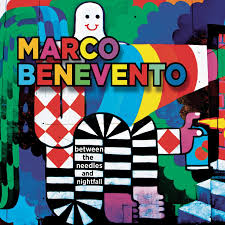
SOUNDTRACK: MARCO BENEVENTO-Between the Needles and Nightfall (2010).

This is the third album by Marco Benevento and his trio: Reed Mathis on bass and Andrew Barr on drums.

It’s hard to put this release into any genre because of how fluid Benevento is.  He has some poppy songs, some jazzy bits and some experimentation.

Most of the songs are pretty long (over 6 minutes) and none of the songs have words (well, one has a aspoken section).

“Greenpoint” flows around a very simple bass line as Marco plays a poppy piano throughout the song.  There’s also some synthy blasts that move the song beyond a simple piano motif.  Around the four minute mark, the song shifts gears, growing a little faster and little more intense as the drums crash through.

“Between the Needles” is a slower song with a pretty bass line and slow piano chords.  After a minute and a half it takes off a bit with bigger piano chords and a more dramatic tone.  But then it all slows down to just piano before building up again, this time with even more evocative lead bass.  “Two of You” is quieter, with a waverly keyboard line that lays under the lead piano  The main piano line acts like a lead vocal line and is really pretty and quite catchy as well.  It builds into a nice bouncy song by the end.

“Numbers” is a slow song with a lead bouncing bass and simple keyboard intro chords.  The song builds in layers until it is a loud, almost-crashing sound with some jazzy piano soloing on top.  “It came from You” is a super catchy piano melody with some complicated electronic drumming. It turns into a bouncy and fun romp by the end.

“Ila Frost” is one of the catchiest things on the album–a lively piano melody both in the repeated background and the main lead line.  It’s followed by the even catchier “RISD.”  In addition to the fun pulsing bass, the main echoing keyboard melody is simple but instantly catchy.

“You Know I’m No Good” is the shortest song on the disc.  It’s a slinky torch song that is actually written by Amy Winehouse. Knowing that, you can hear it in the delivery.  There’s a sort of crashing drum section in the middle.  This song also has the only vocals–worldless “da da daing” toward the end.

“Music Is still secret” is a lovely, slow jazzy ballad. While “Wolf Trap” is the opposite.  There’s some loud clangy drums and a big fuzzed up bass that matches perfectly with the really noisy piano melody.  Once the song starts going, there is some ferocious soloing from Marco as the rest of the band jams behind him.

The disc ends with “Snow Lake” an electronic kind of processed sounding track that mixes some interesting synths and some low ringing bass.  It ends with a wild cacophony of sounds–electric and otherwise–and then abruptly ends.

There’s not a lot of earworms on this disc.  But everything sounds great.  The musicianship is top notch and the songs are all pretty fun.

[READ: September 14, 2010] “Lucky Girls”

In this story, the narrator is an American woman living in India.

As the story opens she says she always imagined what it would be like meeting Arun’s mother for the first time.  She pictured a fancy restaurant with herself looking stunning.

But in reality, Mrs Chawla showed up at the apartment one day, unannounced.  The narrator had been living there for five years and had yet to meet the mother of the man who owned the place.

The narrator was in her painting clothes when Mrs Chawla showed up.  The narrator considered changing, but decided against it.  Mrs Chalwa was shorter than expected; she looked at the narrator as if she too were not what was expected. (more…)

Read Full Post »

« Newer Posts - Older Posts »