Feeds:
Posts
Comments

Archive for the ‘Violence’ Category

SOUNDTRACK: ANDY GILL-January 1, 1956 – 1 February 1, 2020.
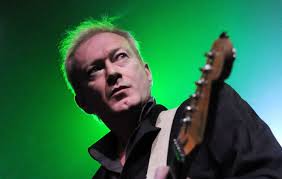
I wasn’t a huge fan of Gang of Four, but I really liked what I knew.  I probably should have been a bigger fan–I certainly should have listened to more records than Entertainment (1979) and Mall (1991).  I also probably should have seen them when they were touring around here last February.

Alas.

Andy Gill was a fascinating musician.  His guitar playing style was angular and distinctive and very influential.  His songwriting was also quite unusual.  As he explained, “Instead of guitar solos, we had anti-solos, where you just stopped playing, left a hole,”

Gang of Four was definitely punk, but they also had a kind of danceable quality (and not just slam dancing) that sucked people in before hitting them with their power.

But mostly, they were known for their charged lyrics.  Like “At Home He’s a Tourist”

At home he feels like a tourist
He fills his head with culture
He gives himself an ulcer

or 5.45

How can I sit and eat my tea
With all that blood flowing from the television
At a quarter to six, I watch the news
Eating, eating all my food
As I sit watching the red spot
In the egg which looks like
All the blood you don’t see on the television.

But there was always room for a catchy love song, too.

And I feel like a beetle on its back
And there’s no way for me to get up
Love’ll get you like a case of anthrax
And that’s something I don’t want to catch

I often say that I have been going to as many shows as I can before the bands I want to see break up or die.  I should have taken my own advice.

[READ: February 1, 2020] “Things We Worried About When I was Ten”

This story is indeed things that Dan worried about.  It even starts as if the title were not a title, but the first line:

High on the list was trying not to have the older boys decide to de-pants you and then run your pants up the flagpole.

That’s a pretty valid concern.

They mostly did this to Freddy Boyd–nobody knew why.

Generally you wanted to not meet anyone’s eyes. Especially if the boys were pushing and spitting on Devin Sleverding. One time Devin fought back with a stick and accidentally hit Dan in the face.  The older boys took some pity on Dan at that moment.

But the more important thing was that he would never have to box Sharon Weber again.  Dan’s father brought him to the Weber’s house where he was supposed to box Ron Weber–the boy who was a year older than Dan.  But Ron wasn’t home, so Ron’s dad suggested Dan box his daughter Sharon.   She was just as tall as Dan but a year younger.  He did not want to fight her.  He couldn’t hit her face–she needed to be pretty.  Couldn’t hit her stomach because that was where her baby machinery was.  And you couldn’t hit in the breasts.  So he stood there getting pummeled until his disgusted father pulled him away. (more…)

Read Full Post »

SOUNDTRACK: KOFFEE-Tiny Desk Concert #938 (January 27, 2020).

I can honestly say I didn’t know that there were musicians making new reggae music.  I mean, obviously there are–it’s not like the genre just stopped or anything–but I never hear about them.

So I was pretty surprised to play this Tiny Desk Concert and hear a reggae song start up.

Koffee is a 19 year-old Jamaican reggae star.  She just won a Grammy for best Reggae album (for an EP).  She is the first woman and the youngest artist to win the category.

She sings four songs.

“Raggamuffin” opens with her shouting out NPR quite a lot (is that all improvised or is she modifying existing lyrics?).  While the music has the typical reggae rhythm (although faster than old school reggae to be sure), her delivery is really amazing.  She sing (raps?) so fast during the verses.  It’s really an impressive display even if I can’t understand a word she says.

Her band is from different places around the world

“Rapture” has her singing along with her backing singers, Zhayna France and Shanice Drysdale (both from Jamaica) who really flesh out her voice.  There’s some cool moments where the lyrics pause to allow her to say a pointed word.  This song has a guitar solo from Thomas Broussard (from Paris).  It’s also really fun watching drummer Stephen Asamoah-Duah (London) and percussionist Stephen Forbes (Jamaica) communicating with each other and high-fiving at the end of the song.

Koffee centers her music around faith, resilience and gratitude. She has a new perspective to add to the pantheon of mostly male reggae greats and it’s resonating with a new generation that’s just getting hip to the iconic sounds. As her Tiny Desk performance shows, Koffee makes the best of her surroundings, channeling the day’s buzzy energy into a balancing act of youthful heart and old-pro precision, proving why she has become one of the most invigorating voices in reggae.

“Toast” opens with a fun keyboard melody from David Melodee (London).  Then the full song kicks in with a groovy five string bass from Nana Pokes (London) and acoustic guitar strumming from Broussard.  Mid song he switches back to electric for a brief solo.

“I want to thank everybody who’s been involved,” Koffee told the crowd halfway through her show. “You have now become a part of my journey.”

The final song “W” is her latest single.  It’s a slower ballad.  I realize that she has a pretty heavy Jamaican accent but I really can’t tell how many times she says the letter W in the song.  It sounds lie a lot, but perhaps she’s rhyming it with something ele.

[READ: February 1, 2020] Rust Volume 0

Royden Lepp was born in the Canadian prairies which I’m sure had some impact on the design of this book–set in fields and farms and colored with sepia tone.

I saw this book series at the library and thought it looked really interesting.  Royden Lepp’s artistic style (and color palette) are really cool and the premise of a military weapon that looks like a little boy is pretty fascinating.

The book starts 48 years ago in the middle of a war.  Amid the human carnage there is a boy with goggles on.  He has on a jetpack and appears to be flying around saving people.  He saves them from a large robotic monster/creature which someone calls a kamikaze drone.

The first forty or so pages are almost wordless–its’ all battle sequences.  It is quite exciting, but it is also without question, a little confusing,   Especially since this a world that is not quite like ours.  (more…)

Read Full Post »

SOUNDTRACK: DEATH LURKS-“Happiness Pie” (1996).

After Grivo took GLeeMONEX, he went from being a dark man embracing darkness into a happy man who loves happiness.  In pie form.

What’s in this pie?

Two cups love
A cup and a half of understanding
a tablespoon of good old-fashioned compassion
sugar to taste
and the ovens … are our hearts

This song, like the other Death Lurks songs was written by Craig Northey of Odds.  And while the lyrics are deliberately over the top treacle, the song is top-notch.

The jangly guitars sound just right and you can easily start to sway along.

Much like this movie was all about drugs, this song is like a gateway into pop music.  You listen because it is so silly and easy to mock.  But you slowly start to get into it because the music s really catchy.  And soon enough you like pop music as well!

True story.

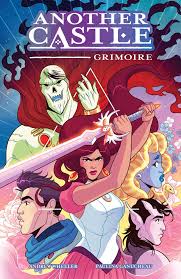
[READ: January 20, 2020] “Another Castle: Grimoire”

This story was written by Andrew Wheeler and illustrated by Paulina Ganucheau. It was published as a five issue arc and collected in this one volume.

In the Kingdom of Beldora a heart finch appears on a branch outside the window of princesses Artemisia (Misty).

Her lady in waiting is thrilled at the good omen, but he princess recognizes that it is not actually a heart finch.  She realizes it as a spy and puts a pair of scissors through it and it immediately disintegrates.  Then the princess if off to defend the kingdom–Shadelings are spying on them.

The Shadelings are run by Lord Badlug.  It has been ten years since he’s done anything to their kingdom, but hey can’t forget his treachery.

Misty’s father tells her to settle down and go back to her friends.  But Misty knows what she is doing.  She runs up to the throne and grabs The Leveler–the only sword that can kill Lord Badlug. (more…)

Read Full Post »

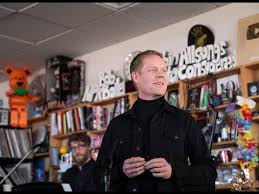
SOUNDTRACK: MAX RICHTER-Tiny Desk Concert #936 (January 22, 2020).

Max Richter is a composer and pianist.  His music is emotional and even more so when you know what has inspired it.

The first piece “On The Nature Of Daylight” was written as a response to the 2003 Iraq War.

In Daylight, which has been effectively used in movies such as Arrival and Shutter Island, a simple theme rolls out slowly in the low strings until a violin enters with a complimentary melody in a higher register. Richter, at the keyboard, adds a subterranean bass line for added gravitas, while high above another violin soars sweetly, mournfully. With all elements interlocked – and sensitively played by members of the American Contemporary Music Ensemble [Clarice Jensen: cello & artistic director; Ben Russell, violin; Laura Lutzke, violin; Isabel Hagen, viola; Claire Bryant, cello] – the piece gently sways, building in intensity. It all adds up to a six-minute emotional journey that, if you open yourself to the sounds, can leave you wrung out.

The music reminds me of the kind of repeating motifs you might hear in someone like Michael Nyman.

In between the two emotional string-filled pieces, he plays a solo piano piece called “Vladimir’s Blues.”

Its delicately toggling chords are an homage to novelist Vladimir Nabokov who, in his spare time, was a respected lepidopterist, obsessed with a subfamily of gossamer-winged butterflies called the blues. Richter plays the piano with the practice pedal engaged for a warm, muted sound.

The final piece, “Infra 5” is a ballet that he composed as

a meditation on the 2005 terrorist subway bombings in London… he counters violence with calming, thoughtful music.

This piece is much like the first in that it is beautiful and repetitive and thought-provoking.  This one is interesting because Richter does not play on it.  He just stands there and listens, no doubt deep in thought.

Richter is a truly amazing contemporary composer and his music is just wonderful.

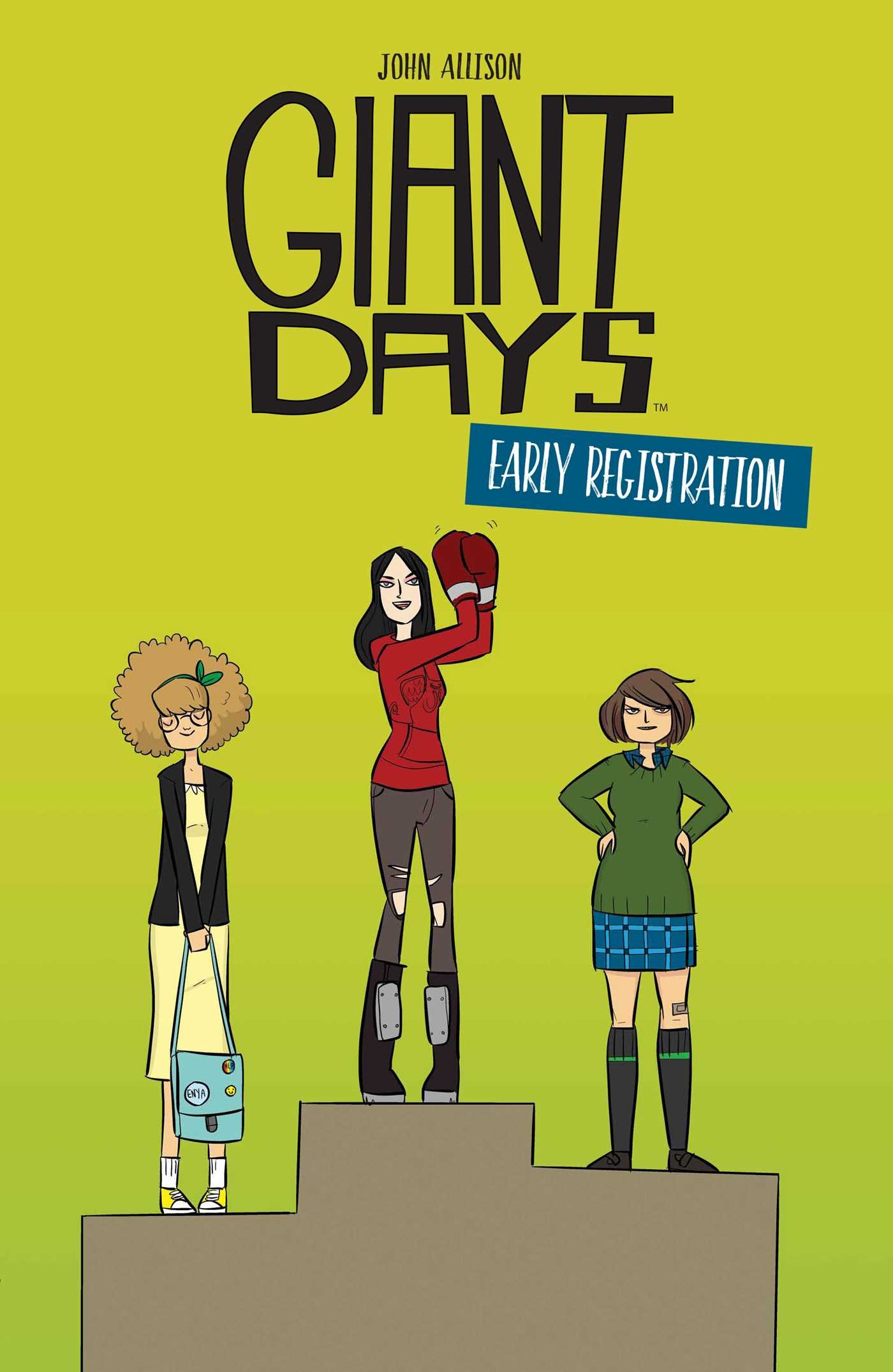
[READ: January 23, 2020] Giant Days Early Registration

I found out recently that there is an end to Giant Days. In fact I believe it has already ended, but there are still three or so collections left to come out.

When a beloved (and award winning) series nears its end, it is time to put out early issues and special features collections.  Usually they come once the series has ended, but this one has come early.

Early Registration is a collection of the first self-published comics that John Allison made of our heroes Daisy, Esther and Susan.  This book is drawn by him (in the style that I initially preferred although I have now come to love Max Sarin so much that these pictures look weird).

This book begins with Esther’s parents sending her off to college (I didn’t realize until recently that Esther de Groot was in Allison’s previous comic Scary Go Round and that this is a spin off of sorts.  I don’t know that comic but am sure looking forward to reading it. (more…)

Read Full Post »

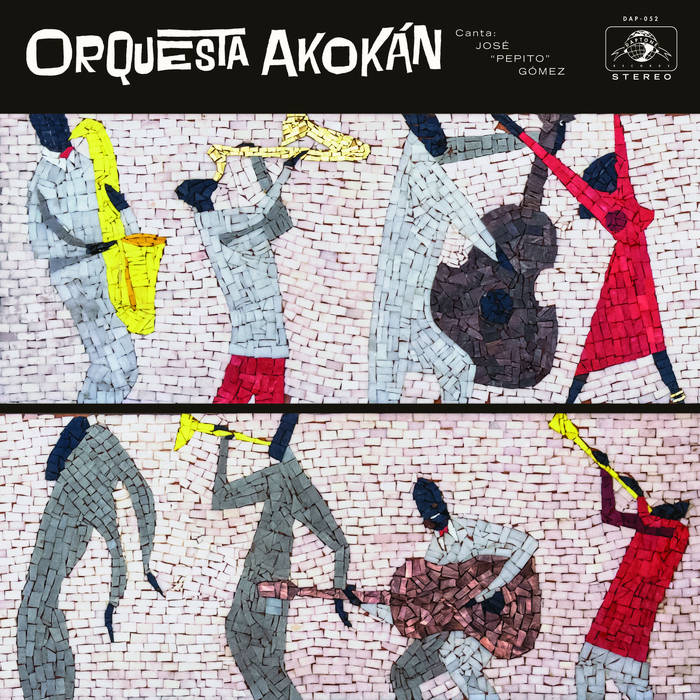
SOUNDTRACK: ORQUESTA AKOKÁN-“Mambo Rapidito” (2019).

Since this story is about something shameful in Cuba, I thought I’d tie it to something that is wonderful in Cuba: Orquesta Akokán

Orquesta Akokán is a band comprised of Cuban musicians and “Latin music freaks” from New York.   They play the kind of Cuban music that filled New York nightclubs in the 1940s and 1950s.  As their website explains:

Robust, time-tested musical architectures of son cubano and mambo are honored and modernized through a synthesis of the rich compositional styles of Havana, New York, and beyond.

This song begins with a descending piano riff that quickly gives way to horn hits and a cowbell that doesn’t stop for the whole three minutes.

The main melody comes in as a swinging, wholly danceable riff with shouted refrains of “baile!”

Then lead vocalist José “Pepito” Gómez shows where the rapidito comes in as he sings an insanely fast vocal part ( I wouldn’t even guess what he’s saying).

The song is fun and swinging and should make everyone want to baile!

Then comes an awesome flute solo.  There’s a cool swinging instrumental sections in the middle before the call and response of the backing vocalists and Pepito.

Then a wild and cacophonous piano solo sprinkles the end of the song.  It is a ton of fun.  The NPR blurb says that

when globalFEST decided to host this year’s edition at New York’s Copacabana nightclub — a venue with a history that stretches back nearly 80 years and boasts a long association with Latin music — the festival’s organizers decided that Akokán had to be the first group they invited this time around.

Mambo!

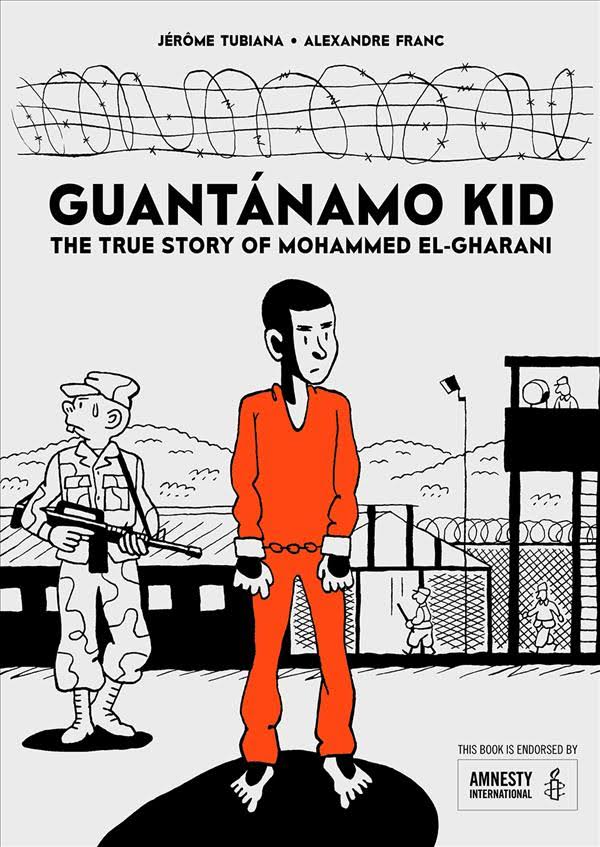
[READ: December 23, 2019] Guantánamo Kid

This is a story of injustice.

Injustice at the hands of Americans.

Americans should be humiliated and outraged by this injustice.

Injustice that is utterly horrific to behold–and I suspect that this graphic novel holds back a lot of the really unpleasant details to make it readable.

This is the story of Mohammed El-Gharani, an innocent kid who was sent to Guantánamo Bay for seven years.

At the age of 14, Mohammed El-Gharani made money in the streets of Medina, Saudi Arabia.  His family was from Chad and, as such, he was treated like an outsider in Saudi Arabia.  He wasn’t allowed to go to school and the locals treated him badly.  He and his friend knew this was no way to make a living.

One day his friend told him that if he went to Pakistan he could learn how to fix computers.  He even knew people there who would put him up while he studied. (more…)

Read Full Post »

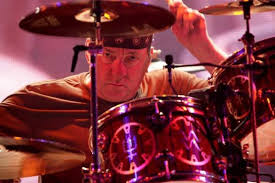
SOUNDTRACK: NEIL PEART-September 12, 1952-January 7, 2020.

When I was in high school, Rush was my favorite band, hands down.  I listened to them all the time.  I made tapes of all of their songs in alphabetical order and would listen to them straight through.

I still loved them in college, but a little less so as my tastes broadened.  But every new release was something special.

It’s frankly astonishing that I didn’t seem them live until 1990.  There were shows somewhat nearby when I was in college, but I never wanted to travel too far on a school night (nerd!).

For a band I loved so much, it’s also odd that I’ve only seen them live 5 times.  However, their live shows are pretty consistent.  They play the same set every night of a tour (as I found out when I saw them two nights apart), and there wasn’t much that set each show apart–although They did start making their shows more and more fun as the years went on, though).

One constant was always Neil Peart’s drum solo. It too was similar every night.  Although I suspect that there was a lot more going on than I was a ware of.  It was also easy to forget just how incredible these solos were.  Sure it was fun when he started adding synth pads and playing music instead of just drums, but even before that his drumming was, of course, amazing.

It was easy to lose sight of that because I had always taken it for granted.

I am happy to have seen Rush on their final tour.  I am sad to hear of Neil’s passing.  I would have been devastated had it happened twenty years ago, but now I am more devastated for his family.

So here’s two (of dozens) memorials.  The first one is from the CBC.  They included a mashup of some of Neil’s best drum solos:

But what better way to remember the drum master than with a supercut of his drum solos? From a 2004 performance of “Der Trommler” in Frankfurt, Germany, to a 2011 performance on The Late Show With David Letterman, to his first-ever recorded drum solo (in 1974 in Cleveland, Ohio), dive into nearly five minutes of Peart’s epic drum solos, below.

The best Neil Peart drum solos of all time.

I was only going to include this link, because it was a good summary, then I saw that Pitchfork ranked five of Neil’s best drum solos (an impossible task, really).  But it is nice to have them all in one place.

You can find that link here.

Starting in the 1980s Neil’s solos were given a name (which shows that they were pretty much the same every night).  Although as I understand it, the framework was the same but the actual hits were improvised each night.

Even after all of these years and hearing these drum solos hundreds of times, watching them still blows my mind.

  • “The Rhythm Method”
  • “O Baterista”
  • “Der Trommler”
  • “De Slagwerker,”
  • “Moto Perpetuo”
  • “Here It Is!”, “Drumbastica,” “The Percussor – (I) Binary Love Theme / (II) Steambanger’s Ball”

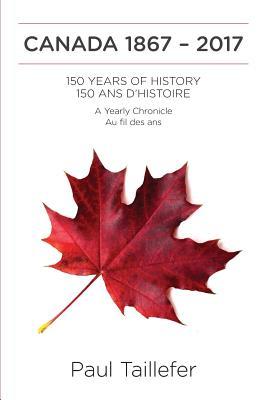
[READ: January 2020] Canada 1867-2017

In this book, Paul Taillefer looks at the most historically significant event from each tear of Canadian history.  And he tries to convey that event in about a page.  Can you imagine learning the history of your country and trying to condense every year into three paragraphs?

And then do it again in French?  For this book is also bilingual.

I can’t read French, but i can tell that the French is not a direct translation of the English (or vice versa).

For instance in 1869, the final sentence is:

This, in turn, signaled the start of the Red River Rebellion which would not end until the Battle of Batoche in 1885.

Neither Batoche nor 1885 appears in the entire French write up.  So that’s interesting, I suppose.  I wonder if the content is very different for French-reading audiences. (more…)

Read Full Post »

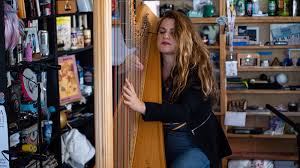
SOUNDTRACK: BRIDGET KIBBEY-Tiny Desk Concert #930 (January 8, 2020).

I love the harp.  Ever since I took a very brief class in grad school (like 4 weeks), where I learned exactly how to play one, I’ve wanted to buy one (that’s an expensive hobby).

Harps are usually thought of as celestial instruments, think “the stereotype of the genteel harp, plucked by angels.”

But the range on the harp is unreal–47 strings!  Such highs and lows.  And the things usually weigh a ton (not literally, or maybe literally).  When I saw Joanna Newsom, I was delighted to see her play a harp from relatively up close.

Now here is Bridget Kibbey.

Kibbey is crazy for the harp. She first heard one at a country church amid the Northwest Ohio cornfields where she grew up. Now she’s the go-to harpist for contemporary composers, some of whom who are writing pieces especially for her.

To be able to watch Kibbey play these pieces up close is breathtaking.  She starts with Bach (arr. Kibbey): “Toccata and Fugue in D minor, BWV 565.”  Yes, that one, the one we all know on the organ.  Well, hearing it on the harp is a whole new experience and watching her steamroll through as her fingers fly all over the place is wonderful.  You can marvel as she “offers tightly interwoven voices, like gears in a clock, with melodies and rhythms that sparkle.”

She says she transcribed the piece for the harp on a bet.  It gives her a chance to explore Baroque counterpoint and the drama of this piece.  And does she ever.

The second piece is by the “great living jazz artists Paquito D’Rivera” from Cuba.  He plays clarinet and saxophone and wrote “Bandoneon” (arr. Kibbey) for piano, which she transcribed for harp.   It is an Argentine tango and is really terrific.  I love how she keeps that bass line steady while the high notes fly around the harp.

Kibbey is really fun and boisterous and she’s very excited about her instrument.  It’s fun to hear her talk about what she’s going to be playing next.

The final piece is a “little ditty” she grew up singing in the cornfields of Ohio.  It’s Bach (arr. Kibbey): “O Sacred Head, Now Wounded” from St. Matthew Passion.

I see that she has played Princeton a few times in the past.  I sure hope she comes back!

[READ: January 9, 2020] “The Country in the Woman”

This story was published this month in a collection of previously unpublished work.

I don’t believe I’ve read much by Hurston and I was a a little put off that this story is written in partial dialect.

Looka heah Cal’line, you oughta stop dis heah foolishness you got.

But I quickly got over that as I saw what she was doing with the story.

Caroline and her man, Mitchell, are from Florida but they have moved to New York City.  The New Yorkers all want Caroline to be more like a New Yorker but they know you can’t get rid of “the country in the woman.” (more…)

Read Full Post »

SOUNDTRACK: Bob Boilen’s Favorite Tiny Desk Concerts of 2019.

For 2020, I intend to put more albums in my Soundtrack section.  But it’s amazing how time consuming that can be.

Nevertheless, I’ll always be posting about Tiny Desk Concerts because I watch all of them.  So I’ll start 2020 with Bob Boilen’s favorite Tiny Desk Concerts of 2019.

It amuses me that Bob Boilen and I often share very similar tastes in music, but our favorite things are usually quite different.

When we first started filming musicians playing behind the Tiny Desk in April 2008, the beauty was in the intimacy and simplicity of these concerts. Now into our 11th year, after more than 900 Tiny Desks, the other treasure I find in these concerts is the variety. I remember having the cast of Sesame Street here in May, with NPR parents and their children seated on the floor watching the Muppets. The following Monday we had the blood red-faced raging of Idles, climbing all over the desk and singing “I’m Scum.” The scope of music is invigorating, especially considering a world of listening where we can not only get comfortable with what we love, but where the quantity of music from any particular genre could keep us happy all year. Tiny Desk concerts are here to shake up your tastes a little and help you stretch your ears and discover something you never knew existed or convert you to something you never thought you’d like. Here are 10 great examples of that magic from 2019.

I don’t have a list of favoirtes, but I will make some observations about Bob’s.

Bob seems to really like bands who put their names in all caps.  Also bands who have a number (specifically 47) attached to their letters.

Quinn was the Tiny Desk Contest winner.  Sesame Street is pretty iconic.  Taylor Swift is something of a surprise, but was clearly the biggest name they’ve ever had.  And yet, Lizzo’s Tiny Desk has twice as many views as Taylor Swift’s (5 million to 2.5 million!).

Looking forward to their 1,000th show later this year.  I wonder who it will be.

[READ: January 6, 2020] “Playing Metal Gear Solid V: The Phantom Pain”

This was a great short story about playing a video game.

For decades, the video game industry has been releasing video games in which a protagonist kills people from other countries.  Since I don’t play these games, I never really thought about what it would be like to be from that country and to play those games.

Surely people from all around the world like to play video games, and they probably want to play the popular ones as well.

In this story an an Afghani-American kid, Zoya, who works at Taco Bell has saved up all of his money (the money that he doesn’t give to his out of work father) to buy the final game in the Metal Gear series.  He has been playing this series which has becomes “so fundamentally a part of your childhood that often, when you hear the Irish Gaelic chorus from “The Best is Yet to Come” you cannot help weeping softly into your keyboard.” (more…)

Read Full Post »

SOUNDTRACK: RONG-“Shrugging at the Dearth of Discourse” (2019).

Every year Lars Gotrich publishes his list of favorite music in an NPR podcast called Viking’s Choice: The Year In The Loud And The Weird.  I always listen to these songs because I’ll never hear them anywhere else (he mostly seems to scour bandcamp for unknown music.

One that he especially liked was by the band Rong from Boston.

He says:

Just bonkers. Boston’s Rong channels the joyous chaos of Japanese punks Melt-Banana and the aggro skronk of Brainiac with a tad of Deerhoof’s weirdo-pop hooks, in what sounds like a swarm of bats fighting a comically large industrial fan… and the bats win. Dissect the noise and you’ll find some truly athletic guitar interplay, held together by a sturdy rhythm section and Olivia W-B’s vocal acrobatics.

This song starts out with Olivia screaming quickly and almost inaudibly while the drummer thrashes away on every surface nearby.  There appears to be two guitars each playing their own riff that seems irrelevant to anything else. It’s a chaotic statement that will likely make most people turn the song off.   After 30 seconds one of the guitars plays a riff and at 35 seconds the riff is actually really catchy and Olivia sings along with it.  Wow.

And the song is not even one third over.

After a few more rounds through similar styles things really slow down around 1:45.  It is just bass and drums and vocals for a bit before two separate solos happen at once.  About five more parts occur before the song ends at 3:11.  This includes a riff that is repeated a few times and a absolutely berzerk ending.

That’s the first of 8 similarly eclectic and, yes, bonkers, songs.  Finding the melody and connections between the parts is rather strangely rewarding.

Incidentally, the final track on the album is called . ༼ ༎ຶ ෴ ༎ຶ༽   In a bigger font, that’s:

༼ ༎ຶ ෴ ༎ຶ༽

[READ: Summer 2019] The Long Cosmos

The “Long Earth” Tetrology is complete.

This was a series that was pretty much impossible to end.  I mean the very premise is that there is unlimited exploration to be had in the various “Earths.”  So how do you end it?  Well, really you end it by following the main protagonist of all of this, Joshua Valiente to his logical conclusion (or something like that).

This book also serves as a kind of reconciliation for many of the estranged characters, but, thankfully does not resurrect any dead characters (well, except for Lobsang–whatever he may be).

The Foreword to this book answers a question that I had: If Terry Pratchett died in 2015, did he have anything to do with this book which came out in 2016?  Baxter explains that indeed, he and Pratchett had created drafts of the final three books by August 2013.  Terry and Stephen worked on the book together as late as autumn 2014.  Then Baxter dealt with final editorial and publishing stages.  So that makes me happy.

I am, as always with this series, puzzled as to what Terry’s contributions were to the books.  I haven’t read anything else by Baxter, so I don’t know if this is a Baxter book with Pratchett sprinkled in or if it’s a combination of their writing styles   The one thing is that this series is never really all that funny (with one huge exception later).  Not to say that Pratchett had to be funny, but it was certainly what he was known for.  Maybe I’ll try a Baxter book one of these days to see just what his works are like.

But back to the concluding chapter of this long series.

This book opens with the invitation: JOIN US. (more…)

Read Full Post »

SOUNDTRACK: FALHA COMUM-“Film Do Mundo” (2019).

Every year Lars Gotrich publishes his list of favorite music in an NPR podcast called Viking’s Choice: The Year In The Loud And The Weird.  I always listen to these songs because I’ll never hear them anywhere else (he mostly seems to scour bandcamp for unknown music.

One that he especially liked was by this band Falha Comum, a duo from Brazil.

He says:

The Brazilian post-punks scaled down to a duo, but opened a festering third eye. The psychedelic noise receptors of a previous decade (think Raccoo-oo-oon and Gowns) run throughout Rakta’s Falha Comum, but in levels below, the sinister grooves and cackled reverb inhabit a life all their own with primal incantations to spirits unknown.

The album is like a few things and nothing else that I’ve heard.  There’s elements of krautrock–but not sterile and efficient, more groovy and cool, with a warm bass and seemingly wild, improvised vocals.

This particular song is 7 minutes long and opens with a spoken word section (presumably in Portuguese).  There are synths and screams behind the speaking and then everything starts pulsing as the vocals echo and echo.   The music–a simple repetitive drum and bass (I guess) line, keep a terrific groove going while on top, the high notes (vocals and other synths) skitter and flit about.

Midway through, the song goes through a phase shift–it sounds like it’s been transported somewhere else, and that’s when the bass gets cleaner and the vocals grow a bit more intense.  But the groove remains.

Somewhere around 6 minutes, the groove changes slightly–a brief shift in notes suddenly gives the song a brief moment of extra melody.  The following keyboard frenzy keeps it from getting too comfortably melodic though.

It’s an unexpectedly interesting and cool record.

[READ: Summer 2019] The Long Utopia

This was the fourth book in the Long Earth series.  I brought it along on vacation thinking it would be a fairly slow and leisurely read like the others—something I didn’t mind putting down and picking up a few days later.  But this book changed that pattern entirely.  It was fast paced and quite exciting and my favorite book of the series so far.

The previous book about the Long Mars seemed to be more than anything else, a distraction.  Not a lot happened, although there were some cool ideas in it.  The one big thing that book 3 did that effects book 4 is the cable/elevator thing—which I still don’t understand [see yesterday’s post about book 3].

This book also introduces a new concept in Stepping.  Typically Stepping is described as moving left or right, east or west through the Earths.  But suddenly, in this one world, it seemed like a person could move…north.  Into an entirely different world—night instead of day:  “No stars exactly, it was like he could see the whole galaxy…from outside.”

This book is set in 2052.  Protagonist Joshua Valiente:

will be 50 years old. He has been stepping for 35 years and has been all over the Long Earth.  But some things are still unsettling—things that he can feel in his bones or his head.

The reason for his feelings date back to 2036 in New Springfield.  Cassie Poulson had been digging a basement for her house when she hit some kind of opening.  Not a cave or anything natural, but some kind of manufactured tunnel or the like.  When she poked her head in,  what poked back was a humanoid metal beetle.  Obviously she freaked out and covered up the hole. (more…)

Read Full Post »

« Newer Posts - Older Posts »