Feeds:
Posts
Comments

Archive for the ‘Universities’ Category

SOUNDTRACK: WEEZER-Hurley (2010).

In my head, no band garners as much debate as Weezer.  According to this article, a man offered them $10 million to break up.  Even I go back and forth about whether they are great pop song writers or incredible sell outs.  I mean, look at one of the items on their thanks list for Hurley: “Dodge–makers of the timeless Challenger.”  Is this ironic or not and if not, does it matter?  I’m also torn by Rivers Cuomo’s Harvard degree, which I would think means he would write intellectually rigorous songs–and yet he never does.

But what of it?  Let’s talk about the music.  It has dawned on me that the closest band to compare them to is Cheap Trick.  They write poppy songs with often heavy guitars that are completely sing along-y but are in no way alternative to anything.  And yet everyone loves Cheap Trick, so why not love Weezer, too?

Hurley is no different.  Each song is 3 minutes of pure pop (for crying out loud Desmond Child is on one track–put one in the sell out column).  But they also have some odd fans on this disc: the crew from Jackass sings backing vocals on “Memories” and Michael Cera plays mandolin and sings backing vocals on “Hang On” (although you can’t hear any of them really).  “Hang On,” by the way is their most Cheap Trick-y song to date.

“Unspoken” features a flute and acoustic guitars until about two minutes into a three-minute song.  Then it bursts out of acousticland and into heavy rocking guitars.  The one song I don’t get is “Where My Sex?” which I suppose is the controversial song on the disc.  He’s clearly talking about socks but he keeps saying sex.  I really have no idea why.  It’s not funny, even remotely.  It’s just an odd decision.  And I would say I rather dislike the song, but the chorus is great, as is the totally unexpected third section (which is like  pop song unto itself) that comes in 2 and a half minutes out of nowhere.

“Smart Girls” has to be ironic, but who knows anymore.  To me the most interesting song is “Brave New World.”  It eschews the standard big-chords-for-choruses format they’ve been using with a much heavier guitar and single guitar notes in the verses.  (Although the chorus is, once again super catchy).

My version of Hurley has bonus tracks which are separated by an interesting 10 seconds of string music.  The bonus tracks include a cover of a song from Yo Gabba Gabba ( I really must watch that show some time).  There’s also a great cover of Coldplay’s “Viva La Vida” (in many ways Weezer is like a harder rocking version of Coldplay in terms of success and obvious sellout possibilities).  Although this live version shows that Rivers’ voice is no match for Chris Martin’s.

“I want to Be Someone” is an earnest acoustic solo track while “Represent” (Rocked Out Mix) is one of the heaviest things they’ve done.  I assumed the original was on Raditude, but it’s not.  Evidently it’s the unofficial song of the U.S. World Cup soccer team.  Huh, who knew?

So yes, it seems that they’re pretty much sell outs.  And yet for thirty minutes (all of their discs are so nicely short) it’s easy to stop worrying about “indie or not” and just sing along.

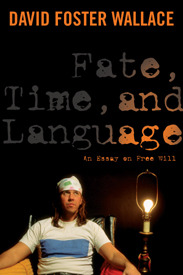
[READ: November 7, 2010] Fate, Time and Language: An Essay on Free Will

First I wanted to thank Columbia University Press for sending me an Uncorrected Proof of this book. I was pretty excited to read it, but to get it a few weeks early was even cooler (and, no, this won’t have any impact on my review).

Second, I wanted to state exactly what this book IS (because I wasn’t entirely sure myself).  The book is a reprinting of David Foster Wallace’s philosophy graduate undergrad thesis.  However, rather than just publishing the thesis (and giving us a short book or a long book with one sentence per page), Columbia University Press has packed the book with a great many essays that help to contextualize the thesis.  The Preface by Steven H. Cahn & Maureen Eckert explains this quite neatly.

So, my (briefer) version of the background: DFW’s thesis is about Richard Taylor’s article “Fatalism” (1962).  CUP has also included Taylor’s initial article (so we can see what DFW is talking about).  And even more than that, when Taylor’s article was initially published, it caused a bit of controversy and a lot of responses.  So, to get a sense of everything that DFW was working with (and against), this book also includes the intellectual dialogue: articles that range from four to ten pages (and also include a dense of Taylor by Steven H. Cahn himself (published in 1964).

Part II of the book includes an introduction by Maureen Eckhart and DFW’s essay.

Part III is a brief look at DFW as a student written by a former professor, Jay Garfield.

Before I get to the meat of the book itself, I wanted to say that I didn’t know anything about this essay.  And I’d thought about this thesis as possibly an interesting piece of philosophy from an author whose work I greatly admired.    Well the introduction to this book states in pretty certain terms that my thinking about this thesis is a massive understatement.  For, in fact, DFW’s thesis undermined Taylor’s argument in ways that no other argument had been able to do before.  His thesis more or less repudiated Taylor’s original essay.  The thesis also won the Amherst University Gail Kennedy Memorial Prize in Philosophy (and a wonderful piece of trivia: DFW’s father James won the same prize in 1959).  So, yes, this isn’t just a graduate undergrad thesis, this is real philosophy.

On to the book: (more…)

Read Full Post »

SOUNDTRACK: FUN BOY THREE-“Our Lips Are Sealed” (1983).

In an interview with David Foster Wallace’s sister, she says that David spent an entire summer listening to this song.  Most of us know the Go-Go’s version which is bubbly and playful (even though the lyrics–which are the same–are quite dark).

I’ve had this song on some compilation or other for years and I’ve alway thought of it as a kind of novelty.  And yet the more I listened to it, the more I liked it (and the more I liked it more than the Go-Go’s version).

Terry Hall, the singer of Fun Boy Three (and The Specials), co-wrote the song with Jane Wiedlin.  And it’s funny to hear how very different the two cowriters made their versions.

There’s definitely a new romantics vibe to the Fun Boy Three version, but the great bass backing vocals bring a coolly mysterious element to the song.  And if you check out the live version, you can see the polar opposite stage manner from Belinda Carlisle.  Terry Hall makes Robert Smith seems gregarious and silly.  And yet, for all of the darkness of the song, it’s still hard not to bop along to.  It’s pretty wonderful.

[READ: November 7, 2010] Consider David Foster Wallace

A group read of Consider David Foster Wallace is currently underway.  I had planned to read along and contribute weekly posts here.  I read the first two articles and, as it turns out, I have literally nothing useful to say about them.  And I certainly don’t have enough to contribute a weekly opinion about them.

It’s not that they are bad, not at all.  The onus is mine.  I am out of academia for something like a decade now.  I am totally out of practice for coming up with clever arguments and rebuttals to well researched pieces.  I have also seen a few people’s comments and critiques of these pieces and I realize that I am just not in the right mindset to be a productive member of the academic community.

But that doesn’t mean that I’m not going to read it and write a post when I’m done (I’ll likely follow along with the discussions, so this book won’t get posted for quite some time).

In the meantime, I wanted to say a few words about the preface and introduction.  (more…)

Read Full Post »

SOUNDTRACK: BROKEN BELLS-Broken Bells (2010).
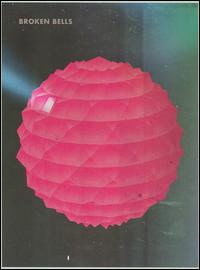
When I first played this disc I was really disappointed by it.  I’ve grown to expect crazy magic from Danger Mouse, and I assumed that this collaboration with James Mercer of The Shins would be crazy awesome.  But it seemed very mellow to me.  Mellow in a way that just kind of sat there.  So I put it aside for a while.

Then I listened to it again a little later and I found that I really liked it this time.  In fact, it rapidly grew into one of my favorite releases of 2010.

The disc is a wonderfully paced mixture of acoustic guitars, interesting keyboard sounds and, often, downright bizarre electronic choices (subtle, yet bizarre).  The weird sounds that open the disc, a kind of backwards keyboard, are disorienting but also very catchy.  And the song itself is instantly familiar.  It’s followed by “Vaporize” a simple acoustic number that bursts out with some great organ and (very) distorted drums.  It also features a fascinating horn solo!

“Your Head is on Fire” settles things down a bit with a mellow track which, after some cool introduction, sounds like a  pretty typical sounding Shins track (ie, very nice indeed–and more on this in a moment).

“The Ghost Inside” feels like a ubiquitous single.  I’m not sure if it is or if it’s just so catchy (with dancey bits and hand claps and a great falsetto) that it should be everywhere.  “Sailing to Nowhere” reminds me, I think, of Air.  And the great weird drums/cymbals that punctuate each verse are weird and cool.

One of the best songs is “Mongrel Heart” it opens with a western-inspired sound, but quickly shifts to a quiet verse.  The bridge picks up the electronics to add a sinister air (and all of this is accompanied by nice backing vocals, too).  But it’s the mid section of the song that’s really a surprise: it suddenly breaks into a Western movie soundtrack (ala Morricone) with a lone trumpet playing a melancholy solo.  And this surprise is, paradoxically, somewhat typical of the disc: lots of songs have quirky surprises in them, which is pretty cool.

Having said all this, there are a few tracks where it feels like the two aren’t so much collaborating as just playing with each other.  And that may have been my initial disappointment.  I was expecting a great work from a combined powerhouse, and I think what we get is two artists writing great stuff while seemingly respecting each other too much to step on each others toes.

There is another Broken Bells disc in the works.  And I have to assume that they’ll feel more comfortable with each other and simply knock our socks off next time.  But in the meantime we have this really wonderful disc to enjoy.

[READ: October 21, 2010] The Broom of the System

It dawned on me sometime last summer that I had never read DFW’s first novel.  I bought it not long after reading Infinite Jest and then for some reason, never read it.  And by around this time I had a not very convincing reason for not reading it.  DFW seemed to dismiss his “earlier work” as not very good.  I now assume that he’s referring to his pre-Broom writings, but I was a little nervous that maybe this book was just not very good.

Well I need not have worried.

It’s hard not to talk about this book in the context of his other books, but I’m going to try.  Broom is set in the (then) future of 1990.  But the past of the book is not the same past that we inhabited.  While the world that we know is not radically different, there is one huge difference in the United States: the Great Ohio Desert.  The scene in which the desert comes about (in 1972) is one of the many outstanding set pieces of the book, so I’ll refrain from revealing the details of it.  Suffice it to say that the desert is important for many reasons in the book, and its origin is fascinating and rather funny. (more…)

Read Full Post »

SOUNDTRACK: FUCKED UP-Couple Tracks: Singles 2002-2009 (2010).

I knew of Fucked Up from a cover shoot on Chart Magazine. Clearly, they are aiming for major pop success and massive radio airplay.

Their live shows sounded amazing.  And, of course, everything about them seemed unpredictably wonderful.

This is a collection of singles (although not singles in the “pop chart” sense).  Fucked Up released more singles than anything else.  In fact their discography is borderline impossible to keep straight, they have so many small releases on so many small labels.

There is definite growth over these two discs (maybe not maturity, but growth).  The first track, “No Pasaran” is an ugly shouty noisy mess (pretty much straight hardcore). Over the course of these singles, Pink Eyes, the singer, refines his voice and he sounds a bit like Dicky Barrett of the Mighty Mighty Bosstones (still rough, but more melodic).  The music on the other hand pretty well stays in the hardcore mold.  But by the end (and it is most notable on disc two) the band’s energies branch out into guitar riffs and notable melodies.

The rest of the band includes Concentration Camp and 10,000 Marbles on Guitars, Mr Jo on Drums and Mustard Gas on Bass.

This collection of singles includes most of their shorter tracks (since they were on 7″ vinyl).  But on their 2006 release Hidden World (which I have not heard), most of the songs are over 5 minutes, with one reaching 9.  So they’re even fucked up by hardcore standards.  Cool.

This collection is definitely not for everyone, but it’s worth checking out if you like your core hard and weird.

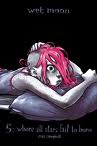
[READ: May 27, 2010] Wet Moon 5

Holy cow!  This book ends on an amazing cliffhanger!  Beloved Trilby is put in mortal danger, and from what we see, I can’t imagine how she’ll survive.  Gasp!

By this time, Campbell is well on his way to a long, twisted epic series.  One only wonders how long he has this story arc planned out.  It seemed so simple at first: a buncha goth girls hanging around a college, with the worst thing that happens is someone puts up a flier about you or your cat goes missing.

Now the stakes are higher.  I’m not entirely sure that I like the path that this story is following.  I mean, don’t get me wrong it is super exciting.  I just don’t want Wet Moon to turn into Friday the 13th or some other kind of “crime & superhero” story.  What happens to Trilby is pretty intense.  I just hope it won’t destroy all of the characters. (more…)

Read Full Post »

SOUNDTRACK: RUSH-Permanent Waves (1979).

When my friend Doug and I were hanging out back in the 80s, we both were getting into Rush at the same time.  And because this album was in black and white this was the last Rush LP we bought.  Imagine our surprise when it turned out to contain “The Spirit of Radio” one of the best hard rock anthems ever.

The cover art also featured a newspaper that read Dewey Defeats Truman.  But the band got in trouble for it from the Chicago Tribune!  I’ve never actually seen an actual cover with that headline (or the proposed fix: Dewei Defeats Truman).  Huh, thanks internet, here’s a picture of it.

The disc  also contains some (more) of my favorite Rush tracks.  “Freewill,” a fantastic “smart” song features some insane guitar and bass work in the middle sections.  And side one ends with “Jacob’s Ladder,” a 7 minute mini epic with precious few words that really evokes the simple concept of the sun’s rays bursting through clouds.  It’s surprisingly moving.

Side two features two more short tracks: Entre Nous suffers from side two syndrome: it would have been a hit if it was on side one.  While “Different Strings” is probably the last mellow song the band would write until the acoustic tracks on Snakes and Arrows.

For me, the best song is “Natural Science.”  A three-part mini 9 minute mini epic that features very cool lyrics, acoustic and electric guitar, a mid-song (short) drum solo and an incredibly intense heavy metal section.  And I have been really really psyched that they play this live again.

This disc marks an interesting transition from the prog rock heyday to the poppier commercial side that would soon arrive.  It’s a great mix of truly classic classic rock, real virtuoso performances and a couple of nice pretentious epics.  You’ll but it for Spirit of Radio, but you’ll get hooked by Natural Science.  “A quantum leap forward, in time and space….”

[READ: Week of March 29, 2010]  2666 [pg 565-633]

Before I start with the final week of the Crimes, I wanted to acknowledge everyone else who has been doing a great job in the endurance-o-rama that is the winter/spring 2666 online readathon.  I have been terribly remiss in mentioning (and even reading) as many of these posts as I would have liked (oh where does the time go).  But there’s some folks who have been doing a great job bringing up issues and suffering through The Part About the Crimes with me.

Obviously our friends at Bolanobolano are hosting this event and keeping wonderful track of details that I’m too exhausted to do myself.

And of course, the cohosts in Crimes, Infinite Zombies, are keeping tabs on all manner of thoughtful aspects of this book.

Steve, who I often read on IZ, also posts at his own site: A Solipsist’s 2666.

The Daily Snowman has been offering interesting thoughts, as well as a Paragraph of the Week (often from 2666).

Naptime Writing always offers thoughtful comments as well as a quote of the week.

Bleakonomy offers brief summaries and ideas, as well as non-2666 related thoughtful ideas.

Alone with Each Other offers that rarest of birds: someone who really likes The Part About the Crimes.

I haven’t been reading these blogs as much as I would have liked (and maybe someday I’ll post a comment to one of them long after we’ve all finished reading), but what I’ve read, I’ve appreciated.  So thanks for keeping me company out here.

And on to the last (and best) section of the Part About the Crimes.

I don’t know if the slow plodding death after death was like climbing a hill, but these last 68 pages were like speeding downhill with the top down.  So much was packed into it.  I was totally rejuvenated, thrilled to meet new (!) characters and totally unsurprised when the Part ended and absolutely nothing was resolved. (more…)

Read Full Post »

SOUNDTRACK: RUSH-Caress of Steel (1975).

Despite the fact that this album is largely considered a failure, it’s one of my favorite Rush albums.  There’s so much weirdness about it that I can see why it isn’t terribly popular but there’s so much goodness that it makes me a bit bummed that some glorious tracks are overlooked.

It opens with the one track people know from the disc: “Bastille Day,” a rough raw rocker that is heavy and really sets the tone for the first side of the disc. The heavy heavy riff is reminiscent of Black Sabbath and other early metal pioneers.  I also learned that they were touring with Kiss around this time, so maybe that’s where they got some of their heavy riff ideas from. I of course cannot imagine Rush and Kiss touring together.  That must have been a real trip.

The second song, the amusing “I Think I’m Going Bald” is rather obvious, especially the way he delivers the title line, but man the guitar solo just rocks and rocks and rocks.  “Lakeside Park,” a real location outside of Toronto is a gentle tribute to youth.   This quote amuses me no end, and is something I just read about.

The first real highlight for me is “The Necromancer,” a wacked out 12-minute mini epic.  It opens with a spoken word introduction, setting the tale of three travelers fording a river. The first part is pure psychedelia, with screaming guitars going from ear to ear.  The second part is heavy with a slow pounding riff and Geddy’s screamed vocals  It features a long headphone-happy guitar solo.  And just when you think it’s over, there’s some crazy sound effects and, yes more guitar soloing.

The third and final movement sees the return of By-Tor from “By-Tor and the Snow Dog.”  By-Tor is now a good guy and he scares off the Necromancer.  I always enjoyed playing this part on the guitar as the chord progression is really pretty.

Side Two is one song, a full side, their first proper epic. Called “The Fountain of Lamneth” it focuses on a man’s quest for this elusive Fountain.  It has six parts.  The first, “In the Valley” is a pretty, acoustic ballad that expands into a loud rocker.  It introduces our anonymous narrator, and by the end its sets the tone with a loud/quiet explanation of his satisfaction and dissatisfaction with his life.

It’s followed by the insane “Didacts and Narpets” (Teachers and Parents (anagram on Narpets).  It’s just drums and shouting.  Evidently it’s designed to show a young man fighting with teachers and parents, and sure why not.  It’s pretty out there, but it’s only 90 seconds long.  (I’ve always enjoyed it).

The middle sections are really quite mellow.  More of that beautiful classical guitar that Alex does so well.  The songs don’t remain mellow the whole time, with “No One at The Bridge” adding some loud aggressive bits.  But “Panacea” stays quite mellow, with some beautiful guitar harmonics.  The next bit, “Bacchus Plateau” is a really pretty song despite its ultimately downer message, and probably could have been a hit if tit weren’t part of  20 minute song..

The song ends with him finding the fountain.  And yet rather than rejoice, he’s exhausted.  But I’ve always enjoyed the “message” of the song: “Life is just a candle but the dream must give it flame.”  It’s inspirational and depressing at the same time.  It ends with a reprise of the opening acoustic bit. It’s a tidy song and a wonderful first attempt at an epic track.

The only reason I’m surprised this didn’t sell well is that it works so well as a trippy 70s disc, ideal for sitting around with headphones on in one of those round chairs.  I assume its the heaviness that turned away fans of Pink Floyd and the like.  And, well, probably the downer message and really weird title of the disc (what does Caress of Steel mean anyhow?) might have had something to do with it.

[READ: March 10, 2010] Rush, Rock Music and the Middle Class

I read about this book in an article from The Walrus. And I thought to myself, it’s geeky enough to love Rush, but how about reading an academic treatise about Rush? I’m so there.

Well, I haven’t really read a truly academic (as in published by a University Press) book in a while, but it didn’t take too long to get back in the swing of things.  Plus, if I may be so bold, ethnomusicology seems like a lot more fun than philosophy.

As the subtitle implies, this book looks at Rush as music for the middle class.  The only thing I had a hard time with the book was the definition of middle class.  It is specifically aimed at a U.S./Canadian middle class (although the UK does enter into it too), and with all of the definitions thrown around, middle class seems very broad.  The easiest breakdown to see was based on employment and the most prominent type of employment among Rush fans was “professional” (including librarians and IT people).  So, evidently I am middle class.  I only say this because for the most part classes are hidden in the US (they aren’t, of course, but there are many attempts to try to keep them hidden).

This concept of class obviously pervades the entire book.  But before we get too hung up on that, we must not forget that the real focus of the book: the music of Rush. (more…)

Read Full Post »

SOUNDTRACK: ARCADE FIRE Austin City Limits (2007).

Recorded in support of Neon Bible, this concert blew me away.  I enjoyed Neon Bible quite a lot, but seeing the band in this concert setting was really amazing. The band was so exciting live.

From Win Butler’s intense performance (both on stage and in the audience) to his wife, Régine Chassagne’s multi-instrumental extravaganza (even if she does look like Susie Essman when she’s about to go off on a foul-mouthed tirade).  To the exhausting and exhaustive rest of the band.  They never stop.  Even when they’re not playing anything, the are happy to join in on a random drum or cymbal.

Plus, how many bands do you get to see play the hurdygurdy?

There’s just so much going on onstage with this band (and of course they throw in little video screens as well!).  And when Win grabs his mike stand and moves literally into the audience to finish one of the last songs, it was really invigorating (and would have been very exciting to have been in the front row there).

Even though it was televised, I felt like I was there.  Oh, and it wasn’t just the theatrics, the band sounded amazing too.  If I ever get the chance I hope to see them live, myself.

[READ: February 11, 2010] Wet Moon 2

I finally received Wet Moon 2 & 3 in the mail the other day.   I was quite excited to get to them.  And Volume 2 did not disappoint.

It is very apparent from Volume 2 that Campbell is in it for the long haul.  Which is one way of saying that not very much “happens” in this book.  Several plot threads from book 1 are teased out a bit, but nothing conclusive happens anywhere.

But that’s not to say that nothing happens at all.  We learn the identity of the long-haired person whom Cleo runs away from in book one (an ex). We learn a little back story (and about a curious upside-down contraption from the person with no hair (who is named Fern).  We learn that Wet Moon is full of more and more bizarre characters, and that there’s an FBI agent around town.  We also learn that another Cleo Eats It sign has been found, although we don’t know anything more about who did it.

(more…)

Read Full Post »

SOUNDTRACK: MUSE-The Resistance (2009).

If someone were to create a band that tickled all of my fancy spots, on paper it would be Muse.  Vocals like Thom Yorke from Radiohead.  Heavy heavy guitars.  And yet, not afraid to have prog rock keyboard sections.  On top of that, throw in pretentious titles (how about a subtitle in French?), or, just for kicks, a three part suite called “Exogenesis: Symphony.”  Oh, sure and let’s just throw in a clarinet solo in one of the songs too.  Okay, so that’s Muse.
I’ve been a fan of Muse for quite a few years, before they really broke in the U.S. (Origin of Symmetry being a particular favorite).  I’m still amazed that they’ve had success here, given their proclivities towards excess.  But more power to them.

For some reason, this disc (despite all the pros in the first paragraph) didn’t really grab me that much at first.  The first single “Uprising,” is awesome: heavy, rocking, over the top choruses, everything you could want in a pseudo political rebellion type song.  But somewhere after that I felt the disc drifted a bit.

Further listens changed my mind though, and I think that “United States of Eurasia” is great while “Guiding Light” (which could easily be mistaken for Queen) is fantastic.  In fact the entire end of the album, “MK Ultra,” “I Belong to You/Mon Coeur S’Ouvre a Ta Voix” and the symphony are a wonderfully decadent 25 minutes of music.

Clearly Muse isn’t for everyone, but I’m really pleased that they’re finding their fans.

[READ: Week of February 1, 2010] 2666 [pg 102-159]

This week’s reading contains a lot of dreams and it often felt like a dream while reading it.

We pick up right where we left off, with El Cerdo telling our friends about his visit with Archimboldi.  We learn a little about why Archimboldi called El Cerdo, but nothing about what he was doing in Mexico City. It turns out that El Cerdo knows Archimboldi’s publisher Mrs Buber. (And Dieter Hellfield speculates that she, herself, may be Archimboldi. [I secretly wondered if he might be a woman given that earlier in the book, it was mentioned that [part of what was so unusual about Archimboldi’s name was that it was a feminine form of the name.]  However, his incredible height has definitely thrown me. And of course, since El Cerdo reports to have talked to him, it seems very unlikely at this point.) (more…)

Read Full Post »

SOUNDTRACK: THURSTON MOORE-Trees Outside the Academy (2009).

Thurston Moore is a founding member of Sonic Youth.  He’s put out several solo albums over the year, although I feel like only two really “count,” Psychic Hearts and this one.

Anyone familiar with Sonic Youth knows that the band has pop sensibilities but that they bury their poppiness under layers of guitars or noise or other things.  And everyone knows that Thurston is one of the main noisemakers (you don’t put screwdrivers under you guitar strings and expect to break the top 40).  So it may come as some surprise just how accessible and poppy this record is.  In fact, I first heard one of the songs on a Radio compilation (true it ‘s an awesomely hip radio station…88.5 WXPN Philadelphia), but I couldn’t get over how supremely sweet the song “Fri/End” was.

And, although there are a few noisy moments on the disc (Thurston loves his feedback squalls), the large majority of the disc is really catchy almost folky indie music (acoustic guitar and violins!).  But it’s important to mention that Dino Jr’s J. Masics is also on hand and that he plays some wild solos on about half of the tracks (most of the longer instrumental pieces).  Like on the the title track, a nearly 6 minute instrumental that has a great melody; the middle section just screams with a great Mascis solo.

Okay, so technically that’s not the final track.  “thurston @13” is a home recording from when the man was 13 years old.  It’s him recoding various things around his house (spraying Lysol, dropping coins) with hilariously pompous 13 year old narration.  It reminded me of me when I was kid and got hold of the family tape recorder–I used to record myself doing all kinds of weird kid things (I wish I still had those tapes).  It’s just silliness, but I really enjoyed it.

Even if you’re not particularly a fan of Sonic Youth, this is a worthwhile addition to any record collection.

[READ: Week of January 25, 2010] 2666 [pg 52-102]

As this second section opens, we see Norton and Morini still together during his visit.  She takes him to an area of London that has become trendy, and features great restaurants.  She relates the story of the first famous person to move there, a painter named Edwin Johns.  Johns is famous mostly for one painting but its notoriety led it to sell for a ton of money.

As this week’s reading draws to a close, we get a wonderful parallel story about this very painter.  Espinoza, Morini and Pelletier travel to the sanitarium where the painter is currently residing.  Morini is compelled to ask the man one very specific question.

For in the story that Norton related, she revealed that Johns chopped off his hand, had it embalmed, and placed it at the center of his one masterpiece painting.  This painting became the centerpiece of a very successful exhibition.  Morini is queasy during Norton’s story and when he later confronts Johns at the sanitarium, he demands to know why Johns cut off his hand.  As this section draws to a close, Johns reveals to Morini that the answer is, simply, money.

But fear not, Archimboldi fans, the man is not forgotten, and the next revelation about him comes from an unlikely source.  A Serbian writer reveals some tactile information that sheds light on Archimboldi himself.  One of the details is that he bought a plane ticket flight but never showed up for the flight.  The Serbian writer believes it was because he canceled the flight under the pseudonym and then rebooked the flight under his real name.  Although Pelletier published the article in his journal, further scrutiny by himself and Espinoza lead them to doubt its credibility or use. (more…)

Read Full Post »

SOUNDTRACK: DO MAKE SAY THINK-Other Truths [CST062] (2009).

I’ve always enjoyed Do Make Say Think’s CDs.  They play instrumentals that are always intriguing and which never get dull.

But this CD far exceeds anything they have done so far (and  they’ve done some great work).   There are only four tracks, and they range from 8 to 12 minutes long.  Each track is named for a word in the band’s name: Do, Make, Say, Think.  And each one is a fully realized mini epic.

“Do” sounds like a gorgeous Mogwai track.  While “Make” has wonderfully diverse elements: a cool percussion midsection and a horn-fueled end section that works perfectly with the maniacal drumming.  “Say” is another Mogwai-like exploration, although it is nicely complemented by horns.  It also ends with a slow jazzy section that works in context but is somewhat unexpected. Finally, “Think” closes the disc with a delightful denouement.  It’s the slowest (and shortest) track, and it shows that even slowing down their instrumentals doesn’t make them dull.

It’s a fantastic record from start to finish.  This is hands down my favorite Constellation release in quite some time.

[READ: December 2009 – January 13, 2010] McSweeney’s #33.

The ever-evolving McSweeney’s has set out to do the unlikely: they printed Issue #33 as a Sunday Newspaper.  It is called The San Francisco Panorama and, indeed, it is just like a huge Sunday newspaper. It has real news in (it is meant to be current as of December 7, 2009).  As well as a Sports section, a magazine section and even comics!

[DIGRESSION] I stopped reading newspapers quite some time ago.  I worked for one in college and have long been aware that the news is just something to fill the space between ads.  I do like newspapers in theory, and certainly hope they don’t all go away but print issues are a dying breed.  When I think about the waste that accompanies a newspaper, I’m horrified.  Sarah and I even did a Sunday New York Times subscription for a while, but there were half a dozen sections that we would simply discard unopened.  And, realistically that’s understandable.  Given how long it took me  to read all of the Panorama, if you actually tried to read the whole Sunday paper, you’d be finished the following Sunday (or even two Sundays later).

Their lofty goal here was to show what print journalism can still do. And with that I concur heartily.  Even if I don’t read the newspaper, the newspapers as entities are worth saving.  Because it is pretty much only print journalism that finds real, honest to God, worthy news stories.  TV news is a joke.  There is virtually nothing of value on network TV.  Fox News is beyond a joke.  CNBC is sad (although Rachel Maddow is awesome!) and even CNN, the originator of all of this 24 hour news nonsense still can’t fill their airtime with non-sensationalized news.

Obviously, there are some decent internet sites, but for the most part they don’t have the budget to support real news investigation.  You either get sensationalized crap like Drudge or rebroadcasts of real news.

So, print is the last bastion of news.  And you can see that in journalistic pieces in The New Yorker, Harper’s, The Walrus, Prospect and, yes, in newspapers.

But enough.  What about THIS newspaper?  Oh and unlike other McSweeney’s reviews I’ve done, there is NO WAY that I am writing a thorough comment on everything in here.  There’s just way too much.  Plus, there are many sections that are just news blurbs.  Larger articles and familiar authors will be addressed, however.  [UPDATE: January 18]: If, however, like Alia Malek below, you bring it to my attention that I’ve left you out (or gotten something wrong!) drop me a line, and I’ll correct things.

There is in fact a Panorama Information Pamphlet which answers a lot of basic questions, like why, how and how often (just this once, they promise!). There’s also a Numbers section which details the size, scope and cost of making this (it shows that with an initial start up, anyone could make a newspaper if they talked enough about what the readers were interested in). (more…)

Read Full Post »

« Newer Posts - Older Posts »