Feeds:
Posts
Comments

Archive for the ‘Translation’ Category

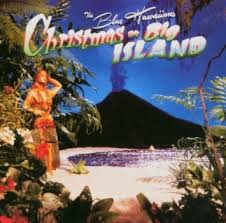
profSOUNDTRACK: THE BLUE HAWAIIANS-Christmas on Big Island (1995).

blue ha I was to get this disc used because I already knew one of their songs and I thought that a surfing Christmas album would be fun.

So I was pleased to add this to our collection.  But upon listening to it, I learned that while I enjoy surf guitar instrumentals, I do not enjoy the Hawaiian style of music popularized by Elvis.  This album features both of these types of songs.

The songs that I like include these instrumental surf guitar renditions: “Christmas Time is Here” (the Peanuts song); “White Christmas,” “Jingle Bells” (the guitar is a little too untamed for my liking in this version).  “Have Yourself a Merry Little Christmas” is a good instrumental, but there’s a very lengthy middle section that makes the song too long.  “We Four Kings (Little Drummer Boy)” is my favorite track on the album and the one that made me look into more from them.  It’s a great surf guitar rendition of “We Three Kings” with some excellent tribal drumming as a segue into a surf version of “Little Drummer Boy.”

The vocal songs are fine, they’re just not my style.  “Jingle Jangle” and “Blue Christmas” are just way too Elvis-y for my liking (we actually just watched some of Blue Hawaii so it’s in my head).  “Big Island” stars with Hawaiian style drums which I like, then it turns into a kind of blues song.  “Mele Kalikamak” is my favorite song with vocals, probably because of its nontraditional nature (to me).  It ends with about 20 seconds of waves breaking.

“Enchanted Xmas” ends the disc with some Western sounding guitars and some cool wordless backing vocals.  It gives the whole thing an eerier (or enchanted) feel.  Pretty cool.

So something of a mixed bag, but a great album to select tracks for a fun Christmas mix.

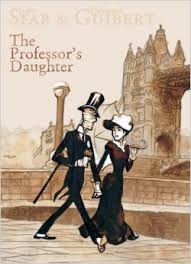
[READ: December 15, 2014] The Professor’s Daughter

From the team who brought us Sardine comes this very different kind of story.  Interestingly, in this book, it is Sfar who wrote it and Guibert who drew it.  And I have to say I like it a lot more than the Sardine books (both in content and drawing style).

The story is quite unexpected.  As it opens, a young lady (in Victorian times) is seen stepping out with, well, with a mummy.  It turns out that he is Imhotep IV and she has taken him from his holding spot and is going about town with him.  (And no, it isn’t all a dream.  At least I don’t think it is).

They go out for tea (which makes him tipsy).  He causes all manner of mayhem, including offending someone who slaps his face and challenges him to a duel.  Later when the police come, the professor’s daughter takes matters into her own hands (which only makes the situation worse!).  A man is killed and the mummy is the suspect (which leads to a few very funny scenes). (more…)

Read Full Post »

novocSOUNDTRACK: BUKKENE BRUSE-The Loveliest Rose (2002).

bruseI’m not entirely sure how I came to own this disc.  But I’m so glad I do.  This is a Christmas album from one of Norway’s traditional ensembles (pronounced: BUH-kayna BREW-sah).  They have been around since the 1990s and have toured extensively around the world.  This is their only Christmas album.  It was recorded in an Oslo church.

The album features four players on some great traditional instruments: Arve Moen Bergset – vocals, violin & Hardingfele; Annbjørg Lien – Hardingfele & nyckelharpa; Steinar Ofsdal – flute; Bjørn Ole Rasch – pipe organ.

The album is a wonderful collection of music.  I prefer the instrumentals, although Bergset does have a lovely singing voice.  What I found most interesting is that the sound of the music conveyed many non-Norwegian feelings.  I heard some Irish sounding traditional music and even some Native American (the flute in the final song).

The pipe organ sounds amazing and the fiddle, especially on “Father Fiddled on Christmas Eve” is fantastic.

Nine of the songs are traditional, the rest are written by the band, aside from St. Sunniva, the opening of which comes from ELP’s “Karn Evil 9, 3rd impression (I kid you not–it is quite stripped down here).

I really love this non-traditional traditional Christmas album.  I’m including the track listing mostly because I wanted to have all of this Norwegian in a post.

  1.   A Child Is Born in Bethlehem «Eit barn er født i Betlehem» (3:18) [great flute and a surprisingly catchy hallelujah]
  2.   Lullaby for Julie «Lullámus» (3:15) [great sound of the Hardanger fiddle which has two drone strings]
  3.   Spirit of the Grove «Haugebonden» (5:14) [a gorgeous melody]
  4.   Christmas Eve «Juleftan» (3:38) [unusual fiddle sounds and an unusual and captivating melody]
  5.   My Heart is with Jesus «Mit Hjerte Altid Vanker» (6:32) [the pipe organ really elevates this song]
  6.   St. Sunniva «St. Sunniva» (3:44) [organ and fiddle together in this Irish sounding song]
  7.   A Little Child So Pleasant/In the Sweet Christmas Time «Et lidet barn saa lystelig / I denne søde juletid» (7:20) [beautiful flute and solo violin]
  8.  Father Fiddled on Christmas Eve «Så spela far juleftan» (3:02) [that cool, unusual fiddle is back]
  9.  The Loveliest Rose has Been Found «Den fagraste rosa er funni» (2:35) [the voice is really great on this one]
  10.  Christmas Gangar «Romjulsgangar» (3:22) [beautiful fiddle and flute dance with some unusual sounds from both instruments]
  11. For Such Generous Gifts «For saadan’ mildheds gaver» (2:53) [a New Year’s tune that is rather haunting, I must say]

[READ: December 14, 2014] Novocento

In continuing with my obsessive reading of all things Baricco, I had to interlibrary loan this book from Johns Hopkins.

Novocento is confusingly titled because that is the Italian title as well and although it is a number (which could be translated) in this book it actually refers to a person, which would not get translated–so look carefully for the English edition (done by Oberon) and wonderfully translated by Ann Goldtsein).  It was designed as a play (and this edition is the play).  However, it is a one man monologue (with music ion the performance), so it doesn’t “read” like a play.

The book is 56 pages long.  They have also made a movie out of it (called The Legend of 1900, not just 1900 which is a different movie).  Amazingly the movie is 170 minutes (Italian version) and 120 minutes (international).  That must be a lot of music.

The story is simple, Novocento, as he is called, was born on a ship–an ocean liner that transported people primarily from Europe to America in the early 20th century.  His parents were undoubtedly lower class and left him on the piano aboard the boat (we don’t hear their story at all).  One of the crew finds him and names him Danny Boodman T.D. Lemon Novocento.  Danny Boodman is the man who found him, T.D. Lemon was on the side of the box he was left in and Novocento was the year. (more…)

Read Full Post »

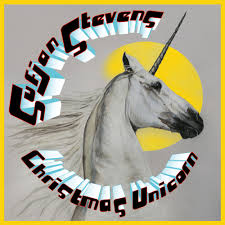
bolano SOUNDTRACK: SUFJAN STEVENS Christmas Unicorn: Songs for Christmas, Vol. X (2010).

sufjan 10This is the final disc in the second Sufjan Steven Christmas box set.  It is comprised of mostly shorter songs except for the final one which is 13 minutes long.

Interspersed in the disc are three short instrumentals (under a minute each).  “It Came Upon A Midnight Clear” “Angels We Have Heard On High” and “We Three Kings” are all pretty with flutes and minimal electronics.

The more traditional songs are “Have Yourself A Merry Little Christmas” which sounds very much like a Sufjan song with some fun electronic sounds and orchestration and some unusual vocals.  “Up on the Housetop” features lots of drums and layered vocals. It is the standard version but tinkered with with in fun ways.  “We Need a Little Christmas” is a fun and traditional version with choral vocals.

The other three tracks are originals from Sufjan.  “Happy Karma Christmas” a slow track of mostly drums and echoed vocals. It reminds me of Beck’s discoey electronic moments.  “Justice Delivers Its Death” is based on the lyrics of “Silver and Gold” (from Rudolph) but it is a much darker song (obviously, given the title) and sounds nothing like it.

The final track is “Christmas Unicorn.”  It’s a sweet song with funny/thoughtful lyrics.  After three minutes it turns into a nice instrumental.  At the four minute mark a new refrain begins. It sounds like the song is going to fade to end, but it doesn’t. At 6:30, drums come back in and the song takes off with more singers and a fugue style of interweaving vocals.  At 7:36 a new melody is introduced which is, Joy Divisions’ “Love will Tear Us Apart.” They incorporate that into the fugue vocals and it works very well.  It’s a strange song and very unChristmassey, but it’s very cool and quite catchy by the end.

I don’t enjoy this second box set as much as the first, since it is so unChristmassey, but it has some really interesting songs on it.

[READ: December 13, 2014] Bolaño: A Biography in Conversations

I don’t often read biographies about authors I like, but once in a while one will catch my eye.  I knew Maristain’s name from Bolaño’s last published interview, so I was curious what she would do with this collection.  It was translated by Kit Maude, and I am also curious about some of the words that Maude chose to use (the word savage/savages comes up an awful lot when not referring to The Savage Detectives).  But overall it was an easy, quick read.

As the subtitle suggests, Maristain has compiled a loose biography of Bolaño based on interviews with others.  Some are interviews that she has conducted and others are previously existing interviews that she has cobbled together.  The people interviewed are primarily his family and his fellow poets/novelists/friends.

Bolaño was born April 28 1953 in Santiago de Chile.  Soon after, they moved to Valparaiso, and then other smaller towns in Chile. In 1968 they moved to the Mexico City because of his mother’s asthma (although he never set foot in Sonora, the scene of the crimes in 2666). They lived close to the Olympic park and were within walking distance of the Olympic torch during the 1968 Olympics.

He had a difficult upbringing, with his parents splitting up and his mother moving out and taking his sister with her.  Roberto, meanwhile, stayed with his father.  They eventually had a falling out and Roberto went twenty years without seeing him.  His father was a boxer and an opinionated man, and there are lots of quotes from him in the book.

In 1977 Bolaño left Mexico for Spain (and never went back) and that’s when we start getting into his publishing history. (more…)

Read Full Post »

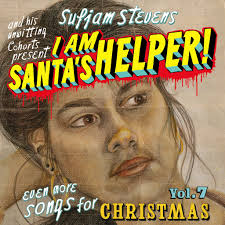
sardineSOUNDTRACK: SUFJAN STEVENS and HIS UNWITTING COHORTS present I am Santa’s Helper even more songs for Christmas Vol. 7 (2007).

sufjan 7This is the first of Sufjan’s Christmas albums to really deviate from the style of the first six.  First off, there are 24 songs on the disc and second, it is 42 minutes long.  Most of the songs are between 1 and 2 minutes, although there are a couple of longer ones too.  There are a large number of songs that are traditional sounding and which have a beautiful chorale of voices supporting it.  But interspersed with these are some nonsensical tracks that sound mostly like goofy kids songs–out of tune, hastily created, sloppy and a lot of fun (I imagine he recorded these songs with the adults’ children while they were in between takes).  It’s surprising that the songs are interspersed like they are since the serious one are so pretty and the weird ones are so weird.

 It’s a ramshackle collection with some real highlights.

“Christ The Lord Is Born” pretty piano instrumental under a minute long.
“Christmas Woman” a big song with lots of orchestration (and clocking in at over 5 minuets).  With lots of backing vocals and a crazy sloppy guitar solo. I love it.
“Break Forth O Beauteous Heavenly Light” 1 minute of piano and chorus: traditional and pretty (this is a Bach song).
“Happy Family Christmas” piano and slightly wonky guitar and after the first verse a bunch distorted chaotic nonsense (with someone “singing” a guitar solo).  The first really weirdo song on a Christmas release of his.
“Jingle Bells” Continuing with the weird style, the “dashing through the snow” part is done with a very off guitar melody and kids laughing during the “laughing all the way” part. It’s silly and funny.
“Mysteries Of The Christmas Mist” 2 minutes of piano and other noises (this is one of many short Sufjan originals).
“Lift Up Your Heads Ye Mighty Gates” another pretty choral piece with many voices.
“We Wish You A Merry Christmas” crazy nonsense of sloppy silly singing and crazy out of tune guitars.
“Ah Holy Jesus” a slow pretty piano song with chorus
“Behold! The Birth Of Man, The Face Of Glory” a slow piano number, also pretty.
“Ding-a-ling-a-ring-a-ling” raucous and wild, with crazy guitars.  It’s 2 minutes of silly nonsense. It ends with someone saying “let’s do a real song”
“How Shall I Fitly Meet Thee?” pretty piano instrumental with voices.
“Mr. Frosty Man” sloppy guitars and nonsense.
“Make Haste To See The Baby” accordion and piano in a slow sombre song.
“Ah Holy Jesus” (reed organ version) this is the second version of this song.
“Hark! The Herald Angels Sing” straightforward and pretty with some over-orchestration later in the song
“Morning” pipe organ and flute in a nice instrumental.
“Idumea” the vocal chorale comes back on this sad song.  It is over 3 minutes long and is rather disturbing.
“Eternal Happiness Or Woe” a creepy kind of song with ringing bells and sounds of, well, woe.
“Ah Holy Jesus” [a cappella] the prettiest version on the disc.
“I Am Santa’s Helper” this is a funny song in which the only words are “I am Santa’s helper, you are Santa’s slave.”
“‘Maoz Tzur’ (Rock Of Ages)” a 42 second traditional Jewish hymn done on piano.
“Even The Earth Will Perish And The Universe Give Way” a low bass organ opens this final track on this long and often times weird Christmas disc.

But this is not the weirdest of Sufjan’s Christmas EPs.

[READ: December 5, 2014] Sardine in Outer Space

Sardine is a children’s book published by First Second.  It was originally published in France (and in French) and was translated by Sasha Watson.  There are six Sardine books out.  And I fear that this is one series that I’m really not very interested in finishing.

The inner flap says No Grownups Allowed, so I imagined that the story would be funny and a little naughty.

But really it’s just kind of uninspired.  Sardine is a young girl who works with (or lives with anyhow) the pirate Yellow Shoulder (who is apparently her uncle?) on his outer space pirate ship.  They spend nearly every story (each story is about ten pages) battling the evil (and suitably stupid) Supermuscleman and his evil henchman Doc Krok (a weird orange creature who looks like a walking sweet potato).  There’s also Little Louise, a boy who is Yellow’s..henchman? and may not be all that bright and a cat creature who doesn’t really do much. (more…)

Read Full Post »

tibSOUNDTRACK: INDIGO GIRLS-Holly Happy Days (2010).

hollyhappyI know I bought this for Sarah for Christmas a few years ago (I like that it looks like a present).  Sarah and I have both been fans of the Indigo Girls (and we’ve both seen them, but at different events).  This seemed like an obvious fun record for the holidays.  But we both felt a little let down by it.

I’m not exactly sure what’s not quite right, but after listening  again, I think the record is just too much of a downer for Christmas.  I mean even the Indigo Girls’ more serious songs counterbalance with lively singing, but much of this album feels very dirge-like to me.

The main unexpected thing for me is that the record is largely bluegrass-inflected–not something I expect from the Indigo Girls–or Christmas music.

But that’s just how it opens–banjos and fiddle and whooping on “I Feel the Christmas Spirit” a song I didn’t know before.  It’s fun, just unexpected.  “It Really is (a Wonderful Life)” reminds of Barenaked Ladies for some reason (not their voices obviously). It’s folky and is another a song I didn’t know.  I like it–it’s fun having new Christmas songs.
“O Holy Night” has a very weird quality to it.  I usually love this song, but I don’t really care for the way they did this one–it feels flat or something.  Or maybe it’s the violins and folk trappings?  Actually, the middle part (with their great harmonies) sounds really good–I guess it’s just the opening I don’t like.

“Your Holiday Song” sounds more like  a”real” Indigo Girls song–great harmonies, cool chord progressions.  (This one was written by Emily Saliers, so that makes sense).  It’s the first song I really like on the disc.

It’s the middle of the disc that really loses any steam it had.  “I’ll be Home for Christmas” is certainly a sad kind of song, but their version is practically suicidal.  Oh it’s such a downer with that slow violin solo.  Who would want to listen to this version of this song?
“Mistletoe” is an Amy Ray original.  Coming right after the downer of “I’ll be Home” this one is also slow and a downer.  I find that Ray’s voice also sounds really different on this song–I would never have guessed this was her.
“Peace Child” is the third downer in a row, and you just want to give up on your festive mood after this one.

But it picks up with a rollicking bluegrass “The Wonder Song” (written by Amy Ray).  It’s the most fun song on the disc and while it doesn’t scream Christmas, it is a holiday song.

Obviously no one is making “In the Bleak Midwinter” into an upbeat poppy song.  Their version is quite pretty, and their harmonies are wonderful.

Perhaps the strangest song is their cover of Woody Guthrie’s “Happy Joyous Hanukkah.”  It feels very Guthrie, which means it should be done in a folk style (which it is).  The surprise is the full bluegrass rendition of a Hanukkah song (how many Hanukkah songs have whooping in them?  It’s fun, though.

“Angels We Have Heard on High” sounds great with their harmonies.  Although the mandolin solo kind of brings the song down to earth in a weird way.

The disc ends as it middled, with a slow, mournful song,”There’s Still My Joy.”  While I know that not everyone is happy at Christmastime, this record goes a bit too far into the darkness for my liking.

[READ: December 2, 2014] Tib and Tum Tum

Here is another translated comic.  It is done with great flair by Carol Klio Burrel who also did Nola’s World.  This story is aimed more at kids though (but is not existential at all–see yesterday’;s post about translated stories).  The biggest surprise for me with this is that it is actually a series of one page strips rather than a long graphic novel (I think).  Well, there is a long story arc, but every page seems to have a “punchline” as if the story was sequential rather than continuous.

It’s a very simple premise. The book is set in caveman days.  Tib is a small boy with a giant birthmark on his face.  The other kids make fun of him for this.  His mother is overprotective (the joke about him always being safe is very funny) and his father is an oblivious storyteller (whoppers of tales, I must say).  In that first strip, Tib runs into Tum Tum, a baby dinosaur.  He is adorable (and a little scary too, of course).  And Tib decides that this red guy is pretty cool.  Tum Tum spends most of his time chasing (an eating) butterflies.

When Tib tells the elders about the dinosaur they tell him of course that dinosaurs are extinct.  (I love that the story is set in caveman times but that they talk in a more or less contemporary way (no grunting) and are knowledgeable (there’s a sewing joke which is very funny).  When he tries to show Tum Tum to them, the dinosaur hides so no one can see him.  Eventually his mom thinks he has an imaginary friend. (more…)

Read Full Post »

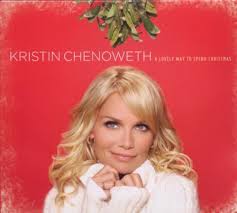
aamaSOUNDTRACK: KRISTIN CHENOWETH-A Lovely Way to Spend Christmas (2008).

chenoLast year I thought about doing a Christmas CD every day in December as my soundtrack.  But I forgot until a week or so in.  But this year I remembered.  Yuletide joy!

Since Sarah and I have a lot of Christmas CDs from over the years, I decided to just pick some at random this year.  And we start with this one which I got for Sarah I thought last year, but if it’s from 2008, perhaps I got it earlier?

I knew Chenoweth from her great role on Pushing Daisies.   I didn’t know she was a singer then.  She has since done some amazing runs in various roles and her voice is great.  This disc features a mix of traditional songs, a few more religious songs and a number of unexpected “mashups.”  It works pretty well, although it tends to cross the line into cheese a bit too much for me.

“I’ll Be Home for Christmas” has her in great voice.  Although I hate the cheesey sax solo.
“Christmas Island” is a new favorite song for me.  Her version is fun (although the original Hawaiian version is much more fun).
“The Christmas Waltz” is a song I don’t know.  It is probably best song on the disc.
“Do You See What I See” also suits her voice very well.  It’s the first song to mash in another song (“Angels We Have Heard on High“) which is quite pretty
“Sleigh Ride/Marshmallow World” I like her part, I’m not sure about the blend.  I don’t know who John Pizzarelli is, but he sings it too clean.  The original of “Marshmallow World” is sung in an almost drunken fashion which makes the weird lyrics better.   Nevertheless, the two of them have a good vocal chemistry.  And there’s some goofy fun at the end.
“Sing” (you know, sing, sing a song).  It’s a really weird inclusion here.  But she sounds great.
“Silver Bells” also sounds great.
“Come On Ring Those Bells” is another song I don’t know.  This version is way too pop country for my liking.
“What Child is This” is also perfect for her voice.
“Home on Christmas Day” is another song I don’t know (who knew there were so many unfamiliar Christmas songs?), and it works well “Born on Christmas Day” is a rather dull more religious song, which seems somehow out of place.
“Sleep Well Little Children/What a Wonderful World” is another mash up. It works pretty well and I kind of get why she chose it to end the album, but it’s another weird non-Christmas related song.

So overall this is a decent Christmas album. There’s some lovely traditional songs, some odd choices, and a few clunkers.  But her voice is really fantastic throughout.

[READ: November 29, 2014] Aama

I’m surprised and delighted with how many unusual, translated graphic novels are being published in the States these days.  There’s always something about the art that screams “not American.”  So when I get books like this (especially if the author’s last name is Peeters), I immediately look for the translator to confirm my suspicions.  This book was translated by Edward Gauvin.

While translated childrens book often seem slightly weird to my family (fun, but always slightly askew), the graphic novels don’t usually seem as weird to me.  (Maybe the childrens authors just expect more existential thought from their kids).

Having said all of that, I found that I really couldn’t get into this story.  There were some great elements to it, in both storytelling and character creation, but, and maybe more will be explained in future books, but the main plot was a little too vague to me.

But I loved the way it was constructed.  We open on a man face down.  As he comes to, he realizes that he has no idea who he is.  While he tries to get himself together, a weird looking ape comes up and calls him Verloc.  The ape has no hair on his legs (so they look human).  The ape is named Churchill and he is a custom built robot.  As Verloc tries to come to grips with what’s happening, Churchill gives him his “memoirs” to read.  The book is “real paper” which Verloc appreciates.  And they started just a week ago.

Pretty cool opening. (more…)

Read Full Post »

harpjuneSOUNDTRACK: FATHER JOHN MISTY-“Bored in the U.S.A.” (2014).

 boredNot a cover of the Clash song (“I’m So Bored with the U.S.A”) this is a piano dirge about the materialism of American culture.

I loved Father John Misty’s debut, and the way it addressed serious topics but with beautiful songs and Misty’s wonderful voice.  But this song is a dark and dreary tale of life in contemporary America.  Father John laments about, well, just about everything:

I’ve got all morning to obsessively accrue
A small nation of meaningful objects
And they’ve got to represent me too

or

Now I’ve got a lifetime to consider all the ways
I’ve grown more disappointing to you
As my beauty warps and fades

with the staggering next line

I suspect you feel the same

Te melody is pretty, but solemn (there’s no ironic poppy chord structure for this lament).  Rather, it’s a slow minor key piano melody with Misty’s beautiful aching voice drifting over the chords: “Save me white Jesus.”

By the next verse, while the melody and singing stay at the same pace, he adds a laugh track to his life: “They gave me a useless education / A subprime loan, Craftsman home / Keep my prescriptions filled / Now I can’t get off, but I can kind of deal / Oh, with being Bored in the USA.”

If this is the single, what can the album have in store?

 Save me President Jesus.

[READ: November 17, 2014] “Long in the Tooth”

This is a Czech story (translated by Stacey Knecht) written by Hrabal (who died in 1997).  I don’t know anything about him except that he wrote “many novels.”

But this story I find quite puzzling.  It’s not hard or complicated, indeed, it is quite a straightforward piece.  I’m just puzzled by why he wrote it (unless the conceit of false teeth was so novel that it needed to be written down).

In this story, the main character (who is a woman although that isn’t revealed until quite late in the story) is marveling at how she (and her husband) have aged without them realizing it.  She says that suddenly she was sixty and then sixty-five when she contracted paradentosis (which can cause massive tooth loss). (more…)

Read Full Post »

silkSOUNDTRACK: STARS-Heart (2003).

stars I found out about Stars with their second album but I like their debut quite a lot too.  There’s a few songs that i don’t love, but overall the album is really solid.

The opening synths belie the beautiful guitar (and nice bass work) of “What the Snowman Learned About Love.”  Singer Torq’s voice is low and muted while other singer Amy Milan has gorgeous  harmony vocals.  “Elevator Love Later” features’ Milan on lead (for some verses)–the album really comes to life with this song.  It’s got a great chorus and a cool bass line that elevates the song above typical pop fare.

“Heart” has a melancholy piano riff (something Stars excel at) and some wonderfully poignant lyrics: “Sometimes the TV is like a lover, singing softly as you fall asleep.”  And yet it, once again, has a really catchy chorus (with lots of “All rights”).  “Woods” is mildly orchestral and has a plaintive vocal line and a sampled spoken word section (which I can’t identify).

“Death to Death” is one of my favorite Stars songs.  A slinky discoey song with Torq’s cool verses and Milan’s sultry “I am destroyer I am lover” chorus.  I love the sound of the next song (synthy flutes and the very clear guitar) that play throughout “The Vanishing” even though I don’t love the song.

“Romantic Comedy” surprises with its baritone guitar sound (instead of the sprightly synths), but the chorus is once again super catchy.  There’s some great lyrics in this song as well: “You’re not bad, but you were just badly raised,” and the chorus “don’t walk away then turn and say I love you anyway.”  “Time Can Never Kill the True Heart” is a beautiful song with a lovely sentiment.  “Look Up” is a pretty Amy Milan sung song.  I love the way the chorus’ words don’t pause for breath even though the song itself is not very fast.  “Life Effect” is pretty song sung by Torq (I really like when the guitars come to the fore even though I think of Stars primarily as a synth band).

stars other“Don’t Be Afraid to Sing” is the final song on the album,.  It’s a simple ballad, and once again the bass line is great–nothing fancy but it’s a great melody behind the guitars and vocals.  It’s got a great ending of an album sentiment: “We all come to an end / And we all end together.”

There’s a “bonus” track on my version of the album (cleverly hidden about 20 seconds after the previous song).  It has a with a great hidden bonus track title–“The Comeback.”  It actually sounds perfect with the album–an instance where a bonus doesn’t really feel tacked on.  It’s a nice addition if you can’t get enough of the band.

Incidentally, the American version has the reddish cover above, while the original cover is this black and white one down here.

[READ: November 17, 2014] Silk

I enjoyed Mr Gwyn so much that I wanted to read more by Baricco.  And when I saw that many of his books are so short, it  was easy to grab them and devour them.

I didn’t know anything about Silk–somehow I missed it when it came out.  It was even made into a movie, so it must have been a big important book (and it was a huge best seller).  So imagine my surprise to see that the book is 91 pages and that each chapter is basically one page (sometimes half a page).   And Baricco creates this beautiful, taut story that is really compelling, in what is really only about 70 pages of text.

I’ve admired Baricco’s ability to write gorgeous novellas, and this must be where it all started (his earlier books are somewhat longer than this).  The fact that none of his stories are about similar things is also pretty amazing.

This story is about a Frenchman who makes his fortune buying silkworm eggs and the lengths and distances he is willing to travel for them.  But it is also about something much more poignant. (more…)

Read Full Post »

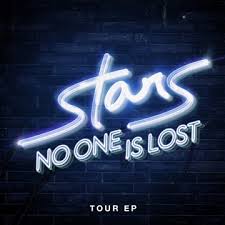
gwynSOUNDTRACK: STARS-No One is Lost Tour EP (2014).

stars epStars are back with a new album and this downloadable 5 song EP.  There’s something about Stars’ aggressive pop sensibilities that I just love.  It’s the dual vocals, the big choruses and I’m sure to a certain degree it’s the darkness in the lyrics that compliment the poppy music so much.

The EP has five songs, “No One is Lost” and “From The Night” are from their new album.  “Hold On When You Get Love And Let Go When You Give It” is from their previous album The North.  There’s also two exclusive tracks: “Blue Is The Colour” and “From The Night” (A Tribe Called Red Remix).

“From the Night” has simple, keyboard note-driven verses which are obliterated by the dancey and even discoey chorus.  Surprisingly at the 4 minute point, it adds a third fast part which segues back into the catchy chorus.  “No One is Lost” opens with Amy Milan speaking French before the keyboards wash in.  It has a slightly faster pace than their usual fare.  But despite the bouncy music in the chorus, we get the twisted lyric: “put your hands up coz everybody dies” (that’s Stars in a nutshell).

“Hold On When You Get Love And Let Go When You Give It” is less dancey (perhaps less discoey sounding is more accurate).  It’s got a real Stars feel to it (when Milan comes in at the chorus it is really angelic), and showcases Stars’ previous album very well.

The two new songs include the Tribe Called Red remix of “From the Night.”  I’m not that big a fan of remixes, but this one is pretty good.  I like the way they stripped the big chorus of the music and left it spare–which makes their catchy vocals seem kind of sinister.  I actually expected a bit more of Tribe’s signature sound put into the song, but that’s not really what remixes are all about, so I guess it’s no real surprise they didn’t.

“Blue is the Colour” is a dark sounding song as well, until the chorus comes in with some poppy keyboards and slinky guitars.  It’s very electronic sounding which I love in contrast to Torquil’s mellow vocals.  But at 6 minutes long, this song has many sections up its sleeve, and the twist at 4 minutes really turns the song into something else, with an almost epic feel.

It’s a great sample of Stars more recent work.  This link takes you to WXPN from which you can download the EP from NoiseTrade.

[READ: November 5, 2014] Mr. Gwyn

I loved this book.  It has been one of my absolute favorite books in years.

The premise is fairly simple.  A successful writer (Mr. Gwyn) has had three books published to much acclaim and financial success.  But one day he wakes up and decides that he is done writing. He crafts a list of 50 things he will never do again, and one of them is write a book which he publishes in the newspaper.  His agent thinks it is a great marketing scheme, but Gwyn is quite serious.

Gwyn then disappears from society for a while.  Only his agent is able to fin him (Gwyn and the agent are very close).

After a series of small incidents, Gwyn’s agent tracks him down at the laundromat.  He has sent his new employee, a young woman named Rebecca, to give him a phone through which they can talk.  Rebecca is respectful and Gwyn is fascinated by her.  Over the next few months, he and his agent only communicate via Rebecca.

One day, in order to avoid a rain storm, Gwyn ducks into an art gallery.  He has never really understood art.  But he becomes fascinated with the portraits there.  And he decides that his new “job” is that he is going to create portraits with words.  He calls his new occupation, “copyist.”  Obviously his agent freaks out about his–no one even knows what “copyist” means.  But Gwyn is determined.

He spends the next few months getting ready–he rents a studio, buys furniture and specially ordered light bulbs.  And then he is ready to work.  But who will he his first portrait be? He finally settles on Rebecca–someone he knows a little and feels comfortable enough to ask to pose for him.  And this is where the story became fantastic. (more…)

Read Full Post »

krausSOUNDTRACK: THE FLAMING LIPS-The Terror (2013).
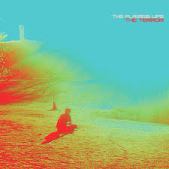
terror After the distortion heavy and heaviness of At War with the Mystics and Embryonic (to say nothing of their other experimental releases), I wasn’t sure what to expect from an album called The Terror.  Yet with a title like that the album is far more invested in psychological terror than in pummeling you with scary noises and music.  The album is more unsettling and spooky with existential dread.

Wayne Coyne has always been a pretty optimistic guy–weird, sure, dealing with feelings of dread, sure, but never so dark and insular.  But I learned that before recording this album and most likely as an impetus to record it,  Coyne separated from his partner of 25 years, Michelle, and Lips multi-instrumentalist Steven Drozd temporarily relapsed into addiction.

In an interview, Drozd says the album is like a crisis of life confidence.  He also says that the uniformity in sonic style was intentional: “Instead of writing songs and then figuring out sounds, we’d write the other way around: create sounds then make songs out of those sounds.”

So the vocals are quite low in the mix, and there is not a lot of “music” in the album.  Rather there are layers of sounds–swishing synths, spiraling noises, percussion effects that seems to almost cover up the vocals, giving it a very claustrophobic effect.  “Look… The Sun Rising” opens the disc.  It is primarily percussion with some noisy sounds and really sharp piercing guitars (that play noisy counterpoint to the soothing chorus of Oh Oh Ohs).  And yet after all of that noise and chaos, the very lovely “Be Free, A Way” surfaces as a quiet introspective song.  There are gentle keyboard notes (not unlike on Yoshimi) that propel this song along.  “Try to Explain” is a pretty song with some unusual sound effects swirling around it (The Lips can’t so straight up pretty, right?).  And yet lyrically, this song, along with the rest, is very dark indeed.

“You Lust” is a 13 minute (!) invocation about various forms of lust.  It opens with the couplet: “You’ve got a lot of nerve/A lot of nerve to fuck with me.”  The middle of the song is a kind of Pink Floydian keyboard workout.  It’s a  lengthy jam that’s kind of samey, but I’ll bet if you can really sit (with headphones) and close your eyes and focus it’s pretty intense.  After about ten minutes of that repetitive claustrophobia, some lightening occurs with sprinkled keyboard notes.

“The Terror” is primarily in Coyne’s falsetto, and it seems gentle until the mechanized noises come bursting forth.  “You Are Alone” is the shortest thing here, under 4 minutes of squeaking noises.  And again, a lovely melody despite the title.  I feel like this song summarizes the album pretty well.  In it, Coyne sings “I’m not alone” while a deeper voice replies, “you are alone.”  Whose voice will ultimately win?

  “Butterfly, How Long It Takes to Die” returns to that abrasive guitar of the earlier tracks, but the main body of this 7 minute song is just bass, keening keyboards and Coyne’s whispered voice.  There’s a recurring synth line that is magical and/or creepy depending on your frame of mind.  It, along with many of the other songs, have a kind of coda that links the songs.  This one is mostly just choral voices, but it twists the ends of the songs in a different direction. “Turning Violent” is a quiet track, in which Coyne sounds nearly defeated until the second half of the song grows louder and more animated with layers of vocals.  The disc ends with “Always There…In Our Hearts” which seems to offer some hope…maybe.  There’s signs of uplift in the melody, and when the drums kick in at the end, it seems to propel the song into a more intense frame of mind.

And lyrically, despite all of the darkness that is always there in our hearts, there is a light peeking out: “always therein our hearts a joy of life that overwhelms.”

Although most reviewers find this album unremittingly bleak, I find the music to be beautiful in an aching sort of way–a beautiful way to deal with pain (better than getting the same tattoo as Miley Cyrus, anyway).

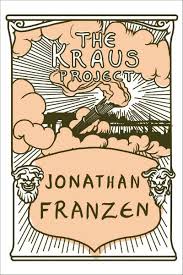
[READ: October 31, 2014] The Kraus Project

The title page of this book read: The Kraus Project: Essays by Karl Kraus translated and annotated by Jonathan Franzen with assistance and additional notes from Paul Reitter and Daniel Kehlmann.

So just what is this thing anyhow?  Well Karl Kraus was a German writer (1874-1936) whose main contributions to letters were some essays and a newsletter Die Fackel (The Torch).  The authors compare the newspaper (favorably) to a blog (while also complaining about what blogs have done to letters).  He started Die Fackel in 1899 and he continued to direct, publish, and write it until his death.  He used the paper to launch attacks on hypocrisy, psychoanalysis, corruption of the Habsburg empire, nationalism of the pan-German movement, laissez-faire economic policies, and numerous other subjects.  For the first ten or so years, Kraus was the editor, accepting contributions from around the German speaking word.  But in 1911, he became the sole contributor to the newsletter.

He also wrote many essays (he did not care much for fiction), including the two main ones that compression this book: “Heine and the Consequences” (1910) and “Nestroy and Posterity” (1912).  The book also includes two follow up essays: “Afterword to Heine and the Consequences” and “Between Two Strains of Life: Final Word to Heine and the Consequences” (1917) and a poem: “Let No One Ask…” (1934).

The essays themselves are quite brief.  Despite the first coming in at 135 pages, note that the left pages are all in German (so reduce 135 by half), nearly all of the English pages are filled with footnotes (reduce by half again) and some of the footnotes run for several pages.  So the essay could be said to be about 25-30 pages.

The same is true for all of the pages in the book.  The left sides are in German (except the footnotes) and most pages are split in half because of the footnotes.  Which means that Franzen and friends write far more than Kraus did.  Ultimately, this book is actually three things: It is a collection of Kraus’ essays with Franzen’s fine translation; it is an explication of Kraus’ attitude and about life in Germany during Kraus’ life and finally it is an insight into Franzen as a young man living in Germany and why Kraus was so appealing to him.

The first part: Kraus’ essays. (more…)

Read Full Post »
« Newer Posts - Older Posts »