Feeds:
Posts
Comments

Archive for the ‘Smarty Pants’ Category

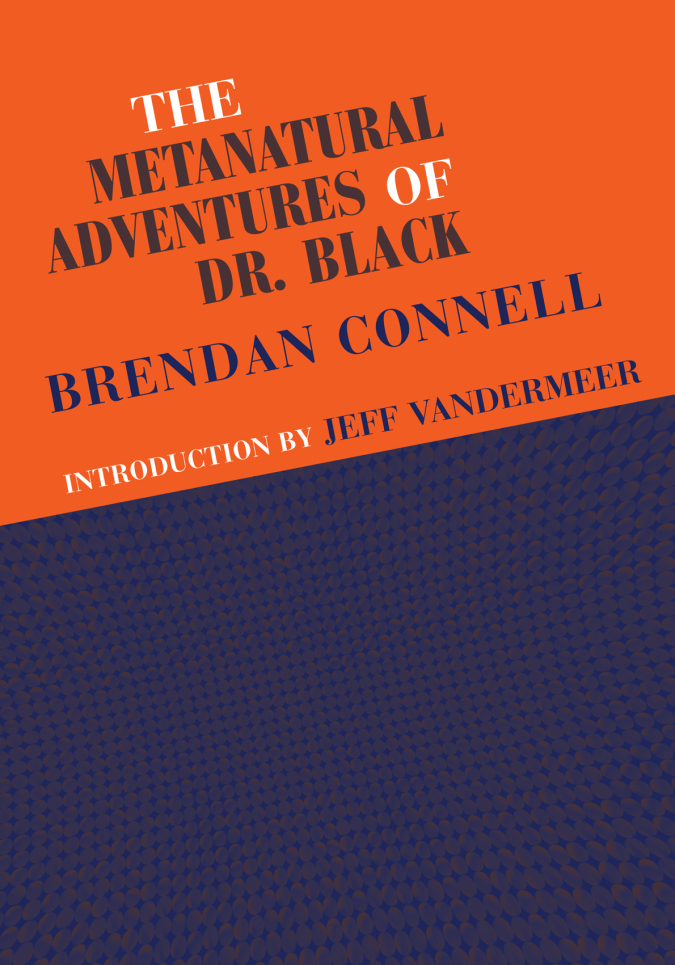
Connell Dr.Black jacketSOUNDTRACK: KODAGAIN-“King of Curls” (2014).
supernaturalWhen I looked for a picture of this book cover, I was connected to Connell’s blog which has links to many songs by Kodagain. After some more work, I learned that Kodagain features music by Saša Zorić Čombe and lyrics by Brendan Connell!

It was hard to find any real details about Kodagain (they have a media presence, but it is rather abbreviated), until I saw their soundcloud page which gives these nuggets of information

  • Kodagain formed in 1985 in Knjazevac, SE Serbia, where it’s hard to be alternative but easy to be alone.
  • Kodagain writes and records songs with English lyrics because English is more musical than Serbian.
  • Kodagain has a miniaturist approach to pop music, channelling influences from Henry Purcell, through Dean Martin, to Roxy Music, into short compositions combining a bubblegum-pop concern for melody with lo-fi experimentalism, resulting in songs as soulful as they are playful.
  • Many of the lyrics have been provided by the existing poetry of famous poets such as Dorothy Parker, Oscar Wilde, Chu-I Po (Bai Juyi), Lord Byron, Ogden Nash, Sara Teasdale, Louisa Stuart Costello and Robert Creely.
  • Since 2007, Kodagain has also been using … original lyrics from the writer Quentin S. Crisp; since 2012, Kodagain has similarly collaborated with the writer Brendan Connell.  Brendan Connell says: “My ultimate goal is to write a vast number of lyrics about natural wonders, public parks, lost watches, Indian villages, hidden love, birds, trees, mountain passes, fake Taoists, imperceptible colors, rhetorical mysteries, and flowers. Ideally these would be compounded into a ‘Guide for Modern Life’ which could be used to build better relations between workers and their bosses, the various sexes, and those whose religious beliefs differ.”
  • Their songs and videos can be found in generous supply on YouTube and SoundCloud. Albums include: Speed Up, The Nowhere Land’s Echoes, A Drink With Something In It, 000, Vranje, Letters From Quentin, Time to Get Ready for Love, My Fear of His Fear of Death, and Supernatural.

Since encountering Kodagain, I have become totally transfixed by them.  The melodies are simple and lovely and Zorić Čombe’s voice is gentle but wise.  Lyrically the songs are certainly all over the place, and most of the songs are under 2 minutes long.  The instrumentation is simple–usually a gentle guitar, steady drums and multi-tracked voices.

It was really hard to pick a song to talk about because there are so many.  But I decided to pick “King of Curls,” in part because the video is fantastic, and so are the lyrics

If I ruled the world
I’d call myself
The King of Curls

If I were king
I’d change damn near
Everything

If I ruled the world
My army wouldn’t fight wars
But rather eat chocolate bars
And move to the beat
In shorts
While my advisors wise
Would do jazzercise

(and that’s just the first part!)

Zorić Čombe’s voice sounds a bit to me like a smoother Jens Lekman (although that could just be the enunciation style).  I find his songs utterly enchanting.

And if you look on YouTube, you’ll find dozens of videos–most of which are masterpieces of found footage.

[READ: February 20, 2015] The Metanatural Adventures of Dr Black

About 7 years ago, I read a novella called Dr Black and the Guerrillia and I liked it quite a lot.  I liked that Connell created this character, with no apparent context (at least none given in the story) and that it was so amazingly detailed and “real” and yet so seemingly unreal–an unsatisfying word which Connell has corrected for me with the title of this collection–Metanatural.

This book is something of a collection of short stories about Dr. Black, but it is far more than that.  It collects some of the adventures that Dr. Black has been on as well as some of the patents and other ephemera and fashions a kind of narrative (although a very sketchy narrative) about the life he leads.

Before I even get to the “plot” of the book, I need to say just how much I enjoyed reading this book. I was absolutely captivated by Connell’s voice.  Over the years I have known that Connell was an accomplished writer with an unparalleled attention to detail and to choosing the precise word.  But somehow in the Dr. Black stories Connell’s details and specifics push the narrative to real heights.  Perhaps it is because Dr Black seems so real that when anything “metanatural” happens to him, it is entirely believable–drawing you into his exploits even further.  I really wanted to read more and more.

Having said all that, while this book is certainly his most accessible, it is still not light reading.  Connell challenges the reader with his extensive vocabulary, his lack of compunction about throwing in some obscure sections of text (that I won’t pretend I understood, but which didn’t bother me at all) and his willingness to defy reality, which may lose some readers.  But the rewards of the stories are worth it. (more…)

Read Full Post »

whatifSOUNDTRACK: SON LITTLE-“The River” (2014).

sonlittleI don’t like the blues.  I find it dull and repetitive.  I also don’t really like singers who are described as “soulful.”  And yet here is Son Little with a soulful blues stomper that I really like a lot.  WXPN has been playing this song pretty often, and I like it more with each play.

It’s a fairly simple set up with handclapping and a two note guitar riff.  Even Son Little’s voice doesn’t seem all that special at first.  But there’s some way that all of the elements combine that makes it so much more than the sum of its parts.

And with each verse, more elements are added, a synth sound, some guitar lines, even some bass riffs, building the song’s intensity.

But it’s that chorus–so catchy and ominous at the same time with interesting harmonies that just sound like he is echoing himself.  I really can’t get enough of it.

[READ: January 31, 2015] What if?

This book was just entirely too much fun.  Well, actually I thought it would be a bit more fun, but Munroe is so scientific that at times (when he got really factually scientific) I just felt dumb.  Which lessens the fun.  In fact, the first couple of pieces are really heavily sciencey, unlike some of the later ones which are really funny.

But what am I talking about?  This book is a collection of the “what if’ section of the website xkcd. There’s no real guidelines on the site for what kind of question you can ask, and many of them are quite strange (and often hilarious). They are hypothetical (what if?) questions and, depending on the arcane rules that Munroe follows he will answer them to the best of his scientific scrutiny.  And he will take the questions very very seriously–no matter how stupid your question may seem, he will try to answer it scientifically.  It’s fun!

But it’s also serious, and seriously scientific–Munroe is a former NASA roboticist.

So the first one “What would happen if the Earth and all terrestrial objects suddenly stopped spinning, but the atmosphere retained its velocity” almost seems to be put in the front to scare off those who might not want to be too scientific.  And the second question comes more down to Earth (but also destroys the Earth): “What would happen if you tried to hit a baseball pitched at 90 percent the speed of light?” (more…)

Read Full Post »

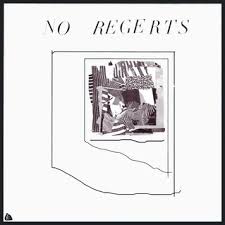
xkcdSOUNDTRACK: CHASTITY BELT-No Regerts (2013).

regertsChastity Belt’s debut full length returns to the lineup of the first EP: Julia Shapiro (guitar, vocals), Lydia Lund (guitar), Annie Truscott (bass), and Gretchen Grimm (drums).  But it retains some of the more full sound of the second EP.  It’s a really interesting album with a lot of diverse styles that are all held together by Shaprio’s voice.

I love the complexity of “Black Sail” which has some jangling guitar and an interesting lead riff at the same time–and which exudes a more psychedelic feel.  “Seattle Party” is up next and between the two songs, they clock in at 8 and a half minutes, which is funny since the next four songs total less than that.

“James Dean” (re-recorded from that first EP) sounds better here–you can make out the lyrics better and it’s less staticky.  It really highlights their great short song writing skills.  “Healthy Punk” has a quick sound, with an almost ska-like rhythm.  “Nip Slip” is a funny song about wanting some chips and dip (with appropriate sound effects–the whispered chorus is really quite funny too).  “Full” is a rather spare song that changes things up a bit.

“Happiness” is a slow song that I don’t love, but it’s followed by the awesome “Giant (Vagina)” which takes PJ Harvey’s “Sheela na Gig” to an even more unexpected place–it’s funny and funnier.  “Pussy Weed Beer” is about well, pussy weed and beer–a fun song for one and all.  “Evil” ends the disc with a bright happy guitar sound–belying the “evilness” of the narrator.

Not every song is great, but there’s plenty to like about this weird album.  And the new single from their soon to be released album sounds even better.

[READ: February 10, 2015] xkcd volume 0

After reading Monroe’s What If? [which, in a cool, utterly intentional time bending way will be posted two days from now], I saw that he had a previous book called xkcd.  This is also the name of his website. I had passing familiarity with xkcd, but didn’t know all that much about it.  I’ve mostly been sent links to it rather than actively going there.  And it turns out it’s not that friendly of a site anyhow.  But there is a lot of funny to be had there.

xkcd is primarily a bunch of stick figure characters getting involved in a few kinds of situations: romantic (or unromantic), mathematical and sci-fiction/sci-reality issues.  Or as he sums it up:

Warning: this comic occasionally contains strong language (which may be unsuitable for children), unusual humor (which may be unsuitable for adults), and advanced mathematics (which may be unsuitable for liberal-arts majors).

It helps to know that Munroe used to work for NASA (although not as like an astronaut or anything), and that he has a very scientific/mathematical brain.  So much so that a liberal arts major such as myself found many many of these comics to be waaaaay over my head.  Of course, he also has cartoons about Vanilla Ice and MC Hammer, so we can’t all be smug bastards, can we?

I laughed a lot at this book, and of course I scratched my head in confusion a lot too, but that’s okay, the ratio of humor to huh was high (there’s some basic math, right?). (more…)

Read Full Post »

writeSOUNDTRACK: THE MINIONS-“Banana” (2014).

Ibanan really enjoyed both Despicable Me movies, and the minions crack me up.  So how did I not know that bananas are a big deal for them?  At Universal Studios, bananas are a huge part of the Minion gear that they sell, but I had no idea why.  When we watched Despicable Me recently, I saw them fighting over a banana, but it seemed like a minor thing.

Well, anyhow, the minions have done a cover of “Barbara Ann” as… well, you get the point.

And man, is it irritating, especially in the two hour version I present you with below.

I honestly can’t wait for the next movie though.

[READ: November 9, 2014] Write This Book

I’ve had this book on my shelf for a while.  I didn’t want to read it until I finished the Secret series.  And since I did, I decided to read this right away.  (You don’t need to read the Secret series to enjoy this book–especially for the h ow-to elements which are outstanding whether you know his work or not)

I wasn’t really sure how this would work–there was an excerpt at the back of the You Have to Stop This paperback.  He sets up the story for us and has us finish it, was it just going to be blank pages?  No, it is not.

Indeed, it is a very clever book because it accomplishes two things very well.

1) It creates a simple yet compelling mystery (with Bosch’s typical flair for twisting things around on their heads) and

2) It teaches young writers a ton about how to write.  In fact, I hope Clark reads this soon, because I think it will really help him with his storytelling. (more…)

Read Full Post »

stopthisSOUNDTRACK: PHARRELL WILLIAMS-“Despicable Me” (2010).

meAfter coming back from Universal, we watched Despicable Me again.  I had totally forgotten that Pharrell Williams, that “Happy” guy, had written this song about “having a bad bad day.”

Now since this is an open credit sequence, I think he can be forgiven for repeating the two verses FOUR TIMES.

Of course, that makes it insanely catchy (I’m havin’ a bad bad day), and the melody is a nice combination of bouncy jingle and suspenseful spy type movie.

It’s nice to see Williams run the gamut of emotions in these two songs (“Happy” comes from Despicable Me 2).

[READ: November 7, 2014] You Have to Stop This

This is the final book in the “Secret” series.  It has been quite a while since I read book four, so I was a little worried that I wouldn’t remember what was going on.  And I really didn’t, but that didn’t matter too much, because I immediately jumped right back into he plot and figured out the details as I went along.  And I flew through this (it was a great vacation book).

One of my favorite things about this series is the way that Bosch plays with the conventions of storytelling.  I’m not even sure if young readers can appreciate the jokes at this level (have they read enough to know what is being spoofed?).  So when chapter one begins with a pick your own beginning, it made me laugh because of the types of opening lines you can choose, but also because of what the answer is.

And then in chapter 2, the narrator promises to reveal the Secret right away… (more…)

Read Full Post »

krausSOUNDTRACK: THE FLAMING LIPS-The Terror (2013).

terror After the distortion heavy and heaviness of At War with the Mystics and Embryonic (to say nothing of their other experimental releases), I wasn’t sure what to expect from an album called The Terror.  Yet with a title like that the album is far more invested in psychological terror than in pummeling you with scary noises and music.  The album is more unsettling and spooky with existential dread.

Wayne Coyne has always been a pretty optimistic guy–weird, sure, dealing with feelings of dread, sure, but never so dark and insular.  But I learned that before recording this album and most likely as an impetus to record it,  Coyne separated from his partner of 25 years, Michelle, and Lips multi-instrumentalist Steven Drozd temporarily relapsed into addiction.

In an interview, Drozd says the album is like a crisis of life confidence.  He also says that the uniformity in sonic style was intentional: “Instead of writing songs and then figuring out sounds, we’d write the other way around: create sounds then make songs out of those sounds.”

So the vocals are quite low in the mix, and there is not a lot of “music” in the album.  Rather there are layers of sounds–swishing synths, spiraling noises, percussion effects that seems to almost cover up the vocals, giving it a very claustrophobic effect.  “Look… The Sun Rising” opens the disc.  It is primarily percussion with some noisy sounds and really sharp piercing guitars (that play noisy counterpoint to the soothing chorus of Oh Oh Ohs).  And yet after all of that noise and chaos, the very lovely “Be Free, A Way” surfaces as a quiet introspective song.  There are gentle keyboard notes (not unlike on Yoshimi) that propel this song along.  “Try to Explain” is a pretty song with some unusual sound effects swirling around it (The Lips can’t so straight up pretty, right?).  And yet lyrically, this song, along with the rest, is very dark indeed.

“You Lust” is a 13 minute (!) invocation about various forms of lust.  It opens with the couplet: “You’ve got a lot of nerve/A lot of nerve to fuck with me.”  The middle of the song is a kind of Pink Floydian keyboard workout.  It’s a  lengthy jam that’s kind of samey, but I’ll bet if you can really sit (with headphones) and close your eyes and focus it’s pretty intense.  After about ten minutes of that repetitive claustrophobia, some lightening occurs with sprinkled keyboard notes.

“The Terror” is primarily in Coyne’s falsetto, and it seems gentle until the mechanized noises come bursting forth.  “You Are Alone” is the shortest thing here, under 4 minutes of squeaking noises.  And again, a lovely melody despite the title.  I feel like this song summarizes the album pretty well.  In it, Coyne sings “I’m not alone” while a deeper voice replies, “you are alone.”  Whose voice will ultimately win?

  “Butterfly, How Long It Takes to Die” returns to that abrasive guitar of the earlier tracks, but the main body of this 7 minute song is just bass, keening keyboards and Coyne’s whispered voice.  There’s a recurring synth line that is magical and/or creepy depending on your frame of mind.  It, along with many of the other songs, have a kind of coda that links the songs.  This one is mostly just choral voices, but it twists the ends of the songs in a different direction. “Turning Violent” is a quiet track, in which Coyne sounds nearly defeated until the second half of the song grows louder and more animated with layers of vocals.  The disc ends with “Always There…In Our Hearts” which seems to offer some hope…maybe.  There’s signs of uplift in the melody, and when the drums kick in at the end, it seems to propel the song into a more intense frame of mind.

And lyrically, despite all of the darkness that is always there in our hearts, there is a light peeking out: “always therein our hearts a joy of life that overwhelms.”

Although most reviewers find this album unremittingly bleak, I find the music to be beautiful in an aching sort of way–a beautiful way to deal with pain (better than getting the same tattoo as Miley Cyrus, anyway).

[READ: October 31, 2014] The Kraus Project

The title page of this book read: The Kraus Project: Essays by Karl Kraus translated and annotated by Jonathan Franzen with assistance and additional notes from Paul Reitter and Daniel Kehlmann.

So just what is this thing anyhow?  Well Karl Kraus was a German writer (1874-1936) whose main contributions to letters were some essays and a newsletter Die Fackel (The Torch).  The authors compare the newspaper (favorably) to a blog (while also complaining about what blogs have done to letters).  He started Die Fackel in 1899 and he continued to direct, publish, and write it until his death.  He used the paper to launch attacks on hypocrisy, psychoanalysis, corruption of the Habsburg empire, nationalism of the pan-German movement, laissez-faire economic policies, and numerous other subjects.  For the first ten or so years, Kraus was the editor, accepting contributions from around the German speaking word.  But in 1911, he became the sole contributor to the newsletter.

He also wrote many essays (he did not care much for fiction), including the two main ones that compression this book: “Heine and the Consequences” (1910) and “Nestroy and Posterity” (1912).  The book also includes two follow up essays: “Afterword to Heine and the Consequences” and “Between Two Strains of Life: Final Word to Heine and the Consequences” (1917) and a poem: “Let No One Ask…” (1934).

The essays themselves are quite brief.  Despite the first coming in at 135 pages, note that the left pages are all in German (so reduce 135 by half), nearly all of the English pages are filled with footnotes (reduce by half again) and some of the footnotes run for several pages.  So the essay could be said to be about 25-30 pages.

The same is true for all of the pages in the book.  The left sides are in German (except the footnotes) and most pages are split in half because of the footnotes.  Which means that Franzen and friends write far more than Kraus did.  Ultimately, this book is actually three things: It is a collection of Kraus’ essays with Franzen’s fine translation; it is an explication of Kraus’ attitude and about life in Germany during Kraus’ life and finally it is an insight into Franzen as a young man living in Germany and why Kraus was so appealing to him.

The first part: Kraus’ essays. (more…)

Read Full Post »

bookSOUNDTRACK: “WEIRD AL” YANKOVIC-“Belevdere Cruisin” (1976).

belevder This is the first song that Al recorded and submitted to Dr. Demento.  And it was a huge success.  I hadn’t heard it before (it’s not on his box set (not so surprisingly)).

It is a fairly straight song.  It’s a funny (kind of) song about riding in a Plymouth Belvedere.  I imagine the premise of the song is funnier if its 1976 and you see lots of big old Belvederes on the road (when I looked for pictures online, most of what I got was beautifully restored classics, which undermines the humor here).  Although judging from the promo photo above they’re not exactly a sexy car.

It’s a fully realized song played entirely on the accordion.  The song opens with an intro from Hungarian Rhapsody #2 adding faux drama to the funny ditty. And then Al sings about his family’s car and how much he loves it.  So there’s lines like: “just the thought of a Pinto leaves me shaking” and the nascent smart alec: “Watch me pass that Porsche on the right.”    The chorus gives us the truth: “In a Belvedere I can really get my thrills.”

And while the song doesn’t do anything too weird, there is a funny moment where he sings, “Datsuns ain’t worth a fudge…sicle, no.”

It’s a charming little ditty that in no one prepares one for the mad genius that he would become.

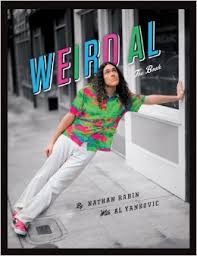
[READ: October 12, 2014] Weird Al: The Book

This biography of Weird Al is written by Nathan Rabin.  I actually read Rabin’s more recent book about Phish and Insane Clown Posse in which he talks about writing the Weird Al book (and how he was a in a dark place when he wrote it).  Having recently watched a bunch of biographical stuff about Weird Al (he’s everywhere lately), there was really nothing new in this book for me.  I should have read it when it came out, duh.

In fact, nearly everything that is mentioned in the book is in the TV specials. The biggest addition that Rabin adds, and its a good one, is his personal insights into Al (he had thanked Al on his memoir).  Most enjoyably, it’s nice to hear someone praise Al’s original songs–sometimes even more than the parodies.  Al’s originals have always been clever and fun and, while fans already know it (and its fans who will buy this book), it’s nice to see it in print as well. (more…)

Read Full Post »

lostscrapSOUNDTRACK: THE XX-Coexist (2012).

coexGiven my proclivities towards noisy fast rock, there is no reason that I should like The XX, and yet I like Coexist quite a lot. It is such a spare album, but Romy’s voice is fantastic—so sensuous and breathy–that she can totally handle a song that is nearly a capella. So a song like “Angels” whose music consists pretty much entirely of a beautiful echoey guitar (and virtually nothing else except for some occasional soft percussion) is engrossingly intimate and not at all boring. In fact when that simple percussion eventually comes in, it’s like a revelation of sound accompanying her.

What also keeps the album interesting is that she is not the only singer (so there’s something for everyone). “Chained” has Oliver’s breathy, sexy voice as he more or less whisper/sings the lyrics. It has slightly more complex arrangements (meaning the drum is constant and there are quiet waves of synths). “Fiction” slowly builds with an ominous muted guitar motif and echoed chords. But when the chorus kicks in, that muted guitar grows loud and it’s almost overpowering (relatively, of course).   “Try” brings in a spooky kind of keyboards that is slightly unsettling under their mellow hushed duet of vocals.

The diversity of simple sounds that Jamie xx adds to each song are revelatory.  Even though each song is quiet and intimate, the sounds that he uses are so very different within that limited palate.  So “Reunion” sounds like a steel drums, before adding pulsing bass beats. “Sunset” has a slinky guitar and “Missing” introduces as drumbeat that is like a heart beat.  “Tides” has one of the loudest drum beats on the record, alternating with a delicate guitar line.

The simple bass line adds a really funky quality to “Swept Away.”  And when the claps and keyboard hits come in it feels almost like a dance song.

This is a great album for quiet nights and headphones.  Even if the songs seem to be mostly about lost love, it has a calming effect that is really enjoyable.  I’ll have to check out their debut as well.

[READ: September 30, 2014] The Lost Scrapbook

Some fans of David Foster Wallace speak well of Evan Dara (at least that’s how I’ve heard of  him).  I was unfamiliar with him and the fascinating story he has built around himself.  Evan Dara appears to be a pseudonym.  As one writer put it: “Hell, we don’t even now who Evan Dara is. Apparently, he is a male American in his 30s living in Paris.”  This, his debut novel, has attracted attention not only for being really weird, but for being really good.

What was fun about reading this was that I knew there were strange things afoot in the book, but I didn’t know what exactly (I really like to go into a book completely blind if I can).  So when the book started out with a conversation in which no character names were given (or even how many there were), I was prepared.  And while I didn’t really know what the subject they were talking about was, I figured that would be fine as well.  Then when four pages in the all caps word YIELD seemed to signal a change of narrator/perspective/something, I thought, okay this is what I’m in for.

Then I noticed that every paragraph which wasn’t conversation (with an em dash) was preceded by three ellipses (and ended with same).  A few pages later there’s an all caps TOW-AWAY ZONE which introduces another shift.

And somewhere around page 14 a sort of plot begins to form (although it’s unclear whether or not any of the earlier sections have anything to do with this one).  A man is shot…or not?  But then after the KEEP DOOR CLOSED section break, a new story develops.  A man with a Walkman (I was trying to decide if this was deliberately retro or intentionally set in the 80s, but that was unclear to me) is driving along to meet a man named Dave (at last a name!).  Dave is a filmographer who has been collecting fireflies for a video project.  And just as we near a kind of resolution of this section, it morphs, unannounced, mind you, into something else entirely–a discussion of music, specifically Beethoven and his decision to rework limited material into multiple variations.  It is fascinating and engaging and very well-considered, but it too ends before anything can be “resolved.” (more…)

Read Full Post »

bothfleshSOUNDTRACK: SIGUR RÓS-Von brigði [Recycle Bin] (1998).

recycleAfter releasing their first album, Sigur Rós was approached by Icelandic musicians to remix the album. And thus came Recycle Bin.  I realized too late that I really just don’t like remix albums all that much–they’re mostly just faster drums plopped on top of existing songs.  And such is the case here.  Despite the interesting musical pedigrees of the remixers, there’s nothing anywhere near as interesting as on Von itself.  There are ten tracks, but only 5 songs.

”Syndir Guðs” gets two remixes:

Biogen keeps the bass but adds some more drumlike sounds.

Múm removes the bass, adds some wild drums and trippy textures and reduces the 7 minutes to 5.  It is quite pretty but very far from the original.

“Leit að lífi” gets three remixes

Plasmic takes a spacey 3 minute wordless noodle and turns it into a heavy fast dance song with speedy drums, big bass notes and with spacey sounds.

Thor brings in some fast skittery drums and keeps the spacey sounds (which sound sped up).  And of course bigger bass noises.

Sigur Rós recycle their own song into a dance song by adding funky bass and drums.

“Myrkur” gets two remixes.  the original is a fast-paced groovy track.

Ilo begins it as a spacey non-musical sounding piece.  After two minutes they add a beat of very mechanical-sounding drums.  It’s probably the most interesting remix here.

Dirty-Bix adds big, slow drums.  It keeps the same melody and vocals as the original but totally changes the rhythm and texture of the song, (removing the guitar completely).

The remaining three songs get one remix each.

The original “18 Sekúndur Fyrir Sólarupprás” is 18 seconds of silence.  Curver turns it into “180 Sekúndur Fyrir Sólarupprás” and makes a muffled drum beat and some other samples from the album, I think.  It constantly sounds like it is glitching apart until the end where it practically disintegrates–an interesting remix of silence.

“Hún Jörð” 7 min Hassbræður increases the drums and adds a more buzzsaw guitar sound and makes the vocals stand out a bit more.

“Von” has delicate strings and Jónsi voice.  The remix by Gusgus adds low end bass and drums making it a thumping rather than soaring track.

I prefer the original, but I much prefer their next album to the first one.

[READ: end of October to early November 2013]  original articles that comprise Both Flesh and Not

As I mentioned last week, I decided to compare the articles in Both Flesh and Not with the original publications to see what the differences were.  I had done this before with A Supposedly Fun Thing… and that was interesting and enlightening (about the editing process).

This time around the book has a lot more information than the original articles did.  Although as I come to understand it, the original DFW submitted article is likely what is being printed in the book with all of the editing done by the magazine (presumably with DFW’s approval).  So basically, if you had read the original articles and figured you didn’t need the book, this is what you’re missing.

Quite a lot of the changes are word choice changes (this seems to belie the idea that DFW approved the changes as they are often one word changes).  Most of the changes are dropped footnotes (at least in one article) or whole sections chopped out (in others).

For the most part the changes were that the book version added things that were left out or more likely removed from the article.  If the addition in the book is more than a sentence, I only include the first few words as I assume most readers have the book and can find it for themselves.  The way to read the construct below is that most of the time the first quote is from the original article.  The second quote is how it appears in Both Flesh and Not.  At the end of each bullet, I have put in parentheses the page in BFAN where you’ll find it.  I don’t include the page number of the article.  And when I specifically mention a footnote (FN 1, for example), I am referring to the book as many times the articles drop footnotes and they are not always in sync.

Note: I tried most of the time to put quotes around the text, but man is that labor intensive, so if I forgot, it’s not meant to be anything significant. (more…)

Read Full Post »

contficSOUNDTRACKTHAO NGUYEN-Tiny Desk Concert #5 (September 4, 2008).

thaoI had never heard of Thao Ngyuen (who admits that her last name is a phonetic disaster–it’s pronounced When) before this concert and man is she a lot of fun.

  She plays a great acoustic guitar—very percussive on the strings (and even some percussive noises from her mouth before the first song starts).  Her voice is a strange mix of a few singers, reminding me a bit of Björk (but with a kind of Southern sounding accent) and maybe Beth Orton, if Beth was a bit more excited.   Thao plays her guitar very loosely—a kind of sloppiness that is really fun—but not in a “she can’t really play” way.  It’s an I’m having a lot of fun style.

NPR dude Mike Katzif heard her band Get Down Stay Down opening for another band.  And he loved her off-kilter melodies (which are ample).  “Bag of Hammers” is played on the high strings and it has an almost Caribbean feel—boppy and fun and totally made for dancing. Her guitar playing is very fast strumming, especially on “Beat (Health, Life and Fire),” I love watching the chords she is playing up and down the neck of the guitar.

I really enjoyed the conceit of “Big Kid Table” and the Hawaiian vibe she gets from her guitar.  “Feet Asleep” brings out a bit more of a country vibe from her singing (she is from Virginia).  I love the diversity of her music and I’m looking forward to checking out both her band and her solo work. In addition to being a great singer and songwriter, she is also quite funny—the story about her grandma and her calves is very funny indeed.

This continues the greatness of the Tiny Desk concerts.

[READ: November 14, 2013]  “The Empty Plenum”

The reason I got involved with Wittgenstein’s Halloween was because David Foster Wallace had said Wittgenstein’s Mistress was one of the best books of the 1990s.

The whole list is on Salon, but here’s the quote about WM:

“Wittgenstein’s Mistress” by David Markson (1988)
“W’s M” is a dramatic rendering of what it would be like to live in the sort of universe described by logical atomism. A monologue, formally very odd, mostly one-sentence ¶s. Tied with “Omensetter’s Luck” for the all-time best U.S. book about human loneliness. These wouldnt constitute ringing endorsements if they didnt happen all to be simultaneously true — i.e., that a novel this abstract and erudite and avant-garde that could also be so moving makes “Wittgenstein’s Mistress” pretty much the high point of experimental fiction in this country.

I had also read his review of the book before [I copy everything I said then below].  I admit I didn’t get that much out of it before because it was mostly about Wittgenstein and a book I hadn’t read.  Well, now that I’ve read the Markson book, it seemed like a good time to revisit the review.

Two things strike me immediately–this was written after Wallace had written Broom of the System and some other fiction and yet he speaks of himself as a “would-be writer,” not a writer.  And two, this review really belongs in a philosophy journal rather than a literary journal–DFW was making the jump from philosophy to literature, but his knowledge of philosophy is very strong, so he is focusing on that aspect of the story. (more…)

Read Full Post »

« Newer Posts - Older Posts »