 SOUNDTRACK: SUGAR-“Helpless” single (1992).
 I loved that first Sugar album and even bought the single for “Helpless” (back then singles were ways for record labels to get more money out of fans of a band rather than for people to pay for one song). In addition to “Helpless,” the single contains three songs. “Needle Hits E” is a poppy song–very Mould, very Sugar. The song is a bright and vibrant addition and would fit nicely on Copper Blue.
The second track is an acoustic version of “If I Can’t Change Your Mind” which sounds wonderful. Mould really knows how to record a 12 string guitar to make it sound huge. “Try Again” is the final track. It reminds me of The Who, especially the bass line at the end of each verse. It’s a darker song (especially for his single which is so up). But I love the way the acoustic guitar seems to make it build and build. Then, some time around the two and a half minute mark, a feedback squall starts building. It’s way in the background (and actually sounds a bit like squealing balloons). It continues until the last thirty seconds just degenerate into full blown feedback noise–just so you know Sugar aren’t all pop sweetness. All three songs were later released on Sugar’s Besides collection.
[READ: May 10, 2013] The Art of McSweeney’s
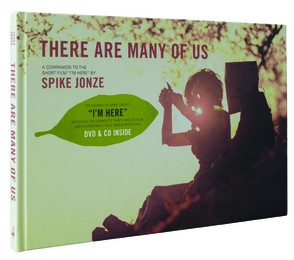
Sarah got this book for me for my birthday and I devoured it. It answers every question I’ve had about McSweeney’s and many more that I didn’t. It provides behind the scenes information, previously unseen pieces and all kinds of interviews with the authors and creators of the issues as well as The Believer, Wholphin and some of the novels.
The real treasure troves come from the earliest issues, when there was very little information available about the journal. So there’s some great stories about how those early covers were designed (ostensibly the book is about the artwork, but it talks about a lot more), how the content was acquired and how the books were publicized (book parties where Arthur Bradford smashed his guitar after singing songs!).
The cover of the book has a very elaborate series of very short stories by Eggers (these same stories appeared on the inside cover of McSweeney’s 23). For reasons I’m unclear about, the rings of stories have been rotated somewhat so it is does not look exactly the same–although the stories are the same. The inside photo of the book also gives the origin of the phrase “Impossible, you say? Nothing is impossible when you work for the circus.”
The opening pages show the original letters that Dave Eggers sent out to various writers seeking stories and ideas that were rejected by other publications (and interesting idea for a journal). (more…)



 SOUNDTRACK: DO MAKE SAY THINK-Other Truths [CST062] (2009).
 I’ve always enjoyed Do Make Say Think’s CDs. They play instrumentals that are always intriguing and which never get dull.


 [WATCHED: June 2009] The Power of Nightmares
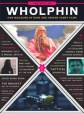 This is a periodical I haven’t mentioned before. Wholphin is a “DVD Magazine of Rare and Unseen Short Films.” So yes, the reason I hadn’t mentioned it is because it is a DVD and not a book. However, as I have been watching Vols 1-8 over the last few months, I have noticed that a few writerly names keep cropping up in the credits. Plus, it’s got that whole McSweeney’s connection.
 film possibly ever by Scott Prendergast called “The Delicious” which you can watch, and I encourage you to,
 SOUNDTRACK: NADA SURF-High/Low (1996) & The Proximity Effect (1998).
 High/Low. This CD features the “novelty” hit “Popular” from some years back, you remember, the spoken word bit about trying to impress your high school sweetheart by washing your hair “every two weeks, once, every two weeks.” The song is pretty great, even after the novelty factor has worn off. However, you may feel that you got screwned (see What I Learned… (5)) if you thought the rest of the record would sound like that. For the most part High/Low is kind of forgettable, and a surprising lead off point to what are some really fine follow-up albums. Overall the sound is, not quite murky, but very samey. So that even the catchy parts sort of blend together. It was not until their next album that they start to show some great songwriting.
 The Proximity Effect. As I understand it, when Nada Surf didn’t produce a hit like “Popular” for their second album, the label dropped them. Which is typically short-sighted because The Proximity Effect is a much better album. In fact, it contains a song akin to “Popular” called “Mother’s Day” but it is so much darker–almost the anti-“Popular.” It too has a spoken word type vocal, and yet the song is an anti-rape song. A dark subject to be sure, but the guitar riff is so great it stays in your head, and you wind up thinking even more about the song. The first four songs really break Nada Surf out of the sameyness of High/Low by introducing high notes! It really cracks through the grungy sound by including some contrast. However, it’s the next album, Let Go, that really shows Nada Surf taking off.
 I Just Read About That...