Feeds:
Posts
Comments

Archive for the ‘Short Books’ Category

 SOUNDTRACK: COLD SPECKS-Live at Massey Hall (May 23, 2014).

After enjoying the Rheostatics Live at Massey Hall video, I thought it would be interesting to check out some of the other artists in the series.

The very first artist to play was Cold Specks.  I had never heard of Cold Specks and I was blown away by their set.

So who is Cold Specks:

Cold Specks is the stage name of Canadian singer-songwriter Ladan Hussein, who was previously known as Al Spx. Her music has been described as doom-soul. The name Cold Specks is taken from a line in James Joyce’s Ulysses (“Born all in the dark wormy earth, cold specks of fire, evil, lights shining in the darkness.”).

As the set opens, Al Spx (for that is what she was known as at the time) speaks about Massey Hall, learning about it from Charles Mingus and Neil Young albums.

And then the band comes out and they play “A Broken Promise.”  There’s such a great moodiness to the melody and the sound of the guitar (and bass pedals).  There’s interesting keyboard effects throughout as well as a spare but powerful unconventional drum rhythm.  And then there’s her voice powerful and a little menacing–arresting and gripping.  There’s a Nick Cave vibe to what she does, but with a very different texture because of her voice.

“Bodies at Bay” is a bit more uptempo and rocking with a wonderfully dramatic slow down for the powerful chorus.  I hear a bit of Marianne Faithfull and some of the more out there vocals of Tina Turner in her voice.  But the contrast between her voice and the music is very engaging.  “Living Signs” is a bit more spare–really focusing on her voice.

She describes “Hector” as “an old one” (which means it came from her other album).  Al Spx plays guitar and I love the way her guitar adds a new layer of music.  The melody in the bridge/chorus is fantastic.

“Let Loose the Dogs” starts a capella.  She sings it off mic (I wonder who could hear her) and then the band comes in with a quieter synth sound.  It’s a much less dynamic song, but a nice mellow moment.

She explains that she doesn’t play Toronto very much and yet this is her fourth time at Massey Hall. “I’ve informed my booking agent that shows in Toronto will be strictly limited to Massey Hall.

“Old Knives” is slow and moody but builds really nicely–a great song overall.  The big, crashing middle section is intense.  As the song ends, they let the music ring out as the guys leave.  As they are walking off, she says, “they fucked off before I could introduce them.”  So they are: drums: Loel Cambpell; guitar: Tim D’eon; the magic corner over here, including Marxophone: Jim Anderson.

While they are gone she says she’ll play “a song or two on my own here.”  She plays guitar and sings “Blank Maps.”  It has the same moodiness just unplugged–the guitar melody is simple, but very cool.  I’m glad I watched this, it has made me a fan.

You can watch the footage here.

[READ: March 19, 2018] To Kick a Corpse

At the end of the previous book, the Qwikpick Adventure Society was in trouble.  Lyle (whose parents work at the Qwikpick and the kid who has access to all of the Qwikpick goodies) was seen as bad influence on the other two.  His best friend Dave had been grounded, but that has finally been lifted.  But Marilla, the girl on whom Lyle is massively crushing (and the funnest girl ever), has been banned from ever seeing him (or the Qwikpick) again.  It was so bad that her parents even told the school principal that she was not to be seen talking to or eating lunch with Lyle (somehow Dave was not deemed so guilty).

It’s a pretty sucky couple of months.

One day the local historical group came by with fliers looking to Save Greenhill Plantation, a local farmhouse that belongs to Colonel Shergood.  Dave and Lyle were joking about the terrible speech when they were tapped on the shoulder and given in-school suspension.

But then Marilla, who is a rule follower to the letter and never wants to upset her parents, broke the rules and shouted “Good” when she heard the plantation was being turned into a Kmart. This guaranteed her an in-school suspension as well.  When they asked her why she would do that, she explained that she hates Colonel Shergood and she wants to “go kick his dead *&%!”

Marilla has never said a bad word in her life, and the boys are shocked.

Why is Marilla so upset? (more…)

Read Full Post »

 SOUNDTRACK: ÌFÉ-Tiny Desk Concert #736 (April 29, 2018).

ÌFÉ is from Puerto Rico.  Creator Otura Mun has a fascinating history as to how he wound up creating this band:

Otura Mun started out in the world as Mark Underwood, a Goshen, Ind., native whose parents were Mennonites and who managed to snag a coveted spot on the University of North Texas’ drumline. But that was before a flight mixup landed the percussionist, composer, DJ and producer with a free trip to Puerto Rico. Two years later, he moved permanently to the island, became a Yoruban high priest and began creating electronic music that channeled the African diaspora.

Woah.

So ÌFÉ (pronounced ee-faye) combines traditional Afro-Cuban drumming and chanting with a kind of Jamaican dancehall sound.  Midway through the set, Mun explains that he drilled holes into the traditional acoustic drums and has attached electronics to them, essentially making them triggers, but with the traditional acoustic sound as an overtone.  It’s pretty amazing.

The group’s debut album, IIII+IIII, (pronounced “Edgy-Og-Beh”) is a fresh electronic take on tradition that’s winning over even the most devout practitioners of the western African-based spiritual ceremonies that form the base of their music. That’s hard to do with ritual music.

Although interestingly, for the first song “House of Love (Ogbe Yekun),” they play acoustically.

For their turn behind the Tiny Desk, Otura Mun and his ensemble unplug their drums for their first tune, an acoustic version of their “House of Love (Ogbe Yekun)”.

This acoustic sound is quite compelling in itself.  Yaimir Cabám plays a beautiful acoustic guitar (pretty, simple chords) and sings, I believe wordlessly.  Meanwhile, the rest of the band plays various percussion: simple electronic percussion and shaker and various hand drums.  Anthony Sierra on congas keeps the rhythm.

After a verse, Otura Mun joins in on vocals (with deep backing vocals from Beho Torrens).  It’s a quiet, soothing song with occasional punctuation from the drums.  When the melody finally changes after 4 minutes, it sounds like a massive shift even if it’s just a few notes.

“Prayer for Oduduwa (Para Meceditas)” opens with bells and shakers and some interesting electronic splashes before the massive amounts of electronics take over the song.  I believe Rafael Maya joins them and was not their for song one.

The sound of the second song here is what startled me when I heard the band’s debut CD last year: the parts normally performed on Afro-Cuban bata drums and chekeres are electronically treated for a traditional prayer for the deity Oduduwa.

They sing in a traditional chanting style including an awesome low chant (from Torrens) that sounds otherworldly.

By the last tune, “Bangah (Pico Y Palo),” the electronics have created a sonic playground that plays perfectly against the battery of Afro-Cuban rhythms.   “Bangah,” focuses on a reflection of the Orisha Ogún, the owner of war in the religion, whose main tool is the machete.

Mun says he wanted to play urban music you could improvise and to use percussion as the basis–Cuban rumba combined with Jamaican dancehall.  He demonstrates some sounds and then a deep rumbling bass: “we got your nasty subs that you know from that the stuff that’s nasty.”

The song is a shout out to those struggling against the vestiges of colonialism still prevalent in Puerto Rico.

They begin the song with a “breathe in” [inhale] let it out Ahhh!

I love the way the various voices are processed.  Torrens sound deeper and Cabám’s voice sounds alien and like it is three voices at once.  The various lines are interspersed with interesting vocals sounds: grunts and screams that punctuate the verses.

It’s a very cool set.

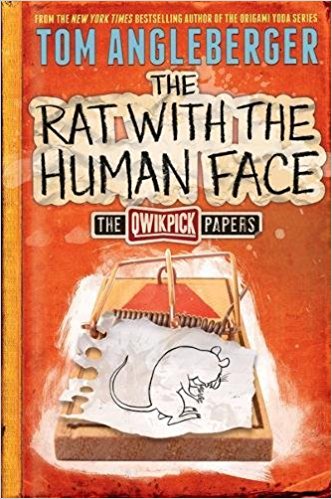
[READ: March 19, 2018] The Rat with the Human Face

In 2014, Angelberger’s first book The Qwikpick Adventure Society was reissued as Poop Fountain.  He then wrote two more books in this trilogy.

This is the second book (written in 2015) and it opens with this

This is the second of three stacks of papers this guy found in a storage room at the old Qwikpick gas station in Crickenburg.  The guy, who asked me not to use his name, called me because one of my old newspaper articles was in the first stack.  (You know I was a reporter before I wrote the Origami Yoda books, right?)

Then he reminds the readers that this book is set in 2000–kids didn’t have iPhones or smartphones.  They didn’t have phones at all and cameras took forever to charge the flash and they drained the batteries fast.

So the entire Qwikpick Adventure Society: Lyle, Marilla and Dave is back, but this story begins with bad tidings–the Qwikpick Adventure Society was disbanded after this adventure.  (more…)

Read Full Post »

SOUNDTRACK: VICENTE GARCÍA-Tiny Desk Concert #701 (February 2, 2018).

Singer-songwriter Vicente García plays a delicate acoustic guitar and has a pretty crooning voice.

The blurb says that he

is still relatively under the radar, but performances like the one he gave at the Tiny Desk are starting to turn some heads.

García’s music isn’t dominated by his native Dominican Republic, but you can hear it in every note. His poetic lyrics are like short stories, sung by a voice both plaintive and evocative, yet always distinct.

“San Rafael” is quite a pretty song echoing the beauty of San Rafael.

Before “A La Mar” (the title of second album which means ‘to the sea’) he introduces [unclear] Vasquez from Dominican Republic on percussion and Ricardo Muñoz from Bogota on the keys.  There’s a neat moment where he plays a harmonic on the guitar in a rather unusual way.  The delicate percussion really adds a lot, as does the bass line plays on the keys.

“Dulcito e Coco” opens with a lovely guitar melody and a close up of the fascinating percussion box that Vazquez is playing–a purple, strangely-shaped box that seems to get different sounds where you strike it.  The song stays quiet throughout although it does get a bit bigger by the end.


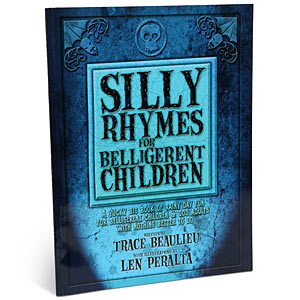
[READ: November 13, 2017] Silly Rhymes for Belligerent Children

I was so excited to see Trace Beaulieu in person.  Ans even though this book is available everywhere, it was especially neat to buy it from the man himself and get him to autograph it.

It is subtitled A Yucky Big Book of Rainy Day Fun for Belligerent Children & Odd Adults with Nothing Better to Do.  The illustrations are by Len Peralta who apparently has not done anything else I’ve read even though his work looks so familiar and is really good.

So what is this?

Well the title is pretty accurate.  Trace has concocted snarky funny poems.  Most of them are pretty short (and in this format are often two or three lines per page) and accompanied by an illustration). (more…)

Read Full Post »

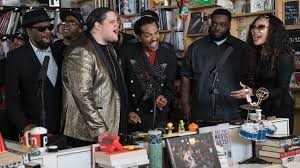
SOUNDTRACK: ARTISTS FROM THE “TAKE ME TO THE RIVER” TOUR-Tiny Desk Concert #692 (January 15, 2018).

This is a touring band playing classic soul.  But I found the modern updates to be unpleasant and almost undermined the tone of the show.  The blurb says:

“Take Me To The River” is a 1974 song from the legendary Al Green and guitarist “Teenie” Hodges. And though it wasn’t a big hit at the time, this song’s mix of religion and desire has become part of pop music’s canon.

Here at the Tiny Desk, some of the original players of this deep southern soul have come together to honor and update this tradition. It’s a celebration of Memphis soul old and new, with 13 musicians wedged behind the desk.

Some of those players of the old include singers Bobby Rush and William Bell; on the Hammond organ, Rev. Charles Hodges and LeRoy Hodges on bass. But it’s what’s new that makes this more than a look back – the addition of southern rappers Frayser Boy and Al Kapone – that truly puts this project on new musical ground.

But it is this update–Frayser Boy and Al Kapone who really ruined this show for me.

I’m not suggesting that the original lyrics to “Push and Pull” are profound.  They are not, but Frayser Bay’s rap is just up front and graphic whereas the original song is more understated (as much as something called “Push and Pull” can be).  Bobby Rush is a great singer and he looks spectacular in his sequined jacket.  Rush has a nice harmonica solo too.  That rap just seemed to come in and mess the whole thing up.

“I Forget To Be Your Lover” suffers from the same problem.  William Bell has a great sound–a cool rough voice.  And the original has this conceit: “I forgot to be your lover and I’m sorry.”  Al Kapone  comes in with a fairly explicit and hardly apologetic rap.  And what’s even stranger is that Rev. Charles Hodges who plays an outstanding organ throughout the show (I loved seeing the organ’s spinning fan that makes the great organ sound), plays really sour notes while Kapone is rapping.  Each verse has this weird nauseating sound. In every other section it sounds amazing, but during the rap it’s almost like he’s commenting on the rudeness of the rap.  The contrast is even more stark when Bell takes back the song mid way through and holds a high falsetto note for about 10 seconds–which really shows his power and range.

The backing vocals by Ashton Riker and Evvie McKinney are a nice touch.   Then on “Take Me to the River” Riker shares lead duties with Bobby Rush and they sound great together.  Riker hits some powerful high notes while Rush keeps it all together.  This is the song that really sells the show.  But look at how uncomfortable Frayser Boy looks during this song.

The rest of the band sounds just fine, playing quiet and understated:  LeRoy Hodges (bass), Edward Cleveland (drums), Andrew Saino (guitar), Jamel Mitchell (sax), Scott Thompson (trumpet), Martin Shore (percussion).

[READ: November 10, 2017] The Talented Ribkins

I saw Ladee Hubbard on Seth Meyers.  She was really interesting (and went to Princeton) and her book sounded fascinating.

On the surface the book is fairly simple, even fairly uneventful. Johnny Ribkin has to come up with $100,000 in a week because he has run afoul of a powerful man.

A few things separate this from similar books.  The first is that over the course of his life, Johnny buried various amounts of money and possessions in random places around the state of Florida.  He should be able to find the money fairly easily.  The reason why he buried all of this is part of the story.

Another thing is that he and his siblings all have special powers.  Not exactly superpowers, but certainly special powers.  And while these powers don’t exactly come into play in the quest, they are ever-present and unavoidable.

So what the heck is going on here? (more…)

Read Full Post »

SOUNDTRACK: JULIEN BAKER-Tiny Desk Concert #690 (January 10, 2018).

Julien Baker joins a handful of artists who have now made a second appearance at a Tiny Desk Concert.  (If they start inviting artists back regularly, they’ll never get ANY work done at the NPR offices).

I was quite enamored with Baker when I watched her first Tiny Desk Concert.  And I was totally smitten with her when I saw her open for The Decemberists.

Julien plays three songs here.  I’m intrigued that in the blurb Bob says “I reached out to ask if she would be willing to do something different this time around.”

It makes it sound as if she’s going to do some kind of dance/electronica show.  But I guess the difference is that last time, she just played electric guitar and this time she mixes up instrumentation and adds a violinist.

The first two songs, “Hurt Less” and “Even,” were accompanied by Camille Faulkner, with Julien on piano for the opening tune and acoustic guitar on the second.

If Julien Baker sounds delicate with just her electric guitar, she’s twice as delicate on piano.  But her voice sounds exquisite–powerful, honest and a little raspy, adding a slight edge.

I love seeing her sticker-covered acoustic guitar as she sings on “Even”:

Putting my fist through the plaster in the bathroom of a Motel 6 / I must have pictured it all a thousand times / I swear to God I think I’m gonna die / I know you were right / I can’t be fixed, so help me

She tends to play her guitar a little louder than the piano, so this one is a bit more dynamic.  The violin adds some aching sounds over the top.

I love that she plays each song in a very different style:

For the final song, Julien put together an arrangement of “Appointments” that begins on electric guitar, which then was looped as a backdrop to her on piano and voice.

It’s always fun watching someone loop guitar melodies.  And I like that she continues to loop long after it seems like the looping is done.  This allows for some of her gorgeous ringing chords.  They continue to ring out as she plays the piano.  It’s even cooler that she can stop parts of the guitar looping while she is completing the song.

All along her voice, which seems so delicate when she starts proves to be really powerful, especially during “Appointments” when she builds to a powerful high.    When I saw her live, she held a really long note that was quite impressive.  Don’t be fooled by the quietness of her music, Julien Baker rocks.

[READ: October 27,2017] Threads of Blue

This is the sequel to Beautiful Blue World, a book I really enjoyed.

In the first book, Mathilde’s country of Sofarende was being attacked by Tyssia.  She was sent to a special location to work on the war effort–they needed precocious children and she was picked for her empathy.  As the book ended, Mathilde followed her empathy and, while their encampment was under siege, released a teenaged prisoner of war because she felt that he was a good person who was just caught up in the war.

This act caused her to leave her group (and her best friend Megs) and to miss the conveyance to safety.

As this book opens, Mathilde wakes up on a boat that is bringing her to the country of Eilean.  She has secret documents and an order to be secretive.

The book picks up right where the previous one left off (I could have used a slight refresher, honestly). (more…)

Read Full Post »

SOUNDTRACK: LO MOON-Tiny Desk Concert #688 (January 5, 2018).

WXPN has been playing “This is It” quite a bit lately and I’ve realized that it sounds way too much like Mr. Mister (I think it’s Mr. Mister, or something else cloyingly 80s) for me to really enjoy.  [Speaking of Mr. Mister, how is it possible that Pat Mastelotto, currently touring with King Crimson, was the drummer for Mr. Mister?  Are they better than “Broken Wings.” There’s hardly any drums in that song at all and Mastelotto is awesome].

Anyhow back to the history of Lo Moon, lead singer and instrumentalist Matt Lowell says he created the song “Loveless” 5 1/2 years ago in a basement studio in New York.

He then moved to Los Angeles and linked up with Crisanta Baker (guitar, bass, keyboards and backing vocals) and multi-instrumentalist and principal guitarist Sam Stewart. They spent months in a backyard shed with gear and guitars everywhere. There they learned to feed off each other, sometimes jamming on two-chord drones for six hours straight without even saying a word. With the lights turned down, it was a comfortable space for the band to catch its artistic wind and create a celestial sound.

No word on when Sterling Laws was added as a drummer.

The show starts with “This is It.”  Lowell is on piano, and the song sounds pretty faithful to the recording. It’s the combination of the four note melody and the synth sound of those four notes at the end of the chorus that really rings Mr. Mister to me.  The addition of the backing vocals (ahhhing) is a nice addition to the song.

For “Real Love” Chrisanta switches to piano, Sam switches to acoustic guitar and Matt goes to electric guitar.  He plays a pretty melody on the guitar, but I can’t help feel that his voice is too soft, too middle of the road.

The same is true for “Loveless.”  They switch back to the original instruments.  Like “Real Love” it’s a pretty song, but ironically, without those Mr. Mister notes, there’s really no hook.  The songs just sound like pretty, generic songs on some kind of soft rock station.

[READ: September 9, 2017] Pip Bartlett’s Guide to Unicorn Training

I enjoyed the first Pip Bartlett book.  It was funny and had a good time with magical creatures.

In the first book we find out that Pip Bartlett is a young girl who can speak to magical creatures–unicorns, silky griffins, fuzzles–but no one believes her (because no one else can).  This is a drag because she loves magical creatures and her Aunt Emma is a veterinarian of magical creatures (people know magical creatures exits, they just don’t think people can talk to them).

Pip loves Unicorns and in the past has assisted Mr Henshaw with a very timid Unicorn–Regent Maximus–who was afraid of his own shadow.

I love the tone of the books.  This one opens: I was shoveling Greater Rainbow Mink poop. This wasn’t as bad as you might think. Greater Rainbow Minks only eat brunt sugar, so their poop literally smells like candy.  (It’s NOT candy, of course, It’s very important to remember that no matter how good its smells, it’s still poop).

And then we see (or actually we don’t see) a Rockshine who can only say the word Hey, but most often says “Heyyyyyyyyyyy!”  Rockshines are dull sheeplike creatures who turn invisible when frightened–which is often. (more…)

Read Full Post »

jack SOUNDTRACK: RINGO STARR-The Best of Ringo Starr: Christmas Collection: 20th Century Masters (2003).

This Christmas album came out twice.  First in 1999 as I Wanna Be Santa Claus and then in 2003 as The Best of Ringo Starr: Christmas Collection: 20th Century Masters.  The track listing is the same.  Some history suggests that when the 1999 album came out the label failed to push it and it kind of faded away.

As you can see from the images, the original cover was the same, more or less.  So, for whatever reason, this new label or maybe its the same label) decided to repackage the Christmas disc as a best of.  Well, whatever, it’s still a great Christmas album, and has quickly become one of my favorites.

Like most people, I’ve never been a huge fan of Ringo.  And yet, I feel like I have new respect for him as a musician and as a humanitarian (he has recently been knighted).  This album is also a perfect example of good will, love and happiness.  And while it may be a bit cheesy here and there, his joyfulness overrides any complaints.

There’s some new songs and some traditional songs as well, all done in a vaguely Beatles rock n roll sorta way.

“Come On Christmas, Christmas Come On” is a new song.  It’s a rollicking childlike good fun wondering why it’s taking Christmas so long to get here. I can’t believe this isn’t played on more Christmas channels.  With lots of big loud chanting.

“Winter Wonderland” is like a slower Beatles swagger, with some great backing vocals and a cool instrumentation.

“I Wanna Be Santa Claus” is exactly what you think a Ringo Starr original Christmas song would be like: light-hearted whimsical and very sweet.

“The Little Drummer Boy” is a quick-tempoed version of the song (which is good as it’s usually too slow) with some solid drumming from Ringo himself.  I was delightfully surprised at the presence of bagpipes throughout the song.

“Rudolph The Red-Nosed Reindeer” sweet and boppy with swinging bass sax and more great backing vocals.  There’s a spoken part where Ringo gets to use his Liverpudlian accent that the luved him.  There’s even a “mistake” where he speaks, “he said Santa, no he didn’t he said Rudolph” [laughs].  He even throws in a Ringo the Red Nosed Reindeer line.

“Christmas Eve” is a sad song about being alone.  But he’s not willing to totally bring us down as there is some hope.

“The Christmas Dance” is a fun skiffle song about going to, yes a Christmas Dance.  It swings and is generally good fun.

“Christmas Time Is Here Again” is my least favorite song on the disc.  Although I do like the chorus the main part is just too simple and repetitive (and long!).  It’s just repeating that same line over and over (with a weird shout of “Do it for Jesus, Jesus Loves you.”  It’s also weird that several times he states O-U-T spells out, but the song doesn’t actually.

“Blue Christmas” is almost country-sounding with a slide guitar. It’s sweet and is one of the better versions of this song.

“Dear Santa” sounds about a mash up of several songs (I expect to hear the “oooohs” from “Twist and Shout”;  there’s a bit of “Dear Prudence,” there’s even the melody of “Beauty School Dropout” from Grease.  It’s a nice sentiment but a little long.  However, I do really like the shout out to John: “Dear Santa, I’ve heard it all before, from Jingle Bells, to no more war.”

“White Christmas” is done in a Jamaican lite-reggae feel with steel drums.  It’s rather silly and fun.

“Pax Um Biscum (Peace Be With You)” is a cool Middle-Eastern sounding jam with a sitar.  There’s also vocals in several languages.  he ends this song by muttering. ” Merry Christmas, Annabelle.”

It’s a fun and enjoyable Christmas album from a fun and enjoyable Beatle.

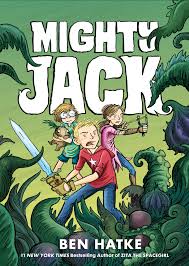
[READ: September 9, 2017] Mighty Jack and the Giant King

I rather assumed that this Mighty Jack series would have several book s in it.  So I was surprised to see that this story pretty much ends the Jack saga (although the epilogue does leave things open…)

The story picks up right where it ended–Jack and Lilly are climbing a beanstalk to chase the monster that stole Jack;s sister Maddy.  They are clearly not on Earth and the monster seems to be rats working together as larger monster.

Jack and Lily are separated.  Jack heads toward the giant’s castle while Lily falls underground and meets goblins. (more…)

Read Full Post »

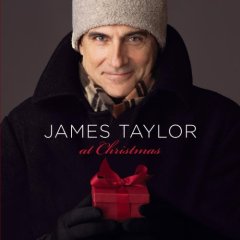
SOUNDTRACK: JAMES TAYLOR-At Christmas (2006).

James Taylor is a folk icon with a smooth voice.  It seems like it would be perfect for a chill Christmas album.

Well, since I last heard Taylor (1976’s Greatest Hits album) he has gotten a little away from that folk sound (imagine that) and more into a kind of bland(er) adult-contemporary sound.  This album has hints of light jazz in it too.  And, worse yet, he tries to lighten some of it up with humor.  Gasp.

When we got this disc we were so disappointed that I don’t think it has been listened to since.  Well, it wasn’t as bad as I remembered, but it’s a pretty long slog through the holidays (and it was nominated for a Grammy, of course).  Almost any one of these songs is a fine addition to any Christmas mix, but too many will put everyone to sleep.

This was originally released in 2004 and distributed by Hallmark Cards, which really does tell you all you need to know.  This was resequenced and a couple new songs were added.

“Winter Wonderland” has all the jazz trappings–muted trumpet, brushes on drums and Taylor’s voice which isn’t quite as comforting as it used to be.

“Go Tell It On the Mountain” sees him modifying this song somewhat and turning it far away from the gospel tradition.

“Santa Claus is Comin’ to Town” has him scatting and be-bopping a little…which is not really his forte I hate to say.

“Jingle Bells” has him making it jazzy.  It’s a bit too much frankly.  Especially when it’s followed by

“Baby It’s Cold Outside” a duet with Natalie Cole, which really tells you everything you need to know about this disc–safe, safe choices.  The “joking” in this song was meant to be cute, but it comes off a little creepy.

After getting annoyed by the first half, I felt like the rest of the album worked pretty well.  He lays off the jazzyness and focuses on his voice.

“River” open with a pretty “Good King Wenceslaus,” on the acoustic guitar.  It switches to a fine version of Joni Mitchell’s “River.”  This is my favorite song on here and it was not included on the original Christmas release of 2004.

“Have Yourself a Merry Little Christmas” sticks in my head because he changes the words from “from now on” to “in a year our troubles will be out of sight.”  Why so specific?  And why every time?

“The Christmas Song” In this nice version, he sings “some holly and some mistletoe” like Paul McCartney does.  Interesting, as I don’t think he’s a vegetarian.

“Some Children See Him.”  This is a song I was unfamiliar with until a couple of years ago.  It’s quite sweet and suits him well.

“Who Comes This Night” I didn’t know this song at all.  But again the piano and bells suit his voice better than the jazzy songs.

“In the Bleak Midwinter” is a slow song, but man he slows it down even more.  And the disc ends with “Auld Lang Syne” which is surprisingly long and would be much better served without the “wailing” guitar solo.

Not every Christmas CD can be a winner.

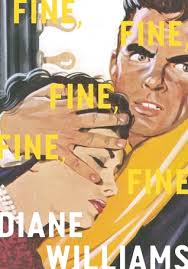
[READ: June 16, 2017] Fine, Fine, Fine, Fine, Fine

This is the third McSweeney’s book in a row (all read around the same time) that I really didn’t like.

It’s not surprising, as I tend to not like Diane Williams’ stories at all (looking back, I don’t think I’ve ever liked anything she’s written).  I only read this because McSweeney’s sent it to me.

The book jacket is just covered with hagiography about what great writer she is and how she upends convention and stuff like that.  But to me, these aren’t stories at all.  And most of them don’t even make sense as themselves.

Rather than saying much more, I’m just posting some stories in full, to show what I mean. (more…)

Read Full Post »

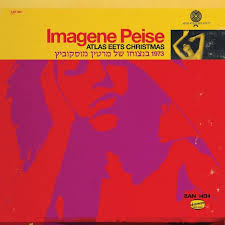
SOUNDTRACK: IMAGENE PEISE-Atlas Eets Christmas (2014).

This is a terrific lost album created by Iraqi jazz piano prodigy Image Peise.  The record states that most of what is known [about Peise] is shrouded in clouds of legend and smoke of myth.”  She is “rumored to have committed suicide in 1978.”

She is playing mostly traditional Christmas songs, with a couple of originals added on to the mix.  She is accompanied by:

Imagene Peise – Piano
Ominog Bangh – Laughing/Crying Glider Synthesizer
Shineyu Bhupal – Drones, Sitar, and Baritone Tambura

The album has a consistent feel throughout.  Lots of jazzy piano and then some interesting Middle Eastern and/or psychedelic sounds that are sprinkled on top (primarily from the sitar and the glider synth).  Whether she is messing with the beauty or just manipulating it is up to the listener.

“Winter Wonderland” opens with a crackling record sound and some interesting Middle Eastern instruments and drones.  And then the lovely traditional jazzy piano version of the classic.  The trippy synth thing comes back up from time to time.

“Silver Bells” opens with a middle eastern synth that sounds nothing like the song.  But once again when the piano comes in it’s really lovely and traditional with hints of psychedelia.

“Christmas Laughing Waltz (Jingle Bells)” has some laughing-like sounds from the voice/synth thing.  Midway through the song, which has been mostly trippy, it resolves itself into “Jingle Bells” on piano with some cool sounds added.

“Silent Night” opens in a not at all peaceful way with some crazy sounds.  It’s a little disconcerting if you know what song it is supposed to be.  But the piano eventually finds the melody and plays it straight and nice.

The first original peace is the delightful if mournful, “Atlas Eets Christmas.”  It’s a series of washes and piano chords until finally a solitary piano melody plays  its mournful melody.  There’ s vocal line where you hear the pronunciation “At last it’s Christmas.”  The voice is pretty far in the background making it kind of hard to hear.  It fits in with the record but stands out because of the voice.  But the sentiment is quite nice.

“Do You Hear What I Hear” is the first really dissonant sounds on the disc.  They come in the form of echoed piano chords.  It feels sinister and kind of kills the mood of the song. The vocal melody is played on that glider thing with dissonant piano behind it.  It feels kind of wobbly and unsettled.

“Have Yourself a Merry Little Christmas” returns to the more traditional style and once again, it’s very pretty.

“White Christmas” has a real feel of longing to it.  After a bout 2 minute it kind of builds with drums and upright bass but it never really gets into a more traditional feel.  It sort of hints at the song until the very end where the melody is more pronounced.

“Frosteeeee”is of course, “Frosty the Snowman.”  It opens with melody played on the piano.  But then it switches off melody lines with that voice/synth thing.  It’s sort of a duet between the two instruments.

“Christmas Kindness Song” is the other original.  It sounds like the other in spirit but this one has highly processed vocals.  Presumably they are by Steven Drodz, but I’m not sure if he sis supposed to sound like an Iraqi woman (how far is the ‘joke’ gong?), but he clearly doesn’t.

“The Christmas Song” returns to the jazzy traditional song with some sprinkling so psychedelia on top.

Depending on your tolerance for oddity, this is either a great, fun addition to a Christmas collection (it will make people prick up their ears to hear whats going on), or it’s just too disruptive to the holiday spirit.

And yes, in the “Christmas Kindness Song” I mentioned Stephen Drodz because this is an album by The Flaming Lips.  I gather that the music was created by Steven Drodz and the mythology of Imagene was created by Wayne Coyne.

Oh and the disc ends with some 30 minutes of what sounds like an album clicking at the end of locked groove.

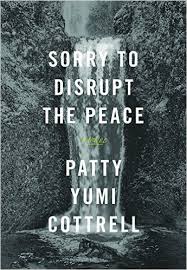
[READ: June 21, 2017] Sorry to Disrupt the Peace

This is one of a new(ish) batch of McSweeney’s books.  I was intrigued by the title and the cover  and some snippets of reviews sounded promising.

There were things I liked about he story but overall I was mixed on it.

The story is about Helen Moran.  She is a 32-year-old Korean woman.  She was adopted by white parents when she was a baby. As was her adoptive brother (who is also Korean but is not related to her).  Throughout the story she refers to her parents as “my adoptive parents” and her brother as “my adoptive brother” easily 100 times each.  I realize that that is a true statement and description, and it is important to her to keep this distinction, but it makes for irritating reading.  It makes your main character seem really ungrateful.

And maybe that’s it.  Helen is a pretty unlikable character.  She works with at risk youth but does some pretty risky things with them.  She’s even currently under investigation at her work for doing suspicious things.  She says she is called Sister Reliability but its unclear to me if they are doing it to mock her, if they are not doing it at all or if they are actually doing it because she is reliable (which I doubt).  She has also written a pamphlet called How to Survive in New York City on Little to Nothing which she handed out to people.  She wears garbage and discarded clothes and eats whatever–and that’s her advice to the poor.

But that’s not what the story is about.  The story is about what happens after she hears from her uncle that her adoptive brother is dead.  For reasons we never find out her adoptive parents do not make the call, it is done by her uncle.  Weird. (more…)

Read Full Post »

SOUNDTRACK: MOSES SUMNEY-Tiny Desk Concert #678 (November 29, 2017).
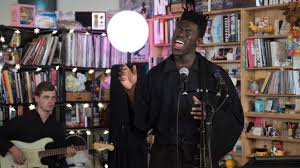
I had never heard of Moses Sumney before this show.  And the blurb seems to anticipate this:

If you don’t know this Los-Angeles-based force of nature, and haven’t heard him on tour with James Blake or Sufjan Stevens or perhaps on albums by Beck or Solange, then this is your chance to watch one of the most thoughtful talents of today as he makes music that is outside the box but easy to relate and connect to.

I’m very curious to know what he did with Beck.

I found Moses’ voice to be mesmerizing–a gorgeous soaring falsetto that he seemed to effortless get to rise higher and higher.  But beyond that, the blurb talks about his lyrics:

Moses Sumney puts a great deal of thought into the heartfelt music he creates. On his debut album, Aromanticism, he was inspired by everything from the works of Plato and Aristophanes’ account of the origin of humanity to the Bible, particularly Genesis and the story of creation. It’s all in an attempt to understand human relationships and the sorts of couplings we tend to be drawn to.

He plays 3 songs in the 20 minute time frame.  I wanted to describe the first song, but Bob’s description is too good:

The concert opens up with Moses not behind my desk, but at the piano we keep in our office. As his team of sax, harp and guitar players set up, Moses sat at the piano and began to play “Doomed.” He had instructed the band, which had already perched behind my desk 40 or so feet away, to create a transition for him to walk from piano to desk, continuing one of the most inspired 8-minute stretches I’ve witnessed here at the Tiny Desk.

So he plays the pretty piano melody and sings with those gorgeous falsetto vocals for about a minute and a half.  Then he strolls (in his cape) to the desk.  He activates some looping pedals.  He plays a beat on the microphone and then Sam Gendel plays a cool modified sax solo.  After 2 minutes of set up, he sings again.  The beats are in full and Brandee Younger is playing some simple gorgeous harp and Mike Haldeman has some echoed guitar on top.  Meanwhile, Sam has switched to a synth and Moses is also playing some kind of synth.  The song builds beautifully and he sings in a  higher and higher register.  It starts to sound otherworldly with the harp and his voice and the loops going faster and faster.  And then the wall of noise abruptly ends and the final minute is delicate and lovely.

He introduces the band and then says “we’re going to keep making noise.”  And then “hopefully no one’s printer goes off” (wonder if that happened).

“Quarrel” opens with him looping his own voice and then playing it faster and faster so it sound like a skipping CD.  Sam has picked up a guitar to pluck out notes (the head of his guitar is fascinating and I want to see it better).  Throughout the song Moses hits that looped vocal section for one or two seconds to add texture–it’s pretty cool.  The mix of that harsh(ish) electronic sound and the angelic harp is wonderful.

For the final song, “Plastic,” he removes his cape.  Everybody else leaves and he says “I want to make more room… for me!”  He picks up a guitar and says, “This is the end.  The bitter end.  Although for some of you, it will be sweet because it’s ending.”  It’s interesting how self-deprecating he is when his voice is so gorgeous.

This final song is much more jazzy with him playing interesting chords and singing to the guitar.  Overall it’s a bit less exciting than the other songs possibly because the last minute or so is just him repeating the line “my wings are made of plastic.”

But overall, Moses Sumney really impressed me with this set.  Right up to the end where he sinks slowly below the desk, to much laughter.

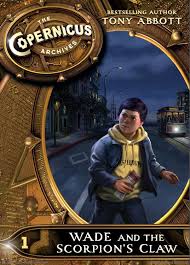
[READ: March 6, 2017] Wade and the Scorpion’s Claw

The Copernicus Legacy is a four book series.  But, in an interesting diversion, there are also two “extra” books inserted between the first two.  They are smaller and do not exactly affect the continuity of the main story, but they seem to delve into one character a little further (and there is some plot advancement).

Interestingly, Book One of the main series ends with Kaplans and their friends leaving Guam for New York.  The second book of the series opens with them in New York.  But this book, the first of the The Copernicus Archives, takes place between Guam and New York.  The big difference is that unlike the main books, this is told entirely from Wade’s Point of view.

En route to New York, the family has to stop in Hawaii.  They are in the airport for a while and they trust no one.  They are waiting for the flight to San Francisco when there are two notable people in the airport around them.  There’s a German man (you can tell by his shoes, Lily whispers) in a leather coat.  The kids don’t trust him and call him Leathercoat.  And then there’s a Chinese man doing acrobatics and other tricks to amuse some children while they wait. (more…)

Read Full Post »

« Newer Posts - Older Posts »