Feeds:
Posts
Comments

Archive for the ‘Scholarship’ Category

SOUNDTRACK: THE BEAUTIFUL SOUTH-“Dumb” (1988).

About five years ago I mentioned all of The Beautiful South records in one post.  But I didn’t really talk about them all that much.

This comes from one of my favorite Beautiful South records–I like all the songs equally, but I often have this song in my head.  And the reason I picked it right now is because Paul Heaton sings about a bunch of things each one ending with “either you are simply beautiful or I am simply dumb.”

And these are: “It doesn’t take a mathematician to add a simple sum”; “It doesn’t take a labrador to show a blind man sun”; and this one: “It doesn’t take Robert The Bruce to see the web you’ve spun.”

I had no idea who Robert the Bruce was and I never bothered to look it up.  And yet, as you will see below in the post, Robert the Bruce is mentioned in JR!  I was flabbergasted.  And this song immediately popped into my head.

And that’s not a bad thing.  It’s a pretty piano ballad with a seemingly negative chorus (dumb, dumb, dumb) despite its positive message.  There’s also a beautiful ending: “The sun, the sky, the moon, the stars/Jupiter, Neptune and Mars/All these things I clearly see/It don’t take a telescope for you to love me.”  The songs ends with Jacqui Abbot’s lovely echo of this stanza.

The Beautiful South were a great band, they broke up a few years ago.  Paul Heaton has a number of solo albums out but they’re not available in the states, so…

[READ: Week of August 6, 2012] JR Week 8

This week’s read finds us primarily in the apartment.  We see bast return home and fool around with Rhoda before he goes off on his trip to the funeral.  We see Gibbs come in and try (in vain) to get work done.  We actually get to see Gibbs’ magnum opus (or parts of it), and we see him fall off the high that he felt with Emily.

There’s a lot of funny stuff in this week’s read.  It seems like the darker the story gets, the more childish jokes Gaddis throws in there.  Seeing Gibbs unable to work on his manuscript because of all of the (real and fake) distractions is simultaneously hilarious and spot on.  And also, the plotlines are really revving up now.  JR Corp is starting to see some pushback on their deals, and a number of outsiders are starting to get angry.  There’s bound to be a collapse of some sort soon.  I’m also starting to think that with all of the ellipses in the book that it will end with a dot dot dot.

As we resume, Davidoff and Bast are still talking.  Davidoff tells Bast “Don’t worry about” something [Thanks to Simon for pointing out this expression–I recognized that Davidoff always says “brush fires,” but not the don’t worry about it].  He is concerned that Bast’s hearing aid isn’t turned up (ha), but that the Boss [JR] wants Bast’s signature on any expenditures over $2,000 (It was originally $200, but Davidoff said Bast would get writer’s cramp).  He explains the title change in the magazine from Her to She–passive to active readership–will cost $14,000.  There’s also $27,000 for a new logo.  And the logos are awesomely cheesy–hard to believe they paid $27,000 for them.  They revolve around the dollar sign, with the least offensive one making a J and R out of the top and bottom of the S–the others have a snake, or breasts or thumbing your nose or even someone behind bars.  They pick the least offensive one that says Just Rite in a dollar sign (“something patriotic about the dollar sign”).  They’re going to put them on half a million matchbooks. (more…)

Read Full Post »

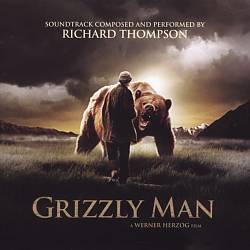
SOUNDTRACK: RICHARD THOMPSON-Grizzly Man Soundtrack (2005).

This is a largely instrumental soundtrack by Richard Thompson.  It features some wonderful guitar work (no surprise there).  There are several slow acoustic numbers (“Tim & the Bears,” “Foxes”–which is in the style of his old traditional folk ballads) there’s also the slow impassioned electric guitar solo (set over a simple beat) of “Main Title.”  “Ghosts in the Maze ” is a dark piece, the exact opposite of “Glencoe” a traditional-sounding song, both of these are under two minutes long.  “Parents” adds a cello, which means a sombre song.  “Twilight Cowboy” is one of the longer pieces, and it really conveys an openness of nature.

“Treadwell No More” is a slow six-minute dirge type song.  “That’s My Story” has spoken dialogue by Treadwell, over a simple unobtrusive guitar.  But as the title of the record says, Music composed and performed by Richard Thompson.  Which means there are other musicians on the soundtrack too.  “Small Racket” is where things start to get noisy and a little uncomfortable.  There’s some squeaks and slashes of sound, but it’s mostly a tense guitar feel.  Then comes the darker, scarier stuff.  “Bear Fight,” is a series of cello noises and swipes.  “Big Racket” is indeed that, with guitar from Henry Kaiser and noises from Jim O’Rourke.  “Corona for Mr Chocolate” is all Jim O’Rourke, it’s also odd noises and moods.  None of these three songs are terribly off-putting but they reflect a very different tone.

The album ends with “Main Title Revisited,” which is what it says and “Coyotes” by Don Edwards which has some coyote yodels.

It’s a good soundtrack, really conveying what the movie is about, and while not essential Richard Thompson, it is still some great guitar work

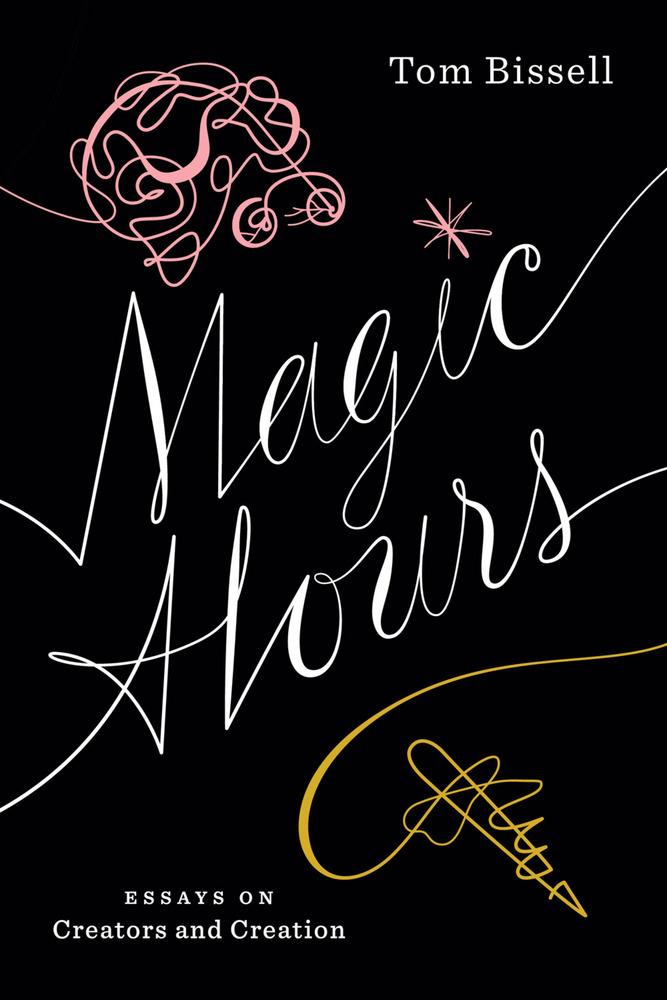
[READ: July 23, 2012] Magic Hours

I thought that I had never heard of Tom Bissell, but I see that I have read three of these articles already (I guess I don’t always pay attention to the author’s name).

This collection of essays comes from the last eleven years (2000-2011).  The articles have appeared in The Believer & The New Yorker (these are the ones I have read) and Boston Review, Harper’s, New York Times Magazine, Virginia Quarterly Review, New York Times Book Review and Outside (which I am starting to think I should really check out more).

Primarily they are articles about writing–he looks at fiction, non-fiction, film or a combination of them.  Bissell is a strong writer and he does not hold back when he sees something he likes or dislikes.  I found his articles (all of which are quite long–about 30 pages each) to be engaging, funny and very persuasive.  I’m really glad I read the book (and was even glad to re-read the articles that I had read before). (more…)

Read Full Post »

SOUNDTRACK: EVANGELISTA-In Animal Tongue [CST082] (2011).

Evangelista is probably my least favorite band on the Constellation label.  I’m especially surprised/disappointed in this because I loved Carla Bozulich’s earlier bands.  I’ve said before that I find her vocals to be weirdly and wonderfully disconcerting.  And when it’s played over aggressive confident music it works wonders.  But when it’s paired with music that is also kind of abstract and untethered, it just sounds like a mess.

After that introduction, I’ll say that this album is their best release yet.  Her voice (the Constellation site suggests her melodies are “largely improvised” (!)) sounds like it always does–unsettling, haunting, compelling, drawing you into whatever world she is invoking.   The title track is the most intriguing–the music is subdued, drawing you in even more.   “Black Jesus” is also compelling in that it is one of her more subtle releases.

“Bells Ring Fire” has the catchiest section, practically a singalong.  “Die Alone” reverts back to that old nebulous style where there’s just nothing to grab on to.  Indeed, “Enter the Prince” and “Hatching” both have interesting sound effects (especially “Hatching”) but they’re not really compelling as songs.

I think the real problem with these songs is that they’re all too long.  Since they don’t have any hooks in them, since there’s nothing to really grab you and make you want to like them, having them come in around 5 minutes is just too much to ask of the listener.  Some of these songs would be inetresting for two or three minutes, but by 5 I’ve given up.

Check it our for yourself here

[READ: May 15, 2012] “Reading Graffiti in the Early Modern Book”

This may be the most current scholarly article I have read from JSTOR.  Part of the fun of reading the JSTOR scholarly articles is that they are usually old enough that you can have either a) contemporary knowledge about what the author got right or wrong or b) a fun nostalgia based upon the word choices or references that are in the text.  So with this one, which is not even two years old, there’s neither of those possibilities.  What’s also interesting is how the article is clearly current–the references that Scott-Warren uses are contemporaneous (“the Banksy of his day?”)

So what is this article about anyhow?  Well, Scott-Warren looks at the notes and scribbles that people have written in their books.  But not just your average textbook or library book, he goes back very far to the “early modern” period and sees that people have been graffiting their books since there were books.  He mentions how anyone studying books from that era will see all kinds of things on the pages of the book, from scribbles to pressed flowers to even the rust outline of scissors.  But he wants to focus on what people have written.  And he wants to see of any of these notations are comparable to graffiti in the current sense of the word.

He discusses current definitions (including tagging) to explain that graffiti is all about saying “I am here.”  (He even interviews a graffiti artist named Claw).  Then he goes back to 1434 and sees a Latin inscription from Jan van Eyck on his painting Arnolfini Double Portrait that more or less says “Jan van Eyck has been here.”  Although it is his own painting it has a feel of graffiti, of making a public note that you exist.  Similar inscriptions can be found in many books of the period as well.  There is a 1565 edition of a book with a heavily flourished signature, there’s a 1548 edition book with a doodle that may include a self-portrait.  There’s even a bible that has been inscribed by every member of the family (daughter Mildred’s is stunningly ornate).  Another book has the owner’s signature about fifty times throughout the book.  Are these words to the world?  Public notations?  or something else?

Scott-Warren wonders if these markings can be considered “pen-trials”–pens were hard to use back then, the ink was homemade and paper was scarce.  Another possibility is that they were an attempt to prove and expand on literacy.  A third possibility was ownership. Like the graffiti in a 1685 Indian Bible, written in Massachusett: “I Nannahdinnoo, this is my book…I, I Nannahdinnoo, own this forever.  Because I bought it with my money”

I especially enjoyed the book that had written, under the name Walter Vaughn, “This book belongs not to Walter Vaughn but to James Vaughn because his later father John Vaughn gave this book in his last will and testament to the same James Vaughn and therefore the said James is the true owner of the book” (1582).

In addition to the I of graffiti Scott-Warren looks at the “was here” aspect.  In a 1549 History of Italy, there is an inscription noting that the owner had been to Venice.

The key to all of this seems to be its public-ness.  Some inscriptions were prayers that were clearly meant for others to read.  In another case, the person wrote his opinion about the booksmith where the book was purchased.  There’s even some graffiti that is like trash talking of others.

I enjoyed this article because there were lots of pictures of the inscriptions, although i could have used a few more, frankly.  It was also curious to think about why people wrote things in books long ago–who exactly did they think would be reading their copy of a book?  Was it just a public act of disobedience at a time when a public act had to be very self-contained?

Read Full Post »

SOUNDTRACK: SANDRO PERRI-Impossible Spaces [CST085] (2011).

This album has become one of my favorite releases of the year.  I simply can’t stop listening to it.  And the funny thing is that on first listen I thought it was too treacly, too “sweet,” especially for Constellation Records (home to the over-the-top Godspeed You Black Emperor amongst other wonderful bands).  But after a listen or two, I heard all of the genius that is present in this record–so many different layers of music, and so many interesting instrumental choices. Indeed, it does come off as sweet, but there’s really nothing wrong with that.

This album gives me a happy pick me up without being cloying in any way.  That’s a great accomplishment.

“Changes” opens kind of all over the place, with some noisey guitars and really high bass notes.  But once the shk shk of the shakers comes in, the sing settles into a great groove (and there’s a cool bassline that really holds the song together).  After about 3 minutes, it turns into a cool light funk jam, with retro keyboards, buzzed out guitar solos and some funky drums.  It’s unlike anything you’ll hear anywhere else.  “Love & Light” is one of the shorter pieces at just under 4 minutes.  It’s different from the other tracks, in that Perri’s vocals seem to be the dominant motif, rather than the cool music.  I like the song, but it’s probably my least favorite here.  “How Will I?” uses a similar multi-tracked vocal style but it has some wonderful flute moments (yes flute) that make the song bubbly and happy.  The song kind of drifts around the ether in a kind of jazzy world until about 5 minutes in, when the bassier notes anchor the song with great contrasting notes.  And the electronic ending is as cool as it is disconcerting.

“Futureactive Kid (Part 1)” is a shuffling minor key number that’s just over 3 minutes, it features a cool bass clarinet and backwards guitars to propel the song.  The backwards guitar solo segues into the uplifting (literally, the keyboards just go higher and higher into space. “Futureactive Kid (Part 2)” features fretless bass, a flute solo and My Bloody Valentine-esque sound effects (although radically simplified from MBV’s standards).  It fades out only to introduce my favorite song in forever–“Wolfman.”  I can’t get enough of this song.  It’s a simple structure, but at ten minutes long, it deviates in amazingly complex ways.  It has so many cool aspects that I love–I love the chord changes at the end of each verse.  I totally love the guitar solo that goes up and down the scale for an impossibly long run–well over 100 notes by my count.  I also love that the end of each section features a different guitar style playing the simple chord progression–from acoustic to loud solo to full band playing those same notes–so by the end of the ten minutes you ‘re not sure what to expect.   By the time the flute solo comes in at nearly 7 minutes, I’m totally committed to the song and wherever it’s going to take me.  So when it gets a bit of an electronic ending, I’m ready to go there with it.  Oh and lyrically the song is just as curious as the music.

The final song “Impossible Spaces” is a beautiful, quiet guitar song which is actually easy to sing along to.  It quiet a departure from the rest of the record, but it ties things together very nicely.  I have listened to this record so much lately, I just can’t get enough of it.

You can stream the whole thing here.

[READ: May 10, 2012] Conversations with David Foster Wallace

This is a book that collects interviews with David Foster Wallace.  Although DFW was reticent about d0ing interviews (as the introduction states), he did do quite a lot of them–often at the same haunts.  This book contains 22 interviews that span from 1987-2008.

The conversations are in chronological order, which is really a treat because you get to see DFW’s opinion (and his addiction to nicotine) evolve over the years.  You also get to see the topics that he was really focused on at one time and whether or not they stayed with him until the final interview.  DFW was outspoken about certain things, especially entertainment, which is unsurprising.  But he was also a big advocate of truth, honesty, realness.  It’s amazing seeing him when he lets his guard down. Although his honesty is there for all to see in his work, he is better known for his difficulty with language or his humor.  So seeing him without the multiple revision is quite enlightening.

The first pieces, “David Foster Wallace: A Profile” published after his first novel The Broom of the System launched Viking’s paperback imprint actually looks into his classroom a little bit and shows him interacting with a student (I wonder if she knows she is in this book?).  It seems sweet and almost naive compared to what is to come next.  And, for anyone who is familiar with him from later in, it’s a wonderful look behind the scenes.  There’s also a number of pieces from The Wall Street Journal.  Like the second piece in the book, the worryingly named, “A Whiz Kid and His Wacky First Novel.”  It’s not a bad piece at all, but man, headlines can be delicate matters. (more…)

Read Full Post »

SOUNDTRACK: DEATH CAB FOR CUTIE-“Kicked In” from Score! 20 Years of Merge Records: The Covers (2009).

Death Cab for Cutie are immediately recognizable here.  And they take this Superchunk song and make it sound like a Death Cab for Cutie song.

This cover is the rare cover in which the band takes a song and makes it clearly their own, and yet they don’t alter it all that much from the original.  The Superchunk version is slow (for Superchunk), with buzzing, distorted guitars and Mac’s vocals riding over the top.  The DCFC version features Ben Gibbard’s voice riding over the top as well.  But DCFC make the song a bit cleaner.  Rather than distorted guitars, we get chiming guitars and simple notes.  Instead of being a kind of grungy anthem, it feels somewhat uplifting.  And in true DCFC style, the uplifting sounding song really disguises something darker.

Even though the DCFC version feels slower, it’s not any longer than the original, and I think the pacing is pretty much the same.  It’s a neat trick.  I like both versions equally.

[READ: May, 2, 2012] “Men Against Violence”

This story came in third place in the Narrative Magazine Fall 2011 short story content.  It had a very different feel from second place winner.  It is set in college.  It feels contemporary and it reads young.  This, of course, means that I liked the style immediately.  I admit I was a little confused by the opening—I felt the exposition was  little convoluted and relationships were not established effectively.  But once it got moving, the story was really engrossing.

This is a reasonably simple story.  Kyle has a Hennessey scholarship—he received hundreds of thousands of dollars over his four years of college.  As the story opens he is attending the dinner which announces the newest scholarship grant, and introduces Kyle to the latest scholarship winner, whose name is (in all lower case letters) madison pepper.

The guest speaker at the banquet is Brooke Hennessey.  She is the granddaughter of Dorothy Hennessey and is currently is Kyle’s class at the college.  She speaks eloquently about her family’s donation (of the Hennessey Art Museum).   What she doesn’t say is that she ran away at 15, spent two years living in a car in Portland and that she accepts no money from her family (and has a mountain of debt).  She also doesn’t say that she is currently dating Kyle.

Kyle has problems of his own.  He recently got into a fight with a Trevor, a fairly important person on campus and he is now on a kind of probation—if he fights again, he loses the scholarship and has to back all the money.  This is why he joined Men Against Violence.  There’s a funny (but not really) insight into the existence of MAV on the campus, which leads to many unanswered questions about gender relations.  And the subject of gender relations is all over this story.  That delicate subject is handled very well. (more…)

Read Full Post »

SOUNDTRACK: WILD FLAG-Live at the Black Cat, October 20, 2011 (2011).

It’s interesting to compare this show by Wild Flag with their SXSW show.  This set is longer, but they retain the same raw energy and intensity.  It also sounds as though the tour has been rough on Carrie’s voice, which sounds a bit strained and hoarse (even when she talks!).

They play most of their debut album, but they also throw in a couple of new songs and even a few covers.  Perhaps the most fascinating part is the 15 minute (!) version of “Racehorse.”  There’s a lengthy noodling section as well as a cool part where Carrie goes a little crazy asking about money.

Janet Weiss is absolutely amazing here too.  And the keyboards, definitely complement everything well, but they are always the most notable flubs, and there’s the same one as in the SXSW show (not as bad, but noticeable).

Without a doubt the most interesting thing is the hearing that Mary Timony gives guitar lessons in Washington DC.  She lives there and evidently earns extra cash by doing guitar lessons.  Wow.  How cool would that be?

Check out the show here.

[READ: January 15, 2012] The Influencing Machine

Brooke Gladstone is one of two reporters who works on NPR’s On the MediaOn the Media is an awesome show which dissects things that happen in the world and examines the way the media portrays the events.  They work pretty hard to see who is reporting bias, who is exposing bias and how things are getting out to the average media consumer.  It’s worth anyone’s time to read (it doesn’t take very long).  And it’s also fun and enjoyable.  As anyone who has heard the ending of On the Media: “and edited [dramatic pause] by Brooke” knows, there’s always a smirking grin attached to the program.

When I heard that this book came out I was pretty excited to read it.  And then I promptly forgot all about it.  Lucky for me, my wife can take a hint, and she got it for me for Christmas.

The first surprise of the book is that it is written as a graphic novel–illustrations by Josh Neufeld (who has drawn for Harvey Pekar’s American Splendor).  The funny thing about the illustrations is that I have no idea what Brooke Gladstone looks like (which I rather prefer about my NPR announcers), but I really like the cartoony style of her avatar (which reminds me of Elaine from Seinfeld and which inspired me to draw a kind of similar version on my drawing site.

On to the book.

This book works as a primer for understanding media ownership, media consolidation and media power.  The opening few chapters are going to be nothing new for anyone who has read Chomsky or Vidal on the media.  But since most people haven’t, it’s a wonderful way into some of these thorny issues of who tells us what and why. (more…)

Read Full Post »

SOUNDTRACK: JOHN ZORN-“Have Yourself a Merry Little Christmas” (2011).

Wild skronking horns, screamed vocals, chaos chaos cha–.  No.

Piano and vibraphones with some gentle guitars thrown on top.  This is a beautiful, gentle jazz rendition of this song.  What makes this so strange is well, frist, because John Zorn loves death metal and all things noise.  But also because John Zorn revels in Jewish culture.  So what’s up with this holiday album?

Evidently he always wanted to make a holiday album.  And he’s using most of the same guys who have played with him for years. 

That’s a real Christmas miracle! Read more about it here.

[READ: December 16, 2011] Children, Gender, and Social Structure

Our director sent us a link to this article to get us in the holiday spirit (you have to subscribe to JSTOR to read it).  Although he spoiled it in his email (boys and girls are different), I still enjoyed reading the contents here.  At least somewhat.  The article was really quite dry and relied on some scientific terminology which I found confounding.  Nevertheless, the results were easy enough to follow, and that’s what really matters.

The most interesting thing was the setup.  They read all of the letters mailed to Santa that were received in the Seattle post office in 1978.  (I wondered why it was so long ago before I confirmed that this was written in 1982, so that makes sense).  They received 855 letters that year.  And I found this breakdown as interesting (if not moreso) than the rest of the article: 63% were from within the state; 29% were from out of state (how did they get there??); and 8% were from out of the country (what?? how, why?–no answer is given, sadly).  31 letters were illegible, so they were out.  The rest were assessed by gender of the names based on a baby naming book (from 1966!).  This yielded 359 from boys, 391 from girls, 46 gender ambiguous (what percentage would there be today??) and 28 with no name. 

I was also fascinated by  the age breakdown: 24%: 5 or under; 41% 6 or 7; 29% 8 or 9 and 7% were ten or older! (more…)

Read Full Post »

SOUNDTRACK: COCTEAU TWINS-“Frosty the Snowman” (1993).

Cocteau Twins released Snow, a “holiday” EP in 1993.  Their version of “Winter Wonderland” is quite sublime.  This version of “Frosty the Snowman” on the other hand is a bit…off.

I don’t know if the tempo is too fast (I think that may be it), or if the lyrics are too silly (even if the Twins weren’t filled with gravitas, most of the time you couldn’t hear what they were saying anyhow) or if they just can’t get their brand of lush to envelope the song, but it just doesn’t quite work for me.

[READ: December 13, 2011] “The Tragedie of Frosty the Snowman”

My work director sent this article around as an amusing academic piece for the holidays.  It’s a short article (one and a half pages) but it does a good job of analysing the real tragedy that is Frosty the Snowman: “Frosty’s tragedy is not simply that he must melt, thaw, resolve into etc.–this is merely the common fate of all men, persons, who are made out of snow.”

The tragedy of Frosty is personal, for he has an inner greatness.  When he encounters the magic hat he claims to be coming “back again someday.”   But can he every really understand that?  [We watched this special just the other day, and it must be said that Frosty, who seems to be quite naive and unaware (what’s a traffic light?) is also quite savvy about a lot of things that he should not know–winter flowers, frozen boxcars]. (more…)

Read Full Post »

SOUNDTRACK: VAMPIRE WEEKEND: AUSTIN CITY LIMITS FESTIVAL 2010 (on Palladia TV 2011).

Like The Flaming Lips, Vampire Weekend only got two songs in this airing (this makes sense as they only had two albums out at the time).  The two songs were “Cape Cod Kwassa Kwassa” and “Oxford Comma” (Palladia faded out the “fuck” in “Oxford Comma” which always seems so subtle I don’t think I’ve ever heard it censored before). 

The band sounds great (something I’d wondered about as they seem like such a studio band–not that they use tricks or anything, but their music is so tight and sharp, it’s nice to know they can play it live, too).   Although their live show is not all that exciting visually and they seem kind of dwarfed on the giant stage. 

The real change comes from the vocals.  Not big changes, but the singer seems to having a little fun on “Cape Cod” but hitting some really high notes which are almost out of tune. 

It’s interesting that they chose to air two songs from their first album and none from their new album.  Regardless, theirs was a good set and I’d love to see more.

[READ: November 6, 2011] “Visions Shared”

A while back I read a few old articles that I got from JSTOR, the online archiving resource.  This month, I received some links to three new old articles that are available on JSTOR.  So, since it’s the holiday weekend, I thought it would be fun to mention them now.

I have been fascinated by synesthesia ever since I first heard of it a few years ago.  So when I saw that this article was not only about synesthesia, but was written from the point of view of an artist with it, I was really excited.  Sadly, while Steen may be a good artist (it is actually really hard to tell from the pictures in my print out–why are they black and white?) she is not a very compelling writer.

The most fascinating thing that I got out of this article was that by 2001, people were still not entirely sure of synesthesia and its effects on artists.  And that this is meant to be one of the first accounts from a synesthetic artist.  As such, she goes over a lot of basic groundwork and tries her best to explain exactly what is happening when she experiences these sensations.

The details are of course fascinating–she sees colors when she has certain experiences and acupuncture in particular seems to be a major source for her art.  In this respect I find her form of synesthesia less than satisfying because I am more interested in those who conflate words and sounds with colors, but beggars can’t be choosers.  Nevertheless, these acupuncture sessions have resulted in a number of art pieces.  In fact, she says she was painting these synesthetic colors long before she even knew she had synesthesia (her first painting, called “Orange Calipers” was actually synesthesia-inspired even though she didn’t “know” that at the time). (more…)

Read Full Post »

SOUNDTRACK: AUSTIN CITY LIMITS FESTIVAL 2010 (on Palladia TV 2011).

Recently Palladia broadcast some highlights from the Austin City Limits Festival in 2010.  The bands they showed were Phish, The Flaming Lips, Vampire Weekend, Muse, LCD Soundsystem, Sonic Youth, Spoon and Slightly Stoopid.

There were so many good bands at this festival (why is Richard Thompson in such small print?) that I won’t really complain about the inclusion of Slightly Stoopid and LCD Soundsystem on this best of (but they could have included Band of Horses, Yeasayer, Broken Bells, Gogol Bordello (the list goes on!).  (I’d never heard of Slightly Stoopid and although I like LCD Soundsystem, live they were less than stellar).  Although I am glad they didn’t include the Eagles, thank you very much.

I’m trying to get actual set lists of these airings (they mentioned the song titles during the show but I didn’t write them down).

This was a 2-hour broadcast and it was really good.  If they re-air the episode, it’s worth watching.  The quality of the broadcast is excellent (even if the HD format does take up way too much space on a TiVo).

[READ: November 6, 2011] “Beer Cans: A Guide for the Archaeologist”

A while back I read a few old articles that I got from JSTOR, the online archiving resource.  This month, I received some links to three new old articles that are available on JSTOR.  So, since it’s the holiday weekend, I thought it would be fun to mention them now.

And to start of the holidays, I present you with this–a loving history of the beer can (for archaeologists).

This is a fairly fascinating look at the development of the beer can from 1935 to the present.  The selling point of the article is that archeologists could use beer cans to date the timeframe of an excavation.  I agree with this; however, since they only date back to 1935, I’m not entirely convinced of its long-term usefulness.

The problem with the article is that page two shows a chronological timeline.  This in itself is not a problem (although it is odd that it goes from present to 1935 instead of chronologically forward); the problem is that the article itself more or less sates exactly the same thing as the timeline.  For although this article is 20 pages long, there are tons of photos and very little in the way of text beyond what was in that (very thorough) time line.

Nevertheless, you can see the morphing of beer cans from ones that you had to pop open with a can opener to ones that finally had self opening cans.  See the switch from tin to aluminum, and even learn why the tops of cans are a little narrower than the sides (called a neck-in chime, it evidently saves a lot of money). (more…)

Read Full Post »

« Newer Posts - Older Posts »