Feeds:
Posts
Comments

Archive for the ‘Religion’ Category

SOUNDTRACK: RHEOSTATICS-“Horses” (1991).

I have mentioned the Rheostatics a lot.  I’ve even talked about this song in Melville.  And yet it works so well as a companion to this book.

It starts slowly enough, a simple acoustic guitar with the lyrics:

Word came down and it crashed through my door
From the twenty-first floor
I was thinkin’ about leavin’ early for lunch
When he told me to shut off my press
His face turned green and his white shirt was wet
Like he’d just seen an accident
We threw our masks into a pile, the trucks pulled away for good

The band kicks in a slow beat  as the song builds:

A bus pulled in and I waved at it
Before I knew what it was
We ran in its tracks chasing its tires
But the gates had been riveted shut
I looked for the foreman; his number was empty
Up to Red Deer to stay
We gathered some signs and we sparked up a fire
Gordie got burned on the high-voltage wire

A quick intense bridge:

The first thing she’ll ask me is: “How did it go today?”And I’ll tell her.

The song builds in intensity with some wild screaming guitars until finally settling down to the quiet beginning

I thought there was strength in a union
I thought there was strength in a mob
I thought the company was bluffing
When they threatened to chop us off
Ah, these guns will wilt the winter will seize
And all the bonfires will go out
The company knows when they can afford to be bold
I wish I could, I wish I could, I wish I could

All along the ringing repeated chorus: “Holy mackinaw Joe! (Holy mackinaw).”

I’m not sure if this references a specific event or not.  (Surely someone can tell me that).  But you can listen to it here.  Or, find any of the live renditions on youtube.

There’s an interview with Dave Bidini of the Rheos who tells the interviewer that he also used to do music interviews.  And once he interviewed Neil Peart who, after much chatter, asked Dave if he knew the song “Horses” by the Rheos.  Dave humbly said that he wrote it.  And Neil said that on their last tour he used to come off stage and listen to “Horses” at full blast.  (And that’s how they got Neil to play on the Rheos’ subsequent album).  Neat, huh?

[READ: Week of July 16, 2010] Letters of Insurgents [Sixth Letters]

Insurgent Summer is till moving along, but the insurgents have been quiet lately.  I hope the insanity of these letters and invocations of the devil will bring up the chatter.

Yarostan opens his letter with the most heartfelt emotions.  And yet, anyone who thought (as I did) that there might be some kind of rekindling of romance between the two will be sorely disappointed: (more…)

Read Full Post »

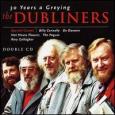
SOUNDTRACK: THE DUBLINERS-30 Years A-Greying (1992).

The Dubliners were an Irish folk grew founded in 1962.  Probably the most notable thing about the band was lead singer Ronnie Drew’s voice, which out-gravels Tom Waits in depth and impact.

I don’t know a heck of a lot about them as a band or their impact on traditional Irish music, but Wikipedia tells me that they were a major force in the export of trad music.  So there.

So if you like traditional Irish music (that’s not as “pretty” as some artists).  The Dubliners are a good resource.)

When I bought this album many many years ago, I was under the impression that it was a greatest hits with extras.  In fact it’s not (although there are a number of classic trad songs here).  The selling point is that there are a lot of guest vocalists (The Pogues, of course, among others).

But I think a cheaper, shorter compilation would be the way to go, (you’d definitely want “Finnegan’s Wake” for instance).  And I have to say I was a bit surprised by the inclusion of “The Rose” (even if The Hothouse Flowers are on it, too).

Nevertheless, if trad Irish music is what you’re after, The Dubliners are your man.  And they’re named after the Joyce book, too.

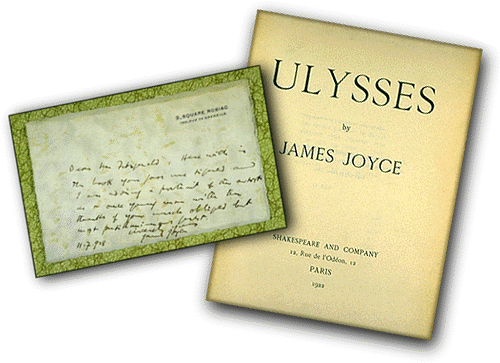
[READ: Week of July 19, 2010] Ulysses: Episodes 4-6

I would be remiss if I didn’t include a link to the Infinite Zombies discussion about Ulysses. There’s some great stuff there!

This week’s reading introduces us to Leopold (Poldy) Bloom.  We meet his wife Molly and learn about their daughter Milly (who is away) and their son Rudy who died in childbirth.  The most notable thing about these three Episodes is that, despite the continued use of interior monologue, they sound so different.  Whereas Stephen’s was very intellectual (ineluctable modality of the visible, and all), Leopold’s is much more visceral.  He focuses quite a lot on excrement and organs.  And of course, there’s Bloom’s very introduction:

Episode 4 “Calypso”
“Mr Leopold Bloom ate with relish the inner organs of beasts and fowls” (45). (more…)

Read Full Post »

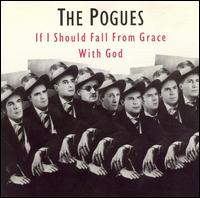
SOUNDTRACK: THE POGUES-If I Should Fall From Grace with God (1988).

So the cover of this album has James Joyce on it (and a hilarious pastiche of the rest of the band).  I guess we know what we’re in for, then.  This is the Pogues third album and the one that tamed the wildness of their first shambling discs into a (somewhat) presentable collection of songs.  And, jaysus, it’s fantastic.

The Pogues seamlessly blended punk and traditional Irish music (and on this disc they expanded into latin & middle eastern motifs too).  The first track opens with a fast paced Irish whistle playing what is pretty darn close to a jig.  And then Shane MacGowan (whose teeth are not to be believed–or if you are lucky, not to be seen) sings his slurred, fantastic lyrics.  MacGowan always presented such a contradictory figure for this band of well dressed resctable players.  And it’s often confusing wondering how he became the front man of this band.  But he adds that certain something to make the band unforgettable.

“Fairytale of New York” is one of the most gorgeous, sad Christmas anthems ever.  It’s a duet with the much missed Kirsty MacColl and it’s moving and charming, even with the lyrics: “you scumbag, you maggot, you cheap lousy faggot, happy Christmas me arse, I pray God it’s our last.”

Then you get a crazy instrumental, “Metropolis” fast paced, manic energy and a great riff (and of course, let’s not forget the quoted musical passage too).

What’s surprising is when you get a tender ballad like, “Thousands Are Sailing.”  Lyrically it is stunning, and you wonder why is Shane singing it with that slurry voice of his.  And then you realize it works perfectly as a drunken lament.  And then you get to the chorus, and you stop caring and just enjoy the song.

They even throw in a couple of traditional songs, like “South Australia” and “Medley” (which incorporates “Rocky Road to Dublin.”)  But after “Fairytale,” I think my favorite track is “Fiesta” which is a Spanish/Mexican sounding song with loud horns and absurd faux Spanish lyrics.  Ole!

And, just so we know, it’s not all drinking and rollicking, Shane also wrote “Birmingham Six.”  “There were six men in Birmingham / In Guildford there’s four / That were picked up and tortured / And framed by the law / And the filth got promotion / But they’re still doing time / For being Irish in the wrong place /And at the wrong time / In Ireland they’ll put you away in the Maze
In England they’ll keep you for seven long days”

The Pogues would release two more albums before Shane MacGowan took off. And they’re all pretty darn good, but I’ve always been partial to this one.

[READ: Week of July 12, 2010] Ulysses: Episodes 1-3

This is my third time reading Ulysses.  The first time I was a freshman or sophomore in college and I signed up for a James Joyce class because, get this, the Canadian band Triumph had released a CD called Thunder 7 which was supposedly based on the 100-letter words in Joyce’s Finnegans Wake (which I had bought and found impenetrable).  Our teacher was intense and tried to scare everyone off (which worked for some, but not me).  The class was hard (first assignment : read The Odyssey over the weekend for a quiz on Monday).  I enjoyed Dubliners and Portrait of an Artist as a Young Man, but I thought Ulysses was pretty daunting.

I read it again when I re-took the class with the same teacher (not for credit this time, but because I wanted to, imagine that).  And that time I learned to really appreciate what Ulysses had going on for it.  I was also inspired by it to try to write challenging fiction, paying careful attention to every single word, and even possibly using different writing styles in the same book.  (The world appreciates that that never panned out).

But so the careful attention thing: Joyce spent seven years working on Ulysses.  Every single word was charged with meaning.  He even made up his own words.  And it’s very apparent that he was the inspiration for countless modern authors (for better or worse).

I’m excited to pick the book up again.  In part, because it was ranked number 1 on the MLA list of books, but also because for twenty-some years I’ve felt the book was fantastic.  And I wanted to see if I would enjoy it without guided instruction.

I was curious about which edition to read.   Since my class, when there was only really one edition available, many many editions have been published.  There’s a great discussion about this at Infinite Zombies, and I considered getting the third one Judd mentions.  But when I consulted with my old professor, he said the Gabler edition is still the best, so I went with that one.  And that edition is littered with all the notes I took from class and from the supplemental resources.

I decided not to read the supplemental resources this time (although I can;t help but look at my notes), to see what I can get from the story AS A STORY.

I remember a bunch from the class, but one thing that I distinctly remember is that to get everything out of Ulysses, you need to understand Catholicism (the mass in particular), The Odyssey, European history–especially Irish history, and popular Irish culture circa 1920.  It also helps to know Latin.  And these are all things that Joyce would have known and his audience probably would have known.  Every year we move away from its publication, means we know less about what he was writing about.  But that’s all the little details and jokes and blasphemies.  I wanted to see (with some background, which certainly gives me an advantage) if I could enjoy the story without all the help.

So… (more…)

Read Full Post »

SOUNDTRACK: TEENAGE HEAD-“Picture My Face” (1979).

Teenage Head is a punk band in the vein of The Ramones.  If I were younger I probably would have enjoyed this song more.  Not because it’s a punk song (and I’m old) but because it’s so derivative of just about every Ramones-inspired punk song I can think of.

There’s nothing wrong with being derivative per se.  Some of the best bands started out as derivative of something else.  And, frankly when you’re playing three chord punk it’s hard to reinvent the wheel.  But I think these kinds of bands are more for people who don’t have a history of music that is just like this, only better.

Heh, I just looked up this band and found out that this song is from 1979.  Whoops.  So it doesn’t have 30 years of punk holding it up, it still has a whole bunch of Ramones tracks to compare it to.  And, I stand by the suggestion that it’s fun punk, just not terribly original (although perhaps in 1979 it was more original).

[READ: June 14, 2010] “Waiting for God”

This story is set (sort of) at the Vancouver Olympics.  The narrator overhears two men speaking.  One of them is described as “Man in rags” the other is “Man with turnip.”  I understood that much.

I assume this is an homage to Waiting for Godot, an absurd story if ever there was.  And so, this story is also absurd.  Man in rags is discoursing with Man with turnip, but Man with turnip seems to be discoursing with someone else entirely. (more…)

Read Full Post »

SOUNDTRACK: DANGER MOUSE AND SPARKLEHORSE present: Dark Night of the Soul (2010).

Seems like most things that Danger Mouse touches involve lawsuits.  I’m not entirely sure why this disc had such a hard time seeing the light of day.  But it is due for a proper release in July.  Although by now, surely everyone has obtained a copy of the music, so why would anyone give EMI any money for the disc (since they hid it away in the first place).

The name that is not listed above is David Lynch, who is an important contributor to the project.  He creates all the visuals (and the visuals in the book that was the original release format).  He also contributed vocals to two tracks on the CD.  (His vocals are weird and spacey, just like him…and if you remember his voice from Twin Peaks, just imagine Gordon singing (but with lots of effects).

The rest of the disc is jam packed with interesting singers: Wayne Coyne (from The Flaming Lips), Gruff Rhys (from Super Furry Animals), Jason Lytle (from Grandaddy) on my two favorite tracks, Julian Casablancas (from The Strokes), Black Francis, Iggy Pop, James Mercer (from The Shins), Nina Persson (from The Cardigans), Suzanne Vega, and Vic Chesnutt.

I’m not sure if Danger Mouse and Mark Linkous wrote the music already knowing who the singers were going to be, but musically the tracks work very well.  And yet, despite the different sounds by the different singers, the overall tone and mood of the disc is very consistent: processed and scratchy, melodies hidden deep under noises and effects.   Even the more “upbeat” songs (James Mercer, Nina Persson) are dark meanderings.

It took me a few listens before I really saw how good this album was.  On the surface, it’s a samey sounding disc.  But once you dig beneath, there’s some really great melodies, and it’s fascinating how well the songs stay unified yet reflect the individual singers.

EMI is going to have to pull out all the stops to make it a worthy purchase for those of us who have already found the disc.  Since The Lynch book was way overpriced for my purchase, (and they surely won’t include it with this CD), they need to include at least a few dozen Lynch photos (and more).  And with a list price of  $19 (NINETEEN!) and an Amazon price of $15, the disc should clean your house and improve your wireless connection too.

[READ: June 1, 2010] Bloom County Vol. 1

Boy, did I ever love Bloom County.  Back in high school I had more drawings of Opus and crew in my locker than anything else.  (I used to reproduce the cartoons by hand, I was never one of those “cut out of the paper” people.)  And so, there are tons of punch lines that I still remember twenty-five years later.

And yet, despite my fondness for the cartoon (and the fact that I owned (and read many times)) all of the collected books, I was amazed at how much of the early strips I had no memory of, at all.  True, some of the really early ones are here for the first time in collected form (according to an interview there are hundreds of comics in collected form for the first time in these volumes).   But those early 1980 comics…wha? (more…)

Read Full Post »

SOUNDTRACK: MOBY GRAPE-Moby Grape (1967).

Moby Grape is one of those bands that I’ve always heard of but had never heard.  I know, their debut is 43 years old and yet I’d never heard it.  Well, thanks to the internet (lala.com, RIP as of today), I was able to listen to what I assumed was their Greatest Hits.  If only I had done a modicum of research.  The disc I chose was Legendary Grape, which it turns out is not a greatest hits at all, but is actually some weird pesudo-Moby Grape record released in 1989 under a different band name due to legal protractions, but then reissued as Moby Grape.  It was rather uninspired and nothing at all what I thought it would sound like.  Nothing dreadful, just nothing worth thinking that this band “legendary.”

So, with a little research, I learned that their first album is what I should have been checking out.  Moby Grape is the eponymous release and it sounds much more like what I assumed this psychedelic era-band would sound like.  This disc is pretty much in keeping with what a band that produced an album cover like this would sound like.

It’s sort of a folksy Grateful Deadish sound.  But they move beyond a simple genre with a host of writers and instrumentalists contributing their own thing, man.  So there’s a few rocking numbers, a few ballads, and a bunch of other fun things. To me the most notable thing is that in a time when trippy psychedelic songs were long events, Moby Grape played mostly short songs (the longest one is the final track at 4 minutes, but most are around 2 minutes long).

I think I may be too far removed from this scene to really appreciate the disc.  I like what I hear, and a second listen made it even more enjoyable, but I can’t imagine investing a lot of  time with the band.

[READ: Week of May 31, 2010] Moby-Dick [Chapters 19-41]

Plug #1:
In case you didn’t see it on Infinite Zombies, Daryl has created what he calls Moby-Diction, which allows you to search the text for any word and see where and how often it occurs.  Geek heaven!

Plug # 2:
A visual treat is found at Matt Kish’s monumental: One Drawing for Every Page of Moby-Dick, which is pretty well explained by its title.  It is an amazing site (sight) to behold.

Now, back to our story.

Week 2 of the Moby-Dick read is amusing because it continues a minor thread that has been going on for some 100 pages (of my edition): When are we going to meet Captain Ahab?  We hear a lot about him, including a portent of doom from Elijah, but he doesn’t appear until Chapter 28.

Elijah, meanwhile, appears on the Nantucket streets.  He reveals himself to Ishmael and Queequeg as a sort of homeless man who asks them if they’re sailing with Ahab.  When they say yes, of course, he warns them about some bad things that happened to Ahab and his leg and future portents of doom.  Ishmael is a bit freaked by the guy, especially when Elijah seems to be following them, but he tries to out the madman out of his mind. (more…)

Read Full Post »

SOUNDTRACK: LED ZEPPELIN-The Song Remains the Same (1978).

I don’t normally try to have my soundtracks correspond to the book. But since Andrew suggested that Mastodon’s Leviathan was a good match, I decided I’d try to have all six Soundtracks relate to the book some how.

The obvious starting point was Led Zeppelin’s “Moby Dick” and where better to look than at the over-the-top live version contained here.

As a classic rock guy, I grew up worshiping Led Zeppelin.  And I have no way of objectively talking about their music, really.  However, when I was in college, some guys in my dorm played this particular release all the time and claimed it to be the best CD in the history of music.

And thus, I have a delightfully convoluted relationship to this live album.  I used to really dislike it: extended jams of silliness rather than rocking live tracks.  However, as I’ve gotten older, and I’ve begun enjoying jam bands more, I see the enjoyment of this kind of show.  And yet I read a review of this very disc the other day that described it as being a few shows past Led Zep’s prime, and I think that’s pretty valid.

I haven’t heard any of the other recently released live discs (which are supposed to be amazing).  But this one feels overblown and pretentious.  And there’s nothing wrong with that if that’s the kind of band you are, but Led Zep was not that (until later);  they were meaty and heavy.

This version of “Moby Dick” is 12-minutes long.  Over 10 minutes of it is a drum solo.  This always reminds me of the line from Dazed & Confused: “Man, I ain’t belivin’ that shit about Bonham’s 1-hour drum solo…I mean, 1 hour on drums…you couldn’t handle that shit on strong acid, man.”  The rest of the disc is the same way: long solos that don’t really showcase virtuosity, they just sort of go on and on.  I do like the kevboard solo in one of the songs, but the “ah ah” part in “Dazed and Confused” is pretty silly.

In some ways, the song “Moby-Dick” (and the album itself) is like the book: a product of its time.  In 2010 , if you played a ten-minute drum solo (even Rush have added electronic horns and a swing number  to Neil’s drum solo) you’d be mocked.  But back in the 70s, it was a badge or honor.  Similarly, Moby-Dick seems quaint and weird to most contemporary readers.  And yet, put in context, it’s funny and surprisingly forward thinking.  And I suppose the music does make a good background for reading it, too.

[READ: Week of May 24, 2010] Moby-Dick [Chapters 1-18]

So, the instigators at Infinite Zombies are hosting a read along for Moby-Dick (and yes, the hyphen is supposed to be there).  I’m going to be a contributing writer to this shindig, so I’m going to curtail what I say here somewhat [see my post about religion, here]. Also, unlike Infinite Jest and 2666 which had difficult, multi-charactered, multi-layered, confusing plots, Moby-Dick is fairly straightforward.  And so, there’s not a great need for in-depth story summary (not to mention each of the 100+ chapters is titled, so you know what’s going to happen in each one!).

But with that out of the way, let’s see what I can say about this book.  Oh, one more thing, I’ve been trying to include page numbers in my citations, but there are just too many versions of this book (and I am using one for my reading and another for my copy-and-paste-quotes–the whole book is available at that link), so I’m just going with Chapters.

I was joking with some friends recently that their sister thinks Moby-Dick is very funny.  And I have to say I was surprised about how funny it was, too.  Not gut-busting funny, mind you, but funny enough. (more…)

Read Full Post »

SOUNDTRACK: THE FLAMING LIPS & STARDEATH AND WHITE DWARFS featuring HENRY ROLLINS and PEACHES doing The Dark Side of the Moon (2010).
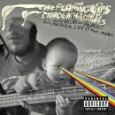
You’ve got to have balls to cover the most popular album of all time.  Everyone knows Dark Side of the Moon, according to Billboard charts everyone probably owns a copy of Dark Side of the Moon.  So, you’re taking on a pretty big task here.  But the Flaming Lips aren’t called The Fearless Freaks for nothing.

What delights me about this album is that it is utterly unfaithful to the original.  There’s nothing worse than a cover song that just apes the original version.  With that in mind, the Lips have put their bizarro stamp on the classic album, oftentimes rendering the songs almost unrecognizable–but more on that in a moment.

The two guest stars on the disc are Henry Rollins and Peaches.  Rollins recites all the spoken word bits from the original.  He actually makes a lot of those weird ramblings clear for me for the firs time.  The originals were spoken by a (presumably) high Englishman.  Rollins’ delivery is much more abrasive (but then so is the music).  It works pretty well, especially since Rollins’ laugh is maniacal, although if he sounded a bit more drunken I think it would work even better.  Peaches sings a few of the female vocal bits.  I’ve never been much of a fan of hers but, man, she does an awesome job in covering “The Great Gig in the Sky,” the track from the disc that features a wondrous diva singing and screaming her heart out.  Peaches really lets loose and showcases the power of her voice.

The Lips play on 7 songs and StarDeath play on 6.  They work together on 2 tracks.

StarDeath is fronted by Wayne Coyne’s nephew, Dennis.  I’d only heard one track from them before, and I liked it.  Dennis’ voice is a higher register, like Wayne, but he’s also a bit more subtle. Musically they are less noisy as well, and it’s a good counterpoint to the static of the Lips’ tracks.

So the opener, “Breathe” (Lips) is distinct right away, because the main focus of this version is a loud throbbing bassline. “On the Run” (Stardeath) is completely indistinguishable from the original.  You would never suspect it was a cover.  It’s a bass-propelled, very cool song, but there’s almost no similarity.

“Money” (Lips) stays fairly faithful to the original, except that the vocals are totally auto-tuned.  It makes the song sound really alien, as if coming, yes, from the other side of the moon.

“Time” (Stardeath) on the other hand, is a very delicate, acoustic track, (sounding somewhat like Mercury Rev, actually).  It is something of a counter to the rocking version on the original.

“Us and Them” (Lips) is probably the closest sounding to the original.  It has simple washes of sound and Wayne’s delicate voice.  But, once again, the louder sections of this song are left out.  “Any Colour You Like” (Stardeath) is a much closer instrumental to the original than “On the Run” was.  And “Brain Damage” (Stardeath) is really quite spot on (and may be even creepier than the original).

The ender, “Eclipse” is like a distorted indie rock version of the original.  It works pretty well.

There’s surprisingly little in the way of sound effects (which are all over the original).  I’d have thought they’d populate the disc with all kinds of fun things, but no, they actually play it pretty straight.

My one real complaint about the disc (and actually about Embryonic as well).  The Lips have always pushed the envelope of music.  But lately, they seem to be redlining  a lot of their sounds, making them distort and crackle.  Now, I love distortion when it’s used well, but this “too loud” distortion actually hurts my ears, even if the volume is low.  I find the sound to be unpleasant, and not in a good way.  And I think it’s a shame because the Lips write such great music, that I hate to have it obscured by clouds of noise.

So, yeah, this will never replace the original for anyone.  But it’s a fun experiment and actually sounds a bit like a rough demo for the final release.  In fact, in many ways it sounds like it’s coming from outer space and may be conceptually more accurate for the title.

I saw The Lips and Star Death on Jimmy Fallon.  They played “Breathe” and all eight (or more) guys were on stage.  It was a big wonderful mess.  And they sounded really good together.

[READ: May 11, 2010] ; or The Whale

In 2007, a book was published called Moby Dick in Half the Time.  And, as the title implies, it took Herman Melville’s Moby Dick; or The Whale and truncated it.  The editors basically kept in all of the “plot” and excised most of the “wandering” parts of the story.

So, in 2009, Damion Searls decided to print all of the excised material as a book itself.  This exercise was published in The Review of Contemporary Fiction, Summer 2009 | Vol. XXIX.  So, this “book” is Moby Dick without the “plot” or as the introduction puts it, “all Moby, no Dick.”

This book includes “every chapter, sentence, word, and punctuation mark that Anonymous removed to produce [Moby Dick in Half the Time]” (10).

And so what we get is a very surreal story indeed.  It comes across as a fascinating look into the mind of the (in this version) not named until Chapter 11 or so narrator (since we’ve obviously lost “Call me Ishmael”).  It also comes across in many sections as bizarre poetry.

; or the Whale’s opening line is:

“methodically.” (31). (more…)

Read Full Post »

SOUNDTRACK: THERAPY?-Never Apologise Never Explain (2004).
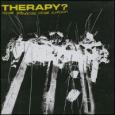
This album is the prior release to One Cure Fits All. It’s not true that Therapy? works on a harsh release/melodic release kind of schedule, although judging by these two discs it sure seems that way.  Never Apologise begins with a blistering, noisy “Rise Up.”  The really notable difference with this disc and other Therapy? releases is the amount of noise in the track. One of Therapy?’s most notable sounds has been a guitar that is so clean it sounds almost unreal.

This disc is far more sludgy (and seems even more angry), witness: “Die Like a Motherfucker.”

The whole disc is fairly short (under 40 minutes), very fast, and in relative Therapy? terms, lyrically not very interesting.  Consider this a solid rawk album.  And, again, one that is not available in the States.

[READ: April 29, 2010] Metrophilias

Brendan Connell’s new book is a short story collection.  And the short stories are indeed very short.  The longest one is 4 pages; most are 2.  There are 36 stories in all and each is named after a city.

I love the title of the book.  Metrophilias.  Technically, what? City love?  Love in a major city?  [Of course the prefix metro- means “mother” so I guess the title is literally motherlove, but that’s not how it’s intended].  And so each short story shows a snapshot of an individual in love in that city.

Each city is represented by at least a small nod that locates it, whether it is a street name or a building, or as in many cases, by an entire culture coming to the fore.  As such, some cities are far more identifiable as cities, and yet the content of the stories is so individualized that the city itself is (in many cases) irrelevant.  Of course, some of them could only be set where they are.  But before I get too obsessed with that aspect of the stories, I should move on to the people on the stories. (more…)

Read Full Post »

SOUNDTRACK: FUGAZI-13 Songs (1990).

I was so blown away by that first Fugazi disc that I immediately ran out and got this collection of their first two EPs.

The strange thing to me is that even though I enjoy the disc, nothing on it really stands out as all that memorable.  I feel like Repeater was such a strong release that these earlier tracks pale somewhat.

I’ve listened to this disc a number of times over the last few days and nothing really stands up and grabs me like Repeater still does.

I wound up buying two more Fugazi discs after this, but I’m pretty sure the reason I stopped buying their music was from this same feeling: the songs were all good, rocking, indie music, but there was nothing terribly memorable about them.

[READ: April 15, 2010] Stephen Fry in America

I first heard about this book when Stephen Fry appeared on The Late Late Show.  This book was very casually plugged as Fry’s attempt to visit every State in the U.S.  It turns out that this book is the companion piece to a six part BBC TV series of the same title (which I have not seen).  Although the TV series makes the existence of this document much more understandable.  Because although everyone wants to travel to every state in the union, the only way it would ever be accomplished in the fashion is for a TV show (even a book wouldn’t get quite this treatment if there were no TV show).

Stephen Fry was almost born in America (in New Jersey, in fact, where he believes he would have been Steve, rather than Stephen).  And he has always felt a connection to the States.  So, Stephen Fry, (in my head the quintessential Brit) brings a film crew and his classic British Big Black Taxi to see all of the States.  He begins in Maine and travels in an interesting manner, zig-zagging across the country.   He tends to visit the places/events/sites that each state is known for.  And, like any good TV show, he participates in the activities (he lobsters, he rides horses, his deals blackjack) and makes a tit of himself. (more…)

Read Full Post »

« Newer Posts - Older Posts »