Feeds:
Posts
Comments

Archive for the ‘Political Humor’ Category

[LISTENED TO: Week of August 30, 2010] Ulysses

While I was reading Ulysses for the group read at Infinite Zombies, I thought it would be (more) enjoyable to listen to the book.  So much of the book is, if not musical, at least euphonious [since I’m talking Ulysses, I’m throwing in big words, eh?].

Nevertheless, when you receive the Ulysses box from another library and you see that it is FORTY discs, and the running time is over 40 hours, it’s a bit daunting.   When you start reading a book you have a vague sense of how long it will take you, but you never see it written so starkly: 40 hours.  Jaysus wept.

I’m almost 20 hours into the book now, so I’m going to mention things up to Episode 12. (more…)

Read Full Post »

SOUNDTRACK: THE CHIEFTAINS-The Long Black Veil

Like the Dubliners, The Chieftains are a bunch of old men who play traditional Irish music.  Unlike the Dubliners, they have gained a fan base beyond the trad scene.  This album in particular features a great deal of crossover material.

Guest singers include: Sting (singing in Irish!), The Rolling Stones, Sinéad O’ Connor, Marianne Faithfull,Van Morrison and Tom Jones (!)

The Sinéad tracks are really great, as she uses her voice wonderfully on the spare musical tracks. “The Foggy Dew” is particularly powerful, and “He Moved Through the Fair” isn’t too shabby either).

Sting’s track is very Sting (with trad accompaniment); Mick Jagger sings the title track, but it doesn’t do a lot for me.  Van Morrison is Van Morrison, regardless of who he’s playing with.  And Tom Jones is so over the top on “Tennessee Waltz” that it’s hard not to laugh with him.

The song with no guests, “Changing Your Demeanor” is a cute Oirishy song with deedly-ee-ayes.

It’s the final song, “The Rocky Road to Dublin” (which I’ve already said is a favorite by other artists) that fares the worst here.  About midway through the song, The Stones seem to burst in (think Run DMC & Aerosmith but a lot older) and play a really sloppy version of “Satisfaction” while The Chieftains are playing their trad song.  Nobody fares well in this version and it’s a shame to have included it on an otherwise good disc.

This is not really a good place to hear the Chieftains as a trad outfit.  It’s certainly more of a showcase album.  But it might work as a crossover introduction to some of these songs.  And yes, the album is very adult contemporary…there’s not a lot of rocking going on here.

[READ: Week of August 16, 2010] Ulysses: Episode 15 [Circe]

This is the Episode I remember most from my previous reads.  I didn’t remember the details, mind you, just the absolute insanity of it.  This is also the place where you can look if you’ve ever wondered why this book was brought up on obscenity charges.  Those first few chapters, with the outhouse and the impure thoughts are mild; even Bloom’s masturbation, while controversial doesn’t hold a candle to all of the insanity that is contained within this Episode.

It was also the only week where we read just one Episode.  And that’s because it is loooooong.  True, it is written in play form (ie, lots of white space), but it is still about 4 times longer than any other Episode.  And man is it a doozy.

I’ve already read that Daryl was just going to write WTF about this Episode.  Of course, that’s sort of what I felt about the previous one, so I guess it’s no surprise that I did enjoy the nonsense of this one.  I’ve always had a great appreciation for the absurd, so this is right up my alley.  This is not in any way to suggest that I understood it, even a little.  But there were parts that I laughed at and parts that I smiled at and parts that I practically blushed at.  Good fun!

Of course, the big question in this chapter is (aside from what the hell is going on and why is it so long) what’s real and what’s Bloom’s fever dream.  This is preceded by the big question of why Bloom is having these fever dreams (or whatever they are).  I’ve been under the impression that he is drunk (but my tenuous following of the previous chapter makes me a little unsure just how drunk he was or if he drank at all.)

In a nutshell what happens is that Stephen (and Lynch) go to the red light district.  Bloom follows behind.  Bloom had a massive memory flashback/acid trip/freak out, and then he “rescues” Stephen (and his money) from the brothel.  He can’t save Stephen from getting punched in the face by a soldier, but he is able to keep him from getting arrested (with Corny Kelleher’s invaluable help).  Bloom, despite his inaction, then offers to take Stephen home.   (more…)

Read Full Post »

SOUNDTRACK: DANGER MOUSE AND SPARKLEHORSE present: Dark Night of the Soul (2010).

Seems like most things that Danger Mouse touches involve lawsuits.  I’m not entirely sure why this disc had such a hard time seeing the light of day.  But it is due for a proper release in July.  Although by now, surely everyone has obtained a copy of the music, so why would anyone give EMI any money for the disc (since they hid it away in the first place).

The name that is not listed above is David Lynch, who is an important contributor to the project.  He creates all the visuals (and the visuals in the book that was the original release format).  He also contributed vocals to two tracks on the CD.  (His vocals are weird and spacey, just like him…and if you remember his voice from Twin Peaks, just imagine Gordon singing (but with lots of effects).

The rest of the disc is jam packed with interesting singers: Wayne Coyne (from The Flaming Lips), Gruff Rhys (from Super Furry Animals), Jason Lytle (from Grandaddy) on my two favorite tracks, Julian Casablancas (from The Strokes), Black Francis, Iggy Pop, James Mercer (from The Shins), Nina Persson (from The Cardigans), Suzanne Vega, and Vic Chesnutt.

I’m not sure if Danger Mouse and Mark Linkous wrote the music already knowing who the singers were going to be, but musically the tracks work very well.  And yet, despite the different sounds by the different singers, the overall tone and mood of the disc is very consistent: processed and scratchy, melodies hidden deep under noises and effects.   Even the more “upbeat” songs (James Mercer, Nina Persson) are dark meanderings.

It took me a few listens before I really saw how good this album was.  On the surface, it’s a samey sounding disc.  But once you dig beneath, there’s some really great melodies, and it’s fascinating how well the songs stay unified yet reflect the individual singers.

EMI is going to have to pull out all the stops to make it a worthy purchase for those of us who have already found the disc.  Since The Lynch book was way overpriced for my purchase, (and they surely won’t include it with this CD), they need to include at least a few dozen Lynch photos (and more).  And with a list price of  $19 (NINETEEN!) and an Amazon price of $15, the disc should clean your house and improve your wireless connection too.

[READ: June 1, 2010] Bloom County Vol. 1

Boy, did I ever love Bloom County.  Back in high school I had more drawings of Opus and crew in my locker than anything else.  (I used to reproduce the cartoons by hand, I was never one of those “cut out of the paper” people.)  And so, there are tons of punch lines that I still remember twenty-five years later.

And yet, despite my fondness for the cartoon (and the fact that I owned (and read many times)) all of the collected books, I was amazed at how much of the early strips I had no memory of, at all.  True, some of the really early ones are here for the first time in collected form (according to an interview there are hundreds of comics in collected form for the first time in these volumes).   But those early 1980 comics…wha? (more…)

Read Full Post »

SOUNDTRACK: THERAPY?–One Cure Fits All (2006).
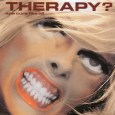
I’ve always liked Therapy?’s brand of aggro-alt metal/whatever you call it.  Their earlier stuff was harsh and dark. During their middle years they grew surprisingly commercial (although they’ve always had a bit of a commercial side to them, even at their harshest).

The last album I got from them was 2003’s High Anxiety (the first in a series of grotesque and unpalatable CD covers which culminates with this horrorshow).  I think the band must have lost any kind of distribution deal in the States, because it is still very hard to find these later discs (without paying way too much for them).

I was delighted to find this one on Lala.  And it stands as a pretty solid Therapy? disc.  They have always had guitars that sounded very sharp, almost electronic, which I thought really exemplified their take on angry literate metal.  And this disc opens up with it (after the 30 second “Outro”)

Their earlier tracks (like the awesome “Teethgrinder”) employed sonic tricks that really propelled the songs onto genius territory.  These songs are a bit more conventional, and yet they’re hardly commercial.  The most likely single would be the “ballad” (which also rocks pretty hard near the end) “Dopamine, Seratonin, Adrenaline.”

The back half of the disc is more melodic and catchy (a sort of reversion back to their middle period?). The only song that veers too far into pop territory is the closer, “Walk Through Darkness.”  It’s almost a bit cheesey, especially after all the heaviness of the earlier tracks.

It’s a fun disc, and a shame that it (and those BBC Sessions, which I am drooling about!) have yet to get a proper release in the states.

[READ: April 28, 2010] “Austerity Program”

In one of the letters to The Believer this month a reader suggests that they start printing fiction.  No reply is given to the letter.  At the same time, here is a piece that is certainly fiction.  There is no comment or explanation attached (which is surprising as The Believer usually tells us everything that’s going on in the magazine.

So, I’m going to treat this as a short story.  Tucker Nichols is responsible for the art direction, while David Khoury wrote it.  It is printed as a series of letters on official letterhead (with a logo but no name) stationary.

Much like with the novel Ella Minnow Pea, the “austerity” is a cost saving measure in which letters are removed from general use. (more…)

Read Full Post »

SOUNDTRACK: THE DEAD MILKMEN-Chaos Rules: Live at the Trocadero (1994).

It wouldn’t be a complete look at the Dead Milkmen without mentioning their one live release.

Chaos Rules is a surprisingly good live set (taken from two separate concerts).  They had to leave all of the songs from their Hollywood Records discs off this collection, so this comes across more as a classic concert rather than a comprehensive one.

The band sounds great and the songs sound pretty close to the originals.  Not that the originals were hard but it wasn’t always obvious whether the Milkmen were doing what they were doing on purpose.  This set suggests that they were.

As any good live band, they play around with their songs, being surprisingly angry about local politics and changing the (by then twenty year old) “Bitchin Camaro” intro to reflect that.

The only reason it would have been nice if they had been allowed to include some of the Hollywood Records songs (they do sneak one in under a different name) would be to see if they played them any differently.  Since the early tracks are pretty chaotic, I wonder what would happen to the latter, more mellow songs.  Did they stand up under the weight of the nonsense or did they become more ramshackle as well?

I guess I’ll never know.  This is not essential by any means, but it is an interesting artifact for the curious and is totally enjoyable for DM fans.

[READ: April 23, 2010] Distant Star

Because Bolaño never does anything typical, this novella is a spin-off of sorts to Nazi Literature in America.  The introduction states that “in the final chapter of my novel Nazi Literature in America I recounted, in less than twenty pages and perhaps too schematically, the story of Lieutenant Ramirez Hoffman…which I heard from Arturo B.  He was not satisfied with my version…So we took that final chapter and shut ourselves up for a month a half in my house in Blanes, … where we composed the present novel.  My role was limited to preparing refreshments, consulting a few books and discussing the rest of numerous paragraphs with Artuto…”

Okay, there is so much wonderful deception in just this introduction to this book it totally cracks me up.  (Arturo B has long been a stand in for Bolaño himself). In the original, the narrator is named Bolaño (he is the narrator in jail who eventually helps the detective locate the poet).

For yes, the story is the life of a poet who is also a murderer.  And, the story is pretty much the same as the 20 or so pages of Nazi Literature.  It is now an extended meditation on this particular poet.  All of the events that were present in the short version are here, they are all just fleshed out with Bolaño’s wonderful details and full biographies of other characters.

The big, weird thing though is that almost all of the names have been changed (to protect the guilty?).  So even though the poet of this book has the same exact  life story as Lieutenant Ramirez Hoffman, he never has that name in Distant Star (and he goes through several pseudonyms).  There are twins in the short version who now get new names.  Even the poetry teachers have different names.  However, the detective who hunts him down at the end has the same name.  Weird.

The book works as a critical assessment of the Allende administration (which is why the real Bolaño was imprisoned).  But on to the story. (more…)

Read Full Post »

SOUNDTRACK: FUGAZI-13 Songs (1990).

I was so blown away by that first Fugazi disc that I immediately ran out and got this collection of their first two EPs.
The strange thing to me is that even though I enjoy the disc, nothing on it really stands out as all that memorable.  I feel like Repeater was such a strong release that these earlier tracks pale somewhat.

I’ve listened to this disc a number of times over the last few days and nothing really stands up and grabs me like Repeater still does.

I wound up buying two more Fugazi discs after this, but I’m pretty sure the reason I stopped buying their music was from this same feeling: the songs were all good, rocking, indie music, but there was nothing terribly memorable about them.

[READ: April 15, 2010] Stephen Fry in America

I first heard about this book when Stephen Fry appeared on The Late Late Show.  This book was very casually plugged as Fry’s attempt to visit every State in the U.S.  It turns out that this book is the companion piece to a six part BBC TV series of the same title (which I have not seen).  Although the TV series makes the existence of this document much more understandable.  Because although everyone wants to travel to every state in the union, the only way it would ever be accomplished in the fashion is for a TV show (even a book wouldn’t get quite this treatment if there were no TV show).

Stephen Fry was almost born in America (in New Jersey, in fact, where he believes he would have been Steve, rather than Stephen).  And he has always felt a connection to the States.  So, Stephen Fry, (in my head the quintessential Brit) brings a film crew and his classic British Big Black Taxi to see all of the States.  He begins in Maine and travels in an interesting manner, zig-zagging across the country.   He tends to visit the places/events/sites that each state is known for.  And, like any good TV show, he participates in the activities (he lobsters, he rides horses, his deals blackjack) and makes a tit of himself. (more…)

Read Full Post »

SOUNDTRACK: THE DEAD MILKMEN-Soul Rotation (1992).

And lo, the Milkmen grow up.

This disc is not funny (well maybe, a little funny); mostly it is  “thoughtful” (and sometimes absurd).  But what is most striking about it is how mature (mellow) it is.  For this is the first album by The Dead Milkmen on Hollywood Records (a subsidiary of Disney).  This combination raises far more questions than is worth looking at.  But suffice it to say that even though this disc is the Milkmen, its a very different Milkmen.

The most obvious difference is that the majority (10 out of 13) of the songs are sung by the artist formerly known as Joe Jack Talcum, now known as Butterfly Fairweather (perhaps Hollywood knew that “”Punk Rock Girl” was their big hit?).  Past DM records were mostly sung by Rodney Anonymous (who goes by H.P. Lovecraft on this disc).  And his were the heavier, weirder, funnier, absurdist tracks, for the most part.  So, when the first four songs here are sung by Butterfly, you know something different is afoot.  Oh, there’s horns on the disc as well!

The disc feels like a pretty typical alt-rock band from the 90s.  But it’s missing the sass, it’s missing the vulgarity.  Basically, it’s kind of dull.

That’s not to say there aren’t good songs on here, because there are.  “If I Had a Gun” is a great screamy Butterfly song, and “Wonderfully Colored Plastic War Toys” is full of Lovecraft’s snark. As is “The Conspiracy Song” a lengthy rant of absurdity.

The rest of the songs drift between mellow and alt-rock rockers.  And it works as a product of the alt rock 90s.  It’s just not much of a DM album.

[READ: April 8, 2010] Last Evenings on Earth

I have been reading Bolaño’s short stories for a while now.  And so I have read a couple of the stories in this collection already. The stories in this collection were taken from his two Spanish collections of short stories: Llamadas telefônicas (1997) and Putas aseinas (2001).  And I have looked at about a dozen sources but I can’t find which stories came from which original collection (I like  to know these hings).  I can’t even find a table of contents for the original books.  Anyone want to help out?

I enjoyed these stories more than I expected to.  I have read some of his stories in The New Yorker and elsewhere, and I’ve been okay with them, but this collection blew me away.  Whether it’s being immersed in his writings or just having them all in one place, I was thrilled by this book.

There so many delightful little things that he does in his stories that I find charming or funny or something.  Like that his narrators are usually two or three people removed from the details.  Or if they’re not, they act like its been so long they doesn’t need to get all the details right:  “U insults and challenges him, hits the table (or maybe the wall) with his fist” (“Days of 1978”).

I also get a kick out of all the stories with the protagonist named B.  Which seems a not so subtle way of saying he’s the narrator (even though I ‘m sure these things never happened to him quite like it says (despite all the biographical consistencies with his own life).

The opening story “Sensini” has the narrator working as a night watchman at a campground (much like Enric in The Skating Rink…a bit of biography perhaps?).  A number of his stories are simply biographies of interesting characters (something he went to extremes with in Nazi Litearture in the Americas): “Henri Simon LePrince” a failed writer in Post-WWII France.  “Enrique Martin” a delightfully twisted story about jealousy (aren’t they all, though?) and acting impulsively and foolishly (aren’t they all though?).  This one featured  a riddle that I’m not even sure we’re meant to get:

3860+429777-469993?+51179-588904+966-39146+498207853

which the narrator thinks is a word puzzle. (more…)

Read Full Post »

SOUNDTRACK: THE DEAD MILKMEN-Metaphysical Graffiti (1990).

You know that it would be untrue, you know that I would be a liar if I were to say to you I didn’t set your house on fire.
You don’t have to be a philosopher to appreciate the joke of this album title (actually that may hurt the joke a little). But the “runes” that accompany the disc are quite amusing.

I haven’t listened to this disc in ages, and it turns out that I remembered about half of these songs really well.  And that’s because half of the songs are really good.  And the other half are, well, okay.

It opens with a children’s chorus which morphs into one of their heaviest rocking (although fairly uninspired) songs, “Beige Sunshine.”  The disc comes into focus with track two: “Do the Brown Nose” a funny song that outlines exactly how to do the titular dance (although at nearly 5 minutes, it’s a bit long).

The single (!) “Methodist Coloring Book”: features Joe Jack Talcum singing (clearly his success with “Punk Rock Girl” had an impact on that decision).  But on this track, he sings with a dark and distorted voice (which pales to Rodney’s dark voice) and is less interesting than his whiny normal singing voice. It’s a good song (and amusing) although as a single it’s less than successful.

I’ve always enjoyed the premise of “I Tripped Over the Ottoman” although I’m not sure it’s a very good song.  While “If You Love Somebody Set them on Fire” is funny and catchy (and astonishingly irritating with the screechier higher register notes in the chorus).

“In Praise of Sha Na Na” makes the valid point that they played at Woodstock and aren’t dead.

Joe Jack’s other songs are the very slow ballad “Dollar Signs in Her Eyes” and the rollicking (and more distorted singing) of “I Hate You, I Love You.”  But the ending tracks “Now Everybody’s Me” and “Little Man in My Head” (which is musically quite a good reggae track) just don’t have a lot of oomph.

However, the final track, “Anderson Walkmen, Buttholes and Howl!” (which parodies a short-lived but much talked about prog rock band) is delightfully twisted.

The problem with the disc overall is the four or five “improv pieces”  They all feature the same bassline, and by the end of the disc you start to cringe when you hear it (especially since the last one is 6 minutes long).  Each one is a mildly funny rant (along the lines of “Stuart” from Beelzebubba, but less focused and less interesting).  Some of them are certainly funny (Earl’s maggots and the “chills me to this day” refrain is pretty good), but they feel like comedy skits that you only want to hear once.

Erlenmeyer Flask!

[READ: April 3, 2010] By Night in Chile

In continuing with my Bolaño obsession, I moved onto yet another of his short books (144 pages).  Interestingly, By Night in Chile is written in a complete different style than the other two titles I’ve recently read (Bolaño is nothing if not diverse).

This is a stream of consciousness reminiscence told by Father Sebastián Urrutia Lacroix.  The entire book is one paragraph (actually that’s not true, the final line of the book is its own paragraph).

As the book opens, Father Urrutia is dying.  But worse than that, he has been disparaged by a wizened youth.  And his entire memory/rant is a response to the accusations of this (unseen by us) wizened youth.

And Father Urrutia uses this opportunity to describe the highlights of his life.  When he was very young he decided to join the priesthood against his family’s objections. There’s a running joke about people calling him “father,” I especially enjoyed the scene where his mother calls him father. (more…)

Read Full Post »

SOUNDTRACK: THE DEAD MILKMEN-Bucky Fellini (1987).

C’mon, I’m the walrus, damnit.

Bucky Fellini ups the ante from Eat Your Paisley in that the band sounds really accomplished at this point.  The songs are still silly, but they’re not quite as jokey (except for the hit single, but more on that in a second). There’s even lap steel guitar, violin and backing vocals!

Dave Blood’s bass is really something of a force at this point, propelling songs with interesting riffs.  Rodney  “Cosloy” Anonymous sounds great.  And, Joe Jack Talcum gets quite a number of songs to sing: the mellow (and very twisted) “Watching Scotty Die” and the more rocking “Rocketship.”

“Big Time Operator” is a supremely silly song based on a very simple blues riff.  It features the first (utterly wretched) DM guitar solo (look out Stevie Ray Vaughn!) and even showcases a “humming” solo from Rodney (just me!).  While  on the other end of the spectrum, “Surfin’ Cow” is mostly instrumental which is catchy and full of surprising intricacy.

“Instant Club Hit (You’ll Dance to Anything)” was indeed a club hit.  It’s snarky and silly (complete with a drum machine) and it name-checks some of the most prominent college radio bands of the time.  You could easily have built a good collection of British college rock from their list of who you’ll dance to. (instead of giving your money to a decent American artist like himself).

The Dead Milkmen keep getting better and better.  They’re still funny, but they’ve proven themselves to be far more than a novelty act.  Blow it out your hairdoo cause you work at Hardees.

[READ: April 1, 2010] Nazi Literature in America

I’ve read a lot of books that are, shall I say, weird.  But this one is definitely the most unusual when I think:  what would possess a person to write it?

Nazi Literature in the Americas is written as an encyclopedia of Nazis writers who have lived in North, Central and South America.  Except that all of the writers are fake.  So, essentially Bolaño has invented 30 characters, and created rich, fully detailed biographies about all of them.

Some of them are very short (a couple of pages) while a few are over ten pages long, with details of books/poems published, critical reception and even untimely deaths.   The biographies are grouped according to categories (The Mendiluce Clan; Itinerant Heroes or the Fragility of Mirrors, Forerunners and Figures of the Anti-Enlightenment; Poètes Maudis; Wandering Women of Letters; Two Germans at the End of the earth; Speculative and Science Fiction; Magicians, Mercenaries and Miserable Creatures; The Many Masks of Max Mirebalais; North American Poets; The Aryan Brotherhood; The Fabulous Schiaffino Boys; The Infamous Ramírez Hoffman).

And although they are not chronological, Luz Mendiluce (whose bio I read separately) features prominently as a constant “reference point” and creator of one of the prominent Nazi publishing houses.  She had created a publishing empire where Nazi works were spread throughout the continent, and it seems that everyone had a title published by her company Fourth Reich.

What’s so weird about the book is that the people are fake, everything about them is fake (although they are placed firmly within history) and yet their stories are still compelling.  Bolaño has employed a mildly sympathetic tone to these people.  Not sympathizing with the Nazi aspect, but sympathizing with them as humans.

There were one or two who I didn’t really enjoy.  And I admit that I enjoyed the North Americans more; since I know more about North than South America, the facts surrounding these authors resonated more.  But I thoroughly enjoyed most of these biographies.

Of course, just when you think the book is all the same, the final biography changes everything.  In this one, Bolaño himself appears as the writer of the book.  He writes about Ramírez Hoffman in the first person, mentioning himself by name and getting personally involved in the story of this final, skywriting author.  It completely subverts the work before it and leaves you more confused than when you started (although a lot happier for having read it).

The final section of the book is an Epilogue foe Monsters.  It provides a brief biography for all of the secondary characters mentioned in the main body.  It also details the publishing houses and magazines, and finally lists  a bibliography of all books published.  The amount of detail that Bolaño created here is staggering.

But aside from all the Nazism, the book can be quite funny.  Like the conclusion for Luz Mendiluce Thompson, which ends with her driving a car into a gas station.  The final line: “The explosion was considerable.”

It’s tempting to say that this “novel” is not representative of Bolaño’s writing, but I think that’s false.  From what I’ve read so far, Bolaño doesn’t conform to any style in his books: each book is designed differently.  But like this one, they all deal with South America, with violence, with politics and are filled with humor.  So, yes, I guess this is pretty representative.

Oh, and the translation by Chris Andrews is, once again, fantastic.

For ease of searching I include: Bolano

Read Full Post »

SOUNDTRACK: BLUE ÖYSTER CULT–Blue Öyster Cult (1972).

Craig Ferguson mentions that the only concert he saw as a teen in America was Blue Öyster Cult.  My guess is that it would have been around the Agents of Fortune or Spectres tour (ie, around “(Don’t Fear) The Reaper”) so that must have been a killer show.

In honor of his book, I’m going to look at the lesser known early work of BOC.  Their first disc is a fascinating amalgamation of hard rock, blues, boogie and psychedelia.  All of that is coupled with the utterly perplexing lyrics that they came up with. In addition to the huh? factor of titles like “She’s a Beautiful as a Foot” and “Before the Kiss, a Redcap” we also get fascinating title like “Transamaniacon MC” (later on John Shirley would write a book called Transmaniacon as a tribute to this song).

The album isn’t heavy by today’s standards, but at the time, this was some pretty heavy stuff.  The rocking chorus of “Transmaniacon,” the blistering speed of “Stairway to the Stars,” and yes, the undeniably heavy riff of “Cities on Flame with Rock and Roll” let you know that this is no simple rock album.

And yet, they work so well with the fundamentals: Steppenwolf is clearly an inspiration.  This is classic rock that doesn’t quite fit the classic rock mode (which, frankly, makes it far more interesting).  There’s a lot to like here, and there’s more to come.

[READ: February 26, 2010] American on Purpose

I keep saying I don’t read memoirs but then I keep reading them. Yes, I’m a liar.

Well, in this case, I felt it was justified because a) Craig Ferguson is hilarious and I assumed his book would be too and b) he has already written a novel that I really liked (as well as 3 screenplays which I have not seen). So I figured it would be a well-written, funny book.  And, since it turned out I had two days off because of the “snow” I finished the book in a couple of days.

Right, so Craig Ferguson is the host of The Late Late Show, a show that Sarah and I fell in love with last year and then kind of forgot about it. And then we caught it again recently and have been enjoying some TiVo’d bits every now and then. Ferguson has a wonderfully warped sense of humor and his show veers into the bizarre more often than not.   But he is always enjoyable, and his celebrity interviews are worth watching for how funny and un-promotional they are.
But what about this book? This book basically details his life growing up in Scotland, moving to the States and becoming a “huge star.”

But the crux of the book is about his descent into alcoholism, how it destroyed his first marriage and several other long term relationships, as well as potentially his career. (more…)

Read Full Post »

« Newer Posts - Older Posts »