Feeds:
Posts
Comments

Archive for the ‘Parenting’ Category

june2020SOUNDTRACK: NORAH JONES-Tiny Desk (Home) Concert # 65 (August 17, 2020).

Norah Jones is a musical force.  Even though her songs are simple and tasteful, she has pretty much conquered or at least dabbled in many genres.

The blurb notes:

I’ve always wished to hear just her voice and her piano in a room. The unfortunate circumstances of our times have given us something beautiful. For this Tiny Desk (home) concert, Norah Jones sits in her music room; it’s just Norah, her upright piano, her poetry, and that golden voice.

I don’t know these songs (I’m sure they are lush), but even with this simple old-school piano, they sound lovely.  All four of these songs are from her seventh record, Pick Me Up Off the Floor.

“How I Weep” and “Heartbroken, Day After” are pretty songs with lovely melodies.

My favorite song of the set is “I’m Alive,” which she co-wrote with Jeff Tweedy.  I don;t know if it’s the Tweedy connection, but I love the melodies in this song–both vocal and musical.  I’ve been hearing this on the radio a bunch and while I do prefer the full on recorded sound, this stripped down version is quite nice.  “I’m Alive” is

a song that at once feels the pain of politics and a pain that is personal.

“You feel your soul / Get hollowed-out / While the world implodes / You just live without.” Yet the refrain is what lingers, “Oh, I’m alive / Yes, I’m alive / But I’m alive / Oh, I’m alive.”

“To Live” sounds like an old spiritual.

Jones is not very animated in this session.  Indeed, if her hat didn’t keep falling off (why not just leave it off?), she’d have very little to talk about.

But I assume one doesn’t listen to Norah Jones for wild storytelling.

[READ: August 4, 2020] “Terrace Story”

This story started out with a young couple moving out of a beloved apartment and into a smaller one.  The couple (Annie and Edward) had a little girl, Rose, and they talked about many things as if they were Proper Nouns: the tree outside the window was Yellow Tree, the place where the pigeons landed was Pigeon Tunnel.  But the most pressing new Noun was Closet Mystery.  The mystery was what would fall out of the tiny closet the next time you opened it.

Annie worked with Stephanie. Stephanie took on some of Annie’s work while she was having the baby.  Annie wanted to thank her, so she invited Stephanie to their tiny apartment.

Stephanie was delightful and funny.  And when she opened the door to Closet Mystery, the door opened onto a Terrace–a terrace that obviously had never been there before.

The terrace was gorgeous–amazing views, plenty of room, a grill, fantastic weather.  It was fantastic.

When Stephanie left, Annie and Edward tried to recreate the Terrace in so many ways.  But it only happened when Stephanie opened the door.

So they invited her over a lot.

They had a great time on the Terrace.  They told Terrace Stories which were stories that were not really true, but it didn’t matter because the Terrace didn’t really exist either.

But soon, Annie grew suspicious of Stephanie.  She felt that the stories Edward was telling Stephanie were more intimate, more detailed (even if false) than they should have been.

Edward told her he would never lie to her outside of the Terrace.

But on the Terrace, the lies were growing too big.  Stephanie started calling Edward, “Eddie” and Rose “Rosie,” and Annie felt that Stephanie was trying to take over their lives.  Annie had once been Anne until someone had started calling her Annie.

It didn’t help that her boss at worked continued to give Stephanie more and more of Annie’s work.

Just what was going on with this Terrace and why oh why couldn’t Annie find it on her own?

I was really delighted in the way this story turned surreal and wonderful and yet still seemed realistic.

 

Read Full Post »

download (92)SOUNDTRACK: VÍKINGUR ÓLAFSSON-Tiny Desk (Home) Concert #63 (August 12, 2020).

download (91)Víkingur Ólafsson has a fantastic name.  But even better is his way of talking about the music he plays.  He adds so much detail and information about these songs that they really come to life.  I don’t often buy classical music anymore, but I absolutely want to get his new record of Rameau and Debussy pieces).

Ólafsson  has moved from strength to strength, releasing three terrific albums in a row (Philip Glass, J.S. Bach, Debussy-Rameau). And now that he has a young son, he wants to spend as much time with the family as possible these days.

So he tells us that he is leaving Berlin after living there for eight years, to return to Iceland with his wife and son.

He opens with a beautiful slow and stately piece from J.S. Bach (arr. Stradal): “Andante” (from Organ Sonata No. 4).  The piece runs about five minutes and after four slow lines, he throws in some amazing speed near the end.  he says that Bach is a good idea whether you are happy or sad–whatever it is, Bach makes things better.

Then Ólafsson offers a crash course in the fascinating music of Jean-Philippe Rameau and Claude Debussy, two French composers who lived nearly 200 years apart. Ólafsson connects the dots between the two seemingly strange bedfellows, illustrating his points with demonstrations on his Steinway.

Introducing Jean-Philippe Rameau, he says the music will go in a very different direction (than Bach).  Rameau was two years older than Bach and was dubbed the Newton of harmony.  He defined harmony and opened musical doors.

For Rameau: “Le rappel des oiseaux” (“The Recall of the Birds”) he says that he is playing two birds: one in his right hand and one in his left.  They are calling to each other–one imitating the other with perfect recall.  Then they take flight and we see the landscape under their wings.  When he plays it, it absolutely comes to life.

He says that was first piece of Rameau that he had ever heard.  The version he heard was by a Russian pianist who played it “more sad, more Russian.”  He plays it like that original version and you can hear the remarkable difference and how both versions work so well–although I like Ólafsson’s better.

Introducing Claude Debussy, he says it’a unusual pairing since they lived 200 years apart.  But Debussy’s idol was Rameau.  They were both musical outsiders, reinventing music, bringing life to a tired scene.

He plays a simple Debussy melody–harmony in space, a timeless beauty.  But Debussy did not like being considered an Impressionistic.  He was interested in the baroque, and there is a baroque structure to his music.

For Debussy’s: “The Snow is Dancing” (from Children’s Corner), he describes the driving rhythm that never stops as he explores harmonic inventions.  This song wa written for his four-year-old daughter as he was exploring the snow with her. You can absolutely hear the textures of the snow in the song.

Ólafsson has a penchant for making transcriptions, taking pieces written for other instruments and making them his own. He closes with “The Arts and the Hours,” his mesmerizing arrangement of a scene from Rameau’s final opera, which he plays as a farewell to his Berlin apartment.

Ólafsson says that he wrote his last masterpiece (an opera) a year before he died and he never heard it performed.  Indeed, it didn’t get a world premiere until 200 years after he died in 1960.  This is a transcription he made because he was jealous of all the conductors and orchestra players who got to play this music.   Rameau (arr. Ólafsson): “The Arts and the Hours” (from Les Boréades) is more loveliness from a composer who I feel may be quite under appreciated.

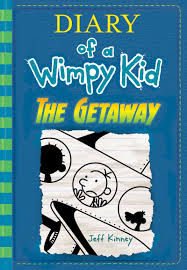
[READ: 2017 and August 15, 2020] Diary of a Wimpy Kid: The Getaway

I read this book when it came out in 2017 but never posted about it.  Then I recently realized that Kinney had written two more Wimpy Kid books that I hadn’t read (and two books written by Rowley, that I don’t know at all).  So it was time to get Wimpy again.

This book is a Christmas book and yet it’s not a typical Christmas story–no annoying relatives, no bad gifts, not even snow.  For The Heffleys have decided to go on holiday for Christmas.    Their Christmas planning was going very badly (a funny picture of the tree on its side with Manny playing with tinsel), so when they saw an ad for Isla de Corales, where Greg’s parents went on their honeymoon, they decided to get out of town for Christmas and celebrate in the warmth of the holidays.

Now, unlike shows where the place is far worse than the advertisement shows, Isla de Corales proves to be a wonderful paradise.  However, the place has now been divided into the mild side for families and the wild side for couples.  Obviously, the wild side is better but the Heffleys have no way to get there.

But before they arrive, they have to get there.  Their entire trip to the airport is one terrible moment after another–bad traffic, lost luggage, late shuttle.  Not to mention terrible lines and a hilarious pile of confusion at the security line–I love that it’s not Greg’s fault that things went so badly but the Heffleys had to pay for it anyway.  And of course Manny is a nightmare. (more…)

Read Full Post »

[LISTENED TO: August 2020] Furthermore

The pandemic pretty much nixed our summer plans.  But we decided to look for someplace close by, in a low-infection rate area, for a short getaway.  It only amounted to a two night trip, but it was well appreciated.  We traveled to the Lake George region and that meant we needed an audio book.

I absolutely love Bronson Pinchot as a narrator.  I will listen to literally anything he reads.  He tends to read darker materials, so the only trick is trying to find something family-friendly.  Fortunately, he reads a lot of those as well.  I’d never heard of this book before (although I was vaguely aware of Mafi’s other series “Shatter Me”).  But as soon as I saw that Pinchot was reading it, I checked it out.

The only bad thing about Pinchot’s narration in this story is that there aren’t all that many characters in it.  Pinchot has an astonishing range of voices at his disposal.  So, to only show off 8 or so means you can’t fully appreciate how great he is.  But the voices he chose were outstanding.

And the story was really interesting.  Mafi has taken a fairly common idea–travelling to another world–and has infused it with all kinds of novel ideas and conceits.

First off, the original world that the characters start in is not our own.  Alice Alexis Queensmeadow lives in Ferenwood, a land full of magic.  Magic is so integral to Ferenwood, that it is a part of everything–including the people who live there.  And that magic is displayed through color.  Color that is abundant and vibrant and breathtaking.

Except for Alice.  Alice was born without color.  She is pale as anything.  Her hair is white, her skin is white–she is unlike anyone else in Ferenwood and she hates that about herself. (more…)

Read Full Post »

download (71)SOUNDTRACK: THAO NGUYEN-Tiny Desk (Home) Concert #56 (July 28, 2020).

download (70)I have enjoyed a lot of music from Thao Nguyen and her band Thao and the Get Down Stay Down.  She plays an idiosyncratic type of indie rock that’s catchy but also quirky.  Although I haven’t heard much from her lately.

She plays three songs here and she talks a lot between songs.  What she has to says is both powerful and meaningful.

For her Tiny Desk (home) concert, Thao Nguyen opens with a somber version of “Temple,” the dance-oriented title track from Thao & The Get Down Stay Down’s new album. The song is an homage to her parents, who were refugees of the Vietnam War. Thao sings from the perspective of her mother, honoring their hard-fought freedom and their hopes that their daughter is blessed with the ability to pursue her own happiness. She recorded it as a trio with cellists (and neighbors) Elisabeth Reed and Andy Luchansky. It’s a powerful rendition that celebrates, in Thao’s words, “being queer and being out in my career, something that being out publicly has caused a lot of turmoil and unrest in my own life.”

I hadn’t heard the original of “Temple” before this, but after, I had to give it a listen.  The recorded version is faster and a lot more dancey.  This spare version is quite striking and really brings the lyrics to the fore.  Thao plays the guitar and the addition of Reed and  Luchansky makes the song far more somber.  She said they created this version just for Tiny Desk “because you deserve nice things.”

She says she’s been reading about addressing anti-black racism in Asian and Vietnamese culture.  She has become more educated about what has allowed Southeast Asian refugees to settle in America. Black civil rights leaders, the Black Power movement for directly and informed change in immigration law and made it less racist.

We also hear “Pure Cinema” from Temple which has another interesting twisting riff that she plays quietly as she sings.  She also plays a slightly atonal guitar solo which is really interesting, too.

She ends with a mandolin version of “Departure” from her 2016 album, A Man Alive.  Once again there’s a cool riff and she does some really cool slides up the fretboard as she plays.  I’ve not heard mandolin playing like this before.  I’d love for her and Chris Thile to do a mandolin show together.

[READ: July 31, 2020] “Heirlooms”

This story felt a lot like an excerpt.  I often wonder if pieces in the New Yorker are excerpts–usually when a story doesn’t feel like it ends properly.  This one actually ended pretty satisfyingly, but it just felt like there could be a lot more.

So this is an excerpt from Washington’s forthcoming novel Memorial.

I had read a story from Washington back in January that I really liked.  I’m not sure if that story is also from the novel, but it features a main character who is similar to the one in this excerpt.

The narrator is a man named Ben.  His boyfriend Mike has just left for Japan to be with his dying father.  Although the same day that Mike left, Mike’s mother Mitsuko came to visit.  This is not, apparently, a coincidence.

So this excerpt shows Ben trying to cohabitate with his boyfriend’s mother whom he has never met before.

Ben is angry at Mike.  Both because he has left his mother here, but also because Mike’s father left him for Japan when Mike was a teenager.  Mike hadn’t heard from him in over a decade, but he rushed off to him. (more…)

Read Full Post »

download (76)

SOUNDTRACKTHE FLAMING LIPS-“My Religion is You” (2020).

download (75)This is another new single from The Flaming Lips’ new, more mellow album American Head.
This song starts as a piano ballad about various religions.

It’s not the most profound song but it’s chill

Yeah, Buddha’s cool
And you’re no fool
To believe anything
You need to believe in
If Hare Krishna
Maybe it’s the
Thing for you
Hey, that’s cool

The chorus kicks in with big fat synth notes that almost feel sinister, but really aren’t.  Wayne explains that he doesn’t need religions, because his religion “is you.”

I don’t need no religion
You’re all I need
You’re the thing I believe in
Nothing else is true
My religion is you

There’s a pretty guitar solo and the end of the song is an interesting mix of scattered drums and quite synth noises.  It’s not their best song for sure, but it grows on you.

[READ: June 2020] That’s Not How You Wash a Squirrel

David Thorne is an Australian smart ass.  This is his fifth collection of previously unreleased emails and essays.

The foreword of this book is written by Holly Thorne, David’s wife.  And it is hilarious.  The Foreforeword is him arguing with her about whether she will write the Foreword–but only if she doesn’t say something mean about him.

So she writes things like

Davis does have a stressful job but let’s be honest, he’s not clearing landmines.  Even on my worst days I’m not half the diva David is.

After writing some more hilarious paragraphs, you see in a different font:

David is very brave, I once saw him flick a snake off the patio furniture with a stick.

In the Postforeword, he complains about her foreword.  That he comes off like a fuckwit and that there is no mention of the snake.  (more…)

Read Full Post »

SOUNDTRACK: BENNY SINGS-Tiny Desk (Home) Concert #50 (July 14, 2020).

I watched a Benny Sings Tiny Desk Concert back in 2016.  I wasn’t that impressed.  I thought it sounded fine, describing him as a slower Elton John.  Since then, he has apparently gone on to bigger things (and must have many fans).

I’ve never come across a moderate Benny Sings fan. The Dutch singer-songwriter and producer has maintained a cult following for over 15 years and performed in the United States for the very first time at the Tiny Desk back in 2016.

Benny and his band play three songs.

Recorded at his studio in Amsterdam, the set list reads like an inventory of quarantine essentials, opening with “Apartment” from last year’s Free Nationals LP (shout out to Anderson .Paak).

As with all of the songs, the music is lightly R&B with some disco flavors.  Each song has a loud low end from  Bram Wassink’s bass and crisp drums from Colin Lee.  The songs are gentle and catchy.  “Apartment” is less than three minutes long.

“Sunny Afternoon” was written with PJ Morton and is a bit catchier (and sweeter).  There’s a nice backing vocal “oooh” solo from June Fermie while Adam Bar Pereg play s anice piano solo.

The set ends with “Music.”  Honestly I can’t imagine a worse title for a song than “Music,” but it is about music.  And the blurb admires the sentiment:

The hook reminds me that I’m not the only one who continues to seek refuge in song. He sings, “Music help me through this / I can’t do this on my own / But music help me through this / Whenever I’m down.”

I will not be an immoderate Benny Sings fan.  His music is pleasant, but forgettable.  Although he seems like a very nice fella.

[READ: July 20, 2020] “The Dinner”

As the United States roils with protests about institutional racism and out immoral leaders conduct illegal schemes of violence against citizens, it was an very charged time to read this story about racism in Ireland.

As Roddy Doyle stories tend to do, this story has a lot of heart and humor in it.  It begins by introducing Larry Linnane and his family.  He loves his family.  He loves his girls (he and his wife have four) and his son.

But he especially loved hearing his intelligent girls as they talked about everything at the dinner table.  And, as usual, Doyle’s ear for dialogue is spot on.  Larry is a pretty open minded guy, he doesn’t even mind hearing his daughters talking about their love lives.  Nothing they said or did ever shocked him.

Until Stephanie brought home the black fella. (more…)

Read Full Post »

SOUNDTRACK: TOM MISCH AND YUSSEF DAYES-Tiny Desk (Home) Concert #49 (July 13, 2020).

mishTom Misch and Yussef Dayes play a light jazz with lots of interesting elements floating around the songs.  The blurb says the music “evokes a dreamy utopia, blending live electronica, psychedelia and avant-garde jazz.”

I didn’t realize that Misch was British until the chorus–the way he sings “the dash.”  Actually I first realized when he spoke after the song, but then it was obvious when he sang.

Producer/guitarist Tom Misch and drummer Yussef Dayes released a surprising and stunning collaborative album earlier this year called What Kinda Music,. This Tiny Desk (home) concert — recorded across six different musicians’ homes — features two songs from that album, “Nightrider” and “Tidal Wave.”

“Nightrider” has cool echoing slow guitars and fantastically complex drumming.  But the focus of this song seems to be the wonderfully busy five string bass from Tom Driessler.  Jordan Rakei provides backing vocals and

special guest John Mayer provides a closing solo, just as he did at last year’s Crossroads Guitar Festival.

It’s weird the way Mayer stares at the camera at the end though.

“Tidal Wave” has a different cast.  It features Rocco Palladino on bass, which is not as complex.  Although Yussef’s drumming is fantastic once again.

There’s a nice lead guitar line before the vocals kick in.  I almost wish the song were an instrumental until Joel Culpepper adds his wonderful high backing vocals.

This is some good chill out music.

[READ: July 10, 2020] “Calling”

I know I’ve read Richard Ford stories before, but this stories was so fascinating to me–it felt very different from so many other stories that I read.

Set around Christmas in 1961, the narrator’s father has left him and his mother in New Orleans while he has moved to St. Louis to be with a male doctor.

His mother, meanwhile, had begun a singing career, which essentially meant that she was sleeping with her African American singing coach.

What’s fascinating about the story (aside from how trasnsgressive his parents seem in 1961) is that the narrator is telling the story from the present:

They are all dead now.  My father.  My mother.  Dr. Carter. The black accompanist, Dubinion.

These interjections of the present allow for some reflections on this tumultuous period in his life.  (more…)

Read Full Post »

SOUNDTRACK: JACOB COLLIER-Tiny Desk Concert #48 (July 9, 2020).

collierI had never heard of Jacob Collier until his recent Tiny Desk Concert.  He was an impressive fellow to be sure.  He has an amazing vocal range and he can play just about any instrument you can think of.

So it should come as no surprise that Collier’s Tiny Desk (Home) Concert is over the top as well.

But even knowing all of that, it is a still mind-blowing.  Because he has seamlessly spliced four videos of himself together.  So you have four Jacobs in four outfits playing everything in a room that is full of instruments.

The set starts with “All I Need.”  Lead singer Jacob is sitting on the floor in front of a steel drum.  This Jacob also plays the melodica solo.  On the left is keyboardist Jacob who plays the organ and, of course, mid song switches to piano and back again.  On the right is bassist Jacob who plays some excellent bass–including a nice solo at the end.  Way in back is Jacob on drums.  You can’t see him all that well, but you can hear his contribution perfectly.

Polymath musician Jacob Collier has been championing this style of one-man-band music videos since 2012, singing every note and playing every instrument. His cover of Stevie Wonder’s “Don’t You Worry ‘Bout a Thing”earned him a devout YouTube following at the age of 19, and he hasn’t slowed down since. The London wunderkind owns four Grammy Awards already, including two at the age of 22 in 2017…. Now 25, and with nearly a decade of experience producing every aspect of his own music from his home, Collier is uniquely positioned to crank out his best work from quarantine. In this video, each of the four parts was recorded in a single take. Pay close attention ; it’s easy to get tripped up inside Jacob’s head as he arranges this Rubik’s Cube of a video production, which feels both like a magic trick and a no-strings-attached bedroom session.

Introducing the next song, one of the Jacobs (they fight over who is the actual Jacob), says that “Time Alone With You” is a little funky–hope you don’t mind.  It’s groovy bass line and smart snapping drums.   The end of this song is a wonderful musical freakout with a vocal section that leads to a series of four fast drum hits (including Jacob banging on the piano and some bass rumblings as well).  There’s even a jazzy breakdown (real jazzy bass lines) which allows one of them to whisper “jazz.”  Because even though he is super talented and a very serious musician, he’s also goofy (look at his clothes).

He’s in the middle of releasing his ambitious four-volume record, Djesse. The last song in this video is the premiere of his new single “He Won’t Hold You,” which will appear on Vol. 3, due out later this year.

When piano Jacob changes the mutes in the piano bassist Jacob talks about the record.  “He Won’t Hold You” song starts a cappella in four part harmony (with himself). He can ht some really deep notes and the harmonies are super.

The only problem for me is I don’t really like his style of music.  Which is a shame because he’s so talented, I want to watch him all day.  It’s just not my musical scene.

[READ: July 10, 2020] “Immortal Heart”

This is a lengthy, somewhat complicated and ultimately devastating story.

The story is quite long and it revolves around a woman and her Precious Auntie living in the Western Hills south of Peking.  Their village is called Immortal Heart and The Liu clan (her family) has lived there for six centuries.  They were ink stick makers. They had expanded to a shop in Peking–a sign of great success.

Precious Auntie was born across the ravine in a town called Mouth of the Mountains.  The village was known for dragon bones, which poor men collected from the Monkey’s Jaw cave.  Precious Auntie’s father was a renowned bonesetter and he used these dragon bones as part of his work.

Precious Auntie could not speak.  She communicated with the narrator. Lu Ling, through sign language which only the two of them knew.  Precious Auntie was rather naughty and their silent language allowed her to speak her mind freely (she disapproved of bound feet for instance). (more…)

Read Full Post »

SOUNDTRACK: DARLINGSIDE-“Ocean Bed” (2020).

oceanToday, Darlingside announced the release of a new song–a wonderful surprise–and an upcoming new album.

The basic sound of Darlingside doesn’t change (thank goodness), but on their last album, they mixed things up by throwing in some electronic sounds.

There’s no electronic sounds on this song (which doesn’t mean there are non on the album) but there is a lot more percussion than usual.

It opens up with some thumping drums.  Is there a drummer?  It’s more than the kick drum they usually use.  Then comes the mandolin and some clapping.  A smooth grooving bass slides in and then, as the voices come in, everything settles down into pure Darlingside.

The verses are individual voice but the bridges are gorgeous harmonies.  The song moves swiftly with a percussion backing as the lead voices sing.

Then the surprise–the middle is practically a drum solo–with rumbling percussion and some kind of low pulsing note (is that secret electronics after all) that adds almost a sinister feel. But that segue leads right back to the mandolin.

I love that this song can sound so much like Darlingside and yet also shows them changing things up. In some ways it’s a step back since their first album had a drummer and their later ones did not.  But this drumming and percussion is a very different sound.  very exciting–how will they do it live?

[READ: July 10, 2020] “Black Mountain, 1977”

This issue of the New Yorker has a series of essays called Influences.  Since I have read most of these authors and since I like to hear the story behind the story, I figured I’d read these pieces as well.

Donald Antrim’s essay is considerably shorter and much more harrowing than the previous one.

Antrim tells of the horrible situation that his mother grew up in.  His mother’s mother was a cruel parent, carrying out “an aggressive campaign against her daughter’s body, even going so far as to advocate unnecessary surgeries for her only child,”

His mother’s father was a meek and cowed alcoholic who never stood up to his wife. (more…)

Read Full Post »

SOUNDTRACK: MADAME GANDHI-Tiny Desk (Home) Concert #38 (June 24, 2020).

I have never heard of Madame Gandhi.  That’s a constant theme with these Home Tiny Desks–they seem even more geared toward introducing lesser known artists to the world.

Madame Gandhi’s is surrounded by her yellow bongos and congas, a yellow desk from her youth and a yellow nightstand, her Tiny Desk (home) concert lighting nods to the lavender-lemon artwork of her 2019 Visions EP.

Her music is mostly prerecorded.  The live elements are her vocals (soft and gentle with a lot of nonsense syllables amid the good vibe lyrics) and her wonderful hand drums.

Her music is inspired by her South Indian heritage and she lights a stick of palo santo.

For the first two songs she plays the damaru (I think).  “Waiting For Me” is about returning to the earth–returning to nature.  I enjoyed the way it began:

Wake up in the morning / hit space bar and start recording

She plays cool-sounding drums–she has wonderfully diverse sounds from that tiny hand drum.  And they seem to be modified in some way, too.

Before “Moon in the Sky,” she says “I don’t want our identities defined according to how oppressed we are.”

She’s intentional with everything she does, including activism that focuses primarily on gender liberation. She uses music to help elevate and celebrate female voices, from working with primarily queer women BIPOC on tour and video sets, to writing socially-conscious lyrics that challenge the white male-dominated music industry.

She continues, “if we are not brave enough to tell our stories end to end, somebody else will.  And they will get it wrong.

on tour and video sets, to writing socially-conscious lyrics that challenge the white male-dominated music industry.. Madame Gandhi’s clear, soft voice and swells of percussion give you the necessary space to meditate on her message of inclusion and equality.

She says her music is Indian trap.  The music has fun beats and a downplayed vocal delivery. I rather like it.

For the final song, “Bad Habits,” she stands up and plays the bongos: “put your phone down and stand with me.”  The catchy chorus of the song is “all my bad habits have got to got to go.”

Her parting words are that each person’s contribution is unique and valuable and can be of service to my community and my family.

This has been a great introduction to a new form of music for me.

[READ: June 28, 2020] “The Rescue Will Begin In Its Own Time”

I really don’t understand what was going on with these previously unpublished stories by Kafka (translated by Michael Hofmann). There are four flash fiction pieces and they seem much more like story ideas than stories.

In the first section he talks about the four ways the Prometheus legend can be viewed.  After the fourth, it ends, “The real riddle was the mountains.”

In the second part, there is a large load of bread which the Father of the family cannot cut.  The Father is not surprised, “Isn’t it more surprising if something succeeds than if it fails?”  When the children woke the next morning he had been up all night but had not managed to cut it. (more…)

Read Full Post »

« Newer Posts - Older Posts »