Feeds:
Posts
Comments

Archive for the ‘The Beatles’ Category

july 28SOUNDTRACK: THE BEATLES-Sgt. Pepper’s Lonely Heart’s Club Band (1967).

pepper A few years ago I started writing about Beatles records–a thankless task if ever there was.  I got held up at Sgt Pepper, so it seems fitting to get back to the Beatles after enjoying the cover album from the Flaming Lips.

I have long thought that this was my favorite Beatles album–it was the first one I bought on vinyl, after all.  But when I was writing about the records last time, I discovered that I like Revolver a little better.  I’m surprised by this especially since I really enjoy all of the amazing musical advances the band made with this album (and the psychedelics too).  I mean, to pretend to be another band, to add a full orchestra–the band had pretty much given up touring at this point–and to have added so many interesting things to this record is really amazing.  And I don’t mean to say that I dislike the record, just that I think Revolver is better.

The title opening is great with the horns and sound effects (just so you know, Paul’s voice is all in the right channel, something that sounds really weird if you only listen to the left!).  In fact the whole album has all kinds of fun stereo manipulations.

“With a Little Help from My Friends” has so many great vocal parts and I love the bass–slow and simple but playing unexpectedly high notes.  This apparently also means that Ringo is Billy Shears.  Speaking of the concept, this album doesn’t really work as a concept album–I mean, overall, what’s the “message”?  There are some songs about love (the lonely hearts club) but there’s also some songs that are not at all about love.  And how does say “She’s Leaving Home” connect to “Mr. Kite?”  It doesn’t really matter, I suppose.

“Lucy in the Sky with Diamonds” is just great–everything about it from the harpsichord to the weirdo processed vocals and the big drums for the chorus (the chorus could actually be a bit bigger) still sound tremendous.  “Getting Better” sounds very old school Beatles to me–I like it but it doesn’t really fit the psychedelic nature of the album.  The harmonies are great (“it can’t no worse”).  It’s also a strangely simply love song I believe, even though it seems like it’s about life in general.  On a sour note, what’s with the Beatles beating their women?

“Fixing a Hole” has a great melody line and instrumentation.  I have always liked “She’s Leaving Home,” I think it’s pretty and the lyrics are great.  But I suddenly find it to be a bit too slow and string-heavy–guess I’m just a rocker at heart?  Interestingly there’s no other Beatles playing instruments on the song.  “Being for the Benefit of Mr. Kite!” is all sung in the right speaker. It’s a wonderfully weird song with great instrumentation.

I’m constantly surprised by “Within You Without You” just because it is completely Indian–no Beatle plays on the song at all, expect for George.  There are also uncredited Indian musicians on swarmandal, dilruba, tabla, and tambura–imagine that there are Indian musicians who can actually say they played on Sgt Pepper, and be telling the truth!  I feel like with a 5 minute song (twice the length of any other song on the disc, except the closing) that Indian music should have become much more popular (or maybe people just skipped the track–it was track 1 on side 2 after all.

The delightfully silly, but somehow profound “When I’m 64”–vocals sped up a bit and bouncing from left to right ear seems like a trifle but is still fun.  “Lovely Rita” is a fun jaunty song.  I like that he thought she was cute dressed as a military man.  Interestingly, she pays for dinner.  “Good Morning” I feel is more known for the chorus, while the verses are a bit obscure.  Although it’s interesting to hear the kind of fast verses that Lennon sings (and that scorching guitar solo (from Paul!) is pretty cool).

I’m intrigued that “A Day in the Life” comes after the song that seems like it should end the record (the Pepper reprise).  “A Day in the Life” really does get better with each listen–the closer you listen, the better it gets, too.  It’s a great way to end any disc.

So yes this album is great and incredibly influential.  I love listening to it.  The biggest surprise to me is that the album is only 39 minutes.

Thirty-nine minutes!

[READ: January 24, 2015] “Last Meal at Whole Foods”

This story is set in a Whole Foods (duh). The narrator is eating dinner with his poor mother.  He says that she is till young which is the tragedy, since she is close to death.  They had a doctor’s appointment earlier which was meant to be “a formality.”

While they are eating he tells us that she has maintained an appetite even though she was always just a nibbler.  But as of late her apatite has been voracious.

The man then reflects back on the location of the Whole Foods.  Twenty years ago this street was apart of a dicey neighborhood.  The only building was the Goodwill.  The Goodwill that he and his other shopped at when they first moved to the area.

On their first outing there (his mother was so excited to get to building) she bought him a football jersey–even though he didn’t follow the local team. But the jersey proved to be a very cool item and the boys all talked to him about football because he wore it–there was even a rumor that he was related to the name of the back of his shirt. (more…)

Read Full Post »

july21SOUNDTRACK: THE FLAMING LIPS 2014-With a Little Help from My Fwends (2014).

fwendsAnd speaking of covers.

Probably the least anticipated album of 2014 was the Flaming Lips’ cover of Sgt Peppers Lonely Hearts Club Band.  Although the biggest surprise (mostly in a bad way, it seemed) was Wayne Coyne’s embrace (metaphorical, we hope) of Miley Cyrus.  The fact that Cyrus appears on this record at all totally overshadowed the fact that so many other people and bands appeared here as well.  I literally had no idea at the names that contributed to this electronic psychedelic re-imagining of a very psychedelic album.

The biggest overall difference between the two is that the Beatles’ psychedelia was conveyed through organic instruments–strings, horns, sitar, piano–while The Fwends version is almost entirely electronic.  This of course means that the album sounds very different from the original.  But what I think makes the album a success overall is that the various artists involved all bring a slightly different vision to the proceedings.  This makes it less of a Flaming Lips record and more of a Friends of Lips-style psychedelia collection.  I’m not even sure why it’s a Flaming Lips record, except that they are credited with playing on a bunch of songs (and presumably produced it–which explains some of the excess noise on the record).

Obviously, they are not trying to improve on the original.  And obviously, die-hard Beatles fans are appalled at this travesty.  But anyone who knows the Beatles knows that they were all about experimenting themselves.  Rather than getting mad about this, perhaps listeners should see that  they are having fun with the originals–sometimes staying faithful, sometimes exploring other ways to do songs, and sometimes just throwing everything out the window for a chance to jam.  And some versions you may even like.

“Sgt. Pepper’s Lonely Hearts Club Band” featuring My Morning Jacket, Fever the Ghost & J Mascis
The song starts out with a goofy falsetto rendition of the song which makes it seem like the whole album is going to be a big joke (I assume this is Fever the Ghost whom I don’t know).  But I loved the way the “record” slows down to let MMJ take over with a great noisy, respectful chorus.  The song could certainly use more MMJ.  When “Billy Shears” is introduced, it turns out be J Masics playing a totally song-inappropriate wailing guitar solo.
“With a Little Help from My Friends” featuring The Flaming Lips, Black Pus & Autumn Defense
I love that Wayne sings this verse (about being out of tune) with an auto tune on his voice.  He sings it really quite lovely.  I even enjoy that the response verses are done in a kind of out of tune crazy way.  But the problem is that they are too much–it turns the song into too much of a joke (which is to be expected form a band called Black Pus, I suppose).  It’s a shame because the idea could work really well if it didn’t sound like someone crashing a party.  Autumn Defense is a side project from the bassist for Wilco, and I assume he does the lovely harmony vocals.
“Lucy in the Sky with Diamonds” featuring The Flaming Lips, Miley Cyrus & Moby
Miley so overshadows everyone on this song that I didn’t even realize Moby was on it.  Miley sounds really quite good in this version–not all that dissimilar to John’s falsetto voice on the original.  The removal of the big drum before the chorus is distressing, although I do like the replacement, the echoed “gone” part (which must be Moby).  I like that they are having fun with the song (the repeat of “Marshmallow Pie” is cute) I just wish the chorus wasn’t mixed so loud that it is so distorted.  I hate that about recent Lips releases, why do they do it?
“Getting Better” featuring Dr. Dog, Chuck Inglish & Morgan Delt
Dr Dog sounds great in this version, although I find Inglish’s recitation (in which he can’t seem to hit any notes on the few times when he  “sings” to be rather unsettling).  I don’t know Morgan Delt, but I find his trippy vocals to work quite well.
“Fixing a Hole” featuring Electric Würms
Electric Würms are the side project of Flaming Lip Steven Drozd.  This is claustrophobic but quite appropriate for the song (I wish it were a little cleaner though).
“She’s Leaving Home” featuring Phantogram, Julianna Barwick & Spaceface
This is a great, delicate version of this with Phantogram and Barwick sharing lead vocals duties.  It’s quite lovely.
“Being for the Benefit of Mr. Kite!” featuring The Flaming Lips, Maynard James Keenan, Puscifer & Sunbears!
Maynard does a great job reciting the song.  The song is not necessarily more trippy than the original (which is pretty trippy), it’s just a lot more electronic-sounding.  It’s a weird but cool rendition of the song.
“Within You Without You” featuring The Flaming Lips, Birdflower & Morgan Delt
I don’t know Birdflower, but she does a great job in a higher register with the Indian melody (it’s all electronic and not traditional Indian instrumentation but it sounds cool).  Delt sings alternate leads and is a good counterpoint.
“When I’m Sixty-Four” featuring The Flaming Lips, Def Rain & Pitchwafuzz
I don’t know Def Rain or Pitchwafuzz, but I think Def Rain is doing the voice.  The robotic voice that sings this song is kind of fun–a little too much at times, but overall fun.
“Lovely Rita” featuring Tegan and Sara & Stardeath and White Dwarfs
Tegan and Sara have fun with this song while the noise from Stardeath is much darker than the original.
“Good Morning Good Morning” featuring Zorch, Grace Potter & Treasure Mammal
This song is a little wild (although so is the original).  I don’t know any of the artists involved in it.
“Sgt. Pepper’s Lonely Hearts Club Band (Reprise)” featuring Foxygen & Ben Goldwasser
Foxygen takes this one minute reprise and turns it into a five minute jam session. It has nothing at all to do with the original and it is a weird way to delay the final song.  I don’t know what Goldwasser contributes.  If you can get past the fact that it sounds nothing like the original, it’s an interesting noisy jam.
“A Day in the Life” featuring The Flaming Lips, Miley Cyrus & New Fumes
Wayne and Miley duet on this, with again, Wayne taking the vocals seriously.  Wayne does the “John” verses.  The switch to Miley’s take on the “Paul” verses is a pretty big shock the way it sounds so stark and electronic.  There’s a few too many echoes on her part, but again, Miley does pretty well with a detached reading.  And because The Lips are purposefully difficult, the end gets cut off before the final famous crescendo.

So is this a great record that people will listen to a lot? Nope.  Is it an interesting twist on a famous record?  Sure.  Is it enjoyable?  For the most part.  As long a you don’t think of it is a definitive re-make, and accept it as a way to raise money for a charity, which it did for The Bella Foundation.

[READ: January 28, 2015] “Wagner in the Desert”

This story reminded me in spirit of both Less than Zero and Generation X, but perhaps for Generation Y.

It’s about a bunch of friends getting ready to ring in the New Year in Palm Springs with a lot of drugs.

The narrator and friends were vacationing some friends from whom he had drifted.  Marta and Eli were trying to have a baby and were looking to do one more sort of wild night before it all became to real: “The Baby Bucket List they were calling it.”  So they all headed to Palm Springs, a group of “modern hustlers: filmmakers, ad writers (screen, Web, magazine), who periodically worked as narrative consultants on ad campaigns, sustainability experts, P.R. lifers, designers, or design consultants, social entrepreneurs and that strange species of human beings who has invented an app.”

Unlike the coke heads of the 80s, though: “We thought we were not bad people.  Not the best, a bit spoiled, maybe, but pleasant, inconstant, decent.”

The group were all paired off except for the narrator and Lily, who was pretty and neurotic, an executive in training.  And he soon filled the role of her gofer because “she needed a lot of things.” He had hoped to have sex with her–his only goal for the vacation.  But as of day three, they had only made out a bit. (more…)

Read Full Post »

greatestSOUNDTRACK: PINK FLOYD-“The Hard Way” and “Wine Glasses” (1974).

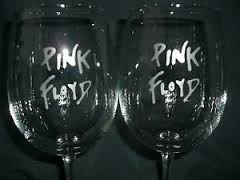
glassThis book informed me about these two unreleased Pink Floyd songs (there’s a Wikipedia site that lists some fifty more !).  While the were unreleased in 1974 (from the abandoned Household Objects album), they were eventually released in 2011 on expanded versions of albums.

“The Hard Way” features some “percussion” that sounds like someone taking steps.  There’s a bass riff which I gather is from rubber bands (but very well tuned).  There’s clocks ticking and chiming and tape being unspooled.  It’s a neat idea and while it is absurd to think you could make a whole album with this kind of stuff (in 1974), it’s a surprisingly good sounding track.

“Wine Glasses” was apparently made with wine glasses.  It is all of 2 minutes long.  It was designed to be a full song but was eventually used in the introduction to “Shine on You Crazy Diamond.”  I never really considered that there were wine glasses making the sounds (and clearly there are synths added on top), but yeah, so that ‘s kinda neat.

[READ: November 25, 2014] The Greatest Albums You’ll Never Hear

I found this book at work and knew I had to read it.  I was actually surprised at how long it took me to read (there’s a lot of entries).

The title and subtitle pretty much say everything you need to know about this book (and if you need to read it or not).  This book collects a series of writers who give a brief history of some of the more famous (and some not so famous) albums that were never released.  It explains (as best they can) why the albums weren’t released and even gives a percentage chance of likelihood of the album ever seeing the light of day (interestingly, most seem to be a 3/10–they may have been able to use a 5 point scale).

I knew some of the records they talked about (The Beach Boys’ Smile, Neil Young’s Chrome Dreams), but was ignorant of quite a lot of them. And while big fans of the artists may know all of the details about their favorite lost album already (these are sketches, not exhaustive research), there will certainly be some new information.  For instance, I’m a huge Pink Floyd fan but had no idea about the two shelved works mentioned here.

I liked the way the book was done chronologically and grouped by decade.  It was also interesting to see how the “reasons” for the non-release morphed over the decades from “the record label didn’t like it” to “it was leaked online.”

The one major gripe I have with the book is that it is chock full of “imagined” album covers.  This in itself is okay, but it is not made explicitly clear that they are all imagined (credits are given at the bottom of each image, but it took me a few entries to realize these were just people’s ideas of what the covers could look like).  And most of them are gawdawful.  Just really lame and dull (as if they had 20 minutes to come up with an idea).  They mar an otherwise cool collection,especially since some of the unreleased records actually do have proposed covers (even if they were never released).  I see that there is in fact a paragraph about the covers in the front pages of the book, but it is almost hidden away.

In addition to the albums I’ve listed below, I learned some fascinating things.  That Bruce Springsteen has hundreds of songs that he wrote but never released for various reasons.  That Pink Floyd did try to make an album out of household objects (with no instruments).  That the Sex Pistols’ Never Mind the Bollocks was almost simultaneously released illicitly as Spunk.  And that Danger Mouse’s The Grey Album was recently remastered.

The end of the book includes two small sections: other favorites that were never released.  Not sure why they earned only a small column instead of a full entry, but that’s okay.  The second was albums that we eventually did see, like My Bloody Valentine’s MBV and Guns N’ Roses’ Chinese Democracy.

So if you ever wondered what happened to that long lost album, this may be the book for you.

A sampling of the unreleased records include:

  • The Beach Boys-Smile
  • Buffalo Springfield-Stampede
  • The Kinks-Four Respected Gentlemen
  • The Beatles-Get Back
  • Jeff Beck-The Motown Album
  • Jimi Hendrix-Black Gold
  • The Who-Lifehouse
  • Wicked Lester
  • Rolling Stones-American Tour ’72
  • CSN&Y-Human Highway
  • Pink Floyd-Household Objects (1974), Spare Brick 1982
  • Dusty Springfield-Longing
  • David Bowie-The Gouster (1975), Toy (2001)
  • Sex Pistols-Spunk
  • Neil Young -Homegrown (1975), Chrome Dreams (1976)
  • Frank Zappa-Läther
  • Beastie Boys-Country Mike’s Greatest Hits
  • Weezer-Songs from the Black Hole
  • Jeff Buckley-My Sweeetheart the Drunk
  • Van Halen-IV
  • Foo Fighters-The Million Dollar Demos
  • Green Day-Cigarettes and Valentines (the author doesn’t believe it was actually stolen)
  • Tapeworm (Trent Reznor and Maynard James Keenan among others)
  • Deftones-Eros
  • U2-Songs of Ascent
  • Beck-The Song Reader


Read Full Post »

jun9SOUNDTRACK: NICOTINE-“Yesterday” (2005).

dudeSince this story is about a guy making up words to “Yesterday,” I thought I’d find a cover of it.  Evidently there are several hundred covers to choose from, so I chose this one, from a band I didn’t know.

As you might judge by the cover, this is a punk version of the song.  But what a little research tells me is that Nicotine is a Japanese punk pop band.  And you can hear in Howie’s vocals that although his English is quite good, his accent shows up at certain moments.

The guitar starts out nicely, in a non-punk way.  Then when the vocals kicks in, you will either love it or hate it camp.  Howie’s voice is kind of whiny/bratty sounding, making the song either funny or irritating depending.

After the first verse, the band turns into the kind of fast pop punk that NOFX does–speedy drums, heavy guitars, etc.  Interestingly, his voice doesn’t speed up for the verses which makes the contrast all the more striking.

The album pictured above is indeed a full album of Beatles covers (the band seems to do a lot of covers), most of which are entertaining enough to listen to more than once.

[READ: September 17, 2014] “Yesterday”

As this story opens the narrator says

As far as I know, the only person to put Japanese lyrics to the Beatles song “Yesterday” (and to do so in the distinctive Kansai dialect, no less) was a guy named Kitaru.  He used to belt out his own version when he was taking a bath:

Yesterday
Is two days before tomorrow
The day after two days ago.

While “Yesterday” features prominently in the story, it is really a story of love and romance and friendship.  The narrator met Kitaru at the coffee shop where they worked.  There is a great deal of emphasis placed on Kitaru’s use of the Kansai dialect (which I know little about except to know that it is not the dialect of Tokyo).  The strange thing about Kitaru (well, one of the strange things) is that he was born in Tokyo.  But he adopted the Kansai dialect because he was a fan of the Hanshin Tigers.  He was such a big fan that he learned their dialect to be able to communicate with the fans when he went to the games.  (Learning Kansai is apparently like learning another language).  He was so into it, that he spoke it all the time.

The narrator, on the other hand, grew up speaking Kansai but after living in Tokyo for a month, he became fluent in Tokyo Standard (which also shows how odd it for Kitaru to do this).

This is mostly set up to show how odd Kitaru is.  Kitaru is a super nice guy and is clearly smart (if he learned the dialect), and yet he has failed his college entrance exam twice.  This is a problem because his girlfriend, the very pretty Erika, got into college on her first try, and he says he can’t date her properly unless he is also in college.  He and Erika have known each other for ever and are romantic without actually “doing ” anything.  He admits that he thinks of her almost like a sister and can’t imagine touching her in that way.  They are super close, and he considers her his girlfriend, but that’s it. (more…)

Read Full Post »

karl2SOUNDTRACK: BRASS BED-Tiny Desk Concert #339 (February 24, 2014).

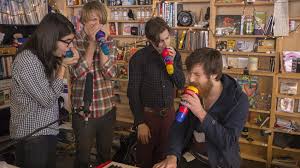
brass bedI expected Brass Bed to be a goofy band because of the snapshot image of them singing into toy microphones.  I was initially disappointed by how normal they were, but I was soon won over by their interesting floating sound. They have this overall trippy underwater vibe (which seems to be accomplished by a bowed slide guitar). This is especially notable on “Yellow Bursts of Age” their best song in the set.  Later the guitar solo is echoey and also underwatery. It’s a very wild sound for a fairly simple song.

They tell a funny story about being from Louisiana and encountering Washington DC snow and (of course) not having an ice scraper (although they did have bag of sand).

“Cold Chicory” is an upbeat sounding song musically although it is kind of a bummer lyrically, but again there’s the great sound of the bow on the slide guitar and the echoey lead guitar. “Please Don’t Go” is a slow song—with more interesting effects from singing into that slide guitar.

The plastic mikes do come out in the last song “Have to be Fine” in which they sing into the echoey mikes for the intro (with very nice harmonies).  They sing the intro for about a minute, and then the slide guitar player takes lead vocals on this simple but pretty song (I don’t know any of their names).

At the end, the NPR folks gave them an honorary NPR ice scraper.

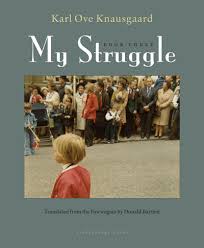
[READ: June 24, 2014] My Struggle Book Three

boyhoodI read an excerpt of Book Three just a few weeks ago.  And in the post about it I said I wouldn’t be reading this book for quite some time.  But then the book unexpectedly came across my desk and I couldn’t resist grabbing it while it was here.  So it appears that I will now have to wait well over a year before Book 4 (which is, I think about 1,000 pages–yipes).  I also see that Book Three is fully called “Boyhood Island” in Britain.

At the end of Book Two, Karl Ove was more or less caught up to the present–writing about what he was then up to (with a few years gap, of course).  So it makes sense that this book is about his childhood–showing us how he came to be the man he is.

The book, amusingly enough, starts off with memories that he cannot possibly remember, and he even says as much.  He is using memories of his parents and piecing together pictures from when he was an infant.  In 1970, (Karl Ove was born in 1968) his family moved to the island of Tromøy tromo(and check out the idyllic picture that Wikipedia had).  This is where Karl Ove spent his (rather traumatic) formative years.  Their island is small, so he knows everyone in his school, but there are some amenities around like the Fina station and the B-Max, and there’s lots of soccer to be played and bikes to be ridden.

Things seem normal at first–he runs and plays with his friends, there is ample green space to run around in, and they have boats to sail on.  And we meet two of Karl Ove’s earliest friends: Geir and Trond (so many people are named in the book, I’m very curious to know if any of them remember him).  In an early scene they chase the end of a rainbow looking for a pot of gold (and have a discussion about what happens to it when the rainbow vanishes (the boys even play a prank on Karl Ove that they actually found the pot,a dn while he doesn’t initially fall for it, he is compelled to go back and they tease him).

But the looming figure here and throughout the book is Karl Ove’s father, who, at least according to Karl Ove’s memory, is pretty much a monstrous dick.  He is demanding and exacting, unforgiving and seemingly uncaring.  He is either bipolar or a drunk, jumping from goofy to outright rage in a mater of seconds.  Karl Ove and his brother Yngve fear him unconditionally and, by the end of the book they both seem to hate him.  The scene where their dad tries and fails to teach Karl Ove to swim is heartbreaking, especially when the dad goes home and tells their mom right in front of him “He’s frightened of water.”  There are dozens of instances of fear and intimidation (often accompanied by a wrenching of Karl Ove’s ear).  Like when Karl Ove turns on the TV for his grandparents (he wasn’t allowed to touch the TV but he wanted to do something nice for them).  After a few minutes, the TV fizzed out and, naturally, he was blamed for it and sent to bed without supper (after some minor physical abuse). (more…)

Read Full Post »

dec20133SOUNDTRACK: FRANKIE SPARO-Arena Hostile (VPRO Radio Recordings) [CST017] (2001).

sparo2I didn’t love Sparo’s debut album, but a year later while on tour with A Silver Mt. Zion (whom I do love) he went into a studio in Amsterdam to re-record some of those songs.  I’ll let the Constellation site tell you what this EP is and why I like it so very very much,

In January 2001, Frankie Sparo toured Europe with a Silver Mt Zion. Musicians from the latter group worked on new arrangements of songs from Sparo’s debut record My Red Scare, adding strings, organ and electronics to Frankie’s guitar and beatbox compositions. Some of the results were captured in a live studio performance recorded live to 2-track at VPRO radio in Amsterdam, where a feverish flu found Sparo in a ravaged, hallucinatory state – which only added to the dark magic of these recordings. The four songs on this EP are all first takes, beautifully recorded by the good people at VPRO. Along with 3 songs reworked from the debut album, the EP also includes a heartbreaking cover of the Rolling Stones’ “I Am Waiting”, which Sparo performed solo a number of times in concert.

“Diminish Me NYC” is great in this version with an off-kilter electronic arrangement and strings. “The Night That We Stayed In” which I singled out on the debut album has two violins, turning the song into an even cooler number (although the “throw your hands in the air” line seems moderately less comical now).  “Here Comes The Future” has an almost dance beat—a slow dance mind you, but still, a good one and ends with some organ waves.  And the cover of “I am Waiting” must be the slowest cover of a Stones song ever.  I don’t know the original, but I bet it sounds nothing like this.

I really like this EP a lot and it makes me want to like the debut album even more–if I had more patience with it.

[READ: April 15, 2014] 3 book reviews

noveltyThis month Bissell reviewed non-fiction three books.

The first is Novelty: A History of the New by Michael North.  In this book North argues that newness, that novelty, has always been a problem: “one of the very first ideas to trouble the consciousness of humankind.”  This dates all the way back to Aristotle who argued that nothing came from nothing; that everything came from something else.  Even the Renaissance, that period of great exploration and creativity was really just mimicking classics (hence the word renaissance).  The new tends to be looked at askance, so we get terms like “novelty act.”

North says that one thing which is genuinely new is our proclivity to turn everything into information as gigabits or as abstract knowledge.

I’m intrigued by the premise of this book but not enough to want to read it and frankly, Bissell doesn’t make it sound that compelling.

Bissell connects this attitude about newness and novelty to the rock world (and rightly so).  Where we (well, some people) value novelty and criticize anything that is derivative.  Which leads to the second book (another one I don’t want to read but for different reasons).  Beatles vs. Stones by John McMillian.  The Beatles were arguably the most original band ever since no one did what they did before them.  And then, bvssarguably, the Rolling Stones came along and did just what the Beatles did a little bit afterwards.

Some easy examples:

  • The cover of the Rollings Stones’ first album is compositionally similar to the cover of The Beatles’ second album.
  • A few months after the Beatles released their ballad “Yesterday,” the Stones released their ballad “As Tears Go By.”  (The song was recorded earlier but was initially dismissed as not Stones enough).
  • After the Beatles used a sitar in “Norwegian Wood,” the Stones used one (in a different way) in “Paint It Black.”
  • And quotemaster himself, John Lennon, once said, “Everything we do, the Stones do four months later.”  [The Stones did still released some great music after The Beatles broke up, of course, even if now they play nothing they wrote after 1981 on tour anymore].

And this Lennon quote is typical of this book which is a gossipy casual look at the differences between the Beatles and Stones [Beatles when you’re writing, Stones when you’re jogging; Beatles when you’re alone, Stones when you’re with people).  But in addition to comparisons, he includes scenes like when the Beatles attended a Stones show and when Jagger and Richards were at Shea Stadium for The Beatles’ arrival.

There are many similarities between the bands, although the biggest different seems to be that the Stones never really became friends, while The Beatles were friends till the end.

Of course, the Stones has always been cooler than the Beatles, which is a nice segue into Bissell’s third book: The Cool School: Writing from America’s Hip Underground by Glenn O’Brien.

coolschoolO’Brien’s thesis is the seemingly obvious one that “cool” is not a new thing–that early tribes doing war dances had cool people playing syncopated drums in the corner.  But he is not arguing about coolness, he is collecting “a louche amuse bouche [that must have been fun to write]…a primer and inspiration for future thought crime.”  The book includes works by the likes of Henry Miller, Delmore Schwartz, LeRoi Jones and Eric Bogosian.  I like some of these guys, but as soon as I see them assembled together, I know I’m not going to be going anywhere near this book.

Bissell says that there is some cool stuff here: Miles Davis writing about Charlie Parker for example, but most of the cool seems to be trying too hard.  Like the “charmlessly dated” Norman Mailer piece, “The White Negro.”

I appreciate the way Bissell sums up what comes through from the book: “to be cool…is to make the conscious choice, every step of the way through life, to care about the wrong damn thing.”

It is comforting to come away from one of these book reviews without wanting to read anything.


Read Full Post »

univSOUNDTRACK: BECK-Mutations (1998).

mutationsThis is the first album that shows a wholly different side to Beck. It is pretty much an entirely traditional album.  There’s no samples, just consistently strong songwriting.  The overall feel is mellow and it comes as quite a shock after the chaos of Odelay!

Although the album has a very consistent vibe, it’s not all samey.  There’s a lot of different instrumentation like the harpsichord on “Lazy Flies,” and the old-timey piano and slide guitar on “Canceled Check” which has a very country feel.  It’s not all simple and normal though, as “Check” ends with a strange musical breakdown that keeps it from being a smooth song.  “We Live Again” is a very mellow track with Beck singing sweetly over the waves of music.

As befits the name “Tropicalia” has a very tropical feel, it’s totally danceable and was a very wise choice as a sample.  “Dead Melodies” has a classical music feel (with vocals of course).  “Bottle of Blues” is, unsurprisingly, a somewhat rowdy blues song.  “O Maria” is a slow but upbeat piano song that also feels old timey.  “Sing It Again” has a melody that is similar to “Norwegian Wood,” but the song is nothing like that Beatles classic.  This is gently sung and played acoustic guitar number.  And “Static” is a quiet disc ender.

This disc also feature a “bonus” track, and this is the first one that is actually enjoyable.  It is a fleshed out song (and a good one at that). It is comparatively rambunctious and noisy and quite different from anything else on the disc.  It’s called “Diamond Bollocks” and has a great bass line and cool backing vocals.  This song could easily have been a hit if it weren’t tucked away at the end of the disc.  (Well, and there are some weird moments to, but overall, easily a hit).

Despite all that Beck is known for his crazy songs and samples, Mutations is an extremely cohesive record with enough diversity to keep it from ever getting dull.  It’s a great record and is somewhat overlooked in his catalog.

[READ: March 16, 2014] The Unknown University

This is a collection of almost all of Roberto Bolaño’s poetry.  Some (but not all) of the poems from his collection The Romantic Dogs are included here, although some of those are apparently modified a little.  It also includes what was earlier released as Antwerp but is here called “People Walking Away.”  (I found Antwerp and “People” to be quite unusual and would never remember what is the same in the two.  But translator Laura Healy says that she more or less uses Natasha Wimmer’s translation of Antwerp for the parts that are the same (a task which must have been harder than it sounds if the two pieces weren’t exactly the same).

This book is 830 pages with facing pages of Spanish and English.  According to the publisher’s note, this collection was found on Bolaño’s computer as is—a collection of all of his poems from throughout his career.

Most of the early poems were written when Bolaño was young (in his 20s).  Even at such a young age, he writes powerfully.  Not all of his poems are great of course (how could they be when there are so many) but there are dozens and dozens of poems that I thought were fantastic.  I’m going to include some below, but I also wanted to get some criticisms out of the way too.

He tends to revisit ideas quite a lot, which is normal for a poet, but it seems weird to revisit an idea in subsequent poems (especially when the poems are just a few lines long each).  It almost feels like he fixated on a subject and thought of a number of ways to work with it and rather than make one long poem, he made several short ones.  Like this strange occurrence: (more…)

Read Full Post »

eleanorSOUNDTRACK: BILL CALLAHAN-Tiny Desk Concert #21 (July 13, 2009).

billcBill Callahan (formerly known as Smog) plays beautiful slow ballads.  He has a deep, calming, gorgeous voice.  And his songs have a very traditional acoustic feel (even when he plays electric guitar).  He is excellent at what he does.

But I’m afraid I just don’t really like his style all that much.  I can absolutely appreciate why he is so well-regarded, because even as I’m listening to this Tiny Desk set I keep thinking how good everything he is doing is.  Man, his voice is so interesting, and his music is so pretty (the strings add a very nice touch).

But I just can’t imagine myself ever choosing to listen to his album.

In fairness, a song on a mix tape would probably be awesome, and I did enjoy the three songs here: “Jim Cain,” “Rococo Zephyr” (great title, and my favorite of the three) and “Too Many Birds.”  And I can imagine if I was ever on a mellow music kick that this would be where I’d start.  So if you enjoy pretty, mellow music done incredibly well, Bill Callahan is definitely your guy.  I feel like he is not as well-known as he ought to be, so check him out.

[READ: January 23, 2014] Eleanor Rigby

Completing three Douglas Coupland novels in two weeks may seem daunting, and it is especially so when the books are as dark as these have been.  (With Coupland’s follow up book, JPod, he would go in a different direction and kind of break the darkness somewhat.  And the new book which just came out seems like it is more humorous than dark).  This book is perhaps the most insular of his career and perhaps the most insular book I’ve read.  The title is puzzling (and is ultimately revealed), although Coupland says that he was inspired by wondering what happened to Eleanor Rigby after the (Beatles, duh) song was over.

So in this story, the main character is named Liz Dunn.  Liz is a blank.  She claims that she is so dull that if she were an extra in movies, she would be asked to leave the scene because she is too devoid of character to even be an extra.  (Actually, Liz lays the self-pity on a little too thickly throughout the book–we got the point).  Liz has a brother, who is an accomplished world traveller, and a sister who lives nearby and pops in to check on her once in a while.  Both are married and have their lives together, unlike Liz who lives by herself in a room with no personality at all.

Liz’ sister is beautiful and got up to all kinds of trouble in school and William has always been successful, but Liz was…nothing.  She didn’t like to do much.  And she pretty much holds herself up as the antithesis of her sister.  She watches movies all the time in her living room. And then she goes to sleep.  She works at a well paying but dull job and she has saved a ton of money because she never spends it on anything.

As the story starts, she is getting wisdom teeth out. She takes a week off from work, but he boss (the Dwarf Whom I Report To) calls to say that someone will bring some work over to keep her busy.  She has bought a bunch of tear jerker movies in hopes of riding out the painkillers with them.  And then she gets a phone call.  A man named Jeremy has her name on his medic alert bracelet and he is in the hospital.

Liz doesn’t know who he is, but then takes a guess and goes to see him in the hospital.  And it turns out to be…her son. (more…)

Read Full Post »

mccarthySOUNDTRACK: PHISH-Undermind (2004).

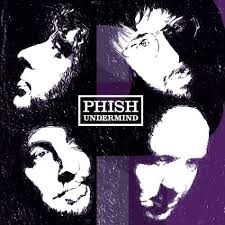
undermindAs I understand it, Phish fans didn’t like Undermind that much and yet I really liked it and still do.  Indeed, “Undermind” is one of my favorite new Phish songs, it’s clever and boppy and just really catchy.  The album has very Beatles vibe to it—a kind of echoey feel on all the songs.  And I have recently read that people interpret the cover design to be a nod to Let It Be (there are other connections made but I’m not going to go too deeply into that).

“Scents and Subtle Sounds” opens the album.  This is a brief intro–the full songs, which sounds different appears later on the disc (it’s 97 second here)).  It leads into “Undermind” which has a loose, slightly funky sound—one of their more fun songs on recent albums.  The album version has some big fat organ sounds on it which make it even cooler.

“The Connection” is another great poppy song—gorgeous harmonies and wonderful melody, and indeed it was their first real hit.  “A Song I Heard the Ocean Sing” is another great song, great backing vocals, an excellent melody and great alternating verse vocals from Mike.  It also has a great middle guitar section—it’s long and wild and reminiscent of Jimi Hendrix’ solos.  “Army of One” is sung by Page.  It is a big soaring song and it’s got a very upbeat sound.  “Crowd Control” is a very Beatleseque song.

“Maggie’s Revenge” is a noisy instrumental, with Trey’s guitars making all kind of squealing noise.  It’s weird and quite refreshing from Phish’s more recent fair.  “Nothing” picks up with the open and poppy sounds of earlier records and has more great harmonies.  It seems to fade out in the middle though—a song that could have been longer!  “Two Versions of Me” is another mid tempo song with great harmonies and  great chorus.  “Access Me” is a brief poppy song that feels a bit like filler, although it has a cool and interesting coda.  “Scents and Subtle Sounds” resumes

“Tomorrow’s Song” has a very African feel to it.  It is a simple repetitive rhythm that lasts for about 3 minutes before it fades out just like it faded in.  “Secret Smile” is a very pretty piano ballad.  It’s a little heavy handed with the strings, and at nearly 7 minutes it’s too long (especially the long coda), but the melody is certainly nice.  The album ends with “Grind,” a barbershop quartet track which shows just what kind of great harmonies they cool do.

Although it’s a mature sound, there’s enough weird stuff to let them show their funky side too.  The CD comes with a DVD called “Specimens of Beauty.”

[READ: October 8, 2013] C

I received a prepub version of this book back in 2010.  The cover and title were weird and I thought I’d like to read it.  And it sat on my shelf for two years.

And then Borders closed (bummer, their chai tea was the best!) and I saw a hardcover copy of the book for $1 so I bought it (I’m enough of a geek to want to see how prepubs and final copies are different.  In this case, the books appear identical except that in the last two dozen or so pages, there’s a section with ellipses.  In the prepub, they are single spaced but in the final book they are double spaced which throws off the line spacing.  So by the end of the book, the lines are about three lines different.  Fascinating huh?).

Anyhow, what on earth is a book called C about?

Well, it is a Bildungsroman or coming-of-age story.  By definition these stories focus on the psychological and moral growth of the protagonist from youth to adulthood.  Our protagonist is Serge Carrefax, even though he is not the first person we meet.  That would be a doctor delivering materials to Serge’s father, Mr. Simeon Carrefax.  Mr Carrefax runs a school for the deaf in which he tells children to stop using sign language and to start speaking properly.  And he has had considerable success with the children, each of whom acting in a play every year.  (The book, by the way, is set in the late 1800s).  His mother is a silkworm farmer, and much of their money comes from this job.

But the main person in Serge’s life is his sister Sophie.  Sophie is a deviously clever girl who is alternately mean to Serge (as only older sisters can be) and then encouraging him to play with her.  She is mad for science and is constantly experimenting with her chemistry set (leading to more than one explosion in the house).  The early sections of the book show Sophie and Serge’s education.  And when Sophie goes off to school, Serge is lost, especially when she returns from school but keeps telling him to leave her alone.  And then one day, Serge discovers her dead in her “lab” and experiment in progress. (more…)

Read Full Post »

CV1_TNY_03_25_13Juan.inddSOUNDTRACK: THE SMITH WESTERNS-“3AM Spiritual” (2013).

smith-westerns_cvr-208198ccccc71e78a954f8e32cfa71f6abe43e63-s1This album is currently streaming on NPR.  It is a sweet acoustic pop album with elements of retro electric guitar sounds.  It has lots of elements that I recognize (name any folkie power pop band and you can hear them in here).  But the biggest element here is The Beatles–later period Beatles–especially on the instrumental break of this song.

It opens with jangly guitars and a falsetto vocal (with lots of ah ha has at the end of the verses).  There’s a soft keyboard and some wooooah yeashs.   So far so good.

At the two-minute mark the song gets much bigger–the “whoa yeahs” get louder and there’s a guitar break which lasts for a few measures and which seems like the song will be ending (it is a power pop song after all).  But the chord changes and the song stops and the pizzicato piano comes in.  And it’s followed by that fuzzed out classic rock guitar solo sound.   All of which is brief enough to keep the listener guessing while the song swings back into some Whoa Yeahs until it ends.

It’s a simple pop song, but it has enough going on to not be completely obvious.

[READ: April 21, 2013] “The Judge’s Will”

I read this awhile back and never posted on it.  So here it is.

This is the story of a judge and the women in his life.  He has survived a second heart attack but knows he is not long for the world.  The judge is married, but he has been keeping a woman on the side for twenty-five years.  And she is concerned for her future–he has always taken care of her but she has no legal rights.  He has ensured that she will be okay in his will, but he is afraid that his wife and son will cause trouble when the time came.

His wife Binny did not react at all when he told her of his multi-decade infidelity–she acted like it was idle gossip.  But she did share the news with her son Yasi.  They knew the judge wouldn’t leave everything to the other woman.  The judge is rather surprised by this reaction and indeed, it proves to be false.

When the judge went back to the hospital, he called on Yasi and asked him to bring things to the other woman.  Which he did–although he says he left as soon as he could.  When the judge returns home, he asks Yasi to bring the other woman, Phul, to their house. Binny was upset, but accepted the news. (more…)

Read Full Post »

« Newer Posts - Older Posts »