Feeds:
Posts
Comments

Archive for the ‘Morality’ Category

[LISTENED TO: Summer 2017] Middle School: The Worst Years of My Life

download (50)I might be one of the few people in America to have never read anything by James Patterson.  Well, C. really enjoyed this series (and his other books for young readers) so we decided to listen to this on a car ride. (Both kids had seen the film already, although I hadn’t).

I have to say that right off the bat I was turned off by the introduction of this book because there was this hard rocking guitar that they played through about 3 minutes of opening text.  And it was too loud!  It was really hard to hear the narrator.  I kind of tuned out because I feared that the whole book would feature this (it doesn’t).  And while I won’t say I was confused by what I missed, I did wonder if I’d missed some things that were revealed later (also, some of the main character’s motivation).

Rafe Khatchadorian is starting Hills Village Middle School.  It’s a new school (sixth grade).  Rafe seems to have a hard to succeeding in school in general.  There’s also a lot going on at home.  His mom has been dating a jerk named Bear.  Bear is unemployed, and living with them while Rafe’s mom is working two jobs and is hardly ever home.

The only person who seems to help Rafe cope with things is his friend Leo the Silent.  Leo doesn’t talk much, but he is an awesome artist.  And he also encourages Rafe to do things that maybe he shouldn’t.

When Rafe arrives at school, he is given a rule book with over 100 rules that he must follow.  Given the possibility of hanging out, being good and following the rules or having fun and enjoying school, he and Leo make a choice.  And they come up with “Operation R.A.F.E.” (which stands for Rules Aren’t For Everyone).  The operation is set up like a video game.  Rafe is going to try to break every rule in the handbook. Leo will award him points.  But he will also only have three “lives,” which he will lose if he gets caught or otherwise fails in his quest. (more…)

Read Full Post »

815SOUNDTRACK: BORIS-DEAR (2017).

The plan was that after 25 years, Boris would retire.  They recorded songs for Dear, but then toured the anniversary of the album Pink.  This inspired them to write more songs, and somehow through all of that, Dear was created (with apparently enough music for two more albums).

Then they toured Dear (a tour I was lucky enough to see) and are still going.  Who knows if they are done.  Who knows if this is their final album.  Either way, this is a doozy.

10 songs and 70 minutes (on the U.S. release), Dear specialized in slow droney heavy songs.  The album opens with seven smacks of a drum before loud heavy chords signal the beginning of “D.O.W.N -Domination of Waiting Noise.”  The vocals are loud but just loud enough to add to the overall drone sound.  Things slow down further with “Deadsong” a deep bass drone with whispered, rather spooky/demonic vocals.

Despite the drones there are moments of catchiness (relative).  “Absoluego” is a faster, downtuned song with a big shouted chorus and “Beyond” is a quiet, moody song featuring Wata on vocals.  About 90 seconds into the song there is blast of metal guitars and drums that lasts for 30 seconds or so before fading out.  When it happens again, one of the guys starts singing too, a faster heavier, catchier melody.

“Kagero” opens with a low rumble.  Eventually a slow, heavy guitar comes in with near falsetto singing.  “Biotope” has a steady pulsing bass drum through the track.  The guitars are slower with an occasional plucked string that resonates. This song even has some ooohs in it.

“The Power” has my favorite Boris riff since “Tu la la.”  It’s got six notes all of which are strangely menacing and yet catchy at the same time. This was a great song to see live.  “Momentio Mori” is slow and menacing with cool echoed/chorused vocals–there’s an Alice in Chains vibe to the vocals.  With about a minute left, the song slows down and grows quiet almost as a lead in to the 12 minute “Dystopia -Vanishing Point.”  This song opens with two minutes of warbly accordion (I loved watching Wata play this part live) and some thundering drums.  It all fades away into some quiet ringing guitars and whispered vocals.  This continues for a few minutes as waves of guitars are added.  And then at 7 minutes the loud guitars and drums blast forth and Wata gets to do a screaming solo for the final 4 minutes.  She is still soloing as the song abruptly ends and switches to the final track.

“Dear” opens with those low downtuned guitars echoing.  I love that the guitars simply slide up to a very high note and hold it until sliding back down.  There’s a muffled chug on the low chords while the heavily echoed vocals ring out.  The song continues like this, a mountain of low rumble, for 9 minutes until it starts to consume itself–feedbacking and disintegrating until it sounds like all of the plugs are pulled.

There’s not a lot of diversity on this disc, which resembles some of their earlier music.  I’m very curious to see what they do next.

[READ: February 9, 2016] “The Republic of Bad Taste”

This story (it feels complete and not like an excerpt, although the title seems unlikely as a short story title) was 20 pages long in this issue of the New Yorker.  That’s one of the longest pieces I’ve seen in the magazine.

And it covers a lot of ground.

Like how does an at-risk-youth counselor agree to commit murder?

It begins by introducing us to Andreas Wolf in East Germany circa 1987.  He is a disaffected youth, an atheist with a super libido and he has found employment at the church on Siegfeldstrasse.  Andreas felt the whole regime was ridiculous.  In fact he felt that a lot of things were ridiculous.  The Republic was just so German that it couldn’t even go after misfits unless it was by the book.

His “job” at the church was as a youth counselor.  He was surprisingly good at it. In part because he really didn’t care and in part because he himself was almost at risk.  He wasn’t really at risk because his father had a good position with the government, but they had more or less disowned him (aside from agreeing to make sure he never got into real trouble).  Plus, he was pretty good-looking so many of the at risk girls found him attractive–with all that implies.

He took advantage of this.  He found that his monetary reward was so pitiful that a reward in beautiful girls made up for it.  At the same time, he did have some scruples.  He never had sex with anyone underage or anyone who had been sexually abused.  What a guy. (more…)

Read Full Post »

SOUNDTRACK: AHI-Tiny Desk Concert #693 (January 16, 2018).

AHI is apparently, inexplicably pronounced “eye.”  He is an Ontario-based singer.  There’s nothing strikingly original about his sound, but his songs are pretty and thoughtful and his voice has a pleasing rough edge.

Bob says,

AHI’s gruff but sweet voice and openly honest words were my gateway to this young Ontario-based singer. AHI says he sings Sam Cooke’s “A Change Is Gonna Come,” at the end of every set with a sense of hope. It was powerfully moving, without a note that felt clichéd or overly nostalgic. At that moment, I knew he needed to play a Tiny Desk Concert.

With a tasteful band comprised of Frank Carter Rische on electric guitar, Robbie Crowell on bass guitar and Shawn Killaly (a man of a million faces) on drums, AHI put his heart into three songs in just about 11 minutes, all from his debut album We Made It Through The Wreckage, which came out a year ago this week.

“Alive Again” builds slowly, but by the time the chorus comes around and he adds some whoops, the song really moves. I’m quite intrigued at the constant soloing from guitarist Frank Carter Rische.  It’s virtually nonstop and really seems to propel the song along.  It’s a catchy and fun song the way each round seems to make the song bigger and bigger.

About “Closer (From a Distance)” he says, we all have relationships.  Some are good; some are bad and some are just awful.  You may care about someone with your whole heart only to realize that you care about that person more than they care about themselves.  No matter how strong you are your strengths may not be as strong as their weaknesses.  Sometimes the only way to save the relationship is to walk away–“maybe we’ll be closer from a distance.”   This is a really heartbreaking song.  The lyrics are clearly very personal and quite powerful.  And the soloing throughout the song is really quiet and beautiful.

“Ol’ Sweet Day” is bouncy and catchy with a propulsive acoustic guitar and lovely licks on the lead acoustic guitar.  The drums are fun on this song as Killaly plays the wall and uses his elbow to change the sound of the drum at the end of the song.

The burning question that is never addressed is way he is wearing a helmet –motorcycle? horse riding?  It stays on the whole time.  At one point he even seems to “tip” his hat.  How peculiar.

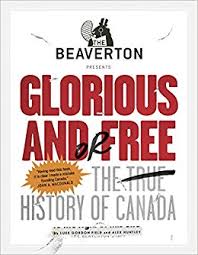
[READ: December 8, 2017] Glorious and or Free

The Beaverton is a satirical news source based in Canada.  It began as a website in 2010 and then added a TV Show in 2016 (now in its second season).  To celebrate 2017, the creators made this book.

They have divided the history of Canada into 13 sections.  As with many satirical history books, you can learn a lot about a country or a time from the kinds of jokes made.  Obviously the joke of each article is fake, but they are all based in something.  Historical figures are accurate and their stereotypes and broadsides certainly give a picture of the person.

Some of the humor is dependent upon knowing at least a little about the topic, but some of the other articles are just broadly funny whether you know anything about it or not.

When we made this book our goal was to transport readers back to grade school to remember what they were taught n Canadian history class.  And so what if your teacher was hungover most of the time?

~30,000 Years of History in About Four Page (3,200,000,000 BCE – 1496)

“What the hell is that?”  –God after forgetting he made beavers. (more…)

Read Full Post »

SOUNDTRACK: VOIRVOIR-The Free-P (2016).

I got this Free Ep at a VoirVoir (not Voir Voir) show in Bethlehem.  This EP contains four songs.

Two of them are new and two are re-recordings of songs from their debut album.

“Quit It All” is a bit poppier than their debut album.  The 90s synth is a nice touch to this song which, make no mistake, still rocks.   The middle noise section (skronking guitar solo and great drums) is a highlight as are the catchy verses.  The band even submitted a video for the Tiny Desk Contest (I had no idea).

“Sides” is perhaps one of the best catchy alt rock songs I’ve heard in years and I am bummed that they didn’t get recognized for it.  It’s got a great 90s alt-rock sound and wonderful harmonies in the backing vocals.  There’s a video for this song as well.  You can also stream the song on bandcamp.

The other two songs, “Stupid for Now” and “There are No Good Goodbyes” were recorded at WDIY (Lehigh Valley’s Community NPR Station) in a stripped down format.  You can stream the songs here.  It’s interesting to hear them without the fuzz and drums.  The songs are solid and work very well although I do like the originals better.  The show also includes an interview with the three members who play the stripped down show.  The DJ asks their influences and while main singer guitarist Matt Molchany demurs,  April Smith says Built to Spill) and Josh Maskornick says Primus and Superchunk.

And if you can’t get enough (since they haven’t released that much) here’s a live show from Shards.

[READ: January 10, 2016 & January 10, 2018] Goldfish Memory

For some reason, I read this book back in 2016 and then didn’t post about it–I felt like I needed to read it again, and so I waited almost exactly two years and re-read it and enjoyed it even more this second time.  Almost like actual goldfish memory.

The back of this book made the stories sound really compelling:  “what does it mean to have a connection with someone? This is the question these brilliant short stories try to answer.”  The note said that this was the first translation of Monique Schwitter’s form-breaking work.  The translation was by Eluned Gramich.

I’m not sure how form-breaking these stories are, but they are certainly interesting.  They remind me in some ways of Julie Hecht–a narrator who is connected to people but very distantly.  But while Hecht’s narrators are critical and dismissive of everyone, Schwitter’s narrators just seem to be incapable of connecting properly.  You can feel the longing in the distance between them.  I also like how these missed connections cover all kinds of relationships–familial, sexual, friendship, professional, even passing acquaintances.

Few of the characters seem to be able to tell anyone else how they really feel–even when they are dying.  There is sadness at loss, but a kind of c’est la vie about it as well.  And all along, Schwitter’s writing is consistently excellent and the stories are really enjoyable. (more…)

Read Full Post »

SOUNDTRACK: CIGARETTES AFTER SEX-Tiny Desk Concert #684 (December 13, 2017).

I only know of Cigarettes After Sex from when NPR played a song of theirs and Bob asked us to guess whether the singer was a man or a woman.

Greg Gonzalez has one of those wonderful voices that is deep and husky and sounds feminine (although his speaking voice is very deep).

This Tiny Desk Concert is very quiet (like The XX).  It is just Gonzalez on heavily echoed guitar and vocals and his unmoving, emotion-free longtime bandmate Phillip Tubbs on spare keyboards.

Although there’s not a lot to these songs, the melodies are truly terrific.

The three songs sound very similar–unmistakably them.

“K.,” the opening track to this Tiny Desk Concert – and the opening cut to the band’s eight year-long awaited debut album – is especially memorable. The lyrics are simple and easy to remember: “Kristen, come right back/I’ve been waiting for you to slip back in bed/When you light the candle.”

Amazingly, for almost half of each song, there are no keyboards, just the guitar.  So that extra, gentle wash of music sounds huge.  “Apocalypse” has the lovely swooning chorus of “you’ve been locked in here forever and you just can’t say goodbye” and “Nothing’s Gonna Hurt You Baby” follows that same pretty structure (although it’s my least favorite of the three).  With the minimalism:

each note and each word seems to count for more  …  and the office environment of the Tiny Desk Concert [may work better] than in a club, where just the chatter of a crowd can drown out this gentle music.

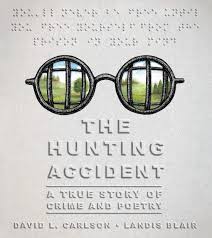
[READ: November 1, 2017] The Hunting Accident

I loved this book. Everything about it was utterly fantastic.  The story, the way it was told, and the amazing drawings of Landis Blair

The book opens on a snowy day in Chicago in 1959.  A boy whose mother has just died has moved from sunny California to miserable Chicago to live with his blind father, Matt.   The boy had lived with his mother since he was four (his mother’s mother thought that his father was a trouble and that they needed to get away from him).  So he barely knew his father.  And now it was time to find out everything about the man.  Like, first off, how he became blind.

The father told the boy all about the hunting accident.  He and his friends were screwing around, playing by the train tracks.  They were having fun scaring each other.  All the kids were afraid of real life bogeymen Leopold & Loeb local murderers.  The boys even believed they found the pipe in which Leopold & Loeb stuffed their victim.

There’s even little reminder of the crime:

In 1924, two wealthy educated men kidnapped and brutally murdered Bobby Franks, a 14-year-old neighbor…just for the thrill of it… to see if they could commit “the perfect crime.”

Anyhow, the boys had a shotgun and heard a deer.  When one of those boys shot at the deer he missed and his Charlie’s father right in the face.

Soon Charlie must learn what it is like to live with a blind man–how everything must be in the exact same place.

Charlie’s father writes all the time (on a braille machine).  He writes about morality and poetry.  He quotes Dante.  And soon, Charlie’s dad was having Charlie help with the writing–by proofing and checking things (Charlie learned a lot at the same time).

Charlie’s grandmother also said that Chicago was dangerous, but not for Charlie.  He got along fine. He even made friends with Steve Garza–the coolest kid in the neighborhood.    Garza was so cool he bummed cigarettes off of Charlie (from his dad–even though Matt, counted them and got mad about it).

Charlie also began getting involved in extracurricular activities–he loved tap dancing and tried the cello–two things his father appreciated. But soon Steve and his buddy started pressuring Charlie.  He “left” his tap shoes at the park, he stopped playing cello and he got involved in some ugly things.

Garza wanted to join the JPs–a local mob related gang.  But he was too young so he started the Junior JPs and soon enough that involved theft.  And since they were dumb, they were easily caught.

And that’s when the truth comes out.

I was already hooked into the story and then I was blown away.  Charlie’s dad did not lose his sight in a hunting accident.  Charlie is furious that his dad lied to him.

Garza convinces Charlie to head for Canada to avoid the cops.  (The third guy has already gotten there and is at a free-love commune or something).  Charlie is prepared to drive them both (he’s the one with the car after all).  And then his dad tells him the whole truth, which gets Charlie to pause.

The rest of the book cover’s Matt’s story.

He was poor in 193os Chicago and got mixed up with the wrong crowd.  His did go blind from a gun shot, but it was a very different setting–and it led to prison.

On the day he got to prison, the same prison that Leopold and Loeb were in, Richard Loeb was killed in the shower.  This left Leopold alone.

Charlie asks if he met Leopold.   And Charlie’s dad says that Nathan Leopold is the reason for his divorce.  What?

Turns out hat not only did Charlie’s dad know Nathan Leopold. He was Leopold’s cell mate.  Since Loeb was killed there was concern that Leopold might be next.  And since Matt was blind, they were put together under watch.

After Matt was out of prison, Leopold sent him a letter (in braille) which the grandmother intercepted.  Matt had never told anyone he was in jail, and that made Matt a Liar.

Matt was miserable in jail.  He couldn’t see, his father was disappointed in him and he had nothing to live for.  He just wanted to die, but that was pretty hard to do under constant supervision. We see daily life for a blind man in jail–food stolen all the time and knocking his cellmate’s things over.

Leopold was angry and bitter and wanted nothing to do with a blind man.  But soon, Leopold began talking to Matt about the life of the mind–something he realized that Matt lived all the time.  Because he couldn’t see everything was in his mind. Leopold used to hold educational lessons in the library at the jail.  He also showed Matt how to make a Glim Box (a way to use a spinning coin to light a fire to light cigarettes).

Matt tells Leopold that he has no family.  Meanwhile, Leopold’s dad visits every two weeks (the visits are awkward and uncomfortable but are a way for Leopold to get things from the outside).

Soon, Leopold is trying to convince Matt to learn Braille.  Why?  well, this gave opportunity for Leopold to learn it to and thereafter he could read after lights out.  (Leopold was a master of many languages and picked up braille easily).

And that’s when Leopold persuaded Matt to read Dante’s Inferno.

The story of Matt’s imprisonment jumps back to the present where Charlie is still annoyed with his father, but is really interested in the story. Especially when he leans that his father almost committed suicide there.

I loved the philosophical ideas in the story–they way the book interprets both Plato and Dante for the everyman .  I loved that Matt’s story runs throughout the book and I loved the whole idea of a blind man helping one of the most notorious criminals of he 20th century.

This story is thought-provoking and exciting at the same time.

The only thing that I feel was left out–did Charlie wind up going to jail or not?  It’s never addressed.

The end of the story and that final two-page spread are just breathtaking.

I also love that David L. Carlson more or less found out about this amazing true story by accident.

Read Full Post »

SOUNDTRACK: HANSON FOR THE HOLIDAYS-Tiny Desk Concert #686 (December 18, 2017).

The Hanson Tiny Desk Concert back in October ended with them saying “See you for Christmas everybody.”  And, lo, here they are.

But it turns out that Christmas was in October this year.

During the break, the NPR crew set up the Tiny Desk to look like Christmas.  Two of the three (why not all three?) brothers even wear Christmas sweaters.

They play three Christmas songs.  Two originals and one “traditional” medley.

The two originals are rocking, very piano heavy (the pianist does a LOT of sliding down the keyboard as they rock n toll out).

“Finally, It’s Christmas” is fun and bouncy song that I imagine we’ll hear a lot next year.

“To New Year’s Night” is a very conventional rock n roll song about a North Pole Party.  The guitarist with his gruffer voice (and no sweater) sings this song about needing a toddy for hid body (since I think of Hasnon as being 8-12 years old (although they obviously aren’t), it’s weird to hear them singing about drinking.  It’s a pretty standard rocker, they even quote “da do ron ron.”  After rocking out, they comment “Can anyone saw ‘sweat”ers.”  Since it is obviously not Christmastime.

It has been 20 years since their first Christmas record.  So they decided it was time to do a new one.  While they are talking Bob starts blowing snow all over them.  This leads to them singing “Joy to the Mountain” an a capella mash up of “Joy to the World” and “Go Tell It On the Mountain.”  They sin the melody in a non traditional way.  Their harmonies are really good even if I don’t care for their delivery.

2017 has been a pretty strange (mostly bad) year.  I never would have guessed I’d be watching two Tiny Desk Concerts with Hanson (and more or less enjoying both of them).

[READ: December 25, 2017] “A Chaparral Christmas Gift”

Once again, I have ordered The Short Story Advent Calendar.  This year, there are brief interviews with each author posted on the date of their story.

Hello. Welcome. It’s finally here: Short Story Advent Calendar time.

If you’re reading along at home, now’s the time to start cracking those seals, one by one, and discover some truly brilliant writing inside. Then check back here each morning for an exclusive interview with the author of that day’s story.

(Want to join in? It’s not too late. Order your copy here.)

This year I’m pairing each story with a holiday disc from our personal collection. (more…)

Read Full Post »

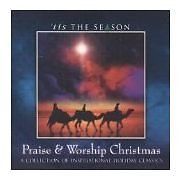
SOUNDTRACK: ‘TIS THE SEASON: Praise and Worship Christmas: A Collection of Inspirational Holiday Classics (2001).

s-l500This Christmas Collection came from Sarah.  As you can tell from the title and subtitle and sub-subtitle, this is a religious disc.  And as you can tell from the title and subtitles, they have gone way over the top.
The group consists of a bunch of performers and a choir from something called The Evergreen Community Church/The Rock.  Presumably not the actor The Rock, although that would be pretty cool.

As with a lot of contempo-Christian music, they’ve decided to add a rock flair to it.  So these are 13 songs sung very passionately and with little restraint.  Because if you can have an echo pedal, you should use it.  And for some reason, nothing says Christmas like alto saxophone.

“O Come All Ye Faithful” features that sax prominently.  Up next, I was pretty surprised to hear a rocking harmonica solo on “Joy to the World.”  For the most part the folkiness was okay until the choir at the end.

“Do You Hear What I Hear” has a solid drum machine and an excess of R&B vocals.  Up next, the music for “What Child is This?” is understated and pleasant.  Shame that the singer is shooting for the rafters.  Their version of “Go Tell It On the Mountain” is not gospel-tinged and, stranger yet, they changes the stress of the chorus to the “ow” of mountain.

“Angels We Have Heard on High” brings that saxophone back and back and back.   “O, Little Town of Bethlehem” has a quiet piano motif, but once again, it is oversung.

“We Wish You A Merry Christmas” makes excessive use of that echo pedal on the vocals.  “Hark! The Herald Angels Sing” was pretty good.  No complaints.

But try to imagine just how over the top and ponderous you could make an a capella (plus echo) version of “O Come, O Come Emmanuel.”

“Silent Night” loses all of its power in this folkie rendition.  I’m noticing the fretless bass and cheesey sax rather that the echoed vocals.  Amazingly, “Amazing Grace” is understated musically with just an acoustic guitar but the singer overcompensates.

The disc ends on a high note (not literally).  On “Joy to the World” the folkie harmonica and guitar work nicely.

[READ: December 22, 2017] “The Christmas Banquet”

Once again, I have ordered The Short Story Advent Calendar.  This year, there are brief interviews with each author posted on the date of their story.

Hello. Welcome. It’s finally here: Short Story Advent Calendar time.

If you’re reading along at home, now’s the time to start cracking those seals, one by one, and discover some truly brilliant writing inside. Then check back here each morning for an exclusive interview with the author of that day’s story.

(Want to join in? It’s not too late. Order your copy here.)

This year I’m pairing each story with a holiday disc from our personal collection. (more…)

Read Full Post »

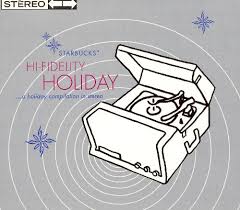
SOUNDTRACK: STARBUCKS Hi-Fidelity Holiday (1998).

This is one of my favorite Holiday CDs.  Say what you will about Starbucks (and I know you will), they know their audience (even if I don’t drink coffee).  Almost the entire CD is excellent, or at least in that groovy Hi-Fi style.  There are a few songs that don’t quite fit with the others, but overall, this is a keeper.

ESQUIVEL-“Jingle Bells”
I love Esquivel, and this space age jingle Bells is just the most fun.  You look ravishing tonight.

KEB’ MO’-“Jingle Bell Jamboree”
Keb’ Mo’ is a great performer, but this song doesn’t quite fit on this CD.  Especially after Esquivel.  Maybe if it was a little later in the sequence?  But the song itself is great and should be heard more at Christmas time.

COCTEAU TWINS-“Winter Wonderland”
I have loved Cocteau Twins for decades.  This version of “Winter Wonderland” has been a perennial favorite.  I love what they do with the song and how they keep it faithful but make it their own.  This should have followed Esquivel.

DEAN MARTIN-“Baby It’s Cold Outside”
This song is problematic for many reasons.  But if you can get past the creepiness, Dean’s version is fun.  It’s interesting that the female singers are practically a chorus of voices.

COMBUSTIBLE EDISON-“Sleigh Ride”
I’ve pretty much forgotten about Combustible Edison, but I love this swinging instrumental version of this song.  It’s totally terrific.

LEONARD COHEN-“Hallelujah”
This is not a Christmas song.  At all. It is also so over played that I never really want to hear it again.

XTC-“Thanks for Christmas”
I love this song.  It’s bright and happy and the XTC voices and guitars are just perfect.

EL VEZ-“Christmas Wish”
I have a soft spot for El Vez, but man I don’t care for this version of this song.  It’s not bad, but I kept thinking it was some B list actor form a 1950s rock n roll film (like Arch Hall).  I suppose if it was more in the El Vez spirit I’d enjoy it more.

JAMES BROWN-“Merry Christmas, Baby”
I like this song except it always bugs me that there’s a line about not being drunk but being all lit up like a Christmas Tree.  James seems a little not into this recording, to be honest.

THE ALARM-“Happy Christmas (War is Over)”
This song bugs me.  I think it’s the obnoxious (but well meaning) idea that war can be over if we want it.  But whatever.  This version is kind of flat, which is springing given The Alarm is all stadiumed out most of the time.

THE TEMPTATIONS-“Little Drummer Boy”
This song is tough to pull off.  The Temptations were a little flat at first I thought, but they pulled through to the end and won me over.

PEGGY LEE-“I Like a Sleighride (Jingle Bells)”
This song is weird and fun.  The “I like a sleighride” chorus is weird and kind of creepy, but it’s got a real fun feel overall.

ROBBIE ROBERTSON-“Christmas Must Be Tonight”
So I listened to this song and had literally no recollection of ever hearing it before–even though I have listened to this disc every year for a decade.  And even now, I have no recollection of it either.

THE BLUE HAWAIIANS-“We Four Kings (Little Drummer Boy)”
Is it because I have heard every Christmas song a million times that I gravitate to the oddball recording?  Probably.  I love this surf guitar instrumental version of “We Three Kings,” it brightens my day.

BOBBY DARIN-“Christmas Auld Lang Syne”
This is a classic.  It used to bug me that he goes so over the top with the LOOOOOOORD business at he end, but it doesn’t bug me much anymore–its makes me smile.  I really like the melody and the way the songs are conflated.

Overall this is a great collection of songs.  It’s not all as groovy and space-age as it appears, but it’s still good holiday fun.

[READ: December 1, 2017] “Skinks”

Near the end of November, I found out about The Short Story Advent Calendar.  Which is what exactly?  Well…

The Short Story Advent Calendar returns, not a moment too soon, to spice up your holidays with another collection of 24 stories that readers open one by one on the mornings leading up to Christmas.  This year’s stories once again come from some of your favourite writers across the continent—plus a couple of new crushes you haven’t met yet. Most of the stories have never appeared in a book before. Some have never been published, period.

I already had plans for what to post about in December, but since this arrived I’ve decided to post about every story on each day.

This story is told by a little boy, Wendell, who wants to be called Dilly.  He tells us that Jesse doesn’t like it when he calls him Dad.  Jesse always says “Two things.”  Like “One, your dad left a long time ago and two, although you don’t want to say he’s your dad, he still is.  I’m not.  Clear?

Clear.  Clear as mud, he says.

Jesse is now in the hospital and the boy has been talking to his mom a lot.

When he goes into Jesse’s room the pastor is in there.  “He thinks all the answers are in that book,” his mother says to him.  She then says to the pastor, “I know it’s serious, but that was years ago when you both loved getting into trouble.  He’s different now.”

The pastor bristles at this and says “some of us know better than to get into fights over things people say.”

There’s a lot of observations from the boy about his mother (and what both she and Jesse say about women in general)

And sometimes he just goes in and talks to Jesse, which he thinks is weird, but he does it anyway.  When he heard there was skink in the hospital he knew Jesse would want to see it. “It’s a weird word but I like it.”

But mom and a police officer enter and Dilly hears the officer say, “I’m sorry, but things have changed.”  Before he can leave the room he sees that Jesse is now restrained.

The pastor comes out while Dilly is outside and asks Dilly what he’s doing.  When Dilly mentions the skink, the pastor gives him some suggestions about bait and ways to catch them.   During this brief conversation, a lot of truths come out.  About Jesse, about Dilly’s father and about the pastor.

But I feel a little too much like Dilly in this story–like everyone is talking around me.  There’ a few too many gaps that I can’t fill in to fully get what happened.

Read Full Post »

SOUNDTRACK: PARAMORE-Tiny Desk Concert #656 (October 2, 2017).

I had always thought that Paramore was someone else (although I don’t know who).  I thought they were a pop punk band.  And maybe they were.

But this six-piece incarnation of the band is not pop punk at all.

Indeed, the blurb says, Paramore

captures the moment between rapture and its comedown, the glitter wiped away, left with skin rubbed raw. It’s a record, more than a decade into the band’s career, that not only exposes the sparkling pop that’s always lit Paramore’s songs, but also deals with the ache of growing up and growing apart.

The first song “Hard Times” opens with a keyboard line that sounds vaguely like steel drums.  It makes me smile that Logan MacKenzie’s keyboard is about six inches long. There’s slices of jagged guitar, but the chorus is pure pop.  The drums (Zac Farro’s drum machine) have an Afro-pop texture and Joseph Howard’s bass plays a few sliding moments that seem very dancey.  Although I do like that the song ends with another jagged guitar chord.

Singer Hayley Williams has a really lovely voice.   Before the next song,  “26,” she say that the new songs are dancey and happy but this song is the most transparent in not covering up the emotions of the record.  Hope we don’t bum you out too much.

The song is simply a gentle echoed guitar from Taylor York and William’s exposed voice.  And the blurb assures us that Paramore’s quieter songs have never quite shown this depth of understated devastation and determination.

Bummed or not she does encourage everyone in the office to sing and dance along, unless that’s awkward.

The final song, “Fake Happy” has synth drums and more of those steel drum keyboard sounds.  The blurb says it’s a soaring anthem to expressing your truest self (and calling out those playing pretend).  There’s a groovy bass line and minimal dancey nods.  There’s some interesting guitar sounds from both Taylor and Justin York.  I like this song, although she tends to fall into some vocal pop trappings that I don’t like, especially in the middle section.

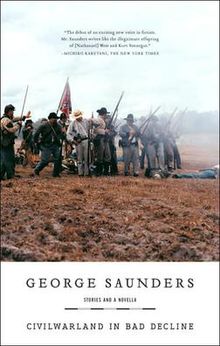
[READ: February 2, 2017] CivilWarLand in Bad Decline

I have been really enjoying George Saunders.  I had considered reading all of his published pieces in the New Yorker.  And then I realized that they were probably all collected in his books, right?  Well, yes, most of his pieces have been collected.  Although for this book, his first, there was only one New Yorker story, “Offloading for Mrs Schwartz.”

When I read In Persuasion Nation many years ago, I remembered thinking that Saunders is supposed to be very funny but that his stories really aren’t.  And now, after reading so many things about his generosity and kind spirit, I was expecting to get more of that from these stories too.  But in both cases, I feel like Saunders was a very different writer.  While there is certainly humor in these stories, it is very dark humor and is often surrounded by characters who are incredibly cruel.  It makes these stories rather hard to bear sometimes. (more…)

Read Full Post »

SOUNDTRACK: RHEOSTATICSFall Nationals The Horseshoe Tavern Toronto, ON. Night 3 of 13 (November 12, 2003).

This was the 3rd night of the Rheostatics 13 night Fall Nationals run at the Horseshoe.  Rheostatics Live has recordings of nights 1, 3, 4, 5 and 7.

As the show starts, Tim says, “Thanks for coming out.”

So Dave replies, “Why, you’re welcome, Tim.  I was doing nothing else so I figured why not play a little drums, a little bass, a little guitar.”

“Here Comes The Image” opens the show (Dave is on drums for this).  It’s slow with lots of cool keys from M.P.W.  The sound quality fades dramatically about 3 minutes in.

Dave explains, “That was an epic song by Tim Vesely.  We’re gonna do another epic song now.  Epic means just long basically, and grand.”  It’s “Oneilly’s Strange Dream.”  Which Dave describes as a song that “was supposed to the be the equivalent of an Edgar Rice Burroughs book.  He’s the guy who wrote Tarzan.  Not to be confused with William S. Burroughs–an urban jungle thing still a lot of guys with no shirts on.”  Martin: “I hate those guys.”

Martin repeats the first verse.   There’s some great powerful drumming in the middle of the song.  The sound levels go back up during this song.

The final notes are a little cockeyed and you hear someone re-sing “pile of bones laying at my side” with that bad chord.

They play Woodstuck “with a drum fill.”  Dave says it’s an old song and someone asks him what it’s about.  Dave tells a story about touring in 1987 and he tells a strange story about a merch guy.  It’s pretty strange and ends with: that’s a song about Brett.  We left him in Calgary naked, quivering under the bed.  Tim says “we didn’t leave him, we gave him to another band: Pigfarm.

Mike notes that “that story was on the set list.  That was a tune.”

Next they play a new song (from 2067), “The Latest Attempt On Your Life.”  It seems they haven’t quite figured out the backing vocals live yet.  “CCYPA” rocks and then they settle things down with “Introducing Happiness” and “Power Ballad for Ozzy Osbourne” (with no ending howl from Martin).

Dave says this is our 3rd annual Fall Nationals.  Mike asks if there is a theme for this night.  No, but one might emerge.

Mike says, “A bolt of lightning struck exactly one block from my house this evening.”  (Dave makes an allusion to Frank Marino of Mahogany Rush (who “inherited the soul of Jimi Hendrix”).

They play a sweet version of “It’s Easy To Be With You,” about which Dave says, “Boy is this song ever about cocaine.”

Next Thursday is an all covers night, so they’re going to do some tonight to make sure they know what they’re doing.

They play Simon & Garfunkel’s “The Only Living Boy in New York,” which I don’t know at all. Martin sings and plays gentle guitar.

Then they start joking about “Old Garfunkel, eh?”

He walked across America with just a credit card…it’s true.  Talk about time on your hands.  I thought it was a knife and a rope.   I heard it was credit card shoes.  Shoes made out of old credit cards.  That was his last album Credit Card Shoes.

In Edinburgh we listened to Scissors Cut about 20 times.  Weirdest album ever made.  Scissors cut and yet the hair remains.

They finally get to a quiet “Palomar” with limited backing vocals.

Somebody in the audience says “I heard you guys have a synchronized soft shoe routine.”  Tim says,”we’re waiting for that to become an Olympic event before we unveil it.”  Dave says, “I couldn’t remember if it was black square white square or white square black square.”

Martin introduces “Self Serve Gas Station”: Take it away Dave.”  But Dave plays “Roll Another Number” bu Neil Young which segues in to “Self Serve.”  The quiet guitar section at the end segues beautifully into “California Dreamline.”

They play a cover of The Clash’s “London Calling,” which sounds great although Dave is a little not angry enough.

People shout out “Michael Jackson”  Martin: “pleased to announce that Michael Jackson is in the audience tonight.”

Then after lots of ums there’s discussion of what to play. Martin in HAL’s calm voice “Why not both, David.  Let’s do both.”  They play “One More Colour,” but then go to an encore break.

Thanks all.  “Frozen rock pose.”  Dave: “We are Frozen Rock Pose.”

We have a few more for you—Dave sings “My First Rock Show” and gets the wrong verse!  He also sings “I ‘sore’ [sic] everything.”  Tim calls him on that.  At “swan dived,” Mike plays a thunderous drum and Dave recites a spiel:

The drums of war were in the air yet they were peaceable times.
And you saw a band like Yello and found out that they sucked and it didn’t cost you $85 to find out.  No $21.50.  Trixter, Heart, The J Geils Band.    Meat Loaf, Blue Peter, The Spoons.  A Flock of Seagulls.  No A-ha did not play.  OMD  OMD, baby.  Oingo Boingo at the first Police picnic.  To Martin: Are those guitar sounds a flock of seagulls?  Dave: they were the best, not the best but they were good.

Where to?  A Flock of Seagulls.  No Tim will do a Warren Zevon song.  called “Reconsider Me.”  I don’t know it.  He sings very high and off a bit.  He groans but then by the middle he says its coming to me and he finished okay with a “Sorry, Warren, I tried.”

We’re here til next Saturday and tomorrow night is guest vocals night.  We have 26 guest vocalists.  We better get in the habit of thanking our guests.

Andrew Houghton played tonight.  And Serena Ryder the next two nights held over by popular acclaim.  They end the with a poppy “In This Town.”

[READ: January 25, 2017] The Ugly

I read a review of this book that made it sound really compelling and strange.  And the back of the book has some of that compelling strangeness in the blurb:

Muzhduk the Ugli the Fourth is a 300-pound boulder-throwing mountain man from Siberia whose tribal homeland is stolen by an American lawyer out to build a butterfly conservatory for wealthy tourists.  In order to restore his people’s land and honor, Muzhduk must travel to Harvard Law School to learn how to throw words instead of boulders.

And that is exactly what happens.  Along with a bunch of other strange things.

I enjoyed the way the story was told.  There are basically parallel narratives.  One is told in first person and is Muzhduk’s life after Harvard (perhaps the present), the other is told in third person and is all about his life at Harvard law school.

But the story begins with the Dull-Boulder Throw.  In his village a chief is determined by who can catch (and throw) a boulder hurled at your chest.  Muzhduk the Ugli the Fourth is the next in line for the throne–his ancestors have all been leaders–but he is the smallest of his lineage being only 300 pounds.

Nevertheless, he knows he must defeat Hulagu who was inbred huge and dumb.  If Hulagu won, the tribe would suffer.  And so for the good of the tribe, he win the Throw. But the second part of becoming chief was climbing the tallest mountain.  Each of his ancestors had climbed a taller mountain, and now his task was trying to find one taller than the tallest one around here. (more…)

Read Full Post »

« Newer Posts - Older Posts »