Feeds:
Posts
Comments

Archive for the ‘Marriage Trouble’ Category

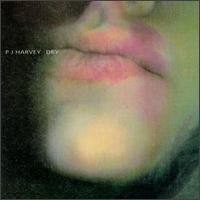
SOUNDTRACK: PJ HARVEY-Dry (1992).

This first PJ Harvey album was a revelation in 1992.  It was angry and loud and awfully disconcerting. And, perhaps most importantly, it showed a strong woman, unafraid to point fingers at foolishness around her. (Yes, I miss the 90s).

It was also raw and abrasive and, at times, scary.  The opening track featured discordant music and vocals that were more than a little uncomfortable.  “O Stella” has more uncomfortable vocals with super cool and slightly off harmonies.  The guitar is a great distorted mass and the bass is low and heavy.  A great track.

“Dress” is one of the least abrasive tracks musically, which really lets the lyrics come to the fore. And her lyrics are wonderful throughout the disc–she attacks conventions of femininity and flips expectations.  And although “Dress” has a very simple chorus–just the line “If you put it on”–it is catchy as anything.

But it’s not all loud songs, either.  The wonderfully titled “Happy and Bleeding” features some intriguing quiet guitar work and whispered verses.  It grows in strength but never wails like the other songs.  For real wailing, “Sheela-na-Gig” is your song. Terrifically rocking and obscene, it’s a funny, clever awesome alt rock song.

Harvey experiments with falsetto (although nothing like she will on Let England Shake) on “Hair,” a cool twist on the Samson and Delilah story.  “Plants and Rags” makes exquisite use of a creepy violin to bring some extra sounds to an already cool song.

It’s a stunning debut and showed that Harvey was a fearless singer.

[READ: February 27, 2011] Misadventure

This is Millard Kaufman’s final novel (after the very cool Bowl of Cherries).  The Afterword (written by Kaufman’s son) seems to suggest that Millard actually wrote this back in the 60s.  There are elements of this book that make me thing that he did write it in the sixties (and then obviously updated particulars to make it contemporary).  It just feels circa the 60s and it feels like the book of a younger man (Kaufman was 92 when he died).

The story opens with a dead body and a real estate agent.  And it quickly develops into a tidy noir fiction with double-crossing and undermining and all kinds of interesting twists.  I don’t read noir or “mysteries” as a rule, so this is kind of a novel novel to me.  Accordingly, I can’t compare it to the genre. (more…)

Read Full Post »

SOUNDTRACK : PHISH-Live Bait: Vol 2 (2010).

Phish has been releasing live concert downloads  for years now.  And now that they’ve started touring again, they have a whole bunch of new ones.  I’m not going to be downloading new shows, (I have a  bunch of old ones that I really never listen to).  But what I like is that they are giving away a few tracks from these shows.  And what I love is that they’re calling the freebies, Live Bait.

This set is a few tracks from shows recorded in August of 2010.  There’s nine tracks  ranging from 90 seconds (“NO2” ) to 17 minutes (“Twenty Years Later”).

Although this show is from 2010, this bait contains only two songs from their last album, Joy. The older songs are fan favorites (“Wilson, “Possum”) and weird interludes (“Kung”).  The band sounds fresh and really into what they’re doing and the old songs sound rejuvenated and fun.

Nevertheless, since most of the other live releases are older, it’s so nice to have the two new songs.  You can’t be choosy on a free sample, but I’d have loved to hear them do “Time Turns Elastic.”  If you’re new to Phish, this is a good place to get a free sample of their live shows.  Three volumes of bait have been released so far.

[READ: February 16, 2011] Ladies and Gentlemen, The Bible!

I discovered this book when I read the short story “Samson and Delilah in The Walrus.  I liked, but didn’t love, the short story, but I was intrigued enough to want to see how the other Bible stories would stack up.  And since we had the book on the shelf, I decided to check it out.

So this book is a retelling of several stories from the Old Testament.  What Goldstein does is create a backstory for these biblical characters who are really just sketches.  The stories are funny, serious, weird and often enjoyable.

The introduction is a very funny kvetch about at being a Jew and having dinner in the Grey Derby; waiting online for hours with so many other Jewish families, eating kosher food with your own family, fighting over the check, pointing fingers, calling each other names and, ultimately, leaving by 5:30 PM.  It made me laugh out loud in the best Woody Allen tradition.

With no real introduction, he moves right into his new versions of Bible stories.

The biblical stories that Goldstein updates include:

  • Adam and Eve
  • Cain and Abel
  • Noah and the Ark
  • The Tower of Babel
  • Jacob and Esau
  • The Golden Calf
  • Samson and Delilah
  • King David
  • part 1: Goliath
  • part 2: Bathsheba
  • part 3: Absalom
  • Jonah and the Big Fish
  • My Troubles (A Work in Progress, by Joseph of N–) (more…)

Read Full Post »

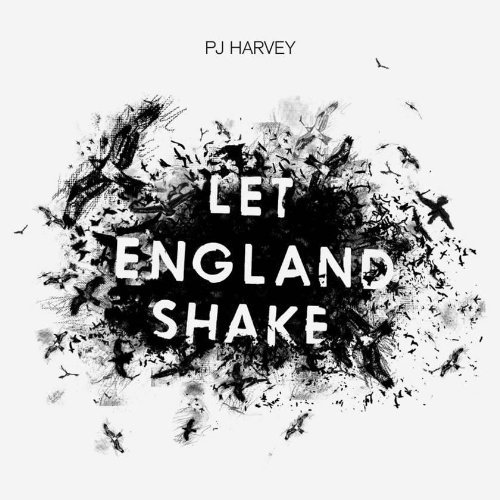
SOUNDTRACK: PJ HARVEY-Let England Shake (2011).

I’ve listened to this disc several times online; I have no details about the recording.  There’s samples, but I don’t know what they are and I can’t really tell what all the lyrics are (it’s obvious she’s pretty angry, but the details are lost to me).

The first question for me on hearing this disc is what happened to PJ Harvey’s voice?  It comes as such a shock when you compare it to Dry.  But once I accepted that this is not the PJ Harvey of Rid of Me, I listened to it as a new artist and I really like it.  But it’s a weird record to be sure.

The title track is played on an autoharp (!).  In fact the autoharp is a dominant instrument here.  It’s got a cool melody and, once you accept that she sounds like the singer from Rasputina, you can really appreciate what’s going on.

The second track, “The Last Living Rose,” returns somewhat to the PJ of old (the opening “God damn” sounds like she’s about to bust out some good-ol’ invective).  And there are guitars, but the music is upbeat (as are the vocal melodies) and there’s even a horn!  “The Glorious Land” has samples from the cavalry (I can see the horses riding across the plains) and a cool, slinky guitar (or is that the autoharp?).  There’s male vocals in the middle of the song, and it makes for disconcerting harmonizing (especially when PJ,’s voice ratchets up the weirdness and sounds more like Kate Bush).  But musically this song is great, it’s got a wonderful 80’s alt-rock feel.

“The Words That Maketh Murder” also has horns and some interesting male vocals chanting the lyrics.  This has one of the least subtle lyrics I’ve heard in a long time, although the re-imagining of the “Summertime Blues” refrain is pretty genius.

“All and Everyone” opens with more autoharp, and I think I’m realizing that the autoharp is what I think of as the interesting guitar sound (this song opens like a Smiths’ ballad.)  There’s more horns on this track which adds a weird dimension of sadness to it.  “On Battleship Hill” is a fast but delicate track in which PJ pulls out an astonishing falsetto–completely unexpected.  After the first verses, the rest of the song has, again, a kind of slinky 60s vibe.  “England” brings out the Kate Bush voice in PJ again.  This is a very delicate song, the music is mixed so low in the background that it feels like acapella–I guess Harvey has grown much more confident in her voiuce.  The music builds and builds though and there’s an unexpected middle eastern sounding vocal in the background.

“In the Dark Places” brings out Harvey’s guitar (in this case the Harvey is Mick Harvey, I believe) and her lower register vocals. While “Bitter Branches” is probably the loudest song on the disc, with a bunch of screamed vocals.  It’s rather startling considering the rest of the disc, but it’s nice to know just how much fire PJ still has.

“Hanging in the Wire” is another delicate song, with quiet pianos and Harvey’s sedate voice.  “Written on the Forehead” returns to that middle eastern vibe (“people throwing dinars at the belly dancers”) and that Kate Bush vocal–the backing vocals remind me of Peter Gabriel.  The album ends with “The Colour of the Earth.”  It’s the most disconcerting song of the bunch becuase it opens with a male singer (John Parrish?) singing what sounds like an old trad song (the melody is very traditional).  Then PJ joins in and makes the song her own.

It’s obvious that the lyrics are the main aspect of this disc, and I know that I’m missing something by not having them. I’m also missing a lot by not knowing all that much about England’s history.  It sounds like she has a lot of gripes with Eng-a-lund, and I’m curious to know what she’s on about.  But more than that, I’m totally hooked by the music.  It’s a great reinvention of a great artist.

[READ: February 9, 2011] The Ask

I was planning to read nothing except books from the pile by my bed for the foreseeable future.  And then, as if calling to me, I saw this book, which I was planning to read eventually, on a display right in front of me called Booklist Editor’s Choice (a new display for our library).  I stared at it for three hours and just had to check it out.

And I’m glad I did.  For the most part I really enjoyed this book, it was quite funny and the main character, kind of a schlub, was completely relatable.  I say for the most part because I felt like it dragged a bit about 2/3 of the way through (more on that later).  But its possible that it dragged because the first half of the book was just fantastic–fast paced and clever with lots of wonderfully funny lines (more on that later too).  And a setting that I found very entertaining.

The story is about Milo Burke. He is married to Maura and they have a going-on-four-year-old boy Bernie who is nothing if not precocious.  The titular ask concerns Bernie’s job.  He works for a small arts college in New York (which he called Mediocre University).  His job is to basically ask (hence the title) rich people for money for the college. We see him in his office as the book opens and we meet the rest of the staff: the surprisingly unslacker slacker Hubert (with whom Milo shares space and ribald jokes…this section is the funniest; many paragraphs end with sentences that hilariously undermine what he just described.

We often called it, with what we considered a certain amount of panache, the Mediocre University at NewYork City.  By we, I mean Horace and I.  By often, I mean once (4).

His supervisor is Vargina.  (This name, which is obviously over the top and childish and which I absolutely laughed at and then felt was maybe too easy of a laugh, has a great origin story and is really never not funny no matter how often you see it).  Milo has obscene fantasies about Vargina, but he is a (somewhat) happily married man and would not cheat on his wife.

He’s not very good at his job, but the other askers do alright so his job is safe.  Until, that is, he insults the daughter of one of the university’s biggest donors and he is summarily let go, without severance.  And then we get to see a lot about his home life. (more…)

Read Full Post »

SOUNDTRACK: RHEOSTATICS-Live at the Bathurst Street Theatre, Toronto ON, April 4, 1997 (1997).

This concert is free as a download on the Rheostatics Live website.  According to the on-stage banter, the band had just finished a string of live dates with the Inbreds that were recorded for their amazing Double Live album.  They even say that this night’s show is also being recorded for the disc.  And the set list is pretty amazing.

Which is why this show is such a disappointment.  Part of the problem is obviously the quality of the recording, and you can’t fault anyone for that…a bootleg is a bootleg after all.  But the band makes some really odd flubs and some of the songs seem really lackluster.  This is all the more surprising because the band seems in really good spirits –making jokes with each other and with the crowd (they make someone take off a Mr. Bean T-shirt!).

The biggest gaff comes in “King of the Past” where (I think Dave) begins the chorus a measure early (yipes!).  “Fan Letter to Michael Jackson” for some reason removes the loud rocking “Michael!” and “Jackson!” sections and replaces them with whispers.  It’s an interesting change, but the intensity is completely lost.  Something is also missing from “Sweet Rich Beautiful Mine,” there’s no oomph to it.  And, my favorite song “Claire” sounds off to me (I think it’s the recording though).

On the plus side, “My First Rock Concert” is great and well-received.  Dave introduces it as if it was the first time they’ve played it, which is very exciting.  The end of the show picks things up and the band sounds better.  In fact the last two songs are really great (and you can really hear Neil Young’s influence on the guitar).  I’m willing to blame some of my disappointment on the sound quality…it’s missing a fullness that you really need to appreciate the band, but this is not an A+ show.  They played another show the following night there (also available online).

Heh, I just learned that they used a number of recordings from this show on Double Live.  They used “Torque, Torque,” “Claire,” “Bread Meat Peas & Rice” and “Feed Yourself.”  Listening back, “Torque” and “Peas” sound great in the set and “Jesus Was Once a Teenager, Too” is a fun, light version.  “Claire” still sounds funny to me (even on Double Live), but it’s definitely worse on this bootleg.  The mixing is so much better on Double Live (of course!), that it really accentuates the guitar solo and backing vocals much more.

[READ: February 1, 2011] Shampoo Planet

On the inside cover of my copy of Shampoo Planet, I scribbled my name and “December 1992.”  I was in a phase of putting my name on all my books (which is kind of cool looking back, but really rather silly).  This is Douglas Coupland’s second book, and I remember being very excited when it came out.

I’m sure I read it then, but upon re-reading it (admittedly almost twenty years later), I didn’t remember anything from it.  Does that mean I didn’t read it, or that the book was just ephemeral?  Well, in some ways it is ephemeral, because it’s such a document of its time.  It also seems to me that either Coupland is (or was) unique in his writing style, or that very few writers dealt with 90’s culture as directly as he did.  Off the top of my head, I can’t think of another writer who approached 90s culture in the same way

In many ways, this book is all about dealing with the wealth of the 90s, when money was everywhere and people felt free to experiment with their lives.  And, yes reading this now the story feels so light and free and I wish that I had the problems that these kids deal with.  I also wondered if anyone could write a story like this now, with youth culture being so very different.

The inside front and back cover are (different) periodic tables that he has personalized with 103 elements of the 90s.  (Lu=Moon, A=Ambition, Dd=The Dead).  This is the only nod to unconventional book tropes here (where Gen X had all of those definitions that he footnoted).  In fact, the novel is fairly straightforward and conventional.

The main character, Tyler, is a twenty year old who cares more for his hair (he has a vast array of products–my favorite observation: “always better to buy well-advertised products–preferably those products endorsed by a celebrity” (133)).  He was raised in a hippie commune off on Vancouver Island (the only real nod to Canada in the book), but when his parents divorced, his mother Jasmine took the kids to Lancaster, a suburb of Seattle.  And, as seems to happen, the children of hippies became proto-yuppies. (more…)

Read Full Post »

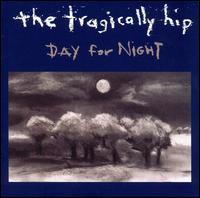
SOUNDTRACK: THE TRAGICALLY HIP-Day for Night (1995).

This is the first Hip album that I bought.  In fact, I first learned about them when I saw a video for “Nautical Disaster” on Much Music when I lived in Boston.  That was my first exposure to The Hip–and to another cool Canadian band, The Tea Party–and I’ve loved Much Music ever since (even if I can’t get it anymore).

For me, Day for Night takes the greatness of Fully Completely and ramps it up a notch further.  In part this is probably because the album is almost 60 minutes long instead of just 40, but I think the intensity that The Hip found on Fully is fully matured all over this disc.

The album opens with a great bass intro on “Grace, Too.”  And with Downie’s intensity in the breakdown it’s an amazing opening to a great disc.  “Yawning or Snarling” has even more intensity, with practically snarled verses and a strangely catchy chorus (and great lyrics).  It’s followed by the blistering rocker “Fire in the Hole” which really captures the anger that seems to be brooding under the surface of this disc.

“Thugs” follows, it’s a catchy, quiet song; I love the chorus: “I do the rolling, you do the detail.”  ANd there’s another great opening , with an unexpected twist for “Inevitability of Death.”  Which is followed by “Scared,” another mellow, minor-chord song which is a great lead in to “An Itch an Hour.”

Normally a disc this long can’t hold the listener’s attention for the whole disc.  But the penultimate song, “Titanic Terrarium,” an atmospheric brooding song with a quirky verse melody draws you in to its claustrophobic subject of life in a biosphere.

The Hip had a minor buzz in America with this album and even played Saturday Night Live, where they shaved a minute off of Nautical Disaster, but keep all five minutes of “Grace Too.” Watch it here:

This is a great album, perennially one of my favorites.  It’s only a shame that it never broke through to U.S. audiences, leaving The Hip as one of Canada’s biggest cult bands (in the U.S.).

[READ: January 26, 2010] “Questions Surrounding My Disappearance”

This was the third flash fiction in this 2004 Summer Reading issue of The Walrus.  And of the four, this was my favorite.  It was weird and kind of silly but underneath it had some real angst.

The story opens with a kind of generic dismissal of the Canadian Film and Television Industry (“who should give a shit who wrote or lit or recorded the sound for a television show or a movie….”).  But nevertheless, he’s not too dismissive of it (“There have been…awards”).

As with the other flash fictions in the issue, the set-up is quite long, but unlike the other stories this sort of casual tone continues throughout the story.  And we learn a bit more and more about the narrator and about his opinions of the CBC.

The title obviously comes into play, as we soon learn that when he was, in fact, missing, very few people seemed to be up in arms about it (including his family).  Perhaps the most surprising aspect being that during the time he was reported missing he was interviewed on the radio (true, it was a program dedicated to the arts, but still). (more…)

Read Full Post »

SOUNDTRACK: JIAN-The First 6 Songs (2001).
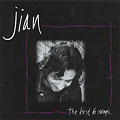
Being American and apolitical in my youth, I had no idea who Pierre Trudeau was until about 2001.  And my first real introduction was through this album by Jian Ghomeshi.  Jian was one of the four guys in Moxy Früvous (and man has his career skyrocketed since then…watch his great interview show Q online–in particular, check out the crazily uncomfortable interview with Billy Bob Thornton or the wonderful hour long interview with Rush).

Moxy Früvous had just broken up and Jian, who was one of my faves in the band, put out the optimistically title The first 6 songs (no other songs have arrived yet).

Jian is a mostly folk rock album which features Jian’s gentle voice.  And gentleness is one of Jian’s trademarks, it would seem.  But more than gentleness, his songs are about accountability and justice.  And yet lyrically, he’s not naive or obvious.  “Quebec City” is about the Summit of the Americas in Quebec City in 2001 (“the whole world is watching”).

I’ve always felt connected to the last track, “Lousy Boy”:

“And a man Is a man If he’s got a gun in his hand
Well I never wanted to destroy I always made a lousy boy….  And I know guys who are just like me
They like hockey and poetry
I think in retrospect that we have won
I’m a full-grown man and I don’t own a gun.”

Früvous has similarly thoughtful lyrics but in addition to the lyrics, the music is always interesting.   So the unexpected chord changes in the bridge to “Astronaut” turn the song from a simple folk song into a moving rocker.  And “Baby Don’t Lie” is a 5 minute track that builds on a folk base and is a catchy sing along.

of course, this all leads to the song “Father (For Pierre Trudeau)” the song that first taught me a little bit about the Prime Minister.  The song covers a few moments of his media-saturated leadership.  But mostly it’s a reflection about Trudeau on the day of his death.  The personal touch of course is that Ghomeshi’s father wanted to meet him (as did Jian) but now they w0uld never get to.  It’s a very touching song, and I have a hard time imagining someone writing a similar song about a President.

It was this song that got me to investigate the life and leadership of Trudeau.  (I even wrote an email to Jian, to which he quickly responded…I only wish I still had that email account active).

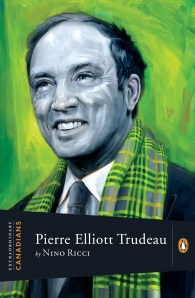
[READ: January 12, 2011] Pierre Elliot Trudeau

This is one of the more exciting biographies that I’ve read.  Which is pretty great.  Although one of the reasons it is so exciting is because he presumes that the reader knows a lot about Trudeau already.  And to be fair, I assume most Canadians would know the global picture (and most of the details) about him already.  So, basically, you get a summary picture of Trudeau, but instead of a quick outline that glosses over details, we get a lot of details, but no gloss.

What I’m getting at is that there are a number of places where Ricci talks about events and movements as if we know them.  So this makes for incredible fluency even if the novice is left puzzling exactly what all the fuss was about.  In fairness, contextually it’s easy to figure out, it’s just a bit surprising.

Another fascinating thing: Ricci skips over Trudeau’s childhood pretty much completely.  The book opens with Ricci’s memory of seeing Trudeau in 1967 when he (Ricci) was a young boy and seeing the way his teachers an adults seemed mesmerized by him.

Nostalgia aside, Ricci quickly explains what a polarizing figure Trudeau has been.  Warmly loved by many and yet (according to Macleans) ranked 5th of all Canadian Prime Ministers (despite being re-elected several times).  Actually, the way that Ricci words it it sounds like he came much lower than that (he says “third tier” which seems much mower than 5th).  And, judging by comments on YouTube videos, utterly hated by others.

The next chapter continues in 1968 at the beginning of Trudeaumania. Treudeaumania sounds a lot like Obamamania–a young, relatively inexperienced politician makes some noise and is thrust into prominence.  (Of course, in 1968, Trudeau only ran for office for a month and a half before being elected–ah the bliss of a short campaign season).

A video of Trudeaumania shows people swooning over him.

The biography does cover some of Trudeau’s earlier years (taken largely from Young Trudeau by Max and Monique Nemni).  He was a somewhat rebellious youth and his teen behavior was full of the usual (and not so usual) rebellions.  But the thing with Trudeau is that it is never clear whether he seriously held certain beliefs or if he was just trying to get a reaction out of people.

He established a society called les X whose purpose was to create an independent Quebec (organized under fascist principles).  les X faded from Trudeau’s life and existence with very little fanfare, and evidently radical groups like that sprang up all the time in Quebec at that time.  Really, it seems to point to his growing bored at his school and with the provincialism of Quebec.

When he left Quebec for Harvard and later for Europe, his mind was expanded and his beliefs opened up accordingly.  He had written many anti-Semitic things in his Montreal youth but once he actually met some Jews, he quickly changed his tune. Indeed, Harvard seems to have really shaped his later outlook in life.  And his exposure to vastly different attitudes during his studying Paris and then later in London exposed him to so much more in the world.

When he returned home to Quebec he found everything small and narrow (which is exactly how it (and he) was when he left it).  And he quickly finds himself embroiled in politics with the Asbestos Strike of 1949.  He took a position (and offered free legal assistance to anyone striking) which raised his profile and quickly made him persona non grata in his province.

This led him to leave for Ottawa, where he was less known and (since his credentials were great) where he could easily get a low position in politics and establish his career.  The main thing he learned, though, was that Ottawa was not the enemy (as is generally held to be true in Quebec).

Trudeau eventually returned to Quebec for Cité libre.  This is one of the things that Ricci glosses over…I’m still not exactly sure what Cité libre is (okay, an influential political journal), but I’m well aware of Trudeau’s involvement in it.  And how it helped him to state his principles and beliefs.

There’s a lengthy passage where Ricci explains how Trudeau’s federalism came to blossom so powerfully for him.  And this argument is one of the reasons why I am in the camp of Trudeau, because even though his piece is meant to be just about Quebec, I find it holds true for the U.S. as well (substitute out Quebec for any special interest).

The sort of independent Quebec he had dreamed of as a young man, he saw now, would only have given greater rein to the ruling elites to exploit nationalism for their own end, as Duplessis has done. In a Quebec obsessed with the survival of French-Canadian culture it was too easy for leaders to manipulate the electorate by promoting vague ideological goals rather than more practical ones, such as those providing infrastructure and employment (103).

Trudeaumania quickly swept him into office, but he was most reviled by his home province which felt betrayed by his turning his back on separatism.  He was the target of an attack by the FLQ, which captured and killed Trudeau’s friend and cabinet minister Pierre Laport. This was known as the October Crisis.  Trudeau’s reaction was swift and hard, he called for martial law (and the Mounties certainly abused their rights). But when questioned about whether he should or could step so hard on a province his answer was “Just watch me”

Now, it turns out that that quote comes at the end of a lengthy interview and makes for a glib soundbite when in fact Trudeau was anything but glib.
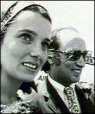
The next big moment of excitement for Trudeaumania was when he married Margaret Sinclair.  For a brief time, they were the it couple.  He was 51, she was just 22, and she was beautiful.  Trudeau seemed to be a confirmed bachelor or at least a consummate playboy, so to have him settled down was quite a story.  But how hard must it have been to be a young woman suddenly thrust into the political spotlight.

Naturally, cracks would surface in their marriage.  In fact, in 1977, Maggie decided to party with The Rolling Stones rather than attend her sixth wedding anniversary party (read the wonderful article in People about it–I love the tsk tsk tone!).

But the penultimate chapter is, mostly, about Trudeau’s disappointments.  He had taken office in a hail of excitement but really had not a lot to show for it.  He was even set for retirement, until he was drawn back in.  And in this final term, he was finally able to achieve his legacy.  And this legacy seems to be summarized by two words: federalism and patriation.  (With the downside being summed up in the word “notwithstanding”).  Now, this is obviously something that Canadians know all about, and it seems foolish to summarize what this meant for readers who lived it.  But for me, who knows precious little about the mechanics of Canadian politics, I was a little lost in the details.

I got the Federalism thing, but the constitution is a bit confusing.  And the whole notwithstanding clause really kind of lost me.  Nevertheless, the chapter that covered this was rather exciting because Ricci writes as if there is one man whose mission is to see him fail.  And this nemesis is Rene Lévesque.  It’s a classic mano a mano battle between two Quebeckers and it’s really rather exciting (especially if you didn’t know the results).

The final chapter talks of Trudeau’s legacy.  And in this chapter Ricci seems to side with Trudeau.  He cites specific examples of being the best man at a same-sex wedding ceremony, something that would not be possible without Trudeau (even though Trudeau never envisioned it).  Indeed, there’s a comment that:

during the 1968 leaders’ debate, Réal Caouette, leader of the Ralliement créditistes, joked that Trudeau’s Criminal Code amendments might lead to a situation where “a man, a mature man, could in the future marry another mature man” Caouette had his joke while Trudeau, awaiting his response time, smiled civilly and held his tongue.

Because I’m not part of the culture, I don’t know to read Ricci’s take on the man.  He is not afraid to show off all of Trudeau’s faults.  In fact, in many instances he rather highlights them.  For instance, the debt under Trudeau expanded exponentially.  When Trudeau took office in 1968 Canada had a debt of $18 billion; when he left office in 1984, that debt stood at $200 billion, an increase of 83% in real terms.  And yet at the end of a nasty passage he will present some evidence which ameliorates Trudeau either in whole or (more typically) in part.

I guess in that sense it is an excellent primer on Trudeau’s political life.  But it’s also personal enough that you can see how one man impacted people.  Not citizens, but people.  And when he describes the people lined up for Trudeau’s funeral it ties right back to Jian’s song.  It really shows the impact that one person can have on the lives of so many.

And, here’s a shameless plug to the folks at Penguin Canada–I will absolutely post about all of the books in this series if you want to send me the rest of them.  I don’t know how much attention these titles will get outside of Canada, but I am quite interested in a number of the subjects, and will happily read all of the books if you want to send them to me.  Just contact me here!

For ease of searching I include: Fruvous, creditistes, Real Caouette, Rene Levesque, Cite libre

Read Full Post »

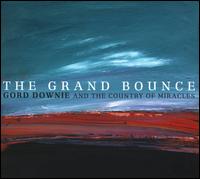
SOUNDTRACK: GORD DOWNIE AND THE COUNTRY OF MIRACLES-The Grand Bounce (2010).

I knew I was going to write about Canadian musicians for this series of Extraordinary Canadians, but I wasn’t sure who would get matched to whom. I figured I’d match Gord Downie to Mordecai Richler, but when I saw this in the liner notes to this disc, I knew I’d made the right choice:

Thank you to the Richler Family for the font you are presently reading.  The Richler font, not publicly available, was created and named for the great Mordecai Richler.  It was commissioned by Louise Dennys, designed by Nick Shinn and graciously made available by Florence Richler.  I am grateful for this honour.

So Gord Downie is the driving force behind The Tragically Hip.  I’m always curious when a guy who pretty much runs a band needs to do a solo album (or three).  And in this case, since the last Hip album was much more mellow and almost country, it seemed like he got some of his less rocky side out on that disc, so what’s the need?  Unless, of course, it’s just the need to play with some other folks once in a while.

Well, whatever the reason, this disc finds Downie in incredible form.  In fact, I think I like this disc better than the last Hip disc (which I did like, but which was a little too mellow overall).  The songs are all great, from the simple folk tracks to the more elaborate rockers.  And, yes, while the disc never rocks as hard as some Hip songs tend to, this is not a simple acoustic guitars and solo vocals record.

“The East Wind” is a wonderful starter.  It’s fairly simple with awesomely catchy lyrics.   I learned that the lyrics are from a quote by Todd Burley.  And they are an awesome way to describe a hostile and violent wind: it’s lazy, because “it doesn’t go around you, it goes right through you.”  Fantastic.

“Moon Over Glenora” sounds a lot like a Hip song.  Downie’s lyrics are almost mumbled and understated until he gets to the end of each verse when he raises his voice an octave for maximum effect.   The stops and starts in the bridge are also great.  “As a Mover” is also smoothly catchy with a wonderful rising chorus.

“The Dance and the Disappearance” is another great conceit.  This song is inspired by a quote from Crystal Pite: “Dance disappears almost at the moment of its manifestation.”  It is suitably dramatic with some great verses.  “The Hard Canadian” is a gentle acoustic number that would not be out of place on the more recent Hip records.  “Gone” feels like a continuation of “Heart,” almost like the slightly more rocking second half of it.

My favorite track is “The Drowning Machine” (I seem to like anything that Downie writes that’s about the sea).  It’s a minor chord wonder, dark and mysterious and wonderfully catchy.  The rock comes back on the rather simple “Night is For Getting.”  It’s probably the least essential track on the disc except that once again the chorus/bridge is really great and memorable.

The last three tracks bring on the mellow, which is a fitting ending for the disc, although since the three t racks take up about 12 minutes, it makes the end drag a bit.  “Retrace” is a country-tinged (steel guitar) mellow track (again, Downie’s voice brings out the excitement) .  “Broadcast” has an extended outro of gentle guitars and piano that for all the world sounds like the end of a disc, so I’m always surprised that there’s a final track after it.   And so the final track “Pinned” feels like filler.  It has a movie projector clicking sound and gentle piano with almost inaudible vocals.  It’s actually a pretty song, but it feels almost discarded here.

One of things I’ve always liked about Downie’s lyrics is that they are atypical of rock songs.  They’re not “about” sex or rock or drugs or swagger or anything like that.  In this case they are about locations and events.  And it really paints a picture.  And speaking of painting, Downie painted the cover art.  The beautiful simplicity of the painting is not unlike the beautiful simplicity of the music on the disc.

Oh and my copy is autographed too! (although I wasn’t there when he autographed it, so it could have been anyone who scribbled on the cover).

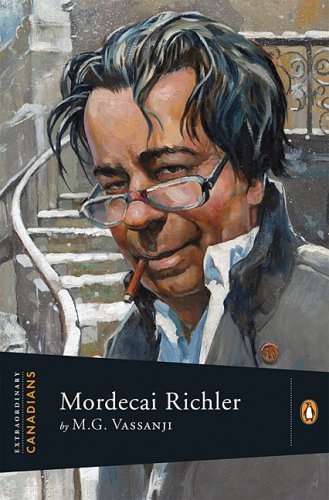
[READ: November 15, 2010] Mordecai Richler

I don’t know a lot about Mordecai Richler, although I feel like whenever I read about him it’s in hushed tones (a neat trick, that).  Nevertheless, for a number of reasons I have wanted to read him for many years but have just never done it.  Now, the stars are aligning with me for Richler.

There’s this book, there’s the cover of the October 2010 issue of The Walrus and the recent filming of his book Barney’s Version (the filming of which is discussed in the same issue).  And then a patron asked for the film of The Apprenticeship of Duddy Kravitz.  So, it’ about time to read one of his books.  But here’s the rub…do I start with the great books or do I start at the beginning and work my way through his career?  And, there’s also a huge new biography coming out (the review of which mentions a wonderfully offensive event in which Richler absolutely dismisses his Jewish audience).

This book was written by M.G. Vassanji.  I feel that I’ve heard of him but I’ve never read him.  And yet listen to this incredible biography:

M.G. Vassanji was born in Kenya and raised in Tanzania.  He attended University in the United States, where he trained as a nuclear physicist, before coming to Canada in 1978.  Vassanji is the author is six novels and two collections of short stories…and he has twice won the Giller Prize.

Damn.

Since I read this right after Coupland’s McLuhan it’s tempting to compare them.  And yet, as I said in that review, it seems quite apparent than Coupland’s book will be like no one else’s, so I won’t say much about that.  Instead, Vassanji opens the book by talking about the similarities between himself and Richler and their few awkward but pleasant meetings.  (In this respect yes, it is sort of like Coupland’s book in that the author puts himself into the text). (more…)

Read Full Post »

SOUNDTRACK: Ô PAON-“Courses” (2010).

This album, Sainte Patronne De Rien Pantoutemade ranked #7 on Viking’s Top Ten list and it is very different from the other albums on the list.

This is a simple song with a gentle guitar motif repeated over and over.  There also appears to be some looped vocals.  The singer, Geneviéve Castrée, sings in Quebecois-French and is assisted by Godspeed You Black Emperor mainstay Thierry Amar.

As with many of the songs on this list, the song builds and builds as it repeats itself.  But unlike the other songs, this one never grows menacing or dark.  Rather, it builds, layer upon layer of instrument or voice until the song (whatever it’s about) reaches its climax.

Viking says that there are English liner notes on the disc, but you ‘ll have to buy the disc to get them.  I liked this track more with each listen, and would like to hear more from her.

[READ: January 4, 2011] “Costello”

This is a story of perseverance.  Costello is a middle-aged man with two kids.  When the story opens, we see him floating on a raft in his pool. The pool is overgrown with grossness and, down in the filter, there is a dead lizard.  But Costello seems, if not exactly content, then at least not unhappy.  He has everything he needs nearby: a newspaper, a Zippo and smokes.

Costello is a plumbing salesman, and he has been nominated as salesman of the year (you can read about it in Pipeline!).  It’s pretty much the only exciting news he’s received recently, especially since his beloved Dodgers are middling at best.  Although even he likes being able to watch the Disney fireworks from his roof.

Costello seems like a decent guy.  He also seems liked by others: his coworkers like him, his neighbor likes him (although Costello hasn’t accepted a dinner invitation from him in almost a year).  Through the course of the story we wonder why his wife isn’t there with him.  The answer to this is revealed slowly throughout the story. (more…)

Read Full Post »

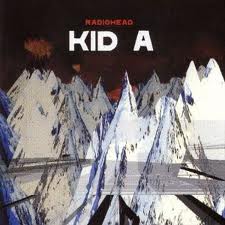
SOUNDTRACK: RADIOHEAD-Kid A (2000).

After the rocking brilliance of OK Computer, Radiohead released Kid A.  And the world hushed.  The opening song “Everything in Its Right Place” begins with keyboard notes and what-the-hell vocals by Thom Yorke.  Once the song proper starts, though, it turns into a cool, electronically detached Radiohead song.  And even though it never lifts beyond that state, the melody is captivating.  Next, the title track is downright bizarre, a quiet electronic ticking and bleeping song with distorted vocals and, eventually, electronic drums.  It’s a statement of purpose if nothing else and shows that you’ll not be hearing any guitar anthems here.

And then comes “The National Anthem,” one of my favorite Radiohead songs ever.  It reasserts them as songwriters (even if its a really weird song).  It features a great bass line and then–about 3 minutes in–it devolves into a noisy skronky horn filled mess.

After the moody near-instrumental “How to Disappear Completely” and the mellow actual- instrumental “Trefingers”, “Optimistic” comes back with some wonderfully clear moments amidst the beautiful murk of the song.  It is followed by “Idioteque,” which is probably the perfect encapsulation of the new Radiohead: full of disorienting electronic distorted noises and yet utterly catchy and captivating.  “Morning Bell” the next track is equally stunning.

It’s odd of course that the disc ends with two minutes of silence, but that’s surely not the oddest thing on this disc.  And yet for all my seeming criticism, the disc is genre-breaking and mind-bending.  It’s an extraordinary piece of music.   And it virtually smashed all communication with their earlier selves.

Oh, and I even managed to score the limited edition disc with the booklet behind the tray!

[READ: December 31, 2010] “Assimilation”

Although I have met E.L. Doctorow (and he signed his then latest book–which I have yet to read), I have not read a lot by him.  I’m not sure why exactly, as I regard him highly, he’s just another writer who has slipped through my fingers.

As such, I have no idea if this story is in any way representative of his work.

It is a fairly straightforward story.  A hispanic man, Ramon, who is an American citizen and has gone to college, finds himself busing tables in a restaurant owned by a Russian immigrant.

One day the boss asks him, basically, if he would marry a Russian woman so as to get her legally into America.  He agrees.  They do.  And she treats him like dirt, because really, she has no reason to be nice to him.

She is such an unlikable (almost unbelievably so) character that I considered not finishing the story.  I also felt that Ramon may have been to gullible.  And yet, Doctorow writes so wonderfully, that I kept reading even though I didn’t really care about them. (more…)

Read Full Post »

SOUNDTRACK: All Songs Considered Year End Music Roundup (2010).

Every year, I like to check various sources to see if there were any albums that I missed.  My definition of good resources: allmusic, amazon, pitchfork.  (There’s another fascinating list available here at Best Albums Ever, a site I’ve never seen before, and I have a large portion of the Top 50 albums.  I didn’t buy a lot of music this year, but evidently I chose wisely!).  I don’t necessarily agree with these lists, but if I see the same album on a few lists, I know it’s worth at least listening to.

This year, since I spent so much time on All Songs Considered, I thought I’d see their Best of Lists.  What’s awesome about the site is that you can hear not only selected songs in their entirety, you can also download the audio of the original show…where the DJs talk about their selections and play excerpts from them.   There are many different lists to investigate.

The most obvious one to star with is 50 Favorite Albums of 2010.  This shows the staff’s 50 favorite albums in all genres.  I admit that there’s going to be a lot on this list that I won’t bother exploring (I’m not really that interested in new classical or jazz and I’m not too excited by most pop music, although I was pleasantly surprised by how much I enjoyed the Kanye West songs here).

But some albums did stand out that I hadn’t heard, and I will investigate them further in 2011:

Buke And Gass, ‘Riposte’
Deerhunter, ‘Halcyon Digest’ (I know, this is on many best of lists)
The National, ‘High Violet’ (This is also on everyone’s list)

Bob Boilen, All Songs Considered’s most awesome host, picks his Top 9 of the year.  I’m on board with about 1/2 of his list (haven’t heard the other half).  Sufjan Stevens is his #1.

Robin Hilton, Boilen’s partner in crime, has a Top Ten which is remarkably similar to Boilen’s.  It has most of the same albums just appearing in a slightly different order.  Lower Dens is #1. (I’ve never heard of them).

Carrie Brownstein (of beloved Sleater-Kinney and now evidently a permanent member of the NPR team) has a Top Ten (Plus One)–funny that she liked more than ten when Boilen liked less than ten.  I’m really surprised by her selection of albums because her own music is so punk and abrasive, but her top ten features R&B and some folky bands.  Her top album is by Royal Baths, a band I’ve never heard of.

Stephen Thompson also picked his Top Ten.  He has an interesting mix of alt rock and jazz.  His number one is by Jonsi from Sigur Rós. (A great album).

Perhaps the best list comes from 5 Artists You Should Have Known in 2010.  I didn’t know any of the 5.  Sarah bought me two CDs for Christmas (and she was pleased to have gotten me good music that I hadn’t heard of!).  The Head and the Heart hasn’t arrived yet, but The Capstan Shafts is great.  I’m also really excited by Tame Impala.

Another great list is Viking’s Choice: Best Metal and Outer Sound (stay tuned for much more from this list).  It is dominated by black metal, but there are a few surprises in there as well.

Even the All Songs Considered Top 25 Listener’s List was great.  I had most of the list (except for The Black Keys who I simply cannot get into).

Although I enjoyed a lot of new music this year, it’s always nice to see that there is some new (to me) stuff to investigate.  Who knows maybe some day I’ll even have listened to enough new music in a year to make my own Top Ten.

[READ: December 31, 2010] McSweeney’s #36

With McSweeney’s #36, it’s like they made my conceptual ideal.  Its weird packaging is fantastic and the contents are simply wonderful.  But let’s start with the obvious: this issue comes in a box.  And the box is drawn to look like a head.  You open up the man’s head to get to the contents.  Brilliant.  The head is drawn by Matt Furie (with interior from Jules de Balincourt’s Power Flower.

Inside the box are eleven items.  The largest are smallish books (postcard sized) running between 32 and 144 pages.  The smaller items are a 12 page comic strip, a nineteenth century mediation (8 pages) and 4 postcards that create a whole picture.  The final item is a scroll of fortune cookie papers.   The scroll is forty inches long with cut lines for inserting them into your own fortunes (I wonder if they will sell this item separately?)

Aside from the bizarre head/box gimmick (and the fact that there is ample room in the box for more items), the contents are really top-notch.  For while many of the books included are individual titles, there is also an actual “issue” of McSweeney’s (with letter column and shorter stories) as well.  So let’s begin there

ISSUE #36: New Stories and Letters.  The resurrected letters page continues with more nonsense.  I’ve often wondered if these are really written like letters or if they are just short pieces that have no other place to reside.  (Oh, and the back of this booklet contains the bios for everyone in here as well as assorted other folks who don’t have room for a bio on their items).

LETTERS (more…)

Read Full Post »

« Newer Posts - Older Posts »