Feeds:
Posts
Comments

Archive for the ‘Marriage (Happy)’ Category

SOUNDTRACK: ALICE RUSSELL-Tiny Desk Concert #288 (July 15, 2013).

I read the name Alice Russell and pictured some kind of folk artist.  Boy, was I surprised to see a woman with  bleached blonde hair, a leather jacket and a funny t-shirt.  And then her band started playing low groovy soulful music.

Turns out:

Russell is a classic soul-infused singer — close your eyes and it’s easy to hear a Southern drawl, but truth be told, she’s a Brit. American-style R&B from Britain has a long history dating back to the 1960s with Dusty Springfield and on up through 21st-century artists like Adele. As for Alice Russell, she’s been making great soul music for 10 years, and her arrangements on To Dust often include a dose of electronics.

I didn’t love her voice when the first song “To Dust” started.  But as soon as the chorus kicked in I was hooked–wow, what a great voice she has and with the full band playing behind her it sounded amazing (the sampled backing singers was a bit flat, but otherwise OK).  And by the second chorus, man she is belting out the song—it’s great.  The Adele comparisons are spot on.

Then she hit Bob’s gong at the end of the song and told us that it was an ode to the taxman.

“For a While” is a great big soul song.  The drummer gets some great sounds out of that one drum he has.  And they keys sound great too.  I love the middle part where there’s some seriously long pauses in between beats–they are all wonderfully in sync.  At the end of the song she yells “I didn’t gong!” and then makes a peculiar hand gesture about a turtle.

“Heartbreaker” has such a classic-sounding riff it’s hard to believe it’s a new song.  I like it a lot (although I don’t care for the chanted “when it falls, when it breaks” by the guys).

I have to agree with this blurb about her:

To Dust is Russell’s fifth album, but the hiatus that followed 2008’s Pot of Gold may be the reason too many people don’t yet know what she’s doing. This stuff is as powerful as the work of any American singer making soul music in the 21st century. If you haven’t heard of her yet, think of this as a well-overdue introduction.

[READ: May 15, 2016] I Kill the Mockingbird

I bought this book from the bookstore in Bethlehem, PA.  I don’t buy too many books these days but I saw this one in the PA authors section (and it was 20% off) and the title sounded intriguing.  So I grabbed it.

And I’m I glad I did. This book was outstanding.  I loved it from the first chapter and was thrilled that the ending was also very satisfying–not easy given the way the story was heading for a conclusion that could have gone in many different directions.

So what’s this about?  Well, there are three kids, Lucy Elena and Michael.  They are at the heart of the story.  I loved loved loved that these three were great friends who’d known each other forever.  And they were all big big big readers. Such an awesome start to a story. (more…)

Read Full Post »

SOUNDTRACK: PATTY GRIFFIN-Tiny Desk Concert #282 (June 24, 2013).

I have Patty Griffin’s first two albums—I like her folkie sensibilities and her voice which I tend to think of as a little unusual.  And yet it’s not unusual here at all.  She sings powerfully and beautifully.

For this Tiny Desk Concert she’s playing some from her then new release:

she takes care to balance the exquisite mourning of “Faithful Son” — and the sweetly somber “That Kind of Lonely,” which Griffin describes as “a song about finally letting go of your delayed adolescence” — by closing her set with the playfully bawdy, kindly celebratory “Get Ready Marie.” Inspired by a favorite photo of her grandparents, the song finds Griffin viewing two complicated lives with the generous, hopeful eye she’s been casting on her subjects for three fruitful decades now.

She opens with “Faithful Son.” I love how the middle of this has a cool section where the two acoustic guitars (played by Griffin and Dave Pulkingham) face each other and strum hard for a bit.  The problem for me with this song is that the baritone guitar (played by Craig Ross) is either out of tune or the Ross hits a few wrong notes.  Since it resonates a bit louder than anything else, it’s really noticeable.  The accordion (played by John Deaderick) isn’t loud enough either.

“That Kind Of Lonely” is, as noted, a song about finally letting go of your delayed adolescence.  It’s a pretty, quiet number.  A good contrast to “Get Ready Marie.”  She says she is always picking on her family for stories.  She says she got this idea from a photograph of her grandparents taken just after they wed in the 1920s.  Her grandmother is looking at the camera like maybe she made the biggest mistake of her life and her grandfather (who looks really handsome) looks like he can’t wait to get his hands on her. They had a wild relationship—plates were lying.  This is a comic bawdy song that sounds like a traditional drinking song with some great lyrics:

No this isn’t the end of our story
No our marriage stuck like a habit
But I had a good hunch, when she kissed me a bunch
She could do other things like a rabbit

It’s in ¾ time and the accordion is louder here and it all sounds terrific.  It’s hard to believe that she’s been playing for 30 years, but she sure sounds like a pro.

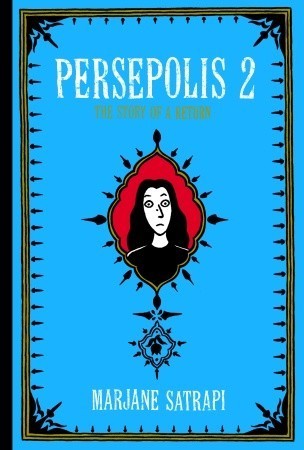
[READ: March 26, 2016] Persepolis 2

I found Persepolis to be an amazing book.  A peek inside a regime that was sort of mythically wicked during my childhood. Marjane’s personal story was interesting of course, but I enjoyed seeing just what was happening in this world that seemed so mysterious when I was growing up.

This sequel is a little less exciting because it is more or less about a lonely teenager in Europe.  I think if the first book wasn’t so groundbreaking, this one wouldn’t feel as disappointing.  Her story is interesting and her experiences are story-worthy, but compared to the first book this one is the awkward teenage years.

We see that Marjane’s being sent to Europe didn’t go quite as planned.  She stayed with her mom’s friend.  But the friend fought with her husband all the time and their house was not a happy one. They felt that they couldn’t look after Marjane so they sent her to boarding school in Vienna–Marjane didn’t speak German. (more…)

Read Full Post »

SOUNDTRACK: BILLY BRAGG-Tiny Desk Concert #281 (June 17, 2013).

I really like Billy Bragg.  Not necessarily all of his music, but I like a lot of it and I certainly love what he stands for.  If you like his instantly recognizable voice (which I do), then just about anything he does sounds good.  But no doubt some songs are catchier than others.

Bragg played a Tiny Desk Concert in 2016 with someone else as part of a duo.  I’d listened to that one first, but I liked this one more.

For this one he is accompanied on the first two songs by dobro player C.J. Hillman.

Bragg talks a lot–he has many lengthy stories between songs–and he’s pretty much always funny or thoughtful.  He introduces the first song by saying that moving into a new building always has troubles–you’ll always need someone to fix things up.  With that, his first song is called “Handyman Blues.”

It’s a great story song.  I especially like this line:

Don’t be expecting me to put up shelves or build a garden shed / but I can write a song about how much I love you instead.

It’s amusing that in the next song workers actually interrupt his song.  They were “met with lot of hammering on our rooftop by some real handymen as they put the finishing touches on NPR’s new home.”

For the second song they

channeled the spirit of legendary American folksinger Woody Guthrie, with whom Bragg collaborated — albeit posthumously, in Guthrie’s case — when he took Guthrie’s unsung words and set them to song with the help of Wilco. Here, he takes a song Guthrie himself co-opted and altered: a gospel tune (“This World Is Not My Home”) he’d turned into an anthem against inaction.

Bragg introduces this song as saying he took it over when the U.S. was having the debate about universal health care.  He says that people still face all the same problems that this classic song talks about–people losing homes to banks or families struggling to make ends meet.  But the middle verse is about a wife who dies on the floor for want of proper health care.  Bragg says that that doesn’t happen in his country anymore and it’s hard for people in his country to imagine that a generous country like the US still hasn’t resolved that issue (and five years later things are even worse with Trumpcare–#ITMFA #RESIST).

Guthrie called the song “I Ain’t Got No Home (In This World Anymore”).  After he sings a verse, the hammering starts and they pause the song to wait for the work to finish before he re-starts the song.  In the meantime they talk about what his band should do in Washington.  Someone says the National Archives and he jokes the Nashville Archive?  He says that they really enjoyed Nashville.  Then he mentions the National Archive to CJ and says

We can find out how the Americans started the war of 1812.  (chuckles).  I just played Annapolis, they’re still sore about it over there.  Never mind who won the war but who started it.

It’s another nice story song.  The dobro works perfectly with it.

“Sexuality” is the only song on this set that I knew.  It’s an old favorite that is serious and funny as well (and very progressive for when it was written).  It sounds terrific and is super catchy.  Although he comments that the acoustics aren’t that great in this new building–there’s not much bounce back off the walls “for those of us who technically aren’t great singers.  But for those of us who are buskers like myself, it’s not bad.”

Introducing the final song, “No One Knows Nothing Anymore” he says he read an article on the BBC about a kid who proved that economics professors were wrong and the article commented that “the trouble with economics is that no one knows nothing anymore.”  He says that had just written a song with that same name, so he’s with the zeitgeist.

He also interjects that there will be pedants–“and there are one or two who listen to NPR, I’m sure” who will write in to say it should be ‘no one knows anything any more.’  But the first thing they teach you at songwriting school is that alliteration trumps grammar.

And then he starts strumming “Sexuality “and says “Oh, I’ve just played that.”

“No One Knows Nothing Anymore” is a nice folkie, very-Billy Bragg song–good melody and really good lyrics.

At the end, as the camera fades to black he says “Chris, pass the hat around.”

I’m so happy that Billy Bragg is still making music.

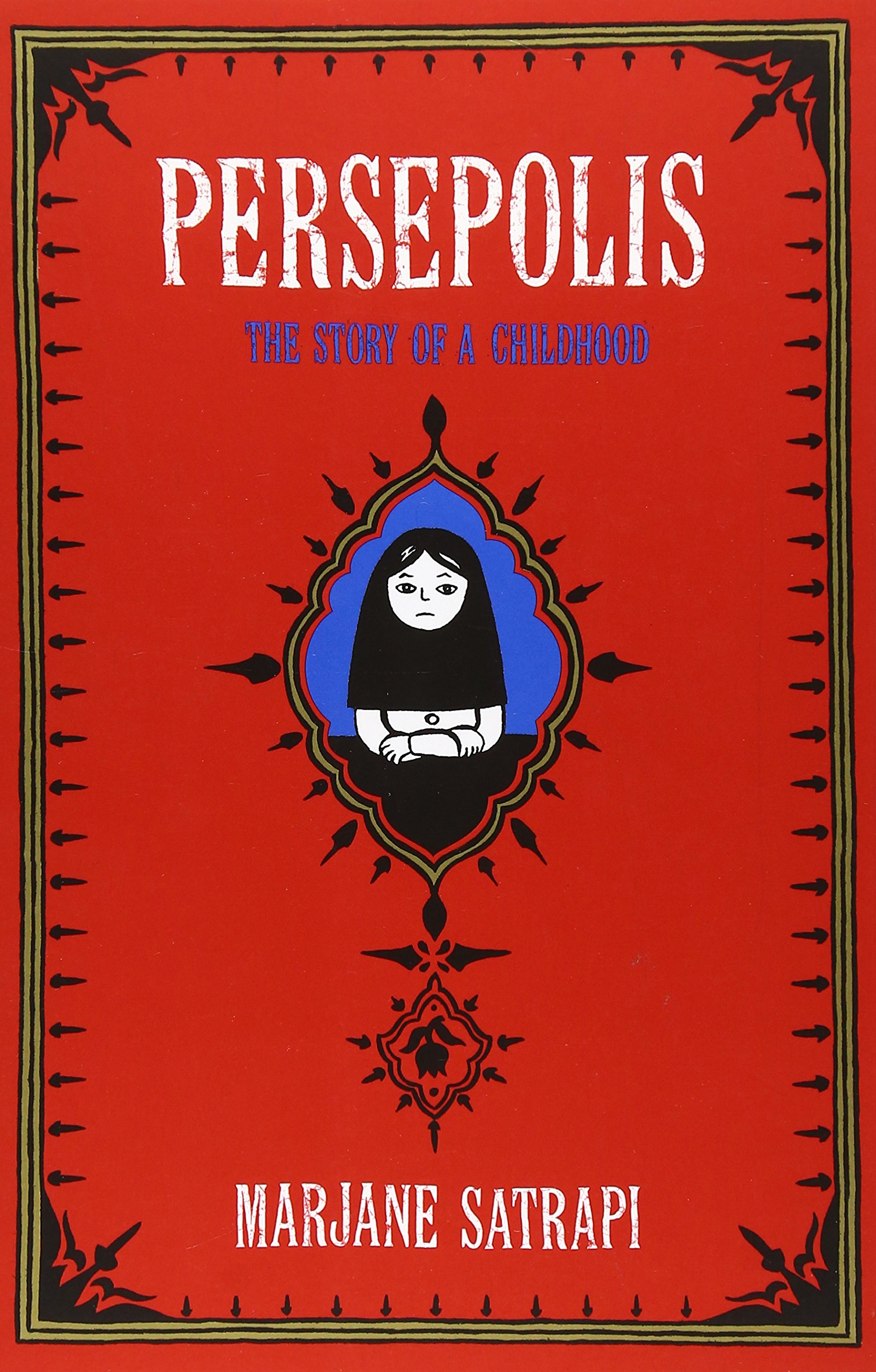
[READ: March 26, 2016] Persepolis

This graphic novel is legendary, and I’m embarrassed it has taken me 13 years to read it.

Persepolis is a memoir of a young girl growing up in Iran during the 70s and 80s.  I appreciated the contextualizing introduction in which she explains the history of the country.

The introduction lays out a basic outline of the history of Iran and the Middle East (that goes all the way back to B.C years).  She explains that Iran has always been a rich nation and has constantly been under attack.  When oil was discovered, the West came calling.  Great Britain wielded a powerful influence over Iranian economy.  During WWII, Iran remained neutral but then was invaded by the west.

The Prime Minister of Iran (not the Shah) nationalized the oil industry in 1951 which led to an embargo and a coup organized by the CIA.  The leader, Reza Shah was succeeded by his son, Mohammad Reza Shah–known simply as the Shah of Iran.  The Shah stayed in power until 1979 when he fled to escape the Islamic Revolution.

She says that since the Islamic revolution Iran has been associated with fundamentalism, fanaticism and terrorism, but she knows that this is far from the truth.  And that’s what inspired her to writ this book.

(more…)

Read Full Post »

SOUNDTRACK: ANDERSON .PAAK & THE FREE NATIONALS-Tiny Desk Concert #558 (August 15, 2016).

I had heard so many great reviews of  Anderson .Paak but I didn’t really like his album.  But I love this Tiny Desk—there’s something great about this live set.  First off, I love that he’s on the drums–and I love Paak’s drumming—all high hats and rim shots and total funk.  Especially when he starts tapping with his fingers on the snare.  And I really love the funky sound of the keys and the bass.

For this Tiny Desk, they reworked three cuts from Malibu,

Guitarist Jose Rios and bassist Kelsey Gonzalez inject a hard-rock edge into the Hi-Tek-produced “Come Down.”  He opens this by saying, “This song is appropriate since its like a sauna in here right now.”  (The opening lyrics are: Y’all niggers go t me hot.”  It is fun and funky and a great opener.  At the end, he asks the bassist: “What is that song about, Jose?  Coming down off of what?  Substances?  That’s what you into?”  “No. Naw.”  “I like water myself.”

The second song “Heart Don’t Stand A Chance” features a lot of keyboards.  It’s a slow, groovy song.  Much more soulful than funky.

“Put Me Thru” is really funky.  He says “This song is about Jose’s ex-girlfriend.  She still your ex-right?”  “Yea.”  When it ends he jokes Tiny Desk, Big Heart.

Normally bands play 3 songs, but everyone is so into the set that they get to play one more.  “What else y’all wanna play?  Should we do requests?” Someone shouts, “Suede”  And he shouts, “OH!  I though this was a more cultured, mature….  So you all like being called bitches over here?”  He cautions, “I talk a lotta shit on this song, is that okay?”  We’ve never done this song like this.  He asks Jose, “Go over the notes. You know the chords?”  “It’s only a loop—only two chords.”  They all laugh.

“Suede” is a super funky, pretty vulgar song.  But .Paak is so charming, it’s hard to criticize.  Especially at the end of the show when he says, “That actually my mom’s favorite song.”

[READ: September 5, 2016] “Let’s Go to the Videotape”

This was a fascinating story about a widow who submits a video of his child to Americas Funniest Home Videos.  His son, Gus, was riding a bike for the first  time.  As he was going along, he hit a rock and flew over his handle bars into the bushes.  His helmet pulled down over his eyes.  Nick kept filming, seeing that he wasn’t hurt.  And then Gus looked up and said “Daddy, am I okay?”

Nick sent the video to some friends and they all thought it was very funny.

The video had made it to the finals and they were in the studio watching the other finalists’ videos.  And then it was their turn.

Gus was very uncomfortable–mostly because of his clothes but also because of the attention. (more…)

Read Full Post »

15 SOUNDTRACK: SPIRIT FAMILY REUNION-Tiny Desk Concert #244  (October 8, 2012).

sruI first heard Spirit Family Reunion when NPR covered their show at Newport Folk Festival in 2012 (a few months before they played the Tiny Desk).  I really enjoyed their set which was vibrant and fun.  And clearly Bob Boilen did too.

Spirit Family Reunion was my favorite find at this year’s Newport Folk Festival. The group makes music I’d call “new old-timey,” but which its members call “open-door gospel” — gospel music that’s not tied to any particular religious denomination.

There are 6 0f them plating–an upright bass, banjo, guitar, fiddle washboard (!) and drums.  And they play three songs.

“Leave Your Troubles At The Gate” opens largely a capella and then just takes off with some wild fiddling and fast strumming from everyone else.  For this song, the guitarist sings lead and the fiddler sings a higher pitched backing vocal—his voice is powerful and at an unexpected pitch.   They finish up and he says, “first song of the day… that’s a way to wake up.”

For the second song, “Green Rocky Road,” the violinist sings this one.  It changes the tone of the band since his voice is so different—strained and intense sounding.  When the song ends, he says, I hope you like singing….  we need help on this one.”

Throughout “I’ll Find A Way” he tries to encourage everyone to sing along (it’s hard to hear if they do): “Its fun, don’t be bashful.”   It is a simple song with an easy to repeat refrain.  And it is indeed uplifting: “When we’re singing together we’re shining a light on the dark places between us.”

[READ: July 10, 2016] “Foster”

This is a story set in Ireland.  It’s about young girl whose Ma is about to have another baby.  The girl is being shipped out to a friend for the summer so that her mom and dad can have the baby in peace.

The story is about the girl, but it is also about the couple who have fostered her.  They are much better off than the girl’s family–a far more successful farm with a much nicer house.  But something about them seems a little off to the girl.

I enjoyed the story although I was unclear when it was set.  The setting is quite rural, and there is talk of an outhouse and a chamber pot.  But there is also a television and plastic washing up on the shore, so it’s not as old as I thought. (more…)

Read Full Post »

cardboardSOUNDTRACK: MARY HALVORSON QUINTET-Tiny Desk Concert #267 (February 25, 2013).

maryI had never heard of Mary Halvorson before.  And that makes sense because she is an avant-garde free-jazz guitarist, a sound I like (sometimes) but one which I do not follow.  So a little background is in order:

As a sidewoman, [Mary Halvorson] is often tapped to play in open improvising situations….  Among her sonic signatures are craggy distortions, bent strings and delay-pedaled blurts through a hollow-body guitar….  Halvorson has now recorded two albums with her quintet, one with alto saxophone (Jon Irabagon) and trumpet (Jonathan Finlayson) up top. (The rhythm section is also among New York’s finest, with John Hebert on bass and Ches Smith on drums.) From the way her songs balance order and entropy, you can hear that she’s studied how golden-era hard bop blended those voices, and how later generations morphed, rephrased and imploded those ideas.

The Quintet plays two pieces.  I would have guessed they were improvised but not only do they have titles, they have sheet music!

“Love In Eight Colors” (No. 21) starts out as a slightly dissonant mellow jazz piece.  Then about 45 seconds in, Mary throws in an unusual guitar lick—a slightly weird note.  And then a minute later things get noisy until a simple trumpet solo takes over.  When the music resumes, Mary is playing some strangely discordant chords over the solo—everyone seems to be doing their own thing.  Around 4 minutes in, it turns into something new with an interesting, mesmerizing guitar solo riff.  When the band resumes, the sax takes over and the trumpeter literally stands stock still like a statue staring forward–it’s almost creepy.  At 8 minutes, they introduce a two-minute drum solo.  It’s fun to watch all the strange things he does—elbow on the drum head, vibrato with his hands changing the sound, clicking the sides of his drum.  Then the band resumes until the end.  And it’s more dissonance.

She introduces “Hemorrhaging Smiles” (No. 25) without smiling.  There’s a lot more melody in this song–the sax and trumpet sound groovy.  Even the guitar is pretty. Then she throws in a bizarre scale which cycles throughout the song.  It’s strangely addicting and I enjoyed hearing it every time it came back–even though it wasn’t exactly pretty.  The guitar has a lot of vibrato on it, although about six minutes in she switches the sound of her guitar to a bit more conventional sound and she plays a wicked solo. The second listen through made me appreciate what was happening a lot more.  Even if the song is pretty out there.

Mary Halvorson’ Quintet is not for everyone.  It might not be for many at all, but if you like your jazz free, check her out.

[READ: June 19, 2016] Cardboard

I’ve had mixed feelings about TenNapel’s books.  I loved Ghostopolis, and didn’t love Tommysaurus Rex.  So I picked this up with some hesitation.

But I found that I really enjoyed this weird book a lot.

For a kids’ graphic novel it’s actually quite long.  And, for a kid’s graphic novels there’s a few adult themes (like unemployment and widowhood) that a kid may not get or care about all that much (or maybe they would, what do I know).

As the book opens we see Mike, a big burly carpenter, begging for work.  But he gets nothing.  And as he walks away we see a very strange-looking man (TenNapel’s book are chock full of weird-looking characters) who offers to sell him a gift for his son.  Mike has no money, so he can’t buy the cool gift.  But the man says that for 78 cents (the exact amount in his pocket) he can have this giant cardboard box.

Mike is appalled at the idea of getting his son a box (even if it can be a creative play toy–ha!), but he’s got nothing else.  So he drives home with this box muttering “worst present ever.” (more…)

Read Full Post »

ny928SOUNDTRACK: COMMON-Tiny Desk Concert #569 (at the White House–October 4, 2016).

comonFor the first time in Tiny Desk history, they moved the desk from Bob’s corner of the office to The White House.  Not a bad move.

Boilen explains:

the White House called and said they were putting on an event called South by South Lawn, a day-long festival filled with innovators and creators from the worlds of technology and art, including music, we jumped at the chance to get involved. We chose Common as the performer and the White House library as the space.

I don’t know much about Common.  And, I don’t know what his album tracks are like.  But for this concert, Boilen explains:

Common put together a special six-piece band of close friends that includes the great Robert Glasper, with his eloquent and delicate touch, on keyboards and Derrick Hodge, whose music spans from hip-hop to folk and has made a big imprint on the world of jazz, on bass. Common also asked his longtime friend and collaborator Bilal to sing on two songs.

I didn’t know his lyrics, but I found his songs to be thought-provoking and smart. Perfect for the White House library.  But that is apparently what Common (who used to be known as Common Sense) is all about: “morality and responsibility continue to play significant roles in his songs”

Common plays four songs: three brand new songs, along with one classic, “I Used To Love H.E.R.”

“I Used To Love H.E.R.” is a very clever ode to hip-hop in which he uses a woman as a metaphor for the genre. It’s really well done.  “Letter To The Free” is about how slavery has not really been abolished–it has just turned into mass incarceration.  “The Day The Women Took Over” is an ode to women and certainly sounds like a song that was written for the woman who was then in the White House and the woman who should have been our next president.  “Little Chicago Boy” is a tribute to his father–a man that Common has always respected.

Musically, the group sounds great–a light, jazzy feel with some great flute from his sister and perfect playing from the rest of the band.

The blurb ends

Common told us that he’d been invited to the White House many times before, including by Michelle Obama for a poetry reading back in 2011, but he was thrilled by the prospect of performing his music during Barack Obama’s final months as president.

And with the Great Liar presumably heading to the White House, this may be the last time any musician I’d want to hear will appear there again.

[READ: March 10, 2016] “Three”

This story was told in three parts with a narrative bookend holding it together.  I had to reread the “introduction” after reading the whole story to see what an interestingly crafted tale this was.

The intro begins “This is an account of three people who died.  Quite recently, one after the other….  They weren’t important, as the wide world defines ‘importance.'”

And then we meet the three people who all lived in this provincial town in the north of Italy.  She says they share no real connection either, except “purity of spirit.”

The first person was her mother-in-law Ombretta.  She was never intrusive to the narrator and even though the narrator was her son’s second wife, there was never any weirdness about that either.  There was a big celebration for her 90th birthday.  Soon after, she took ill.

And this is when the narrator realized how much she had fallen in love with Nonna Ombretta.  And as part of her summation of Ombretta’s death we learn some interesting details about her. (more…)

Read Full Post »

slowreadSOUNDTRACK: DIRTY THREE-Tiny Desk Concert #245 (October 15, 2012).
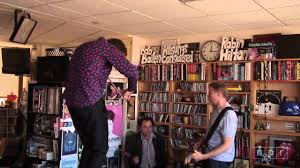
dirty-3For a Murakami collection I should really have picked a jazz Tiny Desk Concert.  But none jumped out at my on my list.  So I decided to do something that might be jazzy in spirit, even if it is nothing like jazz at all.

Dirty Three are a three-piece band which consists of violinist Warren Ellis (who works closely with Nick Cave), drummer Jim White (who I had the pleasure of seeing live with Xylouris White), and guitarist Mick Turner (who has released a string of gorgeous instrumental solo albums and worked a lot with Will Oldham).

I’ve liked Dirty Three for years, although I kind of lost touch with them back around 2000.  So it was fun to see that they are still working.  (They’ve released all of 3 albums since 2000).

Jim White plays an eccentric but very cool style of drum–it always feels improvised and random, and maybe it is, but it’s never “wrong.”  Turner is the only one who is keeping the song, shall we say, “stable.”  He’s got the rhythm and melody both with his strumming.  And Ellis is all over the place with melody lines and bowing.

For this Tiny Desk, they play three songs.  Their music is ostensibly instrumental although Warren Ellis is not above shouting and yelling and keening when appropriate.

The first two songs are from their 2012 album and the last one is from Ocean Songs.

“Rain Song” opens with Ellis strumming the violin while Turner plays slightly different chords.  Then Ellis takes off on a series of spiralling violin rolls.  As always, White is back there waving his arms around with the loosest grip on drumsticks I’ve ever seen.  He plays brushes on this song but the drums are far from quiet.  Meanwhile Ellis is soloing away, yelling where appropriate and doing high kicks when White hits the cymbals.   As the song comes to an end, White is going nuts on the drums and Ellis takes off his jacket (revealing a wonderful purple shirt) .  He starts screaming wildly as he physically gets into his violin playing.

“The Pier” is about realizing that it’s the rest of the world that is driving you crazy.  It’s about “trying to undermine Facebook and realize a new way of communicating with people beyond the internet.”  It’ about… are you ready Mick?  Okay.  “The Pier” is a slower song with some plucked violin.  Ellis climbs up on the desk and dances around as he plays.  This one feels a but more controlled but in no way staid.

For “Last Horse in the Sand,” white switches to mallets and adds a tambourine to his cymbal.  It’s really interesting to watch White play around with things–moving his gear around as he plays.  He switches sticks and seems to be not even paying attention, but without ever really losing momentum or timing.  For this song, Ellis and Turner are the mellow ones while White is just all over the place with his amazing drumming.

I haven’t said anything about Turner because he is really the grounding of the band, while the other two are taking flights of fancy.

This is a wild and untamed set and it’s a lot of fun.  It’s also amusing to watch the audience witnessing this seeming chaos.

[READ: December 16, 2016] Slow Reader Vol. 1

Madras Press had released 16 small books, which I enjoyed reading quite a lot.  I have posted about some and will post about more in the new year.  But word is that they have given up on the small books and have switched their attention to a new magazine/journal called Slow Reader.  The first issue came out this month and it collects stories, essays, poems, illustrations, and other things that center around novelist Haruki Murakami.

Support this small press!  You can order this issue directly (and name your price, although I think the asking price is $6).

From an article elsewhere I’ve learned that future issues will cluster around M.F.K. Fisher, Kazuo Ishiguro, and Patricia Highsmith.

This issue contains essays, fiction and illustrations, some dating back as far as 2000.

CHIP KIDD-cover illustration (wind-up bird)
Chip Kidd is awesome

GRANT SNIDER-Murakami Bingo Board
This bingo is hilariously apt–covering most of the bases of Murakami’s writing: cats, jazz, running, and even a Chip Kidd cover.

JESSE BALL-Sheep Man
A line drawing of a sheep standing upright with the caption “The sheep man’s peculiar tail was never visible to me.”

HARRIET LEE-MERRION-Diner illustration
A nice line drawing of a corner diner

KAREN MURPHY-Sputnik and two moon illustrations
Two simple drawings of Sputnik and two moons.

BEIDI GUO-Hard Boiled Wonderland and the End of the World map
A cool map of the locations of the novel.

DINA AVILA–Murakami Tasting Menu at Nodoguro in Portland, OR
I don’t really get if the menu items are related to the stories but it’s a neat idea that there are foods named after his works. But why are so many called IQ84?

EUGENIA BURCHI–IQ84 menus
A drawing of foods with what I think are character names (I haven’t read the novel yet).

FABIO VALESINI-train illustrations taken from the book trailer for Colorless Tsukuru Tazaki and His Years of Pilgrimage
No idea what the original context is, but it’s a neat, clean drawing of a train station.

JEFFREY BROWN-“In Conversation” What Jeffrey Brown Thinks About
The first piece is an amusing cartoon in which Brown scores a job at an indie bookstore by mentioning Murakami.  The little blurb says that it is an only slightly exaggerated account. There’s also a later picture by Brown of Murakami’s face posted on a bulletin board (with a lost cat flier), that’s really great.

DANIEL HANDLER-“I Love Murakami”
Handler begins his piece by apologizing to dozens of authors before saying that Murakami is our greatest living practitioner of fiction.  He mentions a few books but heaps a ton of praise on Wind Up Bird Chronicles and mentions his excitement at  finally getting Norwegian Wood in English (it had been untranslated for many years).  He wrote this essay in 2000.

YOKO OGAWA-“On Murakami’s “The Last Lawn of the Afternoon” [Translated from the Japanese by Stephen Snyder]
Ogawa writes about a house in her neighborhood which has a lawn that she finds unsettling–it’s perfectly manicured and a pale, cool shade of green.  She is reminded of the Murakami story in which a boy mows a woman’s lawn and she asks him an unexpected question.  Ogawa imagines a woman in that home asking the same kinds of questions.

ETGAR KERET-“What Do We Have in Our Pockets?”
This was inspired by Murakami’s story “On Seeing the 100% Perfect Girl One Beautiful April Morning.”  This story is about a man whose pockets are always bulging with unusual items.  People often say to him, “What the fuck do you have in your pockets?”  And his answer is that he carries things that he imagines the perfect woman needing–a stamp or a toothpick.  It is a wonderfully charming story.

RIVKA GALCHEN-“The Monkey Did It”
Of all of the items in this collection, this is  the only piece I’d read before.  I remembered parts of it (particularly the excerpts from “A Shinagawa Monkey,” and her talking about Colorless Tsukuru Tazaki.  I also recalled her saying that she liked his short stories better than his novels, but that she was perhaps wrong in thinking that.  The one thing I didn’t pick up on last time was that in the beginning of the essay she writes about Toricelli’s Trumpet or Gabriel’s Horn–an item with finite volume but infinite surface area.  She says this perfect describes Murakami’s work.  And I love that she ties it to translator Philip Gabriel who is a gentle and modest translator–perfect for the watery novel.

TESS GALLAGHER-“Murakami and Carver Meet at Sky House”
Before he had written any substantial works, Murakami translated Raymond Carver’s works into Japanese.  Ray was excited and bemused that Haruki and his wife Yoko would travel from Japan to meet with him.  This essay tells us that the following poem came about as Ray tried to imagine how his poems could possibly be appreciated in Japan.  Murakami told him how both the Japanese and American people of the 1980s were experiencing humiliation at being unable to make a decent living.  Gallagher says that if they were to meet today Ray would be awkward about Haruki’s stature.  But he would have loved knowing that Murakami had translated everything he had written.

RAYMOND CARVER-“The Projectile”
This poem is wonderful. It begins with Carver speaking about his meeting with Murakami and then flashing back to when he was 16 and was hit with an ice ball.  It was thrown from someone in the street through a small crack in the window of the car he was riding in–a chance in a million.

RICHARD POWERS-“The Global Distributed Self-Mirroring Subterranean Neurological Soul-Sharing Picture Show”
This is the most abstract and “intellectual” of the essays here.  It speaks of a team of neuroscientists discovering a lucky accident–that neurons in the brain fire when someone else makes a motion that we recognize.  Similarly, in Murakami–representation is the beginning of reality.  He speaks of the parallel narratives in Hard Boiled Wonderland.  He wonders at the universality of dreams and ideas in Murakami.  “But if his own stories are steeped in the endless weirdness hiding just inside everyday life, how then to account for Murakami’s astonishing popularity throughout the world?”

MARY MORRIS-“The Interpreter”
I loved this story.  An American business woman is giving a series of lectures in Japan.  She is assigned a translator who goes with her nearly everywhere.  She is a little annoyed that he is always there, but he is very respectful of her and only speaks when spoken to.  She assumes he is translating her speeches correctly, but during one, the audience laughs where there was nothing funny.  She doesn’t want to disrespect him, but she can’t imagine what he said to them.  In the next one, they are practically doubled over with laughter at what he says.  Finally she has to confront him about it.  He reveals astonishing insights into her personal life.  And the next day he is called away–just as she has begun to feel close to him.

In the author’s note, she says that the she was at an writer’s meeting in Princeton (where she teaches) and Murakami was there eating with them. He was by himself, and she talked to him because she was a fan of his work.  She relates a story of holding up a sign for him when he ran the New York City Marathon.  She says that the part about the translator and his family (which I didn’t mention) is from an actual translator she met in Japan.

AIMEE BENDER-“Spelunking with Murakami”
Bender speaks of trusting Murakami.  She says when the cat started speaking in one of his books, she began to mistrust him.  Nevertheless, she says, she loves a lot of writers but only trusts a few of them.  She’s not trusting Murakami’s honesty or his ability to make her smarter.  Rather, she trusts him like a man with a torch in a cave–someone who is willing to explore–and to be in front leading the way.

SUMANTH PRABHAKER-Editor’s Note
Prabhaker would like to ask the world’s philosophers why some things seem to happen to us in a random fashion.

Read Full Post »

storiesSOUNDTRACKPOLYPHONIC SPREE-Tiny Desk Concert #259 (December 21, 2012).

The Polyphonic Spree performs a Tiny Desk Concert.I really enjoyed Polyphonic Spree’s first album (and their strange robes and cult-like following (apparently even within the band).

They put out a Christmas album some time ago, and since we have a big pile of Christmas albums, I grabbed that one.  I didn’t love it, but it was a fun addition to our collection.

This Tiny Desk Concert is notable for just how many members of the band are behind (and on the side of) the Tiny Desk (perhaps 18?).

And the band is suitably musical–trombone, trumpet, keys, drums, bass, cello, violin and a ten (or so) piece choir.

Interestingly, I find that the weak link in this whole thing is leader Chris DeLaughter.  It’s just that his voice is really not that interesting. It’s especially notable on “The Christmas Song” where he sings some high notes unaccompanied.  When the choir comes in (and they change the melody) it sounds really cool.  I especially love the way they make “reindeer really know how to fly” into a high note.

The first song is “Happy Xmas (War Is Over)” which I feel is the Christmas song they might be best known for.  It’s pretty traditional to the original, with the choir filling in for the kids.  The addition of horns really adds a lot to it.

“Silver Bells” gets a pretty rocking treatment–the buildup at the beginning is pretty cool.  They change the main melody to an almost circus-like waltz. I love the way it sounds when everyone joins in–and when the choir is singing along to the rocking end (with a very different melody) it sounds great.  But once again DeLaughter’s voice doesn’t seem up to the task of leading this larger group.

But it’s festive and fun, especially with everyone in red robes (and DeLaughters green one).

[READ: December 2016] Christmas Stories (1854-1864)

Last year, I started reading some Charles Dickens Christmas Stories in December.  I imagined that I’d finish the whole book this season (all 750 pages of it), but I didn’t come close.  I enjoy these stories but they are not quick reads by any standard.

The fascinating thing with a lot of these stories is that they appeared in All the Year Round, a Victorian periodical founded and owned by Dickens and published between 1859 and 1895 throughout the United Kingdom.  But just because these stories came out for the Christmas issue doesn’t mean they have anything to do with Christmas directly.

I thought I’d be reading a whole chunk of the book in a row, but I wound up skipping around a bit.  Maybe next year I’ll finish the remaining stories. (more…)

Read Full Post »

thrilignSOUNDTRACK: ADIA VICTORIA-Tiny Desk Concert #545 (June 30, 2016).

adiaAdia Victoria has a rough, raw voice that goes well with her simple, exposed guitar sound.  The blurb says her music “carries the singular perspective of a Southern black woman with a Seventh Day Adventist upbringing, who never felt like she’d fit in.”

She sings three song, mostly in a great, raspy voice.  For “Stuck in the South” she actually seems to be gritting her teeth as she sings: “I don’t know nothing ’bout Southern belles / but I can tell you something ’bout Southern hell.”  When the first verse ends, and her band kicks in, it adds such interesting textures.  A distorted bass and a lead guitar playing quietly distorted sounds.  This song is really captivating.

“And Then You Die” with its swirling sounds and keyboards has a very distinctly Nick Cave feel–gothic in the Southern sense of the word.  Indeed, the first verse is spoken in a delivery that would make Nick proud. This is no to say she cribbed from Cave but it would work very well as a companion song  I really like the way it builds, but the ending is so abrupt–I could have used some more verses.

After the second song the band heads away and Bob says “They’re all leaving you.”  She looks at them and growls, “Get off the stage!” to much laughter.

She sings the final song “Heathen” with just her on acoustic guitar.  It is a simple two chord song.  It’s less interesting than the others, but again, it’s the lyrics that stand out: “I guess that makes me a heathen, something lower than dirt / I hear them calling me heathen, ooh like they think it hurts.”

I’m curious to hear just what Adia would do with these songs when she’s not in this Tiny format.  I imagine she can be really powerful.

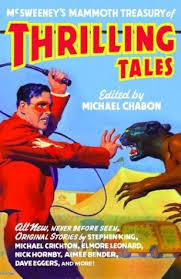
[READ: November 23, 2016] McSweeney’s Mammoth Treasury of Thrilling Tales

For some reason or another I have put off reading this McSweeney’s volume for many years.  This is technically McSweeney’s #10, although it was also released in this printing from a  major publisher. Sadly for me, my McSweeney’s subscription had expired sometime around here so I’ve never actually seen the “official” Volume 10 which I understand has the exact same content but a slightly different cover.

One of the reasons I’ve put off reading this was the small print and pulpy paper–I don’t like pulpy paper.  And it was pretty long, too.

But I think the big reason is that I don’t really like genre fiction.  But I think that’s the point of this issue.  To give people who read non-genre fiction some exposure to genre stuff.

Interestingly I think I’ve learned that I do enjoy some genre fiction after all.  And yet, a lot of the stories here really weren’t very genre-y.  Or very thrilling.  They seemed to have trappings of genre ideas–mystery, horror–but all the while remaining internal stories rather than action-packed.

Which is not to say I didn’t enjoy anything here. I enjoyed a bunch of the stories quite a bit, especially if I didn’t think of them as genre stories.  Although there were a couple of less than exiting stories here, too. (more…)

Read Full Post »

« Newer Posts - Older Posts »