Feeds:
Posts
Comments

Archive for the ‘New Yorker’ Category

SOUNDTRACK: THE HEAD AND THE HEART-KEXP in Studio, September 14, 2010 (2010).

My saga of The Head and the Heart continues.  Sarah had ordered me the disc for Christmas, but the self-released CD had gone out of print.  This is because Sub Pop was going to re-release the record sometime in the new year.

Well, NPR loved the album, so why wouldn’t they have more recordings by them?  (This is one of the great things about enjoying new bands…they are far less likely to restrict listening and downloading abilities online).  So, this session (September) was recorded shortly after they released their album (July).  I have still yet to hear the actual album, but I have fallen in love with these songs.

This set (which has some very brief interview portions) is five songs. The band sounds great, with wonderful harmonies.  The first two songs “Cats and Dogs” and “Coeur d’Alene” meld together seamlessly, and it works wonders.  “Lost in My Mind” is an amazingly catchy single: the “whoo whoos” (which sound not unlike a train) are wonderfully catchy (in a Mumford and Sons kind of way).

They also play “Ghosts” (another catchy catchy song) and the non-LP song “Down in the Valley” (which has the slightly uncomfortable opening lyrics: “I wish I was a slave to an age-old trade”).

This neo-folkie revival has generated some great bands, and The Head and the Heart are yet another one.

[READ: April 14, 2011] “A Withered Branch”

This is a very brief short story (a page and a half) translated by Anna Summers.

A young woman hitchhikes into Vilinus.  She is picked up by a trucker and is unbothered until they get to a rest stop.  While they are having dinner, one of the drivers wonders who she will sleep with that night.

But that is the prelude to the story.  When she arrives in the city, she meets a woman of about fifty who, when the narrator asks if there is any place to stay, offers her own house to the (dirty and sweaty) stranger/narrator. (more…)

Read Full Post »

SOUNDTRACK: CIBO MATTO-“Sugar Water” (1996).

We have been rewatching Buffy the Vampire Slayer.  In episode one of season two the (then) hip band Cibo Matto appeared, playing “live” at the Bronze.  It was the first time they had a “real” band on the show.  In season one there was an occasional live band, Sprung Monkey (they were in the first episode pretty prominently) but Cibo Matto were the first “national” band–with a hit single or two–to be on the show (and look, there’s Sean Lennon in a dress!).  The song works pretty well here for the atmospherics and moodiness.

I really liked Cibo Matto when they came out.  Sure, they were kind of a novelty, (two Japanese singers with an Italian band name who sung a bunch about food) but then the late 90s were all about novelty.  Of course, even within the realm of the alt rock 90s, a song called “Know Your Chicken” was pretty unusual (noisy and weird) .  “Sugar Water” on the other hand, is a moody piece.  It’s slow with delicate keyboards and a (very mildly) spooky verse.  But the overall feel is a kind of “space age” one for notes and tones.  It also has a kind of Stereolab-vibe (especially in the la las).   It’s a catchy song and I enjoyed hearing it again after all thee years.

Not to mention the video is suitably curious.

[READ: April 8, 2011] “Goo Book”

This is a strangely sentimental story for one that starts out with the sentence: “It was fucking hot.”  In fact, the story is strangely sentimental for a story about a gangster’s apprentice (and one which has so much cursing!).

The protagonist is a young man who is a petty thief.  Mostly he steals from tourists (I was pleased that when he took he thought was a wallet but which turned out to be a notebook, he then gave the book to a kid to make sure the tourist got it back–stealing money is one thing but returning the notebook showed a decency that I approved of).

But he also worked for Mishazzo as his driver. (And I have to admit that perhaps the one flaw of the story is that I couldn’t follow the timeline at all).  Mishazzo is a gentleman who owns a lot of businesses.  And the driver was told explicitly that he didn’t know anything.  At all.  He just drove.  And the driver was fine with that.  He asked no questions.  And the driving was fine–usually to one of Mishazzo’s coffee shops for an undetermined  length of time.  So he started carrying a bottle with him in case he had to pee (he wasn’t allowed to leave the car), and started smoking like a fiend.  But the money was good, and he honestly didn’t know what Mishazzo was up to (he assumed it wasn’t good, but he also assumed it wasn’t that bad either). (more…)

Read Full Post »

SOUNDTRACK: GOGOL BORDELLO-Tiny Desk Concert #66 (June 28, 2010).

I had heard a few minutes of Gogol Bordello before this concert but it was during a TV show that I was half watching.  When I sat down and listened to this show, I was blown away by hem and immediately bought two of their CDs. Gogol Bordello is a multi-piece, multi ethic band that plays rocked-up Russian folk music (mor or less).  The sound is very traditional, with a kind of gypsy edge sprinkled onto it.  I’m not sure how many people are in the band, or how may people showed up for this concert but it sounds like about 100 in the tint room.  This is also the longest Tiny Desk show that I’ve heard (it runs almost 25 minutes).

The band plays five songs (and there’s a little chatting in between) and as the session goes on the band gets more rowdy (and more fun).  The video (also available at the same site) shows the singer sitting in the laps of the NPR folks and jumping on some desks and just having a blast.  And even though I enjoy shoegazing music, this is the kind of rollicking fun that I would love to see in concert.

The songs are political, but not overtly so, it’s more of a communal feel, of people uniting (which is indeed political).  I think they could get old kind of quickly, but in small doses the band is energizing and wonderful.

[READ: March 27, 2011] “U.F.O. in Kushiro”

This story was originally published in the March 19, 2001 issue and was inspired by the incidents of the 1995 earthquake in Kobe, Japan.  It was reprinted here to memorialize the recent earthquake in Japan.  The story is accompanied by rather devastating photos (and some surreal ones) of the aftermath of the earthquake in Kobe.

The story (translated by Jay Rubin) opens a few days after the Kobe Earthquake.  And even five days after the Kobe earthquake, Komura’s wife is still engrossed in the TV footage from Kobe.  She never leaves the set.  He doesn’t see her eat or even go to the bathroom.  When he returns from work on the sixth day, she is gone.  She has left a note to the effect that she’s not coming back and that she wants a divorce.  Komura’s wind is knocked out of him. (more…)

Read Full Post »

SOUNDTRACK: RICHARD THOMPSON-Tiny Desk Concert #107 (February 1, 2011).

This Tiny Desk concert sees Richard Thompson playing three songs from his most recent disc Dream Attic.  I really enjoyed this album, but because it was recorded live, and there’s lots of instrumentation on it, I wasn’t sure how well these songs would translate to a simple acoustic guitar.

I needn’t have worried.  RT is a master songsmith and even stripped down to just him and his guitar the songs swell where they should and haunt when they ought.  “The Money Shuffle” doesn’t need the horns that accompany the original (he supplies the power with his voice), and “Stumble On,” a gorgeous ballad, works fine solo.  I appreciated the introduction he gives to the final song “Demons in Her Dancing Shoes” as I didn’t realize it was about something specific.  He plays all the fast bits (including a brief solo) wonderfully on that acoustic guitar, too.

This is not to say that I think these songs are better solo than with the band.  It’s just to say that RT can play anything and make it sound great.  It’s an excellent (if not brief) set.

[READ: April 4, 2011] “Atria”

I hated this story as I read it.  I felt like it was deliberately trying to manipulate me.  I felt like it was playing some very obvious cards and leading to an obvious conclusion.  By the end I wanted to scream at it, yet it kept surprising me.

The story is about Hazel, a sophomore in high school.  She has not had any kind of experience with sex until one afternoon when circumstances conspire for her to have sex behind a 7-11.  She doesn’t really enjoy it but she didn’t really protest it either.  She was just sort of there.

Soon afterward, she is raped (I know), by a man who is clearly not all there.  The rape occurs behind the church (I know), and once again, she probably could have gotten away, but she was just sort of there.

Now, of course she’s pregnant (I know).  She doesn’t know who the father is obviously, but now she has a scapegoat.  The man is vilified but never found (the police artist was a joke).  The town puts up a bunch of Hazel-inspired alert phones all over town (fat lot of good they do her now).

She is treated with kid gloves in school.  Even the religious girl doesn’t blame her for being raped (I know).  All the time she is pregnant she imagines the kind of animal that will come out of her.  It’s never a baby, just different kinds of animals: birds with beaks pecking at her and having multiple babies themselves–which are crushing each other, even a four-legged beast.  It’s very trippy, and she seems to be as well.

When the baby is finally born she determines that it is a seal.  And she realizes that it needs to be kept wet.

The ending of the story was very, VERY disturbing and I simply couldn’t believe what I was reading.  And yet for all of the obvious (and by contrast highly disturbing) stuff that happened, I didn’t want to stop.  There’s was something strangely compelling about this story.  I will keep an eye out for her in the future.

Read Full Post »

SOUNDTRACK: WU MAN-Tiny Desk Concert #124 (April 27, 2011).

Wu Man is considered the master of the pipa. If that sentence was complete gibberish, the pipa is a 4 stringed lute-like instrument and Wu Man is a Chinese virtuosi of the instrument.  This Tiny Desk Concert shows Wu Man playing three songs, solo.

The songs are, if not traditional Chinese songs, then at least traditional in style.  Needless to say they are not for everyone (and really, they’re not even my cup of tea–I’m not downloading it, just watching it), but watching her fingers move on this instrument and really paying attention to the kind of things she’s doing with four strings, it’s quite an impressive feat.

She doesn’t sing, and the songs do not follow western musical structure at all.  But it’s an interesting look into Chinese musical culture.

Even if you only watch the first song, it’s worth the time.

[READ: April 29, 2011] The Pale King

[Note: this review is pretty much free from spoilers–some details are given but I don;t think they ruin anything–but it is full of speculation and imaginings of what could have been]

I finished The Pale King today.  It took about a month, but that was because I only read it at lunch hour.  And I was surprised to find that, unlike with other books, I didn’t always feel up to pushing my lunch hour a few extra minutes to get some extra pages in.  Not because I didn’t like the book, but I think it was just really dense and often quite intense.

I’ll also state that I hadn’t been making any kind of notations when I started.  Then, a bit of the way through, when I realized there were a lot of characters, I started jotting down some names and characteristics.  But then I stopped again, because it was interfering with my absorption of the story as a story (such as it is).  So, this review is based on an initial read (yes, I’ll be reading it again in the not too distant future, that’s for sure), without any real note taking.

Is note taking necessary?  Well, yes, at least to keep the characters straight.  There are many many characters and most of them do not interact (or at least not explicitly) so it’s not always easy to know who is who or which person’s weird characteristics are showing up in any given chapter.  Plus, there are dozens of chapters in which unnamed people are described.  It’s hard to know how deliberate that was or how much of it is just the fact that book was unfinished.

The other thing is the ending, of course.  DFW fiction is notorious for its “lack” of endings.  Broom of the System ends mid-sentence, Infinite Jest ends in the middle of a scene, so who can imagine what The Pale King would have ended.  As such, we have only to go by editor Michael Pietsch’s placement of chapters.

So, in many respects, this book is very much Pietsch’s project.  Sure, DFW wrote all the words, but it was Pietsch’s job to piece them together.  Who is to say that DFW would have wanted §50 to end the book?  Pietsch also includes about ten pages of notes at the end of the book all showing ideas that DFW had asked himself about the nature of the finished product.  Some of these questions are minor, but others are quite significant, and would effect not only connections in the novel, but also the overall shape of the book.  It also implies that there could have been as much as another 500 pages coming.

The book feels like a kind of culmination of all of the things that he has been putting into his work for the past few collections.  There are character sketches based on interviews (Brief Interviews), there are lengthy sections of bureaucratic minutiae, lovingly rendered (“Mr Squishy”), there are scenes of conformist office work (“The Soul is Not a Smithy”) and there is redemption in the everyday (“This is Water”).  The mind reels at what this could have been had it been finished.

So this book is obviously, radically unfinished (and yet it’s still over 500 pages long).  So, why bother reading it?

(Here’s where the review really starts).

Because what is here is amazing. (more…)

Read Full Post »

SOUNDTRACK: THURSTON MOORE-in studio at KEXP, March 11, 2008 (2008).

This interview was headlined ‘Thurston Moore: Not a “Real Guitar Player”?’ which is pretty funny.  The Sonic Youth guys have been defying conventional guitar playing for years.  And then in 2008 Thurston put out a solo album called Trees Outside the Academy, a beautiful delicate album of acoustic guitar songs.

The interview covers this very subject and concludes that maybe back when they started he wasn’t a guitar player, but now, 25 years later, he certainly is.  Moore is charming and funny and relates a very amusing story about being on the cover of Guitar Player and then embarrassing himself in front of one of his idols.

But this download is all about the songs.  Thurston (and violinist Samara Lubelski–who plays great accompaniment, but doesn’t really get any on air time to speak) play four songs from Trees: “Sliver>Blue,” “The Shape is in a Trance,” “Frozen Gtr” and “Fri/End.”  He sounds great in this setting, especially under close scrutiny.  I’d always assumed that there was a lot of improv in the SY guitar world, so to hear him play these (admittedly not difficult) songs flawlessly is pretty cool.  I actually wondered if he’d be hesitant (he admits the acoustic guitar is a fairly new thing for him), but not at all (although he says he screwed up on a chorus, but I never heard it.

It’s a great set and its fun to hear Thurston so casual.

[READ: April 14, 2011] “Farther Away”

The subtitle of this essay is “‘Robinson Crusoe,’ David Foster Wallace, and the island of solitude.”  As with Franzen’s other recent essays, this one is also about birding.

Franzen explains that he is hot off the work of a book tour (for Freedom) and is looking for some solitude.  He decides to travel by himself to the island of Alejandro Selkirk, a volcanic mass off the coast of Chile.  The island is named after Alexander Selkirk, the Scottish explorer who is considered the basis for Robinson Crusoe.  As such, Franzen decides to travel to the remote island, decompress and read Robinson Crusoe while he’s at it.  The locals call the island Masafuera.

I haven’t read Robinson Crusoe as an adult, so I don’t know the ins and outs of the story.  Franzen has a personal resonance with the story because it was the only novel that meant anything to his father (which must say something about Franzen’s father, no?).  The upshot of what it meant to Franzen’s father was that his father took him and his brother camping a lot as a way to get away from everything.

However, for Franzen, on his first experience of being away from home for a few days (at 16 with a camping group), he had terrible homesickness.  He was only able to deal with the homesickness by writing letters.

When he arrives on Masafuera, Franzen’s writing really takes off.  He has some wonderful prose about this treacherous space.  Although he comes off as something of a yutz for relying on a Google map to learn about the terrain and for bringing an old GPS which has more or less run out of battery. (more…)

Read Full Post »

SOUNDTRACK: THE BLASTING CONCEPT Volume II (1985).

I listened to this collection of (then) old and new SST artists almost nonstop the summer I bought this.  I remember my friend Al disliking it quite a bit–except for Hüsker Dü, of course.  (I wonder if he would change his mind about any of it now).

This LP was a kind of transition record from the standard bearers of SST (Black Flag, Hüsker Dü, The Minutemen) to the then new young bands (DC3, Angst, Gone).  The Allmusic review dismisses the disc out of hand, but I think that the disc has held up very well.  I didn’t follow SST records too closely in the 90s so I’m not sure what they were doing, but for whatever reason, most of the bands that the average listener hasn’t heard of were dropped (and sadly most of those discs are long out of print, some never released on CD at all–MP3s do appear to be available). The exception of course is any band that Greg Ginn played in (which is most of them, actually), which he of course has kept in print on SST.

SAINT VITUS-“Look Behind You” This song opens the disc and seems to introduce right away that SST is no longer just a punk label.  This is a very metal sound with a wah wahed and fuzzed out guitar all the way through.  It’s mixed in a weird way (which could be SST), which undermines the real heaviness and actually adds some cool effects.

DC3-“Theme From an Imaginary Western” as mentioned, an awesome track.

SWA-“Mystery Girl” a fuzzy distorted track.  It’s heavy, but not very heavy.

BLACK FLAG-“I Can See You” is one of those Black Flag tracks that is all about Greg Ginn’s weird guitar.  He plays a simple melody out of tune with crazy guitar solos over the top.  Rollins is on vocals which are mostly spoken here.  It’s a bizarre throwaway kind of song that I really like.

GONE-‘Watch the Tractor”  This is a wonderful instrumental.  High speed with a great riff that propels about half of the song.  The other half is a heavy kind of mosh that breaks up the proceedings nicely.  This is one of the few bands that no one has heard of from thee days of SST that actually have the album still in print (because Greg Ginn is on it).

WURM-“Death Ride” is not a very good song, but one which I always liked for its simplicity and stupidity. The screamed chorus is really catchy.

OVERKILL-“Over the Edge”  This is not the famous metal band Overkill, but a different metal band named Overkill who got shuffled aside by the (arguably) better, bigger one.  This is the only song I know from this Overkill (now known as Overkill L.A.) and I really like it.  It has a great riff and vocals like Lemmy.

SACCHARINE TRUST-“Emotions and Anatomy” is one of several odd, improvised tracks on this compilation. It seems like perhaps everyone is playing his own thing and the lyrics are some strange little rant.

PAINTED WILLIE-“The Big Time” is more raucous style of song, reminiscent of earlier SST recording.  The most interesting part comes at the end with the falsetto voices threatening to take over the song.  They play a kind of sloppy punk-lite that would likely be very popular today.

ANGST-“Just Me” After DC3 this is my second favorite unknown song on the album.  It has a great bass line with some angular guitars over the top.  It actually sounds a lot like later Hüsker Dü, and there’s nothing wrong with that.

MEAT PUPPETS-” I Just Want to Make Love To You” I’ve like the Meat Puppets for ages.  And this absurd cover of the blues song is one of the oddest songs this odd band has recorded.  The solo sounds like it comes from under a volcano.  It’s not a great song (and should probably be two minutes shorter), but it is kind of fun.

MINUTEMEN-“Ain’t Talkin’ ‘Bout Love” The always awesome Minutemen engage us with this awesome cover of Van Halen’s “Aint Talkin’ ‘Bout Love.  In 1 minute they undermine all of the overblownedness of the original.  Check out the live version here.

HÜSKER DÜ-“Erase Today” This is simply fantastic.  This is an early punk song of theirs.  Catchy and fast and wonderful.

OCTOBER FACTION-“I Was Grotesque” Another weird improv piece.   It’s filled mostly with drums and strange rantings–kind of beatniky.  Here’s a live show from the band from 1984.

TOM TROCCOLI’S DOG-“Todo Para Mi”  This song has a cool riff. Although Troccoli’s voice is questionable at best.  It more or less devolves into a nonsense jam and is too long at 6 minutes.  It’s not a great way to end the album, but maybe it’s last for a reason.

[READ: March 21, 2011] “Who Am I?”

I have been hearing about Demetri Martin for a few years now.   How he’s the hot new comic. And yet I’ve never come across anything he’s done (even though I think Comedy Central repeated his shows practically on the hour when they first aired). So this short piece is my first exposure to him.  I’m going to assume it is not a fair representation of his comedy as he is normally a stand up and writing is not the same as stand up.  (That’s not to say it’s not good, just that it’s not his natural medium).

This was a short piece in the New Yorker’s Shouts and Murmurs section. It asks and answers the titular question “Who Am I?” (more…)

Read Full Post »

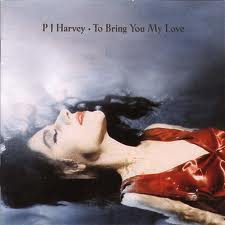
SOUNDTRACK: PJ HARVEY-To Bring You My Love (1995).

After the intensity of Rid of Me, To Bring You My Love ratchets things down a bit.   In fact, it almost seems like Harvey wanted to explore a more mellow side.  I was disappointed in the disc when it came out, although I do think it has a couple of her best songs on it.  The overall tone is simply too atmospheric for me (and I like atmospheric music, I think I just don’t like her version of it).

She dumped the PJ Harvey band, and worked primarily with John Parrish on this disc.  But her voice is deep and resonant throughout the disc.  The disc seems to be easily broken into three styles of song:  brooding, quiet songs; distorted loud romps and catchy songs that have  kind of folk base.

The broody quiet songs dominate the disc.  “Working for the Man” is a very quiet–drums, quiet organ,and a shaker.  “Teclo” and “I Think I’m a Mother” are moody pieces.  After the dynamics of Rid of Me, you expect a big noisy section to come next, but it never emerges.

The louder, more rocking songs are sonically loud.  The title song is pretty much just her and a distorted guitar (not unlike Neil Young), while “Meet Za Monster” has a Tom Waits quality.  Of course, the real power comes from the devastating “Long Snake Moan.”  It’s a five-minute scorcher of a song full of screaming intensity.  And also from the amazing single, “Down By the Water.”  It has an intense distorted bass that buzzes seductively through the whole song.  And when the whispered vocals come in it’s an unexpected sonic triumph.

The third style, acoustic rockers, shows up on “C’mon Billy,” a gorgeous acoustic track with Harvey’s voice strong and proud, and “Send His Love to Me” another intense vocal song.  Both of these songs thread her wonderfully catchy acoustic guitar playing with her rocking sensibilities.

The final track on the disc doesn’t fit neatly into any camp.  “The Dancer” is a moody piece, but Harvey’s vocals are loud and strong and probably the most interesting on the disc.

Even though I don’t like this disc as much as her others, I still acknowledge that there’s some great stuff here.

UPDATE: My friend Lar mentions an interview with PJ Harvey in Mojo.  I’ve made it accessible here.

[READ: March 17, 2011] “Rollingwood”

This is a story about a man who is overwhelmed by his life.  But unlike those of us who suffer from general overwhelmedness, Mather has some very specific problems that conspire against him.

The second, and less obvious one is that his work is less than forthright to him.  His supervisor doesn’t communicate well, there are temps in his cubical and, worst of all, the daycare center where his son goes during the day is closed inexplicably.

The first and more obvious problem is his son, Andy.  Well, more to the point the problem is that his ex simultaneously doesn’t think he does a good job rasing their son, but she also has no problem leaving Andy with him when she runs off with her new boyfriend.

Of course, Mather doesn’t speak up for himself in any of these situations so he is not innocent in the problems.  However, Andy’s mother is pretty much a capital b bitch.  She takes off with her new boyfriend for an unspecified amount of time and doesn’t leave any kind of contact number (Andy has health problems, too), yet she still doesn’t accept responsibility for her actions.  And when Mather’s office’s day care center is closed, there’s not very much that he can do. (more…)

Read Full Post »

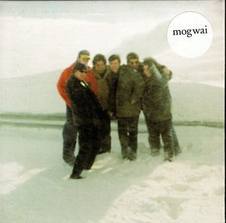
SOUNDTRACK: MOGWAI-My Father My King (2001).

Yet another EP release from Mogwai, this is a twenty-minute song that is everything that Mogwai does best.  It’s a slow builder that grows into a loud, epic track; it’s not only noisy and chaotic, but features some really catchy parts as well.

This song was produced by Steve Albini (which makes the Mogwai noise crispy and sharp and modifies their brand of waves of noise).  It’s a kind of companion to Rock Action.

It opens with a kind of middle eastern flair–Wikipedia says it was based on the melody of the Jewish prayer Avinu Malkeinu. Hear the original here.  [Man Wikipedia loves Mogwai, there are lengthy writes ups about nearly every song they’ve done.]

Even without knowing where the melody comes from, it’s a great song with wonderful structure, building and receding (in what is by now a kind of Mogwai pattern).   Twenty minutes rarely sound this good.

[READ: March 13, 2011] “Going for a Beer”

I’m currently reading Robert Coover’s A Child Again, which is a collection of short stories.  For the most part I haven’t really enjoyed it that much.  Nevertheless, I really enjoyed this one page story.  Part of me wonders, simply, if Coover works much better in much much shorter pieces.

So this story is a time-bending crazy quilt of reality.  And, indeed, the story is a lot more style over substance (which is kind of the point).

It opens in third person present with this mind-shredding sentence: “He finds himself sitting in the neighborhood bar drinking a beer at about the same time that he began to think about going there for one.” I admit I read this sentence three times before I gave up and accepted that he was fucking with me.

And, indeed he is. (more…)

Read Full Post »

SOUNDTRACKMOGWAI-No Education = No Future (Fuck the Curfew) (1998).

This is a 3 song EP. The opener “Xmas Stripes” is one of my favorite early Mogwai songs.  The opening melody is really great, with a cool interesting bass and a nice guitar over the top.  At about 3:30 the song grows from a silent track to a menacing, growing beast until the drums start and the song and the main riff begins.  By 5 minutes it’s all out rock noise.  By 6 minutes the song is scaled back for the violin solo.  The remaining 7 (!) minutes are a denouement for the song.  Even though I love the track, I mostly love the first 8 or 9 minutes.  The ending tends to drag a bit.

But for all of their noise, Mogwai’s early releases were really quieter instrumentals, meditative songs that were really quite pretty.  “Rollerball” is a beautiful, sad three-minute track.

The last song “Small Children in the Background” continues in this quieter vein.  At nearly 7 minutes, it allows for a noisy middle section.  This noisy section is indeed mostly noise.  And yet the pretty melody of the rest of the track is just as loud throughout the mix, making for a very cool and very brief explosion mid-song.

Not all EPs are essential, but this one is pretty fantastic.  And I have Lar to thank for getting it for me.

[READ: March 10, 2011] Changing My Mind

It’s funny to me when that when I get into an author, I seem to wind up not reading the books that people most talk about until much later.  Take Zadie Smith.  Her debut, White Teeth, is something of a touchstone for many readers.  I missed it when it came out, but I loved On Beauty and figured I’d go back and read it.  That was almost a year ago.  And in that time I have read lots of little things by her and now this collection of essays.

Regardless, this collection of essays is a wonderful look in to the nonfiction world of a writer whom I admire.  And it was quite a treat.  Zadie is an intellectual, and that comes across in all of these paces.  Whether it’s the subjects she’s writing about, the footnotes she uses or just the acknowledgment that she likes art films and not blockbusters, we know where she’s speaking from.  And, of course, I’m right there with her.  The funny thing about this book then is how few of the subjects I know.

The book is broken down into five sections: Reading, Being, Seeing, Feeling and Remembering.  The Reading section is basically book reviews.  The Being section is about her experiences.  The Seeing section is about films.  The Feeling section is about her father and the Remembering section is about David Foster Wallace. (more…)

Read Full Post »

« Newer Posts - Older Posts »