Feeds:
Posts
Comments

Archive for the ‘Humiliation’ Category

SOUNDTRACK: THE FLAMING LIPS-“Will You Return/When You Come Down” (2020).

As part of The Flaming Lips’ slow release of new songs from American Head, here comes this gentle song “Will You Return/Will You Come Down.”

Wayne sings his falsetto vocals over a gentle piano and bells melody.  He sings the title a few times before the verse begins.

The verses are very Flaming Lips–a friendly vocal melody about death.

About half way through, after the second chorus, the song takes off with soaring backing vocals and more instruments added.

A vocal line (Wayne’s voice sped up?) sings the “will you return” part a few times before a folky acoustic guitar comes in to take over the chorus.  The last minute or so goes full on Lips with strings, different vocal lines (screaming from beyond) and a wild guitar solo.

Although there’s not much to this song, there’s quite a lot going on.

[READ: August 21, 2020] “Woven, Sir”

After reading some bizarre and exciting stories, this one felt rather dull.

A man is in a hotel in Madrid waiting for a friend.  He looks around the hotel, makes observations about the other people there and then notices a man name Tyler.

There’s a number of interesting lines in the story which I liked.  Like when the narrator requests food from the waiter and Tyler, who is not facing him, says

I notice that, regrettably, you haven’t improved your pronunciation.  You are as lost in Spanish as you once were in English, he says…. You don’t listen to how other people talk.  You never say to yourself, He speaks well, so I’ll listen to him and learn how to speak.

Then we learn that the narrator knew Tyler (it’s his last name, first name unknown) many many years ago, when the narrator was six or seven.  Tyler was a tutor at a facility called the Green Hut.  (more…)

Read Full Post »

SOUNDTRACK: BORIS-Archive Volume Five “Pink Days” (2014/2020). 

a0153819288_16In early August, Boris digitally released six archival releases.  Volume Five is called “Pink Days” and it is the best sounding of the bunch.

This show was recorded live in New York on May 31 during Boris’s 2006 US tour.  PINK had just been released and the band played 7 selections from the album.  But they also played two classics from Akuma No Uta and, one from Dronevil and a track from The Thing Which Solomon Overlooked (or Mabuta No Ura depending on which version of the song they play).

This show

 transmits wild enthusiasm; the songs in this full set recording could even be called their greatest hits.
(Originally released on March 5, 2014. Included in Archive 2, limited to 1,000 copies)

The set opens with four songs from Pink.  The first is “Blackout” which serves as a noisy introduction for what’s to come–feedback, squeals, waves of noise and Atsuo’s gong.  As the songs settles in around 7 minutes, Wata takes some soaring solos while Atsuo pounds away on the drums and Takeshi plays some super heavy bass lines.   Atsuo adds some vocals and a big YEAH! before the band starts “PINK,” with its fast, heavy riff and more soaring guitars.  Atsuo sings the melody as the song speeds along.  “Woman on the Screen” continues the fast heaviness with two and a half minutes of pummeling guitars and drums.  “Nothing Special” is two more minutes of blistering noise with lots and lots of YEAHs!

A quick jump to the Akuma No Uta album for the riff-tastic “Ibitsu” before returning to Pink for the two minute “Electric.”

Boris has two songs called “A Bao A Qu.”  Apparently they are entirely different.  I gather that this one is from the Mabuta No Ura album and not The Thing Which Solomon Overlooked (that version is over 8 minutes long and this one is about 4).  It’s heavy and dense with a lot of slow vocals and screaming solos.

Things finally slow down for the 15 minute “the evilone which sobs” from the Dronevil album.  This is a solid drone song–waves of low end feedback pulsing throughout the concert hall.  After four minutes of ringing, Wata plays a slow four note melody.  About half way through the song, a new melody enters–both Takeshi and Wata play different parts while Atsuo smashes the cymbals.   By nine minutes the two parts have more or less melded and the four note melody returns with the powerful backing of Takeshi.  The last five minutes show Wata whaling away on her guitar creating soaring textures and sounds.

The feedbacking end segues into the title track from Akuma no Uta.  This five minute instrumental features a lot of gong and a lot of cymbals as the slow riff unfolds. Until about half way through when the song takes off with a wicked riff and lot of whiooping from Atsuo.

For the last two songs the band returns to Pink.  Up first is the the ten minute “Just Abandoned My-Self” which is a simple, fast singalong (if only you could figure out the words).  The last five or so minutes lead the song into a droning outro–feeback and noise–that abruptly shuts off to wild applause and Atsuo telling everyone that there’s one more song.

The last song is the opening track from Pink called “Farewell.” It starts slowly with a pretty guitar riff.  It’s a really catchy song with a great melody.  Atsuo’s soaring vocals at the end are a nice capstone to a great show.

[READ: August 15, 2020] “Nobody Gets Out Alive”

I didn’t really like the way this story unfolded.  It started out intriguingly enough: “Getting past the mastodon took planning.”

The mastodon skull was in the middle of the room where a coffee table might normally be.  The setting is a house in Alaska, being used for a wedding party.

The newly married couple are Carter and Katrina.  They are in Alaska visiting Katrina’s father.  His neighbor Neil decided to host this wedding party for them.  Its apparent that he and Katrina used to date (or maybe wanted to) a long time ago.

They went to Alaska because Carter had never been there.  Nor had he met her father (in fact they’d only met each other a year ago). But Katrina’s father is very dull–he eats the same meal every night, he watches the same shows every night and he doesn’t even want to go to the wedding party. (more…)

Read Full Post »


download (98)SOUNDTRACK
: TAME IMPALA-Tiny Desk (Home) Concert #69 (August 24, 2020).

download (97)With so many artists that I’ve never heard of doing really long Home Tiny Desk Concerts, why on earth did Tame Impala, one of the biggest bands around, only play for 16 minutes?

The studio version of Tame Impala is pretty simple on paper: All songs are written, produced and performed by Kevin Parker. For the live version, Parker is still front and center but surrounded by a host of musicians who interpret his recorded work almost to a tee.

For his Tiny Desk (Home) Concert or his “Tame Impala Soundsystem” Parker brought Jay Watson and Dom Simper together to

do this kind of electronic jam with heaps of equipment around us and we’ll recreate the songs with samplers and sequencers. I’ve wanted to do something like this for a while and thought Tiny Desk would be the opportunity to do it.

So the three of them are in a room with banks of keyboards and all kinds of buttons to push and knobs to twist.  There’s even a guitar (most notably on “Is It True”).

They play two songs from this year’s The Slow Rush.  They open with “Breathe Deeper.”  The most interesting part of the song comes at the end when Parker starts messing around with the mixer in front of him and he starts generating drum beats and manipulating the sound of the entire song.

“Is It True” is similarly dancey and Parker’s soaring falsetto rides over the top of the song nicely.

They end the set with “Patience” a fantastic 2019 single that for some reason, didn’t make it to The Slow Rush.  This is my favorite song of the three.  The melody is great and with the pace slowed a bit it makes the song a bit more memorable.

When I saw then live, their show felt massive.  This show sounds massive too, yet it’s all confined to a tiny room.

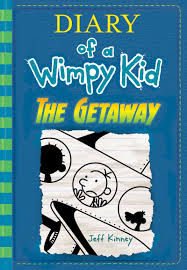
[READ: August 20, 2020] Diary of a Wimpy Kid: The Getaway

I was looking forward to reading this book after really enjoying Book 12.  But I felt like this one wasn’t quote as laugh out loud funny as some of the others.  I find Greg’s family dynamic to be the funniest part of these books and his family doesn’t feature all that much in this one.

This book is all about snow.  And snow means snow days from school, sledding and snowball fights.

The book begins with some environmental concern about global warming (it is unseasonably hot that winter).  Despite the genuine concern for global warming, Greg’s take is always a little warped–he’s concerned that if the ice caps melt there could be a giant monster hiding in there.  (more…)

Read Full Post »

download (92)SOUNDTRACK: VÍKINGUR ÓLAFSSON-Tiny Desk (Home) Concert #63 (August 12, 2020).

download (91)Víkingur Ólafsson has a fantastic name.  But even better is his way of talking about the music he plays.  He adds so much detail and information about these songs that they really come to life.  I don’t often buy classical music anymore, but I absolutely want to get his new record of Rameau and Debussy pieces).

Ólafsson  has moved from strength to strength, releasing three terrific albums in a row (Philip Glass, J.S. Bach, Debussy-Rameau). And now that he has a young son, he wants to spend as much time with the family as possible these days.

So he tells us that he is leaving Berlin after living there for eight years, to return to Iceland with his wife and son.

He opens with a beautiful slow and stately piece from J.S. Bach (arr. Stradal): “Andante” (from Organ Sonata No. 4).  The piece runs about five minutes and after four slow lines, he throws in some amazing speed near the end.  he says that Bach is a good idea whether you are happy or sad–whatever it is, Bach makes things better.

Then Ólafsson offers a crash course in the fascinating music of Jean-Philippe Rameau and Claude Debussy, two French composers who lived nearly 200 years apart. Ólafsson connects the dots between the two seemingly strange bedfellows, illustrating his points with demonstrations on his Steinway.

Introducing Jean-Philippe Rameau, he says the music will go in a very different direction (than Bach).  Rameau was two years older than Bach and was dubbed the Newton of harmony.  He defined harmony and opened musical doors.

For Rameau: “Le rappel des oiseaux” (“The Recall of the Birds”) he says that he is playing two birds: one in his right hand and one in his left.  They are calling to each other–one imitating the other with perfect recall.  Then they take flight and we see the landscape under their wings.  When he plays it, it absolutely comes to life.

He says that was first piece of Rameau that he had ever heard.  The version he heard was by a Russian pianist who played it “more sad, more Russian.”  He plays it like that original version and you can hear the remarkable difference and how both versions work so well–although I like Ólafsson’s better.

Introducing Claude Debussy, he says it’a unusual pairing since they lived 200 years apart.  But Debussy’s idol was Rameau.  They were both musical outsiders, reinventing music, bringing life to a tired scene.

He plays a simple Debussy melody–harmony in space, a timeless beauty.  But Debussy did not like being considered an Impressionistic.  He was interested in the baroque, and there is a baroque structure to his music.

For Debussy’s: “The Snow is Dancing” (from Children’s Corner), he describes the driving rhythm that never stops as he explores harmonic inventions.  This song wa written for his four-year-old daughter as he was exploring the snow with her. You can absolutely hear the textures of the snow in the song.

Ólafsson has a penchant for making transcriptions, taking pieces written for other instruments and making them his own. He closes with “The Arts and the Hours,” his mesmerizing arrangement of a scene from Rameau’s final opera, which he plays as a farewell to his Berlin apartment.

Ólafsson says that he wrote his last masterpiece (an opera) a year before he died and he never heard it performed.  Indeed, it didn’t get a world premiere until 200 years after he died in 1960.  This is a transcription he made because he was jealous of all the conductors and orchestra players who got to play this music.   Rameau (arr. Ólafsson): “The Arts and the Hours” (from Les Boréades) is more loveliness from a composer who I feel may be quite under appreciated.

[READ: 2017 and August 15, 2020] Diary of a Wimpy Kid: The Getaway

I read this book when it came out in 2017 but never posted about it.  Then I recently realized that Kinney had written two more Wimpy Kid books that I hadn’t read (and two books written by Rowley, that I don’t know at all).  So it was time to get Wimpy again.

This book is a Christmas book and yet it’s not a typical Christmas story–no annoying relatives, no bad gifts, not even snow.  For The Heffleys have decided to go on holiday for Christmas.    Their Christmas planning was going very badly (a funny picture of the tree on its side with Manny playing with tinsel), so when they saw an ad for Isla de Corales, where Greg’s parents went on their honeymoon, they decided to get out of town for Christmas and celebrate in the warmth of the holidays.

Now, unlike shows where the place is far worse than the advertisement shows, Isla de Corales proves to be a wonderful paradise.  However, the place has now been divided into the mild side for families and the wild side for couples.  Obviously, the wild side is better but the Heffleys have no way to get there.

But before they arrive, they have to get there.  Their entire trip to the airport is one terrible moment after another–bad traffic, lost luggage, late shuttle.  Not to mention terrible lines and a hilarious pile of confusion at the security line–I love that it’s not Greg’s fault that things went so badly but the Heffleys had to pay for it anyway.  And of course Manny is a nightmare. (more…)

Read Full Post »

SOUNDTRACK: BORIS-Archive Volume Three “2 Long Songs” (2005/2020). 

In early August, Boris digitally released six archival releases.  Volume Three is called “2 Long Songs” and that’s what it contains.

There are two songs in this live recording, one is 15 minutes, the other is 22 and this whole recording is just fantastic.

Originally released in 2005 from the US label “aRCHIVE”, limited to 600 copies which sold out immediately. A precious live recording from their early days, of Boris’s 1996 debut single song release, “Absolutego”, and “flood”, released in 2000, performed live together as “1 song, 1 production”.
(Reissued as part of Archive 1 on March 5, 2014. Limited to 1,000 copies).

Like the other Archive releases, this one was also recorded at Koenji 20000V.  This time in 2001–so the band and the quality of the recording are much improved.

“Absolutego” is a sixty minute song released as one long track on Boris’ debut album.  So a 15 minute version is quite truncated.  This version has a slow three-note bass line that slowly adds feedbacking guitars and cymbals.   At two and a half minutes, the drums loudly pound in–like Atsuo is introducing himself to the set.  But five minutes, the full on washes of noise have taken over the song and a few minutes later, Atsuo starts scream/singing.  The song starts speeding up and by 12 minutes there’s lots of cymbal crashing as the song crescendoes into a conclusion of feedback and warped sounds.

“flood” is a 70 minute song (!).  It is their third album (which was recorded in four parts).  This song is much prettier and far less abrasive and here is only 22 minutes long.  It opens with a pretty, quiet melody.  It is slow and moody punctuated by cymbals and echoing noises.  At four minutes the vocals come in–quietly singing in harmony.  Then the drums come crashing in, building to waves of guitar noise and cymbals as the loud bass pushes the song along.  A break introduces a high three note riff as the singing continues.  Is that Wata singing?  By fifteen minutes, Atsuo is making judicious use of the gong–a great punctuating sound.  The last seven minutes are a conclusion as the song drones out to the end.

This is one of my favorite archival releases.  The band sounds great and they perfectly jam out these long songs.

Takeshi: Bass & Vocal ;  Wata: Guitar & Echo ; Atsuo: Drums & Vocal

[READ: August 15, 2020] “The Report”

This is a short story and I agree with the first sentence: “The report is bizarre.”

A woman has hired a man to bring information about her husband.  The man followed the woman’s husband who worked at an office in Barcelona.  But he spends a lot of his time in Madrid.  With another woman.  They meet every Thursday and Friday

The wife does not want to know the other woman’s name.

But the man tells her that the other woman is very ugly–her husband turns off the light as soon as he can because, “her face frightens him.”  He takes long showers after lovemaking.

Then the man stands up and says that there are solutions to problems like this–we know how to get rid of people.   But the wife is not interested. (more…)

Read Full Post »

download (76)

SOUNDTRACKTHE FLAMING LIPS-“My Religion is You” (2020).

download (75)This is another new single from The Flaming Lips’ new, more mellow album American Head.

This song starts as a piano ballad about various religions.

It’s not the most profound song but it’s chill

Yeah, Buddha’s cool
And you’re no fool
To believe anything
You need to believe in
If Hare Krishna
Maybe it’s the
Thing for you
Hey, that’s cool

The chorus kicks in with big fat synth notes that almost feel sinister, but really aren’t.  Wayne explains that he doesn’t need religions, because his religion “is you.”

I don’t need no religion
You’re all I need
You’re the thing I believe in
Nothing else is true
My religion is you

There’s a pretty guitar solo and the end of the song is an interesting mix of scattered drums and quite synth noises.  It’s not their best song for sure, but it grows on you.

[READ: June 2020] That’s Not How You Wash a Squirrel

David Thorne is an Australian smart ass.  This is his fifth collection of previously unreleased emails and essays.

The foreword of this book is written by Holly Thorne, David’s wife.  And it is hilarious.  The Foreforeword is him arguing with her about whether she will write the Foreword–but only if she doesn’t say something mean about him.

So she writes things like

Davis does have a stressful job but let’s be honest, he’s not clearing landmines.  Even on my worst days I’m not half the diva David is.

After writing some more hilarious paragraphs, you see in a different font:

David is very brave, I once saw him flick a snake off the patio furniture with a stick.

In the Postforeword, he complains about her foreword.  That he comes off like a fuckwit and that there is no mention of the snake.  (more…)

Read Full Post »

SOUNDTRACK: JOHN PRINE TRIBUTE-Tiny Desk (Home) Concert #8 (April 11, 2019).

I feel like I have been aware of John Prine forever.  Although I also feel like I only really became aware of who he was and what he had done in the last year or so.  Or at the very least since he had surgery and his voice changed dramatically.

I knew that he was a legend in folk circles, but I had no idea how many of his songs I knew–although likely from other artists.

I was not devastated when he died because I didn’t know him enough to be devastated.  But I did feel that it was unbelievably unjust of the world to have him survive cancer only to be beaten by this virus that could have been avoided.  While there are people out there actively doing harm to others, why would a person as thoughtful as him be the victim.

Every time I saw John Prine perform, he invited friends to join him. The outpouring of love and respect has always been so profound. And so when John Prine died on April 7 from complications related to COVID-19, I knew his friends and those he touched would want to pay tribute to him. Here are five artists performing their favorite John Prine tune in their home (or bathtub) in honor of one of the greatest songwriters of any generation.

Here are the five performances:

  • Margo Price and Jeremy Ivey, “That’s the Way That the World Goes Round”
    Recorded in their bathroom, with their baby entering the scene for the final verse.
  • Courtney Marie Andrews, “Speed of the Sound of Loneliness”
    She says that Prine was the best at putting humor and sadness in one song let alone one line.  Her version of this song (that I know very well) is too slow for my taste.
  • John Paul White, “Sam Stone”
    He says he is taking this harder than he thought. This song makes him cry every time.  I knew this song from someone else singing it, although I’m not sure who.
  • Nathaniel Rateliff, “All The Best”
    I didn’t know this one, but I do like it.
  • Brandy Clark, “Speed of the Sound of Loneliness”
    It’s a shame that two people did the same song since he has 19 albums out, but this song is quite lovely.  I like Clark’s version better than Andrews’ even if they aren’t that different.

[READ: April 1, 2020] The Spirit of Science Fiction

I have read pretty much everything that has Roberto Bolaño has written which has been translated into English (many, like this book, by Natasha Wimmer).  This is one of the first novels he ever wrote and it was finally published posthumously in 2016.

It’s a very strange book with a very strange construction (a precursor to the construction of his later, larger books, for sure).

The book is told in three parts and it concerns three major characters.  The narrator, Remo, his best friend Jan Schrella and a third poet, Jóse Arco.

The book opens with Remo being interviewed by a journalist.  He has just won a literary prize.  This interview is spread out over many chapters, but it is sort of summed up by his reply:

you actually predict a bright future for art? You don’t realize that this is a trap. Who the hell do you think I am, Sid Vicious?

Remo lives with Jan, another serious poet, but one who has more or less taken to his bed–barely ever leaving the house at all.

Jan is seventeen and spends nearly all of his time reading, especially science fiction books.  He seems to want to single handedly get recognition for his country men and women.

He spends most of his time writing letters to famous science fiction authors: Alice Sheldon, James Hauer, Forrest J. Ackerman, Robert Silverberg, Fritz Leiber, Ursula K. Le Guin, (twice, first one unsent), and Dr James Tiptree, Jr.

Some of the letters are stories about his dreams, some are general notes of good will, but the overall tones is one asking them to support science fiction written by authors in Latin America.

Remo does go out though,  He goes to writing workshops.  At one of them Jóse Arco enters late.  Remo’s is instantly taken with him. As the first scene with Arco ends, Arco lays back in his chair and recites his new poem Eros and Thantaos from memory.  Arco was a daring fellow riding his (often broken down) motorcycle at 3AM.  Arco is based on Mario Santiago Papasquiaro.

Although Jan is not active, his imagination certainly is. He feels compelled to tell Remo about “Silhouette,” a science fiction short story by Gene Wolfe. (Yes, part of the book is someone describing another book ).

Meanwhile, Remo and Arco decide to investigate a publication called My Enchanted Garden which comments on the torrent of poetry magazines in Latin America.  There were 32 then it jumped to 661 and by the end of the year it was predicted there would be one thousand.

Through Arco, Remo meets young poets Angélica and Lola Torrente and their friend Laura, as well as the queen of local poets, Estrellita. Remo invites them back to his apartment.  Although Lola is the more experienced of the two, it’s Angélica who falls for Jan.  The scene where they first meet is crazy.  Jan was in bed (of course) when they came in

Jan jumped up, his skinny ass exposed and his balls dangling golden, and in two or three swift movements his back to the group, he jammed his papers under the mattress and got back into bed.

What a lovely young man, said Estrellita And his darling balls are the color of gold.

Jan laughed

It’s true, I said

That means he’s destined for greatness.  Golden balls are the mark of a young man capable of … great deeds.

They’re not exactly golden, said Jan.

Shut up.  She thinks they look golden, and so do I. That’s all that matters

And I do too, said Angélica.

It was at this party that Remo fell for Laura.  She was with Cèsar at the time, but that didn;t stop them from kissing.  But when she says they could fuck right there, he says I don’t think I could.

What do you mean, you don’t think you could?  You mean you couldn’t fuck?
Yeah, I couldn’t get it up.  I couldn’t get an erection. It’s the way I am.
You don’t get erection?
No I mean, I do, but it wouldn’t work right how.  This is a special moment for me, if that makes sense, and its erotic too, bu there’s no erection.  Look, feel.  I took her hand and put it on my crotch.
You’re right. it’s not erect, said Laura with a barely audible laugh.

He falls for her immediately though and gives her a nickname–Aztec Princess.

Later in part 2 an actual Aztec Princess–a motorcycle with that phrase stenciled on it, comes into Remo’s life.   How can he refuse to get it?  Even if he has no money, cannot drive a motorcycle and has no licence?

This barely touches half of the ideas that float through this book.  There’s a lot of information about a potato farmer; a lieutenant (Boris Lejeune) watching a recruit shoot a colonel in the chest; Father Gutierrez visiting Pierre LeClerc; and a lengthy story about a village becoming obsessed with woodwork, to the detriment of everything else.  There’s also Jan’s dream of a Russian cosmonaut, and the final chapter called “Mexican Manifesto.”

This last section is all about Remo and Laura going to baths and the strange sexual things that happen in steam.  This section was excerpted in The New Yorker in 2013(!).  That version was translated by Laura Healy.

About it I wrote:

The narrator is the man and the woman, Laura, is the more adventurous of the two.  She is the one who encourages them to go to the baths in the first place and, while he also thinks it is wonderful, it is she who wants them to explore as many different baths in the city as possible.

The first bath that they go to is a nice one, an upscale bath where the man in charge (who is pointedly referred to as an orphan) is very nice and as a result people treat him with courtesy.  There’s never any trouble at this bath.  It’s very nice, but Laura wants to explore other houses.  So they ask him for a list.  And they set out on their voyage of discovery.

It is at these less reputable baths that most of the action takes place (both in the story and out of the story).  People mingle more freely (with sexual contact common), they also share drugs and other entertainments.  The story focuses on one instance in which the entertainment was two young boys and an older man.  The man instructs the boys to begin masturbating each other.  But the boys are tired (as is the old man).  They say they haven’t slept in days.  The old man falls asleep. And with the steam, the boys begin to fall asleep as well.  The steam gets thicker and thicker and soon Laura is squatting nearer to the boys.  The narrator can’t really see what’s happening but it all seems like such a dream that he’s not even sure what to think.

I’m not really sure what this section has to do with the rest.  I’m not really sure what happens in the book at all.  The revelation of Jan’s alias is pretty fascinating though.

This is strange book to be sure and I didn’t really enjoy it that much–I just couldn’t get into it.  But it seems to forecast the kind of (much better) writing that Bolaño would eventually become known for,

I wondered how different the 2013 Healy translation was from this one.  The content is of of course, the same, but they are notably different.

Here is the last sentence first from Healy

The color of the pool’s rocks, doubtless the saddest color I saw in the course of our expeditions, comparable only to the color of some faces, workers in the hallways, whom I no longer remember, but who were certainly there.

Now from Wimmer

The color of the stones around the pool, surely the saddest color I saw in the course of our expeditions, comparable only to the color of some gazes, workers in the hallways, whom I no longer remember, but who were surely there.

If Wikipedia is to be believed, here are the remaining untranslated works

  • 1976 [Reinventing Love] 20-page booklet in México (first publication)
  • 1983[Advice from a Morrison Disciple to a Joyce Fanatic] Novel written in 1983 in collaboration with A. G. Porta
  • 2011 [Bolaño By Himself] Collection of interviews with Bolaño (1998–2003)
  • ? [Diorama] not yet published

Read Full Post »

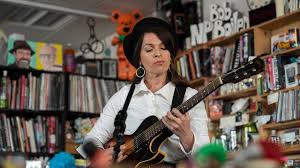
SOUNDTRACKKING PRINCESS-Tiny Desk (Home) Concert #6 (April 8, 2020).

I’ve heard a lot of buzz around King Princess–that she’s fun and puts on a wild show.

This home Tiny Desk is not wild in any way.

“Welcome to the quarantine shed!” King Princess exclaims. She’s in jogging pants and sitting on a fluffy white chair, with two guitars, an amp and a tiny keyboard at her side. “I’m in Hawaii and brought as much gear in the carry-on of my plane ride as possible.”

She calls herself KP, which I rather like.  These songs are really quiet. She plays “the three songs from her late 2019 album, Cheap Queen, in ways I never would have imagined.”

“Isabel’s Moment” is played on a quiet keyboard.  She says it’s an homage to people experiencing quarantine thirstiness–texting their exes and ex friends and everyone.  It’s my least favorite of the three because I don’t like the keyboard sound she chose.  But her voice is excellent.

“Prophet” is played on one of her guitars (with lots of echo and slightly out of tune she admits).  The chorus turns surprisingly bright. She says it’s about the entertainment business and it is now more relevant than ever.  We’re all out of jobs right now.

She says this is back to making music in my room, trying to find that creative spark we had as children, when I could sit in my room and make things for hours.

“Homegirl” is also on that guitar and sounds really pretty, too.  I really like her singing voice quite a lot. It holds up well in this quiet setting–so if Bob says that it’s very different from what he’s used to, I’m very curious about what her live show is like.

But I really don’t like her speaking voice, I must admit.

[READ: February 2020] Burning Bridges to Light the Way

Evidently I asked S. for a book by David Thorne a few years ago.  I don’t know what book it was, I don’t recognize any of his titles and I didn’t even recognize his name when I saw this book.  She didn’t get me the book then, but she did get me one this past Christmas.

Turns out that David Thorne is an Australian smart ass.

As the foreword from Peter Goers puts it, this book is full of “barely coherent rants about friends, family, and colleagues.”  He continues,

David isn’t a dreadful human being all the time.  He has to sleep and I know he cares a lot about squirrels.  There are parts of this book that even hint at a certain degree of empathy for other human beings.  Some human beings, not all of them, maybe three.

I’m not sure who Peter Goers is, but his introduction is very funny.  Don’t skip it:

I once asked David if he’s autistic and he replied, “It’s pronounced artistic and no, not really, I can draw a cat though.”  I assume he was joking but it’s hard to tell with David.

In the first essay, David says that every year when he releases a new book friends and associates say that they are going to sue him if he says anything derogatory about them in his book.  But he’s not worried. Nobody he knows has enough money to hire a lawyer. (more…)

Read Full Post »

SOUNDTRACK: SOCCER MOMMY-Tiny Desk (Home) Concert #1 (March 21, 2020).

Since the quarantine began, many many many musicians have been playing shows at home.  There are so many online home recordings that it is literally impossible to keep up with them.  I have watched a few, but not many.  I’m not sure how many of the online shows are going to be available for future watching, but at least these are saved for posterity.

The Tiny Desk is working from home for the foreseeable future. Introducing NPR Music’s Tiny Desk (Home) Concerts, bringing you performances from across the country and the world. It’s the same spirit — stripped-down sets, an intimate setting — just a different space.

On Monday March 30, Sophie Allison, aka Soccer Mommy, was to perform a long awaited Tiny Desk concert at my desk. Now the world has changed, and with the coronavirus keeping us at a distance, we’re taking a break from filming Tiny Desks at the office for a while.

Sophie wanted to share her music and her thoughts with you. So we’re kicking off our Tiny Desk (Home) Concerts series with Soccer Mommy from her home in Nashville.

Soccer Mommy was supposed to play a show in Philly on March 31. I had a choice between this show and a show from Vagabon.  I wasn’t sure which one I wanted to go to.  Well, now I get this home concert instead.

This Home Concert (as most will be) is Sophie and her acoustic guitar.  Since I don’t really know (most of) the originals, I can’t compare them.

All three songs have catchy melodies.  It’s cool watching her hands up close to see he playing modifications to the chords in “Bloodstream” so it’s not as simple a melody as it seems.

Her voice is soft and high (although a little hard to hear in this mix).

“Circle the Drain” has been getting some airplay and I rather like it.  It reminds me of a Lemonheads song in style.  This acoustic version is nice, but I prefer the studio version (that extra guitar line is a nice touch).  She says it’s about being depressed and staying inside all day.  “I’m sure some of you can relate to that right now.”

Before the final song, “Royal Screw Up” she asks if anyone can guess what tuning she is going from and into.  My guess is that she is going into standard E tuning, although I’m not sure from what.

Most of her melodies remind me of the singers I liked in the 90s, and I think with a slightly better production I would have really enjoyed this set.  I might have to check out her album a little more closely.

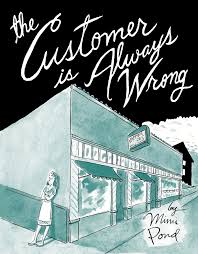
[READ: April 1, 2020] The Customer is Always Wrong

I enjoyed, Mimi Pond’s first memoir(ish) book, Over Easy, but I grew tired of it by the end.  It was an look at late 1970s San Francisco and all of the low-level drug dealers and users who worked and ate at the restaurant where Madge was a waitress.

And yet, I came away from it with enough good vibes that I was interested in reading this second volume.  And this second volume had the heart and soul that I felt the first one lacked.

The story begins with some of Mimi’s past boyfriends (good boys whom her mother loved).  Then it moved on to bad boys who treated her like crap.  Finally, she meets Bryan, a nurse who treats her kindly–and the sex is amazing.

But the shine starts to wear off and a turd is slowly revealed–the way he breaks up and gets back together (he loves the drama), the way he watches the World Series at her house even though she doesn’t care about baseball (or own a TV–he brought his own).  Oh, and the way she finds out later that he lied about nearly everything.

The drug dealer characters from the first book are still there of course.  The most prominent one is Camille, a “straight looking” and pretty young woman who has hooked up with Neville, a real dirtbag (but one who tells great stories).  She has big dreams–they will sell a ton of coke, make a ton of money and go to Paris.  Of course that never happens.

And then there’s Lazlo.  Lazlo is the real main character of the story.  Even though it is Madge’s story, it all more or less revolves around Lazlo.  Lazlo runs the diner where Madge works and he is always around–wearing his cool hat, telling great stories (he is a poet).  It’s hard to remember that he is married.  Hard for him to remember too, apparently. (more…)

Read Full Post »

SOUNDTRACK: JESCA HOOP-Tiny Desk Concert #965 (April 3, 2020).

I really liked the Tiny Desk Concert that features Sam Beam and Jesca Hoop.  So much so that I bought the CD and it made me want to see both of them live.

Jesca Hoop last appeared at the Tiny Desk as a duet with Sam Beam (Iron & Wine) in the spring of 2016. They sang songs from their collaborative record Love Letters For Fire.

This time it is just Jesca and I have realized that I liked her more as an accompanist rather than a lead singer.  Actually, that’s not exactly right.  Her voice is lovely.  I just find the songs a little meandering.

This time around, Jesca Hoop came to the Tiny Desk with just her guitars, her lovely voice, and brilliant poetic songs. She has a magical way with words, and she opened her set with “Pegasi,” a beautiful song about the wild ride that is love, from her 2017 album Memories Are Now.

“Pegasi” is nice to watch her play the fairly complex guitar melodies–she uses all of the neck.  The utterly amazing thing about “Pegasi” though comes at the end of the song when she sings an amazing note (high and long) that represents a dying star.

She wanted to sing it today so it could live on Tiny Desk.

The two songs that follow are from her latest album, Stonechild, the album that captured my heart in 2019, and the reason I reached out to invite her to perform at my desk.

“All Time Low” is a song, she says, for the “existential underdog.”  She switches guitars (to an electric) and once again, most of the melody takes place on the high notes of the guitar.  Her melodies are fascinating.  And the lyrics are interesting too:

“Michael on the outside, always looking in
A dog in the fight but his dog never wins
If he works that much harder, his ship might come in
He gives it the old heave-ho.”

After the song, she says, I’m going to tune my guitar, but I’m not going to talk so it doesn’t take as long. If you were at my show, I’d be talking the whole time and it would take a long time.

And for her final tune, she plays “Shoulder Charge.” It’s a song that features a word that Jesca stumbled upon online: “sonder,” which you won’t find in the dictionary. She tells the NPR crowd “sonder” is the realization “that every person that you come across is living a life as rich and complex as your own.” And that realization takes you out of the center of things, something that is at the heart of “Shoulder Charge” and quite a potent moment in this deeply reflective and personal Tiny Desk concert.

This word, sonder, came to my attention back in 2016 when Kishi Bashi first discovered it and named his album Sonderlust for it.

The song is like the others, slow and quite with a pretty melody that doesn’t really go anywhere.

I found that after three listens, I started to enjoy the songs more, so maybe she just writes songs that you need to hear a few times to really appreciate.

[READ: March 2020] Ducks, Newburyport

I heard about this book because the folks on the David Foster Wallace newsgroup were discussing it.  I knew nothing about it but when I read someone describe the book like this:

1 Woman’s internal monologue.  8 Sentences. 1040 pages

I was instantly intrigued.

Then my friend Daryl said that he was really enjoying it, so I knew I had to check it out.

That one line  is technically (almost) accurate but not really accurate.

The story (well, 95% of it) is told through one woman’s stream of consciousness interior monologue.  She is a mother living in Ohio.  She has four children and she is overwhelmed by them.  Actually she is overwhelmed by a lot and she can’t stop thinking about these things.

She used to teach at a small college but felt that the job was terrible and that she was not cut out for it.  So now she bakes at home and sells her goods locally.  She specializes in tarte tatin.  This is why she spends so much time with her thoughts–she works alone at home.  Her husband travels for work.  Whether she is actually making money for the family is a valid but moot question.

So for most of the book not much happens, exactly.  We just see her mind as she thinks of all the things going on around her.  I assume she’s reading the internet (news items come and go in a flash).  She is quite funny in her assessment of the world (how much she hates trump).  While I was reading this and more and more stupid things happened in the real world, I couldn’t help but imagine her reaction to them).  She’s not a total liberal (she didn’t trust Hillary), but she is no conservative either (having lived in Massachusetts and New York).  In fact, she feels she does not fit in locally at all. (more…)

Read Full Post »

« Newer Posts - Older Posts »