Feeds:
Posts
Comments

Archive for the ‘History’ Category

SOUNDTRACK: TRIUMPH-Just a Game (1979).
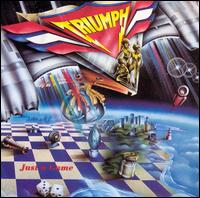
When I was a kid, my love of Rush was followed closely by my love of Triumph (I had a thing for Canadian power trios).  I’ve recently read a bunch about Triumph and was surprised to hear how acrimonious the band was.  Of course, I didn’t care about any of that back in the 80s.

This album was my favorite (even though Allied Forces was their major breakthrough).  In my gate-fold album the inner foldout was an actual board game.  How thoughtful!

It’s funny listening now, how much I liked this album back then because there is definitely some cheese here.  And I could never decide if I liked drummer Gil Moore’s songs or Rik Emmet’s songs best.  “Movin On” is a great hit but the backing vocals and “on and on” parts are kind of wimpy 70s rock–I must have blocked it out while jamming to the guitar solo.

Rik Emmet has since gone on to a successful solo career.  But on “Lay It On the Line,” the song that got me into them (thanks MTV) Rik rocks like he loves this band and this music.  The song features some serious guitar workouts and some impressive vocal acrobatics.

Perhaps, in hindsight, I like Rik’s songs better, as “Yong Enough to Cry” is pretty cheesy (it was fun to sing along to when I was 13 though–even if I never understood Gil’s pain, man).  But all of that was forgiven for the majesty of “American Girls.”  Sure, it’s also a cheesy song, but man it rocks.  As a young kid, I loved hearing the national anthem in the middle of the song.  And that solo is non-stop.

“Just a Game” is a powerhouse of a song although it’s a little long for what it is.  But then there’s the amazing “Fantasy Serenade” just over 90 second of beautiful classical guitar (a direction he’s go in much more after leaving Triumph).  It’s wonderful as a solo and it works as an amazing intro to the majestic “Hold On” (a song about music that doesn’t suck).  Although admittedly, the single version is better without the weird disco instrumental in the middle that really kind of puts a kibosh on the flow of the song.

The album ends with the strange (and quite long for what is it) “Suitcase Blues,” a 3 minute slow blues about touring.  But hey it showcases diversity, eh?

Even though many people compare Triumph to Rush, I think the more likely comparison is actually Kiss.  “American Girls” has a real Kiss vibe towards the end, and the opening chords of “Movin’ On” have a real Kiss feel.  Regardless, they played great metal/rock/prog and I’ll always love them for it.

[READ: February 12, 2012] Ready Player One

Do you like Rush? Do you like Monty Python?  Do you like the 80s?  (not those 80s, but cool 80s like Blade Runner, coin op video games, Family Ties, Square Pegs?)  Then you absolutely must read this book.  Especially if you like Rush, because how often does Rush form a plot point in a book?

Sarah was reading this book and she insisted that I read it (she has really been passing on the good suggestions lately!).  And when I heard her playing Rush a few days after reading this book (and she doesn’t like Rush), I knew I had to read it.

But what is it?  Well, It is basically the story of an online quest to find a secret egg and win a massive fortune.  The egg was placed in a virtual world by its creator, James Halliday.  Halliday was “a nerd uber-deity on the level of Gygax, Garriott, and Gates.”  He created amazing video games and ultimately the most amazing virtual reality space ever: OASIS.  (For Atari geeks, his inspiration for getting into creating video games in the first place was the Atari game Adventure).  Halliday was obsessed with the 19080s (the decade he grew up in), with technology and with geeky movies.  The only way to find this egg in OASIS is to know a thing or two (or 1,000,000) about the man who created it and the decade he loved.

If you were hooked by the first paragraph, you’ve already put this book on hold.  If you were hooked by the third paragraph, you know you have to put this book on hold.  If you’re not convinced yet let me back up.

It is the year 2044.  The earth is in a hellish state–there’s no fuel, there’s no jobs, people live in trailers that are stacked on top of each other.  Life sucks.  Except for OASIS.  OASIS is the virtual world created by Halliday.  At this stage in the world, OASIS is where most people go to school (cheaper and easier to do virtual teaching) and where many people spend most of their lives.  It’s depressing and horrible (and I actually didn’t enjoy the opening chapters all that much because it was really horrible and at a times a bit more caustic than I was expecting–but that changes quite a lot).

So Halliday invented OASIS as an idealized pace.  It was originally a multi-player game but soon became a new place to live, a kind of Eden.  It was free to join and you didn’t have to pay to play.  Although you needed credits to travel (or to build your own buildings or planets or whatnot), you could stay on the main world (which looks a whole hell of a lot nicer than the real world) and just hang out for free.  You can earn points through various achievements which would let you travel (or you could always hitch a ride with a friend) around the worlds.

Anyhow, when Halliday died, as his last will, he created a contest in OASIS.  Anyone who could find the three keys and unlock the three gates would win his entire fortune (billions of dollars) and total control of OASIS.

The protagonist (Wade in the real world, Perzival in the OASIS world) is telling his tale because he was the first avatar to find the first key to Halliday’s Hunt (it took over five years to find the first key).  If you played D&D, this section will make you smile.

When Perzival found the key he was suddenly famous because everyone on OASIS knew it was found.  Prior to this moment, the “leader board” which previously listed only Halliday, now suddenly lit up with Perzival’s name.  (Good thing OASIS avatars are anonymous, right?) (more…)

Read Full Post »

SOUNDTRACK: MITCHMATIC-“Why Don’t You Know” (2012).

This song reminds me in spirit of the old Fresh Prince songs–buoyant and fun, funny and a little silly.  And although it doesn’t sample I Dream of Jeannie, the mood is the same.

The track opens with a great sound of an old rotary phone.  When the music comes it, it’s completely loungey: strings and easy music propel this song to the heights of Cool.

The delivery style is gentle but fast and the lyrics are funny “I’m gonna tell you some reasons that you wanna date me.”

Mitchmatic is a Canadian rapper and his record is coming out soon on Old Ugly records.  Listen to the track at NPR and explore his stuff at his bandcamp site.

Darling I would like you so much more if you loved me back…

[READ: December 31, 2011 and January 24, 2012] “Wolves at the Door” and “Comment”

This is a blog post from Barry that deals with politics.  Although it was written in 2004 it is completely relevant to the current state of affairs in American politics.  I suppose it was ever thus, but it sure seems worse now.

He opens, “Stop me if I ‘m getting too cynical, but I think elections are won by the guy with the stupidest policies.”  He explains that it’s not because people are dumb; rather, it’s because when you are marketing to an entire country, “your best strategy is to scramble straight to the bottom of the barrel and start groping around in the muck there for the lowest common denominator.”  This is very true.

But I think the perfect summary for politics is (as Barry writes): “smart is complicated, but dumb is catchy.” (more…)

Read Full Post »

SOUNDTRACK: tUnE-yArDs-Tiny Desk Concert #179 (December 1, 2011).

tUnE-yArDs perform three songs in this Tiny Desk concert.  Merrill Garbus doesn’t chat a lot between songs, but she’s clearly having a good time (witness them all jumping at the end of “You, Yes You” and how much she smiles at the end of the set.  This is a wonderful opportunity to see and hear her live sampling technique in a small setting (with close up cameras!).

Her voice sounds great–she pulls off all of those voices that she conjures on the record.  And her ability to sample herself and make it work is wonderful to witness (I never imagined that some of those “sirens” and “keyboards” are actually her voice).

The live band is also really hot.  The bassist really hold everything together and the horns sound great–duplicating the sound of the record with just enough flare to keep it original.

And to think she’s making all of  that guitar noise with a ukulele!  It’s pretty groovy.

Watch it here.

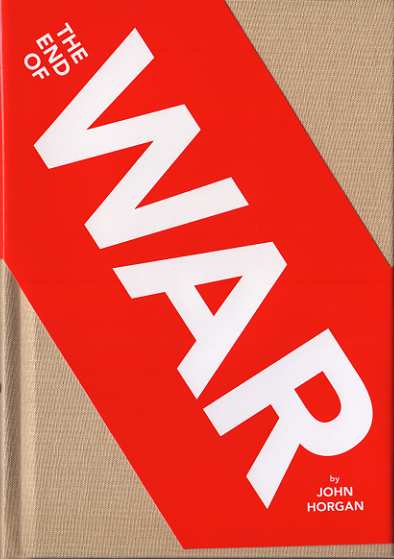
[READ: January 21, 2012] The End of War

This is a non-fiction book in which Horgan believes that in the not too distant future (his lifetime I believe), we will see the end of war.  Not the end of violence, nor anger nor aggression–he’s not crazy–but military campaigns against another country could be ended if we reversed our fatalism about war’s inevitability.

Horgan is a writer for Scientific American and in this book he uses the scientific method to show that ending war is utterly possible.  Now, although Horgan is himself kind of a pacifist (he’s not entirely one, this interview explains), his family is not–his father and grandfather are both veterans and his son is looking to enlist in the army.  Nevertheless, Horgan feels that war is not a viable way to solve problems and that the cost of human life is never worth it.

His research shows him that war should be thought of as a solvable, scientific problem—like curing cancer.  The difference is that cancer is outside of our control, while war is not.  But like cancer, war can infect any society–there is no “reason” for it, but it is like a virus–it infects all cultures, even peaceful ones.  If one culture is aggressive the peaceful neighbors need to prepare for war or move away.

Horgan anticipates skepticism, indeed, many of the sources he quotes are skeptics, and he deals with all of their arguments accordingly.  He looks at those who say that war is genetically part of humanity (as many people believe) or that the best way to prepare for peace is to prepare for war (as just about everyone seems to believe).  He looks at those who say that scarcity causes war (not necessarily true), to those who say that as long as there are guns there will be war (he disagrees).  He has a reasonable, believable argument for all of these doubts.  He even shows that the whole “alpha male, XXY chromosome” argument has been disproven and while men are more prone to violence, they are not more prone to wage war.

He also shows scientific evidence that war has not been around as long as people (or even apes) have existed.  Indeed, the first evidence for “war” (as opposed to violence) is 10,000 years ago (not much in humanity’s timeline).

He culls data from previous wars to show that the causes of wars can never be narrowed down to one thing.  And yet, rather than seeing this as a negative–that so many things cause war, he sees it as a positive–that causes of war are not monolithic and impervious to breakdown.

I was skeptical of this book when I started reading it.  I was willing to accept the various scientific answers that he showed (that war is not innate, for example) but my skepticism came because of what I guess you call the military industrial complex–that our military budget is huge and is not going to go down any time soon.  Just see how much protest is garnered by the miniscule amount that President Obama wants to reduce it.  [Everybody knows this truth but it’s worth seeing in print–our military budget is more than almost every other country combined.  China, who spends the next largest amount on their military has a budget that is 1/6 the size of ours.  That is shocking and depressing and a horrific waste of money].

But his point is that like with so many other things that we have outlawed or abolished over the years: slavery, apartheid, monarchy (as opposed to democracy), acceptance of torture; if we have enough consensus we can also abolish war.  He gives examples that it’s actually not as hard as we might think.  Germany and Japan become pacifist virtually overnight (it was forced on them, but they have taken to it with no problem) and even better, Sweden and Switzerland are pacifist voluntarily.

He also points out that war is already on the wane–although the United States was in two wars very recently, the warlike nature of the world is much less than it was even as recently as the first half of the 20th century.  The number of casualties from war has dropped dramatically compared to World War I.  We simply need to find ways to solve crises that do not involve killing people.

All of the chapters were interesting in this book (the book is more or less set up to deal with an issue per chapter).  Some of the chapters were a little long but at 186 pages (plus a bunch of citation pages) this book is short overall.  I appreciate all of his scientific rigor and his ability to show the arguments and then knock them down.

For me, the most interesting and satisfying chapter was the one that found that preparing for war, despite claims that it is necessary, actually does not keep a people safe. That the allocation of resources towards war removes resources from things that actually make people’s lives  better: art, culture, medicine, health.  Preparing for war doesn’t keep us safe, it actually harms us.

Similarly, he shows that competition for resources is not necessarily a cause for war.  To the contrary they have found that in some cultures scarcity brings out altruism.

In short, he says that the only thing that prevents us from abolishing wars is our fatalism that war is inevitable.  The more fatalistic we are about war the more we accept hawkish ideas which perpetuates more war. Once we stop believing that and we try to work towards the end, he believes that we war can end very quickly.

Horgan doesn’t really calm my fears about the military industrial complex–but who knows with enough popular opinion, maybe voters can change things.  It’s a wonderful thought.  And here’s hoping that this post can spread the good word.

And here’s an interview with Horgan that addresses a lot of these questions.

Read Full Post »

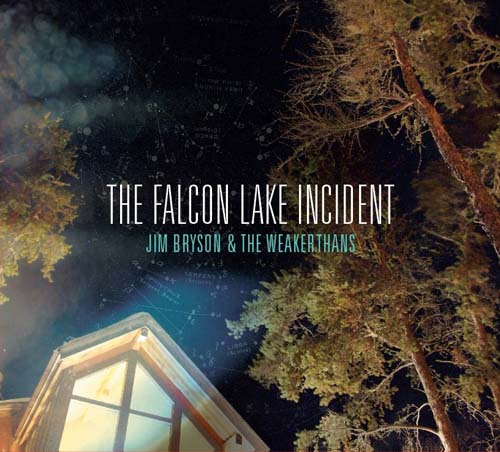
SOUNDTRACK: JIM BRYSON & THE WEAKERTHANS-The Falcon Lake Incident (2010).

I don’t know who Jim Bryson is (he’s a Canadian folk singer, duh), but I do know The Weakerthans.  And since this CD is always listed in The Weakerthans’ discography, I thought it was worth investigating.

All of the songs have a Weakerthans feel, there is no question (I mean, they play all the music).  And while I like the album quite a lot, I feel like without John K. Samson’s voice, the disc is missing something.  Nevertheless, the album is a wonderful folky album, a great mix of upbeat and slow tracks.

“Metal Girls” is a wonderful upbeat folk rocker.  It’s incredibly catchy.  “Fell Off the Dock” is a much slower, sadder song with the final repeated line, “everybody loved it here, but you.”  “Wild Folk” ups the tempo again.  “Constellation” is another slow song, this one with beautiful harmonies.

“Freeways in the Frontyard” has even better harmonies, from Jill Barber–a kind of minor key harmony that works very well.  “Up All Night” is another more uptempo track that could easily be an adult alternative hit.  “Kissing Cousins” is a slight track that seems like it should be funny but isn’t really.  “Decidedly” is one of my favorite tracks on the disc.  It’s boppy with a fun chorus: “Why would you ever grow leaves just to watch ’em fall off again.”

The first and last tracks feel more like filler or intro/outro than real songs.  But that’s okay.  It’s a tidy little album of very pretty songs.  And the tempo changes keep everything interesting for half an hour or so.  You can’t complain about that.

And in case you were wondering, the Falcon Lake Incident is a reported UFO encounter near Falcon Lake, Manitoba, Canada claimed to have occurred on May 20, 1967 (thanks Wikipedia).

[READ: January 19, 2012] “Happy New Year”

Of course, I wish I had read this article earlier in the month, but then I only found out about it a couple of days ago.

This is an article (I assume from the editor of The Lotus Magazine) which bemoans the loss of the New Year’s Day tradition of going to (pretty much) anyone’s house for meals and snacks and drinks and good times.

The article states that it may have been about 35 years ago (circa the 1880s) that the Dutch custom was abandoned.  Before then, people in New York City would throw open their doors and it was:

a breach of etiquette to omit any acquaintance in these annual calls, when old friendships were renewed and family differences amicably settled.  A hearty welcome was extended even to strangers of presentable appearance.

Indeed, it seems that certain houses were known for:

particular forms of entertainment.  At one was eggnog; at another, rum punch; at this one, pickled oysters; at that, boned turkey, or marvelous chocolate, or perfect Mocha coffee, or, for the connoisseur a drop of old madeira, as soft as rainwater and as delicate in flavor as the texture of the glass from which it was sipped. (more…)

Read Full Post »

SOUNDTRACK: WILD FLAG-Live at the Black Cat, October 20, 2011 (2011).

It’s interesting to compare this show by Wild Flag with their SXSW show.  This set is longer, but they retain the same raw energy and intensity.  It also sounds as though the tour has been rough on Carrie’s voice, which sounds a bit strained and hoarse (even when she talks!).

They play most of their debut album, but they also throw in a couple of new songs and even a few covers.  Perhaps the most fascinating part is the 15 minute (!) version of “Racehorse.”  There’s a lengthy noodling section as well as a cool part where Carrie goes a little crazy asking about money.

Janet Weiss is absolutely amazing here too.  And the keyboards, definitely complement everything well, but they are always the most notable flubs, and there’s the same one as in the SXSW show (not as bad, but noticeable).

Without a doubt the most interesting thing is the hearing that Mary Timony gives guitar lessons in Washington DC.  She lives there and evidently earns extra cash by doing guitar lessons.  Wow.  How cool would that be?

Check out the show here.

[READ: January 15, 2012] The Influencing Machine

Brooke Gladstone is one of two reporters who works on NPR’s On the MediaOn the Media is an awesome show which dissects things that happen in the world and examines the way the media portrays the events.  They work pretty hard to see who is reporting bias, who is exposing bias and how things are getting out to the average media consumer.  It’s worth anyone’s time to read (it doesn’t take very long).  And it’s also fun and enjoyable.  As anyone who has heard the ending of On the Media: “and edited [dramatic pause] by Brooke” knows, there’s always a smirking grin attached to the program.

When I heard that this book came out I was pretty excited to read it.  And then I promptly forgot all about it.  Lucky for me, my wife can take a hint, and she got it for me for Christmas.

The first surprise of the book is that it is written as a graphic novel–illustrations by Josh Neufeld (who has drawn for Harvey Pekar’s American Splendor).  The funny thing about the illustrations is that I have no idea what Brooke Gladstone looks like (which I rather prefer about my NPR announcers), but I really like the cartoony style of her avatar (which reminds me of Elaine from Seinfeld and which inspired me to draw a kind of similar version on my drawing site.

On to the book.

This book works as a primer for understanding media ownership, media consolidation and media power.  The opening few chapters are going to be nothing new for anyone who has read Chomsky or Vidal on the media.  But since most people haven’t, it’s a wonderful way into some of these thorny issues of who tells us what and why. (more…)

Read Full Post »

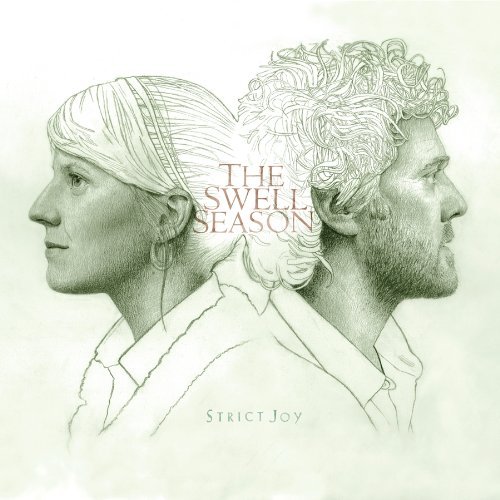
SOUNDTRACK: THE SWELL SEASON-Strict Joy (2009).

I bought this disc for Sarah after it came out.  I didn’t think that I would enjoy it that much because while I loved the movie Once, I wasn’t sure if I needed more from Glen and Marketa.  But then I found a whole slew of free concerts from NPR and I became hooked on the band.

The disc opens with “Low Rising” (what I think of as the “Van Morrison” song).  It gets better with each listen.  It’s a slow ballad which is followed by “Feeling the Pull,” a more up-tempo song that really highlights Marketa’s beautiful harmonies.  “In These Arms” is a gorgeous song.  The verses are downbeat and somber “if you stay…with that asshole…it will only lead to harm” but again the harmonies are gorgeous.  “The Rain” is a more rocking tune (within reason, of course).  It has an interesting middle section that quiets down, but it’s a solid folk rocking song.

“Fantasy Man” is Marketa’s first lead vocal song on the disc.  I like her voice but sometimes I find her lead songs to be a bit too wispy, too quiet.  I like this song, but it feels long (and at 5 minutes, it is).  “Paper Cup” is one of Glen’s quiet ballads.  It’s a pretty song.  “High Horses” is one that I didn’t know from the live sets, I guess it’s not too popular with the band, but I think it’s strong.  It runs a little long but that’s because it has a cool middle section that keeps building and building with more instruments and voices.  “The Verb” is another song that I didn’t know.  It has a cool intensity to it and while it doesn’t stand out as a hit, it’s certainly an enjoyable song.

“I Have Loved You Wrong” is another pretty Marketa song, but again it’s very slow and very long.  I don’t think I could buy her solo album because although her voice is lovely and her melodies are nice, they’re just so ephemeral I can’t really get into them.  “Love That Conquers” is an interesting song.  It sounds nothing like The Swell Season (must be the banjo).  It’s a nice addition to the album and should maybe have been placed a little earlier to break up the sound style a bit more.  “Back Broke” ends the disc very strongly.  Although I think the song works better live (with audience participation), the melody and tone of the song are somberly beautiful.

There are moments of this disc when it turns out to be what I feared the whole disc would be–bland folkiness. But overall this is an enjoyable album for a rainy day.  And Hansard really has an amazing voice.  However, I really like them better live.

[READ: December 26, 2011] Third Reich

I was pretty excited when I heard about this book, although I must admit I was a little concerned by the title.  Bolaño has a kind of weird Nazi fascination.  There is Nazi Literature in America and then a whole section of 2666 is given over to Nazi Germany.  He doesn’t like Nazis or anything but he writes about them a lot and it can be a little exhausting.  So it was with some relief that I learned that Third Reich is the name of a game that the main character plays.  It is a kind of historical reimagining kind of game (I guess like Risk but more specific and with more at stake).  It is set during the time of the Third Reich and the players represent various countries (or perhaps even powers).

I am giving up on explaining the game from here on because a) there’s a lot about the game in the book and b) I’m not sure if it wasn’t explained very thoroughly or if I just missed out on exactly what was happening.  During the book he talks about Hexes 65 through 68 and so on.  So I assume the map of the world is a hex grid.  But he never gives any context (or even a picture!–and this makes sense as it’s written as the diary of a well-regarded player who is not trying to teach us the game).  So while I understand the general tenets and play of the game (there’s a die (or dice) and tokens that reside on the board), the specifics are completely nebulous.  But that’s okay.  Because the game specifics don’t impact the book, but the game overall is at the heart of the book.  I think it’s neat that Bolaño invented a game (and several others games are named, but no details are given).  He is clearly very gifted at inventing people, games, things.

But as I said, the game is only a part of the book and in fact, the game details don’t enter into the book until about half way through. (more…)

Read Full Post »

I have been getting The Washington Spectator for years and years.  I was delighted with it in the beginning when the editor had the wonderful name of Ben Franklin.  I am delighted now that publisher’s name is Hamilton Fish.  But aside from these two fascinating details, I have always enjoyed the content.  It was thoroughly researched and detailed.  And the little 4 page leaflet always looked like a newspaper in design and style, and it gave it a kind of gravitas–no flashy colors or pictures.

Well, here it is, Vol 37, Issue No 21 and they have finally changed the format.  And not only that, they have created a website and have a Facebook presence!  Welcome to the 20th century!

I say that jokingly because despite these changes (which look great by the way), The Spectator has not abandoned its old school journalism practice.  21st century news is pretty much all flash and brash–style over substance–quick reporting with no concern for accuracy and very little attention brought to retractions (can anyone say “climategate” (I wish they wouldn’t call it that)).  But The Spectator is exactly the opposite, and I am delighted to say that although they are now a lot more accessible, they have not lost any of their tenacity or thoroughness.

The redesign is quite nice.  There’s an image on the front page and now there are pull quotes in red, which stand out nicely on the pale paper.  Although I always liked the pull quote box in the middle off the front page, this new format allows for a couple of different pull quotes as well as an opportunity to mix things up a bit.  (more…)

Read Full Post »

SOUNDTRACK: THE FLAMING LIPS: AUSTIN CITY LIMITS FESTIVAL 2010 (on Palladia TV 2011).

It must be tough to take a festival like Austin City Limits and truncate it into 2 hours.  It must also be tough to be a pretty much headling band like The Flaming Lips and to be playing in the middle of the day when your cool stage stuff is probably less impressive (but good for them for going all out!).

Some fun things to see during their set: the camera mounted on Wayne Coyne’s microphone (huge close-ups of his face); the guns that shoot streamers, Cliph the drummer makes the sample sound effects that you need to make during the songs, tons of back up dancers (who I believe are fans that won a contest or something), the amazing multi-instrumental skills of Steven Drozd.

This broadcast only showed two Lips songs (criminally underrepresented, but I understand).  They played “I Can be a Frog” which is a wonderful audience participation song even if it’s nowhere near their best song. 

And “She Don’t Use Jelly” which I understand as it was their hit and the crowd (and even the band) always seem into it, but that song is like twenty years old and they didn’t play any other bands’ old singles.   I won’t complain to hear that song, but there are just so many good ones to choose from that it seems silly to play that one.

[READ: November 6, 2011] “The Mermaid of Legend and Art”

A while back I read a few old articles that I got from JSTOR, the online archiving resource.  This month, I received some links to three new old articles that are available on JSTOR.  So, since it’s the holiday weekend, I thought it would be fun to mention them now.

I wrote the review of this article before I realized that I had only read part 3 of 3.  There were some clues (like the start mentioning “the first few lines of my opening chapter”), but since the link I was given went here, I assumed that the other chapters were not available (until I saw the tiny footnote that said this was continued from pg 172).

So, I’m including my original post at the bottom for history’s sake, but I’m going to write the revised review here.

I don’t quite understand why this article was broken up into three sections.  This is especially egregious because of the figures included in the articles.  They do not really correspond to the sections where they are written about.  So, for instance he mentions Figure 13 on the last page of the article when we are already up to Figure 36 (and Figure 13 is fifty-some pages away).  For most of the other figures, he always seems to be a few pages behind, as if they needed to put the pictures throughout the article rather than where they are mentioned–it was bad enough having it in three sections (in my print puts) but imagine having to flip back thirty some pages to see what the hell he’s talking about!  Of course, this was 1880, they had more free time.

So, anyhow, the beginning of this article talks about the history of the mermaid in folk tales and the Bible.  Evidently Brahma visited Menu (Aka Noah) in the guise of a fish–which is how he was able to build the ark.  There is also a lengthy discussion about the importance of fish in the Old Testament.  In addition to the whole IXTHUS thing, fish were a very useful form of currency.  So it is nor surprise that they used representations of fish and sea creatures in ancient Rome and Greece. (more…)

Read Full Post »

SOUNDTRACK: AUSTIN CITY LIMITS FESTIVAL 2010 (on Palladia TV 2011).

Recently Palladia broadcast some highlights from the Austin City Limits Festival in 2010.  The bands they showed were Phish, The Flaming Lips, Vampire Weekend, Muse, LCD Soundsystem, Sonic Youth, Spoon and Slightly Stoopid.

There were so many good bands at this festival (why is Richard Thompson in such small print?) that I won’t really complain about the inclusion of Slightly Stoopid and LCD Soundsystem on this best of (but they could have included Band of Horses, Yeasayer, Broken Bells, Gogol Bordello (the list goes on!).  (I’d never heard of Slightly Stoopid and although I like LCD Soundsystem, live they were less than stellar).  Although I am glad they didn’t include the Eagles, thank you very much.

I’m trying to get actual set lists of these airings (they mentioned the song titles during the show but I didn’t write them down).

This was a 2-hour broadcast and it was really good.  If they re-air the episode, it’s worth watching.  The quality of the broadcast is excellent (even if the HD format does take up way too much space on a TiVo).

[READ: November 6, 2011] “Beer Cans: A Guide for the Archaeologist”

A while back I read a few old articles that I got from JSTOR, the online archiving resource.  This month, I received some links to three new old articles that are available on JSTOR.  So, since it’s the holiday weekend, I thought it would be fun to mention them now.

And to start of the holidays, I present you with this–a loving history of the beer can (for archaeologists).

This is a fairly fascinating look at the development of the beer can from 1935 to the present.  The selling point of the article is that archeologists could use beer cans to date the timeframe of an excavation.  I agree with this; however, since they only date back to 1935, I’m not entirely convinced of its long-term usefulness.

The problem with the article is that page two shows a chronological timeline.  This in itself is not a problem (although it is odd that it goes from present to 1935 instead of chronologically forward); the problem is that the article itself more or less sates exactly the same thing as the timeline.  For although this article is 20 pages long, there are tons of photos and very little in the way of text beyond what was in that (very thorough) time line.

Nevertheless, you can see the morphing of beer cans from ones that you had to pop open with a can opener to ones that finally had self opening cans.  See the switch from tin to aluminum, and even learn why the tops of cans are a little narrower than the sides (called a neck-in chime, it evidently saves a lot of money). (more…)

Read Full Post »

SOUNDTRACK: ULVER-Bergtatt (1994).

Ulver has some music in the soundtrack to Until the Light Takes Us and my friend Lar pointed me to a location where you could download a bunch of their music (this was before Spotify of course). 

So I grabbed a few of their albums expecting to hear some brutal death metal.  And I kind of did, but I also heard classical guitar, flute solos and chanting.   So this album’s full title is Bergtatt – Et eeventyr i 5 capitler (“Taken into the Mountain – An Adventure in 5 Chapters”) and it comes in at a whopping 35 minutes–not bad for an epic.

The opening track (“I Troldskog faren vild” (“Lost in the Forest of Trolls”)) is fascinating–a kind of chanting vocals over a quietly-mixed-in-the-background black metal.  The music is so quiet (and yet clearly black metal) that it almost comes across as ambient noise, especially over the multilayered chanting (I have no idea what language they are singing in).  It ends with a pretty acoustic guitar passage that segues into a very traditional sounding heavy metal section–with a catchy solo that takes us to the end.

“Soelen gaaer bag Aase need” (“The Sun Sets Behind Hills”) opens with, of course, a flute solo.  It’s a minute long and quite melancholy before blasting into the fastest of heavy black metal complete with growling vocals and nonstop pummeling.  But after a minute of that it’s back to the layered chanting like in the first song.  The song ends with a conflation of the two–the chanting metal with the growling black metal underneath.  It’s quite a sound.

Track three “Graablick blev hun vaer” (“Graablick Watches Her Closely”)opens with a lengthy acoustic guitar intro–not complicated, but quite pretty and unlike the poor recording quality of the metal, it seems to be recorded with high quality equipment.  After about 45 seconds that gives way to more black metal.  In a strange twist, the black metal section just fades out, replaced by more acoustic guitar and what seems like the end of the song.  But instead, there is a strange quiet section–not music, but sounds–like someone walking around in the cold forest with crunchy noises and little else.  For almost two minutes.  Until the black metal comes back with a vengeance.

Slow guitar with slow chanting opens track 4 “Een Stemme locker” (“A Voice Beckons”) (the shortest at only 4 minutes).  And the amazing thing is that it doesn’t change into something else.  It is a nice folk song.

The final song “Bergtatt – Ind i Fjeldkamrene” (“Bergtatt – Into the Mountain Chambers”) has a blistering opening followed by some of the most intricate acoustic guitars on the record.  It morphs into a very urgent-sounding black metal section which lasts about 5 minutes.   But just to keep us on our toes, the song (and the disc) end with more classic acoustic guitar.

There is a story here (allmusic says it is a Norse legend about maidens being abducted by denizens of the underworld) and that might help explain the music madness.  But as a musical composition it works quite well.  The chanting over the black metal is really effective and the acoustic instruments bring a nice sonic change from the pounding metal. 

This is not for everyone obviously, but the diversity makes this an interesting introduction into the black metal scene.  Baby steps. 

[READ: November 4, 2011] “Apocalypse”

This is the final non-fiction essay of Junot Díaz that I could find online.  The other one comes from GQ and is called “Summer Love”, but there’s no access to it online. 

In this essay, Díaz looks at the impact of the earthquake that devastated Haiti now that it has been over a year.  Díaz was born in the Dominican Republic which has a long and very brutal history with the people of Haiti–they share a land mass after all.  But rather than looking only at Haiti and how it was devastated, Díaz takes this as an opportunity to see what the earthquake reveals about our country and the state of the world.

The essay is broken down into eight parts.  The first revisits what happened.  The second discusses the meanings of apocalypse, which sets up the “theme” of this essay.  The First: the actual end of the world (which for the thousands of people who died, the earthquake was); Second: the catastrophes that resemble the end of the world (given the destruction of Haiti and the devastation that still lingers, this is certainly applicable); Third: a disruptive event that provokes revelation.

Díaz is going to explore this third option to see what this earthquake reveals. 

What Díaz uncovers is that the earthquake was not so much a natural disaster as a social disaster–a disaster of our creating.  The tsunami that hit Asia in 2004 was a social disaster because the coral reefs that might have protected the coasts were decimated to encourage shipping.  Hurricane Katrina was also a social disaster–years of neglect, the Bush administration’s selling of the wetlands to developers and the decimation of the New Orleans Corp of Engineers budget by 80 percent all contributed to a situation where Katrina could be so devastating.

Then he talks looks at the history of Haiti.  I had known some of this story, but not as much as he provides here–the constant abuse of the citizens, the constant abuse of their finances (both from simple theft and from French and American planning that changed their economy).  There’s also the story of “Papa Doc” Duvalier.  Basically Haiti was a disaster waiting to happen. 

Díaz goes into great detail about the global economy and how it impacted the poor in Haiti and he shows that it doesn’t take a lot of extrapolation to see it reflected in the rest of the world as well.  With the constant rise in standards for the wealthy and the constant abuse that the poor take, it’s not hard to see that Haiti could easily happen here.  If not in our lifetime, then certainly in our childrens’.

But Díaz has hope.  (more…)

Read Full Post »

« Newer Posts - Older Posts »