Feeds:
Posts
Comments

Archive for the ‘Greed’ Category

SOUNDTRACK: A HOUSE-Zop (1991).

This is an EP that came out just after I Am the Greatest.  Released only in the UK, I found it used at Amoeba Records (I must have been on an A House binge at the time).

The EP has 6 tracks.  The opener sounds like a slightly remixed version of “You’re Too Young.”  And “Take It Easy on Me” also sounds remixed (the wah wah seems downplayed somewhat, although the song is still strong).

The other tracks are good songs from this experimental period of A House.

But for me the highlight is “When I Last Saw You,” the 5 minute version of “When I First Saw You” from Greatest.  I’d always liked the album versions’ fascinating concision and almost a capella feel.  This version tacks on a proper song, and it changes the song in wonderful ways.  I will always enjoy that short version, but this EP version is really great.

What’s interesting is that there’s virtually no record of this disc on the web.  Even though the A House homepage is known as ZOP.  The site, sadly, has not been updated for two years.  Although it does answer the question of what Dave Couse has been up to since the late 1990s.

[READ: August 22, 2010] Bloom County: Vol. 2: 1982-1984

This volume of the collection covers a lot of the comics that I know very well.  There are a number of strips that I drew (not traced) and hung in my locker in high school (I wasn’t about to cut up Loose Tales, was ?).  It also covers what I think of as my first era of social and political awareness.

I know I wasn’t totally aware of what was going on, but, via punk music mostly, I became aware of criticisms of Reagan.  And to a lesser degree, so does Bloom County.  I’m actually surprised at how apolitical it seems in retrospect.  My recollection was that it was a massively political strip.   And yes, there are a lot of political references, but for the most part it’s sort of political pop culture jokes.  Reagan gets teased a bit (although again less than you might expect), but it’s not the raging left-wingedness that I fondly recall. (That said, the strip is imbued with leftie political ideas, but they’re sort of mellow compared to now).

Rather, the political jokes are aimed at politicians as a class.  And there are commentaries about political events (couched in terms of local politicians, or, more often, in terms of Bloom County’s nonsensical “scandals” that are based on what really happened (although often the real scandals seem as absurd as the Bloom County ones). (more…)

Read Full Post »

I’m very late to this show, I know.  But then I have an excuse: I don’t like watching TV/movies/etc on my computer.  So, even when I watched the awesome Dr Horrible, and the commentary  told me all about Felicia Day’s online show, I didn’t investigate.

It took our friend Megan telling us that we could Instant Watch it on TiVo before we decided to check it out.   And the only reason I’m glad it took so long to watch is because we were able to watch all three seasons back to back (to back). (more…)

Read Full Post »

SOUNDTRACK: FUGAZI-13 Songs (1990).

I was so blown away by that first Fugazi disc that I immediately ran out and got this collection of their first two EPs.

The strange thing to me is that even though I enjoy the disc, nothing on it really stands out as all that memorable.  I feel like Repeater was such a strong release that these earlier tracks pale somewhat.

I’ve listened to this disc a number of times over the last few days and nothing really stands up and grabs me like Repeater still does.

I wound up buying two more Fugazi discs after this, but I’m pretty sure the reason I stopped buying their music was from this same feeling: the songs were all good, rocking, indie music, but there was nothing terribly memorable about them.

[READ: April 15, 2010] Stephen Fry in America

I first heard about this book when Stephen Fry appeared on The Late Late Show.  This book was very casually plugged as Fry’s attempt to visit every State in the U.S.  It turns out that this book is the companion piece to a six part BBC TV series of the same title (which I have not seen).  Although the TV series makes the existence of this document much more understandable.  Because although everyone wants to travel to every state in the union, the only way it would ever be accomplished in the fashion is for a TV show (even a book wouldn’t get quite this treatment if there were no TV show).

Stephen Fry was almost born in America (in New Jersey, in fact, where he believes he would have been Steve, rather than Stephen).  And he has always felt a connection to the States.  So, Stephen Fry, (in my head the quintessential Brit) brings a film crew and his classic British Big Black Taxi to see all of the States.  He begins in Maine and travels in an interesting manner, zig-zagging across the country.   He tends to visit the places/events/sites that each state is known for.  And, like any good TV show, he participates in the activities (he lobsters, he rides horses, his deals blackjack) and makes a tit of himself. (more…)

Read Full Post »

SOUNDTRACK: FUGAZI-Repeater + 3 Songs (1990).

This was Fugazi’s debut album and my first exposure to them.  They’d put out some singles before this but I missed them.  Listening to it now, it sounds great, but not revolutionary.  And yet, I remember back then, this was a pretty mind-blowing album.  It’s full of heavy chunky guitars and yet it is underscored by a punk vibe (that comes from the source: Minor Threat).

And yet, despite that pedigree, the album is also quite diverse.  There’s some pleasantly melodic sequences, including the very nice instrumental “Brendan #1.”  There’s some wildly unpreditcable chord sequences and sounds, like the opening fof “Greed.”

Of course before you forget that this is a punk band at heart you get the hardcore chanting of “Sieve-Fisted Find” which sounds like every chanted hardcore record from the 80s (a nice touch).

And yet there’s also great diversity throughout, chugging guitars in “Two Beats Off.”  “The slow, almost jazzy twists and turns of, “Shut the Door.”  And I haven’t even mentioned the two lead-off tracks: “Turnover” and “Repeater” one of the best statements of purpose to open a disc in the 90s.

I have enjoyed other Fugazi releases, but for me this is the one to get.

[READ: April 9, 2010] Keep Your Eyes Open

My brother-in-law Ben got me this book for Christmas a couple of years ago.  It’s primarily a photo collection.  Well, it IS a photo collection, but there’s also an introductory essay that I hadn’t read until the other day.

Glen Friedman has evidently been Fugazi’s official photographer for years (and this is, I gather, his second book of photos).  The book is a good mix of live and “posed” photos.  Obviously, the live ones are more dynamic (and you can really see that way the band is totally immersed in their show).  There’s got to be at least a dozen shots of someone in the band upside down, on his back or in some way not normally upright. (more…)

Read Full Post »

SOUNDTRACK: BLUE ÖYSTER CULT-compilations and live releases (1978-2010).

For a band that had basically two hits (“Don’t Fear the Reaper” and “Burnin’ for You”) and maybe a half a dozen other songs that people might have heard of, BOC has an astonishing number of “greatest hits” collections.

Starting in 1987 we got Career of Evil: The Metal Years (1987), Don’t Fear the Reaper (1989), On Flame with Rock n’ Roll (1990), Cult Classic (which is actually the band re-recording their old tracks (!)) (1994), and the two cd collection Workshop of the Telescopes (1995).  There’s even Singles Collection, (2005) which is a collection of their European singles & Bsides.

This doesn’t include any of the “budget price” collections: E.T.I. Revisited, Tattoo Vampire, Super Hits, Then and Now, The Essential, Are You Ready To Rock?, Shooting Shark, Best of, and the 2010 release: Playlist: The Very Best of).

The lesson is that you evidently won’t lose money making a BOC collection.

I don’t know that any of these collections are any better than the others.

The 2 CD one is for completists, but for the most part you’re going to get the same basic tracks on all of them.

And, although none of them have “Monsters” for the average person looking for some BOC, any disc is a good one.

Regardless of the number of hits they had, BOC was tremendous live.  And, as a result, there have also been a ton of live records released.  Initially the band (like Rush) released a live album after every three studio albums. On Your Feet or On Your Knees (1975) Some Enchanted Evening (1978) and Extraterrestrial Live (1982) were the “real releases.”

Then, in 1994 we got Live 1976 as both CD and DVD (which spares us nothing, including Eric Bloom’s lengthy harangue about the unfairness of…the speed limit).  It’s the most raw and unpolished on live sets.  2002 saw the release of A Long Day’s Night, a recording of a 2002 concert (also on DVD) which had Eric Bloom, Buck Dharma an Allan Lanier reunited.

They also have a number of might-be real live releases (fans debate the legitimacy of many of these).  Picking a concert disc is tough if only because it depends on the era you like.  ETLive is regarded as the best “real” live disc, although the reissued double disc set of Some Enchanted Evening is hard to pass up.  Likewise, the 2002 recording is a good overview of their career, and includes some of their more recent work.

If you consider live albums best of’s (which many people do) I think it’s far to say that BOC has more best of’s than original discs.  Fascinating.  Many BOC fans believe that if they buy all the best of discs, it will convince Columbia to finally reissue the rest of the original discs (and there are a number of worthy contenders!) in deluxe packages.  I don’t know if it will work, but I applaud the effort.

[READ: October 2009-February 2010] State By State

This is a big book. And, since it’s a collection essays, it’s not really the kind of big book that you read straight through.  It’s a perfect dip in book.  And that’s why it took me so long to get through.

I would love to spend a huge amount of time devoting a post to each essay in the book.  But, well, there’s 51 (including D.C.) and quite a few of them I read so long ago I couldn’t say anything meaningful about.  But I will summarize or at least give a sentence about each essay, because they’re all so different.

I’ll also say that I read the Introduction and Preface last (which may have been a mistake, but whatever).  The Preface reveals that what I took to be a flaw in the book was actually intentional.  But let me back up and set up the book better.

The catalyst for the book is the WPA American Guide Series and sort of Steinbeck’s Travels with Charley.  The WPA Guides were written in the 1930s as part of the Works Progress Administration.  48 guide books were written, one for each state.  Some famous writers wrote the books, but they were ultimately edited (and many say watered down) by a committee.  I haven’t read any of them, but am quite interested in them (and am looking to get the New Jersey one).  Each guide was multiple hundreds of pages (the New Jersey one is over 800).

State By State is written in the spirit of that series, except the whole book is 500 pages (which is about 10 pages per state, give or take).  And, once again, famous writers were asked to contribute (no committee edited this book, though).  I’ve included the entire list of authors at the end of the post, for quick access.

So I started the book with New Jersey, of course.  I didn’t realize who Anthony Bourdain was until I looked him up in the contributor’s list (I’m sure he is thrilled to hear that).  And his contribution was simultaneously exciting and disappointing,.  Exciting because he and I had quite similar upbringings: he grew up in North Jersey (although in the wealitheir county next to mine) and had similar (although, again, more wealthy) experiences. The disappointing thing for me was that Bourdain fled the state  for New York City (and, as I now know, untold wealth and fame (except by me))  I felt that his fleeing the state, while something many people aspire to, is not really representative of the residents of the state as a whole.

And that dissatisfaction is what I thought of as the flaw of the book (until I read the Preface).  In the Preface, Matt Weiland explains that they asked all different authors to write about states.  They asked some natives, they asked some moved-ins, they asked some temporary residents and they asked a couple of people to go to a state for the first time.  In reality, this decision makes for a very diverse and highly entertaining reading.  In my idealized world, I feel like it’s disingenuous to have people who just stop in to give their impression of an area.  But hey, that’s not the kind of book they wanted to compile, and I did enjoy what they gave us, so idealism be damned.

For most of the book, whenever I read an essay by someone who wasn’t a native or a resident of a state, I assumed that there weren’t any famous writers from that state.  I’ve no idea if that played into anything or not.  From what I gather, they had a list of authors, and a list of states (I was delighted to read that three people wanted to write about New Jersey-if the other two writers ever decided to put 1,000 words  to paper, I’d love to read them (hey editors, how about State by State Bonus Features online, including any extra essays that people may have wanted to write).

From New Jersey, I proceeded alphabetically.  And, I have to say that I’m a little glad I did.  I say this because the first few states in the book come across as rather negative and kind of unpleasant.  Alabama (written by George Packer) comes across as downtrodden, like a place you’d really have to love to live there.  Even Alaska, which ended up being a very cool story, felt like a veil of oppression resided over the state (or at  least the part of the state that Paul Greenberg wrote bout.)  But what I liked about this essay and the book in general was that the authors often focused on unexpected or little known aspects of each state.  So the Alaska essay focused on Native fisherman and the salmon industry.  Obviously it doesn’t do justice to the rest of that enormous state,  but that’s not what the book is about.

The book is meant to be a personal account of the author’s experiences in the state. (more…)

Read Full Post »

SOUNDTRACK: Make the Load Lighter: Indie Rock for Haiti (2010).

I mentioned this disc a few days ago because it’s a benefit disc for the people of Haiti.  I had encouraged people to order it ($10 to a good cause, eh?) but hadn’t fully listened to it yet.
Well, after playing the disc nonstop for the weekend, it’s time to chime in and say that this is a fantastic disc of indie rock, which spans the indie rock gamut from harder punk songs to beautiful heart-felt passionate tracks.  Each and every track is catchy, and most of them have a cool twist or hook to push it beyond being “just” an indie song

The first three songs are really fast and really heavy.  Footstone opens the disc.  I don’t know a lot by them, but this sounds to me like their heaviest song ever.  It comes across like a really hard edged punk song, but you know there’s a groove too.

Boss Jim Gettys (one of many wonderfully named bands) play a 2 minute punk metal blast that is notable for the cool guitar solo that breaks up the onslaught.  The third heavy song is by Dromedary stalwarts cuppa joe (!?).  “Taniqua” is a fast song with a rocking guitar intro.  It thuds along for 2 and a half minutes and then ends with a wonderfully upbeat chord that leads nicely in to the fourth song.  Moviola’s “Calling on the Line” is a poppy jangly college rock sounding song from the 90s.  It pretty well epitomizes the Dromedary sound.  The band has a bunch of records out which you can see here.

I wasn’t that impressed with Three Blind Wolves at first.  It seemed a little lacking.  But after about three listens I got it, and it’s now one of my favorite songs on the disc.  The singer’s voice is varied and wonderful, warbling over a fairly spare musical intro (the occasional high notes are totally cool).  But the chorus just rocks out wonderfully.  Three Blind Wolves is one of four Scottish bands from what I rather assumed would be a Jersey based compilation.

Paula Corino’s song is okay.  It’s my least favorite track on the disc, but only because it never really grabs me, and, while it’s a totally fine song, it gets a little lost amidst the rest of the tracks.  It’s followed by Wallendas’ “Adrianne” a delightful poppy song like a modern day Byrds.

The next song, The Neutron Drivers’ “All Around the Sun” doesn’t have an original second in it.  And yet it is easily the catchiest song on the whole disc. When you first hear the opening guitars you pretty much know exactly what the whole song (even the obvious guitar solo) will sound like.  It’s like the uber-rocksong.  And yet for all of its sounding familiar, it doesn’t sounds like any specific song. Amazing how they pulled that off.

The Dark Brothers’ “Knee Deep in Sin” is a weird and unsettling song in that it sounds like the singer from Social Distortion with a slide guitar.  It’s got a majorly country feel, until about three minutes in when you get a guitar solo straight outta Teenage Fanclub’s “The Concept” and suddenly this country song is a slow burning rocker.  Very cool.

The next two songs justify the price of the disc.  There Will Be Fireworks’ (Scottish band #2) “Foreign Thoughts” is a fantastic, amazing song.  It builds and builds with tension upon tension as the singer (with a wonderfully aggressive accent) spits the words over more and more instrumentation.  It’s followed by the utterly amazing Gena Rowlands Band’s “Fuckups Of the World Unite.”  This is like the great long lost American Music Club song.  It’s vulgar and yet completely un-profane.  It’s catchy, heartfelt and it blows me away each time I hear it, both lyrically and musically.  The simple guitar paired with the opening couplet is amazing in an of itself but it’s even better when it closes the song.

The Mommyheads come next with a remixed version of “Spiders” from Flying Suit.  I enjoyed the song on that disc, but it takes on a new life in this remixed version.  It feels fuller and even slighty creepier.

On like my third or fourth listen, Scottish band #3, Farewell Singapore’s “Blue” grabbed me and said “HEY THIS SONG IS FUCKING GREAT YA BASTARD.”  And man, is it ever.  I’ve been walking around all weekend singing “Scotland’s as dark as it’s going to be” over and over.  And I’ve no idea what it means.  The sudden breaks in the song sound like there’s something wrong with the track given the propulsive nature of everything else.  And the intense guitar solo that follows the glockenspiel bit is fantastic.  Oh and the male/female vocals sound great together.

Jennifer Convertible (a wonderful band name which gently rips a regional chain store, which seems to have changed its name to the far less inspired Jennifer Sofas and Sofabeds) has a very cool song that opens like a latter R.E.M. track but brings in some wonderfully atmospheric guitar noise to add a real sense of foreboding to the song.  The buzzing guitar solo is a nice touch, too.

lions.chase.tigers (4th and final Scottish band, with a downloadable EP on their website) sound a bit like an early Bob Mould track.  Which is pretty good in itself, but what I love about the song is that it’s a cool jangly indie rock song with a great martial drum sound.  And it bops along, in a minor key until we get a delicate guitar riff and then a rocking chorus.  But the really interesting part is yet to come: the gentle guitars come back but they’re accompanied by a voice screaming its lungs out (and yet mixed way down, so it’s no louder than the guitar).  And the song proceeds as if that isn’t a weird thing to add in.  Man, it takes guts to write a song like that, and it pays off.

The disc ends with Stuyvesant’s song, “Salieri.  It’s another slow builder, but it’s quite catchy and when the harmonies kick in in the last minute, it become quite the great song.  And it ends the disc on a good note.

So, in sum, order the disc.  It’s for a good cause, but even if you’re not into that sort of thing, you get some really great music for your money.  There’s literally not a bad track on the disc, and the bulk of them are outstanding.

Even the liner notes are interesting (and provide a look at why and how this disc came about).  My only complaint is that you get almost no information on the bands!  Now, I realize that in the world of online downloads, you’re lucky enough to get album art (and the photos are sad and beautiful) but I’d love to know more about these bands, where they’re from, who they are, and if any of them are have websites or other discs or whatnot.  But then, I actually read liner notes on discs!

Download the tracks, and the art, here.  Do it!  Now!

[READ: Week of February 15, 2010] 2666 [pg 231-290]

This week’s reading is the first half of the third Part: The Part About Fate.  And I have to say thus far it is easily my favorite part of the book.  I enjoyed it right from the start upon learning that the titular Fate is not an abstract Fate but a person named Fate.  A nice twist right up front.

This section also deals quite directly with matters of race.  Fate is black, and during his travels he is acutely aware of his color.  Plus, many scenes pop up in which race is definitely a factor.

Fate’s real name is Quincy Williams.  He is a 30 year-old reporter for Black Dawn, a magazine out of Harlem.  Quincy is known as Oscar Fate; everyone calls him Fate. (more…)

Read Full Post »

SOUNDTRACK: LES CLAYPOOL-Of Whales and Woe (2006).

Although I was a little disappointed with Of Fungi and Foe, I enjoyed it enough to want to track down Of Whales and Woe, since it seemed to be generally better received.  What’s interesting about this disc is that it sounds a lot like Primus, except that rather than guitar, other various instruments have been substituted to accompany Les’ bass.  And since one of the instruments is the saxophone, (and there’s no guitar) this album sounds (at times) like beloved Morphine (with a much funkier bass and completely un-sexy vocals).

On the first few listens, when I wasn’t listening very carefully, I really enjoyed the disc.  It reminded me a lot of Primus, although it had a lot of Les’ solo quirks.

However, once I started scrutinizing it a bit more, I found I didn’t enjoy it as much.  The first track, “Back Off Turkey” reminds me of some of the tracks on Fungi: wild and crazy sounding music but the vocals are so muddy it’s impossible to tell what’s up with the song.

On the opposite end from the Fungi-like bass heavy tracks, we have “Iowan Gal” a light -sounding and light-hearted romp about, well, an Iowan Gal. (There’s a lot of fun little quirks in there–Bow ditty bow bow).

And yet there’s some really great tracks on here: “One Better” is an amazing track, highlighting just how great Claypool is as a songwriter and arranger.  This song lasts pretty long but because there’s a lot of different things going on, it never overstays its welcome.

Most of the songs are stories about various bizarro characters.  And although I love Les’ characters, this turns into one of the downfalls of the disc.  In the great tradition of storytelling songs, the songs tend to be verses only with nary a chorus.  And that’s fine because most storytellers use the music as a background to accompany the story.  Les’ music is far too aggressive/innovative/interesting to be  background.  So when you get a great wild bassline, you’re attracted to it.  But when it lasts for 5 minutes with no changes, it’s exhausting.  And trying to listen to lyrics along with it is, well, I think your brain just shuts down (especially when they are recorded low in the mix and are hard to hear).  And so, the album feels a lot longer than it is.

Maybe I miss Ler’s amazing guitars.  I’m still unclear about why Primus has split, especially if Les is writing songs that are not unlike Primus.  Of course, having said all that, there is no denying the awesomeness of Les Claypool.  The funny thing is that even a reigned-in Claypool is still pretty out there.  I think maybe sometime he just goes too far out there.

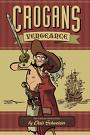
[READ: February 7, 2010] Crogan’s Vengeance

When Sarah and I went to BEA, we spoke to the Oni Press guy who was praising this book, The Crogan Adventures, as a fantastic series aimed at teens, but really readable for the whole family. The premise is that the Crogan family (and there’s an extensive family tree on the back cover), all led exciting lives.  The stories about these men are being told to the youngest Crogan boy Eric, in present day.

This first book is about Catfoot Crogan, an honest sailor who was more or less forced into a life of piracy in the 1700s.  And the story is fantastic.  There is sailor talk, there is swashbuckling, a terrible storm, even a shark! (more…)

Read Full Post »

Howard Zinn [1922- 2010]

The death of J.D. Salinger totally overshdowed the death of Howard Zinn (which I just found out about today while reading a tribute to Salinger).

Howard Zinn was one of my favorite political writers, and I would have to say the one who has influenced me the most.  I first learned about him through You Can’t Be Neutral on a Moving Train, and have read most of his works since then.

His People’s History of the United States is an amazing read, and will make you rethink what you learned (or didn’t) about American history.    Zinn always spoke up for the underdog, and he tried to get people to see history (and current events) through the eyes of the average worker, not just the people who make and write history.

He was also a very outspoken anti-war activist.  He even spoke publicly against “popular” wars; railing against the military industrial complex and the inevitable injustices that war creates.

And in all of his writings and speeches, he was never stodgy or dull.

I’m not sure who will pick up the torch that he has now dropped.  But he will surely be missed.

Read Full Post »

SOUNDTRACK: DO MAKE SAY THINK-Other Truths [CST062] (2009).

I’ve always enjoyed Do Make Say Think’s CDs.  They play instrumentals that are always intriguing and which never get dull.
But this CD far exceeds anything they have done so far (and  they’ve done some great work).   There are only four tracks, and they range from 8 to 12 minutes long.  Each track is named for a word in the band’s name: Do, Make, Say, Think.  And each one is a fully realized mini epic.

“Do” sounds like a gorgeous Mogwai track.  While “Make” has wonderfully diverse elements: a cool percussion midsection and a horn-fueled end section that works perfectly with the maniacal drumming.  “Say” is another Mogwai-like exploration, although it is nicely complemented by horns.  It also ends with a slow jazzy section that works in context but is somewhat unexpected. Finally, “Think” closes the disc with a delightful denouement.  It’s the slowest (and shortest) track, and it shows that even slowing down their instrumentals doesn’t make them dull.

It’s a fantastic record from start to finish.  This is hands down my favorite Constellation release in quite some time.

[READ: December 2009 – January 13, 2010] McSweeney’s #33.

The ever-evolving McSweeney’s has set out to do the unlikely: they printed Issue #33 as a Sunday Newspaper.  It is called The San Francisco Panorama and, indeed, it is just like a huge Sunday newspaper. It has real news in (it is meant to be current as of December 7, 2009).  As well as a Sports section, a magazine section and even comics!

[DIGRESSION] I stopped reading newspapers quite some time ago.  I worked for one in college and have long been aware that the news is just something to fill the space between ads.  I do like newspapers in theory, and certainly hope they don’t all go away but print issues are a dying breed.  When I think about the waste that accompanies a newspaper, I’m horrified.  Sarah and I even did a Sunday New York Times subscription for a while, but there were half a dozen sections that we would simply discard unopened.  And, realistically that’s understandable.  Given how long it took me  to read all of the Panorama, if you actually tried to read the whole Sunday paper, you’d be finished the following Sunday (or even two Sundays later).

Their lofty goal here was to show what print journalism can still do. And with that I concur heartily.  Even if I don’t read the newspaper, the newspapers as entities are worth saving.  Because it is pretty much only print journalism that finds real, honest to God, worthy news stories.  TV news is a joke.  There is virtually nothing of value on network TV.  Fox News is beyond a joke.  CNBC is sad (although Rachel Maddow is awesome!) and even CNN, the originator of all of this 24 hour news nonsense still can’t fill their airtime with non-sensationalized news.

Obviously, there are some decent internet sites, but for the most part they don’t have the budget to support real news investigation.  You either get sensationalized crap like Drudge or rebroadcasts of real news.

So, print is the last bastion of news.  And you can see that in journalistic pieces in The New Yorker, Harper’s, The Walrus, Prospect and, yes, in newspapers.

But enough.  What about THIS newspaper?  Oh and unlike other McSweeney’s reviews I’ve done, there is NO WAY that I am writing a thorough comment on everything in here.  There’s just way too much.  Plus, there are many sections that are just news blurbs.  Larger articles and familiar authors will be addressed, however.  [UPDATE: January 18]: If, however, like Alia Malek below, you bring it to my attention that I’ve left you out (or gotten something wrong!) drop me a line, and I’ll correct things.

There is in fact a Panorama Information Pamphlet which answers a lot of basic questions, like why, how and how often (just this once, they promise!). There’s also a Numbers section which details the size, scope and cost of making this (it shows that with an initial start up, anyone could make a newspaper if they talked enough about what the readers were interested in). (more…)

Read Full Post »

SOUNDTRACK: KISS-Kiss (1974).

I’ve always loved the first Kiss record.  Everything about it is over the top, and I can’t imagine what people thought of it when it hit shelves back in 1974.

And yet, for such a preposterous looking record, the tracks are really great.  The music is a mixture of pop, Rolling Stones rock swagger, Beatles harmonies, and a sort of proto-heavy metal.

“Strutter” proves to be a great opening track with a great riff and fun vocals.  And it’s just one of thousands of Kiss songs about hot chicks that, because of its metaphorical/obscure lyrics is less offensive than it might have been.  “Nothin’ to Lose” is another lyrically inscrutable song that I’ve always assumed was very dirty: “Before I had a baby, I tried every way.  I thought about the back door.  Didn’t know what to say.”  And yet it is so outrageously poppy that no one minds singing along.  “Firehouse” is a wonderfully over the top song with great falsetto vocals and an awesome solo from Ace. “Cold Gin”  is another rocking classic with cool basswork and guitar solo notes over a standard rocking verse.  Side one ends with”Let Me Know” a pop song hiding under the guise of a heavy rock song.  The song is such a poppy bit of fluff (check out the soulful harmonies before the ending guitar solo kicks in), but it works wonders.

Side Two starts with a silly cover of “Kissin’ Time” that of course is appropriate for this band (and if they went for a more poppy sound overall, this would have been their anthem, no doubt).  “Deuce” follows, and it blasts forth with some heavy stuttering and slighty off-sounding guitars.  It also has the best opening lyric ever: “Get up and get your grandma out of here.” Which is later followed by one of the top ten Huh? choruses off all time, “You know your man is working hard, he’s worth a deuce.”  (Rampant speculation as to what a “deuce” was in 1974 can be found online).  I’ve always loved the “Love Theme from Kiss” which is possibly the most hated pre-disco Kiss song that I can think of.  It’s a weird pseudo-middle-eastern instrumental that I’ve always thought was trippy and funny.  And then comes “100,000 Years,” another one of my favorite songs.  Again, the lyrics are just bizarre (and I’ve always mis-heard them until I looked them up just now: “How could you have waited so long, it must have been a bitch while I was gone” (I’d always thought the “it” was actually “you” which means the song isn’t as nasty as I ‘d always thought).  So, it’s sort of like The Odyssey, then.  But musically the song is just phenomenal: a great guitar riff over simple bass notes and a staggering guitar solo.

The disc ends with the outstanding “Black Diamond.”  There’s so much to love about this song.  It’s a gritty tale about life on the streets.  It opens with a pretty acoustic guitar ballad sung by Paul.  Then, after the awesome “Hit it!” the song kicks in powerfully.  Peter takes over vocals, and his rough voice works perfectly.  It’s only five minutes long, but it feels like a great epic track.  No the least of which is because the song ends with a cool concept: a single note, punctuated with drums, that is slowed down (from the original taped master), getting slower and slower making the notes sound heavier and heavier, slower and slower.  You can even hear the drum riff played at a by-now snail pace.  It’s very cool.

This is really a great album, and it’s somewhat overshadowed by their mid 70’s more famous music.  And if you like 70s rock but don’t think you like Kiss, this is one disc you can sneak into your collection.

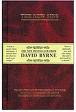
[READ: December 20, 2009] The New Sins

I’m not entirely sure what to make of this.  I bought it from McSweeney’s in their attic sale for a couple of bucks.  David Byrne is Talking Heads David Byrne, so everything he makes is arty, avant garde and hard to fathom on a first listen/view.  But I’m unlikely to read this again, so he gets a cursory attempt here.

The New Sins purports to be a collection of what the “new” sins are.  It’s also written as if it were an ancient text that was recently uncovered and translated into English (although obviously, the word choices are laughably not ancient (web design, for instance).  Basically, what you get is a list of behaviors that until recently were not sins but which are now.  The odd thing about the book is that the sins are not an obvious parody of virtues or anything like that.  He doesn’t just say that kindness is a sin, he adds that ambition is a sin as well.  So it’s not even simple inversion. (more…)

Read Full Post »

« Newer Posts - Older Posts »