Feeds:
Posts
Comments

Archive for the ‘Funny (ha ha)’ Category

[ATTENDED: December 10, 2015] A Christmas Carol

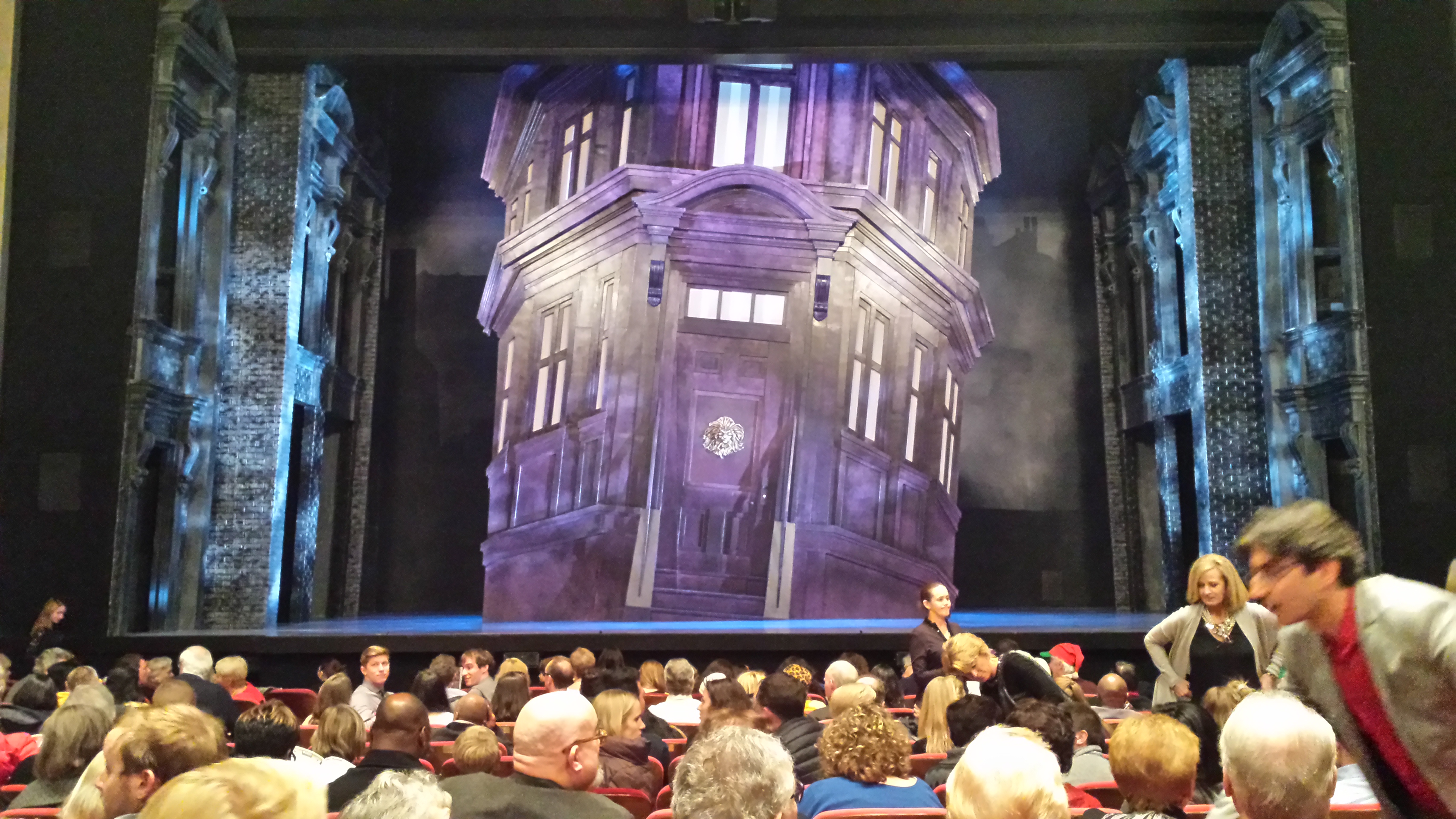
xmasLast night we attended McCarter’s production of A Christmas Carol for the second time (first time was two years ago).  We went specifically because it is the last time that they are doing this particular performance of the show (it has been the same for 16 years).  Next year they will be doing something entirely new.

We were pretty staggered by the pricing (last time we got super cheap seats but they were pretty far into the corner which ruined some of the magic).  But there was a Black Friday special and we had awesome seats (the woman next to me was mad that we paid literally half her price, muhahaha, Scrooge alert!).  But wow, what seats!

The show felt more magical and more moving than last time (I was a blubbery mess by the end).  It was awesome to see that the entire set was crooked (a great, disconcerting effect).  And to really see the sets come forward and the spirit of Christmas future as soon as he came out, those were very cool moments.  T. asked if we can sit in the front row next year.

2015-12-10 20.47.46It was also interesting to see who was different in the cast this year.  I recognized a few returning members–James Ludwig is awesome as Fred, Scrooge (Graeme Malcolm) was the same (and was awesome–I loved the way he did little things, like kick a rug into place, which were “accidents” but were totally in character).  And there were clearly some new faces and new actors.   You can see the whole cast at the McCarter site.

And I just read (in New Jersey Stage) that apparently many in the cast are quite well known:

Boasting a gigantic list of Broadway, regional and international credits, the cast of A Christmas Carol includes Leah Anderson, Allison Buck, Billy Finn, Kathy Fitzgerald, Nike Kadri, David Kenner, January LaVoy, James Ludwig, Bradley Mott, Anne O’Sullivan, Sari Alexander, Gabriel Bernal, Andrew Clark, Jean G. Floradin, Heather Gault, Michael John Hughes, Sophie Lee Morris, Gregory Omar Osborne, Patrick Roberts, Daniella Tamasi, and Arielle Taylor.

I just re-read what I had written two years ago and found that I felt exactly the same.  So for the rest of the post I am going to keep everything the same (with a few updates).

It’s like a Christmas tradition. (more…)

Read Full Post »

juiaSOUNDTRACK: AVI AVITAL-Tiny Desk Concert #239 (September 12, 2012).

aviAvi Avital plays a mandolin. But he doesn’t ply bluegrass. Indeed, much like the Punch Brothers covering Debussy, Avital uses the mandolin to play more classical type of music.  He is the first mandolinist to be nominated for a Grammy in the Best Instrumental Soloist category.

He has had this mandolin for about thirteen years and he loves it.  He has been using the same Israel lutier since he was 17, exchanging them until he found this one.  And he can really play the heck out of it.

He plays only two songs in the ten minute concert, but they really showcase his skills.

“Nigun” was written by Ernest Bloch in 1923 for violin and piano.  NPR says Avital’s arrangement, like the original, pivots between the ecstatic and the introspective, rising in intensity (and pitch) until finally disappearing in a mist of quietly plucked notes.  If you think of the mandolin as just strumming along to pop songs, you’ll be blown away by this.  He plays notes that I suspect were never meant to be played…sliding all the way down to the highest high notes on the highest strings.  I don’t know that it sounds better than a violin, but it is pretty neat.

“Bucimis” is a raucous Bulgarian folk tune in the odd meter of 15/16. “It’s almost 4/4, but not quite,” he says. “I can play it, but I can’t dance it.”  This song is absolutely wild, especially at the end.  While the first song was pretty, this song showcases just what you can do with a mandolin.  It’s intense.

[READ: June 19, 2013] Julia’s House for Lost Creatures

I don’t normally write about kids picture books (if I did my whole blog would be about them as we read so many).  But this one gets a special mention because a) it was published by First Second and b) I love Ben Hatke’s drawing style so much.

This is a delightful story which you have to start on the title page.  It shows a giant turtle with a huge house on its back.  And on the next page the text says “Julia’s house came to town.”

Julia puts in a mailbox and settles in by the sea. (more…)

Read Full Post »

smmaSOUNDTRACK: PROTOMARTYR-Tiny Desk Concert #492 (December 4, 2015).

protoPromtomartyr’s Under Color of Official Right has been one of my favorite albums of the last few years.  Joe Casey’s vocals are more or less spoken (and angry) while the music is propulsive and rocking.  Sometimes punk, sometimes something else entirely.  It’s a weird pairing but it worked wonderfully.

I hadn’t heard their new album yet–I am a little afraid that they’re going to mess with the perfection of their second album–but as soon as I saw they did a Tiny Desk Concert I had to check it out.

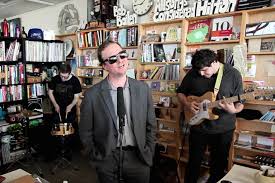
“Singer” Joe Casey stands at the front.  He wears a suit and sunglasses (evidently he has some stage fright issues) and he barely moves.  And then there’s the rest of the guys–each wearing all black, looking like the backing band for someone else entirely (the bassist has super long blond hair).  And yet, man, do they play great together.

The band plays three songs.  The first two are from their new album.  “Why Does It Shake?” has a cool interesting bass line and sharp, occasional guitar chords along with drums that are mostly played along the rim.  The song unexpectedly slows down for a middle section.  And all along, Casey asks his tough, threatening lyrics.  The song is over 4 and a half minutes, perhaps one of their longest tracks.

The second song, “”Devil In His Youth” is a fast propulsive song with a great catchy riff that leads to the simple spoken chorus of “the devil in his youth.”  This song is much more familiar in terms of Protomartyr songs and is only two and a half minutes long.

The final song comes from their debut album, No Passion All Technique (which is hard to get and which I’ve never heard). The song doesn’t sound drastically different from the others, but you can hear a different tone, perhaps a little less abrasive?

Naturally for a curmudgeonly band, they don’t play anything from the album I love, but this set is really good nonetheless.  And yes, it may be time to investigate the new album.

[READ: October 28, 2015] Super Mutant Magic Academy

I saw this book when we were visiting Toronto and I wrote down the title to check it out.  I didn’t know anything about it, and didn’t realize that I knew the work of Jillian Tamaki from several great graphic novels

I also had no idea that this was actually a long in progress webcomic that Tamaki has put into book form.

And finally, I didn’t expect it to be a series of one page funny strips that tell an overarching story. (more…)

Read Full Post »

1963SOUNDTRACK: RESTORATIONS-Tiny Desk Concert #462 (August 14, 2015).

restor I don’t know Restorations, although I understand that they usually play pretty big loud guitar rock.   For the Tiny Desk they are stripped down (I guess) to the three guitars, but no drums or bass.  Lead singer Jon Loudon has a powerful and excellent voice.  On “Separate Songs” there are two guitars and a keyboard and wonderful harmonies.  The keyboardist sings backing vocals in the beginning of the song, so that when the lead guitarist joins in later, it’s even more impressive.

The guys are very friendly and funny.  The joke about the “desk” and about their constant tuning needs.

For “Tiny Prayers” all three play guitars and there some wonderful melodies that they play together.  The Future” is the slowest song of the three, but it contains all of the same elements–cool guitar sounds and wonderful harmonies.

The band has a great sense of melody.  And yet for all that I liked t his set, there was nothing that really stood out for me about the band.  They are simply a good rock band, and that’s not a bad thing.

[READ: November 29, 2015] The Complete Peanuts 1963-1964

The drawing style of Peanuts that I most associate with the strip has been pretty consistent by this point.  And most of the characters look “right” (although Snoopy will continue to morph over the years).

Why does Charlie Brown keep going?  Despite all of the abuse Charlie gets, this one strip seems to sum up his strengths: “adversity is what makes you mature…the growing soul is watered best by tears of sadness.”

I feel like Schulz was either looking up facts to write about for some of this year.  Because we get things like this: Lucy: “You have to have [a note excusing you from school] otherwise the school can’t collect its state-aid money.”  Is that true or has Lucy hoodwinked Linus and me?  Later Charlie tells Lucy “when cranes and herons stand on one leg they can’t be injured by ground lightning.”  Later, Linus tells Sally that birds “have muscles in their feet which automatically contract when they fall asleep (which is how they sleep on a limb without falling off).  He then says the same principle applies with Snoopy’s ears.  Is this true?

In July 1963, there must have been an eclipse as the strip spends several days telling everyone how to safely watch it.

Linus’ blanket continues to occupy a lot of attention, with Lucy continually yelling at him about it.  His blanket hating grandma returns and even takes it away (she gives him a dollar bill which he tries to snuggle with).

Linus is full of ambition in these years.  He wants to be a rancher for several weeks in 1963.  Although, horror of horrors, he doesn’t make the honor roll in March of 1963.  But that doesn’t stop him.  And in a big surprise in 1964, he runs for school president (and has but one failing…and it’s not his blanket).

Schroeder continues to dismiss Lucy, this time even saying the chances are a googol to one (and then writing out how many zeros that is) of them getting married.  In July 1963 she complains that Beethoven never made it on any bubble gum cards.  Later when Lucy asks him why he doesn’t like her, Schroeder gives a very simple answer.  She replies, “I hate reasons.”

Rachel Carson returns in Feb 1964 with Lucy saying “we girls need our heroines.”  Of course Lucy also gets this quotable moment: “The crabby little girls of today are the crabby old women of tomorrow.”

Attacks on consumerism continue with a shoddy baseball about which Charlie says “this is what is called ‘planned obsolescence.'”

Speaking of baseball, there’s plenty of it.  I enjoyed the Sunday strip where Charlie using Snoopy to show how to break up a double play.  In 1964, Charlie suffers from Little Leaguer’s Elbow (and the team does great without him).  And when Lucy hurts her elbow (and refuses to call it Washerwoman’s elbow) she says she’ll sue Babe Ruth, Ty Cobb and Willard Mullin (Mullin was a sports cartoonist).

In August 1963, we see the first mention of Charlie Brown’s baseball hero Joe Shlabotnik (and the very distressing moment when Lucy won’t give let Charlie have his card).

I got a real kick out of Schulz returning to the McCovey joke from last year (in January!) saying “or why couldn’t McCovey have hit the ball even two feet higher?”

In 1963’s National Library week, Sally gets her library card this time and she is even more excited than Linus was.  She even has the line: “Happiness is having your own library card.”

Sally also addresses helicopter parents of 1963: “My mother is watching me out of the window.  Mothers feel secure when they see a child of theirs playing in a sandbox.  Sigh.  She’s secure and I’m bored to death.”

The little red-haired girl is obsessed over from time to time. Especially during Charlie’s lonely lunches.

Frieda has definitely dwindled by now–even if she never really did much.  She does abuse Snoopy about chasing rabbits but in one strip, we seem him playing with bunnies and four sleeping on his stomach on top of his doghouse.  This seems to set in motion Snoopy’s love of all other animals.

Later, there’s a really funny strip with Snoopy trying to fill his water bowl from a tap.  Then it rains on him.  The punchline “That’s one I’m going to have to think about for a while” is hilarious.

And…Snoopy goes to the hospital for a couple weeks! (nothing serious).  Charlie says he has a private room “he has a health insurance policy that pays forty dollars a day!”

In September of 1963, there’s a joke about ZIP Codes (Snoopy forgets his) and then shortly after a new character named 5 is introduced.  He explains, “My dad says we have so many numbers these days we’re all losing our identity.  He’s decided that everyone in our family should have a number instead of a name.”  His sisters 3 and 4 look like Peppermint Patty (who hasn’t arrived yet).  ZIP codes were introduced in 1963.

At Halloween in 1963 Linus slips about the Great Pumpkin and says “if he comes” (like in the TV show).  He’s doomed!

In February of 1964 a whole set of strips focuses on the existence of the humane society.

And in May of 1964 we get the classic bit from the movie when Charlie puts a coin in Lucy’s can and she sings “Boy what a sound.  How I love to hear that ol’ money plink!  That beautiful sound of cold hard cash!  Nickels! Nickels! Nickels!”

In June of 1964 there is a very touching Father’s Day strip.  (Although it wasn’t officially recognized until 1966 and signed into law as a official day by Nixon in 1972).

I really enjoyed the series of strips where they clean out Snoopy’s house and the dimensions (which we never see) are enormous!  There’s stairs, a pool table and all kinds of cool things.

For years now, Peanut has had strips where charters hold up signs–sometimes for Beethoven’s birthday, or national library week.  But in Sept 1964 it gets a bit more surreal with a bird holding a sign that has  ! on it.  Later another bird’s sign says ; and ?   A fight breaks out about it.  It’s very funny.

And in October 1964 Lucy pulls away the football despite given Charlie a signed document… “it was never notarized.”

And the year ends with something of cliffhanger.  Charlie has to do a report on Gulliver’s Travels over his holiday break, but he keeps putting it off… what will happen in 1965?

The foreword was written by Bill Melendez.  Melendez first met Schulz when they collaborated on an animated commercial for the Ford Falcon in 1960.  In 1963, they worked together on a documentary about Schulz using more animation.  Then in 1965 Coca Cola contacted him to see if Schulz would like to make a Christmas special.  They had 5 days to write the outline.  They used the kids from the Ford commercial as the voices. And they had six months to make the move.  It first aired on December 9, 1965.

Melendez raves about their work (rightfully) and then talks about the many other specials the made together–a Veterans’ Day one called What Have We Learned, Charlie Brown, and a show about cancer called Why Charlie Brown, Why?   In total they made fifty network specials and 4 feature films.  He talks about how great it was that they found Vince Guaraldi for the music and that they used real kids and no laugh track.  It’s hard to believe that special is so old!

Read Full Post »

ktelkSOUNDTRACK: NICK BUZZ-Lula Lounge, Toronto ,ON (Mar 23 2011).

NickBuzz-23Mar2011-1There is only one Nick Buzz concert at Rheostaticslive (although there are a number of videos online from an earlier show (from Dec 9, 2010) which could be turned into an audio download, I’m sure.

Anyhow, this show occurred nearly two years before the release of the (thus far) final Nick Buzz album.  It’s interesting that there are some songs that will appear on that album performed here (and there is no mention of it, of course).

As with many of the Tielli solo shows, the band plays songs from Nick Buzz, from Tielli’s solo albums, and even two Rheostatics albums.  But this is primarily a Nick Buzz performance (with Tielli, Goldsmith, Marsh and Piltch).  What I find interesting is that I believe that Martin is only singing (maybe a guitar here or there?) with Pitch on guitar, Goldsmith on piano and Marsh on violin and effects.  It’s a very different dynamic (no drummer!) and really changes the nature of some of these songs.

“Just Because” is a beautiful ballad.  It’s sightly more raucous than on the record, but still sounds beautiful.  Tielli’s solo song “I’ll Never Tear You Apart” sounds very different from the record–the awesome guitar line has been simplified and there’s a piano now.  In fact, piano is the main instrument for most of these songs, which is quite different.

The band then plays three of the four songs from the Arnold Schoenberg record (Martin says he should put on gloves as this is forensic music that’s over 100 years old).  They also sound great–I love they way they can recreate the weirdness from that short album.

When he introduces “Eliza” he says the music is by Schubert, although I don’t believe that is the case (unless the intro is).

In explaining “Milchig” he says that it’s about a dwarf-like creature who taught him “the relax.”  “The relax” is how they describe it in Italy (he wishes he had learned more Italian as a kid but he was too obstinate).

“Spilling the Wonderful” is not as dramatic as on the record–it’s a bit smoother but still really good.  And for “That’s What You Get for Having Fun,” a song which he has played in almost every solo concert, they really pare it down–it’s nowhere near as raucous.

The band goes for a cigarette break for 15 minutes and then comes back with “Beauty On” and the funny moment where Martin sings the intro, “I hate you all.”  When he gets to the “Are you with me Cincinnati are you ready to rock?” rather than singing it, he slurs it.  It’s a great effect.

The only song not on another album is “Now That I’m a Railroad Boy” which was done by John Southwith.  It’s a pretty ballad that fits in perfectly with the other songs.  “The House with Laughing Windows” and “Uncle Bumbo’s Christmas’ sound fanatic live.  And then they play the fourth Schoenberg song “Galathea” which Martin says is his favorite.

“Farmer in the city” has been my least favorite Tielli recording, but this version is fantastic.  It starts on piano and has melodies provided by the violin. Rather than being elliptical and standoffish, this new arrangement really brings you in with some lovely Marsh melodies.  Then the play “Love Streams.”  Martin says that their take on the record was the first time they played it.  It’s gorgeous!  This version is quite different with more violin up front.

“Sane, So Sane” adds a drum machine which is a surprise but a very welcomed one. It really picks up the tempo of the show and creates wonderful new textures.

For their last song Martin says “we’re going to confound you with this one.”  It’s a Jacques Brel song, “If You Go Away.”  It’s not unlike on the future record–slow and pretty.

When they come back out for the encore, Martin says they have played their entire repertoire.  He seems at a loss for what to play so they play a lovely version of “Take Me in Your Hand,” and a shockingly different version of “Shaved Head.”

Check it out here.

The setlist for that 2010 YouTube show is quite similar: Spilling the Wonderful, That’s What You Get For Having Fun, Just Because, Gigerlette, Persian Kitty, Boom, Hymn to the Situation, Milchig, Eliza, L’astronaut [a hilarious explanation of what the song is about], The House with the Laughing Windows, Sane So Sane, Love Streams, Uncle Bumbo [Martin on bass], If You Go Away

[READ: July 12, 2015] Mr Kiss and Tell

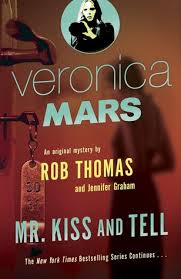
I loved Veronica Mars.  The show was great.  We supported the Kickstarter.  And I was pretty psyched when the first post TV show novel came out.  But I never actually read it.  It is still sitting on my shelf (Sarah really liked it).

Well, Sarah got this one from the library and since it was due back soon I decided to push it to the front.  The good news vis a vis the previous book is that they are unrelated.  The better news is that this book follows up the events of the movie!  And it has a new mystery as well.

The new mystery involves a man who has raped a woman and left her for dead. As with any good mystery there are dozens of twists and turns.  And Veronica is not willing to let go.  Unlike the TV show, this mystery lasts for months.  She is fairly certain she has a suspect and even manages to get some DNA but his “confession” reveals a whole new twist to the story that Veronica was not expecting and which really undermines her case. (more…)

Read Full Post »

zambraSOUNDTRACK: NICK BUZZ-Arnold Schoenberg and the Berlin Cabaret (2003).

schoenIn 1901, Arnold Schoenberg wrote eight Brettl-Lieder (Cabaret Songs).  The songs were short and fun with naughty (cabaret influenced) lyrics.  Some 100 years later, inspired by the Art of Time Ensemble who commissioned Nick Buzz to play pieces for their Schoenberg show.

So the guys from Nick Buzz got together and recorded four of the eight pieces.  Then Martin Tielli released this disc as number 2 of his Subscription Series.  Some of us were a little disappointed when this came out since it was only 15 minutes of music, but the art is wonderful and I have recently rediscovered this disc and have enjoyed it immensely.

Basically the Buzz guys have interpreted the songs in their own style, but they have remained faithful to the original melodies and lyrics (which were in German but are now in English).

“Gigerlette” explores electronic manipulations (presumably by Hugh Marsh) and offers lots of fun samples (what I assume is some earlier recordings of the song in German).  It opens with sampled female singing and staccato piano as well as other unusual effects. Then Martin’s vocals come in and the effects clear out and the song becomes simple piano ballad for a brief moment.  Then the noises come back in again, playing around with this amusing song.  It’s a song of romance and love with the sweet punchline being that cupid is driving their coach and four.  At over 5 minutes this is the longest song by far, even if the basic song is just over two minutes.

“Der genugsame Liebhaber” (The Modest Lover) opens with what sounds like a distorted harp (presumably the piano) and scratchy records (from Marsh).  This song is about a man going to see his lover, but his over’s pussy loves his bald head so much that she continually climbs atop it.  It is charmingly naughty. There’s some wonderful violin from Hugh Marsh on this song

“Galathea” is the most conventional of the three songs.  A lovely piano ballad to Galatea.

“Arie aus dem Spiegel von Arcadien” (Aria from the Arcadian Mirror) is super fun. The music is weird and goofy with a very drunken feel.  And the chorus is just wonderful “my heart begins to thump and dance just like a hammer’s blow it goes boom boom boom boom boom boom boom boom boom (getting faster and faster).  I’ve listened to the original and it is very much the same, although Nick Buzz’s version is much better.

You can find some of these songs on line from a recording at Lula’s Lounge (Dec 9, 2010)

It’s cool to see how they recreate the album so faithfully in a live setting. It’s only a shame that the video isn’t a little closer so you could see just what they are doing.

Nick Buzz-December 9 2010 Lula’s Lounge

[READ: September 1, 2015] My Documents

I have enjoyed some of Zambra’s stories in other locations, so I was pretty excited that McSweeney’s released this collection (translated by Megan McDowell).  The book is pretty much all short stories, although the first items feels a bit less fictional and more memoirish.

“My Documents”
This is a brief historical account of Alejandro as a child and as a writer.  He talks about when he started working on computers and what happens when the computer dies with the information inside.  He explains that this file is in his My Documents folder and he’s going to publish it “even though it’s not finished.  Even though it’s impossible to finish it.”

“Camilo”
I read this story in the New Yorker.  It concerns the relation of a man and his godfather, whom he has not seen since his father and godfather had a falling out years ago.  See my link for a more complete synopsis.  I enjoyed it just as much the second time.

“Long Distance”
The narrator worked as a phone operator in 1998.  He liked the job–his boss was cool and would let him do anything he wanted so long as he answered the phones quickly. The job was in a travel insurance office and one day he received a call from a man named Juan Emilio. After speaking for a time about various things, the narrator realized it had been 40 minutes since they first started talking.  They were expected to call clients back 14 days later as a follow-up and this time Juan Emilio talked with him foe a while and, upon learning that the narrator studied literature, asked if they could meet and discuss books.   The narrator was already teaching classes at night, and these two situations overlapped somewhat.  I loved the way all of this information is used as backdrop to a romance he has with a student known as Pamela.  And the final line is great.

“True or False”
The titular phrase is uttered by a boy, Lucas,  who declared, based on an inscrutable internal feeling, that things were True or False.  An armchair might be true, while a lamp might be false.  Hid father Daniel had a cat, Pedra, even though pets were forbidden in his building.  Lucas loved the cat.  Then the cat had kittens.  There is a metaphor at work about the fatherless kittens and Daniel’s own behavior toward his son. I really enjoyed this story and the strangeness of the true or false brought a fascinating childlike quality to the story

“Memories of a Personal Computer”
The conceit of this story is great.  A PC remembers what it was like to observe a relationship as it begins and then ebbs–and how the PC was moved around into different rooms as things changed in the relationship.

“National Institute”
At the school where the narrator went, they were called by number.  He was 45.  The main subject of his story was 34, although he doesn’t know the boy’s real name.  34 had failed the grade and was made to repeat it, but rather than being sullen about it, he was popular and fun.  All of the students were worried about failing–the final test was very hard.  But one day 34 approached 45 and told him he had nothing to worry about.  The other students didn’t know what to make of it, but he slowly assessed everyone and told them whether they had anything to worry about.  By the end of the story, when 45 is brought to the inspector of schools, he is told a lesson he will should never forget.

“I Smoked Very Well”
A look back on smoking and how quitting smoking made him a different (though not necessarily better) person.

“Thank You”
She is Argentine, he is Chilean and they are not together (even though they sleep together).  They were in Mexico City when they were kidnapped together.  The incident has unexpected moments. It’s a weird story (with some really unexpected moments) but a really good one.

“The Most Chilean Man in the World”
A Chilean couple has decided to separate once she was accepted to school in Belgium.  After several months he is convinced that she wants him to visit, so he spends a ton of money and heads out to Belgium.  Without telling her.  And it goes very badly.  But he can’t just leave Belgium, now can he?  So he goes to a pub where he meets some new friends who call him the chilliest man in the world.  The story hinges on a joke, but the story itself is not a punchline.

“Family Life”
I read this story in Harper’s.  I thought it was fantastic–it was one of the stories that made me want to read more of his works.  This is story of a man house sitting and the false life that he constructs around him.  It was surprisingly moving.

“Artist’s Rendition”
I loved the way this story began.  It tells us that Yasna has killed her father.  But we slowly learn that Yasna is character in a detective story that an author is trying to write.  We learn how the author constructs details about this character and the things that she has experienced which make her who she is.  As this story unfolds we see how those first lines proved to be true after all.

This was a great collection fo short works and I really hope to see more from him translated into English.

Read Full Post »

eggersSOUNDTRACK: NICK BUZZ-Circo (1996).

nickbuzzMartin Tielli has been prolific both as a solo artist and with his “side project” Nick Buzz (named after his love of smokes).

Nick Buzz’ first album came out in 1996 (during a time when the Rheos had just wrapped up their album The Blue Hysteria) and was ignored.  It was reissued in 2002 to a bit more fanfare.  I reviewed it once before and while I thought I was more dismissive of it then, it turns out that I wasn’t.  That I enjoyed it and felt mostly the same as I do now.

“Spilling The Wonderful” starting out with a mellow piano intro, the song jars into a noisy/drunken waltz melody and a violin solo before returning to the cabaret/waltz style that opened the song. It is deliriously catchy. The song ends with some tape manipulation before seguing into “That’s What You Get For Having Fun.” This song opens with some slapped and scratchy guitar sounds with a refrain of “there’s a monkey in my underwear.”  There’s a super catchy guitar riff that is sung along to—this song really shines live.

“Just Because” mellows things down a lot, with a jazzy sounding guitar and Martin’s delicate vocals.  The music for his one was written by pianist Jon Goldsmith which might explain the mellowness. It’s a sweet ballad.  Although the segue after this song is some clips from the radio (possibly sung by Tielli?) which are distant and crackling.   There’s a saxophone playing as well.   This merges into an announcer introducing the band for their (live) cover of Joni Mitchell’s “River.” It’s a beautiful, delicate version with Hugh Marsh’s electric violin solo swirling around.

Some dissonant sax segues into Sane So Sane which is actually a pretty gentle piano song. They play with the recording sound as the drums get muffled and dense and there’s more backing vocals thrown over the top.  But it remains largely conventional.  “Hymn to the Situation” is a creaky somewhat creepy song that Martin described as being about a self-centered jerk. who says things like “I’d suicide for you.” There’s a canned crowd cheering at a particularly funny line and even a cow mooing as the song ends

“Fornica Tango” is a wild weird song.  It is tango (Tielli speaks Italian), but the rhythm is kept by a squeaky sound (which is likely Marsh’s violin).  The song is interrupted throughout by a crying baby or, even stranger, a screeching chimpanzee (fornica translates as ant). The song ends with some crazy sounds from Marsh’s electronic violin.  The highlight of the record is “Love Streams’ a beautiful ballad based largely around a piano melody and Marsh’ keening violin. It’s followed by “Aliens break a heat” which is more tape manipulation and all kinds of weird effects (backward vocals I believe) for 2 minutes. Until it’s replaced by sounds of traffic (European) and horns honking.

The final song is the amusing “The Italian Singer/Just Because I’m Nick The Buzz” It starts slowly with some plucked strings and Tielli’s voice. There’s some spoken sections and lots of staccato music until the gentle ending which resumes the melody from “Just Because.”

It’s a peculiar album but one that gets better with each listen (and hearing him play some of these songs live has really introduced new aspects of them to me.

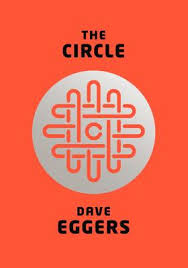
[READ: October 10, 2015] The Circle

I put this book off for a while but with no real reason for doing so.  And I’m sorry I waited so long because the book is really good–it’s thought-provoking and questions a lot of established ideas but is also really kind of fun and utopian.

What’s most impressive to me about the way the book is written is that the story itself is really quite simple.  It is a gradual building up of intensity.  At the end of which the main character has to make a decision which proves to be very important both for her and everyone else.

The story is about Mae.  Mae had been working at a dull and dispiriting job in civil service at her home town.  The job was dull, the people were dull, there was zero energy in the place and even her boss was depressing.  It sucked.  She had been there for 18 months and when her boss joked about her getting a promotion, she’d about had it.

She contacted her friend Annie.  Annie was her college roommate and boon companion for a few years.  And Annie worked at The Circle, the coolest most awesome place in the country to work at–think google, but better).  Was there any way that Annie could help out Mae?  Indeed there was.  Annie got Mae a job at The Circle, just like that.  Annie was one of the Top 40, the influential crowd at The Circle and Mae was in (her first day is hilarious, because Annie plays a wonderful prank on her). (more…)

Read Full Post »

mannersSOUNDTRACK: MARTIN TIELLI-Hugh’s Room Toronto, ON (September 27, 2009).

hughsThis is the final solo show from Martin Tielli on the Rheostaticslive site.  And it’s a great final show.  The sound quality is excellent and the crowd is also really into it.

Martin says that it is the fourth show ever with this band which includes Martin Tielli – vocals, guitar
Selina Martin – acoustic guitar, vocals, bowed saw
Monica Guenter – piano, synth, viola, vocals
Greg Smith – bass, vocals
Ryan Granville-Martin – drums, vocals, glockenspiel

(That’s a lot of Martins).

They open with a Rheostatics song, “Dead is the Drunkest You Can get,” a mellow song that works really well and has outstanding backing vocals from Selina and Monica.  Then they play two Nick Buzz songs, “That’s What You Get for Having Fun” and “Love Streams.”

“Something Wild” introduces a lot of vocoder–his vocals sound very different from on the Danny Gross record.  “Underbrush” is very slow and dramatic.

There’s something about this band that really brings out the best of these songs.  “Voices from the Wilderness” is lovely and “I’ll Never Tear You Apart” is also lovely, done in a slower tempo.  Although Martin keeps correcting himself when he messes up the words.

When they get to “Hymn to the Situation” (an old Nick Buzz song) he says it was an audience request and he thought it was funny.  He asks that the audience cheer wildly when he says the word “axe” (which is what happens on the record).  His description of the song is very funny, saying that it is about love.  Not sex, which is disgusting and which is all you hear in the media.  He concludes, “Never confuse the savory and the sweet.”  The song is played entirely on the piano.

“Saskatchewan” is great.  Big and loud.  Although Martin plays some amazingly bad chords at the end of the song–presumably intentionally.  The guitar solo is played on a violin, which is also pretty neat.

The set list says that the song “Our Keepers” was supposed to be next, but it is not included.  Indeed, the set ends with “Saskatchewan” making this show only 55 minutes.  Nevertheless, it’s a great recording and a wonderful spanning of Martin’s solo career.

[READ: October 10, 2015] The Importance of Manners

I found this book at work and was intrigued by the blurb: a Dali-esque fable, and that it was “in the vein of Evelyn Waugh and PG Wodehouse.”  I was committed to the book when I saw that the print was huge and that the chapters were really short.  Not the best recommendation for reading a book, but if you’re looking for quick read, those are some good markers.

The story is a travelogue farce that involves religion, sex, more religion, death and the end of the world.

There are several main characters, although I suppose the main protagonist is Burt Darwin.  Darwin is concerned for his afterlife and he cycles through a different religion multiple times during the day to make sure he has all of his bases covered.  He also keeps a journal in which he must tell the truth because this will lead to a successful afterlife (according to some healer or another).

We next meet Lady Chanel Malory.  Chanel was a hand model, is quite pretty and is looking for adventure (sexual if possible).  But she is married to Lord Percy, an old stuck up aristocrat who says all the things you’d expect someone like him to say.  He also believes that Lady Chanel is French and she is happy to play up the charade of being French for most of the story (it cracks briefly).  The final main character is Sister Mary.  She is an exiled nun, but she dresses like Mother Theresa, blesses everything and everyone and considers everything including flossing to be blasphemous.

They are all on a cruise ship traveling to Africa (you can probably see already the kinds of jokes and scenes that are going to appear).  They meet angry Kings (one who calls Lord Percy “Hitler”), they meet a talking (at least to us) snake who is mad to be stepped on, we encounter Vodun gods (and sellers of Authentic African knickknacks (most likely made in China) and a spell that makes Sister Mary forget that she is a nun and remember the past that brought her there.

There’s even a couple of authorial interruptions.

While most of the book is made of comic episodes (and some are indeed very funny) there are also some intriguing subplots.  Like Lady Chanel’s connection to pirates (which is sadly never explored fully), there’s even the exorcism of a demon.

Oh, and there’s someone who is about to set off a nuclear bomb destined to blow up the whole word.  Although none of our cast know that, somehow one of them saves the entire world.

H.G. Watt is also known as Hande Zapsu Watt.  She was born in Istanbul but now lives in Scotland.  According to some information, she has published four more novels and four children’s books which have all been translated into several languages, but I can’t find any of them.

So this book was a little broad, with some fairly easy targets, and yet I enjoyed it quite a bit.  There was a lot that made me laugh including  the acknowledgments in which she thanks her editor “who edited all the way to page 42 before writing in the margin: “umm, isn’t this a bit racist?”  [The book is, but it attacks everyone mercilessly, so no one need feel singled out].

Read Full Post »

feschukSOUNDTRACK: THE ART OF TIME ENSEMBLE with MARTIN TIELLI–Korngold: Source & Inspiration (Enwave Theatre, Harbourfront Centre, Toronto, ON, January 30, 2009).

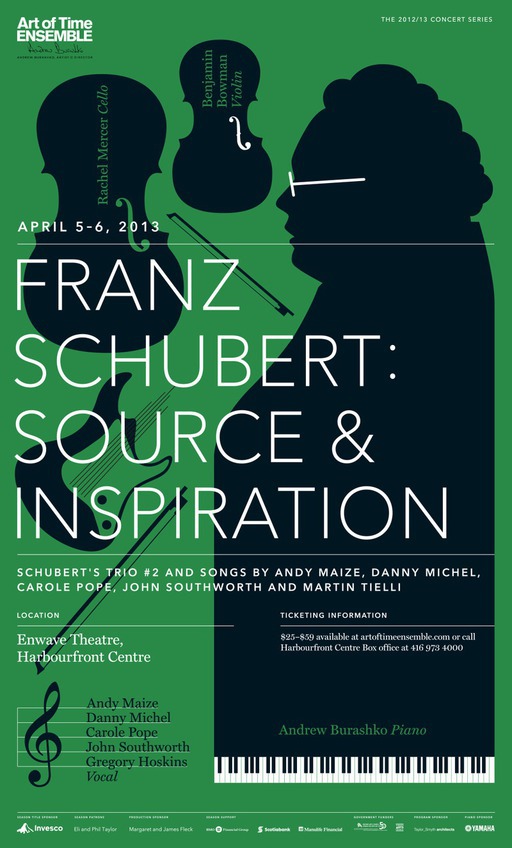
aotimeAfter seeing The Art of Time Ensemble yesterday, it was quite serendipitous that I would have a show from them (featuring Martin Tielli) to post about on the following day.

This concert is the third in the Art of Time’s “Source & Inspiration” series. Two years earlier the first concert focused on composer Franz Schubert.  The previous year’s concert focused on Robert Schumann. This time the spotlight was on the 20th century Jewish composer Erich Korngold–a composer of European pedigree who became well known for his wonderful Hollywood film scores.

This concert featured Korngold’s Suite for Two Violins, Cello and Piano as the ‘source’ as well as new songs inspired by this work from Martin Tielli, Danny Michel and John Southworth.

This recording is only 8 minutes long because there’s only two Martin Tielli songs. “Lied Two” (the German word for song is lied (pronounced leed) so Martin called his “Lied Two.” And “Moglich” which translates into “possible.”  Both pieces are played with by the orchestra.  Martins sings.

The more dramatic of the two would be “Moglich” with his loud whispered “Relaxxxxx at the end.”  For more information about the show, you can click on this link.

Full Program & Repertoire:
Suite Op. 23 for 2 Violins, Cello and Piano Left-hand
Erich Korngold
i.Praeludium und Fuge
ii.Walzer
iii.Groteske
iv.Lied
v.Rondo-Finale

INTERMISSION
Athabasca
Adventures of Erich Korngold
—John Southworth
The Sailor Song
Island

—Danny Michel
Lied 2
Moglich
—Martin Tielli

Performers
Andrew Burashko, piano
Danny Michel, singer
Erika Raum, violin
Stephen Sitarski, violin
John Southworth, singer
Martin Tielli, singer
Winona Zelenka, cello

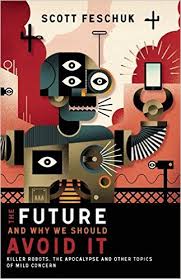
[READ: November 22, 2015] The Future and Why We Should Avoid It

The title of this book made me laugh so I set it aside to read it.  Little did I know that it would be so very funny that I put aside other things so I could finish it.

I hadn’t heard of Feschuk before.  He has written two previous books (How Not to Completely Suck as a New Parent sounds pretty good) and writes mostly for MacLean’s magazine.

As you might guess from the title, this book looks at the future, and Feschuk’s predictions are uncanny.  For instance, I brought the book home and decided to look at it in the bathroom.  And the introduction states quite clearly:

By now, life should be awesome and leisurely and you should be wearing a spacesuit and high-fiving your wisecracking robot sidekick.  Except instead your dishwasher is broken, your god-damn iTunes won’t sync up and right now you’re reading this book on a toilet in your bathroom instead of where you should be reading it–on a toilet in your hover car.

Too right, too right. (more…)

Read Full Post »

[ATTENDED: November 19, 2015] Zoyka’s Apartment

zoykaI was offered free tickets to this show.  I read a brief review, saw the word “farce” and decided it would be fun to go to it.

This play was written by Mikhail Bulgakov, an author I’ve heard of but know little about.  Turns out that all of his plays were banned by the Soviet government.  Including this one, even though it was not an anti-Soviet play.  After the banishment, he wrote to Stalin requesting permission to emigrate, but was denied.

As this play opens, there is a lectern at which an announcer reads a 1990 review of the play by Frank Rich in the New York Times (which you can read here).  Perhaps the most fascinating thing that I heard from the review was this:

Boris A. Morozov’s production of Mikhail Bulgakov’s ”Zoya’s Apartment” at the Circle in the Square. Mr. Morozov is resident director of the Maly Theater in Moscow. His New York cast is headed by such actors as Bronson Pinchot.

Since Pinchot is my new favorite audio book reader, I immediately paid attention. (more…)

Read Full Post »

« Newer Posts - Older Posts »