Feeds:
Posts
Comments

Archive for the ‘Film & TV’ Category

bothfleshSOUNDTRACK: SIGUR RÓS-Von brigði [Recycle Bin] (1998).

recycleAfter releasing their first album, Sigur Rós was approached by Icelandic musicians to remix the album. And thus came Recycle Bin.  I realized too late that I really just don’t like remix albums all that much–they’re mostly just faster drums plopped on top of existing songs.  And such is the case here.  Despite the interesting musical pedigrees of the remixers, there’s nothing anywhere near as interesting as on Von itself.  There are ten tracks, but only 5 songs.

”Syndir Guðs” gets two remixes:

Biogen keeps the bass but adds some more drumlike sounds.

Múm removes the bass, adds some wild drums and trippy textures and reduces the 7 minutes to 5.  It is quite pretty but very far from the original.

“Leit að lífi” gets three remixes

Plasmic takes a spacey 3 minute wordless noodle and turns it into a heavy fast dance song with speedy drums, big bass notes and with spacey sounds.

Thor brings in some fast skittery drums and keeps the spacey sounds (which sound sped up).  And of course bigger bass noises.

Sigur Rós recycle their own song into a dance song by adding funky bass and drums.

“Myrkur” gets two remixes.  the original is a fast-paced groovy track.

Ilo begins it as a spacey non-musical sounding piece.  After two minutes they add a beat of very mechanical-sounding drums.  It’s probably the most interesting remix here.

Dirty-Bix adds big, slow drums.  It keeps the same melody and vocals as the original but totally changes the rhythm and texture of the song, (removing the guitar completely).

The remaining three songs get one remix each.

The original “18 Sekúndur Fyrir Sólarupprás” is 18 seconds of silence.  Curver turns it into “180 Sekúndur Fyrir Sólarupprás” and makes a muffled drum beat and some other samples from the album, I think.  It constantly sounds like it is glitching apart until the end where it practically disintegrates–an interesting remix of silence.

“Hún Jörð” 7 min Hassbræður increases the drums and adds a more buzzsaw guitar sound and makes the vocals stand out a bit more.

“Von” has delicate strings and Jónsi voice.  The remix by Gusgus adds low end bass and drums making it a thumping rather than soaring track.

I prefer the original, but I much prefer their next album to the first one.

[READ: end of October to early November 2013]  original articles that comprise Both Flesh and Not

As I mentioned last week, I decided to compare the articles in Both Flesh and Not with the original publications to see what the differences were.  I had done this before with A Supposedly Fun Thing… and that was interesting and enlightening (about the editing process).

This time around the book has a lot more information than the original articles did.  Although as I come to understand it, the original DFW submitted article is likely what is being printed in the book with all of the editing done by the magazine (presumably with DFW’s approval).  So basically, if you had read the original articles and figured you didn’t need the book, this is what you’re missing.

Quite a lot of the changes are word choice changes (this seems to belie the idea that DFW approved the changes as they are often one word changes).  Most of the changes are dropped footnotes (at least in one article) or whole sections chopped out (in others).

For the most part the changes were that the book version added things that were left out or more likely removed from the article.  If the addition in the book is more than a sentence, I only include the first few words as I assume most readers have the book and can find it for themselves.  The way to read the construct below is that most of the time the first quote is from the original article.  The second quote is how it appears in Both Flesh and Not.  At the end of each bullet, I have put in parentheses the page in BFAN where you’ll find it.  I don’t include the page number of the article.  And when I specifically mention a footnote (FN 1, for example), I am referring to the book as many times the articles drop footnotes and they are not always in sync.

Note: I tried most of the time to put quotes around the text, but man is that labor intensive, so if I forgot, it’s not meant to be anything significant. (more…)

Read Full Post »

bomarsSOUNDTRACK: SIGUR RÓS-“Ný batterí” (2000).

nyThe single opens with “Rafmagnið búið” a kind of brass introductory piece.  There’s lots of horns building slowly, growing louder but not really playing a melody.  By the end of five minutes, it segues into “Ný batterí” which opens with horns as well.  Then the bass comes in, a slow, deep rumble of simple melody.  After 4 and a  half minutes, the drums are a powerful counterpoint to the sweet melody.

“Bíum bíum bambaló” is a slow piece (aren’t they all) that is mostly percussion.  Apparently it is an Icelandic lullaby.  The final track, “Dánarfregnir og jarðarfarir” was a theme used for death announcements on Icelandic radio.  I love the way it builds from a simple melody into a full rock band version and then back again.  It’s very dramatic.

Both tracks were used in the film Angels of the Universe (and appear on the soundtrack).

That certainly makes this single less interesting than the first one (although I’m not sure that the soundtrack was readily available at the time).

[READ: December 1, 2013] Breakfast on Mars

This is a collection of 38 essays (and an introduction by Margaret Cho).  It also includes an introduction geared toward teachers–an appeal that essays do not need to be dull or, worse yet, scary.  The editors encourage teachers to share these essays with students so they get a feel for what it’s like to write compelling personal nonfiction.  The introduction proper gives a brief history of the essay and then talks about the kind of fun and funny (and serious) essays that are included here.

This was a largely fun and largely interesting collection of essays.  When I grabbed it from the library I didn’t realize it was essays (I was intrigued by the title and then looked at the author list and immediately brought it home).  I know it says essays on the cover, but I chose to ignore that apparently.  When Sarah saw the authors (she knows more of them than I do) she had to read it first.  This proved to be a great counterpoint to the very large novel that I was reading at the same time.

The essays each take on different topics.  And what I liked was that before each essay, they include the question that inspired the essay.  I have included the questions here. (more…)

Read Full Post »

Fall 2013 brought in a whole slew of new shows that we wanted to check out.  And while we dropped some after an episode, we still have a few that are lingering on the DVR which we are never really all that excited to watch them.

Perhaps the biggest surprise is that a couple of shows that we thought were sure goners are still around.  And of course, there’s always those shows that we never watched and when we see an ad for it we say, “that’s still on?”

So last time, I did a tally of networks.  Let’s see who wins this time:
NBC: 4  FOX: 6   CBS: 3  Comedy Central: 1  FX: 1  ABC: 3  Lifetime: 1 SyFy: 1   (more…)

Read Full Post »

CV1_TNY_09_16_13Tomine.inddSOUNDTRACK: SAM PHILLIPS-Tiny Desk Concert #3 (June 25, 2008). 

Isamt took a month and a half to get the second Tiny Desk player in, but it took only 20 days to get Sam Phillips to come in after Vic Chesnutt.  Sam Phillips plays four songs (in what is sauna-like conditions apparently) all from her then new album Don’t Do Anything.

Phillips has had a couple of incarnations as a performer (first as “Leslie Phillips” Christian singer).  This incarnation sees her as a kind of folky troubadour with dramatic flair.  She played a lot of the music on the Gilmore Girls (she does the la las), so of course I’m a fan.

Sam is a funny performer, introducing herself (and then asking is she is allowed to talk) and later playing Bob Boilen’s cow in the can (and even questioning the way to say This is NPR).  She is accompanied by Erik Gorfain, who plays a Stroh violin which you can sort of see in this picture (there’s a better one below) and which Phillips suggests is plenty loud enough thank you.

Her first song, “Sister Rosetta Goes Before Us” opens with big strumming guitars and a bouncy melody.  It’s a great song that is a lot of fun–that violin brings great counterpoint.  “No Explanations” is a bit more rocking (with Gorfain on electric guitar).  It has a catchy chorus.  “Signal” returns to that kind of bouncy tin pan alley style which she does very well.  “Little Plastic Life” ends the set with… a screw up, which she handles wonderfully, and which makes the song seem all the better when she plays it again.

I really enjoyed this Tiny Desk and am going to have to listen to more of her work.

Check out what a Stroh violin looks like:

stroh

[READ: September 25, 2013] “By Fire”

Here’s another story about unemployment.  I had intended to post this back in September, so when I originally typed that this story is more dramatic than “yesterday’s,” I meant Lisa Moore’s story from September which was also about unemployment.

I wasn’t sure where this story took place (it was originally written in French).  The story is about Mohammed.  He graduated from University a few years ago with a degree in history.  It has been useless thus far.  When his father dies, and he is once again incapable of getting a teaching job, he gives up and burns all of his paperwork.

Then he sets out with his father’s fruit cart, determined to make some money selling fruit so he can move out of his house and in with his girlfriend.

There is ample back story in this piece.  We learn about Mohammed’s family—his mother has crippling diabetes, his brothers work but not very hard (one is downright lazy).  And we learn that the person who Mohammed’s father bought his fruit from was a crook who demands more and more money from Mohammed.

But the bulk of the story shows the daily life of Mohammed.  He is routinely harassed by the police for not having the proper paperwork or for being in the wrong place or just for being.  They start with simple harassment, but soon they turn to beatings.  Mohammed refuses to bribe anyone, even when the police give him the opportunity to turn in his former students. (more…)

Read Full Post »

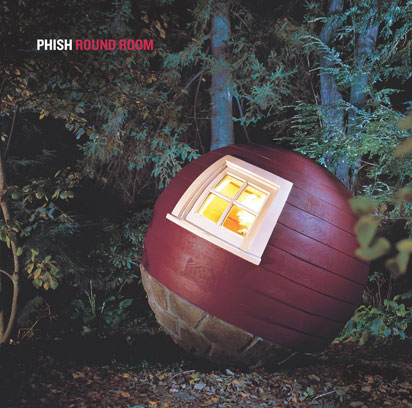
wallsSOUNDTRACK: PHISH-Round Room (2002).

round After Farmhouse, Phish went on a hiatus.  No one knew it would be quite so brief, but there was really a feeling that they were done.

And then they quietly released Round Room in 2002.  And it bursts forth with an 11 minute song.

“Pebbles and Marbles” has an interesting riff—complex and pretty.  And when I listened to it again recently I didn’t really quite recognize it.  But that’s because it’s nearly 12 minutes long and the really catchy part comes later in the song.  At around 5 minutes, the catchy chorus of “pebbles and marbles and things on my mind” announces itself.  And it is a good one.

“Anything but Me” is a pretty, mature song that is slow and piano heavy.  “Round Room” is a boppy little ditty (clearly a song written by Mike).  It is sweet and a little weird.  “Mexican Cousin” sounds a lot like a cover (maybe an old song by The Band) except for the solo which is very Trey.  It’s a funny, silly ode to Tequila.  “Friday” is a slow six minute song with two sections.  The verses are spaced out a bit, delicate riffs that are mostly piano once again.  The middle section is sung by Mike (which makes it more mellow somehow).

“Seven Below” is an 8 minute song.  It has another great riff (and the intro music is cool and bouncey).  When the vocals come in, it’s got gentle harmonies as they croon the sweet song).  Most of the 8 minutes are taking up with a guitar solo.  “Mock Song” is another of Mike’s songs.  This one seems to be a random selection of items sung to a nice melody.  Then when the chorus comes it’s quite nice, how this is a “just a mock song.”  The first verse is sung by Mike, then Trey does a kind of fugue vocal with different words in verse two.

“46 Days” opens with funky cowbells and turns into what seems like a classic rocking folk song—few words but a great classic rock melody (complete with 70s era keyboards).  “All of These Dreams” is a mellow piano piece, another mature song.  “Walls of the Cave” has an interesting piano melody that opens the song. The song is nearly ten minutes long and the middle part has a nice flowing feel to it.  There’s also a few sections that are separated be drum breaks—something that doesn’t often happen in Phish songs.  When the third part opens (to almost exclusively percussion, their vocals all work in a very nice harmony.  It’s a long song but with so many parts it always stays interesting.  “Thunderhead” is another piano-based song with some guitar riffs thrown on top. But it is largely a slow, mellow piece.

“Waves” is an 11 minute song with long instrumental passages.  It also begins with a kind of Santana feel to it, but it is a largely meandering song, with a simple melody that they stretch out for much of the song.  So this album proves to be an interesting mix of long jams and mellow ballady type songs.  It seems like Phish had a big mix of things to let loose.

[READ: November 1, 2013] If Walls Could Talk

This book reminds me of the work of Mary Roach—exploring a topic in great detail and including lots of amusing insights.  The two big differences here are that Worsley is British and that she goes back very far in British history to give us this fascinating information about the development of certain rooms of the house.

Worsley begins with the bedroom.  She looks at the furniture—the history of the bed from lumps with straw to fantastically ornate full poster beds that were made for kings who might never actually use them.

Then she moves on to more personal matters—sex (including deviant sex and venereal disease); breast feeding (for centuries mothers felt they were not equipped to take care of and nurse their own children, hence wet-nurses) and knickers (royalty had an entourage designed specifically to assist with underthings).  Indeed, privacy was an unknown thing in olden times.  Even royalty was expected to receive people in all of the rooms in the house.  Initially the bed chamber was for their most intimate friends, not just for sleeping.

The section on old medicine was also fascinating, they believed that it was vaporous miasma that did you more harm than say, excrement-filled water.

The section on Sleep discusses what was also in a recent article by Gideon Lewis-Kraus—that there were two sleep times at night.  With no electricity there was no artificial light to keep people up late so they would go to sleep early, wake up in the middle of the night (the best time for conception of children) and then sleep again. (more…)

Read Full Post »

lou_reed-620x412 SOUNDTRACK: LOU REED-Metal Machine Music (1975).

mmmfrom Wikipedia:

Metal Machine Music is generally considered to be either a joke, a grudging fulfillment of a contractual obligation, or an early example of noise music. The album features no songs or even recognizably structured compositions, eschewing melody and rhythm for an hour of over-modulated feedback and guitar effects, intricately mixed at varying speeds by Reed himself. In the album’s liner notes he claimed to have invented heavy metal and asserted that Metal Machine Music was the ultimate conclusion of that genre.

I don’t know how many people have actually listened to this album all the way through.  There are four 16-minute tracks.  Each one is, on the surface, exactly the same: feedback and more feedback.  In truth, the album is a bit more complicated than that.

There is a guitar in the left speaker and a guitar in the right speaker and each one is feedbacking in very different ways.  Indeed, if you listen to only one speaker at a time, you get a very different experience (I haven’t done that with the whole album, although that’s only because I really only found out about that recently, I did for a few minutes and it was pretty fascinating).

And fascinating is what this release is.  It was unlistenable in 1975, there is no question.  Just as something like Slayer would have been unlistenable in 1975.  But twenty years later, when Sonic Youth was riding high, Metal Machine Music seemed a lot less outrageous (indeed, their 1998 release Silver Sessions was essentially the same structure of feedback).

And now MMM seems very forward thinking.  Whether or not it was a joke or some kind of payback to the label or whatever (liner notes suggest he just really enjoyed enveloping himself in feedback), it’s a remarkable record.  If you can actually sit through it, there are some really interesting moments in it.  There are times when the squall and noise turns eerily beautiful, when the ringing notes take on chime-like status.

And unlike the aforementioned SY album in which they just turned up their amps and left, it sounds like Reed was actually hanging around and manipulating the sound.  You can hear times when new notes/strumming comes in and changes the mood.  And of course, Reed had to edit it for the album.

One of the more interesting moments comes right at the end of the disc.  On the vinyl release, he made a locked groove so the final rotation would keep repeating over and over until you had to get up and manually lift the needle (as if the album wasn’t difficult enough).  On the CD, they repeat that section for about a minute.  And that little repeated section is noteworthy for the rough distorted guitar and chiming feedback that all sounds very cool.

All of this is not to say that this album is enjoyable.  It’s really not.  It’s brutal and harsh and best handled in small doses (even Reed admits that in the notes).  But it is noteworthy and fascinating.  And it may have inspired as many feedback based bands as the Velvet Underground inspired droning bands.

[READ: November 2, 2013] “I loved Lou Reed more than you”

I was sad at the passing of Lou Reed, although I’ve never been a huge fan.  But of all of the eulogies, I knew that Neal Pollack would write the best one.

Neal Pollock is a wonderfully pompous “character” (who is the main character in most of the writing of his that I have read).  This article—while much briefer than most of Pollack’s short pieces—is an honest eulogy of Reed, but is also a hilariously over the top profession of fandom.

When Pollock heard the news of Reed’s death, he was polishing the acetate of his producer’s cut of Metal Machine Music.  He wept, mostly for himself but also “on behalf of all cultured people everywhere.” (more…)

Read Full Post »

witmis4SOUNDTRACK: PANIC-Requiem for Martin Heidegger (1978).

13+LP+Hoes++VoorkantPanic was a Dutch punk band.  Their album 13 came out in 1978 and “Requiem for Martin Heidegger” was the final track.  I love the album cover (and no I had never heard of this band either).

The lyrics are wonderfully simple (and no you won’t learn a thing about the man) with the completely singable chorus of “Hi-Degger, Hi-Degger, Hi-Degger, Hi-Degger, Hi!”

There are some other lyrics (including ein, zwei, drei, vier) and “Is he in heaven, is he in hell, where has he gone?  no one can tell.”

There’s some introductory chatter which I think is in German, but may be in Dutch.  But that’s all irrelevant, because this is three minutes of classic 70s punk.  And the video is a hoot too.

[READ: October 30, 2013] Wittgenstein’s Mistress p. 120-180

Although I read the first half of this book rather quickly, I took some time off before reading this section.  The good news is that this book does not require constant attention.  The bad news is that because there are so many details in the book (whether “relevant” or not) it’s easy to forget if she has talked about the different pieces before.  And that is kind of the point from her a well, since she constantly questions whether she has talked about something or not.

I’m breaking from my normal summary for a minute because I wanted to bring up something that struck me as I was reading this.  Several times throughout the book I found myself searching the web for ideas and facts that she mentions.  And it struck me that, while yes, in her world, the internet wouldn’t be working anyhow—there’s no electricity even—but she would not even have the concept of being able answer her questions with a few clicks.  This book wasn’t written that long ago, but when it was, the internet as we know it didn’t exist.  So our narrator does not know that she could have answered all of her questions in just seconds.  If this book was written now, it might even be seen as a “point” that the world no longer has such easy access to information.  But that is not an issue in this book.  Rather, our narrator simply knows that unless she is willing to dig through boxes or really wrack her brain to be able to remember where she found the information (and we know that’s not going to be successful), she simply won’t “know” what she knows.  And it’s interesting to imagine what it was like to read this book back in the 1980s without being able to quickly confirm  that indeed Wittgenstein said this or Heidegger said that or even that any of the artists she mentions really did what she says.   And I find that really fascinating.

Vaguely connected to this idea is her wondering about some details of the Savona soccer jerseys and then saying “One is scarcely about to return to Savona to check on this, however.” (122). (more…)

Read Full Post »

underwSOUNDTRACK: OZOKIDZ-“Germs” (2013).

ozokidsThis song is also on the WXPN Kids Corner CD.  Ozokidz is related to the band Ozomatli, who I don’t know all that much about.

The music in this song is very upbeat reggae with the main melody done on kazoos (I suspect this is all one person, but i don’t know for sure).  There’s also some kids’ instruments playing along.  The beat is fast enough that I might consider this ska.

This song is a lesson about germs.  It begins by telling us how to prevent germs from causing us trouble (washing your hands, mostly).  The second half talks about how some germs—some bacteria—are good for us (bacteria is rhymed with healing ya).  But certainly the most memorable part of the song is when he rhymes food with poo (and the song stops so a tiny voice can say “ew, he said poo”).

The message is a good one, and the delivery method is more fun than anything else.  Although it seems a little half-baked of an idea to me.

[READ: August and September 2013] The Underworlds series

I was delighted when I saw that Tony Abbott had a new series and I couldn’t wait to start reading it to the kids.  T. has been asking me to read the Droon series to her like I did for C.  But it is such a long series that I was happy to find something shorter to start with.  It turns out that this Underworlds series is aimed a little older than Droon.  It gets pretty dark, and I was a little worried about some of the concepts in it (the Underworlds are the realm of death after all–and hmm, she has been talking a lot about death lately…).  But in pure Tony Abbott fashion, this was an exciting series where nothing less than the fate of the world is at stake.  And there’s humor as well (although somewhat less than in his other series).  But what really sold me on this series was the way he uses classical mythology (accurately) to generate the basis and conflict of this story.

And even better than using these mythologies, Abbot merges them so that the different cultural underworlds run into each other and even join forces.  It is a great way to learn some mythology if you don’t know it (there are handy maps of the Underworlds) or to gain a more in-depth understanding of the mythologies.  By the end of the series, the kids will have encountered the Greek, Norse, Egyptian and Babylonian gods of the Underworld as well as some of the major scary guys that come out of the Underworld. (more…)

Read Full Post »

sep2000SOUNDTRACK: PHISH-Rift (1993).

riftRift has a kind of story to it (albeit it’s not a real concept album) and you can tell by the full cover (see the bottom) that the story is complex–thank you gatefold sleeves).  The album starts with “Rift” a fast guitar spiral that opens with a harmony vocals on the opening lyric and then a call and response between I believe, Page and Trey as they each take a line of the verse—it’s a cool and surprising opening.

“Fast Enough for You” is a slow country-tinged song (with slide guitar).  This is the first song of their early records that I really don’t know that well.  So it must not get played very much.  It’s a pretty song.  “Lengthwise” is a cute little a capella song (with snoring and clock ticking) which I think about whenever I am alone in a bed: “When you’re there I sleep lengthwise and when you’re gone I sleep diagonal in my bed.”

“Maze” is one of my favorite Phish songs and it sounds great here.  I love the bomp bomp at the end of the verses and the fugue vocals at the end of the song.  This version is fantastic.  “Sparkle” also features fugue and barbershop type vocals (with Mike’s deep voice added in) in a funny silly roping song.  It’s another highlight.  “Horn” has a great opening guitar line (that reminds me of Pearl Jam for some reason).  I’ve always enjoyed this one.  It sounds great here (because you can actually hear what the harmony voices are saying (something you usually can’t in the live setting).  “The Wedge” is a mid tempo song that sounds different from their live versions.

“My Friend My Friend” is a pretty dark song (“My friend, my friend he;s got a knife”) but the opening is a beautiful instrumental with lovely guitar sequences until at 2:30 when the piano takes over and the song becomes slightly menacing.  “Weigh” is a weird song that I rather like.  It’s very piano heavy and very boppy despite the crazy lyrics:  “I’d like to cut your head off to weight it, whaddya say?  5 pounds, 6 pounds, 7 pounds.”  “All Things Reconsidered” a nice NPR joke.  This is a 2 and a half minute instrumental of guitar and keyboards that sort of plays with the NPR “All Things Considered” music.

“Mound” starts with some wonderful out of time signature riffing—4/4 drums and bass and then super fast guitars that don’t quite match until the drums and bass then catch up.  It’s hard to believe that that unusual opening leads to the big catchy bouncy chorus: “And it’s time, time, time for the last rewind.”  “It’s Ice” is a little slower here than live but I kind of like it in this slightly slower version (you can really hear the riffs).  This is another song with fugue-like vocals (they do all of their vocal tricks very well).  “The Horse’ begins as a beautiful Spanish style guitar piece and morphs into a simple acoustic song (it’s al of 90 seconds) which bleeds into “Silent in the Morning,” another highlight from their live shows and a standout here.

Rift might just be my favorite Phish album.

[READ: October 23, 2013] “Escanaba’s Magic Hour”

Once I found out that Tom Bissell had written a number of articles in Harper’s I decided to read them all, especially since some of them already appeared in his book Magic Hours.  This was his first piece for Harper’s and it is the one I remembered most from the book.  So I enjoyed reading it again.

I’m also glad I read the Harper’s version because although I don’t think it varies from the book version at all (and I’m not willing to check), it had pictures from the movie and from Escanaba, which brought a bit more reality to the article.

So, what’s this about a movie?

Well, this article is about Jeff Daniels making a movie in Escanaba, Michigan called Escanaba in da Moonlight (which I haven’t seen, but as I said after reading this the first time, I now feel invested enough in it to want to watch it–reviews are mixed).  And it sounds kind of interesting.  I also really enjoyed the comment that Daniels’ appeal “has something to do with the fact that many men, if asked to cast their lives without undue conceit, might settle on Jeff Daniels to play themselves.” (more…)

Read Full Post »

SOUNDTRACK: PHISH-Live Bait 04 (2011).

bait04This Live Bait free sampler is compiled of songs from some of their summer tours (all songs are from June-August).  And it’s a fun collection of mostly long jams.

“Scent of a Mule” dates from 1996 and has a very “old” quality, like the band doesn’t sound as full as normal (the vocals also have an unexpected country feel). There’s a bit of “Sunshine of Your Love” from the guitars while Page is doing an elaborate solo.  Indeed there’s a lot of piano on this track—much more than usual (and some of it is crazy).  There’s a Jewish music section done on both guitar and voice which abruptly ends when the song returns to “Scent”.

“You Enjoy Myself” is one of my favorite Phish songs.  This version clocks in at almost 25 minutes.  At around 21 minutes the song devolves into them making a bunch of silly rhythmic noises, which must be very fun to see.  The next track is “The Landlady” (from 1993), a wonderful instrumental that morphs into “Tweezer” which has a pretty wild and raucous jam component.  There’s also a repeated guitar motif (which I don’t recognize) that seems to be a cue for the band to do things (play loud and fast or really slow—including their impossibly slow rendition of The Simpsons theme song.  It’s a neat trip.

The next track is “Mike’s Song.”  It opens a 36 minute jam that devolves at around 18 minutes into real silliness with spacey effects and controlled laughter.  At about 20 minutes, it morphs into the simple song “Contact” and eventually into “Weekapaug Groove.” Which starts in an unusual way—instead of Mike only playing the bass, the band joins the song in progress.

“Split Open and Melt” has some loud bass—I hadn’t really noticed the bass so much before, and in this version in particular Mike seems like maybe he’s mixed a little louder and he’s playing some really funky stuff (and making quite a few errors, it must be said).  Next comes the silly “NO2” (from 1999), which duplicates the effects of the record pretty well, and the guitar solo at the end of very pretty.  “My Friend My Friend” is a pretty dark song but it starts with the very pretty guitar work until the minor keys take over.  It slowly morphs into “McGrupp and the Watchful Hosemasters,” a lyrically insane but musically great song.  Page gets a lot of solo time in this song, too.

The next song is “Twist” always a fun and energetic live track.  There’s a very slow jam in the middle of the song (which in total is 29 minutes) before it turns into a very echoey “Slave to the Traffic Light.”

The next song is a nearly 20 minute, joyous “Free”.  It morphs into a beautiful “What’s the Use” yet another or f Trey’s gorgeous rising melodies.  “Axilla” is a fast almost punky version as is the near barbershop quartet riot of ”My Sweet One” which is the fastest I’ve heard it done.  And “Run Like an Antelope” is as frenetic as I’ve heard it—the pace of this segment (from 1993!) is insane.

“David Bowie” begins but then pauses as Trey sings “Catapult” a short piece that I don’t think I’ve ever heard played before.  Then “David Bowie” resumes for the remaining 10 or so minutes and it is a fast and furious cut as well.  This great free set ends with a 15 minute “Divided Sky,” which sounds as good as ever.

Phish releases a lot of concerts, so it’s nice that they throw these free compilations to us once in a while.

[READ: October 15, 2012] “Puppy”

This story is included in George Saunders’ new collection Tenth of December.  But since I was able to find it at the New Yorker, I figured I’d read it now (this means that of all of the stories in the collection I have only not read two).

This story is dark.  Although it doesn’t seem so at first.

The story begins by looking at a married woman who has their two kids in the car with her.  She is trying to get them interested in the beautiful autumnal day but they have heard it all before.  And besides, her son is deeply engrossed in his video game Noble Baker “Not now, Mom, I’m Leavening my Loaves” (ha).  Which is better than the game he wanted, Bra Stuffer.  We go into the woman’s head and (at least in my case) pity her a little bit for trying so hard with kids who clearly aren’t interested.  Like when she read the instructions to her son’s video game so she could offer him tips while he played (and he swats her away, but at least it is “affectionately”).

She keeps her spirits up.  But every example seems more sad than nice.  When she thinks about her husband who says “Ho HO!” to anything that comes up.  Like all of the animals that they own, and how few of them are actually played with by the children.

The other day she spoke of their dog as a puppy and her daughter cried because she didn’t remember it.  So of course she had to get them a new puppy.  She saw an ad for a puppy and decided to go check it out. (more…)

Read Full Post »

« Newer Posts - Older Posts »