Feeds:
Posts
Comments

Archive for the ‘Feminism’ Category

SOUNDTRACK: JASON ISBELL-Tiny Desk Concert #645 (August 28, 2017).

Everybody seems to love Jason Isbell.  I’d heard the songs that people liked and I didn’t really think all that much of them.

This Tiny Desk Concert made Isbell sound much more country than I’d realized (I didn’t know he was with the Drive-By Truckers, either).

I was a little resistant initially, but the first song “Chaos and Clothes” really won me over with the words and melody.  By the end of the song when the fiddle and violin are in full swing and the bassist is playing a cool bass line on that weird tiny fake-looking bass guitar the song really takes off.

But it was Isbell’s playful and funny side that made me rally enjoy him and his band.

He asks the drummer how he is dong and then comments on the hat that they wished they could have worn (they point to tiny top hats).

Isbell says, “Abraham Lincoln had a tiny head, it turns out.  Where’s you’re novel about that, George Saunders.”

Then he jokes about the bass guitar: “that’s’ why you need the hat,  your bass is so small.  Abe Lincoln played a tiny bass.

When they finally get going, the second song “Molotov” has a false start-“I spent so much time on that word and then I said the wrong one.”  The violinist says its alright she didn’t do the best either.  I love the dramatic melody and delightful swing to this song.  It’s really good.

They have a lengthy amusing discussion about babies’ defense mechanisms. The whole banter section between the second and third song is really funny.  Jason leans into his guitarist who jumps and says “thank you.”  This makes Isbell laugh, “if you scare Sadler, he says ‘thank you.'”  Sadler says it’s a defense mechanism from when he was a baby.  Isbell looks at him: “Why would you have o defend yourself when you were a baby?” They talk about baby defense mechanisms and Isbell determines that saying thank you is a good idea: if you were going to kill someone and they said thank you, you’d pause–wondering if you fell into their trap.

He jokes, “we shouldn’t have taken all that acid before Tiny Desk.”

There’s a lot of laughter and then Amanda worries that she has boogers.  It’s quite light-hearted (she doesn’t, by the way).

There’s another false start for “Last of My Kind.”  He pauses the song and then invites an audience member up on “stage” to play.  He says that when he was younger he always imagined that this would happen to him–that someone would have once just asked him to come up and play.

The final song is really good, with a lot of great details in the words, and Ashwin, “a guest in the building who got more than he’d likely expected from his visit to NPR headquarters,” makes good use of his special performance.

His band is The 400 Unit: Sadler Vaden (guitar); Amanda Shires (fiddle, backing vocals); Jimbo Hart (bass); Derry deBorja (keyboards); Chad Gamble (drums); Ashwin Wadekar (guitar on “Last of My Kind”).

[READ: March 15, 2015] Ms Marvel: Generation Why

This book collects issues 6-11 of the Ms. Marvel series. I really enjoyed the first collection a lot, but I hadn’t seen any of the follow ups.  So I was pretty excited to see that my library had gotten all of the published volumes.

In addition to having a great story line about a Pakistani-American teenager who received superpowers, Ms Marvel has a lot of fun with inside-Marvel jokes (which I know some people get tired of, but which I like and which I think works very well here).  Ms Marvel is Kamala Khan.  She is a huge fan of the Marvel Universe (which of course is real), and she had taken the name of Ms Marvel in honor of Carol Danvers, the first Ms Marvel.

Jacob Wyatt drew books 6 & 7 and Adrian Alphona did 8-11.

The book opens with Kamala’s parents–god-fearing Muslims, sending her to Sheikh Abdullah.  She is obviously concerned with talking to this religious leader. Her new career as Ms Marvel has kept her from doing most of the things she should be doing as a decent Muslim girl. But the Sheikh is surprisingly cool.  She doesn’t reveal her secret but he senses that she is doing good and perhaps she just needs the help of someone–a teacher?  She heads downtown where suddenly there is a sinkhole in the ground.  As Ms Marvel, she jumps in and discovers gigantic crocodiles.  The person who has carted these gigantic creatures proves to be a human-cockatiel hybrid who IS NOT A BIRD.  He is bad guy named The Inventor.  And just as things start to get really intense, a teacher of sorts comes to help out–Wolverine!  It cracks me up that she takes a selfie with him. (more…)

Read Full Post »

   SOUNDTRACK: WAXAHATCHEE-Tiny Desk Concert #321 (November 23, 2013).

Waxahatchee is pretty much Katie Crutchfield.  The band recently played a show near me and I wondered if it was a band or just her.

This might be as intimate as hearing Katie Crutchfield sing in her basement. That’s where she and her sister would play guitar, write and sing songs 10 years ago, when she was 14. Katie and Allison Crutchfield had a band back in Birmingham together, The Ackleys; these days, Katie performs as Waxahatchee, while Allison’s band is called Swearin’.

The songs Waxahatchee brought to the NPR Music offices aren’t just stripped down for this Tiny Desk Concert, this is Katie Crutchfield as Waxahatchee, spare and exposed; this is what she does. Sometimes there’s a drummer (her sister’s boyfriend Kyle Gilbride) and at other times another guitarist, her boyfriend Keith Spencer (both play in Swearin’), but even on Waxahatchee’s second album, Cerulean Salt, there are plenty of bare-boned songs. This is intimate music for an intimate setting, as we got to stand in careful silence, listening intently and capturing this frail and powerful performance.

And all of that is true.   These are pretty, quiet folk songs.  They are so quiet it almost seems like she doesn’t have her amp on—you can hear her pick striking against the strings.

To me the power of these songs is in the lyrics, and yet the music isn’t boring or simple either.  Her chords are always, if not interesting, then certainly spot on.  But I keep coming back to the lyrics.  Like the end of “I Think I Love You”

I want you so bad it’s devouring me / and I think I love you but you’ll never find out.

Her speaking voice is quiet too, and after the first song she admits, “This is one of the coolest things I have ever gotten to do.”

“Bathtub” has this wonderfully intense line:

And I tell you not to love me
But I still kiss you when I want to
And I lament, you’re innocent
But somehow the object of my discontent
And it’s fucked up, I let you in
Even though I’ve seen what can happen

The entire Tiny Desk Concert is only 9 minutes–which is simply too short.  I know that the Tiny Desk Concerts usually have bands play 3 songs, but when they are mostly short ones like “Tangled Envisioning” (not even 3 minutes), they could tack on an extra one or two.

[READ: August 30, 2016] Science: Ruining Everything Since 1543

Zach Weinersmith writes the daily webcomic Saturday Morning Breakfast Cereal.  I supported the Kickstarter project for this book because it looked frankly hilarious.  The one thing I have to say off the bat is that I don’t love his drawing style.  There’s something about it that I simply can’t get into.  Even after two full books of these drawings, it just never gels for me.  But that’s fine. because I’m here for the jokes.  And they are awesome.

The book is comprised of the best religion-themes comic from the 13 years that SMBC has been around.  There’s also a whole slew of comics that are exclusive to this book.

We are greeted with this: “For these drawings, the part of God is played by a giant yellow disc.” (more…)

Read Full Post »

  SOUNDTRACK: DAUGHTER-Tiny Desk Concert #313 (October 21, 2013).

Daughter is a quiet folk band (at least in this Tiny Desk Concert) in which two acoustic guitars (Elena Tonra and Igor Haefeli) and one drum (Remi Aguilella) play behind Tonra’s gorgeous, angsty vocals.

For all three of these songs, she sings delicate whispered vocals that are quite lovely, but also quite dark.

Like this line from “Youth” “Most of us are bitter over someone / setting fire to our insides for fun.”  I love the way Haefeli’s guitar harmonics sound like keyboards and how powerful the martial drumming sounds when it comes in.

“Landfill” opens with thudding drums (Mallets instead of sticks) which are louder and bigger and yet still feel gentle.  And yet, as the blurb says: The song is “achingly pretty and melancholy, the track builds to an absolute gut-punch of a line — “I want you so much, but I hate your guts” — that conjures a pitch-perfect mix of gloom, desire and hostility.”

They put out an EP and in 2013 released an album:

the lovely If You Leave, but Daughter was kind enough to resuscitate “Landfill” for this stripped-down performance at the Tiny Desk. As you’ll see and hear, that aforementioned gut-punch is a recurring specialty for the band: In all three of these sad, searing songs, singer Elena Tonra showcases a remarkable gift for coolly but approachably dishing out weary words that resonate and devastate.

Between these two songs, Bob asks if this is an awkward place to play, and she responds, “No, we’re just awkward people.”

For “Tomorrow” there is a beautiful ascending guitar melody and loud drums.  I really like the way the guitars play off of each other–even though they are both acoustic, they sound very different and complement each other nicely.  Like in the wonderful melody at the end.  Despite how pretty the song was, apparently she was unhappy with it saying “a bit ropey, that one.”  I hadn’t heard that before, but evidently it means “unwell…usually alcohol related” so that’s pretty funny.

[READ: August 30, 2016] Science: Ruining Everything Since 1543

Zach Weinersmith writes the daily webcomic Saturday Morning Breakfast Cereal.  I supported the Kickstarter project for his book Religion: Ruining Everything Since 4004 BC and this book was part of my funding level.

I was more interested in the religious comics, but I am tickled by how funny the Science comics are.  Weinersmith knows a lot of science (or at least scientists) and make some really funny jokes about the subject.

The one thing I have to say off the bat is that I don’t love his drawing style.  There’s something about it that I simply can’t get into.  Even after two full books of these drawings, it just never gels for me.  But that’s fine. because I’m here for the jokes.  And they are awesome. (more…)

Read Full Post »

Frank Conniff–Twenty Five Mystery Science Theater 3000 Films That Changed My Life in No Way Whatsoever (2016)

tvfrankSOUNDTRACK: TA-KU & WAFIA-Tiny Desk Concert #577 (November 6, 2016).

Ta-ku & Wafia are Australian, and I knew nothing else about them.  So:

The chemistry between Australian singer-producer Ta-ku and his fellow Aussie singer-songwriter Wafia becomes apparent the instant you hear their voices intertwined in song. On their first collaborative EP, (m)edian, they draw on their individual experiences to touch on subjects like compromise in relationships as they trade verses and harmonize over hollow melodies.  With production characterized by weary low-end rumbles and resonant keys, the two float above the music, playing off each other’s harmonies.

Although the blurb mentions a few bands that the duo sounds like I couldn’t help thinking they sound The xx (although a bit poppier).

“Treading Water” especially sounds like The xx.  Both of their voices sound really close to that band (although Wafia’s high notes and r&b inclinations do impact that somewhat).  It’s funny that they are just sitting there with their eyes closed, hands folded singing gently.

“Me in the Middle” is another pretty, simple keyboard song with depth in the lyrics and vocals.

Introducing, “Love Somebody,” she says its their favorite on their EP and he interjects Go but it now, which makes her giggle.  Her voice is really quite lovely.  I could see them hitting big both in pop circles and in some alternative circles if they market themselves well.

[READ: November 10, 2016] 25 MST3K Films that Changed My Life in No Way Whatsoever

As you might guess from the title, Frank Conniff was involved with MST3K.  He was TV’s Frank and, as we learn from this book, he was the guy who was forced to watch every movie first and decide whether it could be used for the show.  This “job” was created because they had watched a bit of Sidehackers and decided it would be fun to use.  So Comedy Central bought the rights (“They paid in the high two figures”) and then discovered that there was a brutal rape scene (“don’t know why I need to cal it a ‘brutal’ rape scene any kind of rape ,loud or quiet, violent or Cosby-style, is brutal”) that would sure be hard to joke about (they edited it out for the show which “had a minimal effect on the overall mediocrity of the project.”

The book opens with an FBI warning like the videotapes except for this book it stands for Federal Bureau of Incoherence because the document contains “many pop culture references that are obscure, out of date, annoying and of no practical use to anyone.”   So each chapter goes through and explains these obscure references for us all. (more…)

Read Full Post »

SOUNDTRACK: AGNES OBEL-Tiny Desk Concert #599  (February 15, 2017).

Agnes Obel recently played a show near me, but it wasn’t until after I watched this show that I realized I should have gone to see her.

Agnes Obel, a Danish singer and writer of deeply alluring music, brought her work into what you could call its opposite — an office in the daylight. While the setting is a bit contrary to her carefully plotted, vocally dense songs, she mapped out a strategy which included her own reverb and monitor mix in the (successful, I think) hope of giving the Tiny Desk an aesthetic more suitable to these focused and powerful songs.

Obel plays three songs from Citizen of Glass alongside her band, keeping it sonically spare.  “It’s Happening Again” opens with fairly standard-sounding piano chords.  Then Obel’s voice kicks in and it’s unique–not weird, but with a cool almost detached delivery.  Accompanying her is a cellist and keyboardist.  They each sing backing vocals (along with a third backing vocalist).  When they all sing together, it is magical–sometimes creepy, sometimes beautiful.  The song builds to the end with all of the strings growing louder as the cello plays some wild, sliding sounds.  It is quite striking.

For “Golden Green,” the cellist switches to percussion (which is a kind of clacky ball that she throws in the air).  The main melody comes from the mellotron.  Once again when the backing vocalists kick, in everything is magical, especially the way the final note ends with a dramatic rise in pitch from all of the singers.

On “Stone,” the mellotron player switches to (electric) ukulele.  The melody comes from the uke and it is quite quiet until the chord when the cello and keyboard adds some deep bass notes that seem to overwhelm the room–quite dramatic and quite lovely.

[READ: December 1, 2016] Bandette Volume Three

Bandette Volume Three is just as much fun as books one and two.  It opens with Bandette getting shot at as she gives her little dog Pimento an important note for Daniel.  Daniel calls her and she proceeds to tell him about an upcoming heist (while she is still being shot at).  She says that there is a fabulous emerald on display.  An emerald that was once owned by Madame Presto: fabulist, mesmerist, woman of impudent morals.

And later that night (after she easily dispatches the bad guys) she goes to that special event and steals… a film about Madame Presto.

The next night several people (and a dog) are hit with sleeping darts from a new villain–Dart Petite. (more…)

Read Full Post »

  SOUNDTRACK: DANA FALCONBERRY-Tiny Desk Concert #292 (July 29, 2013).

This Tiny Desk Concert introduced me to Dana Falconberry:

Dana Falconberry’s songs are gentle, almost invariably delicate, sometimes mysterious and frequently feather-light. But her music’s sweet, intricate softness never stands in for strength: This is a confident songwriter, whether she’s ambling through six- and seven-minute epics (“Leelanau,” “Dolomite”) or chirping sweetly in the bouncy “Crooked River.”

The compositions on Falconberry’s most recent album, last year’s Leelanau, are sturdy enough to be stripped down for a space like Bob Boilen’s desk at the NPR Music offices. But each benefits immeasurably from the broad assortment of lovely flourishes she re-creates here with the help of five instrument-swapping backing players. What makes Falconberry stand out in a crowded field of singer-songwriters is her music’s unfailing impeccability, and this Tiny Desk Concert finds her and her crack band hitting every immaculately crafted mark.

I tend to agree with the blurbs, but this one really is spot on: delicate, impeccable, sturdy.  These are words I would absolutely use to describe these songs.  I would also use fantastical–not suggesting that there might be fairies floating around during these songs, but it wouldn’t surprise me if one made an appearance.

“Dolomite” is a beautiful 7 minute song with many different sections.  Falconberry’s delicate (but not wimpy, it must be said) voice works perfectly with the capoed guitar she’s playing.  After the first verse, she’s joined by a cello, banjo and backing vocals, and the song builds.  Then after almost 2 minutes the bass and drums jump in and the song, while staying basically the same, gets a whole new feel (the bassline is staccato and unexpected while everything else is so smooth).  At around 3 and a half minutes the keyboards start adding these pretty little runs that make the song seem even more magical.  The middle of the song has the three female singers rotating through a  series of oohs and ahs as they make a cool-sounding fugue.

For “Crooked River,” the bassist switches to melodica.  Once again there’s a great sequence where each of the female singers sings one note in a very complex melody–it’s quite enchanting.  The cello is plucked giving the whole song a very different feel from the first.

Before the final song Bob asks if she has had any desk jobs.  She says she has had her fair share.  “I currently have a desk job…I hope. We’ll see when I get home.”

For Leelanau, the keyboardist switches to accordion, and there is prominent banjo and delicate melodica.  The verse is really quite catchy, and after the verse there is a gently rocking section where everyone joins together–it bursts forth in contrast to the rest.  It is repeated a few times throughout the song, and each one is more fun than the previous.  The middle has a kind of slow break down with the cello scratching and the melodica and accordion sounding like they are running out of breath.  Dana even hit’s Bob’s gong.  The accordion is even “breathing” without making a musical note.  The song returns to that super catchy verse and jam section and just as you think its going to fade to an end, there’s very cool chime that echoes and then a huge buildup to the conclusion.

I was so entranced by Falconberry’s music that I need to hear more of it.

[READ: September 19, 2016] Bandette 2

Two years ago I wrote about Bandette Volume 1: “The book was very exciting and sweetly charming as well.  I’m looking forward to Volume 2.”  And I waited and waited for it to come out.  I even saw Vol 1 the other day and wondered when we’d get volume 2.  Well, apparently this has been out since 2015, but the library just acquired it.  So I’m happy to say it’s not my fault it took two years for me to get around to reading it.

Even though I didn’t exactly remember how book 1 had ended, Tobin & Coover added a helpful “Previously” section to get us caught up.

The wit and charm of the first book is back in spades. Bandette continues to be seemingly immune to the world around her–she says what she wants and does what she wants and no resistance will get in her way–whether it is verbal sparring or her uncanny gravity-defying stunts.  Her love of chocolate remains as well, of course.  And the tone retains that agelessness.  It feels like this book could have been written in the 1950s but for the cell phones and scooters.

Chapter One reminds us that Bandette is a civilizan as well  She has dark hair and a love of pastries–she even gives the bakery owner priceless urn (from where) as payment for the delicious sweets. (more…)

Read Full Post »

mc mcSOUNDTRACK: CHEYENNE MIZE-Tiny Desk Concert #289 (July 20, 2013).

Cheyenne Mize is yet another musician I’d never heard of performing behind the Tiny Desk.  The blurb tells us:

Behind Bob Boilen’s desk at the NPR Music offices, Mize — a multi-talented singer, instrumentalist and music therapist — reduces her band to a duo for three songs from Among the Grey. Naturally, this entailed showcasing some of the album’s quieter, moodier moments (the slinky “Raymaker,” the dreamy “Whole Heart”) before closing with the more forceful “Wait for It.” But along the way, Mize’s voice rings out assertively in every style and setting.

As it turns out, her voice was the problem for me and I can’t really place why.  I like her voice and I like her music I just feel like they don’t go together somehow.

For “Raymaker,” it’s just her on a 4 string guitar and her partner on a box drum.  I really love the sound she gets out of that little four string guitar and he gets some great sounds out of the box drum.  I can’t decide if maybe with a fuller musical sound I’d like her singing more.

For “Whole Heart” she plays a hollow-bodied electric guitar and the drummer plays an electric guitar.  The song is quieter (presumably because of no drums).  I like this song a bit more–the chorus is especially nice–and I feel like her voice works a bit better here.  The guitar interplay in the middle is really delightful as well.

For the final song, “Wait for It,” she switches to violin.  She says it’s both a blessing and a curse I’ve never been able to decide which instrument to play.  “Sometimes it’s helpful and sometimes it just means I have to carry a lot of instruments around.”   She gets a great raw scratchy sound out of the violin.   The drummer stays on the same guitar and adds little background notes.  This song has a great rocking vibe.  And again, the chorus is a neat chord change.  And yes I think her voice works good here too, so it must have been that first song.

And yet for all that I really like the sounds her instruments make more than anything else .

[READ: April 27, 2016] A True Story Based on Lies!

I was unfamiliar with the artists McDermott & McGough.  But I really liked the cover and title of this piece.  I have since learned from Wikipedia that

David McDermott and Peter McGough are best known for using alternative historical processes in their photography, particularly the 19th century techniques of cyanotype, gum bichromate, platinum and palladium. Among the subjects they approach are popular art and culture, religion, medicine, advertising, fashion and sexual behavior.

This particular collection plays around with time–they create works that seems like they are older than they actually are.  And in fact, this is something the artists did in their daily life as well:

From 1980 through 1995, McDermott & McGough dressed, lived, and worked as artists and “men about town”, circa 1900-1928: they wore top hats and detachable collars, and converted a townhouse on Avenue C in New York City’s East Village, which was lit only by candlelight, to its authentic mid-19th century ideal. “We were experimenting in time,” says McDermott, “trying to build an environment and a fantasy we could live and work in.”

This collection looks at advertising from the 1950s and updates it with contemporary additions.  I assume that they are actually painting and re-creating the earlier ads and not simply using the originals.  In their titles they indicate the date that the painting could have been created and then the date that it was created. (more…)

Read Full Post »

SOUNDTRACK: PATTY GRIFFIN-Tiny Desk Concert #282 (June 24, 2013).

I have Patty Griffin’s first two albums—I like her folkie sensibilities and her voice which I tend to think of as a little unusual.  And yet it’s not unusual here at all.  She sings powerfully and beautifully.

For this Tiny Desk Concert she’s playing some from her then new release:

she takes care to balance the exquisite mourning of “Faithful Son” — and the sweetly somber “That Kind of Lonely,” which Griffin describes as “a song about finally letting go of your delayed adolescence” — by closing her set with the playfully bawdy, kindly celebratory “Get Ready Marie.” Inspired by a favorite photo of her grandparents, the song finds Griffin viewing two complicated lives with the generous, hopeful eye she’s been casting on her subjects for three fruitful decades now.

She opens with “Faithful Son.” I love how the middle of this has a cool section where the two acoustic guitars (played by Griffin and Dave Pulkingham) face each other and strum hard for a bit.  The problem for me with this song is that the baritone guitar (played by Craig Ross) is either out of tune or the Ross hits a few wrong notes.  Since it resonates a bit louder than anything else, it’s really noticeable.  The accordion (played by John Deaderick) isn’t loud enough either.

“That Kind Of Lonely” is, as noted, a song about finally letting go of your delayed adolescence.  It’s a pretty, quiet number.  A good contrast to “Get Ready Marie.”  She says she is always picking on her family for stories.  She says she got this idea from a photograph of her grandparents taken just after they wed in the 1920s.  Her grandmother is looking at the camera like maybe she made the biggest mistake of her life and her grandfather (who looks really handsome) looks like he can’t wait to get his hands on her. They had a wild relationship—plates were lying.  This is a comic bawdy song that sounds like a traditional drinking song with some great lyrics:

No this isn’t the end of our story
No our marriage stuck like a habit
But I had a good hunch, when she kissed me a bunch
She could do other things like a rabbit

It’s in ¾ time and the accordion is louder here and it all sounds terrific.  It’s hard to believe that she’s been playing for 30 years, but she sure sounds like a pro.

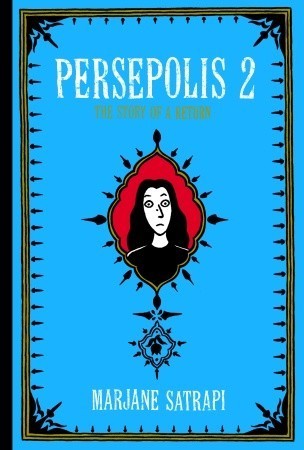
[READ: March 26, 2016] Persepolis 2

I found Persepolis to be an amazing book.  A peek inside a regime that was sort of mythically wicked during my childhood. Marjane’s personal story was interesting of course, but I enjoyed seeing just what was happening in this world that seemed so mysterious when I was growing up.

This sequel is a little less exciting because it is more or less about a lonely teenager in Europe.  I think if the first book wasn’t so groundbreaking, this one wouldn’t feel as disappointing.  Her story is interesting and her experiences are story-worthy, but compared to the first book this one is the awkward teenage years.

We see that Marjane’s being sent to Europe didn’t go quite as planned.  She stayed with her mom’s friend.  But the friend fought with her husband all the time and their house was not a happy one. They felt that they couldn’t look after Marjane so they sent her to boarding school in Vienna–Marjane didn’t speak German. (more…)

Read Full Post »

SOUNDTRACK: BILLY BRAGG-Tiny Desk Concert #281 (June 17, 2013).

I really like Billy Bragg.  Not necessarily all of his music, but I like a lot of it and I certainly love what he stands for.  If you like his instantly recognizable voice (which I do), then just about anything he does sounds good.  But no doubt some songs are catchier than others.

Bragg played a Tiny Desk Concert in 2016 with someone else as part of a duo.  I’d listened to that one first, but I liked this one more.

For this one he is accompanied on the first two songs by dobro player C.J. Hillman.

Bragg talks a lot–he has many lengthy stories between songs–and he’s pretty much always funny or thoughtful.  He introduces the first song by saying that moving into a new building always has troubles–you’ll always need someone to fix things up.  With that, his first song is called “Handyman Blues.”

It’s a great story song.  I especially like this line:

Don’t be expecting me to put up shelves or build a garden shed / but I can write a song about how much I love you instead.

It’s amusing that in the next song workers actually interrupt his song.  They were “met with lot of hammering on our rooftop by some real handymen as they put the finishing touches on NPR’s new home.”

For the second song they

channeled the spirit of legendary American folksinger Woody Guthrie, with whom Bragg collaborated — albeit posthumously, in Guthrie’s case — when he took Guthrie’s unsung words and set them to song with the help of Wilco. Here, he takes a song Guthrie himself co-opted and altered: a gospel tune (“This World Is Not My Home”) he’d turned into an anthem against inaction.

Bragg introduces this song as saying he took it over when the U.S. was having the debate about universal health care.  He says that people still face all the same problems that this classic song talks about–people losing homes to banks or families struggling to make ends meet.  But the middle verse is about a wife who dies on the floor for want of proper health care.  Bragg says that that doesn’t happen in his country anymore and it’s hard for people in his country to imagine that a generous country like the US still hasn’t resolved that issue (and five years later things are even worse with Trumpcare–#ITMFA #RESIST).

Guthrie called the song “I Ain’t Got No Home (In This World Anymore”).  After he sings a verse, the hammering starts and they pause the song to wait for the work to finish before he re-starts the song.  In the meantime they talk about what his band should do in Washington.  Someone says the National Archives and he jokes the Nashville Archive?  He says that they really enjoyed Nashville.  Then he mentions the National Archive to CJ and says

We can find out how the Americans started the war of 1812.  (chuckles).  I just played Annapolis, they’re still sore about it over there.  Never mind who won the war but who started it.

It’s another nice story song.  The dobro works perfectly with it.

“Sexuality” is the only song on this set that I knew.  It’s an old favorite that is serious and funny as well (and very progressive for when it was written).  It sounds terrific and is super catchy.  Although he comments that the acoustics aren’t that great in this new building–there’s not much bounce back off the walls “for those of us who technically aren’t great singers.  But for those of us who are buskers like myself, it’s not bad.”

Introducing the final song, “No One Knows Nothing Anymore” he says he read an article on the BBC about a kid who proved that economics professors were wrong and the article commented that “the trouble with economics is that no one knows nothing anymore.”  He says that had just written a song with that same name, so he’s with the zeitgeist.

He also interjects that there will be pedants–“and there are one or two who listen to NPR, I’m sure” who will write in to say it should be ‘no one knows anything any more.’  But the first thing they teach you at songwriting school is that alliteration trumps grammar.

And then he starts strumming “Sexuality “and says “Oh, I’ve just played that.”

“No One Knows Nothing Anymore” is a nice folkie, very-Billy Bragg song–good melody and really good lyrics.

At the end, as the camera fades to black he says “Chris, pass the hat around.”

I’m so happy that Billy Bragg is still making music.

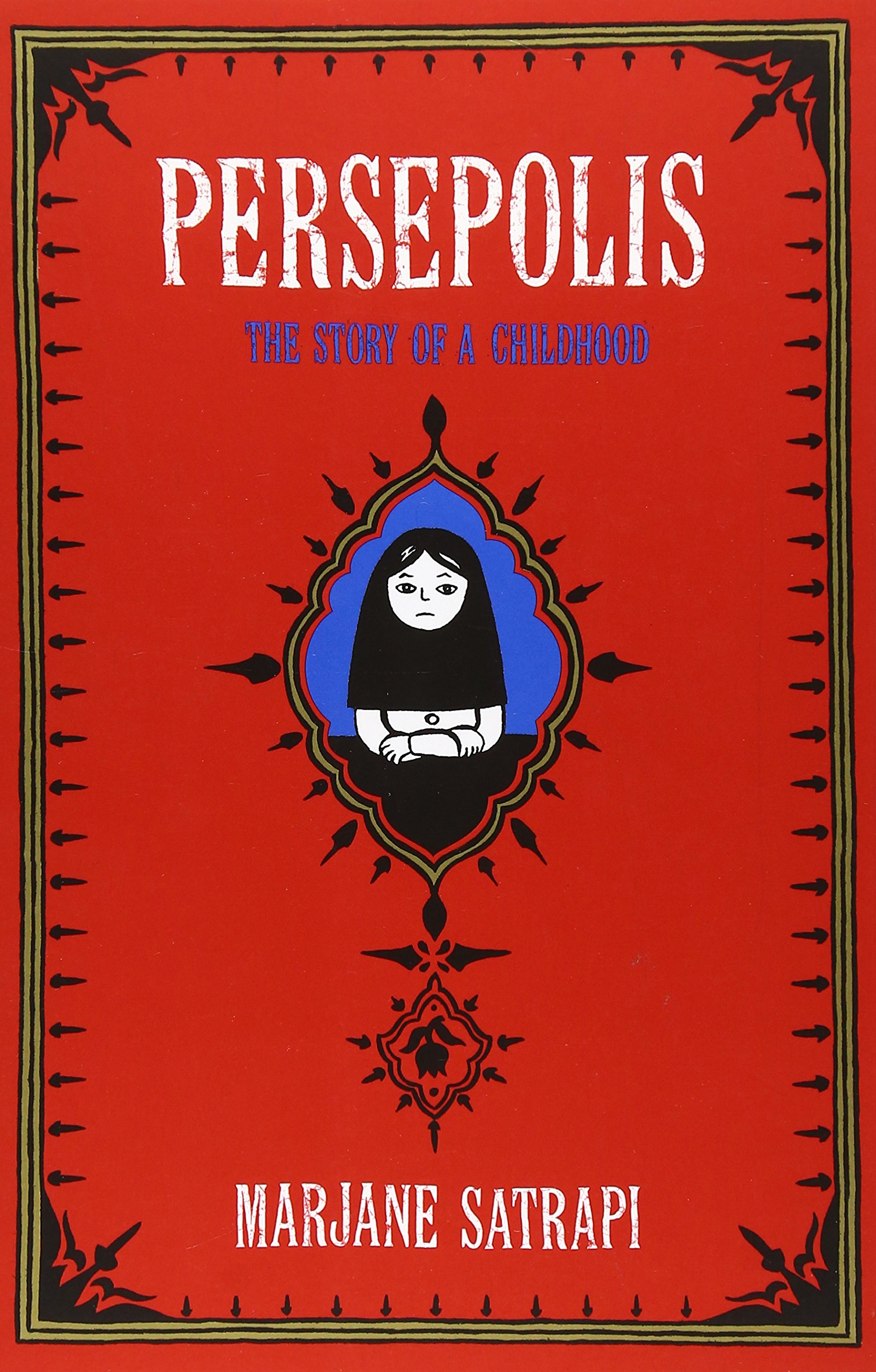
[READ: March 26, 2016] Persepolis

This graphic novel is legendary, and I’m embarrassed it has taken me 13 years to read it.

Persepolis is a memoir of a young girl growing up in Iran during the 70s and 80s.  I appreciated the contextualizing introduction in which she explains the history of the country.

The introduction lays out a basic outline of the history of Iran and the Middle East (that goes all the way back to B.C years).  She explains that Iran has always been a rich nation and has constantly been under attack.  When oil was discovered, the West came calling.  Great Britain wielded a powerful influence over Iranian economy.  During WWII, Iran remained neutral but then was invaded by the west.

The Prime Minister of Iran (not the Shah) nationalized the oil industry in 1951 which led to an embargo and a coup organized by the CIA.  The leader, Reza Shah was succeeded by his son, Mohammad Reza Shah–known simply as the Shah of Iran.  The Shah stayed in power until 1979 when he fled to escape the Islamic Revolution.

She says that since the Islamic revolution Iran has been associated with fundamentalism, fanaticism and terrorism, but she knows that this is far from the truth.  And that’s what inspired her to writ this book.

(more…)

Read Full Post »

SOUNDTRACK: DONNY McCASLIN-Tiny Desk Concert #590 (January 9, 2017).

Donny McCaslin’s band was responsible for the jazzy music that propelled David Bowie’s final album.  As the Tiny Desk blurb says:

David Bowie had long wanted to make a record with a jazz band, and on Jan. 8 of last year, he realized his dream with the release of Blackstar. Two days later, he was gone. Donny McCaslin’s band helped him make that record, and now, a year later, we pay tribute to Bowie and Blackstar by bringing McCaslin’s band

As a bandleader and sax player, [McCaslin’s] put out a dozen albums, the most recent of which is Beyond Now, with musicians Tim Lefebvre on bass, drummer Mark Guiliana and keyboardist Jason Lindner.

Beyond Now was recorded after Blackstar, features a few Bowie covers and stretches the band’s own usual boundaries. For this Tiny Desk concert, you can hear an extraordinary group playing extraordinary music — including an instrumental version of “Lazarus,” from Blackstar.

The band plays three pieces.  “Shake Loose” is 7 and a half minutes.  The music is great behind the sax—dramatic and interesting.  I think I just don’t care for the sound of saxophones as much these days, because I love the bass thumping and the great sounds from the keys but the soloing doesn’t excite me.  I love in the middle of the song that there are really cool spacey sound on the keys.   And the whole middle section where it’s the keys playing weirdo stuff and the drums keeping a groovy jazz beat–that’s awesome.

So I may be the only person in America who has not heard the whole of Blackstar.  I actually don’t even really like the one song I did hear (I don’t care for the jazzy parts).  So I can’t compare this six-minute instrumental version to the original of “Lazarus.”  I love that the keyboard is playing a very convincing grungy guitar sound.  I’m not sure if the sax is doing a vocal line or just playing around, but I love the music for this song a lot.

“Glory” is about the glory of the creation of the beautiful world that we live in “that will hopefully be intact as we move forward.”  This is an 11 minute song with all kinds of great swirling keyboard sounds.  I really like this song—the bass and keys together are great.  And either I’ve grown more used to the sax or its mixed a little lower, but it works so much better with the music.  About three minutes in there’s a lengthy trippy mid-70s Pink Floyd echoing synth solo.  Which is pretty cool.  So overall, I really enjoyed this set.  And maybe I need to go give Blackstar a listen.

[READ: March 25, 2016] Around

I really enjoyed Phelan’s Bluffton.  The story was interesting and I really enjoyed Phelan’s artwork–subtle with delicate coloring and very thin, expressive lines.

This book also contains Phelan’ wonderful artwork and the story (or stories) are also really interesting.  For this is a book about three remarkable journeys around the world.

Phelan gives a fictionalized (but accurate) history of the adventures of Thomas Stevens (Wheelman in 1884), Nellie Bly (Girl Reporter 1889) and Joshua Slocum (Mariner 1895).

I hadn’t heard of the two men and I found their stories quiet fascinating.  I knew of Bly’s journey but I didn’t know all of the details and I found it equally interesting. (more…)

Read Full Post »

« Newer Posts - Older Posts »