Feeds:
Posts
Comments

Archive for the ‘Essays’ Category

harpjuneSOUNDTRACK: みっちりねこマーチ – MitchiriNeko March (2013).

mitchiBecause Lewis-Kraus mentions “the most important internet cat band of our day” in this article, I did a search for such a thing and came across this.  This is an adorable cartoon of cats marching (and playing along to the music).

I didn’t look into this too hard, and I don’t really know MitchiriNeko, although the video says that “MitchiriNeko” is a cat-like cartoon character who is always in a group to hang out so closely with each other wherever they go.

I’ve listed below more stuff about MitchiriNeko, but really I just enjoyed watching the video.

Evidently there is a web comic for this fella:
Manga Box! English editions are coming soon.
https://www.mangabox.me/
https://www.mangabox.me/reader/247/

There are apps for this character:
iPhone
https://itunes.apple.com/jp/app/mitch…
Android
https://play.google.com/store/apps/de…

And this song “MitchiriNeko March” is now on sale.
https://itunes.apple.com/jp/album/mit…

[READ: November 17, 2014] “Story A”

I enjoyed Gideon Lewis-Kraus’ previous Harper’s essay about Japan: “Sleeping Together.”  I thought it would be fun to tie it to this one which is also about Japan.

He says that for a time, he was drawn to “particular breeds of the Japanese trivial” like “the “most important internet cat band of our day” and the cafe that he describes in “Sleeping Around.”  Thus he was immediately drawn to the Japanese hole-digging contest.  He decided to go see it, which would also allow him to visit his brother Micah in Japan.

The title of the article, “Story A” refers to a journalistic practice in which “essays purport to be about one thing but reveal themselves to be about some other, profounder thing.  Story A might be about the game of Monopoly but its real role is to give cover to Story B which is about the decline of the American city.”  He imagined that the nonsense of hole digging could lead to something incredibly profound. (more…)

Read Full Post »

krausSOUNDTRACK: THE FLAMING LIPS-The Terror (2013).
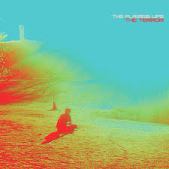
terror After the distortion heavy and heaviness of At War with the Mystics and Embryonic (to say nothing of their other experimental releases), I wasn’t sure what to expect from an album called The Terror.  Yet with a title like that the album is far more invested in psychological terror than in pummeling you with scary noises and music.  The album is more unsettling and spooky with existential dread.

Wayne Coyne has always been a pretty optimistic guy–weird, sure, dealing with feelings of dread, sure, but never so dark and insular.  But I learned that before recording this album and most likely as an impetus to record it,  Coyne separated from his partner of 25 years, Michelle, and Lips multi-instrumentalist Steven Drozd temporarily relapsed into addiction.

In an interview, Drozd says the album is like a crisis of life confidence.  He also says that the uniformity in sonic style was intentional: “Instead of writing songs and then figuring out sounds, we’d write the other way around: create sounds then make songs out of those sounds.”

So the vocals are quite low in the mix, and there is not a lot of “music” in the album.  Rather there are layers of sounds–swishing synths, spiraling noises, percussion effects that seems to almost cover up the vocals, giving it a very claustrophobic effect.  “Look… The Sun Rising” opens the disc.  It is primarily percussion with some noisy sounds and really sharp piercing guitars (that play noisy counterpoint to the soothing chorus of Oh Oh Ohs).  And yet after all of that noise and chaos, the very lovely “Be Free, A Way” surfaces as a quiet introspective song.  There are gentle keyboard notes (not unlike on Yoshimi) that propel this song along.  “Try to Explain” is a pretty song with some unusual sound effects swirling around it (The Lips can’t so straight up pretty, right?).  And yet lyrically, this song, along with the rest, is very dark indeed.

“You Lust” is a 13 minute (!) invocation about various forms of lust.  It opens with the couplet: “You’ve got a lot of nerve/A lot of nerve to fuck with me.”  The middle of the song is a kind of Pink Floydian keyboard workout.  It’s a  lengthy jam that’s kind of samey, but I’ll bet if you can really sit (with headphones) and close your eyes and focus it’s pretty intense.  After about ten minutes of that repetitive claustrophobia, some lightening occurs with sprinkled keyboard notes.

“The Terror” is primarily in Coyne’s falsetto, and it seems gentle until the mechanized noises come bursting forth.  “You Are Alone” is the shortest thing here, under 4 minutes of squeaking noises.  And again, a lovely melody despite the title.  I feel like this song summarizes the album pretty well.  In it, Coyne sings “I’m not alone” while a deeper voice replies, “you are alone.”  Whose voice will ultimately win?

  “Butterfly, How Long It Takes to Die” returns to that abrasive guitar of the earlier tracks, but the main body of this 7 minute song is just bass, keening keyboards and Coyne’s whispered voice.  There’s a recurring synth line that is magical and/or creepy depending on your frame of mind.  It, along with many of the other songs, have a kind of coda that links the songs.  This one is mostly just choral voices, but it twists the ends of the songs in a different direction. “Turning Violent” is a quiet track, in which Coyne sounds nearly defeated until the second half of the song grows louder and more animated with layers of vocals.  The disc ends with “Always There…In Our Hearts” which seems to offer some hope…maybe.  There’s signs of uplift in the melody, and when the drums kick in at the end, it seems to propel the song into a more intense frame of mind.

And lyrically, despite all of the darkness that is always there in our hearts, there is a light peeking out: “always therein our hearts a joy of life that overwhelms.”

Although most reviewers find this album unremittingly bleak, I find the music to be beautiful in an aching sort of way–a beautiful way to deal with pain (better than getting the same tattoo as Miley Cyrus, anyway).

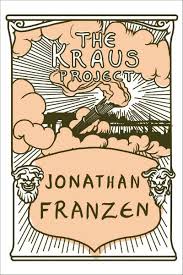
[READ: October 31, 2014] The Kraus Project

The title page of this book read: The Kraus Project: Essays by Karl Kraus translated and annotated by Jonathan Franzen with assistance and additional notes from Paul Reitter and Daniel Kehlmann.

So just what is this thing anyhow?  Well Karl Kraus was a German writer (1874-1936) whose main contributions to letters were some essays and a newsletter Die Fackel (The Torch).  The authors compare the newspaper (favorably) to a blog (while also complaining about what blogs have done to letters).  He started Die Fackel in 1899 and he continued to direct, publish, and write it until his death.  He used the paper to launch attacks on hypocrisy, psychoanalysis, corruption of the Habsburg empire, nationalism of the pan-German movement, laissez-faire economic policies, and numerous other subjects.  For the first ten or so years, Kraus was the editor, accepting contributions from around the German speaking word.  But in 1911, he became the sole contributor to the newsletter.

He also wrote many essays (he did not care much for fiction), including the two main ones that compression this book: “Heine and the Consequences” (1910) and “Nestroy and Posterity” (1912).  The book also includes two follow up essays: “Afterword to Heine and the Consequences” and “Between Two Strains of Life: Final Word to Heine and the Consequences” (1917) and a poem: “Let No One Ask…” (1934).

The essays themselves are quite brief.  Despite the first coming in at 135 pages, note that the left pages are all in German (so reduce 135 by half), nearly all of the English pages are filled with footnotes (reduce by half again) and some of the footnotes run for several pages.  So the essay could be said to be about 25-30 pages.

The same is true for all of the pages in the book.  The left sides are in German (except the footnotes) and most pages are split in half because of the footnotes.  Which means that Franzen and friends write far more than Kraus did.  Ultimately, this book is actually three things: It is a collection of Kraus’ essays with Franzen’s fine translation; it is an explication of Kraus’ attitude and about life in Germany during Kraus’ life and finally it is an insight into Franzen as a young man living in Germany and why Kraus was so appealing to him.

The first part: Kraus’ essays. (more…)

Read Full Post »

jun9SOUNDTRACK: JOHN GRANT-“GMF” (live on The Late Show with David Letterman) (2014).

grantI was introduced to John Grant with this song.  And since the G stands for Greatest and the MF stands for what you think it does, I was really surprised to hear that he played this live on Letterman (Grant’s network TV debut, no less).

He sounds great live (his voice is rather gentle for such a song title).  He has a full band but the song is primarily acoustic guitar with swells of keys.  The backing vocals on the later verses really flesh out the song.  And it is immensely catchy.  I’ve been singing it to myself for days.

But the best part of course are the lyrics.

In the first chorus of this version he dares to sing the dreaded MF words, which get silenced (sophisticated recording keeps the music playing though).  The rest of the choruses he changes it to “I am the greatest living creature” which I find funny and possibly even better.  I also love the way the percentage of laughing you could be doing decreasing as the song ends.

They edited down the song (the original over 5 minutes), removing a middle section that adds dimension to the song, but is not missed in this version.

Even Letterman enjoyed it, saying those same bleeped words at the end of the song.  It’s a great live performance

[READ: September 17, 2014] “You Can Find Love Now”

This year’s Summer Fiction issue of the New Yorker was subtitled Love Stories.  In addition to all of the shorter pieces that were included in this issue, there were also four fiction contributions.

Interestingly, this one was very short as well (possibly shorter than some of the essays).

This story actually reads like a Shouts & Murmurs piece.  It is a funny conceit dragged to its logical ends.  In this case, the story pokes fun at online dating.

The story opens with a pitch from the dating company saying that after creating a profile, within 24 hours “you’ll be on your way to eternal happiness.”  The first joke comes when the profile creator writes, “Find me at cyclops15.  Cyclops 1-14 were taken.”  Then in his second typed section we learn that, indeed, he is really a cyclops: “I am eight feel tall and I have one giant eye.” (more…)

Read Full Post »

10SOUNDTRACK: FATHER JOHN MISTY-Fear Fun (2012).

fjmI can’t get over how much I’ve been enjoying this album for the last two years.  Father John Misty is J Tillman from Fleet Foxes.

This disc is a gentle folk album with vaguely country leanings.  The arrangements are spare and yet the verses and choruses are so great to sing along to. “Funtimes in Babylon” has this infectious chorus: “I would like to abuse my lungs, smoke everything in sight with every girl I’ve ever loved.  Ride around the wreckage on a horse knee deep in mud.  Look out, Hollywood, here I come.”  “Nancy from Now On” has a great propulsive chorus with oohs and tinkling bells and pianos and Misty’s engaging falsetto.

I was introduced to this album by “Hollywood Forever Cemetery Sings” which opens with the super catchy line, “Jeeeeesus Christ, girl.”  I love the big crashing drum sound he has here.  “I’m Writing a Novel” is a fun romp, with the great line “I’m writing a novel because it’s never been done before.”  “O I Long to Feel Your Arms Around Me” introduces a great organ sound.  It’s a full song at only 2 and a half minutes.

“Misty’s Nightmares 1 & 2” opens with a slide guitar and turns into a stomping song with more Ooohs and a great chorus.  “Only Son of the Ladiesman” has a great chorus with the fun couple: “I’m a steady hand, I’m a Dodgers fan.”  “This is Sally Hatchet” has cool guitar blasts and a great bridge.

“Well You Can Do It Without Me” is a countrified 2 minute stomper.  “Tee Pees 1-12” is a big stompin’ honkey tonk song with fiddles and slide guitar.  The disc ends with “Everyman Needs a Companion” a slow ballad with a great piano melody and a fun to sing along with verse and chorus.

I love the lyrics on this album, especially the song “Now I’m Learning to Love the War” a slow ballad with a great story:

Try not to think so much about
The truly staggering amount of oil that it takes to make a record
All the shipping, the vinyl, the cellophane lining, the high gloss
The tape and the gear

Try not to become too consumed
With what’s a criminal volume of oil that it takes to paint a portrait
The acrylic, the varnish, aluminum tubes filled with latex
The solvents and dye

Lets just call this what it is
The gentler side of mankind’s death wish
When it’s my time to go
Gonna leave behind things that won’t decompose

In addition to all of the great music on here, the CD packaging is fantastic with that great cover, done in a cardboard gatefold sleeve including two huge books full of words and drawings and lyrics and everything.  I’m really looking forward to his next release.

[READ: September 14, 2014] Grantland #10

Despite my being in the middle of reading several other things, I was looking for a short article to read the other night and grabbed my Grantland 10.  And, of course, once I started, I couldn’t stop. I put everything else on hold and blasted through this issue.

And so all of my loves and hates are the same with this issue.  I never know how anything they talk about nearly a year ago turned out, which stinks.  And yet I get so wrapped up in the writing that I don’t care.  I’m not sure what it is about the writing for Grantland that i enjoy so much.  It is casual but knowledgeable.  Often funny but not obnoxiously silly. And I suppose that now I feel like I’m in on all of the secret stuff they talk about so I’m part of the club.  I fear that if I were to ever go to the website I would get sucked into a black hole and never emerge.

I often wonder how they choose what goes into the book.  This issue has some new writers and the surprising absence of some regulars.  I wonder what went on there.  And as always, the book could use some editing and maybe actually listing the urls of the links that were once in the online version.  But I think I’m talking to deaf ears on that one.

This issue covers October-December 2013 (that’s ten-twelve months ago!  Some of this stuff feels ancient!)

(more…)

Read Full Post »

jun9SOUNDTRACK: DESTROY TOMORROW 666-“Distortasaur” (2005?).

6666Destroy Tomorrow 666 is a DJ project from Sloan’s Patrick Pentland.  I had never heard of it until reading about him recently (Sloan has a new album out).  It is Pentland’s Alternative / Electro / Punk outlet that he’s been doing since 2005.

Pentland is known for writing gorgeous pop songs with wonderful harmonies.  But he grew up listening to hardcore punk, so his musical tastes are all over the place.  This track (I love the name) is, like the others here, a distorted fuzzy “dance” song that is all instrumental and not poppy at all.

While I’ll stick with Sloan, I imagine this was a lot of fun to whip together.  And yes, I think it’s very good dark dance music.  Although surely if he was going to use 666 he could have turned Pentland into Pentagram.

You can check it out at ReverbNation.

[READ: June 17, 2014] “Stories”

This year’s Summer Fiction issue of the New Yorker was subtitled Love Stories.  In addition to the two graphic stories, we have a series of five personal essays which fall under the heading of “My Old Flame.”  I liked that all five writers have slight variations in how they deal with this topic.

Colm Tóibín is a prolific writer whom I know very little about.

In this essay, Tóibín flashes back to 1978 when he was 23 and living in Barcelona.  He had been there for a few months when he heard about a cheap charter flight back to Ireland.  So he packed up and got out of Barcelona and returned to his home.

He often wonders what would have happened had he stayed in Spain.  He most likely would have stayed with the guy he was seeing, spending days on the beach and nights in the boy’s apartment in the city.  He even thinks he might never have gone home.

After he left, they kept in touch for a time, then inevitably, they lost touch.  (more…)

Read Full Post »

jun9SOUNDTRACK: BUDGIE-“Breadfan” (1973).

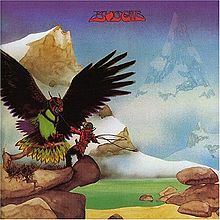
budgieI am pretty much wholly ignorant of Budgie. I know this song “Breadfan” because Metallica covered it back on one of their covers EPs. I really Metallica’s version, but since that was pre-internet, I was never able to explore Budgie more.  And then I forgot about them.

Well, just the other night, WXPN played “Breadfan” (as part of a 70s power trio segment) and I was shocked at how high-pitched Burke Shelley’s voice was (the comparisons to Rush are apt).  And I was also surprised at how heavy this song was.  While Black Sabbath had certainly been releasing heavy albums up until this time, this song introduced a much faster element.  And there were only three members in the band!

What’s also interesting is the prog rock leanings in some of their songs, like the middle of this one.  The fact that Roger Dean did this album cover and that they have a 10 minute song on this album seems to lean towards prog rock as well).

Time to dig deep in to the Welsh band’s catalog, I think.

[READ: June 17, 2014] “Beautiful Girl”

This year’s Summer Fiction issue of the New Yorker was subtitled Love Stories.  In addition to the two graphic stories, we have a series of five personal essays which fall under the heading of “My Old Flame.”  I like that all five writers have slight variations in how they deal with this topic.

Wolff surprises (me anyhow) by saying that when he was fifteen, he cut off the last joint of his left ring finger.  This piece of information just sort of lingers there until the end of the story.

Because he then talks about how he never really had a girlfriend.  In sixth grade he and his friend Terry would meet Terry’s cousin Patty and another girl in the movie theater and they would pair up and make out (clearly Terry did not make out with his cousin).   But they pairings were never seen in public and never went on a further date.

But later that winter his family moved to the Cascades, where the elementary school had all of four rooms.  There were ten kids in his class and nine were boys.  The one girl, Nevy, drove them all crazy. She favored one then the other but her real love was horses not boys. (more…)

Read Full Post »

jun9SOUNDTRACK: BIKINI KILL-Revolution Girl Style Now (1991).

rvolBikini Kill was one of the most memorable bands from the Riot Grrrl movement.  And frankly, twenty years on, these song still sound incendiary–no one has picked up the torch that bands like this lit in the 90s.

Bikini Kill were confrontational–Kathleen Hannah took no shit, and sang however she felt–sometimes screaming, sometime howling, sometimes singing right on key.   But the most important thing about Bikini Kill was their lyrics–they addressed women’s issues in ways that few bands dared to before (or even since).  As in the title “Suck My Left One.”  Or the premise of “Carnival,” a song about 16 year old girls giving carnies head to go on rides.

While it’s not always clear what the lyrics are, occasional lines are crystal clear. “Daddy’s l’il girl don’t wanna be his whore no more.”  “As a woman I was taught to always be hungry / Now women are well acquainted with thirst”  Or the addressed-to-all-girlfriends, “Double Dare Ya”

Hey girlfriend
I got a proposition goes something like this:
Dare ya to do what you want
Dare ya to be who you will
Dare ya to cry right outloud

Their music, especially on this early self released tape was raw and edgy, abrasive and confrontational.  And yet at the same time they didn’t completely shy away from melody, as this album’s “Feels Blind” has a simple but catchy melody.

[READ: June 17, 2014] “TV”

This year’s Summer Fiction issue of the New Yorker was subtitled Love Stories.  In addition to the two graphic stories, we have a series of five personal essays which fall under the heading of “My Old Flame.”  I liked that all five writers have slight variations in how they deal with this topic.

Miranda July’s take on My Old Flame is set back when she was living in Portland. While her story isn’t exactly happy (how many stories about old flames ever are?), this particular old flame had a major impact on her life.

July noticed that there were two women who were always walking together and who loved together.  She was intrigued by them and their cool house and eventually made friends with them.  She was especially interested in the person called TV.  “She, if she was a she, was every boy from every childhood book.”  July had tried to date boys like that but they often turned out to be assholes. But TV had those boyish qualities and a girl’s point of view. (more…)

Read Full Post »

jun9SOUNDTRACK: SLOTHRUST-7:30AM (2011).

slothThis song is the opening theme to the FX show You’re the Worst, which I like very much.

The theme is only a few seconds long although the song (which has been around since at least 2011) is considerably longer (although it doesn’t reach 3 minutes).

Every time we’ve watched the show, I’ve tried to imagine who the guy is singing this song–he sounded strangely familiar.  Well, imagine my surprise to find out that the music from the band Slothrust is pretty much written and sung by a woman, Leah Wellbaum.  Well who would have guessed (it’s more evident in some of their other songs).

I love the simplicity of this song–repeated lyrics set to a ramshackle guitar which bursts forth into loud wailing in every repeated section.  There’s even a guitar solo (equally as uninhibited).  The band is a typically more punky than this folk song might hint, but you can feel all their glorious chaos in this one track.

 It’s funny and rather catchy.  Check out the song on bandcamp.

[READ: June 17, 2014] “Good Legs”

This year’s Summer Fiction issue of the New Yorker was subtitled Love Stories.  In addition to the two graphic stories, we have a series of five personal essays which fall under the heading of “My Old Flame.”  I liked that all five writers have slight variations in how they deal with this topic.

Joshia Ferris has written a number of things that I enjoyed.  This piece, which  found very peculiar, takes a very different approach than Kushner did.  Where Kushner focused on different people in her past, Ferris Ferris focuses on one old flame. Or is she?

He says he met her in the hallway of a dorm.  There’s this near-opening line that sets the tone: “I didn’t think much of her, but I was sure she had never seen anyone quite so handsome.”

It turns out that she was dating someone else anyhow.  And then she graduated, leaving him behind (perhaps unbeknownst to her).  He says, “I didn’t miss her,”  because he was “in this terrible on-off thing with Sisyphus, who kept dragging me up a pretty blond hill and hurtling me down.” (more…)

Read Full Post »

jun9SOUNDTRACK: EX-COPS-“Ken” (2014).

excopsIn this song, I get a vibe of Prefab Sprout singer over a swirly indie band (at least for the verses).  The chorus is bigger–swirling guitars and fast drums, with Ooohs building and building.  And yet the song never quite launches the way “Black Soap” did.

Amalie Bruun doesn’t really contribute to this song.  And while I wouldn’t say she is crucial to the band, something is definitely lacking without her sharing vocal duties.

I wanted this song to be a bit…more, somehow.  I’m not quite sure about Ex-Cops after two songs.  We’ll see if I get blown away by something else later on.

The whole reason I checked out this song was for the video, which is a tribute to The Replacements’ “Bastards of Young” video.

[youtbue=https://www.youtube.com/watch?v=HgRil7yidDg]

[READ: June 17, 2014] “The Adolescents”

This year’s Summer Fiction issue of the New Yorker was subtitled Love Stories.  In addition to the two graphic stories, we have a series of five personal essays which fall under the heading of “My Old Flame.”  I liked that all five writers have slight variations in how they deal with this topic.

Kushner presents a series of past boys that she had crushes on when she was young.  Each one is presented with a “random initial.”  First there was B who looked like an angel.  He asked to carry her books in sixth grade.  It is a sweet introduction until the conflict: an eighth grade girl, she was stridently white, says something about his race.  And in the span of one paragraph, “many things were new to me that day.  B and I never reconnected.”

Next there was D.  D was white and proclaimed that he would hurt others (presumably those who were black).  The race issue was complicated then.

She once kissed M, who was black, although R would have been a better match.  R flirted with her on the playground and treated her like a sexy woman.  (more…)

Read Full Post »

CV1_TNY_03_17_14Liniers.inddSOUNDTRACK: YASMINE HAMDAN-Tiny Desk Concert #359 (May 24, 2014).

Yysamineasmine Hamdan is a Lebanese singer-songwriter.  The three songs she plays here are sung in Lebanese (I assume).  Sung with just the accompaniment of one guitar, Yasmine sings and sways her way through these beautiful songs.  It’s actually fun to just see her move while she sings, she’s so loose and relaxed and yes, sensuous.

The most interesting thing is that Hamdan had only just met guitarist Gabriel Gordon when they traveled down together from New York that morning. They’d never rehearsed together, so the interesting guitar lines he’s playing sound great even though they might not be what she intended.  (I wish there was a little more information about this partnership in the blurb).

“Beirut” is a song form the 1940s and she does some interesting vocal things by using her hands around her mouth.  “Deny” and “Shouei” are beautiful songs that Hamdan has written and the two of them sound just great together.

[READ: May 27, 2014] “Long Story Short”

I have been one of those readers who doesn’t really know what to make of Lydia Davis, so I found this article very interesting and helpful.  It allowed me to appreciate her super short stories a lot more.  For yes I have mused about why “she doesn’t call them poems or fragments.”  The answer: “She prefers the deeper associations of the word ‘story’.”

I was interested that she is considered “one of the most original minds in American fiction today,” and I tend to agree that she is because no one else really writes like her.  Her Collected Stories has “some two hundred pieces” in just over 700 pages.  This is thirty years worth of work.

But I also liked seeing the succinct comment “like many things that Davis writes, [a letter] had started out sincere and then turned weird.”  In this case the letter she wrote to a frozen peas manufacturer was published as the story “Letter to a Frozen Peas Manufacturer.”

I didn’t know much if anything about Davis, so this article acted as a biography as well.  She dated writer Paul Auster and while he write his traditional stories, Davis struggled to do the same.  Her stories never came together or seemed to be about normal things, as her mother commented: “Why don’t you write about your travels or something more cheerful?”  But it was when she started reading very short stories by the poet Russell Edson (of whom I’ve never heard), that she hit upon the idea of writing very short stories and “The Thirteenth Woman” was her first successful attempt. (more…)

Read Full Post »

« Newer Posts - Older Posts »