Feeds:
Posts
Comments

Archive for the ‘Dudes’ Category

SOUNDTRACK: DANIIL TRIONOV-Tiny Desk Concert #691 (January 12, 2018).

It has been quite a while since there had been a classical pianist on Tiny Desk.  And man, what a return.  Trionov is just stunning and he makes some of the more complex piano pieces in musical history seem easy.

NPR’s Tom Huizenga has written a splendid blurb which I’m putting here because he covers far more than I could:

When we invited Russian pianist Daniil Trifonov to play a Tiny Desk concert, we rolled out the big guns. In place of the trusty upright, we wedged a 7-foot grand piano behind Bob Boilen’s desk in preparation for the artist who The Times of London called “without question the most astounding pianist of our age.”

That’s a pretty lofty claim, but watch and judge for yourself. His performance here is extraordinary. Still in his 20s, Trifonov seems to have it all: jaw-dropping technique and interpretive skills beyond his age. He’s also a composer — the night before his NPR visit, he played his own knuckle-twisting piano concerto at the Kennedy Center here in Washington, D.C.

But for his Tiny Desk show, Trifonov focused on Chopin, beginning with the mercurial “Fantaisie-Impromptu” in C-sharp minor, a work that mixes sweeping melody, turbulent passion and wistful repose. Hunching close over the keyboard with feline agility, Trifonov’s slender fingers glide effortlessly. He coaxes the instrument to sing tenderly in the slow central section.

Trifonov follows with a pair of short tributes to Chopin by his peers. Robert Schumann’s “Chopin” accentuates the lyrical side of Chopin, filtered through the German composer’s forward-looking harmonies, while Edvard Grieg’s “Hommage à Chopin” offers volatility, lovingly rendered.

The smartly programmed set is capped with more Chopin, but with a nod to Mozart: the finale from a set of variations based on an aria from Don Giovanni. It gives Trifonov a chance to display his lightness of touch, plus a few pianistic fireworks. Smiling, he treats the tricky filigreed runs and hand crossings as if it were a child’s game. Look closely and you can see the piano shake.

So Trifonov plays four pieces.  The middle two are quite short.

Chopin: “Fantaisie-Impromptu, Op. 66”  This is one of my favorite pieces.  The fast part is jaw-dropping and the slow part is achingly beautiful.  His fingers flow over the keys like he was simply petting a cat.

Schumann: “Chopin. Agitato” (from Carnaval)  Trifonov says Schumann wrote a tribute to Chopin called “Chopin,” which was a portrait of the man.   This is a quiet, delicate piece and it is so much fun to watch his hands float seemingly weightless above the keys.

Grieg: “Hommage à Chopin, Op. 73, No. 5”  This tribute focuses on the more stormy and turbulent aspects of Chopin’s faster work.  It slowly builds in intensity with very fast finger work.

Chopin: “Variations on Là ci darem la mano‘ (from Mozart’s Don Giovanni) – Coda. Alla Polacca”  Chopin wrote a variation of Mozart’s Don Giovanni.  This is the finale. There are some amazingly intense runs up and down the keys in this piece as well. And again a lot more bouncing around with his left hand to high notes.

This was a tremendous Tiny Desk Concert.

[READ: December 13, 2017] Crafty Cat and the Great Butterfly Battle

I really enjoyed this third Crafty Cat book.  Anya continues to be an unreasonable character (and I want someone to stand up to her!), but her awfulness allows for some good humor and good setups in this book.

The book opens with Crafty Cat saving an ant after dusting it with glitter (the ant now feels pretty special).  But then it’s soon time for Birdie to get to school.  She tells us that they are picking roles for the class play about butterflies.  Everyone is supposed to pick a bug they want to be:  “Be creative in your choices, we don’t need ten ladybugs.”  Birdie confesses that she is going to be the butterfly she has even crafted a small model of the wings that she can make.

Then Evan shows up.  He rescues a glittery ant from the sidewalk (that was amusing)  and then reveals that he is going to be an ant for the play.  When Birdie says she’s going to be the butterfly, Evan has reservations.  When they enter the school we see 10 students all wanting to be the butterfly–especially Anya.  And image HER surprise when other kids want to be the butterfly–which is her role, after all. (more…)

Read Full Post »

SOUNDTRACK: ARTISTS FROM THE “TAKE ME TO THE RIVER” TOUR-Tiny Desk Concert #692 (January 15, 2018).

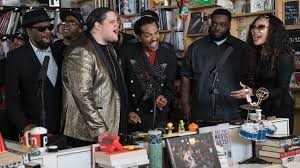
This is a touring band playing classic soul.  But I found the modern updates to be unpleasant and almost undermined the tone of the show.  The blurb says:

“Take Me To The River” is a 1974 song from the legendary Al Green and guitarist “Teenie” Hodges. And though it wasn’t a big hit at the time, this song’s mix of religion and desire has become part of pop music’s canon.

Here at the Tiny Desk, some of the original players of this deep southern soul have come together to honor and update this tradition. It’s a celebration of Memphis soul old and new, with 13 musicians wedged behind the desk.

Some of those players of the old include singers Bobby Rush and William Bell; on the Hammond organ, Rev. Charles Hodges and LeRoy Hodges on bass. But it’s what’s new that makes this more than a look back – the addition of southern rappers Frayser Boy and Al Kapone – that truly puts this project on new musical ground.

But it is this update–Frayser Boy and Al Kapone who really ruined this show for me.

I’m not suggesting that the original lyrics to “Push and Pull” are profound.  They are not, but Frayser Bay’s rap is just up front and graphic whereas the original song is more understated (as much as something called “Push and Pull” can be).  Bobby Rush is a great singer and he looks spectacular in his sequined jacket.  Rush has a nice harmonica solo too.  That rap just seemed to come in and mess the whole thing up.

“I Forget To Be Your Lover” suffers from the same problem.  William Bell has a great sound–a cool rough voice.  And the original has this conceit: “I forgot to be your lover and I’m sorry.”  Al Kapone  comes in with a fairly explicit and hardly apologetic rap.  And what’s even stranger is that Rev. Charles Hodges who plays an outstanding organ throughout the show (I loved seeing the organ’s spinning fan that makes the great organ sound), plays really sour notes while Kapone is rapping.  Each verse has this weird nauseating sound. In every other section it sounds amazing, but during the rap it’s almost like he’s commenting on the rudeness of the rap.  The contrast is even more stark when Bell takes back the song mid way through and holds a high falsetto note for about 10 seconds–which really shows his power and range.

The backing vocals by Ashton Riker and Evvie McKinney are a nice touch.   Then on “Take Me to the River” Riker shares lead duties with Bobby Rush and they sound great together.  Riker hits some powerful high notes while Rush keeps it all together.  This is the song that really sells the show.  But look at how uncomfortable Frayser Boy looks during this song.

The rest of the band sounds just fine, playing quiet and understated:  LeRoy Hodges (bass), Edward Cleveland (drums), Andrew Saino (guitar), Jamel Mitchell (sax), Scott Thompson (trumpet), Martin Shore (percussion).

[READ: November 10, 2017] The Talented Ribkins

I saw Ladee Hubbard on Seth Meyers.  She was really interesting (and went to Princeton) and her book sounded fascinating.

On the surface the book is fairly simple, even fairly uneventful. Johnny Ribkin has to come up with $100,000 in a week because he has run afoul of a powerful man.

A few things separate this from similar books.  The first is that over the course of his life, Johnny buried various amounts of money and possessions in random places around the state of Florida.  He should be able to find the money fairly easily.  The reason why he buried all of this is part of the story.

Another thing is that he and his siblings all have special powers.  Not exactly superpowers, but certainly special powers.  And while these powers don’t exactly come into play in the quest, they are ever-present and unavoidable.

So what the heck is going on here? (more…)

Read Full Post »

SOUNDTRACK: CHRIS FORSYTH & THE SOLAR MOTEL BAND-Dreaming in the Non-Dream (2017).

I was anticipating watching Forsyth at the end of last year but the show sold out on me.  (Note: he is playing nearby this Friday).

I heard about him from a stellar Tiny Desk Concert and was totally psyched to hear this four-song full length album.

The disc opens with the 11 minute History & Science-Fiction that starts with a slow bass line and lots of percussion.  After a short intro the guitar comes in with whammy bar’d chords.  It resolves into a really catchy “chorus” and then a slow down that reminds me of a softer “Marquee Moon.”  But instead of turning into a rocking solo section, it totally mellows out, with keyboards and cymbals and a pretty guitar melody.  It slowly builds out of that by switching from organ to sax.

“Have We Mistaken the Bottle for the Whiskey Inside” is the only song with words.  Of the four it’s my least favorite, but that’s only because I like his guitar playing better than his singing.  It’s a fairly simple riff–kind of Crazy Horse-ish with Forsyth’s deep spoken-singing asking the title question.  After about 3 and a half minutes, the song starts to pick up speed and turns into a huge freak out of noise and chaos. 
“Dreaming in the Non-Dream” begins as a simple picked guitar line repeating.  Throw in some a steady drum beat and some buzzy synths and the song starts to build. And then Forsyth’s soloing makes an appearance.  At first he is just playing harmony notes alongside the lower notes but at the 2 minute mark, the full throttle wah-wah guitar soloing takes off (the backing guitar also throws in some cool wah-wah, too).  And the song runs as a full instrumental for over 15 glorious minutes.  But it is not just a 15 minute guitar solo.  The whole band gets involved–the rest of the band is fully present and there’s a synth solo.  But it’s all within that catchy melody line.  Fifteen minutes never went by so fast.
 “Two Minutes Love” is a beautiful two-minute song.  Gentle guitars interweaving over lush bass lines and twining with the other guitar.  It’s a nice delicate end to that spiraling CD.

[READ: December 27, 2017] Obama: An Intimate Portrait

Sarah got me this book for Christmas and it is awesome.  I wanted to spend 2018 looking forward, getting past the dumpster fire of 2017 and hoping we can move past what we are bogged down with.  #ITMFA #RESIST

But this book was just an amazing look back and something that gives me hope that we can move forward past what we have now.

Pete Souza is a tremendous photographer and this collection offers amazing access to a President who was full of gravitas and thoughtfulness.

We were concerned that reading this would be too depressing given the State of our country and the Embarrassment in Chief.  And in some ways it was depressing.  But in many ways it was what it was intended to be: inspirational.

It’s hard to believe that before our Chief Idiot was bumbling his way through life and giving literally zero thought to anything except his own ego, we as a country had 8 years of a leader who, these pictures show, put serious thought and concern into (almost) everything he did.  Obama was never quick to do anything–he was often mocked for his slow speech patterns–but this is a job where rushing to judgment never does anyone any good.  And you can see the pressures of the world weighing on him.

But this book is not all about pressure.  There are delightful moments of joy–with his daughters, with delightful citizens, with staff and of course with Michele. (more…)

Read Full Post »

SOUNDTRACK: RHEOSTATICS-Copps Coliseum, Hamilton, ON (December 11 1996).

This is the final show on Rheostatics Live in which the band is opening for The Tragically Hip.

For this show, the intro music is also from The Wizard of Oz, but this time it’s Judy singing “Somewhere Over the Rainbow.”  It’s just one verse before fading out and then guitars fading in for Martin to play “A Mid Winter Night’s Dream.”

Turns out that this setlist is similar to the one from Buffalo with a lot of new songs.  Although there are a few older/more popular songs in places.

The new songs include “Fat” which sounds great of course.  I gather they are maybe sharing a microphone because at the end Dave says “See you in the next song, Martin.”  “Okay, Dave.”  This leads into a perfect version of “All the Same Eyes.”

Martin says “We are the Rheostatics.”  Dave says “We are the Rheostatics, not to be confused with The Howell Brothers (?).  They couldn’t make it but we got their jackets.  It’s nice of you to come out early.  We’re playing selections from our new record. Get it before it’s reduced to clear.”  (You can hear someone laugh on tape).

This is a segue into the single “Bad Time to Be Poor.”  It’s followed by another Tim song, “Claire” with the acoustic guitar opening in place.  There’s another lengthy guitar solo, although it’s not quiet as exciting as some of the other ones.  But Martin was saving up for a spirited version of “California Dreamline.”

They end their set with a rough rocking “Feed Yourself.”  During the spoken part, they slow things down to just a bass and washes of guitar.  It’s a pretty intense ending and a good preparation for The Tragically Hip.

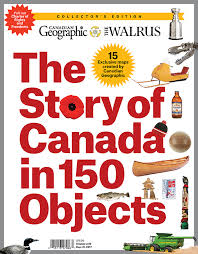
[READ: June 25, 2017] The Story of Canada in 150 Objects

In celebration of Canada’s 150th year, Canadian Geographic and The Walrus created this special issue–a fun way to describe many elements of Canadian culture through “objects.”

The objects are grouped in vague categories.  Some have just a few words written about them while others get a few pages.  Some are humorous, some are more serious.  Most are happy or amusing, some not so much.  And all of it together paints a diverse and complex portrait of the country–as well as teaching this person from South of the border a number of things I did not know.

It’s with comic pride and humility that the first object is politeness (which is not an object at all, of course).  The amusing thing about this article about “politeness” is that while the author of it is very pleased to be so polite, he also can’t wait for his fellow Canucks to forget to be polite so he can rub it in with a extra smarmy “You’re Welcome.” (more…)

Read Full Post »

[LISTENED TO: March 2017] The Organist

organistAfter really enjoying The Organist in 2015, the season ended and I hadn’t heard that there were going to be anymore.  So I stopped looking for them.  And then the other day I got an email reminding me about recent episodes.  Well, sure enough there had been an entire season last year and they were already part way through this year’s season.

So I’m playing some catch up here.  But they are timeless, so it’s okay.

Each cast has a section in brackets–this text comes from the Organist’s own site.  The rest is my own commentary.

The Organist is a free podcast from KCRW & McSweeney’s.  As of this writing, they are up to episode 82. (more…)

Read Full Post »

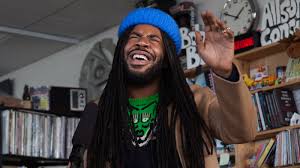
febSOUNDTRACK: D.R.A.M.-Tiny Desk Concert #596(February 1, 2017).

dramI had never heard of D.R.A.M. before (even though apparently his song “Broccoli” has sold 4 million records).  So I was quite surprised to see the start of this blurb:

We all love a good redemption story: We’re front and center to watch our heroes get knocked down, and then we cheer for them to triumphantly rebound. What we’re witnessing with Shelly Massenburg-Smith — a.k.a. D.R.A.M. — is the culmination of a story marked by resilience and stubborn strength.

Making a hit record in the music industry is extremely difficult, and in 2015, D.R.A.M.’s debut single “Cha Cha” was on the brink of exploding. It was getting played in clubs across the country and bubbling on the charts…. Then Drake’s “Hotline Bling” happened. The reports are conflicting as to the inspiration for the record, but there are glaring similarities in the sound of each. “Hotline Bling” was even originally billed as the “Cha Cha” remix by Beats 1, where the song made its debut. Needless to say, “Hotline Bling” practically swallowed “Cha Cha,” but D.R.A.M. didn’t whine about it. He went back to the drawing board, crafting another smash. “Broccoli” became one of 2016’s biggest hits while setting up the release of his debut album, Big Baby D.R.A.M.

We recently invited D.R.A.M. to NPR to lend us his jovial spirit and brighten our workday; after all, his primary aim is to spread love through music. He was jarred by the Tiny Desk setting for a moment before the cameras started rolling. He’s accustomed to touching every corner of the stage, but like a pro, he walked to the desk, activated his signature smile and bounced through various highlights from his catalog. D.R.A.M., whose name stands for Does Real Ass Music, wrote his first selection, “Cash Machine,” right after he’d received his first big music check.

The crowd beamed more with each performance, leading up to a climactic rendition of “Broccoli.” The energy is all fun and games, but his talent is no joke: “Broccoli” is nominated for a Grammy this year, right alongside “Hotline Bling.” A victory would provide a fitting end to this chapter of D.R.A.M.’s career, but regardless of the outcome, he’s already victorious: Far removed from the “Hotline Bling” shadow, he’s already creating bigger songs and more memorable moments, like this one at the Tiny Desk.

His band consists of D.R.A.M. (vocals); Rogét Chahayed (keys); Taylor Dexter (drums); Wesley Singerman (guitar).  And the video begins with him walking through the crowd toward the Tiny Desk.  Unlike most artists, he plays a whopping five songs!  And while he is, indeed, full of smiles and joy, I couldn’t help but think that he was almost a goof.  He practically seemed like a Saturday Night Live spoof of a rapper.

“Cash Machine” has lyrics like “I love it when you talk to me / my cash machine” and it is seriously all about how happy he was to get a lot of money.  It’s almost naive (except for all of the cursing).  He says that he hopes all the ladies like his second song because it was written for them.  And once again, the lyrics are so strangely innocent and almost naive.  The lyrics of “Cute” are “I saw you on your Instagram and I think you’re cute….  Girl we need to go out on a date / We can really do a little something / If it’s cool I’ll pick you up at 8.”  And the music is sweet and dreamy too.

He says that he’s from Hampton, Virginia, which explains “Sweet VA Breeze.”  He says it’s a song about when things were “a little more simpler.”  He raps about “sitting in the treehouse” with the rather puzzling bridge of “Real love, feel love, taste love, smoke love.”

The next song actually appears on Chane the Rapper’s record Coloring Book.  He introduces “Special” by saying that it’s “nice to put a little motivational message out there in the world.  There’s a lot of fucked up shit going on… if we’re gonna be frank.”  He’s got a nice singing voice on this one.  It’s a rather sweet ballad, with the nice sentiment: “Everyone is special / This I know is true.”

And finally we get to the big hit that I’d never heard. It is such a strange song and the delivery here is even stranger.  He sings the opening lines in an over-the-top delicate almost operatic falsetto.

In the middle of the party, bitch get off me
In the cut I’m rollin’ up my broccoli
Ya I know your baby mama fond of me
All she want to do is smoke that broccoli
Whispered in my ear she trying to leave with me
Said that I can get that pussy easily
Said that I can hit that shit so greasily
I’m a dirty dog, I did it sleazily

The room is cracking up by this time.

And more lyrics:

Couple summers later I got paper
I acquired taste for salmon on a bagel
With the capers on a square plate
At the restaurant with the why you got to stare face
To know I either ball or I record over the snare and bass
Rapper face, dread headed
Golden diamond teeth wearin’
They just mad cause I got that cheese, bitch, I keep dairy

The original song (I had to check it out) has this keyboard that sounds like a penny whistle–so childish and goofy. But I love the big throbbing bass line that comes after every line–almost unexpectedly late.

He’s surprisingly vulgar, but he’s so goofy that it’s hard not to like him.

[READ: January 14, 2017] “JB & FD”

When Wideman wrote this story I’m sure he had no idea that Frederick Douglass would be exhumed into public consciousness because Trump is an idiot.

“Frederick Douglass is an example of someone who’s done an amazing job and is being recognized more and more, I noticed,” he said.  “Harriet Tubman, Rosa Parks and millions more black Americans who made America what it is today,” he continued. “Big impact.”

I miss Barack Obama for dozens of reasons, but this guy’s mangling of English is certainly a big reason.

Wideman does not mangle English, of course.  And yet I haven’t really enjoyed the stories I’ve read by him.  And this one proved to be even more challenging for me than his others.

The JB is John Brown.  The FD is Frederick Douglass.  And the problem is that I don’t know enough about either one.  Heck, I wasn’t even sure if they lived at the same time (I have since looked it up–they lived at the same time and admired each other).  But even with that background, this piece is just confusing.

It is broken down into several short numbered sections.

(1) is all about Douglass finding his glasses and having dread.
(2) begins as a letter to Douglass, with the comment that Douglass remembers no beard, not wearing one himself nor a beard on Brown’s gaunt face (but every picture of Douglas has him with a beard).
(3) sees Douglas watch himself step to a podium to discuss “The Woman Question” and then goes home and drops dead [this is historically accurate].
(4) is written from the I point of view, apparently written about John Brown and his upbringing.
(5) is in the first person from John Brown’s POV (I had to look up who had the sons with which names).  I believe it is a letter to Douglass.
(6) contains a letter written by Mahala Doyle and given to John Brown as she awaited execution.
(7) is of Brown’s trip to Kansas and his time in prison.
(8) has three parts. In 1856, a note from Mrs Thomas Russell.  In 1858 John Brown molts (“His feathers shed. A change of color”). In 1859, a letter to Brown (presumably from Douglass).
(9) My name is John Brown and I want my son to hear the story of my name.  In this section someone is dictating to “this good white lady” who is writing every word down to send to his son in Detroit.  And the entire thing is written in dialect.

Beyond that, I’m not sure if this was meant to be a historically accurate portrayal, an imagination of these two minds meeting or something else entirely.  I read it twice and never really “got it.”

Read Full Post »

6616 SOUNDTRACK: CHUCK BROWN-Tiny Desk Concert #217 (May 16, 2012).

chuckI’m puzzled by a few things with this Tiny Desk Concert.  The first is a note that This story originally ran on Sept. 28, 2010.  The second is the note that Chuck Brown, the Godfather of Go-Go music, died Wednesday. In 2010, he brought his full band to the NPR Music office — and put on a party like no one else.

That isn’t confusing in itself, but I have to wonder why it took them two years to air this concert, which is quite a fun rave up.  Are there other shows they didn’t air?

Okay, so I had no idea who Chuck Brown was.  And the blurb anticipated that

The name Chuck Brown might not mean a whole lot to people outside the Washington, D.C., area. … In D.C., Brown is widely known, even revered, as the Godfather of Go-Go, a title he’s held since the late ’70s. Though he started out as a jazz guitarist, Brown invented go-go, a style that incorporates funk, jazz, R&B, hip-hop and dancehall, and has mostly stuck with it ever since.

So, Go-Go, huh?  I never heard of that either.

No one in D.C. can really explain why go-go hasn’t traveled beyond the city’s environs — we love it here, it’s all over our commercial R&B and hip-hop radio stations and, at least when I was in high school, a go-go in a school’s gym was the most packed party of the weekend. Chuck Brown is a local hero. A few days after he played our offices, Brown and his whole band played at the Redskins’ stadium for the halftime show.  So to have Brown play a corner of our office — not a 90,000-capacity football stadium — was like a dream come true for a lot of NPR staffers. Sweat started pouring immediately, between the 11 musicians (that’s congas and a stripped-down kit; saxophone, trumpet and trombone; two backup singers and a rapper) and all the go-go-heads in our building.

Brown played four songs for about 25 minutes.

Go-go is mostly about the groove, though, and Chuck Brown just settles in and leans back. He showed up looking like a million bucks in a vest, Dior shades and his signature hat, and then he did what he does best — get the crowd on his side and hand its members something to dance to.

Go-go is based on a syncopated beat and the use of congas in addition to drums.  So “Senorita” is like a combination of reggae salsa and 50s singing (I can’t help but think he sounds like Frank Zappa when Zappa does his rather funny voice).  The song is slow but smoldering and fun to sing along to.  There’s a Santana guitar vibe too.

“Chuck Baby” is the hip hop element of his music.  His rapper is not very inspiring though.  She seems a little stiff.  And the song is a little flat when he’s doing the call and response–he sounds cool and seductive and they sound more bored than “naughty.”

Before the third song everyone starts chanting “wind me up chuck!” which he lets everyone know www.windmeupchuck.com is his website. “Wind Me Up!” / “Bustin’ Loose” starts with lots of call and response.  “Bustin’ Loose,” is a funky song with very James Brown accents and everyone singing the refrain: “Gimmethebridgenow, gimmethebridgenow.”  The song has been a hit in D.C. since 1979.  The backing vocalist on this song feels a bit looser (apparent as she sings “I feel like bustin’ loose).

The crowd was yelling out requests, too: “Chuck Baby” and “Run Joe,” a go-go cover of the Louis Jordan song.  “Run Joe” / “It Don’t Mean A Thing.”  “Run Joe” has a Jamaican flair “Policeman is on the premises.  What is he doin’ here?”  His guitar playing is really inspired throughout the set, but especially at the end of this song.   He does a lot of playing the same melody as he sings.  The song segues into a version of “It Don’t Mean a Thing” in which he slips in “It don’t mean a thing if it ain’t got that go-go swing.”

This set was really a party.  And Brown was just full of energy.

[READ: January 12, 2017] “Surrendering”

The June 6 & 13, 2016 issue of the New Yorker was the Fiction Issue.  It also contained five one page reflections about “Childhood Reading.” 

This reflection beings with Vuong explaining that his family moved to the U.S. from Vietnam when he was two.  He was an ESL student from a family of illiterate rice farmers who saw reading as snobby.

When he entered kindergarten, he found himself immersed in a new language.  He quickly became fluent in speech but not in the written word.  In fourth grade his class was given an assignment to write a poem in honor of National Poetry Month.  Normally his poor writing skills would mean that he was excused from such assignments.  He would spend time copying sentences out of books in the classroom.  But this time he decided to be ambitious and write a poem. (more…)

Read Full Post »

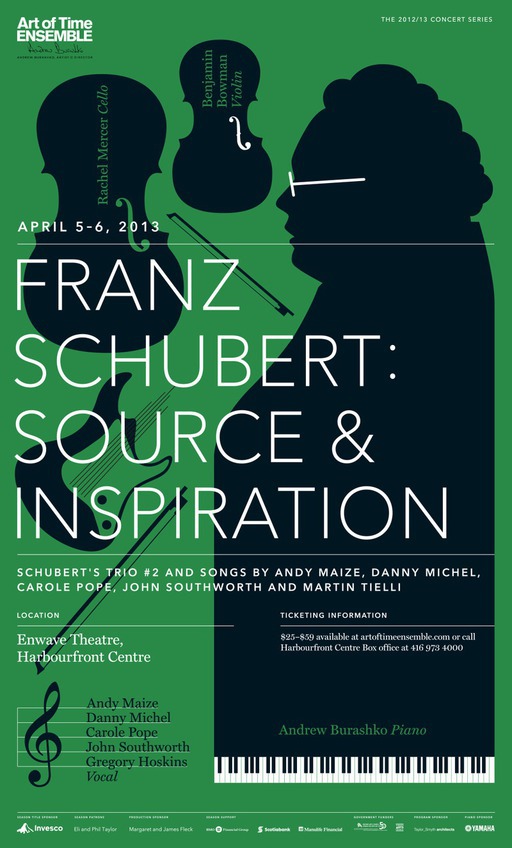
feschukSOUNDTRACK: THE ART OF TIME ENSEMBLE with MARTIN TIELLI–Korngold: Source & Inspiration (Enwave Theatre, Harbourfront Centre, Toronto, ON, January 30, 2009).

aotimeAfter seeing The Art of Time Ensemble yesterday, it was quite serendipitous that I would have a show from them (featuring Martin Tielli) to post about on the following day.

This concert is the third in the Art of Time’s “Source & Inspiration” series. Two years earlier the first concert focused on composer Franz Schubert.  The previous year’s concert focused on Robert Schumann. This time the spotlight was on the 20th century Jewish composer Erich Korngold–a composer of European pedigree who became well known for his wonderful Hollywood film scores.

This concert featured Korngold’s Suite for Two Violins, Cello and Piano as the ‘source’ as well as new songs inspired by this work from Martin Tielli, Danny Michel and John Southworth.

This recording is only 8 minutes long because there’s only two Martin Tielli songs. “Lied Two” (the German word for song is lied (pronounced leed) so Martin called his “Lied Two.” And “Moglich” which translates into “possible.”  Both pieces are played with by the orchestra.  Martins sings.

The more dramatic of the two would be “Moglich” with his loud whispered “Relaxxxxx at the end.”  For more information about the show, you can click on this link.

Full Program & Repertoire:
Suite Op. 23 for 2 Violins, Cello and Piano Left-hand
Erich Korngold
i.Praeludium und Fuge
ii.Walzer
iii.Groteske
iv.Lied
v.Rondo-Finale

INTERMISSION
Athabasca
Adventures of Erich Korngold
—John Southworth
The Sailor Song
Island

—Danny Michel
Lied 2
Moglich
—Martin Tielli

Performers
Andrew Burashko, piano
Danny Michel, singer
Erika Raum, violin
Stephen Sitarski, violin
John Southworth, singer
Martin Tielli, singer
Winona Zelenka, cello

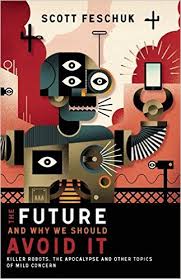
[READ: November 22, 2015] The Future and Why We Should Avoid It

The title of this book made me laugh so I set it aside to read it.  Little did I know that it would be so very funny that I put aside other things so I could finish it.

I hadn’t heard of Feschuk before.  He has written two previous books (How Not to Completely Suck as a New Parent sounds pretty good) and writes mostly for MacLean’s magazine.

As you might guess from the title, this book looks at the future, and Feschuk’s predictions are uncanny.  For instance, I brought the book home and decided to look at it in the bathroom.  And the introduction states quite clearly:

By now, life should be awesome and leisurely and you should be wearing a spacesuit and high-fiving your wisecracking robot sidekick.  Except instead your dishwasher is broken, your god-damn iTunes won’t sync up and right now you’re reading this book on a toilet in your bathroom instead of where you should be reading it–on a toilet in your hover car.

Too right, too right. (more…)

Read Full Post »

pablo SOUNDTRACK: BUILT TO SPILL-Live (2000).

btsliveSoon after releasing “Carry the Zero,” Built to Spill released this, their first (and so far only) live disc.

This disc shows a jamming side of the band that their records up to now hadn’t really displayed (sure there was some evidence of the jam band within, but who would have guessed 2 songs on this disc would stretch to 20 minutes?).

The live set also shows a rather contrarian spirit in that there are only 9 songs in 70 some minutes and only 5 of the songs are actual Built to Spill songs.

The disc opens with “The Plan,” a great version of their most recent disc’s opener.  Then they jump right into Perfect from Now On’s  opening track “Randy Described Eternity.”  That song has a lot of parts and sections, and they do them perfectly.  They follow it with another song from Perfect, “Stop the Show” which also has multiple parts and again, they nail it.  These three songs were recorded in New York.  Brett Netson joined them for “Randy,” and “Stop” which really helps to flesh out those songs.

The next song is a cover of The Halo Benders’ “Virginia Reel Around the Fountain.”  And if it sounds very fitting for Doug, he was in The Halo Benders with Calvin Johnson before he started Built to Spill.  Then comes the centerpiece of the record–a 20 minute version of Neil Young’s “Cortez the Killer.”  And it is amazing.  He sounds enough like Neil to be totally respectful, without just being a rip off.  It’s probably the best version of this song I’ve heard (until I saw Neil do it this summer).

They switch gears to their first single, “Car,” a delightful 3 minute song.   And then, to fill out this almost all covers section, they play “Singing Sores Make Perfect Swords” a song originally done by Love as Laughter.  I don’t know the original, but it fits in with Doug’s style.  These four songs were record in Seattle.

There’s one song that was recorded in Denver, “I Would Hurt a Fly,” which is yet another song from Perfect, and is one of my favorite songs of theirs.  It does not disappoint.

The final song on the disc is a nineteen minute version of the song “Broken Chairs” (which is 8 minutes long on Secret).  They do the whistling section and a ton of solos.  Indeed, the way they stretch out the song out with guitar solos and noise (and the way the song ends with feedback) is really cool.  Netson joined them for “Fly” and “Broken Chairs” (which is why that ending solo is so intense.

It’ s a great live collection of songs and the sound is outstanding.  You’d never know it was recorded in different venues, either.

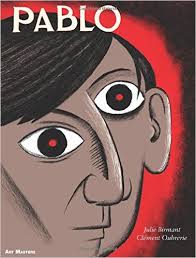
[READ: October 4, 2015] Pablo

Judging this book by its cover you would be correct in assuming that it is about Pablo Picasso.  But rather than being a simple history of the Art Master (the title of the series), this is a thorough recounting of Picasso’s life.  And what’s even more interesting is that the story is told from the point of view of Picasso’s lover and model Fernande Olivier.

And Fernande’s diary entries make up the bulk of the story and allow for a very personal look into the man and the stylistic choices that Picasso made over the years.  As the book says on the back, the authors show “how Picasso’s style developed in response to his friendships and rivalries.”  And of his rivals none was greater than Henri Matisse.  (The book also covers Picasso’s life before she met him too, of course).

The original work was published (in French) in four volumes.   This edition was translated by Edward Gauvin.

I especially like the way the book begins from the point of view of Fernande as an old woman, still alive and reminiscing about her life. (And yes, it’s amazing to realize that Picasso died in 1973…in my lifetime!).  (more…)

Read Full Post »

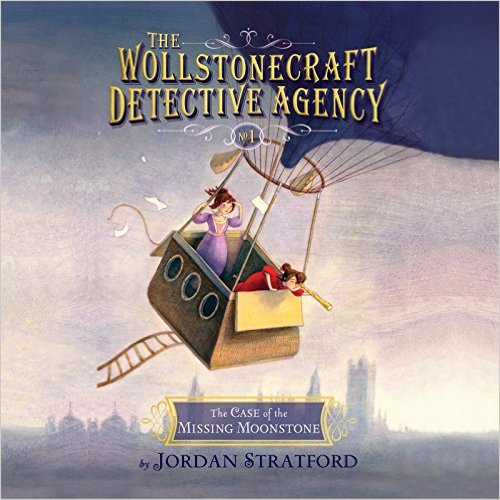
[LISTENED TO: August 22, 2015] The Case of the Missing Moonstone

wollensI was immediately attracted to this book because of the title of the series.  What an intriguing idea.  When we started listening to it, I was even more excited because of how Stratford has taken reality and tinkered with it to make this intriguing mystery.

The preface explains exactly what Stratford is up to:

This is a made-up story about two very real girls: Ada Byron, who has been called the world’s first computer programmer, and Mary Shelley, the world’s first science-fiction author. Ada and Mary didn’t really know one another, nor did they have a detective agency together.  Mary and Ada were eighteen years apart in age, not three, as they are in the world of Wollstonecraft.
Setting that aside, the characters themselves are as true to history as we are able to tell.  At the end of the book, there are notes that reveal more about what happened to each of them in real life, so that you can enjoy the history as much as I hope you’ll enjoy the story.  Because the history bit is brilliant.

The plot is a mystery, of course, but it takes a long time to actually get to the mystery (long into the second of three audio discs).  Because the beginning of the book does an excellent job of establishing character and setting.  It even feels like it may have been written in the time period in which it is set–the prose is kind of leisurely and very British (or at least that is how it is read by Nicola Barber, whose voice is simply perfect for this story).  So even though there was no actual mystery I really enjoyed these opening chapters.

As the story opens we meet young Ada.  She is obviously brilliant–reading books at a young age, creating fascinating science experiments (she is trying to imagine how fast a sock would have to fly for it to hurt someone and imagines inventing a sock cannon) and hanging out in the gondola of a hot-air balloon (which is tethered to her house).  But she has no real connection to the world and doesn’t even know the names of her maids and servants (thinking the woman who just left to get married was called Miss Coverlet).  In fact there are some hilarious malaprops later in the book. Her father (Lord Byron) is long gone and her mother is away.  So her mother has hired a tutor to look after Ada. (more…)

Read Full Post »

« Newer Posts - Older Posts »