Feeds:
Posts
Comments

Archive for the ‘Drinking’ Category

SOUNDTRACK: COLIN STETSON-Live at All Tomorrow’s Parties, October 4, 2011 (2011).
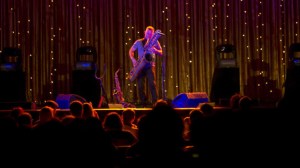
In addition to playing SXSW, Colin Stetson also played All Tomorrow’s Parties, and NPR was there.  Unlike with SXSW, this set appears to be full length (about 50 minutes–which is a pretty amazing amount of time for him to blow that horn).  Like SXSW (and the album) Stetston starts with “Awake on Foreign Shores” and “Judges.”  What I love about this recording is that after Stetson finishes “Judges” a guy in the audience shouts (in a voice of total amazement) “That shit was off the hook!”  And he is right.  It’s not even worth me going into how amazing Steston is once again (check previous posts for  that), but man, just look at the size of that horn he’s playing (seriously, click on the link to see it bigger).

Stetson plays a few more songs from New History Warfare, Vol. 2: Judges like “The Righteous Wrath of an Honorable Man” (which is outstanding) and “A Dream of Water” (which works without Laurie Anderson, although he does say he’s sorry she’s not there).  He also introduces two news songs “Hunted 1” and “Hunted 2” which show new levels and new styles that Stetson employs.

This is a remarkable set, and Steston is clearly in his element (and the crowd is rapt).  The only problem I have is the recording level.  It must be very difficult to maintain recording levels for Stetson’s brand of noise–his louds are really loud–but you can’t hear him talk at all.  And most of the time, the introductions to his songs are worth hearing.  I’m sure if they tried to get the speaking level a little louder the music would have sacrificed though, so I think they made the right choice–I only wish there was a transcript available.

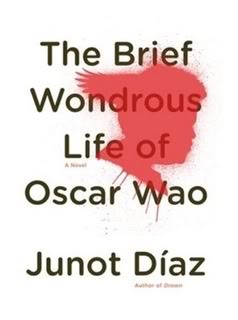
[READ: October 31, 2011] The Brief Wondrous Life of Oscar Wao

Apparently it’s pronounced, “Wow”, by the way.

Because of my new job, I don’t have a  full hour of lunch-time reading like I used to.  And so this book took considerably longer than I intended.  However, once I set aside some time to read it, I flew through the book.

I’m going to get this part out of the way because I was thinking about it throughout the book and I want to mention it without having it bog down the post.  This story reminded me a lot of Roberto Bolaño.  On the surface, sure this is because they are both writers from “Central America” (Diaz is originally from the Dominican Republic but moved to the US, while Bolaño is originally from Chile but moved to Mexico and then Spain).   But I’m not really talking about their origins so much as the style of storytelling.

Without going into a lot of Bolaño here, I’ll just say that Bolaño tends to write very detailed character studies–stories that follow one person throughout his whole life on something of a fruitless quest.  And the details of that person’s life include information about family members and distant relatives.  Further, Bolaño has written about the brutalities of both Chile and Mexico and how a person can survive in such a place.  Similarly, Díaz follows the life of Oscar and his extended family and he talks about the brutalities of the Dominican Republic.

This is in no way to suggest that there is any connection between the two writers. I mean, The Savage Detectives came out in the States in 2007 (same years as Oscar Wao) and while he certainly could have read it in Spanish, I have no evidence that he did (and as I recently found out, the first draft of the Oscar story was written in 2000).  Again, the parallels are only from my reading and have nothing to do with Díaz himself.

Okay, now that that’s out of my system…

This is the story of Oscar de Leon.  But more than that, this is the story of a fukú–a curse that befalls the de Leon family and follows them through several generations.  Oscar is the youngest member of the family and the person whom the narrator knows best.  So we see this fukú as it impacts Oscar.  And although the book is ostensibly about Oscar, it is about much more.

Oscar was born in Paterson, NJ (the town next to where I grew up!) and went to Don Bosco Tech High School (where many of my friends went).  Oscar is Dominican (his mother is from the DR, but he and his sister were born in NJ), but unlike every other Dominican male, Oscar is totally uncool, into geeky sci-fi and D&D and is clearly destined to be a virgin because he is fat with terrible hair and no social skills.

And, (no spoiler), as the title states, his life will be short. (more…)

Read Full Post »

SOUNDTRACK: DINOSAUR JR.-Live at the 9:30 Club, Washington D.C. October 8, 2009 (2009).

This was one of the first shows I downloaded from NPR.  I’ve been a fan of Dinosaur Jr. since my friend Al turned me on to Green Mind back in college.

This is an amazing show created by the original Dino Jr. members.  This tour is in support of their second album since reuniting, Farm. This set-list is an outstanding mix of old songs, new songs, Barlow-sung songs and even some songs from when Barlow and Murph weren’t in the band.  (Green Mind is still my favorite album by them).

When the band reunited there was much joy, and I’ve said in reviews of the newer albums, I’m not entirely sure why.  I mean, Dino Jr has always been about Mascis, and it’s not like Barlow is such an unusual bassist (although Murph’s drumming is always solid).  I’ve nothing against Barlow (I love Sebadoh and Folk Implosion) or Murph, it just seems odd to get excited about having them back in the band aside from nostalgic reasons.

Having said that, the band sounds amazing (and yes, Barlow does get to sing on “Imagination Blind”).  What never really came across to me until hearing all of these great songs live was that Mascis has always been a great pop song writer.  These songs are catchy as hell. But Mascis buries them under loud squalling guitars and a voice that is almost whiny, almost off-key, a total slacker voice.  (But you’ll notice it is never actually off-key.  He must work very hard at that.)

By the nd of the show Mascis chastises the audience for not moving (we obviously can’t see what they’re doing), saying he forgets that people don’t move in Washington, D.C.  But during the encore break, NPR host, Bob Boilen, points out that Mascis himself doesn’t move either–he just stands in front of that wall of Marshall stacks (Boilen wonders how he can hear anything anymore).  And looking at the pictures it’s comical the way he looks, surrounded by amps.  The picture above doesn’t fully do it justice, but check out the extra photos at the NPR page.  And while you’re there, listen to this show. It is amazing.  For a total slacker, Mascis can rock a guitar solo like nobody’s business.

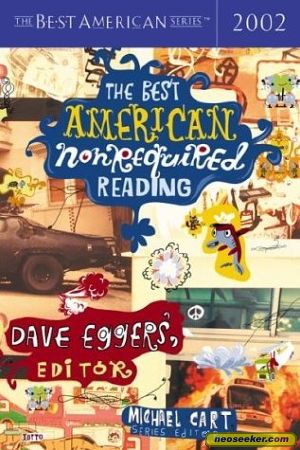
[READ: July 20, 2011] The Best American Non Required Reading

I’d been meaning to read this series for years (yup, Eggers fan), But I have a hard time starting “collections” because I feel like I’d rather be reading a novel.  Nevertheless, I have most of these Nonrequired books, so it seemed like I should dive into one and see what it was like (I don’t think the year really matters all that much–some of the articles are topical but most are not exactly).  Then Sarah said this would be a great book to read on vacation because it’s all short essays, and she was right.  It was perfect for late nights when I wanted something to read but didn’t feel like getting involved in the novel I was reading.

DAVE EGGERS-Introduction
Eggers’ introduction is actually a partial short story about kids who go swimming in pools around town. It reminded me of the opening of Life After God by Douglas Coupland, but of course, lots of kids did that so I’m not saying it was “lifted” from DC.  The story “ends” (it doesn’t really end so much as stop) with an interesting scene between two unlikely kids who get caught.

After this story Eggers includes these three notes about the collection: It’s not scientific, It’s alphabetical, and We had a lot of help with this.  Of the three, it’s the middle one that’s most useful because Eggers says that you shouldn’t necessarily read them in order just because they are printed this way: “In the first half of this collection, you get a good deal of hard journalism, primarily about war and refugees, from Afghanistan to the Sudan, followed immediately by a number of less serious pieces, about malls and Marilyn Manson.  We didn’t group anything by theme , and won’t be offended if you skip around.”  This was good to know (not that we needed the permission of course), but yes, the beginning of the book is pretty heavy. (more…)

Read Full Post »

SOUNDTRACK: STARS-Live at the 9:30 Club, Washington DC, October 20, 2007 (2007).

Thanks NPR for this unexpected concert.  Unexpected because Stars is a wonderful band but I think they’re largely unknown (I could be wrong about that, but it’s not like you hear them on the radio or anything). 

This show was during a tour for In Our Bedrooms After the War, which was one of the best albums of the year as far as I’m concerned.  

It’s an intimate album, with all kinds of styles in it: whispered confessions, dancey pop songs, synthy tracks and also some solid alternative rock.  The unifying theme for Stars is beautiful, often super catchy songs that are filled with melancholy and sadness (and occasionally, hope: “at least…the war is over”).  But the key to their beauty is the wonderful harmonies that the singers give us.

Musically the things that surprised me most during this show were the singers’ speaking voices.  Torquil Campbell’s speaking voice is quite a high register and yet his singing voice is low and soothing.  The opposite is true for the other singer, Amy Millan who has a kind of gruff peaking voice but whose singing voice soars to the heavens.  It’s fascinating.  Torquil is also a gushing frontman, thanking the audience so much for coming and even asking “Don’t your friends have bands that are playing whose shows you should be at right now?”  He also thanks Ben and the rest of Death Cab for Cutie for being so very nice to them.  A very nice chap it seems.

The bands sounds quite good live, but my only problem with the show is that as i mentioned, Stars’ music is very intimate, sometime whisper-quiet, and it doesn’t always translate very well in a live setting (even a relatively small club like the 9:30 Club).  Sometimes it feels like they’re singing too loudly to match the music.  Now, it’s entirely possibly that this doesn’t come across when you see them live, that this soundboard recording picks up every flaw. 

Despite that, there’s undeniable energy here and some really great moments where the bands switches direction at the drop of a hat.  And, overall, this is an excellent introduction to the wonder that is Stars’ music (or a big treat for established fans).

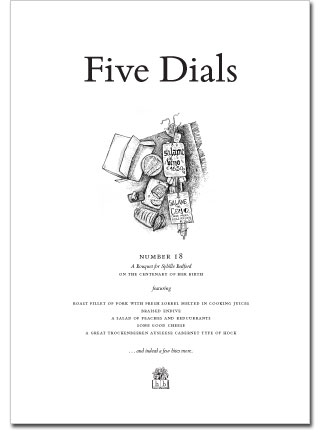
[READ: July 25, 2011] Five Dials 18

Five Dials 18 is unique in the history of the journal.  This entire issue is given over to the memory of SYBILLE BEDFORD.  It is written by ALIETTE MARTIN (there’s not even a Letter for the Editor).

Martin writes about Bedford’s love of wine and fine food.  It was pretty funny to read about her detailed love of meat after reading all of the vegetarianism promoted in the Five Dials news pages (Jonathan Safran Foer’s Eating Animals was just published by Hamish Hamilton). (more…)

Read Full Post »

SOUNDTRACK: RUSH-“Garden Road” (1974).

So the bootleg that I mentioned yesterday was in fact incomplete.  On the Up the Downstair site, the track list includes “What You’re Doing” and “Garden Road.”  When I wrote to the cool host of Up the Downstair, he said that these two songs were available on You Tube and that he’d try to find them and add them to the site.

So in the meantime, I got to listen to the song on YouTube.  This is a song that the band wrote but which they never recorded (same is true for “Fancy Dancer”).  I have to imagine that they wrote these songs for their second album (along with “In the End” which they kept) around the time that Neil Peart joined the band.  Once they realized that Neil could write better lyrics, they scrapped these two heavy rockers.  Both songs have great riffs, even if lyrically they’re pretty poor.

The song rocks pretty well, although the solo seems to have been put to better use in “Working Man.”  I enjoy how the song breaks for the shouts of the Garden Road chorus (kind of like “Bad Boy”–perhaps it was a “thing” for them).  I rather like this song, and I think I like it better than a couple of the songs on Rush.

Check it out.

Maybe it’s time to release these old chestnuts for the fans?

[READ: August 10, 2011] Life After God

After the success of Shampoo Planet, Douglas Coupland wrote several short books (which were really short stories).  They were compiled in Life After God.  To me this book also stands out as another odd one from DC, because it is very tiny.  Not in length, but in height.  It’s a small book, about the size of a mass market paperback.  But it makes sense that it was made this short because it is written with lots of short paragraphs that lead to page breaks (kind of like Vonnegut).

For instance, the first story contains at most two paragraphs per “chapter” about–16 lines of text and then a page break.  At the top of each page is a drawing from DC himself which illustrates to a small degree the information on the page.  It leads to incredibly fast reading and even though the book is 360 pages, you can polish it off pretty quickly.

But what’s it about?  Well, mostly the stories seem autobiographical (even though they are classified as fiction.  And actually, I don’t know anything about DC’s personal life so I don’t know if they are based on anything real, although I do know he doesn’t have any kids, so those can’t be true at any rate).  There are eight stories.  They are all told from the first person and are more or less directed at “you.”  They all seem to deal with existential crises of some sort.  They are honest and emotional.  To my ear, sometimes they seem a little forced, maybe it’s contextual, but it’s hard to write this kind of massively introspective piece and have it sound “real.”  (But maybe I’m not very introspective about things like this myself). (more…)

Read Full Post »

SOUNDTRACKTINDERSTICKS-Claire Denis Film Scores 1996-2009: White Material [CST077] (2009).

White Material is the most recent soundtrack that the Tindersticks created for Claire Denis.  It was recorded between their “reunion” album The Hungry Saw and their latest album Falling Down a Mountain.

This is a very moody soundtrack.  The guitars set a brisk but desperate-sounding pace.  There are feedback squalls that echo for even more tension.  The feedback could be any number of things as well: squeaky machines, industrial noise, or simply disconcerting sounds.

There is a repeated motif throughout the score that morphs and blends with the tone.  The overall feel of the soundtrack is unified but it never sounds like you’re listening to the same few notes repeated (which is actually what it is, the songs use a very limited palette).

For such a limited palette of music, they really manage to give a diverse picture of the movie.  The way “Andre’s Death” builds, using those same few notes and feedback is truly amazing.  The tension that has been building throughout the score really comes to a head in those 2 minutes.  Contrarily, the flute that plays over those same notes in “Children’s Theme 2” is a haunting exploration of the theme.

This soundtrack isn’t as industrial/weird as L’intrus, but it is probably more intense and spooky.  It’s amazing how evocative these guys are.

[READ: June 22, 2011] Merit Badges

Sarah brought this book home, but she didn’t read it.  It sounded pretty good (I mean it won the 2009 AWP Award for the Novel), so I decided to give it a go.

The book seemed strange to me in the way it was set up: it seemed to have a very specific structure but it didn’t always follow it exactly. So, there are four main protagonists who write chapters of the book.  But they don’t each get a turn, in fact one, Barbara doesn’t really have much to say until much later when her story becomes very compelling.  It also advanced over the years with no real explanation of pacing or even of when a new narrator has jumped ahead several years.

I assumed this was going to be a story of four people looking back on their high school years.  But indeed, it’s about four people looking back on their whole lives, as they grow together, drift apart, come back into each others lives and then disappear again.  In that way, it was also a bit hard to get my bearings.  It was also hard for me to keep all of the characters straight.  Because even though there are four narrators there are many many more kids introduced in the beginning of the story.

Each chapter opens by stating who the narrator is.  The first few narrators are Chimes Sanborn (Prologue), Quint (Woodwork), Slow Slocum (Cooking), Chimes (Drafting), Barb Carimona (Music), Quint (Mammals), Quint (Crime Prevention) etc.  So it’s not consistent.

But also, as you can see, all of the chapter titles are named after Merit badges (which I liked quite a bit).  The subtitle describes what you have to do to achieve the badge (and the chapter does indeed kind of work within that stricture).

So far so good, but we’re also introduced to ancillary characters who appear quite often: Dickie Burpee, Pooch Labrador, Smash Sarnia, and a psychopath named Tulep.  With all of the nicknames and rotating narrators, I admit to losing track of who was who, which I fear lessened the impact of some of the events.

Of course, that’s all structural.  And while I felt like I probably missed out on moments of impact, the overall storyline was not hard to follow.  And, indeed, complaints aside, the story was pretty intriguing.  It is set in the (fictional) small suburb of Minnisapa, Minnesota.  It feels very true to me (having lived in a small town, myself) as do the choices (bad and good) that the kids make. (more…)

Read Full Post »

SOUNDTRACK: MY MORNING JACKET-It Still Moves (2003).

I discovered My Morning Jacket through their awesome live album Okonokos.  Most of that album comprised songs from their previous disc, Z.  But there were a number of tracks from this record as well.  So I was thrilled to put this in for the first time and recognize a number of these epic tracks (4 songs are over 6 minutes).

It Still Moves is a soaring, gorgeous record of folk rock plus.  Some of their tracks are rooted in Americana, but they have wonderful touches of psychedelia and soaring sounds (choruses, guitars, voices).  It’s a great combination that never settles into one style of sound, and as much as it stays out of the reach of commercialism, it embraces catchiness.

And for an album that seems like it might resist the average listener, there’ some amazing stuff here.  The opening three songs are absolute stunners–catchy and interesting.  “Magheeta” is a slowish opener; “Dancefloors'” has a great riff and ends with a cool boogie of horns and pianos; and “Golden” is a shuffle song with terrific harmonies.

“Masterplan” is the first really slow song, but it has a dramatic buildup that is wonderful.  It’s followed by the first of the soaring guitar songs on the disc.  “One Big Holiday” opens with a cool tight guitar riff which turns into a soaring guitar riff of joy.  The second one is “Run Thru” which is one of my favorite songs of the past few years.  It opens with a slow soaring guitar riff that is totally catchy.  By midway it turns into a dancey discoey song for a few measures and then returns with the great riff.  It’s excellent.

“I Will Sing You Songs” is a 9 minute slow boiler of a track.  It’s very slow, almost lazily paced, but it’s never dull (credit Jim James’  amazing voice for keeping the whole proceeding interesting).  “Rollin’ Back” opens a bit like “Waiting for the Worms” from Pink Floyd the Wall (soaring oooh ooohs), but quickly settles into a slow roots song.

The end of the disc is a bit slow and meandering (the last song especially is practically a sleepytime ballad) but it works for the overall feel of the disc.  The whole enterprise is a bit long–it’s hard to listen all at one setting.  But nevertheless, it’s a great record with some amazing songs ion it.

[READ: May 9, 2011] “He Knew”

I rather enjoyed the last story by Antrim that I read, but I didn’t care for this one at all.  And that was pretty much because I didn’t care about the characters at all.

The story is about an out of work actor, Stephen (who is on antidepressants) and his very tall wife Alice (who is on Valium).  They’re sort of pathetic and it’s not even entirely clear if the like each other (or is that the anxiety speaking?).  She accuses him of wanting to sleep with every woman he talks to, and he looks longingly at most other women he sees. (more…)

Read Full Post »

SOUNDTRACKFLAMING LIPS-“Two Blobs Fucking” (2011).

As I understand it, the Flaming Lips will be releasing an EP a month for the next twelve months–all in an unusual manner.  The first track, “Two Blobs Fucking” comes as a 12-part free video download.  Like with their album Zaireeka (which had 4 discs that you were supposed to play simultaneously to get the full effect), this song  comes as 12 separate audio tracks.  According to the online instructions, you’re supposed to get 12 friends with iPhones to each download a section and to play them at exactly the same time.  I don’t have an iPhone (or 12 friends that I could get in the same place at the same time to listen to a song), so I did the next best thing: I used YouTube Downloader, converted the tracks to WAV and then mixed them with Audacity.

I have received many CDs over the years that have mixing technology where you can play certain tracks and not others, but it’s very rare that I play around with them.  This whole process was easy enough that I made 20 different mixes of the song.

The “full” version is a fascinating amalgam of noises with a very cool riff that opens the track.  About midway through, the whole song is taken over by noise–a distorted squealing noise–for a few seconds.  And then the song continues as it was with gentle washes of sound.

The twelve tracks include the main riff, the riff as done by “voices” (doh doh doh), there’s a few noise (guitar) tracks and some noise (animal sound) tracks.  There’s a drum and percussion track as well as the vocal track.

The lyrics are a brief story about Wayne finding a dumpster from a factory which makes and discards manikin body parts.

It’s a weird track.  It’s not their best by any means, and the lyrics are hard to hear for the most part (unless you isolate them, of course).  But having now listened to it so many different ways, I’ve rally grown fond of it.  The riff itself is as I said, simple, but very cool.

It’s a neat experiment and nice that it was free (unlike their second release–a USB drive that is buried inside a candy skull which costs $150).

[READ: May 23, 2011] “Deniers”

This is, as far as I can tell, the first short fiction piece that Lipsyte has had published (please correct if I’m wrong), aside from that really short piece in The Revolution Will be Accessorized.  I enjoyed The Ask quite a lot, and I was excited to read more from him.

This piece, as the title implies, plays around with types of denial.  But it is self-denial that they experience.  The main character is Mandy, an adult whose father, Jacob,  is still alive but who has recently been put into a nursing home.  The opening of the story is more about Jacob.  More specifically, it’s about how Jacob relates (or doesn’t) to Mandy.  Jacob is a holocaust survivor, but he has barely said one word about it (or, really, anything) to Mandy.

Through a series of flashbacks, we see Mandy’s childhood with this distant father.  We also see what happened between Jacob and his wife–a fascinating story of duplicity on almost everyone’s part (and which is wonderfully encapsulated by the picture that accompanies the story (a Shell station lit up at night with the light from the letter “S” unlit). (more…)

Read Full Post »

SOUNDTRACK: BEN FOLDS/NICK HORNBY-Lonely Avenue (2010).

As the cover of this album notes: “Ben Folds adds music and melody to Nick Hornby’s words.”  And that is true. The only surprising thing about this combination is that Folds is quite a good lyricist himself, so it’s surprising that he would sacrifice his words.  But regardless, the fit is a good one.

Sometimes it seems like Hornby is challenging Folds to come up with melodies for some of his more difficult lyrics which Folds lives up to).  But they have such similar sensibilities that (aside from occasional references to British things) the words could have come from Folds himself (although, Hornby’s a better writer, so Folds wouldn’t have written exactly the same things).

The big surprise is the diversity of musical styles on the disc.  Folds of course does play lots of different types of music on his previous discs, but I guess since the cohesion is Hornby’s words so Folds can really let loose.

The opener, “A Working Day” is a keyboard pop confection, a surprisingly 80s sounding synth song with some wry lyrics about being a writer/performer (“some guy on the net thinks I suck and he should know, he’s got his own blog”).  “Picture Window” is a beautiful downer, a string-filled song that seems like a companion to Folds’ “Brick” (“You know what hope is, hope is a bastard”).  It’s just as sad but the melody is gorgeous.

“Levi Johnson’s Blues” is a strangely topical song (in fact, it took me a minute to remember who he was when I first listened to the song.  Anyhow, it’s a silly song about what happened to the father of Sarah Palin’s grandchild.  And yet, despite the novelty of it, it’s actually a somewhat sympathetic portrait of the guy (sure he’s a redneck, but he’s just a normal guy thrust into a ridiculous spotlight–the liner notes say the chorus came from Levis (redacted) Facebook page).

“Doc Pomus” feels like a classic piano song.  While “Young Dogs: is a fast romper (with great vocals) and more keyboards.  “Practical Amanda” is a slow ballad (and Hornby says it’s not autobiographical at all).  While “Claire’s Ninth” is a story about a young girl of divorced parents who hates having two birthdays.  (With sweeping choruses!) Hornby states that this was his first accepted short story (modified for the song, of course) but the magazine that accepted it stopped publishing before his appeared.  D’oh!

“Password” is a wonderful song which only makes sense when you know the name of it (which I didn’t at first, as I usually don’t look at titles right away).  Throughout the song Ben spells words which leads to a cool conclusion–it’s wonderfully clever writing and it’s done in a fascinating R&B-lite style.

“From Above” is a jaunty rocker about people who never meet, although their paths cross quite often.  “Saskia Hamilton” is the “single” from the record.  It’s another great 80’s keyboard fueled romp.  Since I have a friend named Saskia (hi, Saskia) I’m fond of this song–her name is fun to say.  They have a bunch of fun in the recording too.

The final track, “Belinda” is designed like a classic 70s piano ballad (there’s a lengthy email printed in the notes that explains the construction of the song–reading that makes the song even more impressive).

It’s a great Ben Folds album.  It’s not as tidy as some of his other ones–but all of that experimentation leads to some new avenues of melody. It’s a risk that paid off.

[READ: May 10, 2011] Five Dials Number 7

This issue of Five Dials was primarily about Memoir.  Typically, I don’t like memoirs, but I’m finding (and this coincides with what one of the memoirs below states), that I just don’t like celebrity memoirs.  Or perhaps I just like three page accounts of an incident in someone’s life (which these are).

Each of the writers below is given an introduction in which they summarize WHY they write memoirs.  It’s interesting to see that many of them do, in fact, take other people’s feeling into consideration (not as seriously as Mark Twain who waited 100 years for the publication of his), but they try to do something or other to spare people’s feelings.  I was intrigued also that several of the writers also talk about finding themselves through writing.  One or two of them make the exercise of writing memoir sound obnoxiously solipsistic (which of course it is), but it’s nice to read ones that are interesting and not too self-centered.

CRAIG TAYLOR-A Letter from the Editor: “On Audio Detective Work and Memoir”
This letter explains the extent of the audio detective work that went into the interview (presented later) between Raymond Chandler and Ian Fleming.  Since I love playing with audio software, this was of especial interest to me.  And it made me really look forward to the interview. (more…)

Read Full Post »

SOUNDTRACK: PEARL JAM-East Rutherford, NJ 6.3.06 (2006).

This concert was a free download with the purchase of Backspacer. I chose this because this is the show that I should have gone to.  [How many concerts have I seen at the Meadowlands–or whatever it is called now?].  Not to mention, this is the last concert date of the first leg of the tour, and the last concerts are usually a little longer, a little wilder, a little more fun.

And there’s a number of reasons why this is true during this show.

The first is the technical flaw.  Midway through their fifth song, “Animal” there is some kind of power failure (the flaw with audio from concerts is that you have no idea what’s really going on).  The song shuts down, there’s some crowd chanting and then the power comes back on.  This gives Eddie Vedder a chance to make a Springsteen joke (did he leave for tour without paying the electric bill) and the band resumes, even more intense than before.

There are a number of Springsteen moments during the show.  They thank him for introducing them to the Community Food Bank of New Jersey–where proceeds from this night’s show go).  Later, Eddie’s explains that his failure to figure out the chords to Springsteen’s “Atlantic City” led to his creating the song “Gone”.  And Eddie’s “Pre-Opener” (sadly not on the download, but you can hear it here) is a cover of Springsteen’s “No Surrender.”

Springsteen aside, this is a great show.  The download is three discs long (the first disc is 25 minutes or so and comprises the audio from up to the power failure).  But even with the confusion, the band sounds wonderful.  They run through all kinds of songs from throughout their career, “Even Flow,” “Alive,” “Why Go,” “Black,” “Porch,” and “Garden” from Ten.  “Animal,” “Rats” and “Leash” from Vs. “Last Exit,” “Whipping” and “Corduroy” from Vitalogy, “Habit” and “Lukin” from No Code, “In Hiding” from Yield. “Love Boat Captain” and “I am Mine” from Riot Act, and about half of the songs from Pearl Jam.  There’s also a whole bunch of songs from Lost Dogs: “Hard to Imagine,” “Yellow Ledbetter,” “Last Kiss” and “Don’t Gimme No Lip” and even “State of Love and Trust” and “Crazy Mary.”

The show is a pretty rocking show overall.  In fact, as you can see above they don’t even play their more crowd pleasing ballads (“Betterman,” “Daughter”).  And the set in no way suffers from it.

This show also has a special guest and a special announcement.  Vedder explains that June 3 is West Memphis 3 Recognition Day.  Wikipedia says The WM3 are three teenagers who were tried and convicted of the murders of three little boys in West Memphis, Arkansas in 1993 by a prosecution team that put forth the idea that the only purported motive in the case was that the slayings were part of a Satanic ritual. In July 2007, new forensic evidence was presented in the case, including evidence that none of the DNA collected at the crime scene matched the defendants, but did match Terry Hobbs, the stepfather of one of the victims, along with DNA from a friend of Hobbs’ whom he had been with on the day of the murders.

The WM3.org site shows that many musicians are behind them, offering support and free music.   A new trial date has been tentatively set for October 2011.  If they are found not guilty they would have spent eighteen years in jail for nothing.  Damien Echols (who was sentenced to death) co wrote “Army Reserve” with Vedder, and Echols’ wife says a few words on stage.

Another great moment comes in “Crazy Mary” when Boom Gaspar and Mike McCready have a kind of dueling organ vs guitar solo.   It goes on for several minutes and Gaspar’s Hammond sounds great.  Later in the show, Vedder toasts the crowd for being great.  It may also be the only toast to incorporate the phrase “fucking assholes” (as in if people don’t think you were amazing, they’re fucking assholes).

One of the great things about Pearl Jam shows is that they pack a lot of music into them.  I was especially mindful that when they came out for their second encore, they played nine more songs for about 30 minutes.  Not a bad encore at all.

This is a great set if you’re looking for live Pearl Jam.

[READ: May 24, 2011] Breakfast of Champions

I read this whole book during my trip to BEA.  I read it while on the bus (two and a half hours total) and then while waiting on line for various author signings.  I don’t know that I’ve ever read a book in such a short period before.  It’s not a long book by any means and it is full of illustrations (more on that later).  It was an ideal book to choose for a day of book reading.

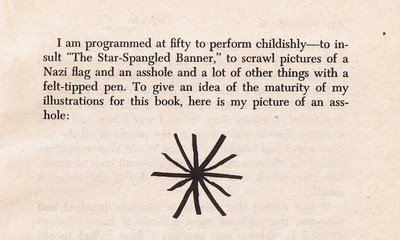
So the novel is actually set up as a story within a story.  The Preface explains that the story is written by Philboyd Stuge (Vonnegut has a lot of fun with names).  It explains that “Breakfast of Champions” is a trademark of General Mills and he is neither  associated with GM nor disparaging them by using the phrase so much (it doesn’t occur frequently until much later in the book).  Stuge explains some of the background information about ideas in the book (that people are actually robots and how Armistice Day was a better name for the holiday than Veterans’ Day).  He also explains that he is writing this book as a 50th birthday present to himself (Vonnegut was born in 1922).  And for his 50th birthday, he is going to act childishly and draw illustrations in the book.  So I found this picture from the novel

That may give you an idea of what to expect inside (although most of the illustrations are “better” than that one).

What is especially helpful about the story is that it tells you what will happen as it goes along.  So the novel starts:

This is a tale of a meeting of two lonesome, skinny, fairly old white men on a planet which was dying fast.

One of them was a science fiction writer named Kilgore Trout.  He was a nobody at the time, and he supposed his life was over.  He was mistaken.  As a consequence of the meeting, he became one of the most beloved and respected human beings in history.

The man he met was an automobile dealer, a Pontiac dealer named Dwayne Hoover.  Dwayne Hoover was on the brink of going insane.

And that is literally the story.  So why is the book 297 pages long then?  Vonnegut is really out to talk about contemporary society:  America mostly, but not exclusively.  And does he ever. (more…)

Read Full Post »

SOUNDTRACK: SURFER BLOOD-Astro Coast (2009).

Surfer Blood is a confusing band.  Their music sounds like a whole bunch of different late-80’s alterna-rock bands that I love.  But their vocalist (and the music of the verses) doesn’t really fit that style–I’m not sure what those sound like) and some of it is drenched in a kind of Beach Boys-reverb that befits the Surfer part of their name.

It’s a fascinating amalgam of styles that works very well and which is chock full of catchy choruses.  “Floating Vibes” opens with a big loud guitar note, that quickly morphs into a catchy verse line.  Conversely, “Swim” opens with a strange shouty kind of introduction and then morphs into a crazily catchy chorus (also shouted).

“Harmonix” opens with a “rock n roll” 50s style riff, then jumps to cool guitar harmonics and then turns into a song that sounds unmistakably late 80s to me (although maybe it sounds like a song my friend Garry wrote back in the late 80s).

“Neighbor Riffs” is a rocking 2 minute instrumental, which is followed by “Twin Peaks,” a song that sounds unmistakably late 80s but I can’t decide why (it’s also great because it’s about, you know, Twin Peaks).  I’m confused by the next pair of songs: “Fast Jabroni” and “Slow Jabroni” as they do not seem related and the Fast song is much better.  In fact the combination of “Slow Jabroni” and the next song, “Anchorage” really drag the disc as those two songs are over 12 minutes in total (whereas most of the songs are in the 3-4 minute range).   Neither of the songs is bad (in fact “Anchorage” is pretty cool), they just both last too long.

As I try to process who this band sounds like, I’m going to let Carrie Brownstein provide the best description of them:

Sometimes an album comes from people who you can tell love some of the same music as you. And when they interpret the bands you both love, when they run it through their own brains and hearts and hands and amps, instead of sounding like a watered-down version of the progenitors, it sounds fresh and heartfelt and energized. That’s Surfer Blood for me.

And me too.

[READ: May 16, 2011] “We Come in Peace”

This is one of my favorite short stories that I’ve read in a long time.  It appeals to me for a number of reasons (I love the conceit of angels tinkering with humans), but it’s also very well written and thoroughly engaging.  I think the only disappointment about it is that it’s a short story and not a novel (although the intro to the story says that this is merely an excerpt from the short story which appears in full length in Gartner’s new collection of short stories, Better Living Through Plastic Explosives).

I feared that the story would be daunting at first because it includes a dramatis personae (which can be intimidating for a short story).  But the dramatis personae just tells us which angels are matched to which humans.  For yes, this is a story about five angels who are sent to earth to learn about the five senses.   Amusingly, this is spurred on because humans have discovered the extra taste sensation known as umami.

So, the five angels are sent to a Canadian suburb to inhabit the bodies of 5 students: Bashaar, an athlete and dancer who is beset by local radical muslims to get him to join; Stephan a good student (ie., dork) who is turned cool by his angel, much to his family’s dismay; Leo, a nice dude; Jason, the school bully, who is inhabited by a happy angel; and Jessica, an anorexic girl who suddenly eats, develops a nice body and becomes romantically involved with 16-year-old Cullen.  Each of the angels subsumes the personality of the kids (whose families are, needless to say, freaked out by the changes). (more…)

Read Full Post »

« Newer Posts - Older Posts »