Feeds:
Posts
Comments

Archive for the ‘Books about writers’ Category

SOUNDTRACK: KISS-Alive III (1993).

Kiss put out Alive! after just three albums.  Alive II also came out after three albums.  Alive III has 14 albums between it and Alive II (if you count the solo albums as 4).  I guess poor sales and poorly attended concerts don’t really suggest live albums.  But Revenge revitalized them somewhat so it was time for a new one–their first with no makeup!  And it’s a pretty good one.

But it’s also like Kiss has forgotten all about being Kiss.  There’s no “You wanted the best, you got the best, the hottest band in the world…Kiss” (which would have been untrue at the time anyhow, but since when has that stopped Kiss?)  The tracklisting is pretty darn good though.  For Alive II, the band didn’t want to repeat any tracks from Alive! (that’s such an endearing thing to say about the band with 400 repackaged hits records).  Since there are tons of records since Alive II, you’d assume Alive III was all 80s songs.  But that’s not the case.  There are a few inevitable duplicates (how could there not be–all their biggest hits were from the 70s), but I’m surprised they didn’t throw more current stuff on the disc.

It opens with “Creatures of the Night” a great heavy version.  Then they go way back to “Deuce” which is a cool surprise.  Since this was the tour for Revenge, you’d think there might be more songs from it, but there’s only three: “I Just Wanna” “Unholy” and “Domino.”  “I Just Wanna” was perfectly crafted for Paul to banter with the audience and get them to sing “I just wanna fuck” (which was edited from the album I understand).  And in this live setting “Unholy” sounds great.

“Heaven’s on Fire” works well live, even if I don’t really like the song–but the band can really ham it up here.  The big surprise has got to be “Watching You,” a totally unexpected song form the past.  And even if it was on Alive!, this version is quite different (no Peter Criss cowbell).  I don’t think much of “Domino” anyhow (well, the music is great but the lyrics, ick), but in this version Gene just seems kind of bored.

Another surprise comes in “I Was Made for Lovin’ You”  true it’s one of Kiss; biggest hits but they often try to distance themselves from the “disco” era.  Nevertheless this version sounds revitalized.  And since there were no live albums in the 80s, there’s no official live recordings of it.  “I Still Love You” is another great chance for Paul to shine.  “I Love It Loud” sounds great (although the harmonies get a little sketchy at times.  But it’s weird to hear “Rock N Roll All Nite” in the middle of the set instead of at the end.  It’s also odd to start off this song with “It ain’t bullshit when you say rock and roll all nite and party every day.”   The intro to “Detroit Rock City” is also very strange “It doesn’t matter where you’re born ,it doesn’t matter where you come from, it matters where your head is at. This one;s called Detroit Rock City.”  Huh.

There’s not much you can do with a dreadful song like “Lick It Up,” and ad-libbing “I wanna lick you” doesn’t make it any better.  The disc ends with “God Gave Rock n Roll to You II,” which I don’t like, but which sounds good live, a lot of energy.  And it wraps up with a very odd thing–a guitar solo version of the Star Spangled Banner.  It doesn’t compare to Alive! or Alive II, but Alive III is a good live album from a good live band.

[READ: August 15, 2012] “From the Pencil Zone”

This is a review of the microscripts of Robert Walser, an author whom I have never heard of.  Walser was born in Switzerland in 1878 and he published several shorts and several novels (which were admired by Kafka!).

As the market for shorts dried up, so did his career, and he moved into smaller and smaller places.  Accordingly, his handwriting grew smaller and smaller, too.  Eventually he cheeked himself into a series of mental institutions.

Walser’s early novels dealt with everyday life, like the “young boyish man” who wants to become a bookshop proprietor in The Tanners.  The character (whose name we don’t learn for a long time) is effusive, praising the job to the heavens as a divine calling!  And lo he is given the job.  A week later he declares, “the entire book trade is nothing less than ghastly.”  Wasler himself had a multifaceted career: butler, inventor’s assistant, clerk, journalist.  But he was eventually diagnosed with schizophrenia and is responsible for this quotable quote: “I’m not here to write.  I’m here to be mad.”

After Walser died, people discovered a treasure trove of 526 pages of “microscripts.”  The writing was so small that these 526 pages, when written in book form came to six VOLUMES of books.  They were released as Aus dem Bleistifsebiet (From the Pencil Zone).  Galchen’s review here is for the short one volume New Directions collection called Robert Walser: Microscripts.  Interestingly, most of the stories have no title and some seem unfinished.  New Directions (and Harper’s) include images of this man’s microscopic writings (all done in pencil of course).  He wrote in Kurrent, a widely used script at the time which was a version of medieval shorthand and which dramatically reduced the number of strokes per character.  His letters were often one or two millimeters tall.  He was able to fit six stories on a postcard received from a newspaper editor. (more…)

Read Full Post »

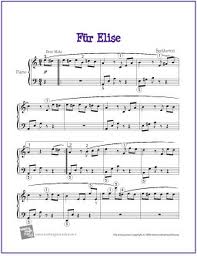
SOUNDTRACK: LUDWIG VAN BEETHOVEN-“Für Elise”

I didn’t know a lot of the music mentioned in this book, but like most people, I know and enjoy “Für Elise.”  It’s an interesting choice of music to end such a crazy chaotic story, although I suppose there are some less than peaceful moments ion the song too.  It’s a shame Bast never gets to play it.

I find the most engaging moments to be when the lone high note comes before the reintroduction of the initial melody.  The middle, minor key section that sounds kind of menacing is also neat–a big switch from the delicate opening.

Why not take 3 minutes and enjoy it now:

[READ: Week of August 20, 2012] JR Week 10

The end is here.  After endlessly interrupted conversations, the book has actually hit a period.

As the last week ended, Bast was being dropped off at the hospital by Coen.  And the bulk of the end of the book takes place in the hospital.  There are many similarities between this book and a big 60s/70s comedy romp, and here is another one–all the characters seems to pile into one location for a big finale.  (Technically the finale happens at Bast’s house, but you get the idea). (more…)

Read Full Post »

SOUNDTRACK: PHISH-Live Bait Vol 3 (2010).

This selection of free Phish songs is notable because of a couple of items.

  1. All of the songs were recorded at the Worcester Centrum in Worcester, MA.  Although the first three songs were recorded in 1993, the fourth song was recorded in 1997 and the final track was recorded in 1991.
  2. The first three songs were recorded on New Year’s Eve–technically on New Year’s Day.  The first track actually counts down the seconds until midnight, when the band bursts into Auld Lang Syne
  3. Probably the biggest deal of all: the band plays a version of “Runaway Jim” that lasts 58 minutes and 48 seconds.  That’s right, nearly an hour on one song.  I think if I went to see them live and they did that I’d be pissed, but it sounds great on this recording.  “Runaway Jim” is not one of my favorite songs, but this extended jam is really good–they break into several different sections and it doesn’t feel like a long version of this song so much as a bunch of different jams thrown together.  At one point it almost seems like the band thought they began with “Weekapaug Groove,” but they push back against that.  I’m very curious to know what happened after that song was over, but the end of the disc takes on an early recording of “Llama, ” a song I like quite a lot.

This is yet another great addition to the free Live Phish pantheon of music–I mean, an hour version of one song, how cool!

[READ: August 1, 2012] “Volumes of Knowledge”

Encyclopedias date back thousands of years–Pliny the elder tried to write everything he knew in Historia Naturalis and a Chinese emperor created a similar book Emperor’s Mirror in 220 A.D.  But the art and craft of creating books that contain all the world’s knowledge flourished in the 1700s.  Increased wealth and education in the French bourgeois, a flood of information and a decline of interest in religion all led to the desire to learn more.  The printing press helped to disseminate the information.

It was Denis Diderot, a French enlightenment polymath who best explained the concept of the encyclopedia:

the purpose of an encyclopedia is to collect knowledge disseminated around the globe; to set forth its general system to the men with whom we live, and transmit it to those who will come after us, so that the work of preceding centuries will not become useless to the centuries to come; and so that our offspring, becoming better instructed, will at the same time become more virtuous and happy, and that we should not die without having rendered a service to the human race in the future years to come.

But Diderot recognized the limits of a one-author encyclopedia: “I do not believe it is given to a single man to known all that can be known.”   From 1751 to 1772 he and his assistants edited more than 70,000 articles from 140 authors to create his first Encyclopedie.  Of course having many authors had drawbacks–differences in style, length and quality.  But Diderot shied away from nothing and in many locations the book was banned.  Some of the ideas in the book shook the very foundation of accepted ideas.  And many of the authors hoped to change the world.  Diderot himself even hoped to usurp religion with his knowledge: “It is not enough for us to know more than Christians, we must show them we are better.” (more…)

Read Full Post »

SOUNDTRACK: THE BEAUTIFUL SOUTH-“Dumb” (1988).

About five years ago I mentioned all of The Beautiful South records in one post.  But I didn’t really talk about them all that much.

This comes from one of my favorite Beautiful South records–I like all the songs equally, but I often have this song in my head.  And the reason I picked it right now is because Paul Heaton sings about a bunch of things each one ending with “either you are simply beautiful or I am simply dumb.”

And these are: “It doesn’t take a mathematician to add a simple sum”; “It doesn’t take a labrador to show a blind man sun”; and this one: “It doesn’t take Robert The Bruce to see the web you’ve spun.”

I had no idea who Robert the Bruce was and I never bothered to look it up.  And yet, as you will see below in the post, Robert the Bruce is mentioned in JR!  I was flabbergasted.  And this song immediately popped into my head.

And that’s not a bad thing.  It’s a pretty piano ballad with a seemingly negative chorus (dumb, dumb, dumb) despite its positive message.  There’s also a beautiful ending: “The sun, the sky, the moon, the stars/Jupiter, Neptune and Mars/All these things I clearly see/It don’t take a telescope for you to love me.”  The songs ends with Jacqui Abbot’s lovely echo of this stanza.

The Beautiful South were a great band, they broke up a few years ago.  Paul Heaton has a number of solo albums out but they’re not available in the states, so…

[READ: Week of August 6, 2012] JR Week 8

This week’s read finds us primarily in the apartment.  We see bast return home and fool around with Rhoda before he goes off on his trip to the funeral.  We see Gibbs come in and try (in vain) to get work done.  We actually get to see Gibbs’ magnum opus (or parts of it), and we see him fall off the high that he felt with Emily.

There’s a lot of funny stuff in this week’s read.  It seems like the darker the story gets, the more childish jokes Gaddis throws in there.  Seeing Gibbs unable to work on his manuscript because of all of the (real and fake) distractions is simultaneously hilarious and spot on.  And also, the plotlines are really revving up now.  JR Corp is starting to see some pushback on their deals, and a number of outsiders are starting to get angry.  There’s bound to be a collapse of some sort soon.  I’m also starting to think that with all of the ellipses in the book that it will end with a dot dot dot.

As we resume, Davidoff and Bast are still talking.  Davidoff tells Bast “Don’t worry about” something [Thanks to Simon for pointing out this expression–I recognized that Davidoff always says “brush fires,” but not the don’t worry about it].  He is concerned that Bast’s hearing aid isn’t turned up (ha), but that the Boss [JR] wants Bast’s signature on any expenditures over $2,000 (It was originally $200, but Davidoff said Bast would get writer’s cramp).  He explains the title change in the magazine from Her to She–passive to active readership–will cost $14,000.  There’s also $27,000 for a new logo.  And the logos are awesomely cheesy–hard to believe they paid $27,000 for them.  They revolve around the dollar sign, with the least offensive one making a J and R out of the top and bottom of the S–the others have a snake, or breasts or thumbing your nose or even someone behind bars.  They pick the least offensive one that says Just Rite in a dollar sign (“something patriotic about the dollar sign”).  They’re going to put them on half a million matchbooks. (more…)

Read Full Post »

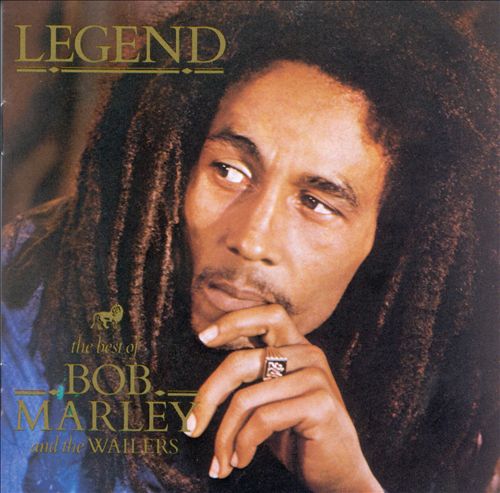
SOUNDTRACK: BOB MARLEY AND THE WAILERS-Legend (1984).

I’m white, so that means I own a copy of this CD (according to the book below).  And I do, because it’s mandatory in college that you play “Jammin'” at every party.

Now, I like ska (yup, still).  I know that ska came from reggae, but to me reggae is just boring ska.  I couldn’t agree more with Barney on How I Met Your Mother:

Ted: Oh, get this, she plays bass in a reggae band. They’re having a show this Friday. How cool is that?

Barney: Oh, does she know that one song? Mm-hm chaka, mm-hm chaka. What’s that song called? Oh, right, it’s called every reggae song.

Although in fairness, listening to this again, it is a rather nice album (I guess I know every song).  I have a personal aversion to some of the really overplayed songs, like “One Love” (because if you go to any Caribbean location they all act like it’s the official slogan of hot weather.  We even have a Christmas ornament from St. John that says “One Love”  WTF?  And I don’t think anyone needs a 7 minute version of “No Woman No Cry.”

But some of the lesser played its (“Could You Be Loved” and just about anything with The Wailers backing him are pretty great).  Although I’ve got to admit I can’t take more than a few songs.  I had to skip through some of the last songs (thank goodness I don’t have the 2 disc version).

[READ: July 26, 2012] Whiter Shades of Pale

Christian Lander created the blog Stuff White People Like.  It was very funny (it hasn’t been updated since Feb 2011, so let’s assume it has run its course).

Lander had released a first book of SWPL back in 2008.  I didn’t read it (blog to book deals were overwhelming in 2008), but I had seen enough of the site to assume it was funny.  One of the funnier jokes when the blog first came out was wondering if the creator was white or not.  (Well, the author photo gives that away, but I won’t).

We grabbed this book at a Borders going out of business sale (sorry Borders, you are missed).  This book continues where the first book left off (I gather).  I don’t know if every entry from the blog made it into the book (the thanks at the end of the book lead me to think not), but I have to assume most of them made it (and maybe there is new stuff in the book too?) (more…)

Read Full Post »

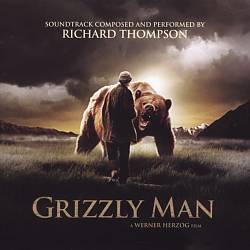
SOUNDTRACK: RICHARD THOMPSON-Grizzly Man Soundtrack (2005).

This is a largely instrumental soundtrack by Richard Thompson.  It features some wonderful guitar work (no surprise there).  There are several slow acoustic numbers (“Tim & the Bears,” “Foxes”–which is in the style of his old traditional folk ballads) there’s also the slow impassioned electric guitar solo (set over a simple beat) of “Main Title.”  “Ghosts in the Maze ” is a dark piece, the exact opposite of “Glencoe” a traditional-sounding song, both of these are under two minutes long.  “Parents” adds a cello, which means a sombre song.  “Twilight Cowboy” is one of the longer pieces, and it really conveys an openness of nature.

“Treadwell No More” is a slow six-minute dirge type song.  “That’s My Story” has spoken dialogue by Treadwell, over a simple unobtrusive guitar.  But as the title of the record says, Music composed and performed by Richard Thompson.  Which means there are other musicians on the soundtrack too.  “Small Racket” is where things start to get noisy and a little uncomfortable.  There’s some squeaks and slashes of sound, but it’s mostly a tense guitar feel.  Then comes the darker, scarier stuff.  “Bear Fight,” is a series of cello noises and swipes.  “Big Racket” is indeed that, with guitar from Henry Kaiser and noises from Jim O’Rourke.  “Corona for Mr Chocolate” is all Jim O’Rourke, it’s also odd noises and moods.  None of these three songs are terribly off-putting but they reflect a very different tone.

The album ends with “Main Title Revisited,” which is what it says and “Coyotes” by Don Edwards which has some coyote yodels.

It’s a good soundtrack, really conveying what the movie is about, and while not essential Richard Thompson, it is still some great guitar work

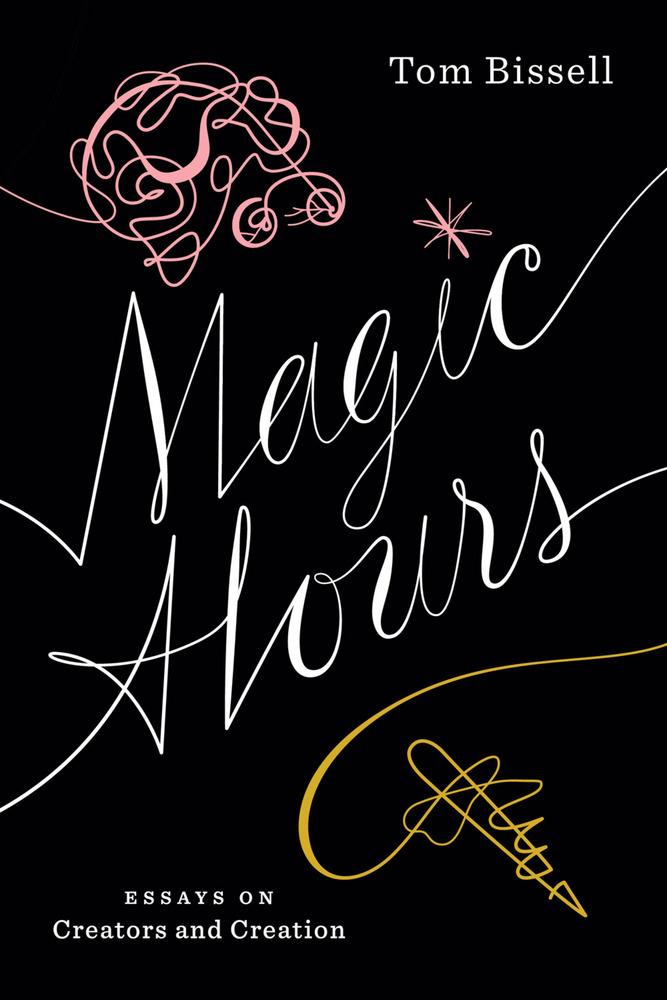
[READ: July 23, 2012] Magic Hours

I thought that I had never heard of Tom Bissell, but I see that I have read three of these articles already (I guess I don’t always pay attention to the author’s name).

This collection of essays comes from the last eleven years (2000-2011).  The articles have appeared in The Believer & The New Yorker (these are the ones I have read) and Boston Review, Harper’s, New York Times Magazine, Virginia Quarterly Review, New York Times Book Review and Outside (which I am starting to think I should really check out more).

Primarily they are articles about writing–he looks at fiction, non-fiction, film or a combination of them.  Bissell is a strong writer and he does not hold back when he sees something he likes or dislikes.  I found his articles (all of which are quite long–about 30 pages each) to be engaging, funny and very persuasive.  I’m really glad I read the book (and was even glad to re-read the articles that I had read before). (more…)

Read Full Post »

SOUNDTRACK: THOU-“Something in the Way” (2011).

Sometimes you hear a  cover version and you really don’t know what to think.  Maybe you hate it from the very beginning.  And then maybe it does something and you kind of hate it a little more.  And then suddenly it turns the corner and who knows what they’re doing.

This song opens almost ponderously slowly.  I guess it’s not that much different from the original , but it feels so really slow.  And then, when they get to the “something in the way” part, the band kicks in with really heavy squalling feedback and cookie monster vocals shouting “Something in the Way.”  And I kind of didn’t like anything.  But then came the surprise.  the “oooh” part was sung very straight and melodically.  The song reverts back to the original slow vocals section and you realize that the singer sounds an awful lot like Cobain himself. And the second time when the chorus comes in, you expect it and while you may not like the cookie monster vocals, the juxtaposition to the sweet “oohs” is strangely cathartic.

Not for everyone by a long shot, but very interesting nonetheless, especially the way the feedback squalls and wheedles.

Thou has done a number of Nirvana covers evidently.  There’s a cover of “Anuerysm” in this live show (in which they acknowledge that the fans aren’t there to see them).  The music is spot on, but man, those vocals are hard to handle.

[READ: June 29, 2012] “The Golden Vanity”

As yesterday’s story was about “the husband,” today’s story is about “the author” (have short story writers run out of names?).  The author has just written a very successful book in which the main character tries very hard not to be nervous in social situations.  The author himself gets nervous in social situations.  When people know he wrote the book they scrutinize him to see if he gets awkward in social situations…which makes him more awkward…etc.  It’s a pretty funny concept.

The opening section has the author meeting the librarian.  He’s put in an awkward situation because his hands are full when she waves.  So he gets emabrassed and scowls.  Then he thinks she assumes he is scowling at her.  He gets through the encounter with advice from his shrink.

The next scene jumps quickly (I wonder what happened to the librarian) to his medical condition.  The author has to have his wisdome teeth out.  He spends a lot of the story wondering is he should have a local or a twilight anesthetic (which costs $3,000 more and calls for an I.V.). He wonders aloud a lot to his friend Liza, who tolerates his neuroses and enjoys talking about them, even though she says things like “We’re not talking about this again.”

The evening before the surgery (he of course chose the I.V.) he went on a date.  Well, not really a date (he liked to say that), but friends going out together with a single woman there to meet him.  Naturally this made him nervous too.  But he and Hannah hit it off (lots of drinks helped).

There’s a whole section devoted to waiting room art which I appreciated quite a bit.  Who decies what to buy?  It’s not like the doctors would come out and look on it and admire it, right?  This sort of melds with a discussion about the preserved letters of famous writers.  Do libraries buy emails?  Do they buy the letters of young writers as a security upon further greateness?  These ideas are pretty theoretical yet the way it is written keeps it inetersting. (more…)

Read Full Post »

SOUNDTRACK: SQUAREPUSHER-Solo Electric Bass 1 (2009).

Yesterday I said that one Squarepusher CD was enough for me.  I did some digging and found out that he has put out a whole bunch of CDs.  And, to the surprise of me, at least, not all of them are crazy electronic music.   This CD, as the title states, is a collection of electric bass solo songs.  The songs were performed live as part of the Jazz à la Villette 2007 festival and were played on an electric six-string bass with no pedals or effects.

And that is all you get—serious solo bass songs.  The man behind Squarepusher, Tom Jenkinson, is apparently a virtuoso musician (who knew?) and these songs really show off his chops (just listen to the insanity of “Seb-1.05” (catchy title, eh?)).  He can play some impressive Spanish-sounding songs–that would probably sound better on a guitar, but sound more impressive on a bass (“Seb-1.06”).  He’s got some great slap stuff going on (“Seb-1.03”), and he really knows from melody (also “Seb-1.03”).  True, 12 all bass songs can meld into one another, but the crowd really loves it (and like a lot of things, seeing it is probably more impressive than just hearing it).

It’s not exactly “fun” listening (even if you love bass solos).  Only 850 copies of the disc were released, so it’s not like they expected a big audience for this.  But it is pretty neat to hear a) how good he is and b) that his main musical output is noisy electronic noodling.  That gives me even more respect for his electronic output.

[READ: June 5, 2012] “The Spider Women”

Margaret Atwood is another author I wish I had read more of—and I’m getting there.  I often wonder if I should just read an author start to finish and be done with him or her or if that just leads to madness.

Much like Miéville says in the previous essay, children don’t read genres, they just read what they like.  I loved Atwood’s idea that “below a certain age, [children] don’t distinguish between ‘true’ and ‘not true,’ because they see no reason why a white rabbit shouldn’t possess a pocket watch, that whales shouldn’t talk, or that sentient beings shouldn’t live on other planets and travel around in spaceships.”  After all, sometimes reality lives under the bed and has sharp claws. (more…)

Read Full Post »

SOUNDTRACK: SQUAREPUSHER-“Dark Steering” (2012).

Hot on the heels of a review of LMFAO I get to the other side of the spectrum in electronic music—Squarepusher.   There’s no big choruses, heck there’s no words, but this music shares something with LMFAO.  Well, actually it really doesn’t—except maybe keyboards.

Squarepusher play dark angular music. It’s very electronic and alien (and sounds like it may have been used in the background of Skinny Puppy songs back in the day). It’s abrasive and the sounds are otherworldly and yet in this song, there’s a melody to it.  I have but one Squarepusher CD—that’s probably enough for me.  But I am always interested to hear new music by him.  It’s impressive the way he can take a song that starts out so noisy and get it to sound like real music by the end.  It like the science fiction of music.

[READ: June 5, 2012] “Forward Thinking”

I have read only one book by China Miéville—Perdido Street Station.  I found it to be quite challenging for a bunch of reasons and figured I wouldn’t read more by him.  And yet I find that images from that book stay with me to this day (at least ten years on).  So maybe it’s time to give him another shot.  But where to start?

This entry in the New Yorker’s Sci-Fi issue is written as an “E-mail sent back in time to a young science-fiction fan.”  And I loved it.  I enjoyed how it started (with the author knowing that E-mail doesn’t exist at the time the recipient will get this—so who will it show up?)  And I loved the central question: “How did you get into this stuff?”  The sender knows that the kid will get asked this a lot, but the question should be turned around: “How did you get out of it?”  Because all kids love sci-fi concepts.  It’s just that some move away from it as they get older.

Miéville includes a few key moments in (his) sci-fi history: Page 40 of “The Tale of Mr. Jeremy Fisher” by Beatrix Potter.  What?  Indeed, for this is the first time that (you) will be ware of knowing something the protagonist doesn’t—that there’s  fish coming up to get him.

Next is Chapter 13 of Golem100 by Alfred Bester.  I have never heard of this book.  Although Miéville does warn us about it—he read it far too young and there’s some sadistic violence in it, what attracted him (and me, now) is the disrespect for text—part of the story is a musical score, another is a picture.  It sounds cool.  And of course it is long out of print. (more…)

Read Full Post »

SOUNDTRACK: TARKIO-Live on KGBA (from Omnibus) (1998).

Tarkio released an album called Live on KGBA in 1998.  Omnibus collects 4 songs from that release (according to various websites, the other tracks include “Kickaround” “Neapolitan Bridesmaid” “Helena Won’t Get Stoned” “Caroline Avenue” and “Candle”  (from the I Guess… album) “Weight of the World” (from Sea Songs) and “Whipping Boy” (the only song that’s not elsewhere on Omnibus).  This live record was distributed in some fashion way back when and there are copies floating around the internet.  I’m not willing to risk a virus by clicking on these links though, so I’ll stick with the few tracks on Omnibus.

The sound is excellent, and the full collection would no doubt be a welcome addition to anyone’s Tarkio fandom.

“Carrie” has a very Neil Young feel, from the rough acoustic guitars to the aggressive strumming technique.  It doesn’t sound like any Neil Young song in particular but you can imagine Neil looking on and smiling.  Even the solo is kind of Neil-ish (electric guitar over the acoustic main song).  “Am I Not Right?” sounds like a newer Decemberists song—there’s some very cool abrasive chords at the chorus “Knowledge!”  “Mess of Me” is a boppy acoustic number that’s fun to sing along to.  It opens kind of like the Decemberists song “The Infanta” but quickly turns into something else entirely.  “Goodbye Girl” is a cover of the Squeeze song done with a dominant banjo.  Although it lacks the original’s punch, it works well as a folk number.

[READ: June 5, 2012] “The Golden Age”

I feel like I’ve really been missing out by not reading any Le Guin.  The more I read from her now, the more I feel like I should be dropping everything and reading her output.  And I will read at least some of Earthsea eventually.

But in the meantime, I can enjoy pieces like this.  She talks about how science fiction has never really been considered “literature” and how it’s always been relegated to the genre ghetto.  Be that as it may, she’s also disappointed when science fiction writers try to deny their ghetto by saying, “Pay no attention to the spaceships…[this] is Literature.”  She thanks Michael Chabon for smashing down at least some of the ghetto walls.

Which allows her to look back at the past and the early Science Fiction Writers of America conventions.  She remembers the fun talk and open mindedness—except for a notable few who were deeply conservative, a surprise for a group of men who were supposed to be looking forward, not back.  And yes…men.  There were very few women sci-fi writers back in the fifties (in “The Golden Age”).  Indeed one SFWA member wanted to create a members-only necktie! (more…)

Read Full Post »

« Newer Posts - Older Posts »