Feeds:
Posts
Comments

Archive for 2012

SOUNDTRACK: MOGWAI-Hardcore Will Never Die, But You Will (2011).

With an album title like that, you expect, well, some pretty loud music, right?

For this Mogwai album that’s not what you’ll get.  You’ll get lots of keyboards, and on the opening track “White Noise” you’ll get one of their prettiest melodies in ages.  Sure, there’s some distorted guitar by the end, but this is quite pretty.  “Mexican Grand Prix” opens with a computerized drums, keyboards, a propulsive bass line and whispered vocals.  This could be a dance hit.  What has Mogwai done with Stuart Braithwaite?  When the processed vocals start singing along (no idea what they’re saying), you can easily imagine a dancefloor packed with people for this track.

“Rano Pano” brings in the buzzy guitars again, both the first intro sounds and the noisier melody guitar, while “Death Rays” returns to the happy keyboard feel for a song that reminds me of Explosions in the Sky.  Once again, the melody is beautiful.  “San Pedro” brings guitars back in, with another killer melody and at 3 and a half minutes, it’s the shortest blast of rock.

“Letters to the Metro” opens with a spare piano melody and adds delicate washes throughout.  “George Square Thatcher Death Party” opens with some chanting (no idea what they’re saying) and then some of the loudest bass so far.  It’s another propulsive song, with some buzzy guitars way in the background, but the main force again is the keyboards.  This song sounds very 80s to me, with the processed computerized voice and the keyboard sound they use.  “How to Be a Werewolf” is 6 minutes. It’s a nice song but it doesn’t really grab me like the others.  “Too Raging to Cheers” has more 80s style keyboards (reminding me of Brian Eno or a PBS documentary about space) until about 2 and a half minutes in, when the Mogwai of old come crashes through–lots of cymbals and loud guitars.

“You’re Lionel Richie” is an 8 and a half minute song that opens with some French dialogue.  There’s a complicated guitar melody that plays for a time.  By about 5 minutes, the noise comes in–guitars, keyboards, cymbals, and while it doesn’t crescendo like Mogwai of old, it certainly gives you tastes of them.  This later section of the song brings in a good guitar melody that plays along until the slow fadeout at the end.

I continue to think of Mogwai as a loud, intense band, but their more recent output shows a band changing into something else.  Their melodies are still top notch and they definitely flirt with using noise in some of their songs, but they seems to be making more commercial sounding music (although realistically no band that makes almost exclusively instrumentals can ever be accused of selling out).

[READ: August 10, 2012] “Ghost Town Choir”

I have a read a few things from Ferris.  This story caught me completely by surprise.

The story is from the point of view of a boy who is living with his mom.  She is dating a man named Lawton.  Lawton had moved some of his stuff into their house, including his record collection–his prized possession.  They have a fight; he sings to her from outside their trailer, “What have you got planned tonight, Diana, he sang, though my mom’s name is Sheryl.”  She threw all of her dishes at him until he left.  He came back later that night calling her all kinds of unforgivable names.

Then the story shifts to Lawton’s point of view (both POVs are in first person, although they are quite distinct in style).  The boy goes to Lawton’s trailer even though he is not welcome anymore: “Your momma and me, we’re done.”  Lawton fancies himself a cowboy, and the backing singer in a cowboy band.

Back at home, Sheryl is on a cleaning binge–purging herself of everything.  When she gets to Lawton’s records, she is ready to toss them but the boy asks her not to.  She doesn’t listen and hauls them to the dumpster.  The boy grabs them later on and brings them to his fort in the forest.  That’s where he kept all of the things that the men left in his house after they were gone: “I wonder did they know about he cigarettes they’d never finish?” (more…)

Read Full Post »

SOUNDTRACK: DIVINE FITS-“Would That Not Be Nice” (2012).

This song was KCRW’s Today’s Top Tune on August 13, 2012.  Divine Fits are a supergroup of sorts with Spoon’s Britt Daniels, New Bomb Turks drummer Sam Brown and Wolf Parade/Handsome Furs member Dan Boeckner.  When I heard who was in the band, I was pretty excited to hear the track.  But I have to say that this sounds kind of like a over-polished Spoon song with keyboards.  Daniels’ voice and musical style are individual enough that he pretty much dominates whatever he does.  But at the same time, I feel like the jagged edges that make Spoon so interesting have been removed.

I assume that Boeckner is responsible for the keyboards and the interesting echo effect on the vocals.  They add an interesting balance to Daniels, but this doesn’t excite me the way Spoon does.

[READ: August 10, 2012] “Signs and Symbols”

I discovered this story because in my post of Lorrie Moore’s “Referential” someone commented that her story was plagiarized from this one.  I had intended to read this Nabokov story immediately so Moore’s would be fresh and I could lay down the “J’accuse.”  It’s been a couple of months but I can say that while her story is obviously inspired by this Nabokov–to the point where she uses elements from this story in her own, it’s a different take on the same idea.

But before we do any comparison, let’s look at this story.  The story begins by stating that for the fourth time in as many years, a young man’s parents don’t know what to take him for his birthday.  The problem is that he is in an institution and many things are forbidden.  And also, for their son man-made objects are either hives of evil or gross comforts–more on that shortly.  They knew they couldn’t get him a gadget of any kind, so they settled on a basket with a set of colorful jellies.  When they travel to him with the gift, everything goes wrong–the train breaks down, there are no busses, and when they finally get there, the nurses inform them that there has been an incident and he cannot see them now.  So they return home with the jellies.

The story describes what is wrong with their son as referential mania.  It’s an interesting situation, and an article about him had appeared in a scientific monthly.  It says that the patient believes that everything happening around him is somehow related to himself.  So clouds transmit details about him, trees talk about him, etc.  And this was driving him crazy (obviously).  He had even tried to kill himself via, what the doctor described as “a masterpiece of inventiveness.” (more…)

Read Full Post »

I had intended to post my final recap of William Gaddis’ JR today.  But my family had been on vacation and I was feeling lazy.  Then September 3 proved to be Labor Day, a perfect day to write thoughts about JR.  The irony was not lost on me.  But then I figured I’d fudge a bit, leave my Monday post until Tuesday and back date it (a good technique for checks too!).

Well, it turned out that my position was terminated at my job.  Which means I got laid off.  Right after Labor Day, and right when I was about to post some thoughts on JR.

That’s a pretty big helping of irony right there.

So here it is two days later, Sept 5 and I’m backdating this post (because I’m anal retentive and like to have a post per day).  I’m happy that I had written a bunch of posts for this week already as I don’t have much gumption for writing about books right now (even though I read several good ones over the vacation).

So enjoy my ironic life and I’ll say a few words about JR next Monday, if I still think it’s funny.

Perhaps I’ll apply for a new job as Mister Ten-forty.

Read Full Post »

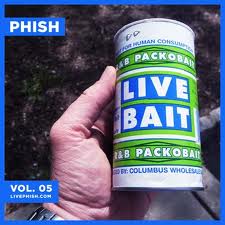
SOUNDTRACK: PHISH-Live Bait 5 (2011).

When this was released it was an astonishing free giveaway.  A mix of previously released and brand new recordings that spanned from 1987 to 2009!  Over 6 hours of music!  For free.

It’s fun to hear the really early stuff–like the songs that are from “Ian McLean’s Party at Connie Condon’s Farm” where the band is laughing with the audience (which seems like it’s about 100 people).  And when they invite everyone to another free part coming up.   This was back in 1987 before they had released their official debut Junta (who was taping all this stuff for them back then?  And with such good quality?).  But this one is especially fun because you can hear dogs barking during the quieter parts.

There’s also a big chunk of live Gamehendge material from Townshend Family Park in Vermont (circa 1989).  The middle block features the addition of The Giant Country Horns who play on “Flat Fee” and great versions of “David Bowie” and “Gumbo.”  I wouldn’t want the horns all the time, but they do add something to these shows.

Then there’s a jump to 1996 and a whole series of songs from shows at Loring Air Force base (through 1998).  There’s a 27 minute “Down with Disease” and a fun “Bathtub Gin.”  There’s then a bunch of songs from one show at the Big Cypress Seminole Reservation.

After a few year’s hiatus, they resume in 2003 back at Loring.  There’s a great version of “Waves,” although I found the “Mike’s Song” from this era kind of anemic.  And then, interestingly, there’s a “Split Open and Melt Jam” which is indeed, just the jam from the song and not the song itself.  “Suzy Greenberg” features Sharon Jones–it’s funny to me to hear r&b singers singing about a Jewish woman going to a neurologist. Fish, by the way has some of the funniest lines during the “forgotten my name bit.”  I’m also intrigued by the 2009 version of “McGrupp and the Watchful Hosemasters,” a pretty but kind of goofy song that dates back to 1985!

All in all, this was a very cool freebie to give to fans.

[READ: July 5, 2011] Five Dials 24

The newest Five Dials came as something of a surprise since Number 23 came out not too long ago and there was talk of the next issue being quite large.  But I like the small editions of Five Dials.  And this one is a cool, bite-sized nugget–a little fiction, an interview and an essay.  I have to assume this one was released when it was because it has a remembrance of David Rakoff, making this release rather timely.

…plus bear illustrations like you won’t believe by BECKY BARNICOAT (funny and dark drawings), LIZZY STEWART (beautiful pencil drawings) and NEAL JONES (blue bears). (more…)

Read Full Post »

SOUNDTRACK: THE FLAMING LIPS-“Smoke on the Water” (2012).

There’s a new Deep Purple tribute album coming out shortly (is this the year of tributes?  what’s going on?).  Anyway, the lineup isn’t all that inspired, but I was curious to see what the Flaming Lips would do with that song

As with their recent reinterpretation of Dark Side of the Moon, this cover is respectful and utterly disrespectful.  Musically the song is pretty accurate. Well, the notes are the same.  But the style is very different, kind of wahwahed delicate chords–no heavy bass or anything.  But it’s the vocals that are the contentious point–he recites the entire song (which kind of works because it is a story) in a stilted, faux British accent.

The second verse has a very computerized voice singing an autotuned melody along with the recitation–sort of a harmony but not.  This voice continues through to the chorus (which the main vocals also simply recite).

I appreciate the Flaming Lips’ approaches to popular songs, but this version renders a big loud song kind of anemic.  Which is so weird because the last few Lips albums were so loud and bass-heavy.  I listened twice, I probably don’t need to listen again.

So, this is yet another tribute I won’t be buying.

[READ: August 22, 2012] Don’t Get Too Comfortable

I’m already making good on my promise to read more David Rakoff.  Indeed, as soon as I heard that he died, I put this book on hold at the library.  The strange thing about this book is that I feel like I read parts of it already.  I don’t feel like I read the whole book because some things were unfamiliar to me, and yet there was a strange feeling of déjà vu throughout the book.  But I looked in the front of the book to see where these essays had appeared and I don’t read any of the magazines where they initially showed up.  And while I like This American Life, I don’t really listen to it very often.  So either I read this book seven years ago or these pieces are inspirations for other pieces I have read (which is possible–two or three articles in here reminded me of things that A.J .Jacobs has since done).

So this collection of essays takes place during the early 2000s, George W. Bush’s first term (not the happiest time to be a gay Canadian living in New York).  But in addition to the first essay which is all about his quest for citizenship, it seems that Rakoff was now gainfully employed as a freelance writer.  Most of these essays seem to have been requested for magazines–like they sought him out to write them.  So his fame was clearly growing.  And, again, like A.J. Jacobs, he seems to have been picked as a guinea pig for certain pieces.   I don’t really know if this is a “genre” per se, I mean lots of un-knowledgeable people have gone into new experiences to write about them (insert inevitable David Foster Wallace reference here–but of course he wasn’t the first either).  But Rakoff’s subjects in the last couple essays seem to be closer to what Wikipedia calls Jacob’s “stunt” journalism. (more…)

Read Full Post »

SOUNDTRACK: RED HOT CHILI PEPPERS-“Magic Johnson” (1989).

Just before the Red Hot Chili Peppers totally took off and became stadium stars, they released Mother’s Milk.  It was a commercialized realization of their three earlier more raw sounding funk rock records.  It was one of my favorite records of the late 80s.

Since Flea is interviewed in this issue of Grantland, and since he’s still a fan of the Lakers, it seemed like a good time to mention this song.

It opens with some martial drums (from then new drummer Chad Smith) and band chanting about M A G I C.  The lyrics are sung very quickly (I’m not even sure what they say half the time).  About 80 seconds in some wild guitar work burst forth, but it’s largely a chanted song of bass and drums.  There’ s a brief jam at the end where Flea shows off some great basswork and John Frusciante gets to do his thing again.

I don’t think I’ve ever heard it played anywhere (maybe at Lakers games?), so here’s a chance to hear it:

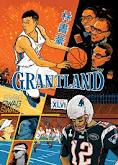
[READ: May 8, 2012] Grantland 3

One thing is for sure, Grantland loves it some basketball.  Basketball is the most widely covered sport in the published Grantlands so far. (The first issue even looked like one).  Since basketball is such a pop culture-referencing sport it actually works pretty well as a subject–with lots of different angles–especially given the state of the NBA lately.  Some other things on the Grantland staff’s minds include–the dangers of football and inadequacy of helmets to protect kids and Tim frickin Tebow (still!).  I don’t think an issue has past without talking about him yet.  I realize that’s a function of the time of these publications but… ew!

Nevertheless, the writing remains exciting and interesting, even for a non-sports guy like me.

(more…)

Read Full Post »

SOUNDTRACK: CHEECH & CHONG-“Basketball Jones featuring Tyrone Shoelaces” (1974).

When I was a kid this was a favorite song on the Cheech & Chong’s Greatest Hit album (although not quite as good as “Earache My Eye”).  Anyone who grew up in the 70s and early 80s should know the teeny tiny voice singing “bassetball jones, I gotta bassetball jones…i got a bassetball jones oh baby ooooo.”

This song is pretty simple and straightforward–a young boy gets a basketball and he loves it and keeps it with him everywhere he goes.  And he becomes the best basketball player ever.  There’s more or less one or two verses and then an ever-increasing choir of voices sings the chorus.  The joke is about 30 seconds long but the song last for over three minutes, growing bigger and more epic.  Tyrone brags about his awesome skills (I can dunk with my nose) all the way through. There’s also a pretty great guitar solo from George Harrison!

I never knew that there was a cartoon for the song–it was made to promote the album Los Cochinos, and was shown before films in the theater! and was included in a Robert Altman film!!.  The cartoon was created by Paul Gruwell, and now you can watch it here:

[READ: August 20, 2012] “The Art of a Basketball”

The last story I read in Grantland was okay, but I didn’t have very high hopes for another one.  And when Mullen described a room as “like the lair of some mad villain from a Spiderman movie” I didn’t think I’d be enjoying this one much either.  But this story proved to be pretty interesting.

The premise is that the main character has his degree in art and he make a living touching up paintings that have eroded over the years.  As the story opens he is restoring the color to chipped sections of a $12 million Cezanne (is that even a job?).  Anyhow, he messes up the Cezanne (d’oh) and is fired.  He messed it up because he was unfocused–he just broke up with his girlfriend and that was all he could think about.  She is an artist (she says so at every opportunity) and he found her pretentious and really not very good.  And she found him very negative–they should have broken up ages ago, clearly.  Anyhow, he is fired and gets a job in Providence at CAMP.  He’s now working on Contemporary art which he doesn’t respect at all (some serious art bashing in this section!).

His first assignment is to fix up Jay Winthrop’s Water Ball from 1981 (not a real installation).  The piece of art is a basketball floating in water.  It had developed black gunk on the ball and his job was to clean it (I of course wondered how the water stayed in there for 30 years).  He created his own solvent which removed the black, bit also some of the coloring of the ball.  Now he was in deep shit. His only choice was to replace the ball without anyone knowing.  But it turns out the ball was not just a regular old 1981 championship ball (on ebay for $500) but a 1981 Championship ball with Dr. J’s signature on it (they weren’t in the playoffs that year)–a factory error valued at $5,000.  The narrator is already in huge debt, but he needs the job.  What is he going to do? (more…)

Read Full Post »

SOUNDTRACK: PINK FLOYD-Alan’s Psychedelic Christmas (1970).

I’ve always loved Pink Floyd’s Atom Heart Mother.  I have no recollection of how I stumbled upon this live bootleg, but when I saw that it contained one of the few live recordings of “Alan’s Psychedelic Breakfast” I had to give it a listen.

So this show is from 1970 and was recorded in Sheffield just before Christmas (Nick Mason evidently introduced the show while wearing a Santa Claus suit).  The sound quality is pretty good given that it is 40 some years old.  There’s a bunch of hiss, and the quieter talking bits are hard to understand, but the music sounds fine.

So the show opens with “Alan’s Psychedelic Breakfast” and what is so silly (and I assume funny to watch (a little less funny on bootleg) is that the band made and ate breakfast on stage.  As Collectors Music reviews writes: “This is the only known live recording of ‘Alan’s Psychedelic Breakfast’ but also hosts an amazing performance by the band which included them making morning tea on stage which is audible. Just like most of their earlier performances, the performance of “Alan’s Psychedelic Breakfast” slightly differs from the album version due to some nice jamming done by the band, especially Gilmour with his delay pedal.” As I said, some of the audio is static and hard to make out in this song–the band is conversing during their tea, but who knows what they are saying.  And who know what is o the radio.

Then the band gets down to business.  One of things I love about this period Floyd which is so different from their later work is that the played really long spacey jams often with very few lyrics.  So we get a 12-minute version of “The Embryo” (the only available studio version is a very short one on Works which is quite a shame as the song is really good).  A 14-minute workout of “Fat Old Sun” which is usually only about 5 minutes.

There’s a great version of “Careful with that Axe Eugene” and “Set the Controls for the Heart of the Sun” (15 and 12 minutes respectively).

Then in a killer version of “Saucerful of Secrets,” just as they get to the end, there’s a power failure (at least according to the song title).  The band is rocking out just hitting the climax when suddenly all you can hear are un-miked drums.  Ha. After a couple of minutes, power comes back and they pick up from just before where they left off.

Then the band launches into a full 31-minute version of “Atom Heart Mother” complete with horns and choir  of voices.  It sounds quite good (the horns seem a little sketchy but that might be expected with such staccato music).

The set ends and the band needs an encore.  Apparently they couldn’t remember anything else because they just re-do the last few minutes of “Atom Heart Mother” again.

One of the things that cracks me up about these shows in the 70s in England, is that the audience is so polite. Their applause sounds like a classical theater rather than a rock show.  And with a bootleg you know they didn’t try to make the audience sound bigger than they are.

The whole package is a fun trip.

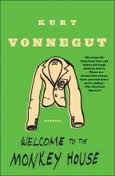
[READ: August 17, 2012] Welcome to the Monkey House

So this book is Vonnegut’s second collection of short stories.  But there’s a twist.  This collection contains all of the short stories from Canary in a Cat House except one. It also contains many of the stories he had written since then as well as stories not collected in Canary.  So you get basically 18 years worth of stories here.  And it’s interesting to see how much he has changed over those years (during which he wrote 5 novels, but not yet Slaughterhouse Five).

Since I read Canary a little while ago (see comments about the stories here), I knew that his 50’s era stories were influenced by WWII.  So it’s interesting to see how his stories from the 690s are not.  They deal more with day to day things and, of course, abstract concepts about humanity, although politics do enter the picture again once Kennedy is elected .

  • Where I Live (1964)

This was a good story to open with because it shows the then-later-period Vonnegut’s mindset and location.  This story is about Barnstable Village on Cape Cod (where I assume Vonnegut lived since there are a number of stories set on the Cape).  This is a very casually written story about an encyclopedia salesman who goes to the local library and sees that their two encyclopedias are from 1910 and 1938.  I enjoyed this line: “He said that many important things had happened since 1938, naming among others, penicillin and Hitler’s invasion of Poland.”  He is told to talk to the library directors who are at the yacht club.  I love the attitude that Vonnegut creates around the village which “has a policy of never accepting anything.  As a happy consequence, it changes about as fast as the rules of chess.” For really, this story is about the Village more than the encyclopedia salesman, and it’s an interesting look at people who move into a new place and want it to never change. (more…)

Read Full Post »

SOUNDTRACK: KISS-Alive III (1993).

Kiss put out Alive! after just three albums.  Alive II also came out after three albums.  Alive III has 14 albums between it and Alive II (if you count the solo albums as 4).  I guess poor sales and poorly attended concerts don’t really suggest live albums.  But Revenge revitalized them somewhat so it was time for a new one–their first with no makeup!  And it’s a pretty good one.

But it’s also like Kiss has forgotten all about being Kiss.  There’s no “You wanted the best, you got the best, the hottest band in the world…Kiss” (which would have been untrue at the time anyhow, but since when has that stopped Kiss?)  The tracklisting is pretty darn good though.  For Alive II, the band didn’t want to repeat any tracks from Alive! (that’s such an endearing thing to say about the band with 400 repackaged hits records).  Since there are tons of records since Alive II, you’d assume Alive III was all 80s songs.  But that’s not the case.  There are a few inevitable duplicates (how could there not be–all their biggest hits were from the 70s), but I’m surprised they didn’t throw more current stuff on the disc.

It opens with “Creatures of the Night” a great heavy version.  Then they go way back to “Deuce” which is a cool surprise.  Since this was the tour for Revenge, you’d think there might be more songs from it, but there’s only three: “I Just Wanna” “Unholy” and “Domino.”  “I Just Wanna” was perfectly crafted for Paul to banter with the audience and get them to sing “I just wanna fuck” (which was edited from the album I understand).  And in this live setting “Unholy” sounds great.

“Heaven’s on Fire” works well live, even if I don’t really like the song–but the band can really ham it up here.  The big surprise has got to be “Watching You,” a totally unexpected song form the past.  And even if it was on Alive!, this version is quite different (no Peter Criss cowbell).  I don’t think much of “Domino” anyhow (well, the music is great but the lyrics, ick), but in this version Gene just seems kind of bored.

Another surprise comes in “I Was Made for Lovin’ You”  true it’s one of Kiss; biggest hits but they often try to distance themselves from the “disco” era.  Nevertheless this version sounds revitalized.  And since there were no live albums in the 80s, there’s no official live recordings of it.  “I Still Love You” is another great chance for Paul to shine.  “I Love It Loud” sounds great (although the harmonies get a little sketchy at times.  But it’s weird to hear “Rock N Roll All Nite” in the middle of the set instead of at the end.  It’s also odd to start off this song with “It ain’t bullshit when you say rock and roll all nite and party every day.”   The intro to “Detroit Rock City” is also very strange “It doesn’t matter where you’re born ,it doesn’t matter where you come from, it matters where your head is at. This one;s called Detroit Rock City.”  Huh.

There’s not much you can do with a dreadful song like “Lick It Up,” and ad-libbing “I wanna lick you” doesn’t make it any better.  The disc ends with “God Gave Rock n Roll to You II,” which I don’t like, but which sounds good live, a lot of energy.  And it wraps up with a very odd thing–a guitar solo version of the Star Spangled Banner.  It doesn’t compare to Alive! or Alive II, but Alive III is a good live album from a good live band.

[READ: August 15, 2012] “From the Pencil Zone”

This is a review of the microscripts of Robert Walser, an author whom I have never heard of.  Walser was born in Switzerland in 1878 and he published several shorts and several novels (which were admired by Kafka!).

As the market for shorts dried up, so did his career, and he moved into smaller and smaller places.  Accordingly, his handwriting grew smaller and smaller, too.  Eventually he cheeked himself into a series of mental institutions.

Walser’s early novels dealt with everyday life, like the “young boyish man” who wants to become a bookshop proprietor in The Tanners.  The character (whose name we don’t learn for a long time) is effusive, praising the job to the heavens as a divine calling!  And lo he is given the job.  A week later he declares, “the entire book trade is nothing less than ghastly.”  Wasler himself had a multifaceted career: butler, inventor’s assistant, clerk, journalist.  But he was eventually diagnosed with schizophrenia and is responsible for this quotable quote: “I’m not here to write.  I’m here to be mad.”

After Walser died, people discovered a treasure trove of 526 pages of “microscripts.”  The writing was so small that these 526 pages, when written in book form came to six VOLUMES of books.  They were released as Aus dem Bleistifsebiet (From the Pencil Zone).  Galchen’s review here is for the short one volume New Directions collection called Robert Walser: Microscripts.  Interestingly, most of the stories have no title and some seem unfinished.  New Directions (and Harper’s) include images of this man’s microscopic writings (all done in pencil of course).  He wrote in Kurrent, a widely used script at the time which was a version of medieval shorthand and which dramatically reduced the number of strokes per character.  His letters were often one or two millimeters tall.  He was able to fit six stories on a postcard received from a newspaper editor. (more…)

Read Full Post »

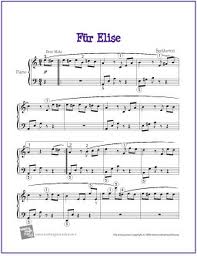
SOUNDTRACK: LUDWIG VAN BEETHOVEN-“Für Elise”

I didn’t know a lot of the music mentioned in this book, but like most people, I know and enjoy “Für Elise.”  It’s an interesting choice of music to end such a crazy chaotic story, although I suppose there are some less than peaceful moments ion the song too.  It’s a shame Bast never gets to play it.

I find the most engaging moments to be when the lone high note comes before the reintroduction of the initial melody.  The middle, minor key section that sounds kind of menacing is also neat–a big switch from the delicate opening.

Why not take 3 minutes and enjoy it now:

[READ: Week of August 20, 2012] JR Week 10

The end is here.  After endlessly interrupted conversations, the book has actually hit a period.

As the last week ended, Bast was being dropped off at the hospital by Coen.  And the bulk of the end of the book takes place in the hospital.  There are many similarities between this book and a big 60s/70s comedy romp, and here is another one–all the characters seems to pile into one location for a big finale.  (Technically the finale happens at Bast’s house, but you get the idea). (more…)

Read Full Post »

« Newer Posts - Older Posts »