Feeds:
Posts
Comments

Archive for September, 2012

I had hoped to read a lot of commentary and observations about JR this week as a nice finalization to the summer reading.  But a couple of things happened.  First, we went on vacation, so JR was the furthest thing from my mind.  Second, I had a really hard time finding commentary.

I somehow missed the whole Goodreads discussion—which I read just the other day and enjoyed.  And I also had a really hard time with the LARB tumblr account.  I don’t know if this speaks to tech non-savvy, but man, that’s a hard thing to search.  It took several tries before I noticed the teeny search window at the bottom, and when I finally got it to search what I wanted I found the results less than spectacular.  So I was able to piece together most of Lee’s comments, which I rather liked, but I wish I had been able to read them as we went along (Googling #OccupGaddis only brought that initial tumblr page, which was very frustrating). (more…)

Read Full Post »

SOUNDTRACK: MATES OF STATE-“I am a Scientist” (2012).

This is a cover of Guided by Voices’ “I am a Scientist.”  It appears on an all female 18-song charity compilation called Science Fair which is themed around and benefiting science and engineering education for girls.

The original is a wonderful, catchy low-tunes and lo fi sounding guitar track (that builds over the course of 2 minutes).  The Mates of State version is brighter and louder.  It also builds but they add kids singing along with them (it is a benefit album for kids after all).

It’s a wonderful introduction to this worthy CD.  You can hear (and watch) it here.

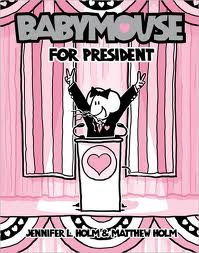
[READ: December 4, 2011] Babymouse for President

So this is the first new Babymouse book that I’ve read that was actually new when it came out!   And I’m reading it just in time for the election season.  Amazingly, this book with its cartoon politics is far less cartoony than the real politics this election season–who’da thunk it.

Babymouse has a dream of being president–not because of what she could accomplish but because of the POWER!  (Later, she is disturbed to realize that Felicia Furrypaws has the same feeling).

This story has fewer pink fantasy sequences than normal.  Well, maybe that’s not true, there are plenty, but they are pretty short and self contained–sequences about George Washington playing dodgeball (ha) and Babymouse on Mount Rushmore. And there’s a pretty funny Declaration of Independence joke. (more…)

Read Full Post »

SOUNDTRACK: DAN DEACON-“Call Me Maybe Acapella 147 Times Exponentially Layered” (2012).

Dan Deacon (whose twitter handle is “ebaynetflix” ha!), created a cover of Carly Rae Jepsen’s “Call Me Maybe,” for a digital album with 43 artists covering the pop delicacy.  I listened to a few samples from the album and they span the gamut from kind of serious to kind of crazy to mocking to Deacon.

Stereogum describes Deacon’s version this way: “Dan Deacon piles “Call Me Maybe” on itself over and over again, creating the most dissonant, harrowing take on Carli Rae Jepsen’s [sic] hit known to man.”

He begins with a sample from the verse, then he adds some lines from the chorus (while the verse is playing). You can hear “here’s my number, so call me maybe” a few times, but the background is growing in intensity and menace.  By 90 seconds in, you can still hear her a little bit, but she is almost entirely consumed by noise.  Then around 2 minutes, things seems to calm down a bit (she’s still plugging away at the chorus).  By 4 minutes the whole thing has seemingly collapsed in on itself.  And the whole time, there seems to be a steady beat that you can dance to.  This track may indeed produce insanity.

You can listen to Deacon’s monstrosity below, or go to the original site.

  To see the lineup for the whole album, go here.

[READ: August 22, 2012] 3 Book Reviews

I don’t quite understand how Cohen pulled this off, but in the July issue of Harper‘s right after his story, “The College Borough,” which I mentioned yesterday, he also had three book reviews.  How does one get two bylines in Harper’s?  Has that ever happened before?

Because I liked the story so much, I decided I would read these reviews too.  Cohen sets up the reviews with the idea of political gestation periods (12 months for donkeys, 22 months for elephants) and how novelists work even slower when it comes to writing about events.  Norman Mailer’s The Naked and the Dead came out 32 months after V-J Day, John Steinbeck wrote about the depression from 1937-1945.  So now in 2012 we see the “spawn of Bush’s two terms of excruciating contractions.”  Books that fictionalize the realities of post-9/11 life: “that the canniest distraction from class war is war-war.” (more…)

Read Full Post »

SOUNDTRACK: DAN DEACON-“Guilford Avenue Bridge” (2012).

I only know Dan Deacon from his “cover” of “Call me Maybe” (in which he layered the song on top of itself 147 times).  Deacon has a new proper album out and while it’s not quite as outlandish as the “Call Me Maybe” cover, it’s still pretty out there.

This is the opening track–a noisy barrage of sound set to a really catchy drum beat and bassline.  But you almost have to listen hard for that beat because it is just a wall of noise that goes on for 90 seconds until the song completely stops and is replaced by a manipulated banjo solo (I think).  This slowly morphs into pianos and then waves of delicate keyboards (all of which I’m sure is some kind of manipulated sound).  With about 30 seconds left the noise comes back and the songs ends much like it started.  Although it ends with a very happy chord.

This is definitely not for most, but the experimental nature is quite fun, and it’s definitely not something you’re going to hear on the radio very often.

[READ: August 22, 2012] “The College Borough”

I hadn’t read any Joshua Cohen before this story (he wrote the 800+ page buzz book Witz, but is NOT the author of a book called Leverage which Sarah reacted very strongly to–that would be Joshua C. Cohen, this one is Joshua A Cohen).  Also, I put it off because it was long.

Before I summarize, I want to state that this story is flipped on its own head by the final line.  The final few words completely changed how I felt about this story.  And I have to wonder what the risk is for a writer to do something like this.  For the entire story we don’t know why the narrator acts the way he does (in the present).  The flashback that the story provided is very thorough and detailed but it does not answer our pressing question.  Even when we return to the present, and the past comes to meet them, it still doesn’t explain it. It is literally the last few words that justify everything.  That’s audacious.

I’ll say more about this at the end.

It also begins with an audacious statement: “I helped build the Flatiron Building though I’ve never been to New York.”  Indeed, it seems that the narrator never wanted to go to New York.  But ow that his daughter, a junior in high school, wants to go to college in Manhattan (they hope she’ll stay in-state), he agrees for them all to go to New York City.

The narrator met his wife, Dem, in college (at in-state college).  They were both in the writing program and they’d had some classes together before they enrolled in Professor Greener’s seminar.

The beginning of the story is mostly the narrator’s complaints about New York.  I especially enjoyed this line: “I know no city can contain all the amenities you’d find at a place like our alma mater.”  Back home they have more pools, more StairMasters and their very own Flatiron Building (dubbed the Fauxiron).

Then the story pulls back so we can figure out what the hell this guy is talking about. (more…)

Read Full Post »

SOUNDTRACK: MOGWAI-Music for a Forgotten Future (The Singing Mountain) (2011).

This track is a 23 minute instrumental that was used for an art installation by Douglas Gordon (who made the film Zidane, for which Mogwai provided the score) and Olaf Nicolai called “Monument for a Forgotten Future”.  The more I learn about  his installation, the more intrigued I am by it.  According to wikimedia, “Monument for a Forgotten Future” is a sculpture by Olaf Nicolai and Douglas Gordon on the so called “Wilde Insel” (wild island) in Gelsenkirchen-Horst, Germany. It is 1:1 replica of a rock formation in Joshua Tree National Park with a sound installation by Mogwai that can be heard from within the “rock.”  Someone has even posted a video of their trip to it.  In the video (which is literally of a rock), as the filmer approached you can hear the music only when he or she gets pretty close to the installation. It’s just barely audible.  Cool.

As for the music itself, it is very mellow an atmospheric, quite perfect for being on a Wild Island and sitting by/staring at a rock.  There are definitely hints of Mogwai’s sound in the music, although there are a lot more keyboards than guitars (which befits their more recent albums).  It’s very peaceful and quite beautiful.  At about 19 minutes it fades out and seems to being another string laden piece into the mix as well, but it more or less fades into static (which would be a lousy time to get to the installation!).

The music comes free with most editions of Hardcore Will Never Die But You Will.

[READ: August 2, 2012] “Without Blood”

After reading Baricco’s Emmaus, I wanted to see what else he had written.  I found this short story (which is also the name of one of his novels, although I’m not sure if this is an excerpt or the inspiration for the novel–Wikipedia says it is a “revised form” of the novel, whatever that means).

I was a little disconcerted by this story when it opened because it has a very violent introduction.  The farmhouse of Manuel Roca is the site of bloodshed.  Three men, Salinas, El Guerra, and Tito pull up in a Mercedes.  Manuel Roca is the man they are looking for.  He has two children a boy and a girl, Nina.  He tells Nina that she must hide when the men come.  Hide in the cellar and be absolutely still, no matter what happens.  And to not be afraid.  The son, slightly older, wants to help, he even has a gun, but Manuel tells him to hide in the woodshed.  And then the house was riddled with bullets.

Manuel survived that first round but when he looked up, Tito (who was described as a boy but was in fact 20) was standing there with a gun pointed at Manuel.  And he shouted to  Salinas “IT’S TITO.  I’VE GOT HIM.”  When the threesome get inside, they see that Tito has shot Roca in the arm because he had a gun.

When the two men come face to face we learn that this fight has to do with the war.  Roca says the war is over, although Salinas, says “Not yours, Not mine, Doctor.”  Salinas was known as the rat because he deciphered Roca’s men’s coded messages.   But despite the war, Salinas has only shot a gun twice.  The first one was at no one, the second was at his brother who was in the hospital when the war ended.  Salinas went to the hospital with the intent of killing Doctor Roca and his men, but they had fled, leaving all of the sick and dying unattended.  When Salinas’ brother asked him to kill him…please, he could only comply.

After this flashback, Roca’s son came into the room with a shotgun.  From here the scene gets really violent with both Roca and his son killed.  The men realize that Nina must be there as well, so they look all over for her.  It is the boy Tito who finds her in the cellar.  They stared at each other, but Tito let her live.  And the men left.  After they set the house on fire.

Three days later a man on horseback found Nina and took her away.

Wow. (more…)

Read Full Post »

SOUNDTRACK: MOGWAI-Hardcore Will Never Die, But You Will (2011).
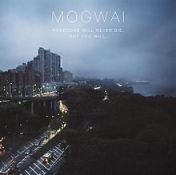
With an album title like that, you expect, well, some pretty loud music, right?

For this Mogwai album that’s not what you’ll get.  You’ll get lots of keyboards, and on the opening track “White Noise” you’ll get one of their prettiest melodies in ages.  Sure, there’s some distorted guitar by the end, but this is quite pretty.  “Mexican Grand Prix” opens with a computerized drums, keyboards, a propulsive bass line and whispered vocals.  This could be a dance hit.  What has Mogwai done with Stuart Braithwaite?  When the processed vocals start singing along (no idea what they’re saying), you can easily imagine a dancefloor packed with people for this track.

“Rano Pano” brings in the buzzy guitars again, both the first intro sounds and the noisier melody guitar, while “Death Rays” returns to the happy keyboard feel for a song that reminds me of Explosions in the Sky.  Once again, the melody is beautiful.  “San Pedro” brings guitars back in, with another killer melody and at 3 and a half minutes, it’s the shortest blast of rock.

“Letters to the Metro” opens with a spare piano melody and adds delicate washes throughout.  “George Square Thatcher Death Party” opens with some chanting (no idea what they’re saying) and then some of the loudest bass so far.  It’s another propulsive song, with some buzzy guitars way in the background, but the main force again is the keyboards.  This song sounds very 80s to me, with the processed computerized voice and the keyboard sound they use.  “How to Be a Werewolf” is 6 minutes. It’s a nice song but it doesn’t really grab me like the others.  “Too Raging to Cheers” has more 80s style keyboards (reminding me of Brian Eno or a PBS documentary about space) until about 2 and a half minutes in, when the Mogwai of old come crashes through–lots of cymbals and loud guitars.

“You’re Lionel Richie” is an 8 and a half minute song that opens with some French dialogue.  There’s a complicated guitar melody that plays for a time.  By about 5 minutes, the noise comes in–guitars, keyboards, cymbals, and while it doesn’t crescendo like Mogwai of old, it certainly gives you tastes of them.  This later section of the song brings in a good guitar melody that plays along until the slow fadeout at the end.

I continue to think of Mogwai as a loud, intense band, but their more recent output shows a band changing into something else.  Their melodies are still top notch and they definitely flirt with using noise in some of their songs, but they seems to be making more commercial sounding music (although realistically no band that makes almost exclusively instrumentals can ever be accused of selling out).

[READ: August 10, 2012] “Ghost Town Choir”

I have a read a few things from Ferris.  This story caught me completely by surprise.

The story is from the point of view of a boy who is living with his mom.  She is dating a man named Lawton.  Lawton had moved some of his stuff into their house, including his record collection–his prized possession.  They have a fight; he sings to her from outside their trailer, “What have you got planned tonight, Diana, he sang, though my mom’s name is Sheryl.”  She threw all of her dishes at him until he left.  He came back later that night calling her all kinds of unforgivable names.

Then the story shifts to Lawton’s point of view (both POVs are in first person, although they are quite distinct in style).  The boy goes to Lawton’s trailer even though he is not welcome anymore: “Your momma and me, we’re done.”  Lawton fancies himself a cowboy, and the backing singer in a cowboy band.

Back at home, Sheryl is on a cleaning binge–purging herself of everything.  When she gets to Lawton’s records, she is ready to toss them but the boy asks her not to.  She doesn’t listen and hauls them to the dumpster.  The boy grabs them later on and brings them to his fort in the forest.  That’s where he kept all of the things that the men left in his house after they were gone: “I wonder did they know about he cigarettes they’d never finish?” (more…)

Read Full Post »
SOUNDTRACK: DIVINE FITS-“Would That Not Be Nice” (2012).

This song was KCRW’s Today’s Top Tune on August 13, 2012.  Divine Fits are a supergroup of sorts with Spoon’s Britt Daniels, New Bomb Turks drummer Sam Brown and Wolf Parade/Handsome Furs member Dan Boeckner.  When I heard who was in the band, I was pretty excited to hear the track.  But I have to say that this sounds kind of like a over-polished Spoon song with keyboards.  Daniels’ voice and musical style are individual enough that he pretty much dominates whatever he does.  But at the same time, I feel like the jagged edges that make Spoon so interesting have been removed.

I assume that Boeckner is responsible for the keyboards and the interesting echo effect on the vocals.  They add an interesting balance to Daniels, but this doesn’t excite me the way Spoon does.

[READ: August 10, 2012] “Signs and Symbols”

I discovered this story because in my post of Lorrie Moore’s “Referential” someone commented that her story was plagiarized from this one.  I had intended to read this Nabokov story immediately so Moore’s would be fresh and I could lay down the “J’accuse.”  It’s been a couple of months but I can say that while her story is obviously inspired by this Nabokov–to the point where she uses elements from this story in her own, it’s a different take on the same idea.

But before we do any comparison, let’s look at this story.  The story begins by stating that for the fourth time in as many years, a young man’s parents don’t know what to take him for his birthday.  The problem is that he is in an institution and many things are forbidden.  And also, for their son man-made objects are either hives of evil or gross comforts–more on that shortly.  They knew they couldn’t get him a gadget of any kind, so they settled on a basket with a set of colorful jellies.  When they travel to him with the gift, everything goes wrong–the train breaks down, there are no busses, and when they finally get there, the nurses inform them that there has been an incident and he cannot see them now.  So they return home with the jellies.

The story describes what is wrong with their son as referential mania.  It’s an interesting situation, and an article about him had appeared in a scientific monthly.  It says that the patient believes that everything happening around him is somehow related to himself.  So clouds transmit details about him, trees talk about him, etc.  And this was driving him crazy (obviously).  He had even tried to kill himself via, what the doctor described as “a masterpiece of inventiveness.” (more…)

Read Full Post »

I had intended to post my final recap of William Gaddis’ JR today.  But my family had been on vacation and I was feeling lazy.  Then September 3 proved to be Labor Day, a perfect day to write thoughts about JR.  The irony was not lost on me.  But then I figured I’d fudge a bit, leave my Monday post until Tuesday and back date it (a good technique for checks too!).

Well, it turned out that my position was terminated at my job.  Which means I got laid off.  Right after Labor Day, and right when I was about to post some thoughts on JR.

That’s a pretty big helping of irony right there.

So here it is two days later, Sept 5 and I’m backdating this post (because I’m anal retentive and like to have a post per day).  I’m happy that I had written a bunch of posts for this week already as I don’t have much gumption for writing about books right now (even though I read several good ones over the vacation).

So enjoy my ironic life and I’ll say a few words about JR next Monday, if I still think it’s funny.

Perhaps I’ll apply for a new job as Mister Ten-forty.

Read Full Post »

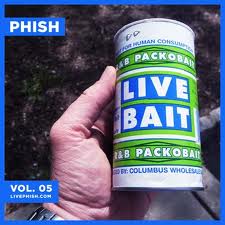
SOUNDTRACK: PHISH-Live Bait 5 (2011).

When this was released it was an astonishing free giveaway.  A mix of previously released and brand new recordings that spanned from 1987 to 2009!  Over 6 hours of music!  For free.

It’s fun to hear the really early stuff–like the songs that are from “Ian McLean’s Party at Connie Condon’s Farm” where the band is laughing with the audience (which seems like it’s about 100 people).  And when they invite everyone to another free part coming up.   This was back in 1987 before they had released their official debut Junta (who was taping all this stuff for them back then?  And with such good quality?).  But this one is especially fun because you can hear dogs barking during the quieter parts.

There’s also a big chunk of live Gamehendge material from Townshend Family Park in Vermont (circa 1989).  The middle block features the addition of The Giant Country Horns who play on “Flat Fee” and great versions of “David Bowie” and “Gumbo.”  I wouldn’t want the horns all the time, but they do add something to these shows.

Then there’s a jump to 1996 and a whole series of songs from shows at Loring Air Force base (through 1998).  There’s a 27 minute “Down with Disease” and a fun “Bathtub Gin.”  There’s then a bunch of songs from one show at the Big Cypress Seminole Reservation.

After a few year’s hiatus, they resume in 2003 back at Loring.  There’s a great version of “Waves,” although I found the “Mike’s Song” from this era kind of anemic.  And then, interestingly, there’s a “Split Open and Melt Jam” which is indeed, just the jam from the song and not the song itself.  “Suzy Greenberg” features Sharon Jones–it’s funny to me to hear r&b singers singing about a Jewish woman going to a neurologist. Fish, by the way has some of the funniest lines during the “forgotten my name bit.”  I’m also intrigued by the 2009 version of “McGrupp and the Watchful Hosemasters,” a pretty but kind of goofy song that dates back to 1985!

All in all, this was a very cool freebie to give to fans.

[READ: July 5, 2011] Five Dials 24

The newest Five Dials came as something of a surprise since Number 23 came out not too long ago and there was talk of the next issue being quite large.  But I like the small editions of Five Dials.  And this one is a cool, bite-sized nugget–a little fiction, an interview and an essay.  I have to assume this one was released when it was because it has a remembrance of David Rakoff, making this release rather timely.

…plus bear illustrations like you won’t believe by BECKY BARNICOAT (funny and dark drawings), LIZZY STEWART (beautiful pencil drawings) and NEAL JONES (blue bears). (more…)

Read Full Post »

SOUNDTRACK: THE FLAMING LIPS-“Smoke on the Water” (2012).

There’s a new Deep Purple tribute album coming out shortly (is this the year of tributes?  what’s going on?).  Anyway, the lineup isn’t all that inspired, but I was curious to see what the Flaming Lips would do with that song

As with their recent reinterpretation of Dark Side of the Moon, this cover is respectful and utterly disrespectful.  Musically the song is pretty accurate. Well, the notes are the same.  But the style is very different, kind of wahwahed delicate chords–no heavy bass or anything.  But it’s the vocals that are the contentious point–he recites the entire song (which kind of works because it is a story) in a stilted, faux British accent.

The second verse has a very computerized voice singing an autotuned melody along with the recitation–sort of a harmony but not.  This voice continues through to the chorus (which the main vocals also simply recite).

I appreciate the Flaming Lips’ approaches to popular songs, but this version renders a big loud song kind of anemic.  Which is so weird because the last few Lips albums were so loud and bass-heavy.  I listened twice, I probably don’t need to listen again.

So, this is yet another tribute I won’t be buying.

[READ: August 22, 2012] Don’t Get Too Comfortable

I’m already making good on my promise to read more David Rakoff.  Indeed, as soon as I heard that he died, I put this book on hold at the library.  The strange thing about this book is that I feel like I read parts of it already.  I don’t feel like I read the whole book because some things were unfamiliar to me, and yet there was a strange feeling of déjà vu throughout the book.  But I looked in the front of the book to see where these essays had appeared and I don’t read any of the magazines where they initially showed up.  And while I like This American Life, I don’t really listen to it very often.  So either I read this book seven years ago or these pieces are inspirations for other pieces I have read (which is possible–two or three articles in here reminded me of things that A.J .Jacobs has since done).

So this collection of essays takes place during the early 2000s, George W. Bush’s first term (not the happiest time to be a gay Canadian living in New York).  But in addition to the first essay which is all about his quest for citizenship, it seems that Rakoff was now gainfully employed as a freelance writer.  Most of these essays seem to have been requested for magazines–like they sought him out to write them.  So his fame was clearly growing.  And, again, like A.J. Jacobs, he seems to have been picked as a guinea pig for certain pieces.   I don’t really know if this is a “genre” per se, I mean lots of un-knowledgeable people have gone into new experiences to write about them (insert inevitable David Foster Wallace reference here–but of course he wasn’t the first either).  But Rakoff’s subjects in the last couple essays seem to be closer to what Wikipedia calls Jacob’s “stunt” journalism. (more…)

Read Full Post »

« Newer Posts