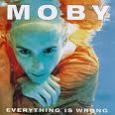
 SOUNDTRACK: MOBY-Everything is Wrong (1995).
 I suppose that everyone knows that Moby (the musician) is Herman Melville’s great- great- great- grandnephew. And that’s why he has the middle name Melville and had the nickname Moby.
Moby started out as a techno guy. He even made the Guinness Book for the fastest bpm ever recorded (since then, many have surpassed that) with the song “Thousand.” It’s an interesting song, although more for its novelty than anything else. He also had a cool hit called “Go” that sampled music from Twin Peaks. And in 1999 he took over the world with his album Play, which featured some 18 songs that were all licensed for commercial use (many of which were ubiquitous that summer).
But this disc, Everything is Wrong, came out before Play, and it was considered a high water mark for dance music (before the next high water marks of Fatboy Slim and LCD Soundsystem came out, of course).
So this disc was hailed as the big breakthrough for Moby. And it has something for everyone. It opens with a pretty piano piece ala Philip Glass which is, as its name implies, a “Hymn.” From there we get a heavy techno beat and “Feeling So Real” kicks off. Gospel-like vocals soar above the dancing (this foreshadows Play quite a bit). It sounds very 1994 to me, although I don’t think it sounds dated, necessarily. And then comes his stab at punk. “All That I Need is to be Loved” is a fast blast of aggro music. The problem is that Moby doesn’t do punk very well. His guitars are too trebly, his vocals aren’t very strong and despite the beautiful melodies he creates, he doesn’t write very catchy hooks.
“Every Time You Touch Me” returns to the style of “Feeling So Real” and is another stellar dance track. While “Bring Back My Happiness” runs even faster.
“What Love” is another screaming punk track. This one is closer to Ministry. It’s quite a slap in the face after the rest of the disc.
“First Cool Hive” slows things down with a groovy almost ambient track. And “Into the Blue” is a moody song that sounds like it could also have been taken from Twin Peaks.
“Anthem” returns to the fast beats with ecstatic moans sprinkled over the faster and faster beat.
The album ends with two tracks, “God Moving Over the Face of the World” which is a beautiful instrumental (again ala Philip Glass or more likely Michael Nyman) that weaves in and around itself for 7 minutes. (It, too, hints of Twin Peaks). And, “When It’s Cold I’d Like to Die,” while not exactly uplifting is coldly beautiful (kind of like a long lost Eurhythmics track)..
The disc is such a mishmash of styles, that it’s hard to really know what to classify it as. Some of it works wonders. Other tracks (notably the punk experiments) are less successful (even though I did enjoy them then, I think they just didn’t age well…or maybe I didn’t age well). Of course, over the course of his career, Moby has attempted all of these genres in more detail, so this was almost like a sampler of what he would be doing later.
Sixteen years later it holds up quite well (although I still think Play is better).
[READ: Week of June 7, 2010] Moby-Dick [Chapters 42-61]
The reading this week opens with a chapter about whiteness. And how somehow Moby-Dick is even more fearsome for being white. As the chapter opens whiteness (even in skin color) is lauded. But by the end, he cites it as being particularly creepy: white whales, polar bears, albinos. (I think that this was my very least favorite chapter so far–I was uncomfortable reading it and I didn’t get a lot of humor from it either).
Some more down time passes, with Ishmael describing how Ahab is able to plot a course to find Moby-Dick. It’s not just looking for a needle in an ocean–there are pathways that whales follow, for instance. This is followed by a chapter that allows Ishmael to swear, absolutely swear! that whalers can recognize the same whale even years later if you tried to kill it but failed (and that he himself remembers one whale that got away from a mole under its eye). (more…)
Read Full Post »
 SOUNDTRACK: NEVEREST SONGS-“Calculator” (2010).
 Opening with a simple, discordant piano, this song quickly morphs into a fast chaotic piano run, all the while the vocal stay slow and calm. Once the bass kicks in, the song feels less like a solo track and more like a band effort. And it’s amazing that this simple bass can add so much to this swelling track.
 SOUNDTRACK: THE MAGIC GARDEN (1970s).
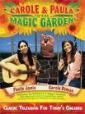 When I was growing up in the 1970s one of my favorite shows was The Magic Garden. Even though I enjoyed Sesame Street and The Electric Company, Carole and Paula were my favorites. And it was the songs that were so memorable. Thanks to the Web, here’s four of their original songs, all of which I loved (although I understand the opening credits only ran on a few episodes). So, travel back in time to The Magic Garden:
 SOUNDTRACK: THE PRODIGY-Experience (1993).
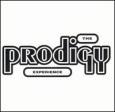 Before Prodigy sang “Smack My Bitch Up” and Keith Flint had devil horns and pierced everything, Prodigy were a dancey techno act. This was their first album, and allmusic calls it “One of the few noncompilation rave albums of any worth.” High praise indeed.

 I’m very late to this show, I know. But then I have an excuse: I don’t like watching TV/movies/etc on my computer. So, even when I watched the awesome Dr Horrible, and the commentary told me all about Felicia Day’s online show, I didn’t investigate.
 Because I needed one more reason to put off reading the huge stack of books on my nightstand (Jasper Fforde, I’m coming, I promise). I have decided to join yet another group read of an inordinately large book.
 SOUNDTRACK: THE BEATLES-Revolver (1966).
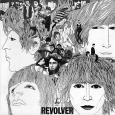 My first exposure to this album came when I received this vinyl LP as a free gift with a purchase from a mail order record store. I assume the store is long out of business (or maybe not). But I had ordered something (funny i don’t remember what) and they sent Revolver as a free gift.
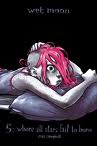
 I don’t know a thing about the author or illustrator, but I really enjoy these stories (and the pictures). I mean, look at how charming (and how beautiful) this is with so few lines!
 SOUNDTRACK: DANGER MOUSE AND SPARKLEHORSE present: Dark Night of the Soul (2010).
 Seems like most things that Danger Mouse touches involve lawsuits. I’m not entirely sure why this disc had such a hard time seeing the light of day. But it is due for a proper release in July. Although by now, surely everyone has obtained a copy of the music, so why would anyone give EMI any money for the disc (since they hid it away in the first place).
 SOUNDTRACK: FUCKED UP-Couple Tracks: Singles 2002-2009 (2010).
 I knew of Fucked Up from a cover shoot on
 SOUNDTRACK: BEATLES-Rubber Soul (1965).
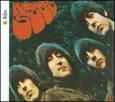 After the breakthrough of Help!, the Beatles followed up with their first proper album that is full of all original songs and which really pushes the envelope.
 I Just Read About That...