Feeds:
Posts
Comments

SOUNDTRACK: SURFER BLOOD-Live at SXSW (2010).

I really enjoyed Surfer Blood’s album Astro Coast.  There was something familiar about it, yet it never aped any sound exactly.  It’s a fun collection of upbeat almost-summer music.

This live set is a great representation of the band.  They don’t break from the CD all that much, but the band is lively and generous.  They play 7 songs, all of them fast and fun (they say that one song is going to be slow, but it seems to wind up as fast as the rest-and someone in the crowd shots “Play another slow one”).

There’s some good banter and the audience is very appreciative.  It’s great set and worth checking out even if you don’t know them yet.

[READ: March 28, 2011] “Pericles”

This story is set in Greece in 1941.  Bulgarians have occupied the land.  And as the first few paragraphs explain, a thief has come to steal some goats.  The goatherds catch the man (a Bulgarian) and kill him.

When the Bulgarians find out, they take it very seriously.  The army travels to the village and rounds up every single male and all of the young females and intend to shoot them in the center of the city.

The story pulls back to explain that during the occupation all of the men were forced to do labor.  This even includes Pericles, the strongest man in the village.  Before the occupation, he was a helpful giant, able to throw four bundles of hay at a time.  Of course, Pericles was also fearsome, and if he got drunk (which he did from time to time) everyone in the town hid until he sobered up (except for his diminutive wife who could calm him down with a look). Continue Reading »

SOUNDTRACK: SLEIGH BELLS-Live at SXSW (2010).

Sleigh Bells were a very polarizing band last year.  Their album made many year end best of lists, but they were also hated by many music fans as well.  I fell somewhere in the middle.  They reminded me of The Go! Team, but without their quirky aspects.  Nevertheless, I found their songs to be a kind of industrial-lite, maybe a baby Ministry or something.  And that was interesting.

So I was intrigued by their live set which I downloaded from NPR’s All Songs Considered.  Their set is plagued by technical malfunctions.  And although they are the headliners (I guess, I don’t really know how SXSW works) their set barely ekes out to 25 minutes.  But they are very apologetic and seem to be nice enough folks.

They manage to play 6 songs (2 songs are beset with disaster–they restart “A/B Machines” but give up on the second to last song altogether and play a different one).  Their onstage dynamic was interesting (at first I thought they weren’t going to talk to the crowd at all, but once the machines broke, they were quite amiable).  I gather the whole band was Derek Miller playing guitar and all the samples and Alexis Krauss singing (she’s really out of breath when the song malfunctions, so she must be quite an energetic performer).  Their set impressed me enough to want to check out their CD for real (I only listened to one song when it made all those lists).

This is an interesting set, especially if you like to hear a band cope with technical difficulties.

[READ: March 28, 2011] “Fictional Houses”

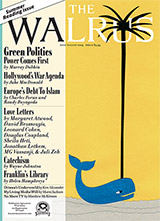
This third piece in The Walrus’ 2005 Summer Reading issue is more of a photo essay than anything.  But the premise behind it is really great (and it is included in the Fiction section of the magazine).

The essay explains that in neighborhoods across Canada, hydro companies created electrical substations to handle power for those communities.  But rather than allow huge electrical monstrosities to reside in these communities, they corporations built full houses around them.  These houses were not simple facades but actual houses with electricity and which really gave the appearance of families living there (even though no one ever would).  That is an amazingly thoughtful thing for a huge corporation to do.

Now, since these stations are no longer needed, the houses are being sold off. Collyer made a point of travelling around to as many as were still extant to take pictures of them.  The pictures themselves don’t speak much because they are simply normal houses that blend in with the community.  But it’s amazing seeing the seven houses and seeing how very different they are.  The two in Toronto are quite lovely two-story houses.  Indeed the one on Spadina Road, with the trees grown in, is quite lovely (see below).  The houses in Scarborough are smaller affairs but are not too shabby either. Continue Reading »

SOUNDTRACK: WORM OUROBOROS-Live at Le Pousson Rouge, March 22, 2011 (2011).

I had never heard of Worm Ouroboros before this concert. They opened up for black metal guys Agalloch.  I was very intrigued by their name, because I love the word ouroboros, and then I learned that their name comes specifically from a novel by Eric Rücker Eddison called The Worm Ouroboros.

Now Agalloch is a heavy, fast, scary kind of band, so I expected that WO would be too, but they are almost exactly the opposite.  A trio (bass, guitar/flute (!)/keyboards, and drums), the band plays very ethereal music.  It has a kind of sinister edge to it, but for the most part it never really has a beat or anything.  The sounds drift and flow over each other.  This is all held together by the gorgeous vocals of bassist Lorraine Rath and the even more gorgeous harmonies of guitarist Jessica Wray.  Their voices are reminiscent of Jarboe from Swans.

The most amazing part of the show comes on the occasional ends of songs when the band seems to come down to earth  and they play a loud and aggressive doom metal stomp. It only last for a minute or two and it doesn’t happen on every song, but it’s amazing and really surprising when it does.

I don’t know what the band sounds like on record, but they make an exquisite noise live.  And you can tell how intense they must be because the rowdy crowd is quiet and respectful for their entire set.  You can get a free download (or listen online) at NPR.

Worm Ouroboros – Winter from (((unartig))) on Vimeo.

This is a video of “Winter” (a song that gets really heavy at the end) from the show.

[READ: March 26, 2011] “Catechism”

Although I have been posting past stories from The Walrus on Saturdays, the July/August 2005 issue was a Summer Reading Issue complete with 5 pieces of fiction.  So, it seemed like a good time (the week after the release of The Pale King, when I will be otherwise occupied) to go through thee five pieces.

This story uses a scene that I think is used an awful lot in fiction–that of the car sitting on a frozen lake with people taking bets as to when it will sink.  It’s not central to the story by any means, but this is I think the third time I’ve read it.  Of course I gather that if you have a  community that is frozen most of the time, it’s a reasonable thing to see there.

Anyhow, this is the tale of an East Coaster moving out to Regina to be writer-in-residence at the Regina Public Library. He finds that there isn’t all that much to do (in the year he’s there, two people ask him for help with their novels in progress.  [Frankly, I would love to hear THAT story instead.  A story where the writer in residence helps these misfits with their novels.  It sounds great.  So, I enjoyed that aspect of the story very much].  In fact I enjoyed it more than what would eventually develop as the plot. Continue Reading »

SOUNDTRACK: PETER BJORN AND JOHN-SXSW May 26, 2009 (2009).

This brief set at SXSW (available from NPR & KEXP) showcases the band’s (then) new record Living Thing.  The album was just about to be released, so these are all previews of the album (“New music is the best music”).  The album itself is very sparse and these live songs are equally sparse, but are slightly different in construction (some songs have different instrumentation live than on record).

The crowd is very responsive, and the band is really funny.  During “Just the Past” there’s a section where the song sounds like it ends, but it is just a pause, and the band tsk tsks the audience for applauding too early.  There’s also a joke about John being Joaquin Phoenix and taking up a career in rap.

It’s a wonderfully lively set, even if it is a bit short (the gripe with almost every SXSW download).  It’s a good introduction to the album and a great introduction to a band who has been around for ten years and just started making inroads into American consciousness a few years ago.

[READ: April 16, 2011] Five Dials #1

Five Dials is an online magazine.  It is free to subscribe (and to download).  All previous issues are available on the site in PDF format.  I learned about it because they printed the eulogies for David Foster Wallace in Issue 10.  But the magazine looked interesting in itself, so I decided to go back and read the whole run (the most recent issue is #18).

The only real complaint I have with the magazine is that they don’t put a publication date anywhere on it.  Which is a shame if you’re anal retentive like me. According to Wikipedia, the inaugural issue came out in June of 2008.   It’s a monthly (ish) publication and, although I originally thought it would be a literary magazine, it proves to be very much of a magazine-magazine.  And a good one at that.

There’s a letter from the editor, there’s Current-ish Events, there’s essays, reviews and even fiction.  There’s also a “classic” letter from a “classic” author.  The magazine also has some very cool black and white art in it.  The style is very crisp and one that I find quite agreeable. Continue Reading »

SOUNDTRACK: RADIOHEAD-The King of Limbs (2011).

I finally had a chance to really listen to this CD and I have some mixed feeling about it.  It doesn’t excite me as much as previous Radiohead releases have and yet, at the same time I can’t stop listening to it.  But I find that I’m listening to it a lot as background music, so I haven’t been able to fully appreciate what’s happening on all the tracks.  Now that I’ve really listened, my appreciation for the disc is higher, although I don’t find it as overall exciting as In Rainbows.

The opener, “Bloom” is a really spare song.  And although I like it, there’s a part of me that wonders almost what’s the point of making an electronica song that is so spare when many others have done much the same.  (It’s interesting to me that iTunes declares that this album is in the genre Electronica).  Of course, with some closer listening, there are some interesting Radiohead things happening, but for me the album doesn’t really start until “Morning Mr. Magpie,” a wonderful weird little song with a great opening guitar riff and excellent use of noisy drumming.  The drumming is really amazing.  It seems to be off-beat and then it speeds up to get on the beat–in every line!  Disorienting and compelling.  But it’s the guitar, I think, that was really missing from the opener.  (Of course, having said that I did like Radiohead’s previous forays into electronica that was sans guitar).

“Little By Little” proves that you can make a weird electronica song that is full of crazy noises and still have a supremely catchy chorus too.  “Feral” is, as far as I can tell, an instrumental (there are lots of sounds that could be voices, but I’m not sure).  It also features one of the great spooky keyboard type sound in a Radiohead song.  Its pretty cool.

“Lotus Flower” is the “obvious” single from the disc (and the radio by me is actually playing it!).  Even though it’s not radically different from the rest of the album, it stands out as the most melodic, the most catchy, the most, well, “single.”  It’s really great.

“Codex” slows things down with, if not a traditional piano ballad, something of a traditional Radiohead piano ballad.  My 5-year-old son made his first venture into music criticism when this song came on.  He said: “Why are you listening to a sad song?”  And when I asked if he liked sad songs he said, “No, sad songs make me feel sad.”  This is a pretty sad song, but it has Thom Yorke’s vocals of redemption pulling through at the end, even while the song retains its sadness.

My son really liked “Give Up the Ghost” though.  He said it sounding like the music at the end of a film, in fact, he was certain it was the music from the end of The Land Before Time movies. (That song is actually a James Horner song, sung by Diana Ross called “If We Hold On Together”).

The final song is a more drum filled track.  Yet despite the manic percussion, the song itself is actually kind of mellow and slow.  It’s pretty much a quintessential late Radiohead song.  Clark’s final review came with this song: “I love this song!  It sounds like someone bonking bananas on your head.”  So there ya go.

So overall, I enjoy the album, but I don’t think it will have as much staying power for me as their other discs.  It’s also surprisingly short (about 35 minutes–although just the other day they released two more tracks).  However, having said that, I’ve since listened again, and I find that I notice something new with each listen, so maybe it will continue to grow and grow on me.

Two of the more interesting things on the album though are the liner notes.  I can’t imagine what inspired, “A big thank you very much indeed to Drew Barrymore”.  And I’m intrigued at “Fluegelhorn on “Bloom” and “Codex” performed by Noel Langley and Yazz Ahmed.”  I’m intrigued that a) there is a fluegelhorn and b) that they needed two people!

[READ: April 10, 2011] The Universal Sigh

This “newspaper” was distributed at some record stores around the world as a tie-in to the new Radiohead album’s release in hard format.  I found out about it from my friend Lar.  He comments that he is too old to be hanging around in the streets waiting for this kind of titbit, and I couldn’t agree more.  He is too old.  As am I.  So it’s nice that there’s a digital version of the paper available.  (Remember when Radiohead snuck little things like this into the backs of their CD cases?)

Now just what is this thing?  Well, it is a newspaper of sorts.  There is a tenuous connection to Radiohead (in other words if you didn’t know they made it, you wouldn’t find out from looking at it). But the main focus seems to be environmental causes.  (Which means that since I printed out the PDF, I have undermined the band’s intention of producing a low carbon footprint product–but hey at least I printed it double-sided). Continue Reading »
SOUNDTRACK: SONIC YOUTH on NPR [interviews and stories] (2006-2009).

While I was finding all of these awesome downloadable shows on NPR, I also found that there are hundreds of downloadable NPR stories about all kinds of bands.  But I was especially interested in the Sonic Youth ones because, well, I’m a fan of the band, but also because it seemed so incongruous to me to hear Peter Sagal introducing a story about Sonic Youth (with noise rock in the background).

The three downloadable shows cover the period from 2006-2008.  It’s no coincidence that this is the Rather Ripped period, where the band is at its most commercial.  And yet it is still pretty neat to hear them play samples of the noisier music as well.

The first one, A 25-Year Experiment in Artful noise (June 12, 2006) appeared on All Things Considered.  It is an interview from WHYY (but with the Peter Sagal intro!).  Joel Rose asks the band about their longevity as well as the history of their sound (this is where Thurston admits that their unusual tunings were because their crappy thrift store guitars sounded very bad in normal tuning).  This interview also revealed to me that Thurston and Kim were married in 1984.  I knew they were an item forever, but didn’t know they were official for that long.  Well done!

The interview also mentions their appearance on the beloved show The Gilmore Girls.  They watched the show with their daughter, Coco and heard Sonic Youth mentioned a few times (by cool chick Lane).  So they got in touch with the producers and were invited on set (I wonder if the actress who played Lane liked them as much as Lane did?).  And they played a fun “troubadour” version of one of their songs on the show (with Coco on bass).

The second download, Story of a ‘Kool thing’ (June 13, 2008) is more of an interview with David Browne, whose book Goodbye 20th Century:  A Biography of Sonic Youth, I have not read (although it sounds good).  This interview delves into their earlier music a bit more (how cool to hear Tom Violence on an NPR show–admittedly this show is The Bryant Park Project, so it’s not quite All Things Considered).  This segment is a general overview of the band’s history and of the book itself (but unlike the book, this offers snippets of music!)

The third one has a rather snarky title: “Turning ‘Sonic Youth’ Fans Into Readers” (January 27, 2009). It’s not so much about the band as it is about a book curated by Peter Wild called Noise: Fiction Inspired by Sonic Youth.

It’s a brief segment which delves into the inspiration for the book and for Wild’s own story “Radical Adults Lick Godhead Style.”  There’s a strangely credulous tone to the whole piece which makes it seem like they don’t really like the book.  I’m curious about the book as there are a few well-recognized writers on board, but I’m not sure if I’ll ever get around to reading it (although Amazon sells used copies for $2.50).

Contributors include:

Hiag Akmakjian • Christopher Coake • Katherine Dunn • Mary Gaitskill • Rebecca Godfrey • Laird Hunt • Shelley Jackson • J. Robert Lennon • Samuel Ligon • Emily Maguire • Tom McCarthy • Scott Mebus • Eileen Myles • Catherine O’Flynn • Emily Carter Roiphe • Kevin Sampsell • Steven Sherrill • Matt Thorne • Rachel Trezise • Jess Walter • Peter Wild

[READ: April 18, 2011] 826 NYC Art Show Catalog

This item is always for sale pretty cheap at the McSweeney’s site.  It recently was marked down to $3 so I figured I’d check it out.  This is a collection of art prints.  Each one is on a stocky paper just under  8 1/2″ x 11″.  The prints are reproduced beautifully (there’s about an inch and a half border (making them suitable for framing).  The back side of the print has a review of the print.  And, most amusingly, the reviews are by 6 to 8 year olds.

The art is hard to summarize, as it covers a lot of ground.  There’s a ton of different styles as well, from straight ahead photography to line and pencil drawing to painting.  These artists each have one page: Continue Reading »

SOUNDTRACK: SONIC YOUTH on World Cafe, August 21, 2006 (2006).

Travelling back even further on the NPR timeline, Sonic Youth appeared on World Cafe in 2006 to promote Rather Ripped.

This is a brief session (only three songs) but as with the interview with Thurston Moore, David Dye does another great interviewing the band here.  Although it must be said that saying the band is once again a four piece (when clearly there are five people in the picture and in the studio and when he later says two guitars, two basses and drums–which I also think is incorrect, as I’m pretty sure Kim switched to guitars at this point, although I don’t know if she did during this set) is not a great way to start the interview.

Facts aside, the interview is informative and interesting and provides a glimpse into the band’s psyche all these years into their career.

The set is also good (although Thurston’s voice sounds a little off on the opener “Incinerate”).  The surprising thing about the set is that even with the five of them, the feeling is one of restraint. True, the songs on Rather Ripped are not as noisy as previous records, but this feels like they are trying not to wake anybody up the NPR folks.  It’s a weird feeling for a Sonic Youth set, but the plus side to it is that you can really hear everything clearly.

The other two songs are sung by Kim: “Jams Run Free” and “What a Waste” (why do they never promote any of Lee’s songs??).  And there’s the very amusing comment that the first time they played “What a Waste” Thurston and Kim’s daughter said it sounded like the theme from Friends.  Ha!

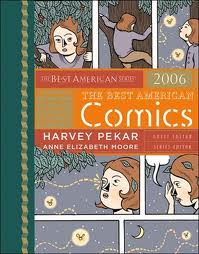
[READ: April 15, 2011] The Best American Comics 2006

I just recently learned about this series from The Best American line of books.  I had known about the Best American Short Stories and Essays and even Non-Required Reading (which I have not yet read).  But once I found out about the best comics, I knew I had to check it out.

The first issue came out in 2006.  The series editor is Anne Elizabeth Moore and the Guest Editor for this volume was Harvey Pekar.  Each of them has an introductory essay in the book.  To me the amazing thing about Pekar”s essay is how aggressively defensive he sounds (a sort of, “you may not like this one, but try this one” attitude) about these comics and comics in general.  I don’t know much about Pekar’s work.  I know he’s a kind of underground icon, but I seem to have missed him.  My impression of him is that this sort of antagonistic/defensive attitude seems to go along quite well with his comics, so I guess that makes sense, but I didn’t find it very welcoming.

But that’s okay, because I really enjoyed the comics.  And quite a few were by artists that I had never read before, which is even better! Continue Reading »

SOUNDTRACK: THURSTON MOORE-World Cafe Studio, November 16, 2007 (2007).

This World Cafe set is a nice contrast to the all-acoustic performance mentioned yesterday (even if it was recorded earlier).  Thurston has a full band with him (including Steve Shelly on drums).  Samara Lubelski from the other session is here too.  The band brings new dimensions to what are mostly the same set of songs.  Both sets included “The Shape is in a Trance,” and “Fri/End” but this one also includes “Honest James.”  The contrast is striking though.  The songs are bigger with the band (and allow for more intricacies) but they are still intimate.

  The interview is also interesting.  David Dye is a fantastic interviewer and he gets some great (and funny) answers out of Thurston. The whole description of how the lyrics to “Fri/End” came about is really cool (if unlikely).

Thurston and NPR: perfect together.

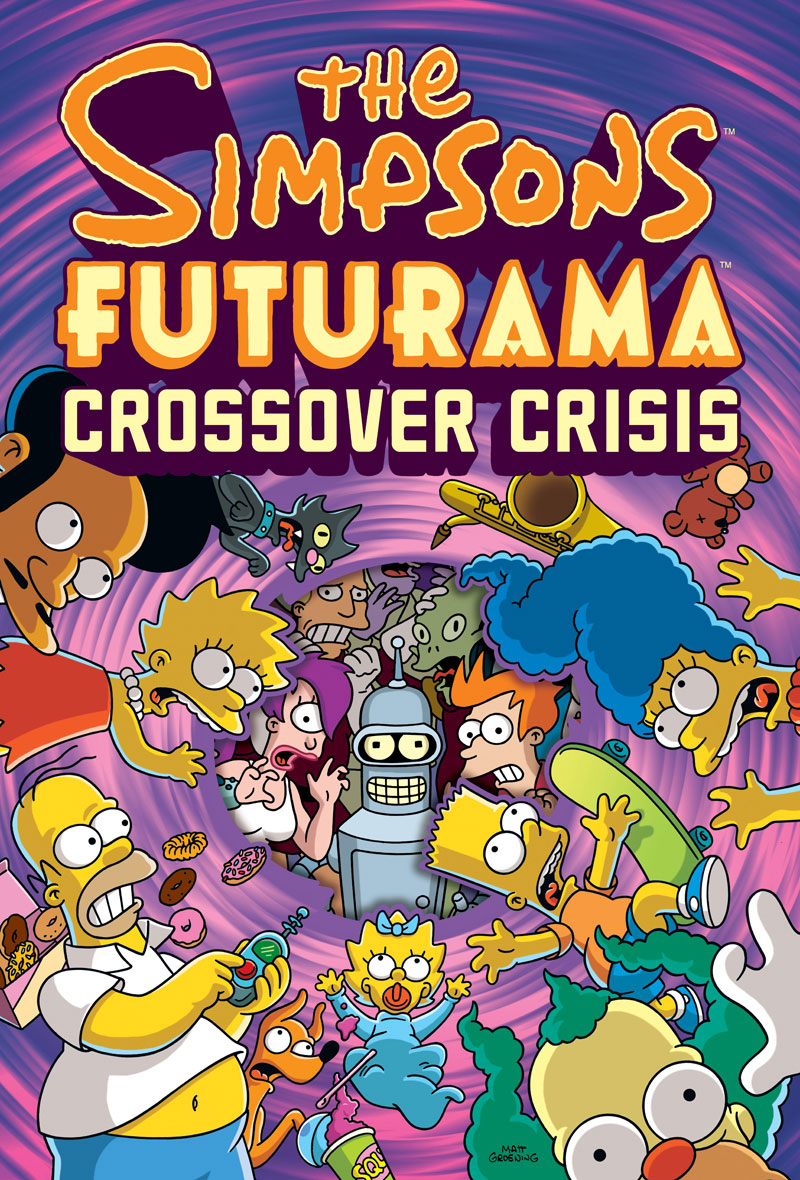
[READ: April 15, 2011] The Simpsons Futurama Crossover Crisis.

This was a wonderful Christmas surprise from Sarah this year.  It is a beautifully packaged (slipcase with a cut-away opening) hardcover edition of the 2002 & 2005 Simpson/Futurama crossover comics issues.

Despite all of my fondness for The Simpsons and Futurama, I never really got into the comics (gotta draw a line somewhere).  But they have Matt Groening’s seal of approval, and they play jokes with things that the show never really touches (not to mention, the shows never tries a crossover event–I can’t even imagine how that would work). Continue Reading »

SOUNDTRACK: THURSTON MOORE-in studio at KEXP, March 11, 2008 (2008).

This interview was headlined ‘Thurston Moore: Not a “Real Guitar Player”?’ which is pretty funny.  The Sonic Youth guys have been defying conventional guitar playing for years.  And then in 2008 Thurston put out a solo album called Trees Outside the Academy, a beautiful delicate album of acoustic guitar songs.

The interview covers this very subject and concludes that maybe back when they started he wasn’t a guitar player, but now, 25 years later, he certainly is.  Moore is charming and funny and relates a very amusing story about being on the cover of Guitar Player and then embarrassing himself in front of one of his idols.

But this download is all about the songs.  Thurston (and violinist Samara Lubelski–who plays great accompaniment, but doesn’t really get any on air time to speak) play four songs from Trees: “Sliver>Blue,” “The Shape is in a Trance,” “Frozen Gtr” and “Fri/End.”  He sounds great in this setting, especially under close scrutiny.  I’d always assumed that there was a lot of improv in the SY guitar world, so to hear him play these (admittedly not difficult) songs flawlessly is pretty cool.  I actually wondered if he’d be hesitant (he admits the acoustic guitar is a fairly new thing for him), but not at all (although he says he screwed up on a chorus, but I never heard it.

It’s a great set and its fun to hear Thurston so casual.

[READ: April 14, 2011] “Farther Away”

The subtitle of this essay is “‘Robinson Crusoe,’ David Foster Wallace, and the island of solitude.”  As with Franzen’s other recent essays, this one is also about birding.

Franzen explains that he is hot off the work of a book tour (for Freedom) and is looking for some solitude.  He decides to travel by himself to the island of Alejandro Selkirk, a volcanic mass off the coast of Chile.  The island is named after Alexander Selkirk, the Scottish explorer who is considered the basis for Robinson Crusoe.  As such, Franzen decides to travel to the remote island, decompress and read Robinson Crusoe while he’s at it.  The locals call the island Masafuera.

I haven’t read Robinson Crusoe as an adult, so I don’t know the ins and outs of the story.  Franzen has a personal resonance with the story because it was the only novel that meant anything to his father (which must say something about Franzen’s father, no?).  The upshot of what it meant to Franzen’s father was that his father took him and his brother camping a lot as a way to get away from everything.

However, for Franzen, on his first experience of being away from home for a few days (at 16 with a camping group), he had terrible homesickness.  He was only able to deal with the homesickness by writing letters.

When he arrives on Masafuera, Franzen’s writing really takes off.  He has some wonderful prose about this treacherous space.  Although he comes off as something of a yutz for relying on a Google map to learn about the terrain and for bringing an old GPS which has more or less run out of battery. Continue Reading »

SOUNDTRACK: WAVVES-Live at the 9:30 Club (2010).

Wavves opened for Best Coast (what a great double bill).  Wavves play a raucous, rowdy set of bratty punk.  Unlike Best Coast, the lead singer seems like he might be something of a jerk.  But it played pretty well into the personality of the music (sloppy, abrasive).  And I wonder just how many times he said he was drunk?

Personalities aside, the was a really fun set.  I have the newest Wavves album, but I think their live show was more engaging.  For all of their sloppiness, the band was always together, with no missed notes (except when the drummer was apparently not paying attention).

They play 16 songs, including a cover of Black Flag’s “Nervous Breakdown” (which the play very well).  And even if you’re not won over by the singer’s personality (which is kind of funny), you’ll be won over by the simple, punky music.  You can listen here.

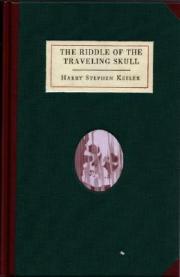
[READ: March 29, 2011] The Riddle of the Traveling Skull

This is the 4th book in McSweeney’s Collins Library Series.  It’s the final book in the series that I’ve read and I have to say that once again, Paul Collins has blown me away with this selection.  Collins apparently stopped his library after 6 volumes.  I wondered if there were more coming, but the Collins Library website is rather confusing.  There’s an almanac with updates as recent as March 1st, and yet the Biography of Paul Collins says: Paul Collins is currently on tour in support of his memoir, Sixpence House, which recounts his time spent living in the Welsh town of Hay-on-Wye, known as the “Town of Books.”  But Sixpence House came out in 2003 (and it sounds awesome!).

Anyhow, back to this book, which was my favorite of the bunch.  It is a genuine mystery from 1939.  Indeed, Harry Stephen Keeler was even more prolific than Agatha Christie (they were born in the same year).  The thing about Keeler though is that his stories are, well, crazy.  Many of his stories were just his attempts to meld disparate ideas into one story.  He includes crazy dialect.  He seems to have no concern for conventional storytelling.  Indeed, he has little concern for conventional mystery storytelling (in one of his stories, he introduced the murderer on the last page).

And this story has similar improbable elements.

In sum: Clay Calthorpe, a salesman returning from the Philipines picks up the wrong bag on the trolley.  When he gets home he finds a skull inside it.  The skull has a name plate affixed to it, a bullet inside it and, in the wads of paper that are keeping the bullet from rattling around, he finds the carbon copy of a poem. Continue Reading »