Feeds:
Posts
Comments

SOUNDTRACK: RHEOSTATICS-2067 (2004).
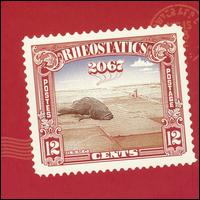
This was the Rheostatics’ final release.  I’m not sure if they knew this would be their last disc, but it kind of feels like they are throwing everything they can into it.

It opens with a delicate song from Martin which reminds me of Jane Siberry (the “row upon row” section).  Although at about 4 minutes it starts rocking out.  It’s a kind of meandering song, which is odd to open an album with.

It’s followed by “Little Bird Little Bird” a great folky song form Bidini.  But the disc really come alive with “Marginalized” a song that reminds me in some ways of “Horses,” as it is rocking and a little twisted (it seems surprising that it came from Tim Vesely).  It’s got some great guitar and an impressive keyboard solo (!) from new member Michael Phillip Wojewoda.

“The Tarleks” follows (with some fun frog noises). It opens slowly (as Martin songs tend to do) but once it really takes off, its got a great riff with his wonderful dramatic pauses and really funky sound from the bass/keyboards.  Then we get the wonderfully odd “Power Ballad for Ozzy Osbourne.”  It’s a kind of joke (but not really) about rock performers aging gracefully.  Bidini gets a bunch of songs on this disc, and here he gets two in a row, with the bizarrely wonderful “I Dig Music.”  The subtitle is “The Jazz Animal” and it tells you a lot about the song…it is indeed a kind of high-octane jazz.  But it has many different segments (and a lyric that references Squarepusher).

“Here Comes the Image” is a 6 minute track from Vesely which sounds very much like his more mellow tracks.  I’m not sure his tracks belong in the middle o f a disc because they tend to really bring the momentum to a halt.  Although it is a pretty song, it’s quite mellow (the organ solo at the end is pretty sweetly retro).  It’s followed by the five-minute slow instrumental “Who is This Man and Why is He Laughing?”  It really feels like an album ender.

So when “The Latest Attempt on Your Life” comes in, it revitalizes the sleepiness that those two songs imbue.  This track has the wonderful repeated chant “Everyone hates you, you sing like a woman”).  “Polar Bears and Trees” follows and it’s another kind of crazy song from Bidini.  It has such simple verses but the chanted “hey hey ho ho” rocks hard and is wonderfully fun.  (The lyrics are clever too).

Vesely returns with the beautiful, wonderfully catchy “Making Progress” which has another great retro keyboard solo at the end. The final track “Praise This Mutilated World” is one of the most beautiful songs in their output.  It starts as a fairly simple acoustic track (Bidini knows a good melody).  At about two minutes in, the band joins in with amazing harmonies.  The quiet parts keep coming back only to be overwhelmed by the harmonies once again.  The last two minutes are a spoken section.  It goes on a bit long, but is redeemed by another gorgeous chorus.

There’s a bonus track which is a very electronic version of  “Record Body Count.”  So this disc is definitely overly long in some places.  There are some great parts to the disc, but it feels like it could have used a good editor.  Nevertheless, since it’s the band’s final release, respect is due.

[READ: March 15, 2011] “Water Spider”

This very short (three-pages) story turned very dark rather quickly.

It opens with an African man, Bokarie, settling into his life as a convenience store clerk in Ottawa.  We learn that he was granted asylum, and that he has the scars to prove it.  He was quite nervous about leaving his country, and he still puts cinder blocks behind his door, to discourage uninvited guests.

At the same time, the action of the story concerns the accidental drowning of Caitlin, a young girl who presumably got too close to the creek when it overflowed.  The town is obviously distraught that one of their youngest and most innocent kids was killed, and they are planning a memorial service.  They are encouraging everyone to wear pink to the service and are even hoping to get a wreath put on the town’s crest.

Bokarie looks on this entire scene with a kind of bemusement.  His life in Africa was full of death.  Most of it horrifying.  So he seems somewhat unsure of what to make of the town’s outpouring for one lost child.  And then the story slowly reveals a shocking truth.

The truth is NOT that he killed Caitlin.  That’d not how the story is going (I didn’t really think it would go there, but it was a possibility).  Rather, the truth comes out about Bokarie himself, and his life back in Africa.  And it’s frankly horrible.

As the story draws to a close, Bokarie makes a decision that is going to impact the community.  It’s a little unclear what his motivation is, but it opens so many possibilities, that it really brings out a whole new realm to the story,

In some ways this story reminded me of Damon Galgut’s “An African Sermon (from The Walrus July/Aug 2004)  which also had an African character whose past has a hidden element and which turns out to be much darker than originally laid out.

I wrote this post several weeks ago.  In fact, I had scheduled several posts as a lead up to the fateful day when this book would get released.  I had even considered finding 4 things to quickly write about so that I could have an entire week of posts about DFW for the lead in to the release of his final, posthumous novel.

And then the book was released on March 30 anyway.  As I write this update, I’m about half way done.  I’m not saying anything about it until I’m done, though.  So, in the meantime, you can read my original post:

Today (tax day–although this year Tax Day is extended until the 18th) is the scheduled release date for The Pale King. Obviously I haven’t read the book yet.  As I write this I, haven’t even received my copy yet.

I was planning on writing a special post for today, but after the last few weeks of build up, I think I’ll just let the book’s release speak for itself. Continue Reading »

SOUNDTRACK: Kids Corner on WXPN (2011).

Kids Corner is a great radio show on WXPN (88.5 Philadelphia).  It airs Sunday through Thursday night at 7PM.  It’s also available online (you can listen live at 7PM!).  In addition to some smart radio for kids (Science Thursday!), there’s quizzes and call in stuff and lots of music.

Most of the music is funny/novelty stuff.  From standard bearers like “Weird Al” Yankovic, to great bands like Trout Fishing in America, to the ancient novelty song “Star Trekkin” and my new favorite kids’ band The Amoeba People.

Every night they have a contest for song of the day, which anyone can vote in (democracy in action!).

Check out the last six years of Ton Ten songs (Steve Martin’s “King Tut!”).  And be sure to tune in, you just might just learn something.

[READ: March 2, 2011] Beyond the Grave

This fourth book in the series excited me because it broke with the format of the kids traveling to two cities with no help.  When they land in Egypt, they are greeted by an old friend (whom they never met before).   This old friend,  Hilary Vale, is actually a friend of their grandmother, Grace.  Grace went to Egypt every year and spent her time with Hilary, traveling, seeing the sights and, of course, looking for clues (although Hilary didn’t know any details of what Grace was up to).  Hilary (and her grandson, Theo) play a helping role in the book, and I have to say that it was nice to let the kids have a little breather with some people that they can trust.

They also get to go to a super fancy hotel room (using Alasdair Oh’s frequent number card).  Of course, as is the way with cool spy stories, the super fancy hotel turns out to be the stronghold for the branch of the Cahill family that Alasitar Oh is part of (I still can’t keep those branch names straight).  They pretty easily access the super spy area of super cool hotel suite.  (Because they have Alastair’s card, they are given the fancy suite).  Of course, once they are in the secret room, Alastair’s uncle, the sinister Bae Oh, knows that they’re there (he owns the hotel).  And they are suitably trapped.

While in the stronghold, the kids learn a little bit about the items they are seeking in Egypt (there is a fake statue in the room).  But mostly they’re concerned about trying to escape.  Thanks goodness thier au pair (who getts cooler with each book) has been paying attention. Continue Reading »

SOUNDTRACK: ERASE ERRATA-“Tax Dollars” (2006).

I admit to looking up a song by this band specifically for this post.  I’ve known of them for a long time, but never really heard them.  So I tracked down this song/video.  I have no idea if it represents the band or not.

This is an angular punk song that starts out with lots of sharp chords but is quickly taken over by a funky bass line and all kinds of percussion.  The bridge is a single guitar section (quite catchy) played over and over.  The fourth section (!) of the song is a kind of sinister spy movie soundtrack sounding riff with all kinds of horns (just how many people are in this band?)

The song is about: murder, slaughter, funded by my tax dollar. It’s sung/shouted by a woman who comes from the Poly Styrene camp of singers, and it’s all quite good.  Initially impression was of a song full of  chaos, but after repeated listens, there’s some really interesting interplay of sounds here.

I’ll have to investigate them more.  Check out the video here.

[READ: March 23, 2011] Mathematical Errata

I had toyed with the idea of making all four posts this week be DFW-related.  Then I realized that I didn’t really have anything else to write about (since I’d been doing about one a week for several weeks now).  So, I found this little, tiny, barely much of anything piece online at the howling fantods and figured I’d mention it as well.

This three page PDF is, as the heading suggests, all of the mathematical errata for the hardcover edition of Everything and More: A Compact History of ∞. Now, I read the paperback edition, so technically I didn’t need this errata.  Of course, I read it almost a year ago and I can’t say that I retained an awful lot of it when I did read it.  So, really these errata aren’t terribly useful to me.  They probably aren’t very useful to anyone unless you are really intense about math.

Continue Reading »

SOUNDTRACK: Y-Not Radio (2011).

I received an email recently from Josh Landow.  I know, who?  Well, he went on to tell me that he and some friends had started Y-Not Radio.

I’m still trying to piece together all the details, but Landow was a DJ for WXPN’s Y-Rock radio.  His email states that he and a bunch of other DJs left (or were asked to leave?) WXPN and started Y-Not Radio as Philly’s “real alternative.”  What they have going on is strangely impressive for a station that has only an online presence.  There’s also a disclaimer that (despite lifting and modifying the Y Rock logo) they are not affiliated with The U of Pa of WXPN.

The YRock Branch of WXPN is still operational.  And, looking at the music they still play, it’s not that radically different from the music of Y-Not Radio (in other words, it’s all great current indie rock and old school alternative music).  So, basically what we have is an embarrassment of riches from alternative radio online.  Of course, I don’t really like listening to the radio online (except at work).  I only wish I could get them both in on my actual radio.

It’s all a fascinating fight about indie rock and online radio.  Let’s see how it plays out!

[READ: March 12, 2011] Babymouse: Heartbreaker

The kids at the library love Babymouse.  And since I am greatly influenced by the opinions of fourth graders, I decided to read it as well.  This is the fifth book in the series (but relax, they don’t appear to have any kind of thread that makes it hard to follow).

The basic set up of the stories is that Babymouse is a mouse in school.  Her classmates are other animals.  It’ hard to determine very much about the school or even the setting of where Babymouse lives because this whole book is about Valentine’s Day.

The most fun aspect of the book for me was the dream sequences.  I’m not even entirely sure if the targeted audience would get all of the references, but I sure liked them.  For instance, while Babymouse is wondering if anyone will invite her to the dance, she has a Cinderella dream sequence and a Snow White Dream sequence (which goes astray) and, my favorite, a Dirty Dancing sequence (“Nobody puts Babymouse in the corner,”) complete with a Swayze quiff on the male mouse. Continue Reading »

SOUNDTRACK: BLACK FLAG: The Process of Weeding Out (1985).

Fans of Black Flag were (justifiably) freaked out by this EP.  It’s a four songs that clock in at almost 30 minutes (from the band who gave us the one-minute long hit “Wasted”).

This album is all instrumental and it provided Greg Ginn yet another outlet for his experimental guitar workouts (see also: Gone, October Faction, Saccharine Trust, Tom Troccoli’s Dog etc.)

So what you get is Kira’s fantastic and unusual bass riffs (she did amazing work with Black Flag), Bill Stevenson’s intense (and cymbal fueled) drums and Greg Ginn’s what the hell? guitars.  I’ve always found Ginn’s guitar work to be somewhat off.  It always struck me that maybe he didn’t exactly know how to play the guitar.  And yet he was always right on with his riffs and chords, it’s just that his solos never conformed to any standard version of guitar solo I’d ever heard.

So this EP comes across more as fee jazz than punk.  “Your Last Affront” is 9 minutes of chaos all under-girded by an interesting if unconventional riff.  It’s followed by the two-minute “Screw the Law” a much faster song, with an intense riff repeated for much of it.  The last 30 seconds or so has some screaming solos from Ginn, but of all the tracks, this is probably the most user-friendly.

The second side has the title track starts with a lengthy solo from Ginn.  A few minutes in, Stevenson’s drums come clacking around the place and Kira is somewhat relegated to the back as her bass is steady but not that exciting.  Until about 3 and a half minutes in, when the band takes over and Kira plays a super cool riff and when Ginn joins in, the song is really solid.  “Southern Rise” ends the disc with 5 minutes of relative quiet.  Although the main instrument appears to be the drums.

The whole things sounds like they were jamming in Greg’s garage.  And I’ll bet lots of fun was had in that garage.

[READ: March 15, 2011] three items about what didn’t make it into Infinite Jest

In honor of The Pale King’s release this week, I’m doing this post on Infinite Jest-related stuff.  This is all of the stuff that we lay people have access to without going to the Wallace archives to find all of the cool DFW stuff.

After finishing IJ this summer, I found out that it was initially much much longer (I think around 300 pages longer).  I grew mildly obsessed with wondering what had gotten cut.  And I had to wonder, if you have an 1100 page book, what difference would an extra 500 pages make, really?  Initially, I thought that the things that were cut were just minor changes, but then I heard about fairly large things that were removed.  And I dreamed of a “director’s cut” of the book.  That will never happen, and that’s fine (I’m less obsessed now).  But these little glimpses into scenes that didn’t make the book are fascinating.

And all told, they confirm that most of the cuts were minor, although there were some large scenes that were left on the cutting room floor. Continue Reading »

[WATCHED: March 19, 2011] Until the Light Takes Us

Soon after finishing Lords of Chaos, I heard a radio interview on the Sound of Young America with the directors of this movie (which is about the same black metal scene in Norway).  I finally got around to watching the film, and I’m really glad I did.

It covers much of the same terrain as Lords of Chaos (although the book covers much more stuff), but what’s cooler about the movie is actually seeing these guys talk to you.  And seeing how “normal these guys are.”  The two “stars” of the movie are Fenriz from Darkthrone and the main man in the scene, Varg Vikerens.

In the radio interview, the directors talked about the way they structured the film. And, I’ll reveal a bit of that.  So if you don’t know this particular fact, I’ll give the next line as a spoiler alert:

SPOILER ALERT: (Highlight the blank space to read it) Varg is in jail for murder and for the burning of several churches and was sentenced to 21 years in prison.

They don’t reveal this information until very late in the film.  So when we first meet Varg, he is a clean cut, handsome man in his late 30s.  He is in jail (although not explicitly stated, it is clear he is in jail).  And he is talking about the Norwegian black metal scene.  Vikerens formed the band Burzum in 1991.  He later joined the band Mayhem.

Mayhem is at the center of the black metal controversy.  The singer of Mayhem, Dead, killed himself with a shotgun.  The guitarist Euronymous found him and took pictures of him (one of which was used as a bootleg album cover–ewww) before calling the police (and it is believed he took some “souvenirs” from the scene).

Vikerens talks about growing up in idyllic Norway, which is peaceful and beautiful–but he undermines all of that by talking about the fairly typical suburban ennui that kids face.  Of course, in Norway it surfaced in violence and death.   Later, he talks about Christianity and how when it came into Norway there was no respect for the Norwegian culture.  Christians built churches on top of ceremonial grounds.  And it seems that he and his mates became very interested in Norwegian folklore and avenging the wrongs done to it. Continue Reading »

SOUNDTRACK: RHEOSTATICS-Night of the Shooting Stars (2001).

This was the first CD by The Rheostatics that I bought as it was released.  I had gotten into them in 1999 or so, and I remember being very excited that this disc was coming out.  I ordered mine from Maple Music (and it was even autographed!) and I recall the evening it came in the mail and I sat in my kitchen rocking out to it.  Night is probably their most accessible disc. There’s a bunch of tracks from Tim Vesely, (who writes the sweet melodies) and although Martin Tielli’s wonderful weirdness is present, it’s more weirdness within conventional songs rather than unconventional song structures.

The disc also features a lot of heavy guitar work.  The disc opens with a heavy guitar riff which morphs into an upbeat poppy number.  Of course, how many pop numbers are titled “These Days Are Good for the Canadian Conservative Youth Party Alliance,”  (Tielli, of course).  There’s a catchy repeated bridge “these days are good for us now” even if the chorus (chorus?) features the bizarre line: “I chipped my eyetooth on the back of a urinal.”

It’s followed by two of the catchiest, poppiest, most wonderful songs the Rheos have done “Mumbletypeg” a delightful ditty sung by Dave Bidini with (again) a wonderful chorus.  And, “P.I.N.”, (Tielli) too catchy by half, and featuring the wonderfully weird lyrics, (in a great descending melody): “You’ve got the key to my heart; you’ve got the P.I.N. to my guts”

“Superdifficult” is sung by Tim Vesely, and sounds a lot like the kind of songs he would later writer for The Violet Archers (he has the most delicate pop sensibility in the band).  Tim also sings “We Went West.”  It kind of slows the pace of the record down, but it is a beautiful song (done with different guitars in each headphone).

“The Fire” is a charming ditty sung by Tielli.  It continues the mellowness of “We Went West” and runs with it until Bidini takes over vocals and adds some heavy guitars.  They end the song with some beautiful harmonies and some screaming guitars.

The next two songs, Vesely’s “In It Now” and Bidinis’ “Here to There to You” are slight songs which are more charming than catchy.  They’re followed by the last three tracks which end the disc with a bang.

“The Reward” has a cool slinky riff and great vocals for Tielli. It’s also sprinkled with some heavy guitar pyrotechnics late in the song.  “Remain Calm” is a calming song from Vesely.  It seems perfectly located between the craziness of “The Reward and the wonderful rocking nonsense of “Satan is the Whistler.”

I always think that “Satan is the Whistler” is a much longer song (it’s six minutes) because there are two official parts to it.  The first 3 minutes are slow and moody, then half way through it bursts into a tremendously heavy riff (complete with whistles!).  It’s a great ending to the disc.

There are also two previously recorded tracks here in new form: “Song of the Garden” is from The Story of Harmelodia, done in a slightly more rocking version here.  And “Junction Foil Ball” (Tielli) was on their odd Nightlines Sessions release.  It opens with some odd effects and guitars and evolves into an incredibly, incredibly catchy riff.  The version here is not vastly different, but it’s a bit cleaner.

I’ve really loved this disc.  And even if the middle is a bit slow, it still rocks.

[READ: March 11, 2011] “Barnyard Desires”

This was a surprisingly odd and twisted story.  And for The Walrus, it was quite long, as well.

It opens with Leona hearing noises in her ceiling.  She suspects that the noises are from rats.  She has called the landlord out several times, but he hasn’t seen any rats.  In fact, he has stopped coming out because he thinks she’s crazy.  She imagines what the rats are up to up there: procreating mostly.  Eventually, she notices a kind of brown stain on the ceiling, which she is convinced is the rats mating and urinating.  The stain grows larger and larger, and it is right above her bed.  She also believes it is taking vaguely human shape.

Meanwhile, we learn about her upstairs neighbor.   The first time they met was in their building’s elevator.  He proudly (and very closely) admittedly that he was recently born again.  She made a quiet comment, turned away and hadn’t really spoken to him since. Continue Reading »

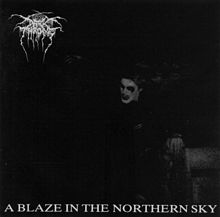
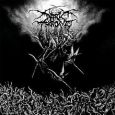
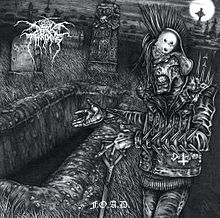
SOUNDTRACK: DARKTHRONE-“Kathaarian Life Code,” (1992), “Sacrificing to the God of Doubt” (2004), “Canadian Metal” (2007).

After watching Until the Light Takes Us, I wanted to check out some of Darkthrone’s music.  According to their Wikipedia page, over the years the band who pioneered black metal has morphed away from the sound.  They’ve added elements of punk and speed metal to their bludgeoning sound.  In the movie Fenriz says that he listens to all kinds of music and is very open-minded.

“Kathaarian Life Code” is a ten minute dirge of black metal.  It opens the band’s second album (considered to be a black metal classic) with chanting and guttural spoken words.  Then it blasts forth with the jackhammer style of drums that is now standard in black metal.

It slows down from time to time, allowing for the really heavy parts to blast through the chaos of the fast parts.  It’s pretty intense and not for the faint of heart.  You can hear occasional guitars screaming through the din, but the production is intentionally murky, dark and noisy.  As they say in the movie, the bands intentionally recorded on the shittiest equipment they could find.

“Sacrificing to the God of Doubt” is a later song, taken from what is considered their final album in the black metal style.  The band was turning away from the traditional black metal sound, and there are elements of punk (guitar riffs that are audible, and a sound that is less bass heavy) present.  And the production, while still mired by noise is relatively cleaner.

“Canadian Metal” is from their third most recent album, after the shift from black metal was more or less official.  It sounds more like an early death metal song.  There’s low tuned notes, audible vocals (growled, but you can actually hear words) and a kind of headbanging aspect to it.  The album is called F.O.A.D. which was a song by Venom (and others, obviously), and this track reminds me of Venom somewhat.  I wouldn’t say that the band has sold out because there’s no way anyone is playing this on the radio, but it’s interesting to see how a band has managed to change things up and add new elements to its sound even though they were the forerunner and grandfather of a scene.

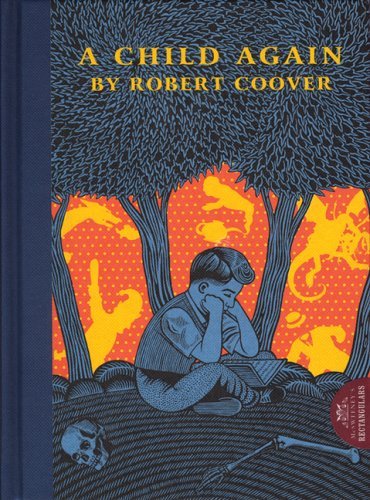
[READ: February and March 2011] A Child Again

This is a collection of short stories from Robert Coover.  There is a kind of theme throughout (most of) the stories about returning to childhood.  But the overall sense is one of despair, sadness, pointlessness and sex.  Lots and lots of sex.  And the sex is usually as vulgar and nasty as the tone of the book suggests it would be.  It’s a little off-putting, actually.

I was planning to say that I didn’t like this collection at all because I really didn’t enjoy the first half-dozen or so stories.  I continued because Coover has a great reputation that I didn’t want to give up after a few misfires.

The real disappointment came because the stories seem so promising: many of them are a kind of retelling of classic fairy tales that looks at “what happened afterward.”  However, and this was true for almost all of them, Coover tries to do two contradictory things with the stories.  He is playing with fairy tales but he is also writing stories that are completely unlike fairy tales.  By that I mean, Coover’s stories are long and very detailed, they bring far too much information to the story.  And a fairy tale is almost by definition short.  I mean, “Puff the Magic Dragon” is a song that’s about five paragraphs long.  But Coover’s “Sir John Paper Returns to Honah-Lee” is 26 pages long.  So instead of playing with the original, it feels like an original story that uses someone else’s characters.  It’s unsettling and unsatisfying.

It’s also not very funny.   And I’m not sure fit’s supposed to be.  But with a title like “Sir John Paper Returns to Honah-Lee” you expect the funny.  And there are funny moments.  I mean the whole premise is that little Jackie Paper has grown up into Sir John Paper.  He’s now an old Knight and he is sent to slay the dragon (Puff) who is plaguing the city.  Even though that is a tragic story, it is also inherently humorous.  And there are laughs when they reunite.  But it gets so bogged down in details, that the essence of the story seems to get lost.  Perhaps I’m just disappointed because it (they) turned out so unlike I wanted them to be. Continue Reading »

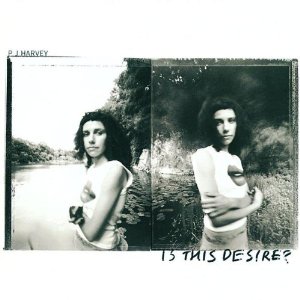
SOUNDTRACK: PJ HARVEY-Is This Desire? (1998).

After the (to me) disappointing To Bring You My Love, PJ Harvey came back with Is This Desire? This disc seems like it took the techniques she explored on To Bring and added more structure to her songs.  Harvey’s songs are by nature minimalist, and that’s why I found To Bring disappointing: it was too minimal.  She fleshes things out here–there’s a kind of Nick Cave quality to the disc as well, especially on the opener “Angeline.”  (She had sung with Cave on his then recent disc)).

These first two songs show an amazing range.  “The Sky Lit Up” has some odd guitar effects and some crazy screams later in the song.  It’s less than 2 minutes long.  As is “My Beautiful Leah,” which is over the top noisy and distorted.  It’s as sinister a song as Harvey has written.  “The Wind” has a wonderful whispered vocal, but it is dynamic and allows her quiet background music to forge its own path).  The harmony vocals are a very nice touch.

But it’s “A Perfect Day Elise” that shows that for all of Harvey’s textures and sounds, she really is a singles writer.  This is a noisy track, but the chorus is simply beautiful.  A fantastic anthem for the late 90s.

But then the disc takes a turn for the ethereal.  “Catherine” and “Electric Light” are quiet, creepy numbers that never really engage. “The Garden” tries to come out of this quiet, and manages somewhat.   “Joy” is another of Harvey’s spookier songs (she can do insane things with her voice) that is filled with anguish.

After these tracks, Harvey returns to the earlier style of the disc, with the beautiful, haunting (but not creepy) “The River.”  “No Girl So Sweet” follows with a noisy short track utilizing some techno aspects and a lot of distortion.  Harvey rocks this song very hard with some great vocals, too.

The final track is “Is This Desire?” It opens with just drums and Harvey’s voice.  It builds in complexity until it reaches a  delicate chorus.  It’s a really beautiful, if not dark, song an a nice ending to a CD that is something of a mixed bag.

[READ: March 23, 2011] “Pride”

I tend to read a lot of peculiar short stories.  So every once in a while, I really enjoy reading a story that is simply about a person or two trying to get by. And if you ever want to read stories about simple human connection, Alice Munro is the way to go!

This story confused me at first because I normally assume that the protagonist of Munro’s stories is going to be female.  This one didn’t state one way or another for a few paragraphs, so I was reading him as a girl (especially since he was talking about another girl in his town).

But no, it is about a boy.  It opens in the 1920s in a small town in Canada.  The protagonist is a poor but reasonably happy boy–with a harelip.  The girl he is talking about is named Oneida (an unusual name that did not catch on in town).  Oneida’s family is wealthy.  Like in a class by themselves wealthy.  Until, that is, her father makes a bad investment (with his bank’s money) in steam automobiles and loses more than his money. Continue Reading »