Feeds:
Posts
Comments

Archive for the ‘Word usage’ Category

clockworkSOUNDTRACK: FEU THÉRÈSE-Ça Va Cogner [CST049] (2007).
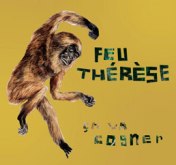
feu2Bands change sounds from one album to another all the time, but few as radically as this one. From weirdo psychedelic band to French new wave pop band, from 6 minute instrumentals to 2 and 3 minute songs with vocals.

At times the album feels like Kraftwerk meets Serge Gainsbourg (which I know is an unfair reduction, but when your singer mostly talk/sings in a deep French voice, the comparison is apt.  And yet the album is fairly poppy and catchy as well.

“A Nos Amours” opens the disc with three minutes of synth happiness. It even has a section where the music drops out and the bass resumes its place.  Recall in their debut that at 4 minutes of each song something radically different happened.  Now the songs just end. “Visage Sous Nylon” features the more Kraftwerk sound—but it’s an almost organic Kraftwerk (which I know makes no sense but there it is). “Les Deserts des Azurs” has a kind of Tangerine Dream feel with washes of analog synths.

“Le Bruit du Pollen La Nuit” has a weird kind of synthy 70 s rock feel but the music almost drops out entirely (but not quite) while the vocals (in French) are spoken. It feels like it’s mocking and serious at the same time.  It’s also got a discoey chorus singing “You’re just a just a just a pretty boy!”

“Nada” has a synthy almost disco feel.  “Ça Va Cogner” is just over 5 minutes long and consists of various delicate swells of synths.  I kept waiting to hear The Beach Boys “Wouldn’t It Be Nice” burst forth from the waves, until about half way in when it turns into a simple delicate melody and a children’s chorus. “Les Enfants” is a simple ditty with hummed lyrics.  It’s poppy and catchy as anything

“Ferrari en Feu Pt. 2” is a fast synth songs with slap bass. (Part 1 was on the debut and sounded nothing like this).  “La Nuit Est un Femme” is a slow synth track with a female backing vocals over a sung male lead. The end of the song adds some loud textures to this otherwise sweet song bringing in some really interesting tensions.  The disc ends with “Laisse Briller Tes Yeux Dans le Soleil,” a synthy instrumental that ends with cheesy charm.

This album is really wonderful–surprisingly catchy and dancey and yet exotic enough to not sound like anything else that (most) people are familiar with.  All of the Constellation albums are streaming on their site, but this one is especially worth checking out.

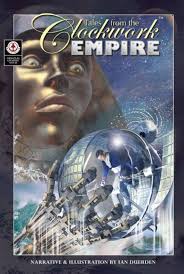
[READ: April 15, 2014] Tales from the Clockwork Empire Book 1

I was very intrigued by this book because of the steampunk nature and because I have a strange fascination with clockwork ideas–a technology that is precise and interesting yet which never really took off beyond clocks and small toys because other technologies were more powerful

I thought that the cover was kind of interesting with this gigantic metal head holding ball.  But on closer look the man in the ball was very poorly computer rendered and that should have been a tip off.  For all of the people in the book have this same unfinished-rendered look.  It looks a lot like storyboards of unfinished versions of Pixar films.  I mean, really cheesy and really unfinished and really unsettling. This is especially noticeable on the rendering of Napoleon Bonaparte in the “end credits” of the book.

I hate to harp on the graphics, but this is a graphic novel after all.  All of the non human elements looks fine, many look even better than fine, bordering on photo realistic.  But the humans all seem ugh, creepy and stiff and just dropped on top of these scenes.  It is terribly distracting and may even make the dialogue feel stiffer than it actually is.  Because the dialogue felt very stiff and mechanical as well.

It is the kind of story that seems historically accurate in the details and works very hard to let you know that it is accurate.  Indeed, in the end of the book Duerden goes to great lengths to show the accuracies in the writing.  But there’s so little flow in the dialogue that it seems like a lecture.  Basically the entire book feels like, not a first draft, but like the draft before the final draft.  Like the book is going to go back to have a final polish to make the dialogue breezier and make the pictures look better.

This is all a shame since I haven;t eve talked about the story yet. (more…)

Read Full Post »

when di dSOUNDTRACK: BECK-Scott Pilgrim vs the World (2010).

220px-Scott_Pilgrim_soundtrackI somehow missed Beck’s next album, Modern Guilt.  Whether I was bummed about not loving The Information or that Iwas just out of the loop, I’m surprised I wasn’t all over this collaboration with Danger Mouse.  But I plan to give it a closer listen soon.

After that, Beck wrote several songs for Sex Bob-Omb, the band in the movie Scott Pilgrim vs the World.

In a confusing annotation, he wrote 4 songs that Sex Bob-Omb play on the soundtrack.  Three of those songs, Beck also performs on the deluxe version of the album.  Beck also recorded two versions of a song that he wrote for the soundtrack.  And, according to Spin, there are four more unreleased tracks that you can listen to on their site.

I’m only going to mention the officially released tracks here.

“We Are Sex Bob-Omb” is a great punky fuzzed out rock song (as all four turn out to be).  It has a very Stooges feel and at only 2 minutes (including the intro) it’s quite the punk anthem.  Beck doesn’t do a version of this one.

“Threshold” is a punk blast (less than 2 minutes).  Beck’s version is fuzzed out with all kinds of interesting noises swirling around.  The chorus is very traditional punk (ie. surprisingly catchy).  The Sex Bob-Omb version is very close to the original.  It’s actually a little cleaner (you can understand most of the lyrics), but I think all of the noises are the same, so maybe its the same music with different vocals?  Well, according to the movie Wiki, the actors played the music, but of the three it’s the closest musically to the original.  There’s also an 8-bit version of the song which sounds like a warped video game playing along to the melody.  It’s created by Brian LeBarton.

“Garbage Truck” is a big dumb slow track.  In Beck’s version, there’s more fuzzed out guitars and it sounds more 70s rock than punk.  There’s big drums and dumb lyrics.  It’s great.  The Sex Bob-Omb version sounds quite different in the recording.  It’s a wee bit slower, and once again the vocals are much cleaner, but the music is wonderfully fuzzed out again.

“Summertime” is the same style of song–fuzzy and simple (Beck must have had fun writing these).  This one is the longest of the songs, at just over 2 minutes. Beck’s voice is once again super distorted.  The Sex Bob-Omb version feels slower, but maybe that’s just because the vocals are so much cleaner.

Although I thought I’d enjoy the Sex Bob-Omb versions more, I side with the Beck versions on all of them.  None of the songs are great, but they’re not supposed to be (Sex Bob-Omb isn’t meant to be a great band).  But they are a lot of fun, especially if you like garage punk.

There are two versions of “Ramona” on the disc.  The acoustic one is just a minute long and is Beck strumming and singing the word “Ramona” a few times.  It sets the stage for the full version which has strings and actual lyrics.  It’s a pretty song, reminiscent of the string style of Sea Change.

So this is an interesting collection of songs for Beck fans.  And, in fact, the entire soundtrack is quite good.

[READ: March 16, 2014] When Did You Last See Her?

I enjoyed Book 2 in this series a lot more than I remember enjoying Book 1.  And it was great to get back into the fun writing style of Lemony Snicket novels.

The first book left us with the quest for the Bombinating Beast sculpture which, as the story ended, was taken by Ellington Feint, a girl who Snicket was just starting to like.  The first book was full of (intentionally) confusing writing in which Snicket knows that the things he did were wrong, and things like the true nature of what happened were written in a weird way.

There was some of that in this book, but the focus was more on the story than the weirdness of Snicket’s situation (which I’m still not entirely clear on).  Without dwelling on book 1 too much, suffice it to say that Lemony Snicket is an apprentice to the terrible mentor S. Theodora (we still don’t know what the S. stands for).  We also don’t even exactly know what they do, in other words what his he apprentice-ing in?  He claims it’s not detective work.

Despite the disappointment of losing the Beast statue, there is a new problem in Stain’d by the Sea, which Snicket and S. have not left yet.  It turns out a girl, heir to the Knight fortune, has gone missing.  Cleo Knight, budding chemist, and girl with a plan to save the dying town of Stain’d by the Sea was last seen leaving town in her indestructible car, the famous Dilemma.  And yet, she was also seen (by the proprietor of Partial Foods (ha!)) leaving in a taxicab.  When Snicket and S. Theodora investigate the house, they find that the Knight parents are being sedated by a Dr. Flammarion–who seems very suspicious.

(more…)

Read Full Post »

walrusmarchSOUNDTRACK: RHEOSTATICS-Linwood Movie Theatre, Port Dover, ON (December 4, 1999)

portThis is the final concert on of the 20th century on Rheostatics Live (and I’ll be taking a short break from the Rheos concerts after this one).  Even though the site doesn’t list the venue, in the previous show they say they are playing at the Linwood Movie Theater in Port Dover.  As with every other venue, I can’t find any information about this, so I’ll just accept it as true.

The last few shows were recorded from the soundboard, so this one is a little jarring to hear the audience so loudly.  But the sound is good and clean.

They say during the show that they are going to play songs from all 10 of their albums. And they do a pretty good job.  They miss playing something from Greatest Hits (which is kind of a surprise as everyone was shouting for “Wendell Clarke.”  Unsurprisingly they do not play anything off of Group of 7, and, in what I think of as a huge surprise—nothing off of Introducing Happiness—they almost always play something from that album anyway.

The set is comprised mostly of Harmeldia and Melville songs and it’s quite a good one.
“I Fab Thee” even invites audience participation.

This show also has one of the great dialogues between fans and band.  Someone asks if they have CDs available for sale.  Dave says, yes in the lobby.  She asks if they have them anywhere else and he replies “Is the lobby not convenient enough for you, ma’am?” to much laughter.

It’s a good show to end the millennium on. And I look forward to seeing what 2000 brings in their live shows.

[READ: March 6, 2014] “We Be Naked”

I have really enjoyed Gartner’s stories in the past but this one rubbed me the wrong way from the start.  I do not like stories where language is deliberated misused and not explained.  I am fine with dialect and I am fine with uneducated narrators, but when a narrator appears educated enough yet consistently gets something wrong and there is no explanation, that story has a massive strike against it.

So when the story starts

We be naked, not nude. Something to remember as the memory of us moves into the slipstream. Nude is in the eye of the beholder, naked a true enough fact.

I thought the “we be” part was an affectation of that first line.  The rest of the language is quite beautiful.  But no, the word “be” is used as the verb throughout the story.  In more and more irritating ways: “Or demands be modest.  We not be asking…”  Ugh. So what has caused the slip in the most basic verb use that English speakers have?  Especially when two sentences later we get this beautiful piece of prose:

And lay down your arms and pick up your instruments, music being the only true and beautiful man-made thing in this world.

Well, the story begins in April 2014 (which I liked) after the collapse of the Kyoto Protocol after the Pirate Party Bombings.  For almost two years since then they be chill.  Shudder. (more…)

Read Full Post »

snicketSOUNDTRACK: HEYWOOD BANKS-“Toast” (1995).

toastI found this song when I was reading an article about Chris Christie.  Someone said he’s toast after his recent scandal.  And someone else posted this video.  Evidently it is taken from a morning radio show (ew), but the song is funny despite the morning nimrods laughing along.

I prefer the audio quality of the radio version, but I like this live version better (the dark toast intolerant joke is very funny (it’s new to this version)–as is the punchline to the Eifel Tower verse).

The excitement that he brings to this nonsense is wonderful.

[READ: September 20, 2013] Who Could That Be at This Hour?

I have a few books lingering around from last year that I have yet to write about.  This is one of them.  I’m not sure how a book gets neglected in my writing.  Usually I feel like I need to devote some time to it and I feel like I don’t have enough time at the moment.  And then it gets pushed back and back until months have gone by and then I wind up writing a half-assed review anyhow.

Alas.

So this begins a new series from Lemony Snicket.  It is a prequel to A Series of Unfortunate Events, but it is a very early prequel.  The main character is a thirteen year old Lemony Snicket who has just finished school and is on his way to a certain destination when all of his plans are thwarted.  And the way the opening is written is confusing and funny at the same time.  Like, “You’ll see her soon enough in any case, I thought, incorrectly.”  Or that he is given a note from a stranger which says to go out the bathroom window.  When he gets into the bathroom he finds a small package: “It was a folding ladder.  I knew it was there.  I’d put it there myself.”  Young Snicket is sitting with his parents–they insist he drink his tea while he waits for the train.  But while he is waiting, a woman breezes into the station and drops a note in his lap.

The mysterious letter writer turns out to be S. Theodora Markson.  She is to be Snicket’s chaperone.  Snicket uses the “a word which here means…” trick from the Unfortunate books but there’s a funny twist

“I’m contrite, I said, a word which here means–”
“You already said you were sorry,” S. Theodora Markson said.  “Don’t repeat yourself.  It’s not only repetitive, it’s redundant and people have heard it before.” (more…)

Read Full Post »

fivedials_no26SOUNDTRACK: BOB DYLAN-Christmas in the Heart (2009).

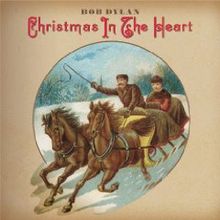
220px-Bob_Dylan_-_Christmas_in_the_HeartI have been a dabbler in Dylan over the years.  I like his hits, I like some of his albums, but I’ve never been a huge huge fan.  So the biggest surprise to me was that Bob Dylan now sounds like Tom Waits.  His voice is so crazily gravelly, it’s almost (almost) unrecognizable as Dylan.

That said, on some of the tracks it works very well–like he’s had too much to drink and is enjoying the revelry of these traditional songs.  I imagine him as a benevolent uncle trying to get the family to sing along.  And sing along they do.  He has a group of backing singers who sound like they are straight out of the forties and fifties (on some songs the women sing incredibly high especially compared to Dylan’s growl).  I’m not always sure it works, but when it does it’s quite something.

The first three songs are a lot of fun. However, when he gets to “Hark, the Herald Angels Sing,” it really sounds like he has hurt himself.  He seems to really strain on some of those notes–note the way he pronounces “herald” (heeerald).

The more secular songs fare better with “I’ll Be Home for Christmas” sounding especially Waitsian and being all the better for it.  Although I feel that perhaps he made up some lyrics–“presents on the tree?”  It’s interesting that in “O Come, All Ye Faithful” he sings the first verse in Latin (I don’t know that I’ve heard any other pop singers do that) and it works quite well.

A less successful song is “Have Yourself a Merry Little Christmas” in which the music just seems to be too slow for him.  His verses end early and it seems like the backing singers are just out in the middle of nowhere.  Perhaps the best song is “Must Be Santa.”  I love this arrangement (by Brave Combo) and Dylan has a ton of fun with it (and the video is weirdly wonderful too).

“Christmas Blues” is a bit of a downer (as the title might suggest).  I’d never heard this song before and Dylan is well suited to it.  Dylan’s version of “The Little Drummer Boy” is also very good–he croons gently and his voice sounds really good.  I was surprised to hear him do “Christmas Island,” a song I have come to love this year–his version is quite fun as well, with the backing singer doing Aloha-ays.

Finally, “O Little Town of Bethlehem” is pitched a wee bit high for him (and the Waits voice is more scary than avuncular here).

So overall it’s a weird collection (to say nothing of the artwork–both the cover and the inside cover), but I think it’s well suited to the day after the festivities.

[READ: December 15, 2013] Five Dials #26

I was shocked to realize who many Five Dials issued I had put off reading (and that this one came out over a year ago!).  I knew 26 was a large issue, so I put it off.  And then put it off.  And then put it off, until Issue 29 came out.  (I read 29 before this one, which got me to jump back and tackle this large one).

I have to admit I did not enjoy this one as much as previous Five Dials.  The bulk of the issue was taken up with German short stories, and I don’t know if it was the choices of the editors, but (a few) of the stories just didn’t grab me at all.  Having said that, there were one or two that I thought were very good.  But with this being such a large issue, perhaps it deserved to be spaced out a little better–Weltanschauung fatigue, no doubt.

This issue starts with Letters from Our Glorious readers and other sources.
I feel like this is a new feature for Five Dials (although again, it has been a while).  There is applause for the Bears (From Issue #24) and the acknowledgement of Zsuzsi Gartner’s first adoptees of her story ideas (Issue #25 Pt 1).  There’s also the amusing story of a guy who got nailed at work for printing the color issue (something I used to do at my old job as well) and a refraining of answering spam.

CRAIG TAYLOR-On Ewen and German
Taylor doesn’t say much in this intro, since the “heavy lifting” is done by Anna Kelly.  He does mention Paul Ewen (and his food writing) and the first Five Dials questionnaire (which I assume it is too late (and too far away) for me to submit for that free HH book).

ANNA KELLY
She explains about wanting to know secrets, and how when she was little, learning Pig Latin was a such a huge boon to her secretive life.  Then her sister started studying German, and Anna herself was hooked.  She says that reading German works in German is like flying.  And she wants to share German language writers with us.  Of course, we won’t be reading them in German, so there will be no flying.  (more…)

Read Full Post »

bothfleshSOUNDTRACK: SIGUR RÓS-Von brigði [Recycle Bin] (1998).

recycleAfter releasing their first album, Sigur Rós was approached by Icelandic musicians to remix the album. And thus came Recycle Bin.  I realized too late that I really just don’t like remix albums all that much–they’re mostly just faster drums plopped on top of existing songs.  And such is the case here.  Despite the interesting musical pedigrees of the remixers, there’s nothing anywhere near as interesting as on Von itself.  There are ten tracks, but only 5 songs.

”Syndir Guðs” gets two remixes:

Biogen keeps the bass but adds some more drumlike sounds.

Múm removes the bass, adds some wild drums and trippy textures and reduces the 7 minutes to 5.  It is quite pretty but very far from the original.

“Leit að lífi” gets three remixes

Plasmic takes a spacey 3 minute wordless noodle and turns it into a heavy fast dance song with speedy drums, big bass notes and with spacey sounds.

Thor brings in some fast skittery drums and keeps the spacey sounds (which sound sped up).  And of course bigger bass noises.

Sigur Rós recycle their own song into a dance song by adding funky bass and drums.

“Myrkur” gets two remixes.  the original is a fast-paced groovy track.

Ilo begins it as a spacey non-musical sounding piece.  After two minutes they add a beat of very mechanical-sounding drums.  It’s probably the most interesting remix here.

Dirty-Bix adds big, slow drums.  It keeps the same melody and vocals as the original but totally changes the rhythm and texture of the song, (removing the guitar completely).

The remaining three songs get one remix each.

The original “18 Sekúndur Fyrir Sólarupprás” is 18 seconds of silence.  Curver turns it into “180 Sekúndur Fyrir Sólarupprás” and makes a muffled drum beat and some other samples from the album, I think.  It constantly sounds like it is glitching apart until the end where it practically disintegrates–an interesting remix of silence.

“Hún Jörð” 7 min Hassbræður increases the drums and adds a more buzzsaw guitar sound and makes the vocals stand out a bit more.

“Von” has delicate strings and Jónsi voice.  The remix by Gusgus adds low end bass and drums making it a thumping rather than soaring track.

I prefer the original, but I much prefer their next album to the first one.

[READ: end of October to early November 2013]  original articles that comprise Both Flesh and Not

As I mentioned last week, I decided to compare the articles in Both Flesh and Not with the original publications to see what the differences were.  I had done this before with A Supposedly Fun Thing… and that was interesting and enlightening (about the editing process).

This time around the book has a lot more information than the original articles did.  Although as I come to understand it, the original DFW submitted article is likely what is being printed in the book with all of the editing done by the magazine (presumably with DFW’s approval).  So basically, if you had read the original articles and figured you didn’t need the book, this is what you’re missing.

Quite a lot of the changes are word choice changes (this seems to belie the idea that DFW approved the changes as they are often one word changes).  Most of the changes are dropped footnotes (at least in one article) or whole sections chopped out (in others).

For the most part the changes were that the book version added things that were left out or more likely removed from the article.  If the addition in the book is more than a sentence, I only include the first few words as I assume most readers have the book and can find it for themselves.  The way to read the construct below is that most of the time the first quote is from the original article.  The second quote is how it appears in Both Flesh and Not.  At the end of each bullet, I have put in parentheses the page in BFAN where you’ll find it.  I don’t include the page number of the article.  And when I specifically mention a footnote (FN 1, for example), I am referring to the book as many times the articles drop footnotes and they are not always in sync.

Note: I tried most of the time to put quotes around the text, but man is that labor intensive, so if I forgot, it’s not meant to be anything significant. (more…)

Read Full Post »

harper septSOUNDTRACK: PHISH-Junta (1989).

juntaI’ve been listening to a lot of live Phish as of late and thought it would be interesting to see if there was truth to the adage that Phish is great live but not so great in the studio.  So here is their first official album.  It was released as a double album, and when it was reissued on CD some bonus material was added.  Incidentally, I just found out that the album if pronounced “juhnta” and not “hoonta” because of the engineer they worked with.

The album starts with “Fee” which is a fun song (the lyrics are wonderfully weird) and they don’t play it all that much so it’s a treat to listen to.  I enjoy the way the verses sound compressed and distant but the choruses are nice and full.  There’s also some funny and interesting sound effects (some of which accentuate the action) throughout the song. This sound effects and noises processing has been with Phish from the beginning and they kept it up through many of their earlier, less mature albums. “You Enjoy Myself” is a live favorite so it’s fun to hear it in this version.  As with a lot of their earlier records, this song sounds a little stiff, especially if you’ve heard the wild live versions. It’s not bad at all, indeed, it has a perfectionist quality to it—the time changes are perfect, the solos are flawless.  Indeed, it’s quite an achievement (and in this more polished version it sounds more like Yes than their live versions ever did).  Interestingly when we finally get to the lyrical section (about 5 minutes in) it’s quite a bit slower than they play live.

“Esther” sounds much more theatrical here.  The music is gorgeous and there are lots of effects and backing vocals which bring a bit more menace to the song than the live version possesses. This also had a very prog rock sensibility to it.  “Golgi Apparatus” has a lot more in the way of backing vocals than the live version.  And “Foam” has some changes: the bass is especially loud and funky and yet the pace is so much slower than I’m used to.  The odd thing is the kind of stiff way that the lead vocals enunciate everything.  And the deep voice (Mike?) is quite amusing at the end of the song.  “Dinner and a Movie” is a fun and silly song and this version is especially enjoyable because of the backing voices and chatter and laughter which illustrate the dinner (and presumably the movie).

“Divided Sky” has a beautiful melody and it’s nice to hear it played so pretty and simply here.  But again the remarkable thing is how much slower the song is here.  “David Bowie” also sounds great (there’s all kinds of weird sounds effects in the background of the (very long) soloing section—I have no idea why or what they might be).  The solo sounds like it was maybe done in one take as there’s a couple spots where it’s not “right,” (whether flubs or intentional is hard to say) but it still sounds terrific.  In fact a number of tracks have some little flubs which makes it seem like they either didn’t mind or tried for a more live feel.

“Fluffhead” sounds solid and like the live versions.  What I never realized until I actually paid attention is that the bulk of the music (the extended jam session) is called “Fluff’s Travels.”  “Flulfhead is only 3 and a half minutes, while “Fluff’s Travels” is over 11 minutes (it opens with the beginning of the guitar solo–the catchy riff that starts the lengthy jam).  “Contact” is a delightfully silly song about tires and cars that I’ve always enjoyed and find myself singing often because the melody is so simple.

What’s funny is that the end of “Contact” kind of bleeds into “Union Federal” which is listed as a live song (and clocks in at over 25 minutes long).  This “Union Federal” is an improvisational jam (or an Oh Kee Pah Ceremony—where the guys would get together with instruments (and other things) and jam for a time.  This song is weird with many layers—and is rather typical of one of Phish’s weirder jazz –flavored improv sections (meaning that there is a lot of dissonance and noise).  It’s quite jarring especially after all of the melodies and prettiness of the album proper.  And I can see a lot of people not being happy about its inclusion.  “Sanity” on the other hand is a fun song.  In the intro, they keep claiming the song is by Jimmy Buffett. They are clearly very silly in this setting, especially at the end of the song.  The final track is a live version of “Icculus” the song which is pretty much all buildup.  In the intro they quote U2 “This is red rocks, this is the edge.”  But the “joke” of this version is that Trey keeps postponing the name of the person who wrote the name of the Helping Friendly Book–stalling in any way he can.  As the song gets louder and louder and more absurd, the guys are even more frenetic.  It takes over 3 and a half minutes to get to the proper lyrics of the song.   And then the song itself is about 15 seconds.  Absurd nonsense.  But very amusing.

So this is quite a solid debut album, and the amount of songs that they still play live shows how fond everyone is of it.

[READ: October 2, 2013]  “Wrong Answer”

I didn’t hate Algebra.  I rather like solving puzzles so I enjoyed solving for x.  Algebra II I recall being more daunting and less fun with lots of formulae to memorize.  And, unlike everything promised, I have never used any of it in my adult life (geometry and angles, sure, but not logarithms).  According to this article the new United States CORE curriculum (which I know my son is dealing with already in 3rd grade) says that high school graduates must have Algebra II.

The reasons for this intensification in the studying of math are many (starting around the time of Ronald Reagan) but the current push comes from Arne Duncane, the U.S. secretary of education.  He believes that “algebra is a key, maybe the key to success in college.  Students who have completed Algebra II in high school are twice as likely to earn degree as those who didn’t.”  Whether or not that is true, those of us who earned a degree in nonmathematical  subjects certainly were not aided by this class.  But Nicholson Baker explains that the reason this might be true is that for most colleges, Algebra II is a prerequisite.  Ergo: if you don’t take Algebra II you can’t get into college because colleges require Algebra II.  That, for those who may not have taken logic–a far more useful course than Algebra II in daily life–is called a tautological fallacy.  [Indeed, I maintain that all high school students should have to take a course in logic because they would then be able to see through all of the builshit that politicians spill and claim to be logic.  Like the current (as I type this) government shutdown in which Republicans are claiming they didn’t want to shut down the government when they in fact signed papers saying they were going to shut down the government).]

The real problem with Duncan’s postulate that everyone should take Algebra II (“airplane mechanics do complex measurements and work with proportions and ratios…X-ray technicians calculate time exposures to capture the cleanest possible image.  Most factory workers need to understand Algebra II or even some trigonometry to operate complex manufacturing electronic equipment”) is that even if that were true (I don’t have any idea of it is or not), most people do not do those kinds of jobs.  And even if they did know higher math, they would still be salesmen, graphic artists, librarians, preschool teachers, custodians and many many other jobs that in no way require math. (more…)

Read Full Post »

embryoyoSOUNDTRACK: QUEENS OF THE STONE AGE with EDDIE VEDDER-“Little Sister” (live) (2013).

qotsavedderThis is a live song from Chile (from what I gather it’s a Lollapalooza show–is that even still around?).  I have no idea if Pearl Jam were in Chile at the time, but what a strange thing to bring Eddie Vedder out on stage and then have him only sing backup vocals and play the cowbell.

The song sounds very much like the record, although a little sloppier.  I’m a bit surprised at that as I think of Homme as running a tight ship (but the sloppiness comes from him, so he has no one to blame but himself).  You’d never know Vedder was even there.  It’s one of the strangest guest appearances since Paul McCartney munched carrots and celery for the Super Furry Animals song “Receptacle for the Respectable.”

[READ: April 3, 2013] Embryoyo

Embryoyo is the final book of poetry I’m going to read for a while.  This book came out a few years ago but McSweeney’s had a garage sale version that I found for cheap.  I’ve always been intrigued by the title (so silly and odd) that I decided to give it a ago.  The blurbs on the back (and I know, no one should read blurbs) are telling: “Dean Young’s work will delight only two kinds of people: those who generally read poetry and those who generally don’t”  And, “No one is unsure if they’ve read a poem by Dean Young.”

I probably concur with the first but I definitely do with the second.  Because Young’s poetry is quite unusual.  And Embryoyo proves to be a demonstrative title.  Not that it means anything specifically, but in the way Young creates portmanteau words, which Young uses liberally.  Like the title “Empheroptera.”

I’m going to give some examples of his poetry that I found really enjoyable: (more…)

Read Full Post »

2013SOUNDTRACK: ARCADE FIRE-The Suburbs (2010).

suburbsWhen The Suburbs came out, it was hailed as a masterpiece and also panned as a hack job (more the former than the latter).  It was impossible to listen to it without hearing raves and rants.  And then Arcade Fire became a kind of punchline or punching bag, the band people loved to hate (although not as much as Nickelback).  I didn’t write about this record then because I wanted to let the air clear.  And then I kind of forgot about it.  I pulled it out again recently and found that I really enjoyed it.  It’s a long album with a lot of different tempos.  It reminds me of the kind of albums I used to listen to as a kid, yes in the suburbs, in which I could absorb an entire hour in one sitting (preferably while driving).

It’s not as indie as their first album nor is it as dark as Neon Bible.  Indeed, with the instrumentation and easy melodies, the album is almost pop (or more like radio friendly AOR music from the 70s and 80s).  There’s orchestration (but Arcade Fire has always had orchestration, that’s why there are eight of them in the band).  There’s heavy piano (which is possibly the most notable difference on this album–the keys have gone acoustic, which definitely makes the album sound more 70s than 2000s.  And there’s big choruses.

“The Suburbs” starts the album, but it’s really hard to deny “Ready to Start”–a bouncy number with a very winning chorus (yes, nominated as song of the year, but deservedly so).  “Empty Room” opens with a violin section that I assume is sampled (its sounds very classical and more as a quote than an introduction to the pumping, rocking song that follows.

“Private Prison” has great backing vocals in the chorus–Wim Butler and Régine Chassagne play off each other so well.  “Suburban War” has a great guitar riff–melodic and pretty in its repetition.  “Wasted Hours” is one of the few folky songs I can think of Arcade Fire playing–but it’s a traditional kind of folk–with la la la las–with a twist.

There are two tracks with a Part I and a Part II.  In both cases the second part complements and surpasses the first part in terms of overall energy and catchiness. “Half Light II” is a beautiful soaring track and “Sprawl II” (the one with Régine singing lead), is one of the best tracks on the album (the way the “mountains beyond mountains” section soars is wonderful).  That honor of best tracks also goes to “We Used to Wait” with its simple piano and cool guitar riff at the end of the verses.

The album feels like a lot of music I grew up with–radio friendly hits that perhaps Butler listened to as a kid, and as he reflects back on them he updates and deconstructs them.  “Modern Man” and “Empty Room” feel this way.  “Month of May” sounds like “Beat on the Brat” while “Deep Blue” opens with a  vibe of “Happy Together” but moves beyond it to a massive (and massively good) chorus.

It’s safe to believe the hype–there’s nothing here that will blow your mind, but  taken together it is a very satisfying collection of songs.  I also just learned that there were 8 different covers created for the album (although they all look vaguely the same).  The one above is the version I happened to get.

[READ: January 4, 2013] “Knowledge”

I didn’t know anything about Gordon Lish when I read this story.  The name sounded vaguely familiar.  Then I looked him up.  Evidently Lish has been writing for a long time, although he hasn’t written much recently.  He is more known for his editing than his writing.

This story is a self-obsessing tale in which the words that the narrator is saying are more important than what the words mean.  So the beginning of the story has the narrator stumbling, repeating, reiterating and then alliterating (which he criticizes himself for doing) without really getting anywhere.  He frets that everyone is watching him–the neighbors, the doorman–and that his sneaky actions were seen by all, especially when the masking tape stuck to him.

Strangely, as the story reaches its midway point we see that the narrator is Gordon Lish himself and he asks rhetorically if the reason he has removed the flyer from the telephone pole (hence the masking tape) is because he himself had something to do with the message on the flyer itself. (more…)

Read Full Post »

SOUNDTRACK: SUNN O)))-Flight of the Behemoth (2002).

I hadn’t really heard Sunn O))) until this record (which may not be typical as they collaborated with Merzbow on this one).  I knew that Sunn O))) played loud droney “music.”  And so it is here.  On “Mocking Solemnity” (9 minutes) and “Death Becomes You” (13 minutes) (which meld into each other seamlessly), the songs are mostly slow drones on electric guitar.  The chords are heavy and heavily distorted and they ring out for a few bars–not until the chords die naturally, there is a kind of pacing involved, but for a few bars until the chords are played again (often the same chord).  This is for those who thought Metal Machine Music was too complicated.

On paper this sounds unimpressive (or downright awful, depending) but in reality it is a very physical experience (if played loud enough).

The staticy noise of “Death” melds into track 3 “O))) Bow 1” which adds what sounds like radically modified piano playing a kind of melody.  It’s about 6 minutes and it really changes the tone of the record to suddenly add an atonal racket to the almost calming drone of the bass.  But by the middle of the song, the piano becomes what sounds like a chainsaw.  Merzbow mixed that track and  “O))) Bow 2” which is 13 minutes of the same slow pulsating noise.  It’s not exactly soothing.

The final track is “F.W.T.B.T.” a “remake” of “Metallica’s “For Whom the Bell Tolls.”  I can’t hear a thing that sounds like the original, but that’s what makes a cover interesting.  Although admittedly around the four and a half minute mark there’s some faster chords (for this band anyhow) that could be Metallica-like.  There are also drums (and vocals, although I have no idea what they are saying) on this ten-minute workout.

Not for the faint of heart (or fans of melody).

[READ: November 17, 2012] How to Be Alone

I read most of the articles in this book already.  But I read them over two years ago, so I thought it would be safe to wade into the world of Franzen again.  What I find most interesting about the title of this book is just how many of these articles are about being alone, wanting to be alone or feeling like you are alone.  Obviously that is by design but it seems surprising just how apt the title proved to be, especially given the variety of subjects  his father’s brain, being a novelist, the US Postal Service, New York City.

I’m not going to go into major detail about each article this time, although I am providing a link to the earlier review–my feelings didn’t really change about the pieces (except that from time to time I got a bit exhausted at his…whininess?  No, not that exactly…maybe his persecution complex.  But I will give a line summary about each one just to keep everyone up to speed.  The four pieces that I hadn’t read before I will give a few more words about.

One overall feeling is that when Franzen isn’t writing about the state of the novel (which he is very passionate about) his articles are well researched well documented which is kind of surprising given the state of panic he seems to be in the novel articles.  It’s also kind of funny how out of touch these articles seem (some are almost 20 years old and are kind of laughably outdated), but it’s also funny to see how poorly his predictions panned out.  The death of the novel is rather overrated (just see the success of his own Freedom.

So the book contains: (more…)

Read Full Post »

« Newer Posts - Older Posts »